Contact Us

Use the form on the right to contact us.

You can edit the text in this area, and change where the contact form on the right submits to, by entering edit mode using the modes on the bottom right. 

Form Block
This form needs a storage option. Double-click here to edit this form, and tell us where to save form submissions in the Storage tab. Learn more
         

123 Street Avenue, City Town, 99999

(123) 555-6789

email@address.com


You can set your address, phone number, email and site description in the settings tab.
Link to read me page with more information.

Subjects

Ordinance of Covenanting

James Dodson

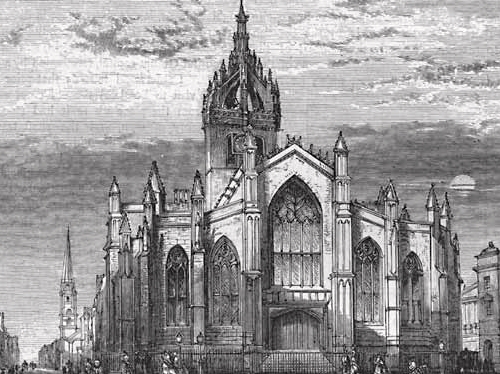
Greyfriars Church.

Greyfriars Church.

HOMEPAGE FOR THE ORDINANCE OF COVENANTING


“I pray you peruse the particulars to be opposed by vertue of your Covenant, Popery, Prelacy, Profanenesse, Schisme, Heresie; and do not dare to indulge any abomination, which you have vowed to oppose: Take heed that no sinfull biasse of near relations, or any self-advantages, take you off from your faithfullnesse in this kinde. The Holy Ghost makes this a character of an heir of Heaven, Psal. 15:4. He sweares and keeps it, though to his own hinderance: Therefore let not fear of losing a customer, a friend, an office, a good bargain, or any other outward advantage, hinder you in keeping your Covenant.”—Simeon Ashe, Religious Covenanting Directed, and Covenant-keeping perswaded (1646).


Works on the Ordinance of Covenanting:


The Solemn League And Covenant.-1643-The Three Kingdoms of England, Scotland and Ireland.-This is both a political league and a religious covenant between the three nations for establishing a covenanted uniformity of religion together with providing a mutual defense.

An Ordinance of the Lords and Commons, enjoining the taking of the late Solemn League and Covenant, throughout the Kingdom of England and Dominion of Wales.-1643-The Parliament.-An Act designed to see that the Solemn League and Covenant was subscribed throughout England and Wales including instructions for how to subscribe.

England’s Covenant Proved Lawful and necessary Also at this Time, both by Scripture and Reason. Together With sundry Answers to the usual Objections made against it.-1643-Samuel Clarke (1599-1682).-In this short piece, Clarke sets forth the difference between lawful and unlawful covenants and explains why the Solemn League was lawful as well as a blessing to the English people. He touches on some other issues, such as resisting the King versus resisting his tyrannical counsellors. This contains important insight into the view of the English Puritans regarding the doctrine and practice of covenanting.

The Great Danger of Covenant-refusing, and Covenant-breaking.-1645-Edmund Calamy (1600-1666).-Westminster divine Edmund Calamy’s sermon on the ordinance of covenanting wherein he describes the use of covenanting together with warnings against refusing to covenant or, what it worse, to break covenant.

A Declaration Of The Commissioners Of The General Assembly, Concerning Present Dangers, And Duties Relating To The Covenant And Religion.-1648-The National Church of Scotland.-The assembly issues a warning to a careful keeping of the Solemn League and explains why it is dangerous to recede from this.

Whether it be Lawful, Just, & Expedient, that there be an Ordinance of Parliament for the Taking of the Solemn League & Covenant, By All Persons in the Kingdom, Under a Considerable Penalty.-1649-George Gillespie.-An essay designed to explain both the necessity of enforcing the Solemn League and the duty of requiring all persons who are capable in the kingdom to take this as their own vow under threat of civil penalties.

ΑΝΑΛΗΨΙΣ ΑΝΕΛΗΦΘΗ, The Fastening of St. PETERS FETTERS. By SEVEN Links, or Propositions. OR, The Efficacy and Extent of the Solemn League and Covenant asserted and vindicated, against The Doubts and Scruples of Dr. John Gauden’s Anonymous Questionist. St. Peters Bonds not only loosed, but annihilated by Mr. John Russel, Attested by John Gauden, D.D. The League Illegal, falsely fathered on Dr. Daniel Featley: AND THE Reasons of the University of Oxford for not taking (now pleaded to discharge the obligation of) the Solemn League and Covenant.-1660-Zachary Crofton (1626-1672).-This text is a robust theological and legal defense of the Solemn League and Covenant, written during the Restoration era to argue for its continuing and permanent obligation upon the British kingdoms. Addressing critics such as the “Oxford Reasons,” Dr. Featley, Dr. John Gauden, and Mr. Russel, the author systematically vindicates the Covenant’s manner, authority, and form—countering charges of solecism, ambiguity, and illegality by asserting Parliament’s authority to act in national emergencies and Charles II’s subsequent oath as retroactive validation. Central to the work is the argument that the Covenant is a public, national bond rather than a mere private promise, and because it invokes God as witness and avenger, no human power can absolve its obligation; to break it is perjury against God, binding both the present generation and posterity to its duties so long as the nation endures.

A Sermon Preach’d Upon Breach of Covenant.-1663-John Guthrie (ca. 1632-1669).-A sermon on the binding nature of covenants and the consequences that fall to those who break them.

HEAD III.-The Refusing to Swear & Subscribe the many unlawful imposed Oaths, for which many have suffered great Cruelties; Chiefly that of Abjuration which was the Cause of Several their Suffering to Death, Vindicated.-1687-Alexander Shields.-In this chapter, Mr. Shields explains the doctrine of oaths and vows and discusses why Covenanters cannot take certain kinds of oaths. Much of this discussion is necessary to gain an understanding about the doctrine of covenanting itself.

A Modest Reply to a Pamphlet, Entitled; A LETTER from a Friend to Mr. John M‘millan; Showing that his Principles and Practice, are consonant to the Word of GOD, our Confession of Faith and Covenants, and to the Practice of CHRIST, his Apostles, and the Primitive Christians; and that the Anti-scriptural Principles Objected to him by the Author, of casting off all Ecclesiastical and Civil Authority, are False and Injurious Imputations. With a Vindication of the Contending and Suffering, Remnant of the true Covenanted Presbyterians of the Church of Scotland, their present Practice in refusing to concur with the present Church and State in their Backsliding Courses.-1710-Hugh Clark.-This is a polemical defense of the Rev. John Macmillan, written in response to a series of queries and remarks by ministers of the established Church of Scotland. The author systematically answers fifteen queries, arguing that the established Church has defected from the covenanted principles of the Church of Scotland’s purest era. He contends that the Church has abandoned the National Covenant and Solemn League and Covenant, submitted to Erastian state control, failed to censure perjury and compliance with past tyrannical oaths, and embraced an unlawful union with England and an Oath of Abjuration contrary to the Covenants. Against these charges, the author defends Macmillan’s continued preaching after deposition as both lawful and necessary, arguing that an unjust sentence from a backsliding judicatory cannot invalidate a minister’s divine commission. He further justifies separation from the established Church by appeal to Scripture (e.g., 2 Cor. 6:17, 2 Thess. 3:6) and Reformed divines like Rutherford and Durham, and defends the Dissenters’ refusal to own the present civil magistrate (Queen Anne) on the grounds that she is oath-bound to uphold Prelacy, which violates the nation’s covenanted obligations.

A Converse Betwixt Two Presbyterians of the Established Church, An Elder and a Preacher. Wherein, The Presbyterian Dissenters from the Establish’d Church, are vindicate from the Charge of Jacobitism; their Principles anent Civil Government, are fairly stated, and succinctly proven consonant to Scripture Light, and the Confession of Faith; and several Important Objections thereanent, answered. For Confirmation of the Weak, and Information of the Misinformed in that Matter.-1714-United Societies?-This 1714 dialogue features an Elder and a Preacher of the established Church of Scotland discussing the Presbyterian Dissenters (Cameronians/United Societies) who refused to acknowledge Queen Anne’s authority. The Preacher voices the common accusation that such disaffection proves Jacobite sympathies, while the Elder systematically vindicates the Dissenters by demonstrating that their covenanting principles—particularly their commitment to the National Covenant and Solemn League, which made Presbyterian religion a fundamental constitutional requirement for Scottish rulers—actually make them the staunchest opponents of the Popish Pretender. The dialogue then explores the Dissenters’ political theology in depth: their distinction between just and legal authority (which requires constitutional qualifications) versus mere power, their argument that Scotland’s covenants cannot be rescinded by Parliament, and the practical consequences of these convictions including refusal to pay cess or appear before civil courts. The work serves both as an apologetic clearing the Dissenters of Jacobitism and as a substantive exposition of covenanting resistance theory.

A Short Exposition of the Popish Tenets Abjured in our National Covenant, or Confession of Faith, With a plain Refutation of these Errors.-1745-Anonymous.-This exposition argues that Roman Catholicism is a false, antichristian religion because it fails the four tests of true religion: its efficient cause is human invention rather than God; its material cause is human tradition rather than divine truth; its formal cause contradicts Scripture; and its final cause robs God of glory by attributing salvation to human merit. The author systematically refutes twenty specific “Popish tenets,” focusing on the Pope’s usurped authority over Scripture, conscience, and the state; the corruption of the sacraments, particularly the Mass and Transubstantiation; and the denial of justification by faith alone, replacing it with works, merits, purgatory, and indulgences. Additionally, it condemns unscriptural practices such as praying to saints and angels, auricular confession, monastic vows of celibacy and poverty, and the Church’s worldly hierarchy. The treatise concludes by asserting the regulative principle of worship: that not only what is contrary to Scripture must be rejected, but also anything introduced without explicit scriptural warrant, branding such innovations as will-worship and superstition.

The Distinguishing Practice of our Reforming Ancestors.-1771-John Brown of Haddington.-Excerpted from a larger work on the history of the church, this contains his observations and comments on the covenanting practiced by older Presbyterians.

Letters of Importance: Wherein are contained some serious QUERIES Upon several very interesting POINTS; MOST HUMBLY AND RESPECTFULLY DIRECTED To the ensuing VENERABLE SYNOD of ULSTER. Craving that they may be read, and seriously considered at their next MEETING, 1775. WITH AN APPENDIX CONTAINING A Short and serious ADDRESS to the PROTESTANT DISSENTERS IN THE NORTH of IRELAND, Under the pastoral INSPECTION of the foresaid respectable SYNOD.-1775-“Pistophilos Philecclesia”.-This treatise is a fervent appeal to the Synod of Ulster to address its internal divisions regarding the Westminster Confession of Faith. The author laments the growing indifference and contempt toward the Confession and the Solemn League and Covenant, attributing this decline to the rise of Arianism and anti-subscriptionism since 1718. Arguing that the Confession is founded on Scripture and that the Covenants are therefore morally binding on posterity, the author challenges the Synod to either publicly vindicate and enforce these standards or formally reject them. If the majority continues to tolerate heresy and neglect orthodoxy, the author contends that the faithful minority is duty-bound to remonstrate and, if necessary, separate to preserve the truth. The accompanying appendix urges the laity to diligently search the Scriptures, guard against false teachers, and steadfastly defend the faith.

A Review of a Paper Lately Written Against the Being and Binding Obligation of our Sacred NATIONAL COVENANTS; Especially, the SOLEMN LEAGUE and COVENANT of the Three Kingdoms. Whereunto An Analysis of the SOLEMN LEAGUE and COVENANT of Scotland, England, and Ireland, is prefixed and some TESTIMONIES of learned and orthodox Divines for these COVENANTS are subjoined.-1779-Anonymous.-This Covenanter text is a defense of the Scottish National Covenant and Solemn League and Covenant against their critics. The author argues against the Independent requirement of demonstrating saving grace for church admission, contending that Scripture shows the visible church has always included unregenerate members who were not expelled unless they totally apostatized. He presents multiple arguments for the lawfulness of national covenanting—that oaths and vows are morally binding, that the covenants contain nothing beyond what God’s word already requires, and that such engagements are warranted by Scripture and approved by God. The author insists these covenants bind posterity, citing scriptural precedents like the Gibeonite covenant and Joseph’s bones, as well as the natural authority of parents and the public faith of nations. The work concludes with collected testimonies from covenanting ministers and assemblies attesting to the covenants’ lawfulness, necessity, and continuing obligation, while lamenting their widespread violation and neglect.

Thoughts on Covenant Obligation.-1798-Anonymous.-This short article examines the issue of covenant obligation particularly with respect to religious covenants but with the understanding that many of the comments pertain to social and national covenants.

Observations on the Public Covenants, Betwixt God and the Church.-1799-Archibald Mason.-A thorough survey of Biblical data and theological reasoning on the subject of covenanting. Mason discusses the duty, obligations and blessings which accrue to churches and nations that enter into this ordinance.

An Inquiry into the Obligation of Religious Covenants Upon Posterity.-1801-George Paxton.-This theological treatise vigorously defends the binding obligation of Scotland’s National Covenant (1638) and Solemn League and Covenant (1643) against various objections. Systematically addressing charges of political motivation, intolerance, enthusiasm, illegality, and improper civil enforcement, the author argues from Scripture and history that these covenants—despite imperfections in their form and administration—impose enduring moral and religious obligations upon posterity. The work concludes with urgent addresses to the British Churches, warning of divine judgment for their apostasy from these sacred engagements, and to the Secession Church, cautioning against spiritual decline and urging a return to the covenant-renovating zeal of their fathers.

A Sermon on Covenanting.-1803-Samuel Brown Wylie.-An excellent sermon on the duty of covenanting originally published with “Two Sons of Oil.” This is a reasoned defense which includes discussions of federal headship and descending obligations of social and religious covenants.

The Obligation of Covenants.-1803-Samuel Brown Wylie.-A sermon that demonstrates the Scriptural basis for the doctrine of covenanting which also explains how and why social covenanting can bind descending generations.

The Duty of Nations.-1810-Gilbert McMaster.-A sermon on national covenanting together with the duty of nations that are favored with the light of the Gospel to engage in this ordinance.

A Discourse on the Sin and Danger of Opposition to Public Religious Covenanting, From Acts V. 38, 39.-1812-William C. Brownlee (1784-1860).-Brownlee preached this discourse in June 1811 to urge covenant renewal upon congregations that had long neglected the duty. His argument from Gamaliel’s counsel—that opposing a divine institution is fighting against God—is ably constructed, and his historical survey of covenanting's efficacy in the church, particularly the Scottish revivals, provides valuable testimony. Less commendable is the Seceder framework from which he writes: having rejected the civil component of the covenants, and having insisted on rewriting the bonds rather than renewing them in their original language accommodated to a remnant's peculiar status, the Seceders effectively preserved the form while hollowing the substance. For Covenanters, the civil terms still bound them to a distinct dissent from a constitutionally rebellious government, and no rewriting could remove that obligation without unfaithfulness. Brownlee’s criticism of the Reformed Presbytery’s infrequent covenanting thus misses the mark—he mistakes their careful providentialism for neglect, while his own tradition had already surrendered the covenant's most demanding features.

A Plea for the Covenanted Reformation in Britain and Ireland.-1822-George Stevenson.-In this treatise, Stevenson defends the doctrine of religious social covenants. The discussion has interesting and useful comments on the use of creeds and the need for testimony bearing. However, its most important component is its explanation and defense of the descending obligations of covenants. Originally written in 1822, this is the third edition expanded by some twenty pages of material.

The Vow:-1831-James Renwick Willson.-This sacramental sermon focuses on the doctrine of oaths and vows. It discusses the implications of vows for people in various connections, from members of the church to nations. In this, Mr. Willson has much to say about public social covenanting in church and state.

Letter on the Relations of Covenanters to the Civil Government of America.-1833-Robert Gibson.-In this letter to the Albany Quarterly, a magazine produced by the “Old Lights,” Gibson corrects many errors espoused by Gilbert McMaster who had gone off with the “New Lights” and abandoned the testimony of the Reformed Presbyterian Church. It is notable because it spends time explaining how Covenanters viewed their relation to the civil government of the United States and has interesting remarks on the subject of slavery.

An Overture entitled “Testimony for Public Covenanting.”-1839-Synod of the Reformed Presbyterian Church.-The American Synod presents the doctrine of covenanting together with its history with an eye to renovation of covenants. This document is filled with many helpful and interesting information not easily available elsewhere.

The Duty of Social Covenanting illustrated and enforced.-1841-Thomas Sproull.-A sermon on the doctrine of social covenanting together with how covenant keeping holds the key for  Presbyterian reunion.

Lecture VII.-1841-William Symington.-An essay exploring the doctrine of social covenanting with an excellent discussion of the descending obligations of lawful covenants upon the societies which entered into them. In addition, Symington undertakes a defence of the National Covenant and Solemn League and Covenant.

Overture on Renewing the National Covenant and Solemn League.-1843-James Chrystie.-Writing on behalf of the Synod, Chrystie sets forth a proposed form and preamble for the renewing of the covenants, National and Solemn League, by the Synod of the Reformed Presbyterian Church in North America.

The Descending Obligation, and Renovation of Covenants.-1844-Robert Hutcheson.-This sermon, preached before the Lakes Presbytery, gives a very good overview of the doctrine and practice of covenanting. It is a very helpful survey of many topics necessary for having a robust understanding of the ordinance of social covenanting.

Covenant Renovation.-1849-James Renwick Willson.-A short article calling for covenant renovation with special reference to the relation of the Solemn League and Covenant to the United States.

Public Covenanting.-1849-James Renwick Willson.-A terse defense of the binding obligation of the Solemn League and Covenant upon the United States.

Seasons of Covenanting.-1850-James Renwick Willson.-A short article pressing for covenant renewal, including the Solemn League and Covenant, because the signs of the times warrant such practice.

The Reformed Presbyterian Catechism.-1853-William L. Roberts.-An excellent overview of Reformed Presbyterian principles set in a catechetical form. Roberts covers many forgotten and neglected topics which are of important to the life and identity of the Covenanter church.

A Pastoral Letter.-1854-James Smyth.-This sermon, given with reference to the recent act of covenant renovation amongst the Irish Reformed Presbyterian Church, is an interesting production for several reasons. First, it gives a short history which helps us to understand the relation of the Irish Covenanters to the Reformed Presbyterian movement at large. Second, it contains a very good and concise outline of the doctrine of public social covenanting. Third, it shows an awareness of the moral obligation of covenants upon posterity. This is a good place to begin reading to gain insight into the distinctive principles of the Reformed Presbyterian Church.

“Form of Covenant Renovation.”-1856-Reformed Presbytery.-This report of the Reformed Presbytery is an examination of the “form” drawn up by the Old Light Synod for covenant renewal. This critique explains some of the defects in the views of the majority in the Old Light Synod. As for the “draught” of the New Light Synod, the committee of the Reformed Presbytery dismisses it as wholly insufficient.

Social Religious Covenanting.-1856-James M. Willson.-A survey of the doctrine of social covenanting with both an exposition and application designed as an apologetic for the Reformed Presbyterian position.

A Memorial of Covenanting.-1857-Thomas Houston.-A volume written to instruct the Irish Reformed Presbyterians in the duty and obligation of covenanting in consequence of their covenant “renewal” in Dervock, 1853. This volume contains much of historical value and concerning the doctrine of covenanting generally. However, it is defective in its views of the manner of covenant renovation.

Principles and Position of the Reformed Presbyterian Church.-1858-John Graham.-This work outlines the foundational testimony of the Reformed Presbyterian Church, emphasizing its commitment to Scripture, evangelical doctrine, and Presbyterian polity as divinely instituted. It strongly protests against Popery and Prelacy while asserting that civil magistrates and nations are morally obligated to submit to Christ and the Word of God. A primary focus is the enduring, binding authority of the National Covenant of Scotland and the Solemn League and Covenant, which the authors argue were sinfully abandoned. Graham justifies the Covenanter’s position of dissent from the established church, arguing that the 1688 Revolution compromised the Reformation by re-establishing Episcopacy, allowing state supremacy over the church, and neglecting the covenant obligations sealed by the blood of martyrs. Ultimately, it presents these distinct principles not as narrow or unpatriotic, but as the essential groundwork for a future, comprehensive reformation of both church and society under the headship of Christ.

Hephzibah Beulah. Our Covenants the National and Solemn League; and Covenanting by the Reformed Presbyterian Synod in America: Considered.-1872-James W. Shaw.-An engaging and often trenchant critique of the 1871 Covenant sworn at Pittsburgh by a minister who remained in the communion of the RPCNA after they had abandoned their covenant bonds.

The Reformed Presbyterian Church and Covenanting.-1872-Anonymous.-An interesting article written by a Seceder which reviews the “Covenant of 1871” and shows that the Pittsburgh “Covenanters” are of a very different character than those who emitted the “Act, Declaration and Testimony,” of 1761. In 1871, the “American” covenant demonstrated that those claiming to be the Reformed Presbyterians [i.e., the RPCNA] had become de facto and practically Seceders.

National Covenanting A National Privilege.-1873-Thomas Hobart (1829-1898).-The subject of this sermon, which it so succinctly and ably treats, is one of vast importance, though in these days little thought of or understood. Secession minister Thomas Hobart discusses the parties who engage in covenant, the warrant for covenanting, the nature of covenanting, and then makes some very helpful remarks on covenanting. The defects in his discussion are only with respect to those matters respecting the civil portion of the covenants as is to be expected from a Seceder. These points can be supplied by reading the works of Reformed Presbyterians, or Covenanters.

Protest and Declinature of John McAuley.-1873-John McAuley.-In this Protest and Declinature, John McAuley explains how the RPCNA ceased to be the Reformed Presbyterian and became something radically different. This suicide of the Covenanter identity within the RP Synod necessitates separation and demands honesty on the part of those who continue to claim to be Covenanters under the umbrella of the “Covenant of 1871.”

Review of the New Covenant. Adopted at Pittsburg, PA. May, A.D. 1871.-1874-Anonymous.-This first article examines the claims of those who entered into the “Covenant of 1871” and shows that it was not a renewal of the National Covenant or Solemn League and Covenant but a replacement covenant which confirms the departure of the RPCNA from the ranks of genuine Covenanters.

The New Covenant. General, Evasive, and Equivocal.-1874-Anonymous.-In this second article, the author of a previous in the Reformation Advocate, continues his critique of the “Covenant of 1871” and describes how the RPCNA had fairly entered into the theological position of the Seceders in this transaction. On this ground alone, it must be repudiated by all genuine Covenanters.

Defects of the New Covenant.-1874-Anonymous.-This third article, published in the Reformation Advocate, continues the line of attack on the “Covenant of 1871” and raises the question of national religion and its absence by the new “Covenanters.” This, too, indicates that the RPCNA no longer can claim with honesty that they are descendants of the Scottish Covenanters.

Review of A.M. Milligan’s Politics.-1877-Robert Clyde, Sr.-A scathing review of an article on politics by Rev. A.M. Milligan which appeared in Our Banner. Mr. Clyde addresses the complete failure of the RPCNA to exercise political dissent and points to their civil incorporation, or charter, together with the “Covenant of 1871” as examples of their treachery in covenant.

The New Covenant Destroys Christian Liberty and Liberty of Conscience.-1879-John McAuley.-In this article, Mr. McAuley describes and defends the doctrine of Christian liberty set forth in the Westminster Confession and shows that this doctrine is destroyed by the “Covenant of 1871” sworn by the Synod of the RPCNA.

A Short Vindication of our Covenanted Reformation.-1879-David Steele.-A second edition of the principles of the Scottish Second Reformation against the “American” RP “Covenant of 1871.”

Where Hast Thou Gleaned To-Day?-1880-John Clyde.-In this article, Mr. Clyde explains the beliefs of faithful Covenanters versus those espoused by the RPCNA. He also asserts and defends the proposition that the RPCNA is an alien organization springing, not from the Reformed Church of Scotland, but from its civil incorporation and the treacherous “Covenant of 1871.”

A Third Reformation Necessary:-1880-James Kerr.-A sermon calling for Christians to follow in the footsteps of the flock by adopting the piety, enlightened views and Christian patriotism of the Scottish martyrs.

The Attainments of the Church of the Second Reformation.-1896-James Kerr.-An address before the First International Reformed Presbyterian Convention, in which the Reformed Church of Scotland, at the time of the Second Reformation, is presented as Biblical, Calvinistic, covenanting and established.

Parliamentary Works and Related Works

James Dodson

British House of Parliament.

British House of Parliament.

PARLIAMENTARY ACTS AND RELATED DOCUMENTS HOMEPAGE. 


“The power imposing this Covenant [i.e., the Solemn League and Covenant], was a Parliament, the Collective Body of the Kingdom; Duly Summoned, Regularly Elected and Returned; Rightly Constituted, and Readily Embraced by King and Kingdom, and animated with more than ordinary Parliamentary power, by the Bill for their continuance against all Casualties, so as not to be Prorogued, Adjourned, or Dissolved, without their own consent: And can any True-born English-man (in any measure acquainted with the constitution of this Kingdom, or the Authority of the high Court or Parliament) deny these to be a just and lawful Authority to resolve, order, and enjoyn, yea, and execute their Resolves, Orders and Injunctions, during the being of their power....”—Zechariah Crofton, The Fastning of St. Peters Fetters, (1660).


Works by and Related to the Work of the English Parliament:


Pastoral Admonitions, Warnings and Letters

James Dodson

A shepherd and his flock.

A shepherd and his flock.

PASTORAL ADMONITIONS AND WARNINGS OF THE REFORMED PRESBYTERIAN CHURCH. 

[together with some profitable ones from other Reformed churches.]


“[The pastor] ought also to watch over the manners of his flock that the better he may apply the doctrine to them in reprehending the dissolute persons and exhorting the godly to continue in the fear of the Lord.”—Second Book of Discipline. (1572).


PASTORAL ADMONITIONS, WARNINGS AND LETTERS:


Review of Thomas Chalmers on Astronomy.-1817-Alexander McLeod.-In this review, McLeod shows how Chalmers’ arguments, though designed to defend Christianity in light of modern astronomy, actually undermine its defense. This article demonstrates that adoption of the latest theories about science on the part of the ministry is worse than useless. Indeed, it often does more harm than good.

A Pastoral Letter to the Members and Other Individuals.-1829-Thomas Houston.-In this pastoral letter, Houston seeks to inculcate the practice of the Reformed Presbyterian church into his addressees. He is concerned that credal Christianity not be undermined by the laxity of her professors. Thus, Houston spends much time on the duty of prayer and experimental religion. Secret prayer and family worship are the great pillars of devotional life. Houston also spends time encouraging attendance upon fellowship meetings of the church. His plea is couched in his postmillennial hope for the complete victory of the Gospel.

Address to the Reformed Presbyterians and other Christians in British America.-1834-Reformed Presbyterian Church, of Scotland.-An address of counsel for those who are scattered and dispersed without any regular access to faithful ministry. These are some of the concerns that should be studied in your relative isolation in order to maintain and promote true religion.

Pastoral Address, Containing Causes of Fasting. By the Synod of the Reformed Presbyterian Church, 24th November, 1842.-1842-Reformed Presbyterian Synod, Scotland.-This is a pastoral address from the Reformed Presbyterian Church Synod in 1842, calling for fasting due to what they perceive as divine judgment manifesting through severe economic depression, moral decay, political turmoil, and religious corruption. The document interprets widespread commercial stagnation, Sabbath desecration, rising socialism, and the Church of Scotland's struggles with state interference as signs of God's displeasure with national sins. While acknowledging some mercies like good harvests and international peace, the Synod urges repentance and spiritual renewal, warning that only through "thorough and general repentance" can true restoration occur.

Pagan Evils in the Church.-1851-James Renwick Willson.-In this introductory lecture at the theological school of the Reformed Presbyterian church, Dr. Willson gives his catalog of the pagan and worldly elements which have entered the church. He explains how the lust of the eye and the pride of life have allowed practices, including the use of immoral pagan literature and opulent forms of worship, into the life of the church. 

A Pastoral Letter.-1854-James Smyth.-This sermon, given with reference to the recent act of covenant renovation amongst the Irish Reformed Presbyterian Church, is an interesting production for several reasons. First, it gives a short history which helps us to understand the relation of the Irish Covenanters to the Reformed Presbyterian movement at large. Second, it contains a very good and concise outline of the doctrine of public social covenanting. Third, it shows an awareness of the moral obligation of covenants upon posterity. This is a good place to begin reading to gain insight into the distinctive principles of the Reformed Presbyterian Church.

A Call for a Public Fast.-2020-Presbytery of the Puritan Reformed Church in Brazil-What should the church’s response be to the demands of the state when, under pretext of plague, they call for the churches not to assemble? How should Christians response and why? The presbytery spells out both the Biblical and historical grounds for resisting such ungody commands.

Poetry of the Covenant

James Dodson

THE POETRY OF THE COVENANT HOMEPAGE 


“The day has come when history and poetry give the glorious sufferers their well deserved praise. The national lyre of Scotland has within the present century sounded its sweetest notes in honor of the men who ‘lived unknown till persecution dragged them into fame’.”—David McAllister, Poets and Poetry of the Covenant. (1894).


Poems Relating to the Covenanting Movement:

Post-millennialism

James Dodson

The Book with Seven Seals closed and opened.

The Book with Seven Seals closed and opened.

POSTMILLENNIALISM AND PROTESTANTISM. 


“There will come a time when in this world holiness shall be more general, and more eminent, than ever it hath been since Adam fell in paradise.”—Thomas Brooks, The Crown and Glory of Christianity. (1662).


POSTMILLENNIAL WORKS:


A Sermon Preached to the Honourable House of Commons.-1644-Samuel Rutherfurd.-This sermon gives attention to the doctrine of God; the doctrine of the magistrate; and even hints regarding eschatology. By first expounding upon the Divine government, Mr. Rutherfurd is then cleared to consider what the character of lawful civil government ought to be considered. After all, as he points out, the magistrate is subject to a Higher authority and derives all that can be called power, by which he means lawful authority, only from God. This sermon then seeks to admonish and guide the members of the House of Commons to be dutiful in their administrations, even under such difficult times.

CHILIASM UNNERVED, addressed to Mr. P. Serarius.-1664-Samuel Maresius (1599-1673).-In this work of continental French Reformed divine Samuel Maresius, we see a devastating attack upon the premillennial position of some of his contemporaries. However, Maresius is clearly historicist and postmillennial, though he thought the 1000 years had passed and still waited for the conversion of the Jews, but without a return to the promised land. Often claimed as amillennial, the presence of a distinct period (though he thought it past), marks Maresius as postmillennial. His great achievement here is showing that the premillennialist carnal views are untenable with Scripture.

The Millennium.-1812-John B. Romeyn (1777-1825).-In this sermon, preached before a missionary society formed to take the Gospel to the American “Indian” population, Romeyn sets forth the doctrine Postmillennialism with great ability. His discourse forms a cogent argument for understanding the Millennium to be a time of great spiritual prosperity prior to the Second coming of Christ.

The Spiritual Illumination of the Gentiles, Coeval with the Conversion of the Jews.-1814-Archibald Mason.-An excellent Postmillennial sermon explaining the Biblical rationale for believing that the future conversion of the Jews will be accompanied with a worldwide spiritual illumination of the Gentile nations. While not having every matter in order, Mason does achieve his goal of demonstrating from Scripture the revival that will overtake both Jew and Gentile shortly prior to the Millennium.

Lectures Upon the Principal Prophecies of the Revelation.-1814-Alexander McLeod.-An exposition of the first thirteen chapters of the Book of Revelation with an emphasis on Covenanter distinctives.

An Inquiry into the Times that shall be Fulfilled at Antichrist’s Fall, the Church’s Blessedness in her Millennial Rest,-1818-Archibald Mason.-Five discourses on prophetical subjects each containing many pious notes and counsels. Although his predicted time table has proved wrong at points, many of his observations remain true and await their proper time of fulfillment.

Appendix to an Inquiry into the Prophetic Numbers Contained in the 1335 Days.-1818-Archibald Mason.-This supplemental essay was written by Mason to defend his contentions regarding the beginning of the 1260 year apostasy. Particularly, he is critical of a paper written in defense of starting that period in 756 A.D. Much of his criticism revolves around his belief that civil power is not necessary for the constitution of Antichrist. In this, it is our belief that Mason was wrong; nevertheless, his discussion is helpful to studying prophetic numbers.

Two Essays on DANIEL’S Prophetic Number of Two Thousand Three Hundred Day; and on the Christian’s Duty to Inquire into the Church’s Deliverance.-1820-Archibald Mason.-These essays consider the knotty question of Daniel’s 2300 days and the reason the church ought to be interested in such numbers. Although Mason’s dating was wrong, he shows many of the principles necessary to finding and fixing dates to show fulfillment of prophecy. The principle is not wrong, the application failed to take some things into account which the unfolding of history makes clearer. History interprets prophecy but the numbers of Scripture may help us narrow the window of those predictions.

The Subjection of Kings and Nations to Messiah.-1820-James Renwick Willson.-An excellent presentation of the doctrine of the Mediatorial reign of Christ and its implications for all nations and kingdoms. This is the Covenanter postmillennial vision.

Address to the Christian Public by a Committee of the Board.-1822-Alexander McLeod.-Here is a very interesting glimpse of McLeod’s understanding of the future prospect of the Jews. This address contains a mixture of then current events in the world of the Hebrews of the diaspora. One of the proposals was creating a society,, or village, for Jews that converted to Christianity since they were no longer welcome amongst their own people but were not able to assimilate with Gentiles.

A Sermon, on the Glory and Security of the Church of God;-1825-James Renwick Willson.-A sermon advocating an optimistic future for the church on earth and a call not to fret but to remain faithful is bearing testimony to the truth not compromising with error. In the end, the church will be victorious and the earth will be filled with the glory of the Lord.

A Scriptural View and Practical Improvement of the Divine Mystery.-1825-Archibald Mason.-This series of 16 sermons, on Romans 11, gives a full treatment to the apostolic teaching on the conversion of the Jews and its relation to the Millennial glory of the church. Mason was a great student of prophecy and is often helpful, and his treatment of the unbelief and eventual conversion of the Jews makes for compelling reading.

Remarks on the Sixth Vial, Symbolizing the Fall of the Turkish Empire.-1827-Archibald Mason.-An exposition of the sixth vial and its relation to the rise and fall of Islam. Mason discusses the Turkish empire and its role in the unfolding of prophecy.

Remarks on the Seventh Vial, Symbolizing the Fall of Popery and Despotism.-1827-Archibald Mason.-This 1827 sermon by Archibald Mason, minister at Wishawtown, interprets the “seventh vial” of Revelation 16:17 as a prophecy of the impending fall of Roman Catholicism and secular despotism. Mason calculates that the sixth vial will be fulfilled around 1843 with the collapse of the Turkish Empire, followed by the seventh vial circa 1866, which will usher in the millennium and Christ's reign on earth by 1867. The work offers a detailed millenarian reading of biblical prophecy applied to contemporary world events, outlining the purification of the Church and the establishment of God’s kingdom following these predicted judgments.

The Earth Filled with the Glory of the LORD. -1835-Samuel Miller.-A missionary sermon which is both description and prescriptive about the task of the church in evangelizing and the glory that will be its future. This is a sermon brimming with the kind of optimism that only the postmillennial vision can convey.

On the Millennium.-1843-Anonymous.-A series of articles setting forth the true doctrine of postmillennialists regarding the nature of the millennial kingdom of Christ. These articles also provide a very good critique of premillennialism, showing why it is wrong both in spirit as well as in Scripture.

Gog and Magog.-1852-James Renwick Willson.-In this short article, Willson discusses the identity of Gog and Magog. He relates them to the battle of Armageddon and the restoration and conversion of the Jews.

The Flying Roll.-1852-James Renwick Willson.-In this short article, Willson discusses the metaphor of the flying roll and its meaning for the times. He sees it as an emblem for Gospel times, toward the end of the apostasy, when ungodly powers are being brought to their knees.

Hebrew Antiquities.-1853-James Renwick Willson.-In this article, Willson explores the possibility that the ten lost tribes of Israel might be found amongst the tribes of native peoples in North America. His interest is related to the belief in the future conversion of the Jews. This article was picked up by several magazines and books on the subject.

Christ’s Second Coming: Will It be Premillennial?-1856-David Brown.-In the fourth edition of this book, Brown presents a thorough manual for classic historical postmillennialism. This book contains a devastating critique of premillennialism and its various peculiarities which have troubled the church through the ages.

The Two Witnesses. Their Cause, Number, Character, Furniture and Special Work.-1859-David Steele.-An excellent overview of the nature and mission of the witnessing church, especially during the reign of Antichrist. Many aspects of eschatology and testimony-bearing are addressed. A very important work of theology.

Come Out of Her.-1860-William Symington.-This sermon contains many hints to the correct interpretation of prophecy and clearly identifies the Papacy as the “Mother of Harlots.” Its excellence is in its exegetical content; however, the author had, by this time, succumbed to the vice of entering into “voluntary associations,” a practice condemned by our faithful Reformers and Covenanting forefathers.

Notes on the Apocalypse;-1870-David Steele.-A commentary on the entire book of Revelation from an historicist and postmillennial perspective incorporating the insights of Covenanting principles and a concern for the standards of the Reformed Presbyterian church.

The Second Advent Not Premillennial.-1883-Robert Wilson Patterson (1814-1894).-An article from the Presbyterian Review explaining why Premillennialism is not Biblical and also rejecting Præterism.  This article also articulates an eschatological hope compatible with Postmillennialism.

Messiah’s Second Advent.-1900-Calvin Goodspeed (1842-1912).-Baptist theologian Calvin Goodspeed presents a thorough and popular treatment of the subject of eschatology showing that Postmillennialism is the teaching of the Bible. One of the strengths of this book is Goodspeed’s careful exposition of many of the Scripture passages bearing on the topic.

The Post-Millennial Advent.-1900-Alexander Hardie (1841-1936).-This remarkable primer, by a Methodist minister, was praised by B.B. Warfield as being a “vest-pocket” defense of Postmillennialism. It is concise and notable for its exposition of Jesus’ “little” apocalypse.

Hand-book of Prophecy, Containing a Brief Outline of the Prophecies of Daniel and John, together with a Critical Essay on the Second Advent.-1906-James Stacy (1830-1912).-This is a very helpful handbook on Biblical prophecy written from a postmillennial and historicist point of view. Stacy condenses and simplifies many prophetic interpretations of the prophecies of Daniel and of John.

Are They Few that be Saved?-1918-Benjamin B. Warfield (1851-1921).-A masterful essay which explains why it is wrong to conclude from a few passages taken out of context that the final number of the saved will be meagre in comparison to the number of the lost.


ANTI-PRÆTERIST WRITINGS: 


Eighteen Sermons on 2 Thessalonians 2 on the Growth and Fall of Antichrist.-1679-Thomas Manton (1620-1677).-A series of Puritan sermons defending the Protestant doctrine that Rome is Antichrist and that the Pope of Rome is that Antichrist seated in the temple of God—the church. These were published posthumously with a recommendatory preface by Richard Baxter.

A Postscript on the First Principles of Protestant Apocalyptic Interpretation.-1701-Robert Fleming, the younger (1660?-1716).-This postscript contains six propositions and several corollaries defending both a late date (i.e., post destruction of Jerusalem) for the writing of the Book of Revelation together with several points identifying the character of the Antichrist.

Review of Moses Stuart's Præterism.-1871-Enoch Pond (1791-1882).-Professor Pond attacks several of the basic premises of Præterism with a particular examination of Moses Stuart's Commentary on the Apocalypse.

The Apocalypse: When Written, and By Whom.-1871-Enoch Pond (1791-1882).-An essay on the dating of the Book of Revelation and its authorship. Pond also notes that præterism, as a system of interpretation, took its rise from the Jesuits and is, prima facie, anti-Protestant.

Prayer and Praying

James Dodson

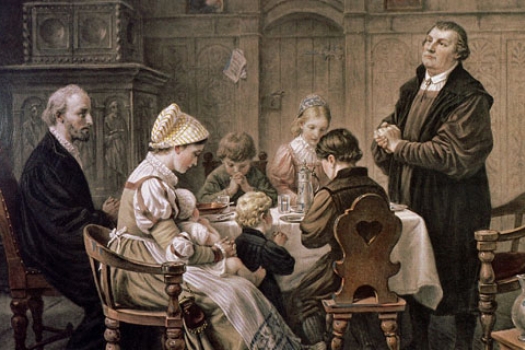
Martin Luther leading in family prayer.

Martin Luther leading in family prayer.

THE NECESSITY AND BLESSING OF PRAYER


“Prayer without fervency and violence is no prayer; it is speaking, not praying. Lifeless prayer is no more prayer than the picture of a man is a man. To say a prayer is not to pray; Aschanius taught his parrot the Lord’s Prayer.

Ambrose said it well, ‘It is the life and affection in a duty that baptizeth it, and gives it a name.’ It is the violence and wrestling of the affections that make it a prayer, else it is no prayer. But a man may say as Pharaoh, ‘I have dreamed a dream’ (Gen. 41.15).

The zeal and violence of the affections in prayer best suits God’s nature. He is a Spirit (John 4.24), and surely that prayer which is full of life and spirit is the savory meat He loves, “spiritual sacrifices, acceptable to God” (1 Pet. 2.5). Spirituality and fervency in duty is like the spirits of wine, which are the more refined part of the wine. Bodily exercise profits little. It is not the stretching of the lungs, but the vehemency of the desire, that makes music in God’s ears.”—Thomas Watson, Heaven Taken by Storm. (1670).


 WORKS ON PRAYER AND PRAYING: 


Prayer, a reasonable Duty.-1821-Samuel B. Wylie.-A very helpful article about why Christians ought to pray. Written from a strict Calvinistic, or predestinarian, point of view, Wylie offers numerous observations on the value of prayer, even though it cannot change the decree of God. Nonetheless, it remains an appointed means for procuring favor form heaven. This is a short, but valuable production.

Exposition of James v. 14.-1822-Anonymous.-This brief article, from the Evangelical Witness, discusses a few exegetical points respecting the prayer of faith and its relation to those who are sick. It places a sharp distinction between the prayer of faith and Romish extreme unction and, so, is an interesting comment by an early 19th Reformed Presbyterian.

A Pastoral Letter to the Members and Other Individuals.-1829-Thomas Houston.-In this pastoral letter, Houston seeks to inculcate the practice of the Reformed Presbyterian church into his addressees. He is concerned that credal Christianity not be undermined by the laxity of her professors. Thus, Houston spends much time on the duty of prayer and experimental religion. Secret prayer and family worship are the great pillars of devotional life. Houston also spends time encouraging attendance upon fellowship meetings of the church. His plea is couched in his postmillennial hope for the complete victory of the Gospel.

Prayer for Ministers:-1837-Peter MacIndoe.-This ordination sermon sets forth the great responsibilities before the minister of the Gospel together with the duties of the congregation toward the minister. MacIndoe enforces the gravity of the ministry and its necessity in the society of men. The need and duty of praying for ministers is pressed with vigor.

Private Social Prayer:-1840-Andrew Symington.-In this discourse, Symington addresses the duty and privilege of prayer particularly as a private social exercise ("where two or three are gathered"). He gives both reasons and petitions for the matter of such private prayer gatherings. This covers much of devotional concern, including method of prayer.


Predestination

James Dodson

William Perkin's Golden Chain describing the Supralapsarian Position.

William Perkin's Golden Chain describing the Supralapsarian Position.


THE PREDESTINATION AND SUPRALAPSARIANISM HOMEPAGE.


"Gods decree, in as much as it concerneth man, is called Predestination: which is the decree of God, by the which he hath ordained all men to a certaine and everlasting estate: that is, either to salvation or condemnation, for his own glory."—William Perkins, A Golden Chaine: or, The Description of Theologie. (1608). 


WORKS ON PREDESTINATION AND SUPRALAPSARIANISM: 


A Treatise on the Predestination of the Saints.-429-Aurelius Augustin (354-430).-In this treatise, Augustine demonstrates why he is so revered by the Reformers from Romanism. The fruit of his later thinking, Augustine penetrates the mystery of predestination and defends this doctrines against the claims of arch-heretic Pelagius.

The Bondage of the Will.-1525-Martin Luther.-This is one of Luther’s most important works. It demolishes the counter claims of Erasmus and sets forth the true state into which man has fallen out of which he cannot draw himself because his will is captive to the world, the flesh and the devil. It presents a very strong view of predestination.

That God is the Creator of all Things, and Governeth All Things by His Providence: Where Mention is Also Made of the Goodwill of God to Usward, and of Predestination.-1550-Henry Bullinger (1504-1575).-This sermon contains the thoughts of Bullinger, a mild predestinarian, who, nonetheless, presses the claims of Scripture concerning the election unto life and the providence of God over all things.

A Treatise on the Eternal Predestination of God.-1552-John Calvin.-First translated into English in the 19th century, this formed part of a volume published as “Calvin’s Calvinism.” In this treatise, Calvin lays out the case for a very high view of predestination, affirming both an election and reprobation, and its importance for maintaining evangelical religion.

A Brief Treatise of Predestination.-1554-Anthony Gilby (ca. 1510-1585).-Written by one of the translators of the Geneva Bible, Gilby demonstrates that deeply held belief in a pervasive predestination of God that includes all creatures and all their actions.

Notes Appertaining to the Matter of Election, Gathered.-1555-John Foxe (1517-1585).-The great martyrologist was a strong defender of the doctrine of predestination. Here he helps would be martyrs discern signs so they can make their calling and election of God sure.

Thirty-Eight Aphorisms against Castalio.-1557-Theodore Beza.-A discussion of God’s will, man’s will, free will, the problem of evil and the belief that God is both sovereign and good.

Twenty-Nine Propositions.-1557-Theodore Beza.-A discussion of the relation of the will of man to evil and the absolute predestination of God against the cavils of the Anabaptists.

A Briefe declaration of the chiefe poyntes of Christian Religion, set foorth in a Table.-1562-Theodore Beza.-This contains Beza’s very high view of the doctrine of predestination in which he explains what predestination is and what it entails for believers.

Absolute Predestination.-1562-Jerome Zanchius (1516-1590).-A classic statement of the doctrine of predestination from an early Reformer who presents a supralapsarian point of view on the subject.

A Short Survey to the Ninth Chapter to the Romans, So Far as it Treateth of the Doctrine of Predestination.-1646-William Twisse.-Dr. Twisse carefully works through Romans 9 with respect to certain questions raised respecting the doctrine of predestination.  He defends the supralapsarian position.

A Historical Sketch of Opinions on the Atonement.-1817-James Renwick Willson.-An excellent survey of the various views held concerning the atonement throughout the history of the church showing together with a demonstration of the pervasive belief in vicarious atonement with its relation to the doctrine of predestination. It was written to combat Hopkinsianism.

Review of Gardiner Spring on Election.-1817-Alexander McLeod.-In this review, McLeod demonstrates the confusion of Spring’s thought on the matter of election. This muddled thinking is the result of Gardiner Spring’s closeted reception of Hopkinsian views which distort Calvinism into a strange form of Arminianized supralapsarianism.

Review of Two Pamphlets Related to the Hopkinsian Controversy.-1817-Alexander McLeod.-In this review, McLeod takes on the various errors of Hopkinsianism more directly and begins to expose their errant Calvinism. It is regrettable that their pretensions to supralapsarianism made 19th century Calvinists of the high Calvinism of the earlier Reformers. Nonetheless, Hopkinsian views of the atonement smack of hypothetical redemption.

Review of a Defense of Hopkinsianism in the Presbyterian Church.-1817-Alexander McLeod.-Choosing to interact with a book by Matthew La Rue Perrine, a Presbyterian pastor, in New York, McLeod discovers some of the worst reasoning and pernicious errors presented as old Presbyterian doctrine in new dress. What he has found is Hopkinsianism, an error that advocates a perverted form of supralapsarianism and weds it to a view akin to the heresy of hypothetical redemption.

Remarks on the Duration of Future Punishment.-1821-Samuel Brown Wylie.-In this series of articles, Wylie explains why there is no injustice in God for punishing what seem to be finite sins with an infinite duration. He reminds his readers that all sin is against an infinite God and His infinite majesty. There is, in this discussion, an excellent discuss of what makes the same physical action in one case virtuous and in another vice. Wylie moves from related topic to related topic, discussing particular redemption in some detail, including examining texts usually asserted to teach universal redemption. He ends with an instructive discussion of the nature of the Mediatorial reign of Christ and a philological assault on Universalism.

Remarks on the Providence of God.-1822-Alexander McLeod.-In this article, McLeod explores the doctrine of providence and he does so with an eye to discussing the place of evil and sin in the providential government of God. His concern is to preserve the doctrine of an all pervading providence while explaining why God is neither the author nor approver of the sinfulness of men.

Argument on the Arminian Controversy. [Published in Overture.]-1836-Reformed Presbyterian Church, in America.-This Overture, prepared by Rev. Moses Roney, a member of the Synod, presents an excellent overview of the Arminian controversy in its history and doctrine. It presents a vigorous defense of Calvinism following the order of the “five points” as discussed at Dort. His discussion on the Arminian assertion of “common grace” is particularly helpful.

Use of the Doctrine of Election.-1851-James W. Shaw.-An interesting article designed to help the reader understand why the doctrine of election is useful. It a doctrine which, when properly improved, is one of comfort and assurance for the believer.

Romanism

James Dodson

The Great Whore of Babylon.

The Great Whore of Babylon.

ANTI-ROMANIST HOMEPAGE.


"The Papists think the Protestant Doctrine is dangerous to Salvation; and the Protestants know the Popish Doctrine to be so."—Matthew Poole, The Nullity of the Romish Faith. (1666). 


Works Against Romanism: 


Eighteen Sermons on 2 Thessalonians 2 on the Growth and Fall of Antichrist.-1679-Thomas Manton (1620-1677).-A series of Puritan sermons defending the Protestant doctrine that Rome is Antichrist and that the Pope of Rome is that Antichrist seated in the temple of God—the church. These were published posthumously with a recommendatory preface by Richard Baxter.

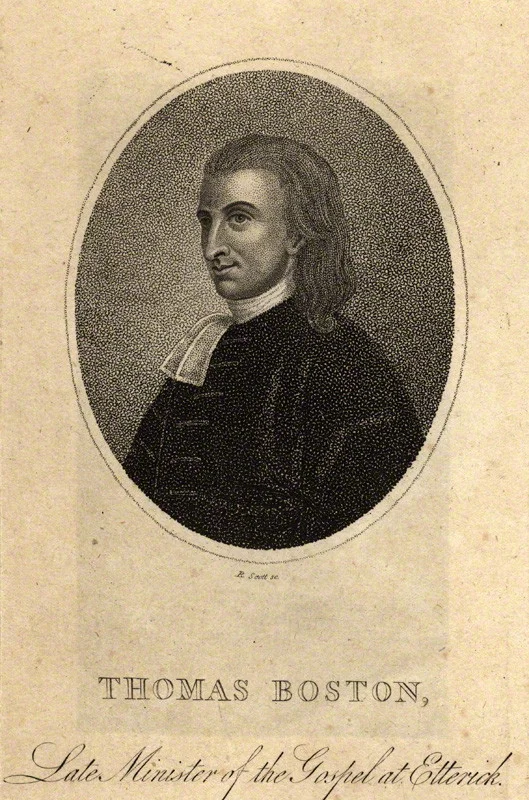
The Church's Prayer Against the Antichristian Beast, and Her Other Enemies, Explained and Enforced.-1714-Thomas Boston (1676-1732).-A fast sermon wherein the crimes of Rome against Britain are recounted along with the present struggle against Romish supremacy. In the course, Boston defends the Protestant doctrine that the papacy is Antichrist.

A Short Exposition of the Popish Tenets Abjured in our National Covenant, or Confession of Faith, With a plain Refutation of these Errors.-1745-Anonymous.-This exposition argues that Roman Catholicism is a false, antichristian religion because it fails the four tests of true religion: its efficient cause is human invention rather than God; its material cause is human tradition rather than divine truth; its formal cause contradicts Scripture; and its final cause robs God of glory by attributing salvation to human merit. The author systematically refutes twenty specific “Popish tenets,” focusing on the Pope’s usurped authority over Scripture, conscience, and the state; the corruption of the sacraments, particularly the Mass and Transubstantiation; and the denial of justification by faith alone, replacing it with works, merits, purgatory, and indulgences. Additionally, it condemns unscriptural practices such as praying to saints and angels, auricular confession, monastic vows of celibacy and poverty, and the Church’s worldly hierarchy. The treatise concludes by asserting the regulative principle of worship: that not only what is contrary to Scripture must be rejected, but also anything introduced without explicit scriptural warrant, branding such innovations as will-worship and superstition.

THE ANTICHRISTIAN SYSTEM. LECTURE IX.-1814-Alexander McLeod.-In this lecture, M’Leod explores several theories regarding the identity of the Antichrist. Ultimately, he rallies the arguments to show that the papacy of Rome is that Antichrist prophesied by Daniel and Paul. This, as he shows, is the Protestant doctrine of the Antichrist.

THE TWO BEASTS. LECTURE XII.-1814-Alexander McLeod.-A thorough discussion of the identities of the two beasts-the civil and the ecclesiastical. In the course of this lecture, M’Leod makes a excellent case for applying the number of the beast (666) to Latinus, the Latin empire-civil and ecclesiastical.

Review of the Episcopal Controversy.-1817-Alexander McLeod.-This review, which ran over three issues of the periodical in which it appeared, canvases several matters that separate evangelicals from the high church party in the Episcopal church. McLeod’s foil is Thomas How, an Episcopalian of the highest sort. This review points out the ease with which Episcopalianism has tolerated even the worst heresies as long as they held to apostolic succession of hierarchical bishops.

An Inquiry into the Times that shall be Fulfilled at Antichrist’s Fall, the Church’s Blessedness in her Millennial Rest,-1818-Archibald Mason.-Five discourses on prophetical subjects each containing many pious notes and counsels. Although his predicted time table has proved wrong at points, many of his observations remain true and await their proper time of fulfillment.

Remarks on the Seventh Vial, Symbolizing the Fall of Popery and Despotism.-1827-Archibald Mason.-This 1827 sermon by Archibald Mason, minister at Wishawtown, interprets the “seventh vial” of Revelation 16:17 as a prophecy of the impending fall of Roman Catholicism and secular despotism. Mason calculates that the sixth vial will be fulfilled around 1843 with the collapse of the Turkish Empire, followed by the seventh vial circa 1866, which will usher in the millennium and Christ's reign on earth by 1867. The work offers a detailed millenarian reading of biblical prophecy applied to contemporary world events, outlining the purification of the Church and the establishment of God’s kingdom following these predicted judgments.

Popery, the Mystery of Iniquity.-1829-William Symington.-A series of three sermons designed to identify Romanism as the mystery of iniquity and what Protestants should do about it.

Maynooth Grant.-1845-Reformed Presbytery of Edinburgh, Scotland.-These 1845 resolutions from the Reformed Presbytery of Edinburgh condemn the British government’s proposed grant to Maynooth College as a violation of national covenant obligations and an act of rebellion against God, declaring that Popery is a soul-destroying system hostile to liberty which Scripture condemns and which inviting divine judgment upon nations that support it. The Presbytery denounces statesmen of all parties for treacherously promoting “political expediency” over truth, thereby strengthening the “Man of Sin,” and decries the Antichristian character of a constitution that permits the funding of Roman Catholic error while violating the nation’s solemn confederation to maintain Protestant truth against Popery and Prelacy.

Dominion of Christ.-1846-Reformed Presbyterian Church of Ireland.-A short article containing a statement from the Reformed Presbyterian Church of Ireland on the duty of the magistrate with respect to Popery.

Come Out of Her.-1860-William Symington.-This sermon contains many hints to the correct interpretation of prophecy and clearly identifies the Papacy as the “Mother of Harlots.” Its excellence is in its exegetical content; however, the author had, by this time, succumbed to the vice of entering into “voluntary associations,” a practice condemned by our faithful Reformers and Covenanting forefathers.


Psalmody

James Dodson

Title page of the Bay Psalm Book, the first book published in New England.

Title page of the Bay Psalm Book, the first book published in New England.

EXCLUSIVE PSALMODY HOMEPAGE.


“We declare, that it is the will of God that the songs contained in the Book of Psalms be sung in His worship, both public and private, to the end of the world; and in singing God’s praise, these songs should be employed to the exclusion of the devotional compositions of uninspired men.”—Article XVIII, Of Psalmody, The Testimony of the United Presbyterian Church of North America.(1858)


WORKS ON PSALMODY: 


Preface to the Bay Psalm Book.-1640-Richard Mather (1596-1669).-An essay affixed as a preface to the Bay Psalm Book (1640), almost certainly the work of Richard Mather (one of the translators), explaining the philosophy of translation employed together with reason why literalism is to be preferred over smoothness in metrical psalmody.

Singing of Psalms a Gospel-Ordinance.-1650-John Cotton (1584-1652).-An excellent treatise on Psalm singing by an eminent New England Puritan. Cotton gives a good overview for the arguments for only singing Psalms together with a spirited defense of the use of metrical psalmody.

A Discourse on Women Prophesying and Headcoverings.-1665-Joseph Mede (1586-1639).-An interesting discourse on 1 Cor. 11:5 explaining what Paul meant when he spoke of women prophesying.  In the course of the discussion, he throws some light on the function of precentors and the antiphony between the preceptor and the congregation (much like lining of the Psalms). Pointedly, he also discusses what Paul meant to teach respecting headcoverings or veils for women in the worship of the church.

Plain reasons why neither Dr. Watts’ Imitations of the Psalms, nor his other poems, nor any other human compositions, ought to be used in the praises of the great God our Saviour—But that a metre version of the Book of Psalms, examined, with wise and critical care, by pious and learned divines, and found by them to be as near the Hebrew metre psalms, as the idiom of the English language would admit, ought to be used.-1783-Thomas Clarke (1720-1792).-In this letter, Dr. Clarke, a Burgher Seceder minister, sets forth the case for the exclusive use of the Psalms of David in the worship of God. Clarke also discusses why Watts’ Imitations ought not to be used in the worship of God as well as why the 1650 Scottish metrical Psalter ought to be retained.

A Letter on Psalmody. Shewing, that Human Composures Ought Not to be Used in Christian-Worship, in Singing the Praises of God.-1790-Robert Jack.-This 1790 Philadelphia pamphlet by Robert Jack comprises three distinct theological treatises: a polemical “Letter on Psalmody” defending the exclusive use of the biblical Psalms in public worship against human compositions (particularly the paraphrases of Isaac Watts); a substantial lecture exposition on Jesus as “the Mediator of the new Covenant” (Hebrews 12:24), delineating the Covenant of Works, the Sinaitic Covenant, and the Covenant of Grace; and a brief practical discourse describing the Christian grace of hope as a theological virtue accompanying salvation.

The Divine Institution of David’s Psalms: and the Unlawfulness of Using Uninspired Hymns in Divine Worship with Occasional Hints on Church Music.-1806-Anonymous.-An excellent and very strict inquiry into the Divine institution of David’s Psalms as the church’s only hymn book. The author soundly sets forth the biblical, historical and confessional claims of Psalm singing while rejecting any attempts to justify human compositions in the worship of God.

An Address to the Students of the Theological Seminary.-1836-John T. Pressly.-This address the a class of students was given by Pressly to call their attention to the matter of Psalmody and note the causes and decline of Psalmody amongst Presbyterians. He wants to form in them a defense of the faith.

Ancient Usage in Praising God.-1838-Anonymous.-An article from The Reformed Presbyterian Magazine defending the practice of lining of the Psalms when they are sung in congregational settings as the most ancient usage of the church.

The Psalms of Holy Scripture, the Only Songs of Zion, an Appeal to the Churches in Behalf of this Ordinance of God.-1840-Donald Campbell McLaren.-An excellent primer on the subject of Psalmody wherein the author painstakingly explains why only the inspired Book of Psalms should be used in the worship of God.

Review of Ralston’s Inquiry -1848-John T. Pressly.-This is Pressly’s spirited response to Ralston’s attack on those who only sing Psalms in the worship of God. Pressly examines his claims to a divine warrant for making and using hymns of human composure in worship.

A Catechism on Praise.-1849-Alexander Blaikie (1804-1885).-An Associate Reformed Presbyterian minister defends the practice of a cappella psalmody by way of catechetical exercises.

A Reply to Morton on Psalmody: To Which is Added A Condensed Argument for the Exclusive Use of an Inspired Psalmody.-1851-Robert J. Dodds (1824-1870).-This is the last salvo in a series of 19th century books on the war over exclusive psalmody amongst various groups of Presbyterians. Dodds takes up the cause of God and truth against hymn singer George Morton and examines the merits of his criticisms on John T. Pressly’s work on behalf of Psalmody.

An Apology for the Book of Psalms, in Five Letters.-1852-Gilbert McMaster.-A comprehensive view of the benefits of the use of the Psalms in the worship of God together with the importance of retaining them in order to bring genuine ecclesiastical union and communion.

Discourse on Scripture Psalmody in Praising God; and Against Instrumental Music in Public Worship.-1859-Hugh Brown.-Two discourse on purity of worship. The first examines and defends the exclusive use of the inspired Psalms in the praise of the church; the second explains why the use of instrumental music in the worship of God is not warranted under the New Testament.

Imprecations in the Psalms Warrantable.-1859-Anonymous.-An interesting article which discusses the propriety of translating the imprecatory (cursing) Psalms, as some have done, merely as predictive rather than preceptive. After explaining why these Psalms are preceptive, he explains their use and place in the prayers of Christians.

The True Psalmody.-1859-Anonymous.-“The True Psalmody” argues that the inspired Book of Psalms alone constitutes the church’s divinely appointed and sufficient manual of praise, to the absolute exclusion of uninspired human hymns. The work demonstrates that the Psalms possess the seal of divine appointment for New Testament worship, richly present Christ in His sufferings and glory, and perfectly adapt to every believer’s experience, while answering common objections regarding their supposedly obsolete or unchristian character. Conversely, it contends that the use of uninspired hymns lacks scriptural warrant, introduces doctrinal error and sectarian division into the church, and degrades congregational singing, ultimately asserting that faithfulness to God’s worship requires singing His own inspired words rather than the fallible compositions of men.

Ancient and Modern Mode of Singing the Psalms.-1862-Anonymous.-An article from The Associate Presbyterian, an North American Anti-burgher Seceder magazine, which canvasses the history of psalm singing in an effort to determine the mode in which the church has always sung Psalms.

The Hymns of David.-1869-Anonymous.-An excellent article that shows that the Hebrew equivalent of the Greek word “hymn,” appears throughout the Old Testament and that is refers to the Psalms of David.

The Public Worship of God: Its Authority and Modes, Hymns and Hymn Books.-1869-James Gibson.-This work is a vigorous 19th-century defense of exclusive psalmody and a polemic against the introduction of human-composed hymns and instrumental music into the public worship of God, written from a strict Scottish Presbyterian perspective. Grounded in the regulative principle of worship—that only what is “prescribed in Holy Scripture” is lawful in God’s worship—the author argues that the Book of Psalms alone is divinely authorized for Christian praise, while human hymns are sectarian, doctrinally unreliable, and inferior in poetic majesty. The text examines the Scriptural, historical, and constitutional arguments against innovations in worship, reviews contemporary hymnals of various churches finding them wanting in taste and theological soundness, and warns that admitting hymns or organs opens an unstoppable path toward ritualism and Romanism. Originally appearing as a series of papers during the worship controversies roiling the Free Church of Scotland and other Presbyterian bodies in the 1860s, it stands as a thorough expression of the conservative position that the church’s praise should remain solely the Spirit-inspired songs of Scripture.

God’s Songs and the Singer. Four Sermons.-1870-John W. Bain.-A United Presbyterian minister preaches four very easy to understand sermons setting forth the basic principles of exclusive Psalmody. A helpful introduction to the subject for ease of conceptualization.

“REVISED PSALMS,”-1873-David Steele.-In this brief article, Mr. Steele raises the question of revising the metrical Psalter. He identifies the craftiness of those who subvert the worship of the church and challenges their authority. This includes an interesting discussion on the need for historical succession to be comprised of both faith and practice.

NEW VERSION.-1873-David Steele.-In this article, the defects of the “new version” of the Psalms, produced by the United Presbyterian Church, is subjected to scrutiny in a couple of serious points. The theme is the difficulty of danger of undertaking any revision of the Psalter without proper theological and confessional moorings.

Are Hymns Idols?-1874-Anonymous.-An article taken from the Reformation Advocate magazine which asks a much needed question about hymns and why they are so difficult for people to abandon in order to sing the inspired 150 Psalms collected in the Bible’s hymnal.

The Hymn Question. A Review of the Speeches of the Rev. J. MacNaughtan and the Rev. T. Y. Killen, at a Meeting of the Belfast Presbytery on the 19th April.-1875-Robert Nevin.-Irish Reformed Presbyterian Professor Nevin examines some then recent arguments of the subject of hymn singing versus Psalm singing. He writes to encourage the proponents of Psalm singing within the broader Presbyterian communions. He remarks are insightful and helpful for the cause of David’s Psalms as the hymnbook of the church.

Continuous Singing in the Ordinary Public Worship of God,-ca. 1885-David Steele.-A defense of the practice of lining in the singing of the Psalms. Mr. Steele explains how the principle of charity ought to work in the public worship of the church.

Exposition of the Psalms.-1887-Thomas Sproull.-An excellent lecture on the practice of giving an exposition to the Psalms that are sung in the congregation. In this exercise, the first Psalm to be sung in congregational worship was usually chosen for an extended exposition that sometimes lasted as long as the sermon (from 20 minutes to nearly an hour). In this way, people are encouraged to sing with the understanding as well as the Spirit.

Songs of the Ages.-1894-William Taggart Meloy (1838-1904).-This pamphlet, by United Presbyterian pastor W. T. Meloy argues for exclusive psalmody—the position that only the biblical Psalms should be sung in Christian worship, not human-composed hymns. Meloy contends that God has appointed the inspired Psalter as the church’s book of praise, that no scriptural warrant exists for uninspired songs in worship, and that the New Testament references to “psalms, hymns, and spiritual songs” refer to the Book of Psalms rather than human compositions. He addresses and refutes common objections—that the Psalms are Jewish, that they sing only of a Savior to come, and that the analogy with prayer justifies using our own words—while arguing that human hymnals are sectarian, corrupting, and inferior to the divinely appointed songs.

Ten Reasons Why the Associate Reformed Presbyterian Church Adheres to the Exclusive Use of the Inspired Psalter in the Worship of God.-1900-John T. Chalmers (1860-1902).-Mr. Chalmers explains the principles, merit and authority behind the exclusive use of the Psalms in the public worship of the people of God in easy to understand language and drawing clear conclusions.

An Authorized Psalmody.-1900-James G. Carson (1833-1908).-This tract defends the United Presbyterian Church’s position of exclusive psalmody—the belief that only the songs contained in the Book of Psalms should be sung in corporate worship, to the exclusion of uninspired hymns. Carson structures his argument around a syllogism: (1) Only what God has appointed should be used in formal worship; (2) God has appointed only the Psalms for praise; therefore (3) only the Psalms should be used. He supports the first premise by arguing that obedience to God’s will is the essence of acceptable worship, that God is jealous of his prerogative to prescribe worship (citing Nadab and Abihu’s punishment), and that divine appointment is necessary as the foundation for faith in worship. He supports the second premise by noting the Psalms’ lyrical form and titles indicating they were designed to be sung, their approved use in the Old Testament, Christ and the apostles’ continued use of them, and the absence of any new inspired songs or commission to compose them in the New Testament. Carson addresses the key objection—Paul’s reference to “psalms, hymns, and spiritual songs” in Ephesians and Colossians—by arguing these terms refer to existing compositions within the Book of Psalms, not a license to create new uninspired hymns.

Psalms versus Hymns. Report on Psalmody Adopted by the Synod of the Reformed Presbyterian Church Philadelphia, PA., May 27, 1908.-1908-James C. McFeeters (1848-1928).-This report for Synod gives an interesting set of comparisons between the Psalms of David and the hymns written by uninspired men. McFeeters sheds clarity on several issues at stake in the debate over Psalmody.

The Excellence of the Book of Psalms as a Book of Praise.-ca. 1925-James G. Reed (1869-1959)-This tract gives a brief survey of the peculiar excellencies of the Book of Psalms as the manual for the church’s praise.

The Psalms God’s Authorized Manual of Praise.-ca. 1950-Armour J. McFarland (1899-1962).-A very well written and easy to understand introduction to exclusive Psalmody.

Sabbath, or Lord’s Day

James Dodson

Nehemiah and the Sabbath breakers.

Nehemiah and the Sabbath breakers.

THE CHRISTIAN SABBATH OR LORD’S DAY HOMEPAGE.


“It is easy to demonstrate by Scripture and argument, as well as by experience, that religion is just as the Sabbath is, and decays and grows as the Sabbath is esteemed: the immediate honor and worship of God, which is brought forth and swaddled in the first three commandments, is nursed up and suckled in the bosom of the Sabbath.”—Thomas Shepard, Theses Sabbaticae. (1649).


WORKS ABOUT THE SABBATH OR LORD’S DAY:


The Sabbath’s Sanctification.-1641-William Gouge (1575-1653).-An excellent catechism on the Sabbath and Sabbath keeping. Gouge was a Westminster divine and he gives much practical advice on the proper observance.

Sabbath Keeping Ordinance.-1642-The Parliament.-An Act against all unnecessary activities or business being conducted upon the Lord’s day together with a condemnation of turning that day into a day of recreation.

An Ordinance of the Lords and Commons assembled in Parliament for the better observation of the Lords Day.-1644-The Parliament.-An Ordinance which contains numerous specific examples of forbidden activity for Lord's day observance together with penalties for violations.

The Violation of the Sabbath. in A Testimony and Warning Against Some Prevailing Sins and Immoralities: Addressed to Christians in General.-1805-Reformed Presbytery, of Scotland.-In this section of this Testimony, the Reformed Presbytery discusses the matter of Sabbath sanctification together with many examples of violations and instructions for improving the Lord’s day.

The permanent sanction of the Moral Law.-1818-James Milligan.-In this section, which is the longest, Milligan offers a tour de force of argumentation for the perpetual morality of the moral law as contained in the Ten Commandments. His many insights and arguments show in various ways how we know the moral law remains binding during the Gospel era. Perhaps of equal interest is the very interesting defense of the Christian Sabbath, or Lord’s day.

The Sabbath. A Discourse on the Duty of Civil Government in Relation to the Sanctification of the Lord's Day.-1829-James Renwick Willson.-A sermon on the duties and responsibilities of the civil authorities with respect to enforcing proper Sabbath observance among Christians.

The Lord’s Day, the Christian Sabbath.-1850-James Chrystie.-This article, from the Covenanter Magazine, examines whether or not the first day of the week is the Christian Sabbath and defends Calvin from charges that he relaxed views of this matter.

The Sabbath.-1866-John Cunningham.-This is a series of articles on the Christian Sabbath. Written by Dr. Cunningham, these articles demonstrate his mastery of the Hebrew language and sources from which he vindicates and expounds the doctrine. This series contains some of the most original and interesting material on the origins and applications of the Christian doctrine.

Sabbath, or Sunday.-1882-David Steele.-A brief article on Sabbath keeping and why calling the day “Sunday” is inappropriate.

The Sabbath-Day.-1896-W.F.V. Bartlett (1831-1903).-An excellent overview of the doctrine of the Christian Sabbath together with admonitions and encouragements for its right keeping.

Nicknaming the Sabbath A Protest against using other than the Scriptural names for the Lord’s Day.-1930-Thomas Melville Slater (1869-1951).-This small tract, written for the Reformed Presbyterian Committee on Witness Bearing, explains why Christians should be careful in their terminology regarding the Lord’s day.

Sermons

James Dodson

The pulpit at St. Peter's where Calvin preached in Geneva.

The pulpit at St. Peter's where Calvin preached in Geneva.

SERMONS BY EMINENT COVENANTING PRESBYTERIANS. 

[AND OTHER REFORMATION GIANTS] 

"Preaching the Word is prophesying in the name and on behalf of Christ. Through preaching those who hear are called into the state of grace, and preserved in it."—William Perkins, The Art of Prophesying (1592).

Lectures and Sermons: 

Terms of Communion

James Dodson

A communion gathering in olden times.

A communion gathering in olden times.

ECCLESIASTICAL TERMS OF COMMUNION.


“I ask our Author, Whether or not a particular visible Church, who have embraced one Confession of Faith, one Form of Church-government, one Directory for Worship, may require it of all her Members, in order to full Communion in all sealing Ordinances, that they confess, acknowledge, and swear to abide in the Profession and Obedience of the same Doctrine, Worship, Government and Discipline? Is not this a publick Confessing and Avouching of the Lord and his Truths? Is not this necessary to the Unity of the particular Organick Body? Is it not warranted from the Word of the Lord? as Jer. 4:2; Micah 4:2; Zech 2:2. Is it not a very proper Mean to excite all the Members of a Church to search into the Scriptures, that they may know and be established in the Principles which they profess? Is it not a very useful and necessary Mean to preserve a Church from Corruption and Degeneracy from such Steps of Reformation as she has already attained unto?”—William Wilson, A Defence of the Reformation Principles of the Church of Scotland (1739).


Works on Ecclesiastical Terms of Communion:


Antipharmacum Saluberrimum: or, A Most Wholesome Antidote,-1664-John Flavel.-In this treatise, Flavel addresses the issue of intercommuning with churches in decline and the problem with hearing corrupt ministers and attending corrupt ministries. Flavel is decidedly against occasional communion and has very strong warnings against occasional hearing.

HEAD I.-Where the sufferings of many, for refusing to acknowledge a corrupt Ministry, are vindicated; and the question of hearing Curates is cleared.-1687-Alexander Shields.-In this chapter, Shields takes up the doctrine of occasional hearing and explains why we should not hear sectarian, erroneous and unsent ministers and teachers. This section is also notable for its careful delineation of the degrees and boundaries of Christian communion in a divided state.

1761 Terms of Christian and Ministerial Communion.-1761-Reformed Presbytery, of Scotland, Ireland and America.-These are the terms of communion as they were adopted by the Reformed Presbytery, in 1761. The American church abandoned them in 1806; the Scottish church in 1822; the Irish church later.

A Short Directory for Religious Societies, Drawn up by Appointment of the Reformed Presbytery, for the Particular Use of the Several Societies of Christian People Under their Inspection, at the Desire of the Said Societies, and Addressed to them.-1772-Reformed Presbytery of Scotland).-Here is a faithful copy of the original directions for society, or fellowship, meetings. It contains directions for governing the meeting together with guidance on the qualifications of constituent members and appropriate topics of discussion.

A Modest Apology for the Conduct of Seceders,  in refusing to join in Christian Communion with Sectarians, Latitudinarians, &c. who have departed from the purity of Reformation once attained to in these Kingdoms.-1773-Anonymous.-This pamphlet defends the Seceders’ refusal to commune with Independents and other sectarians who have abandoned Reformation attainments. The author argues that Christ has ordained Presbyterian church government as articulated in the Westminster Form of Church-Government and secured by the Solemn League and Covenant of 1643, and that all divine ordinances must be observed in their entirety—not treated as matters of indifference. Citing Ezekiel 43:10-11, Matthew 28:20, and 2 Thessalonians 3:6, he insists Scripture commands keeping “ALL the forms” and “ALL the ordinances” of God’s house. The Independents are charged with walking disorderly: their congregational scheme lacks the courts necessary to preserve the visible church’s unity and purity; their principles require tolerating dangerous errors; they oppose creeds as impositions on conscience; and they have broken the national covenants binding these kingdoms to maintain Reformation. While acknowledging many godly Christians among the Independents, the author maintains that love toward them requires—rather than contradicts—open testimony against their disorderly principles and refusal of communion, just as Paul withstood Peter at Antioch without breaching Christian charity.

The sin and danger of countenancing the administrations of erroneous teachers pointed out: [in] a sermon preached at Chartiers, in the county of Washington, Pa.-1794-John Anderson (1748-1830).-A sermon which explains what happens when men are given over to hearing the ministrations of erroneous teachers. Anderson discusses the doctrines and practical reasons for maintaining confessional integrity by avoiding sectarian ministers or ministers not of one’s own communion.

An Explanation and Defense of the Terms of Communion.-1806-John Reid II.-A discussion of why the church needs to have terms of communion together with a defense of the terms of communion adopted by the Reformed Presbyterian church. This was written and issued as an official production of the presbytery.

Church Fellowship.-1819-John Black.-A synodical sermon that explains why the false charity of intercommunion amongst various sects of Christians is contrary to a sound profession and practice of the true religion.

Strictures on Occasional Hearing.-1820-James Douglas.-A thorough investigation of the doctrine of “occasional hearing” wherein Douglas expounds and vindicates the practice of refusing to hear or wait upon ministers from corrupt communions. This is the second edition which is corrected and expanded.  It also contains an instructive addenda on how Covenanters ought to pray for civil rulers under immoral constitutions and administrations of government.

Remarks On A Letter Addressed to the Members of the Old Church of Scotland, -1823-John Dow.-An historical account of the disturbance in the Scottish RP church and the removal of the Auchensaugh Renovation from the fourth term of communion.

On the Proper Time for the Admission of Recent Converts to the Full Communion of the Church.-1833-Anonymous.-An article taken from the Princeton Review, edited by Charles Hodge, explaining the danger to the souls of recent converts by letting them participate in the sacrament of the Lord’s supper and why catechism should precede communion.

Catholic Communion, In The Present State Of The Christian Church Inconsistent With A Due Regard For Truth:-1836-John T. Pressly.-A lecture warning against the increasing practice of intercommunion due to its harm to the interests of true religion and its disregard for creeds and ecclesiastical standards.

Review of Hodge on the Epistle to the Romans.-1836-Gilbert McMaster.-In this review of Charles Hodge’s commentary on Romans, McMaster expresses his deep agreement and gratitude to Professor Hodge for his defense of numerous points of orthodoxy regarding the Person of Christ and the Protestant doctrine of justification. All of this is presented in the form of a general Calvinist concord. Where McMaster expresses some disappointment is when Hodge discusses civil magistracy and church fellowship. This is interesting considering that McMaster himself had strayed form those very principles when he acceded to the New Light position, in 1832 and 1833. Still the production is helpful and instructive.

Occasional Communion.-1852-Anonymous.-An article which appeared in the Covenanter Magazine, edited by J.M. Willson, which defends the practice of confessional communion against the lax and latitudinarian practices creeping into the church.

Occasional Hearing.-1852-Anonymous.-An article which appeared in the Covenanter Magazine, edited by J.M. Willson, which explains why confessional communicant members of the RP church should not attend the ministry of the Word by sectarian ministers outside of the church.

An Inquiry into the Principles of Church Fellowship.-1865-John T. Pressly.-An examination of the scriptural principles of church fellowship which explains why the communicant fellowship of the church ought to be restricted to those who hold the creed of that body. It also indicates why the practice of open communion is neither helpful not truly ecumenical.

Reformed Presbyterians and Open Communion.-William Sommerville.-A tract defending close communion against the false charity of open communionists and ecumenists.

Occasional Hearing.-1874-T.H.-This article, taken from the Associate Presbyterian, sets forth the doctrine of the Secession concerning “occasional hearing.” The author explains why intercommunion in the hearing of the Word preached should be allowed by any who would remain faithful.

1876 Terms of Communion.-1876-Reformed Presbytery “Steelite.”-These are the terms of communion reflecting the need to stress certain features of these terms due to the declining tendenies of the age.

The Duty of Separation.-1877-John McAuley.-This article explains why unity is not always the best course, if we would be faithful to the Lord and his church.

A Word of Warning and the Opening of Covenanter Pulpits to Non-Covenanters.-1900-James Dick-Irish Reformed Presbyterian professor explains why “open communion” is destructive of church discipline and how pulpit exchange amongst ministers of various ecclesiastical connections undermines the testimony of the RP church.

Communion.-1900-James G. Carson (1833-1908).-In this tract, Carson defends the practice of “close communion”—limiting participation in the Lord’s Supper to those who adhere to a church’s specific profession and submit to its government—by distinguishing between the invisible, spiritual fellowship of all believers and the visible, external fellowship of the organized church. He argues for this position based on three points: (1) Badge of Membership, asserting that the Lord’s Supper is the distinctive mark of church membership, and admitting non-members creates disciplinary inconsistency by holding visitors to a lower standard than members; (2) Joint Profession, since partaking requires a public, joint adherence to a church’s specific doctrinal standards and discipline, which only its own members can honestly make; and (3) Witness for the Truth, because a church can only maintain an effective testimony against error by making its distinctive principles terms of communion, ensuring it does not endorse opposing views through shared table fellowship.

Family Worship a Term of Communion in the Reformed Presbyterian Church.-1908-Robert James George (1844-1911).-An interesting defense of family worship being a term of communion amongst Reformed Presbyterians.

Concerning Close Communion. An Investigation.-1930-William J. McKnight (1865-1951).-An easy to understand introduction to the reason and practice of close communion explaining why the Lord’s supper should be restricted only to confessional and communicant members of the Reformed Presbyterian Church, i.e., Covenanters.

Testimony-Bearing

James Dodson

Testimony bearing for Christ's Crown and Covenant has often led men to an early grave.

Testimony bearing for Christ's Crown and Covenant has often led men to an early grave.

TESTIMONY BEARING HOMEPAGE.


“[I]t is surely the duty of the church of God still to contend earnestly for the faith once delivered to the saints, without saying a confederacy with them, who have said a confederacy against Christ, his pure worship, and his public interest and glory, in the world, i.e., such as are guilty of popish idolatry, prelatic superstition, Erastian encroachments, patronage intrusions, and sectarian confusion, who have all united in a conspiracy, to rob Christ of some part of his mediatorial glory, in a way derogatory to some of his offices, as prophet, priest, or king, of his church.”—Thomas Henderson, Testimony-Bearing Exemplified. (1791).


WORKS ON TESTIMONY BEARING AND BEARING TESTIMONY:


A Testimony to the Truth of Jesus Christ, and to our Solemn League and Covenant;-1648-London Ministers (many of whom were Westminster Divines).-A somewhat lengthy testimony against the numerous heresies and errors which were circulating contrary to the doctrine of the Westminster Confession making these against the Solemn League and Covenant.

A Testimony of the Ministers in the Province of Salop, to the Truth of Jesus Christ and to the Solemn League and Covenant,-1648-Ministers of the Province of Salop.-One of many testimonies issued around this time in support of the Solemn League and Covenant, it was signed by many English ministers who opposed the toleration and heresies of the various Independents and Sectaries of their day.

A Solemn Testimony Against Toleration,-1649-Commissioners of the General Assembly of the Church of Scotland.-This is a testimony against the principles of toleration that were afoot in England at that time with arguments against it and a description of the divine doom such toleration incurs.

A Testimony to the Truth of Jesus Christ.-1659-Ministers of Perth and Fife.-A joint testimony against the various corruptions and defections plaguing the once reformed Church of Scotland by a group of Protester ministers.

An Informatory Vindication.-1687-James Renwick and Alexander Shields.-This is an extensive apologetic for the course of act taken by the United Societies during the latter end of the Killing Times. It explains their beliefs and their actions in the face of the prevailing currents of apostasy and the vicious persecution that ensued on the covenant keepers.

A Hind let loose; or An Historical Representation of the Testimonies of the Church of Scotland,-1687-Alexander Shields.-A thorough survey of the history of the Scottish church which contains many hints on church communion together with several chapters devoted to Covenanter controversies.

The Declaration of a Poor, wasted, misrepresented Remnant, of the suffering, Anti-popish, Anti-prelatic, Anti-erastian, Anti-sectarian, true Presbyterian church of Christ, in Scotland,-1692-The United Societies.-In this early declaration, the covenanting Societies lament the defection of the three ministers (Shields, Linning and Boyd) into the Revolution church but they pledge to maintain the cause of covenanted reformation to the best of their ability.

The Protestation & Apologetic Declaration, & Admonitory Vindication,-1695-The United Societies.-This paper decries the wicked confederacies and lamentable defections that had become wide spread in the Church of Scotland contrary to their covenant engagements.

The Protestation, Apologetic Declaration, & Admonitory Vindication.-1703-The United Societies.-A testimony issued against the unlawfulness of the present magistrate, the fruit of covenanting breaking, and a plea for a return to covenanted reformation.

A Protestation and Testimony Against the Incorporating Union with England.-1707-The United Societies.-A testimony against the prevailing evils of the day (1707) with a particular emphasis upon the wickedness of the political union of England and Scotland and its violation of the covenant engagements of both nations.

THE PROTESTATION, DECLINATUR and APPEAL OF Mr. John Mackmillan Minister of the Gospel at Balmaghie, and Mr. John Mackneil Probationer and Preacher of the Gospel, sent to the Commission of the Kirk at Edinburgh the 29 of September. 1708.-1708-John McMillan I.-A clear and earnest testimony by the Cameronian Apostle, John Macmillan, against the various defections amongst Presbyterians in Scotland together with his plain reasons for dissenting from the Revolution establishment of 1690. This contains the very valuable postscript, written by the United Societies concurring with MacMillan.

A Seasonable Advertisement, concerning the late publick FAST of the 25th of January, 1712, Publickly Read and affixed to several Church Doors; and now Printed to prevent Misinformation, whereunto are Subjoyned some Reasons of it’s Publication.-1712-United Societies.-This tract, found in a volume of covenant materials which once belonged to Mr. John MacMillan, shows the stance of the Covenanters toward the keeping of holy days was broadly construed to include not merely ecclesiastical but civil days appointed by the magistrate. They see a Romish angle and much harm in observing fast days and, by implication, feast days, appointed by a covenant breaking and covenant refusing magistrate and state.

A Short Survey of a Pamphlet, Entituled, A Friendly Conference betwixt a Countrey-Man and his Nephew. Wherein is discovered the Lameness and Falsehood of the Author’s Defences of the Backslidings of this Church; His pretended Differences betwixt the State and Management of the Testimony of the witnessing Remnant before, and since the Revolution, are reconciled; The Conduct of the Church anent the late Treaty of Union, is briefly discoursed, and shown to have been Unfaithful: Other incident Controversies are succinctly handled, And his Malicious Queries answered. Whereunto is prefixed a large PREFACE, containing Remarks upon the ACT for preventing the Disturbing those of the Episcopal Communion in the free Exercise of their Religious Worship, and in the Use of the Liturgy of the Church of England; together with some Reasons against the Oath of Abjuration thereby enjoined. As also Observations upon the Addresses and Representations of the Commission of the Kirk thereanent. With Animadversions upon the Bill for Restoring Patronages in Scotland.-ca. 1712-Anonymous.-This pamphlet is a vigorous rebuttal of a dialogue titled A Friendly Conference, which had criticized the dissenting Cameronian societies for withdrawing from the established Church of Scotland. The anonymous author defends the Dissenters’ separation, arguing that the post-Revolution settlement is fundamentally flawed due to its Erastian encroachments, its failure to renew the Solemn League and Covenant, and its incorporation of unrepentant malignants and toleration-accepters. He systematically refutes the dialogist’s charges, defending the Dissenters’ conduct in withdrawing, their refusal to pay the cess, and their disowning of uncovenanted magistrates. The latter half of the pamphlet vigorously defends Mr. John M’Millan and Mr. M’neil against personal calumnies, arguing that their testimony is consistent with that of the martyred Mr. James Renwick, and that the real schism lies with the established church’s defection from covenanted reformation.

A Modest Apology for the Conduct of Seceders,  in refusing to join in Christian Communion with Sectarians, Latitudinarians, &c. who have departed from the purity of Reformation once attained to in these Kingdoms.-1773-Anonymous.-This pamphlet defends the Seceders’ refusal to commune with Independents and other sectarians who have abandoned Reformation attainments. The author argues that Christ has ordained Presbyterian church government as articulated in the Westminster Form of Church-Government and secured by the Solemn League and Covenant of 1643, and that all divine ordinances must be observed in their entirety—not treated as matters of indifference. Citing Ezekiel 43:10-11, Matthew 28:20, and 2 Thessalonians 3:6, he insists Scripture commands keeping “ALL the forms” and “ALL the ordinances” of God’s house. The Independents are charged with walking disorderly: their congregational scheme lacks the courts necessary to preserve the visible church’s unity and purity; their principles require tolerating dangerous errors; they oppose creeds as impositions on conscience; and they have broken the national covenants binding these kingdoms to maintain Reformation. While acknowledging many godly Christians among the Independents, the author maintains that love toward them requires—rather than contradicts—open testimony against their disorderly principles and refusal of communion, just as Paul withstood Peter at Antioch without breaching Christian charity.

Faithful Witness-Bearing Exemplified.-1783-John Howie.-In this volume, Mr. Howie has collected several notable works that pertain to the issue of toleration and pretended liberty of conscience. It is notable how he draws these issues together with entering into unlawful voluntary associations.

Testimony-Bearing Exemplified.-1791-Thomas Henderson (1757-1823).-This volume consists of a number of valuable documents holding forth the doctrine and practice of testimony-bearing and its contrary practice of entering into unlawful voluntary associations.

Testimony and Warning Against Socinian and Unitarian Errors.-1793-Reformed Presbytery, of Scotland.-This is a testimony, largely the work of Archibald Mason, designed to refute the errors of Socinians and Unitarians while giving a full exposition to the doctrine of the Holy Trinity in its several relations.

A Testimony and Warning Against Some Prevailing Sins and Immoralities: Addressed to Christians in General.-1805-Reformed Presbytery, of Scotland.-One of several occasional testimonies emitted by the Reformed Presbytery, this bears witness against the big three prevailing sins-theater attendance, dancing and dicing-as well as many other immoral practices which all Christians ought to shun.

A Short Account of the Old Presbyterian Dissenters.-1806-John Reid II.-This is a second work commissioned by the Reformed Presbytery, of Scotland, and intended to be introductory to the history and distinctive practice of Covenanters.

Remembrancer, Shewing That the state of the Testimony of the suffering Remnant, in the time of the persecution, and since the Revolution, to be the same, as maintained by the suffering remnant, or true non-hearers, who have owned and defended the Martyrs Testimony, and whose practice has not contradicted their profession; as it would entirely ruin the Martyrs Testimony, to account all non-hearers at this day to be maintainers of their principles.-1807-Robert Lawrie.-This work represents a right-hand refusal, emanating from a group of “non-hearers” of the Reformed Presbytery, in Scotland, to acquiesce in what they perceived to be defections within the presbytery from the Covenanted testimony of the martyrs. This has quite a bit to say on the subject of paying of taxes and other compromises with the immoral government. It has bearing on the proper historical reading of the Covenanters’ position on taxation generally.

The Essence of Old Light Principles Extracted:-1808-Robert Culbertson.-This text is a collection of letters written by Robert Culbertson of Leith in 1808, responding to criticisms from Rev. Mr. Chalmers. The work addresses theological disputes within the Secession Church, particularly regarding the “Old-Light” and “New-Light” principles. Culbertson defends his position against Chalmers’ accusations of blasphemy, misrepresentation, and other personal attacks. The letters also include appendices with additional observations and extracts from religious documents. The publication reflects the intense theological debates and personal rivalries within Scottish religious communities during this period, focusing on issues like the role of civil magistrates in religious matters, church discipline, and interpretations of covenants and testimonies.

Humble Pleadings; or, a Representation of Grievances for the Consideration of the Reformed Presbytery.-1809.-John Howie.-Published posthumously by John Calderwood (whose preface is exceptionally illuminating), this work shows the scruples Howie had concerning the Reformed Presbytery as it began to slip from its Reformational attainments. This is a very good example of Howie bearing testimony in which the doctrine of witness-bearing is shown to be definite, not nebulous. Howie enunciates his grievances (and that of others) with precision. This includes a letter in which Howie addresses several key doctrinal controversies which seem to be agitated until the present.

Memoir of William Orr, LATE FARMER, IN KILBIRNIE PLACE, Who departed this life, 25th Oct. 1814. AGED 85 YEARS. RELATED BY HIMSELF.-1814-William Orr [Preface by Thomas Henderson].-This spiritual autobiography, related by William Orr himself in his final years, chronicles his lifelong religious journey from the bondage of legalism to the liberty of the gospel of free grace. Born in 1729 and raised under a “legal ministry” that taught salvation by moral duty, Orr recounts his deep spiritual distress upon realizing the inadequacy of such doctrine to relieve a sin-burdened conscience, and his subsequent conversion upon hearing a dissenting minister clearly distinguish between the Law and the Gospel. Compelled by conscience, he separated from the Established Church—despite the cost to his social standing—and, after examining the various denominations, joined the Reformed Presbytery, the only body he found faithful to the Covenanted work of Reformation. The memoir also candidly details his providential transitions from affluence to poverty, his struggles with debt and failed farming ventures, and his determination to maintain integrity and faith through adversity. Concluding with a series of doctrinal testimonies, observations on the Christian life, and earnest counsels to his children, the pamphlet stands as both a personal narrative of divine grace and a polemical witness against the corruptions of the Established, Secession, and Relief churches.

BIBLARIDION, OR THE APOCALYPTICAL LITTLE BOOK. LECTURE X.-1814-Alexander McLeod.-This lecture explores the nature of witness bearing, its relation to the witnessing church and a thorough description of who and what constitutes the church of the two witnesses. Hint: they are the two sons of oil.

A Plea for the Covenanted Reformation in Britain and Ireland.-1822-George Stevenson.-In this treatise, Stevenson defends the doctrine of religious social covenants. The discussion has interesting and useful comments on the use of creeds and the need for testimony bearing. However, its most important component is its explanation and defense of the descending obligations of covenants. Originally written in 1822, this is the third edition expanded by some twenty pages of material.

Remarks On A Letter Addressed to the Members of the Old Church of Scotland.-1823-John Dow.-An historical account of the disturbance in the Scottish RP church and the removal of the Auchensaugh Renovation from the fourth term of communion.

The Cause of the Scottish Martyrs.-1832-William Symington.-In this short article, written for the American Christian Expositor, Symington sets forth the doctrine and practice of the Scottish martyrs. He calls attention to their fidelity and notes that they were living examples of the Reformed Presbyterian Church, of Scotland.

Truth. A Sermon on Steadfast Adherence to the Distinctive Doctrines of the Church.-1833-Samuel McConnell Willson.-This sermon, on what it means for the church to bear testimony to the truth, was delivered during the controversies which led to the Old Light/New Light division in the Reformed Presbyterian Church. It represents the view that it is not permissible for the church to decline from a more pointed testimony to one more loose and accommodating.

A Narrative of Recent Occurrences.-1834-Robert Gibson.-In this narrative, Gibson sets forth the course of events which led to the Old Light/New Light split. While demonstrating the duplicity of the New Light party, Gibson has reason to emphasize the need for historical testimony in maintaining the church’s witness faithfully.

Lectures on the Principles of the Second Reformation.-1841-The Reformed Presbyterian Church, of Scotland.-A course of lectures which seeks to take up every distinctive position maintained by the RP church. This volume represents a reasonable overview of doctrines related to the Mediatorial reign of Christ and public social covenanting.

Characteristics of the Witnessing Church.-1843-Robert Lusk.-In this extended essay, Lusk recounts the history of the witnessing church together with an account of its declining in numerous ways which made it necessary for the erection of a new presbytery concerned with keeping the principles of Covenanters alive.

Claims of the Divine Government Applied to the British Constitution and the Use of the Elective Franchise, Vindicating the Authority of Messiah Against the Encroachments of Antichristian Power.-1843-Reformed Presbyterian Synod, Scotland-During the first half of the 19th century, Reformed Presbyterians around the world were in foment over various attempts to revamp and reinterpret the Covenanter testimony. Despite slipping in their terms of communion, the Reformed Presbyterian Church of Scotland issued this excellent exposition of the claims of King Jesus over civil governments with particular emphasis on the use of the elective franchise. We see in this document that Covenanters do not vote or actively participate in immoral administrations of government. The section touching on objections is especially helpful.

Argumentative Testimony. According to the Resolution of the Reformed Presbyterian Synod. -1855-James McLeod Willson.-Two chapters for the proposed “Argumentative” portion of the RP Testimony; the first, discussing Testimony Bearing; the second, the Right of Dissent from Immoral Civil Constitutions.

Pastor Steele’s Printed Communications to the Editor of The Covenanter.-1855-1857-David Steele and James M. Willson.-A series of articles debating the so-called “Steelite” position on testimony bearing, history testimony and several other points of dispute. In this, David Steele represents the historic Covenanter position against the departures embodied in the preface of “Reformation Principles Exhibited.”

Historical Testimony.-1856-David Steele.-An article explaining what historical testimony is, how it is applicable to the church and why it needs to be part of the terms of communion of the Reformed Presbyterian, or Covenanter, church.

Principles and Position of the Reformed Presbyterian Church.-1858-John Graham.-This work outlines the foundational testimony of the Reformed Presbyterian Church, emphasizing its commitment to Scripture, evangelical doctrine, and Presbyterian polity as divinely instituted. It strongly protests against Popery and Prelacy while asserting that civil magistrates and nations are morally obligated to submit to Christ and the Word of God. A primary focus is the enduring, binding authority of the National Covenant of Scotland and the Solemn League and Covenant, which the authors argue were sinfully abandoned. Graham justifies the Covenanter’s position of dissent from the established church, arguing that the 1688 Revolution compromised the Reformation by re-establishing Episcopacy, allowing state supremacy over the church, and neglecting the covenant obligations sealed by the blood of martyrs. Ultimately, it presents these distinct principles not as narrow or unpatriotic, but as the essential groundwork for a future, comprehensive reformation of both church and society under the headship of Christ.

Editorial Notice Considered. [A Review of the Review of the “Two Witnesses.”]-1859-David Steele.-This is Steele’s review of the Reformed Presbyterian magazine’s notice of his short work entitled, “The Two Witnesses.” In it David Steele corrects and sets forth proper notions of what is meant by “historical testimony,” as well as clarifying points on terms of communion in the visible church.

The Law and the Testimony.-1860-David Steele.-An article explaining why making a distinction between the law and the testimony is needful to avoid legalism and how this distinction affects the witnessing church.

Declaration and Testimony for the Present Truth.-1864-David Steele.-An explanation of the nature and purpose of judicial testimonies together with several animadversions upon the course and defects taken by the RP Synod in its mangled attempts at testimony bearing.

The Testimony and the Law.-1866-David Steele.-An article from the London Scottish Reformed Presbyterian magazine discussing the difference between the testimony and the law and why the former takes precedence over the latter.

A Question Answered. [in a letter to Dr. John Cunningham]-1869-David Steele.-A short reply on the nature of judicial testimonies and their use of history and argument.

The Social Position of Reformed Presbyterians or Cameronians.-1869-William Sommerville.-This account traces the lines of historical Covenanters and asserts that principles without practice is dead. Additionally, there is included a defense of the practice of close communion in order to maintain the identity of the Covenanter church.

Our Banners Set Up.-1872-James W. Shaw.-A sermon preached after the administration of the Lord’s supper designed to impress upon the communicants the desirability and necessity of persevering in the covenanted faith of their forefathers. This contains many observations on testimony bearing and the nature of ecclesiastical communion.

A Short Vindication of our Covenanted Reformation.-1879-David Steele.-A second edition of the principles of the Scottish Second Reformation against the “American” RP “Covenant of 1871.”

The Attainments of the Church of the Second Reformation.-1896-James Kerr.-An address before the First International Reformed Presbyterian Convention, in which the Reformed Church of Scotland, at the time of the Second Reformation, is presented as Biblical, Calvinistic, covenanting and established.

A Word of Warning and the Opening of Covenanter Pulpits to Non-Covenanters.-1900-James Dick.-Irish Reformed Presbyterian professor explains why “open communion” is destructive of church discipline and how pulpit exchange amongst ministers of various ecclesiastical connections undermines the testimony of the RP church.

The Scottish Martyrs Defended.-1902-James Kerr.-This 1902 pamphlet records a public meeting held in St. George’s Hall, Dumfries, featuring a lecture by Rev. James Kerr, D.D., defending the Scottish Covenanters against strictures made by Professor James Cooper during the recent dedication of a memorial to the Covenanting minister John Blackadder at Troqueer. Kerr’s discourse systematically refutes Cooper’s characterization of the Covenanters as fanatics, persecutors, and rebels, vindicating their resistance to Stuart despotism and their commitment to civil and religious liberty through detailed historical argument and appeals to original sources.

A Call for a Public Fast.-2020-Presbytery of the Puritan Reformed Church in Brazil-What should the church’s response be to the demands of the state when, under pretext of plague, they call for the churches not to assemble? How should Christians response and why? The presbytery spells out both the Biblical and historical grounds for resisting such ungody commands.  

Theatre, Plays and Movies.

James Dodson

Drury Theater, home of the first permanent theater company in the U.S.

Drury Theater, home of the first permanent theater company in the U.S.

THE CHRISTIAN AND THE THEATRE HOMEPAGE.


“There’s one Thing more to acquaint the Reader with; ‘tis that I have ventured to change the Terms of Mistress and Lover, for others somewhat more plain, but much more proper. I don’t look upon this as any Failure in Civility. As Good and Evil are different in themselves, so they ought to be differently mark’d. To confound them in Speech is the Way to confound them in Practice. Ill Qualities ought to have ill Names, to prevent their being Catching. Indeed Things are in a great Measure govern’d by Words: To guild over a foul Character, serves only to perplex the Idea, to encourage the Bad, and mislead the Unwary. To treat Honour and Infamy alike, is an Injury to Virtue, and a Sort of Levelling in Morality. I confess, I have no Ceremony for Debauchery. For to compliment Vice, is but one Remove from worshipping the Devil.”—Jeremy Collier, Preface to A Short View of the Profaneness and Immorality of the English Stage. (March, 5, 1697/8)


“Play-houses, the seminaries of vice and impiety, erected in the principal cities of the nation, and stage players, commonly among the most abandoned of mankind, escape with impunity. Yea, this pagan entertainment of the stage is countenanced by the members and office-bearers of this church, and that to such a degree, that one of the ministers thereof has commenced author of a most profane play, called The Tragedy of Douglas, wherein immorality is promoted, and what is sacred, exposed to ridicule. Oh! how astonishing! that a minister in the once famous church of Scotland should be guilty of such abominations, and yet not immediately sentenced to bear the highest of all church censure!”—Act, Declaration, and Testimony for the whole of our Covenanted Reformation, (1761).


Works Against the Theatre:


The Preface.-1687-Increase Mather (1639-1723).-In this preface, Mather begins by decrying the profaneness of the stage and stage plays, occasioned by the erection of a theater, this describes why this should be avoided by Christians.

Some Important Cases of Conscience Answered, CASE X.-1755-Samuel Hayward (1718-1757).-An casuistical exercise on the matter of Christians and theatre attendance wherein Mr. Hayward affirms the unlawfulness of such displays together with the detriment they pose to maintaining a Christian demeanor.

A Serious Inquiry into the Nature and Effects of the Stage.-1757-John Witherspoon (1723-1794).-In this essay, the character of the theater is subjected to close scrutiny and its nature and tendencies are shown to be contrary to the piety and spirituality of the Christian profession. To this is appended a Letter Respecting Play Actors highly critical of their general moral and spiritual character.

The Stage. in A Testimony and Warning Against Some Prevailing Sins and Immoralities: Addressed to Christians in General.-1805-Reformed Presbytery, of Scotland.-In this section of their Testimony, the Reformed Presbytery explains why the theatre should be rejected as an institution and why attendance is forbidden to all communicant members of the Reformed Presbyterian Church.

A SERMON, Delivered January 19, 1812, At The Request Of A Number Of Young Gentlemen Of The City Of New-York.-1812-Samuel Miller.-A sermon occasioned by the burning of the Richmond theater in which a number of notable persons perished. Miller, while expressing sympathy for the grieving, explains why the theater is not a Christian amusement.

An Interesting Sketch of the Life and Death of Dr. H[arry] [Innes] T[odd], of Kentucky.-1817-James Renwick Willson.-This is a very interesting account of the short acquaintance that Willson had with a son of an Associate Justice of the United States Supreme court. The young Dr. Todd fell ill along the way home to Kentucky and was kept in Willson’s company which issued in his conversion before death. This narrative also suggests the harmful effects of the theater on the minds of men, especially youth. It is a cautionary tale which ends in redemption.

The Sin and Danger of Being “Lovers of Pleasures More Than Lovers of God.”-1818-Andrew Mitchell Thomson (1779-1831).-In these sermons, Thomson sets forth a sobering assessment of what most often passes for amusements. He challenges common assumptions and shows why Christians ought to be very circumspect in their walk. In his notes on these sermons, he offers criticisms of theatre, card playing and other pastimes many hold to be harmless.

Sentiments of Pious and Eminent Persons on the Pernicious Tendency of Dramatic Entertainments, and Other Vain Amusements; With a Few Reflections on the Same Subject Subjoined.-1821-Lindley Murray (1745-1826).-Murray was a Quaker and a noted grammarian whose grammars were widely used in the United States in its early years. In this, Murray gathers notable quotes from famous historical figures against the stage and its vanities. Originally published in 1787, this edition was released toward the end of Murray’s long life.

An appeal to Christians on the subject of Dramatic entertainment.-1830-Robert Kaye Greville (1794-1866)- Greville was a son of the manse who, though himself a scientist of some note, was deeply concerned about moral reforms within English society. This is a short essay he wrote to show the incongruity of theater-attendance with the Christian faith.

Theatrical Entertainments.-1837-William S. Plumer (1802-1880).-This tract, by Presbyterian minister W.S. Plumer, various considerations against theatrical entertainments are advanced together with an array of testimonies against its compatibility with public morality.

The Theatre, in its Influence Upon Literature, Morals, and Religion.-1837-Robert Turnbull (1809-1877).-In May 1837, when a petition was presented to the Connecticut House of Representatives seeking repeal of the statute prohibiting theatrical amusements, Rev. Robert Turnbull of Hartford’s South Baptist Church felt called by Providence to sound the alarm. His discourse, originally composed for a debate before Detroit’s Young Men’s Society and now enlarged and delivered before a packed audience at the Centre church, argues that the theatre—however adorned by the genius of a Sophocles or a Shakespeare—remains fundamentally hostile to literature, morals, and religion. Turnbull concedes the drama’s incidental literary merits but insists these are overborne by its corrupting tendencies: it degrades taste by habituating the mind to vivid excitement rather than sober thought, retards intellectual improvement by monopolizing the leisure hours of the young, ruins multitudes by drawing them into dissipation and vice, and clothes sin in the bewitching garb of poetry and spectacle so that what ought to repel instead fascinates. That good men in all ages—from Solon and Plato to the Reformers and the Pilgrim Fathers—have regarded the stage with deep suspicion, and that the Continental Congress itself once recommended the suppression of theatrical entertainments, confirms what the theatre’s fruits make plain: however attractive the dish, it is poisoned.

On the Amusements of Youth.-1839-William Symington.-In this essay, Symington warns youth against the vanity of amusements. He singles out several, including theatre, fairs and games of chance. He admonishes Christians to consistency of behavior and circumspection in walk.

Influence of Theatres.-1840-Thomas Brainerd (1804-1866).-This lecture, by long time pastor of Old Pine Street Presbyterian church, in Philadelphia, explores the dangers and defects of the theater and its incapability with a sound profession of Christianity.

The Theater.-1863-Fales Henry Newhall (1827-1883)-A sermon by a prominent Methodist Episcopal minister wherein he decries the inherent immorality of the theater as an institution and theatrical amusements as entertainment.

True Christian Love or Christian Charity

James Dodson

“Wilt thou say mass in my ear?”—Jenny Geddes displays Christian charity on behalf of the congregation of God’s people.

“Wilt thou say mass in my ear?”—Jenny Geddes displays Christian charity on behalf of the congregation of God’s people.

TRUE CHRISTIAN LOVE OR CHRISTIAN CHARITY HOMEPAGE.


“Love...will dispose our hearts to submission to the will of God, for we are more willing that the will of those we love should be done, than of others....Love will dispose to contentment in the spheres in which God hath placed us, without coveting any things that our neighbor possesses, or envying him on account of any good thing that he has. It will dispose men to meekness and gentleness in their carriage toward their neighbors, and not to treat them with passion, or violence, or heat of spirit, but with moderation, and calmness, and kindness. It will check and restrain everything like a bitter spirit; for love has no bitterness in it, but is a gentle and sweet disposition and affection of the soul.”—Jonathan Edwards, Charity and its Fruits.([1738] 1851).


WORKS ON TRUE CHRISTIAN LOVE OR CHRISTIAN CHARITY: 


The Case of the Poor Considered, and Charity to Them Recommended.-1800-John Reid II.-This is a 1800 sermon by John Reid that challenges societal judgments about wealth and poverty, arguing that God has chosen the poor of this world to be “rich in faith” and heirs of His kingdom. Reid explains that temporal poverty serves divine purposes: it displays God's sovereignty, detaches believers from worldly attachments, teaches contentment, and exposes the folly of trusting in riches. He defines being “rich in faith” as possessing the precious treasure of spiritual grace, realizing promised blessings, finding satisfaction in God rather than material wealth, and ultimately inheriting eternal life. The sermon concludes with practical applications: urging charitable giving to the poor, encouraging patience in suffering, and emphasizing that faith—not worldly status—is what determines one's eternal inheritance.

The Law of Love.-1873-David Steele.-In this article, Mr. Steele rescues the Christian concept of love from being dissolved into sentimentality. He also defends the doctrine of good and necessary consequence and its use in framing the faith and practice of the Protestant church.

Voluntary Associations and Unlawful Confederacies

James Dodson

Thou shalt not plow with an ox and an ass together.-Deut. 22:10.

Thou shalt not plow with an ox and an ass together.-Deut. 22:10.

THE ANTI-VOLUNTARY ASSOCIATIONS AND UNLAWFUL CONFEDERACIES HOMEPAGE.


“I recommend to them that fear God, sadly and seriously to consider that the holy Scripture doth plainly hold forth. 1. That the helping of the enemies of God, or joyning and mingling with wicked men, is a sin highly displeasing. 2. That this sin hath ordinaryly ensnared Gods People into diverse other sins. 3. That it hath been punished of God with grievous judgements. 4. That utter destruction is to be feared, when a people after great mercies and judgements relapse into this sin, Ezra 9.13,14.”—George Gillespie, The Testimony of Mr. George Gillespie against Association and Complyance with malignant enemies of the Truth and Godlinesse: Written two dayes before his death.(1648).


Works Against Voluntary Associations and Unlawful Confederacies:


Another Most Useful Case of Conscience Discussed and Resolved, Concerning Associations and Confederacies with Idolaters, Infidels, Heretics, or Any Other Known Enemies of Truth and Godliness.-1648-George Gillespie.-A very careful exposition of what does and does not constitute lawful confederations and associations for those who would walk circumspectly in accordance with that covenanted work of Reformation wrought in the Church of Scotland or are simply concerned to act as consistent Christians.

The Testimony of Mr. George Gillespie.-1648-George Gillespie.-Two days before he died, Gillespie was concerned to leave a dying testimony against voluntary associations with malignants and other opposers of the covenanted Reformation.

An Useful Case of Conscience, Learnedly and Accurately Discussed and Resolved.-1651-Hugh Binning.-This is Binning's work against unlawful voluntary associations, confederacies with the wicked, and any other religious or quasi-religious covenant making with infidels and enemies of true religion.

The Great Danger of Backsliding and Defection From Covenanted-Reformation Principles.-1651-James Guthrie.-An important sermon which discusses the fruit of the Engagement in anticipation of the Protestor/Resolutioner split. The subject matter concerns that of voluntary associations and unlawful alliances with the ungodly together with numerous observations on the wickedness of toleration.

A Lecture and Sermon Preached at Different Times by that Faithful and Painfull Minister of the Gospel, and now Glorified Martyr Mr. Donald Cargill. Concerning Jehosophat his Association with Achab, and the Difficulty where to make Recourse, when Staged before the Tribunal of GOD.-ca. 1678-Donald Cargill.-In these two pieces, Cargill uses biblical narratives to deliver a fierce indictment against compromising with ungodly rulers and a sobering warning of divine judgment. In the lecture on Jehoshaphat, he argues that the king's alliance with Ahab was a sinful association that halted reformation, drawing a direct parallel to Scotland’s compromise with the “Malignant Party.” He contends that true reformation must encompass the people, the civil state, and the ministry, insisting that judges rule for God rather than man and that kings are not above God’s law. He boldly asserts that hatred of God nullifies all earthly obligations, making it a duty to reprove even monarchs. In the sermon from Isaiah, Cargill poses three terrifying questions to those who enact unrighteous laws: what will they do in the day of visitation, to whom will they flee for help, and where will they leave their glory? He warns that both the makers and obedient followers of wicked laws will face God’s tribunal, where no earthly power can shelter them and their ill-gotten glory will only testify against them.

A Seasonable Advertisement, concerning the late publick FAST of the 25th of January, 1712, Publickly Read and affixed to several Church Doors; and now Printed to prevent Misinformation, whereunto are Subjoyned some Reasons of it’s Publication.-1712-United Societies.-This tract, found in a volume of covenant materials which once belonged to Mr. John MacMillan, shows the stance of the Covenanters toward the keeping of holy days was broadly construed to include not merely ecclesiastical but civil days appointed by the magistrate. They see a Romish angle and much harm in observing fast days and, by implication, feast days, appointed by a covenant breaking and covenant refusing magistrate and state.

The Testimony of Rev. William Gibson Against Voluntary Associations.-1838-Willam Gibson.-This is the dying testimony of the last Reformed Presbyterian minister who participated in re-erecting the Reformed Presbytery, in America, in 1798.

The Primary Reform.-ca. 1840s.-Anonymous.-An examination of why social reform movements and their voluntary associations are not the proper approach for Christians, if one understands where true reform must be made.

Pagan Evils in the Church.-1851-James Renwick Willson.-In this introductory lecture at the theological school of the Reformed Presbyterian church, Dr. Willson gives his catalog of the pagan and worldly elements which have entered the church. He explains how the lust of the eye and the pride of life have allowed practices, including the use of immoral pagan literature and opulent forms of worship, into the life of the church.

The Testimony of the Church Respecting Military Associations, &c., With the Wicked and Profane.-ca. 1864-William Milroy.-A paper written in opposition to Reformed Presbyterians joining with Union forces during the American Civil War which cites many past testimonies against voluntary associations of this sort.

Voluntary Associations.-1875-Anonymous.-A succinct explanation of why voluntary associations are unbiblical and to be shunned by all faithful Christians.

Voluntary Associations.-1875-Anonymous.-Another article examining the unlawfulness and corruption wrought in the church through voluntary associations.

The Duty of Separation.-1877-John McAuley.-This article explains why unity is not always the best course, if we would be faithful to the Lord and his church.

Women, Feminism and the Church

James Dodson

Women during a Lutheran service sometime around 1525.

Women during a Lutheran service sometime around 1525.

WOMEN AND SOCIETY, CIVIL AND ECCLESIASTICAL.


“In other words, there are two different views of matrimony: one derives from the smart alecks and sophisticates, that is, the principal fools and blind men in the sight of God. These fellows view the state of marriage as a superfluous, presumptuous human thing that one could dispense with and do without, just as I can do without an extra jacket or coat. Then they fill the world with their foolish and blasphemous scribbling and screeching against the married state, advising all men against it, although they themselves feel—and abundantly demonstrate by their actions—that they cannot do without women, these being created specifically for marriage; instead they run after and plague themselves with whores day and night.

Of this kind is that arch-fool, Johann Schmid of Constance, that renowned whoremonger, who has written an immense book, recently printed in Leipzig, against the state of matrimony. He tries to talk everyone out of it but says nothing more than that there is much effort and labor connected with it, as though this were not sufficiently known throughout the world and as if this ass must first teach us what every village peasant knows. If I were chastity herself, I could think of no greater and more unbearable shame and disgrace than to be praised by such rascals, whoremongers, and enemies of chastity. They rail against us, charging that we are enemies of chastity and promoters of marriage who prefer to see men married; and we are to consider them extremely wise, though they cannot but devote themselves to incessant fornication and though they praise chastity with their pens only and defame the married state.

They are rascals, not only on the surface but in the bottom of their hearts, and they are unworthy of an answer. And what matter if the whole world were to complain about the state of matrimony? We see right before our eyes that God daily creates not only men but also women and maintains their lives; and yet it is certain that he does not create any woman for the purpose of fornication. But since God’s work and Word stare us in the face, declaring that women must be used either for marriage or for fornication, these heathenish pretenders should shut their blasphemous mouths and leave God’s Word and work uncriticized and unhampered; unless perhaps they would like to teach us according to their own famed sagacity and contrary to God that all women should be strangled or banished. This would make a fine fool of God: what He does is no good; what we do is well done.

Now therefore since God created woman that she should and must be with man, it should suffice us that God is on our side, and we should honor the married state as a divine and noble institution. And if the wiseacres do not want to enter it, then let them continue in their heathenish blindness to practice rascality and fornication so long as God may allow it. We have God’s Word on our side; that will remain and not be moved by such blundering Smiths, though they were more numerous than the sands of the sea. Still it is a great sin and shame that we Christians have become such great fools that we first have to ponder and decide whether women ought to be married or not, just as though someone should ask whether he ought to eat and drink in this life.”—Martin Luther, Commentary on 1 Corinthians 7. (1523)


 WORKS ON WOMEN AND CHRISTIANITY:


Homily on 1 Corinthians 11.—On the Veiling of Women.-John Chrysostom (347-407).-A very careful exegesis of Paul's discussion on the veiling of women in 1 Corinthians 11. Chrysostom concludes that the veiling of women is not religious but natural because it is a sign of the subjection and inferiority of the women to her husbands together with other observations.

Commentary on 1 Peter 3:1-6.-1523-Martin Luther.-Luther explains how the apostle would have women behave in all departments of life. He discusses modesty of apparel and the need for women to be submissive to their husbands.

Commentary on 1 Timothy 2:9-14.-1528-Martin Luther.-Luther instructs women on modest, including discussion regarding attire and headcoverings. Underlying the entire discussion is an emphasis upon the woman's social subordination to man in family, church and nation.

A Sermon on the Adorning of Women.-1555-John Calvin.-In this sermon, Calvin explains what it means for women to maintain modesty in both their inward and outward frame including a circumspect modesty in their appareling.

The First Blast of the Trumpet Against the Monstruous Regiment of Women.-1558-John Knox.-This is one of the best and most forward strikes against the right of women to exercise political office written by a notable Reformer. This is not for the weak minded and should make many who think of themselves as Reformed ask themselves so fundamental questions. Knox was no proponent of a sad passive obedience and, as witnessed in this writing, he thought women should wear veils but not crowns.

A Discourse on Women Prophesying and Headcoverings.-1665-Joseph Mede (1586-1639).-An interesting discourse on 1 Cor. 11:5 explaining what Paul meant when he spoke of women prophesying.  In the course of the discussion, he throws some light on the function of precentors and the antiphony between the preceptor and the congregation (much like lining of the Psalms). Pointedly, he also discusses what Paul meant to teach respecting headcoverings or veils for women in the worship of the church.

Spiritual Armour To Defend the Head From the Superfluity of Naughtiness.-1688-Thomas Wall (fl. 1680-90).-This is a very detailed examination of hair and headcoverings by a non-Conformist Puritan controversialist who was a friend of Henry Ainsworth. Wall does not stop at hair but addresses many things respecting attire.

On Female Education.-1803-Samuel Miller.-In this extract, from his Brief Retrospect, Miller addresses the rise of the real first wave feminists led by Mary Wollstonecraft and her wicked book on the Rights of Woman. This is a fine critique which declares that feminism was anti-Christian from its inception.

The Appropriate Duty and Ornament of the Female Sex.-1808-Samuel Miller.-Mr. Miller believed that there are real differences between the sexes and that it ought to be reflected in many ways. However, just because women are not men does not mean they can do no good in society.

On the Right of Females to Vote in the Election of Ministers and Elders.-1822-Thomas McCrie (1772-1835).-This is a short examination on the question of women voting in church elections. McCrie discusses some of the reasons and the history behind excluding women from suffrage in the church.

Women's Rights Women.-1871-Robert L. Dabney (1820-1898).-What is it that the women's rights movement really wanted?  Dabney addresses the foolishness of feminism and predicts that it will lead the way to the acceptance of sodomy. What a strange idea!?!

The Public Preaching of Women.-1879-Robert L. Dabney (1820-1898).-Dabney brings the answer of Scripture to the rise of the feminism and faddish notion that women may be preachers of the Word of God. Along the way, he also discusses the use of headcoverings, or veils, in the public life of women.

Woman-Suffrage as Judged by the Working of Negro-Suffrage.-1882-Austin Phelps (1820-1890).-This is the first of two essays examining the movement for woman's suffrage. Phelps compares it to the drive to give the vote to freed negro slaves after the American Civil War. He believed that suffrage was not a right and that it had been given to freed blacks before they were ready to exercise the responsibility whereas he believed that women could never be made ready to be proper recipients.

Reform in the Political Status of Women.-1882-Austin Phelps (1820-1890).-In this second essay, Phelps explains why he believes that giving women the right to vote in civil elections is against nature and will be detrimental to American society. He also warns that it will be hard to regain the country and culture once women start voting.

Letter to A Congressman on Women’s Suffrage.-1918-J. Gresham Machen (1881-1937).-In this short letter to a U.S. Congressman, Machen, early in his tenure at Princeton Seminary, expresses several concerns about the manner in which the women’s suffrage amendment was being pushed through Congress and imposed on the nation.

Paul on Women Speaking in Church.-1919-Benjamin B. Warfield (1851-1921).-What exactly did Paul mean when he prohibited women from speaking in the church? Warfield examines the Greek and the grammar to explain what he meant.

Westminster Assembly and Related Works

James Dodson

Westminster Abbey, home of the Jerusalem Chamber.

Westminster Abbey, home of the Jerusalem Chamber.

WESTMINSTER ASSEMBLY AND RELATED DOCUMENTS HOMEPAGE.


“As truly as in the cases of the Nicene and Chalcedonian formularies, the Westminster Standards mark an epoch in the history of human reflection on the truths of the gospel—an epoch in the attainment and registry of doctrinal truth; and as truly in the one case as in the other the statements they give of the truths that fall in their sphere are scientifically final. All attempts at restatement must either repeat their definitions or fall away from the purity of their conceptions or the justness of their language.”—Benjamin B. Warfield, The Significance of the Westminster Standards as a Creed, (1897).


Works by and Related to the Work of the Westminster Assembly:


Worship

James Dodson

Worship in a Reformed congregation, Le Temple de Paradis, Lyon.

Worship in a Reformed congregation, Le Temple de Paradis, Lyon.

WORSHIP REGULATED BY THE WORD OF GOD.


“If it be inquired, then, by what things chiefly the Christian religion has a standing existence among us and maintains its truth, it will be found that the following two not only occupy the principal place, but comprehend under them all the other parts, and consequently the whole substance of Christianity, viz. a knowledge, first, of the mode in which God is duly worshipped; and, secondly, of the source from which salvation is to be obtained.”—John Calvin, The Necessity of Reforming the Church.(1544)


WORKS ON WORSHIP:


Preface to the Bay Psalm Book.-1640-Richard Mather (1596-1669).-An essay affixed as a preface to the Bay Psalm Book (1640), almost certainly the work of Richard Mather (one of the translators), explaining the philosophy of translation employed together with reason why literalism is to be preferred over smoothness in metrical psalmody.

An Ordinance of Parliament for the taking away the Book of Common-Prayer, and for the establishing and putting in execution of the Directory for the Public Worship of God.-1644-The Parliament.-This is the official Act for removing the Book of Common Prayer and establishing the use of the Westminster Directory for Public Worship throughout England and Wales.

An Ordinance of the Lords and Commons Assembled in Parliament, for the further demolishing of Monuments of Idolatry and Superstition.-1644-The Parliament.-An Act authorizing the removal of all things which violate the Scriptural, or Regulative, principle of worship from all houses of worship throughout England. This included all the liturgical garb, furniture pictures of Jesus or the Trinity together with the removal of all musical instruments.

The Directory for the Publick Worship of God.-1645-Westminster Assembly.-This is the directory given for attaining covenanted uniformity in the matter of the public worship of God. It includes directions for ordinary worship and those extraordinary times to be observed or ordered for the glory of God.

Singing of Psalms a Gospel-Ordinance.-1650-John Cotton (1584-1652).-An excellent treatise on Psalm singing by an eminent New England Puritan. Cotton gives a good overview for the arguments for only singing Psalms together with a spirited defense of the use of metrical psalmody.

Public Worship to be Preferred Before Private.-1696-David Clarkson (1622-1686).-Clarkson explains why public worship is more important than private worship without dismissing the need for the latter.

An Essay Upon the Sacred Use of Organs in Christian Assemblies.-1713-Anonymous.-A very instructive essay which explains the rise of the use of musical instruments and the reason their use was discontinued in the best Reformed churches.

Prelacy an Idol and Prelates Idolaters:-1713-James Fraser [of Brae] (1639-1699).-A devastating critique of prelacy and all of its attendant evils and corruptions.

An Answer Unto Two Questions: With Twelve Arguments Against Any Conformity to Worship Not of Divine Institution-1720-John Owen (1616-1683).-This is a devastating attack on conformity to any worship that involves a violation of the Regulative Principle (e.g., hymn singing, instrumental music, holy days, etc.). To know better and to participate is far worse than violating the law in ignorance.

A Sermon on Proverbs 19:27.-1794-John Anderson.-A sermon which explains what happens when men are given over to hearing the ministrations of erroneous teachers. Anderson discusses the doctrines and practical reasons for maintaining confessional integrity by avoiding sectarian ministers or ministers not of one’s own communion.

Free Thoughts on the Religious Celebration of the Funeral of the Princess Charlotte.-1817-Thomas McCrie.-Taking occasion of some controversy over Antiburgher minister Andrew Thomson’s refusal to open his meeting house for religious celebration on the set day for the funeral of Princess Charlotte, McCrie defends the position of the Scottish church against religious ceremonies and sermons attending funerals. Of special interest is McCrie’s citations of the Dutch and French churches in support of the Scottish church.

Ancient Usage in Praising God.-1838-Anonymous.-An article from The Reformed Presbyterian Magazine defending the practice of lining of the Psalms when they are sung in congregational settings as the most ancient usage of the church.

Ministerial Support.-1838-Anonymous.-Recognizing that tithing is part of the Old Testament ceremonial law does not mean that ministers of the Gospel under the New Testament ought not to receive compensation. The New Testament minister has a rightful claim to a portion of the income of members of the church. When monetary collections form not part of New Testament worship, it is a moral obligation to lay up for ministerial support.

The Publication of the Banns of Marriage.-1840-Anonymous.-This article from the May, 1840, issue of the Reformed Presbyterian magazine shows that the proclamation of marriage banns was a concern of the “Old Light” Reformed Presbyterian Church prior to the division of June, 1840. Not only is this a matter of our covenanted uniformity, it is shown, in this article, to be a matter of deep moral interest to both church and civil society that marriages be conducted publicly and with the approval of ecclesiastic or civil authority.

The Psalms of Holy Scripture, the Only Songs of Zion, an Appeal to the Churches in Behalf of this Ordinance of God.-1840-Donald Campbell McLaren.-An excellent primer on the subject of Psalmody wherein the author painstakingly explains why only the inspired Book of Psalms should be used in the worship of God.

Reasons of dissent from the Act of Synod rescinding the Act, which ordered the Congregations to read the lines in the public singing of the praises of God.-1847-James Renwick Willson.-Dissent over the allowance of the Synod of 1847 dispensing with the necessity of lining of the Psalms in the public worship of God.

Review of Ralston’s Inquiry.-1848-John T. Pressly.-This is Pressly’s spirited response to Ralston’s attack on those who only sing Psalms in the worship of God. Pressly examines his claims to a divine warrant for making and using hymns of human composure in worship.

A Catechism on Praise.-1849-Alexander Blaikie (1804-1885).-An Associate Reformed Presbyterian minister defends the practice of a cappella psalmody by way of catechetical exercises.

Protest Against the Use of Instrumental Music in the Stated Worship of God on the Lord’s Day.-1851-Robert J. Breckinridge (1800-1871).-A Southern Presbyterian decries the use of organs in Presbyterian churches and vows never to speak in a church that has one. He discusses the theological reasons for holding to a strict non-instrumentalist position.

A Reply to Morton on Psalmody: To Which is Added A Condensed Argument for the Exclusive Use of an Inspired Psalmody.-1851-Robert J. Dodds (1824-1870).-This is the last salvo in a series of 19th century books on the war over exclusive psalmody amongst various groups of Presbyterians. Dodds takes up the cause of God and truth against hymn singer George Morton and examines the merits of his criticisms on John T. Pressly’s work on behalf of Psalmody.

The Posture of Prayer, or God to be Worshipped with the Body as well as the Mind.-1851-Isaac Todd (1787-1886).-Todd, who pastored the Presbyterian churches in Troy, PA, and Hollmanville, NJ, discusses the proper posture to be assumed in the public prayer of the church and why together with notes on various postures that may be used by the people of God. 

Occasional Communion.-1852-Anonymous.-An article which appeared in the Covenanter Magazine, edited by J.M. Willson, which defends the practice of confessional communion against the lax and latitudinarian practices creeping into the church.

Occasional Hearing.-1852-Anonymous.-An article which appeared in the Covenanter Magazine, edited by J.M. Willson, which explains why confessional communicant members of the RP church should not attend the ministry of the Word by sectarian ministers outside of the church.

An Apology for the Book of Psalms, in Five Letters.-1852-Gilbert McMaster.-A comprehensive view of the benefits of the use of the Psalms in the worship of God together with the importance of retaining them in order to bring genuine ecclesiastical union and communion.

The Worship of the LORD in His Sanctuary. A Discourse Delivered on Sabbath Evening, April 30th, 1854, at the Opening of the First Reformed Presbyterian Church, Broad Street, Philadelphia.-1854-Alexander Duff (1806-1878).-This discourse, delivered by Rev. Alexander Duff at the opening of the First Reformed Presbyterian Church in Philadelphia on April 30, 1854, expounds on the essential elements and proper nature of public worship according to Scripture. Drawing from Psalm 95, Duff identifies three constituent elements of worship—instruction, prayer, and praise—and warns against the distortions that arise when any is neglected or misapplied. He cautions against resting in mere intellectual knowledge of divine truth without heart transformation, using the vivid metaphor of a life-boat meant for rescue but instead carrying souls more gently to perdition. On prayer, he vehemently opposes the notion of “praying by proxy,” insisting that acceptable prayer must be the direct outflow of a regenerate soul, not a mechanical form uttered by a priestly substitute. Regarding praise, Duff distinguishes between the mere pleasure of musical sounds—which can delight even the ungodly at oratorios and festivals—and genuine spiritual worship that engages the understanding and affections. He advocates for congregational singing with grace in the heart rather than reliance upon instrumental accompaniment, which he fears becomes a substitute for personal devotion rather than an aid to it. The sermon closes with earnest prayers that this new sanctuary would serve as a birthplace of souls, a nursery for heaven, and a place where the gospel would be proclaimed in purity until faith gives way to vision in the eternal temple.

Liturgies, Instrumental Music and Architecture.-1855-Thomas E. Peck (1822-1893).-This article was written to explain why it is that Presbyterians reject pomp and circumstance in the worship of God. It is a helpful overview of the issue of liturgies, music instruments and the often little considered matter of church architecture.

General Principles Touching the Worship of God.-1855-Thomas E. Peck (1822-1893).-Another essay examining the Regulative principle of worship and addressing the issue of musical instruments in more detail.

Evils in the Churches No. 6—Services at the Burial of the Dead.-1859-Anonymous.-This article discusses many of the practices that have crept into Presbyterian churches regarding the burial of the dead. The anonymous author writes in support of the provisions of the Westminster Directory and against these evils.

Discourse on Scripture Psalmody in Praising God; and Against Instrumental Music in Public Worship.-1859-Hugh Brown.-Two discourse on purity of worship. The first examines and defends the exclusive use of the inspired Psalms in the praise of the church; the second explains why the use of instrumental music in the worship of God is not warranted under the New Testament.

Ancient and Modern Mode of Singing the Psalms.-1862-Anonymous.-An article from The Associate Presbyterian, an North American Anti-burgher Seceder magazine, which canvasses the history of psalm singing in an effort to determine the mode in which the church has always sung Psalms.

The Use of Organs and Other Instruments of Music in Christian Worship Indefensible.-1866-James Begg.-This book contains an elaborate and well organized argument against the use of musical instruments in the worship of God. Some of the book is set against the backdrop of 19th century arguments in the Free Church and the Church of Scotland but this only adds historical interest to the work. Overall, this is a very complete rebuttal of the proponents of musical instruments in worship.

The Organ Question.-1868-W. Robertson.-This pamphlet is the substance of two lectures given in connection with the agitation by some in order to introduce an organ into the worship of God. In 1873, five years after these lectures, the pro-organ party carried the day and an organ was introduced into the worship of Coupland Street United Presbyterian Church, Manchester, England. Mr. Robertson’s work is a testimony against this outrage.

The Dedication of Churches.-1869-Anonymous.-An excellent short article on the practice of dedicating churches which speaks to some of the reasons adduced as well as explaining why Reformed Presbyterians do not use this rite.

The Public Worship of God: Its Authority and Modes, Hymns and Hymn Books.-1869-James Gibson.-This work is a vigorous 19th-century defense of exclusive psalmody and a polemic against the introduction of human-composed hymns and instrumental music into the public worship of God, written from a strict Scottish Presbyterian perspective. Grounded in the regulative principle of worship—that only what is “prescribed in Holy Scripture” is lawful in God’s worship—the author argues that the Book of Psalms alone is divinely authorized for Christian praise, while human hymns are sectarian, doctrinally unreliable, and inferior in poetic majesty. The text examines the Scriptural, historical, and constitutional arguments against innovations in worship, reviews contemporary hymnals of various churches finding them wanting in taste and theological soundness, and warns that admitting hymns or organs opens an unstoppable path toward ritualism and Romanism. Originally appearing as a series of papers during the worship controversies roiling the Free Church of Scotland and other Presbyterian bodies in the 1860s, it stands as a thorough expression of the conservative position that the church’s praise should remain solely the Spirit-inspired songs of Scripture.

A Discourse on Instrumental Music in Public Worship.-1871-Robert Johnson (1810-1879).-A extremely well reasoned defense of the anti-instrumentalist position in which he engages several well known objections and examines the plausibility of the arguments of those who would introduce these instruments into the worship of God.

Are Hymns Idols?-1874-Anonymous.-An article taken from the Reformation Advocate magazine which asks a much needed question about hymns and why they are so difficult for people to abandon in order to sing the inspired 150 Psalms collected in the Bible’s hymnal.

Anarchy in Worship or Recent Innovations Contrasted with the Constitution of the Presbyterian Church and the Vows of Her Office Bearers.-1875-James Begg.-In this urgent 1875 defense of Presbyterian worship, Dr. James Begg confronts the “anarchy” threatening the Scottish Church through unauthorized innovations—organs, liturgies, and ritualistic practices—that violate both Scripture and solemn ordination vows. Drawing upon the Westminster Standards, the Scottish Reformers, and the Revolution Settlement of 1690, Begg argues that true worship requires divine prescription, not human invention, and warns that congregational independence in worship undermines the very foundation of Presbyterian government. This passionate appeal to historical continuity and constitutional fidelity offers essential reading for those concerned with maintaining the purity, simplicity, and spiritual integrity of Christian worship according to the Scottish Presbyterian tradition.

The Discretionary Power of the Church.-1875-John L. Girardeau (1825-1898).-This sermon expounds upon the Regulative principle and its necessity in the life of the church especially in the exercise of ecclesiastical power.

Purity of Worship in the Presbyterian Church, as Set Forth in the Westminster Standards, and Illustrated by our History Since the Reformation.-1876-James Begg.-This treatise argues that the Church of Scotland’s constitution, as established at the Reformation, confirmed by the Westminster Standards, and secured by the Revolution Settlement and Acts of Union, mandates a simple worship of prayer, preaching, psalm-singing, and sacraments—expressly excluding instrumental music and liturgies as unscriptural innovations. He demonstrates that this uniformity of worship was legally fixed by civil and ecclesiastical law, binding upon all office-bearers by solemn vow, and enforceable by the rights of heritors and parishioners. The recent toleration of organs and read prayers by Church courts therefore constitutes a subversion of the Presbyterian constitution, a violation of ordination engagements, and a dangerous drift toward Prelacy and Congregationalism that must be firmly resisted.

Musical Instruments—IN—Divine Worship Condemned by the Word of God.-1881-David Wallace Collins (1823-1898).-In this rigorous 1881 defense of a cappella worship, Rev. D. W. Collins confronts the United Presbyterian Church’s debate over instrumental music with scholarly precision and theological urgency. Collins argues that the proposed “permissive warrant” for organs and instruments not only lacks biblical foundation—having been ceremonial under the Old Testament and explicitly excluded from New Testament worship—but fundamentally undermines Presbyterian polity by transferring authority from Presbyteries to congregations. Through detailed examination of Scripture, covenant theology, and church history, he demonstrates that instrumental music introduces anarchy into worship, distracts from spiritual devotion, and violates the regulative principle that God alone prescribes how He is to be worshipped.

Continuous Singing in the Ordinary Public Worship of God,-ca. 1885-David Steele.-A defense of the practice of lining in the singing of the Psalms. Mr. Steele explains how the principle of charity ought to work in the public worship of the church.

Dedication of Churches.-1885-Thomas Sproull.-A short examination of the unbiblical and anti-confessional practice of dedicating of church buildings. Sproull gives a short series of reasons for rejecting this as a relic of popery and unreformed.

Exposition of the Psalms.-1887-Thomas Sproull.-An excellent lecture on the practice of giving an exposition to the Psalms that are sung in the congregation. In this exercise, the first Psalm to be sung in congregational worship was usually chosen for an extended exposition that sometimes lasted as long as the sermon (from 20 minutes to nearly an hour). In this way, people are encouraged to sing with the understanding as well as the Spirit.

Girardeau’s “Instrumental Music in the Public Worship of the Church.”-1888-Robert L. Dabney (1820-1898).-A review wherein Dabney not only praises Girardeau’s book but he adds a number of keen observations and insights into why instrumental music should be kept out of the public worship of God.

Instrumental Music in the Public Worship of the Church.-1888-John L. Girardeau (1825-1898)-This is one of the more thorough discussions of the question of the use of musical instruments in the worship of God.

The Worship of the Church.-ca. 1890-Thomas E. Peck (1822-1893).-Outlines and notes from class lectures on the principles of worship with some considerations on the theological underpinnings of the Regulative Principle of Worship.

Moral Obligation of the Tithe.-1890-Thomas E. Peck (1822-1893).-A Southern Presbyterian discusses the question of tithing and demonstrates that the tithe is connected to Old Testament usages which have been abolished with the coming of the Gospel.

The Scriptural Doctrines Violated by Ritualism.-1895-James Kerr.-An address given in 1894, at the National Protestant Congress, warning that ritualism in worship is contrary to the Regulative principle and subversive of Protestant doctrine.

The Case Against the Choir.-1896-J. M’N.-An article from the Free Presbyterian Magazine that explains why Protestants, especially Presbyterians, should eschew the use of choirs in the worship of God.

In Synod of Pennsylvania, Complaint and Appeal of J. H. Brown, from Presbytery of Parkersburg.-1898-J.H. Brown.-Mr. Brown had been a member of a particular congregation for 50 years and an elder for about 40 years when they introduced “Responsive Reading” into the worship service. Mr. Brown’s case was denied by the Presbytery, so, in this, he files his appeal to the Synod for relief. It is a well-reasoned argument against this intrusion into worship. Brown appeals to precedent, historical usage and a series of very succinct propositions which should resonate with Presbyterian minded people.

Ten Reasons Why the Associate Reformed Presbyterian Church Adheres to the Exclusive Use of the Inspired Psalter in the Worship of God.-1900-John T. Chalmers (1860-1902).-Mr. Chalmers explains the principles, merit and authority behind the exclusive use of the Psalms in the public worship of the people of God in easy to understand language and drawing clear conclusions.