The Scottish Martyrs Defended:
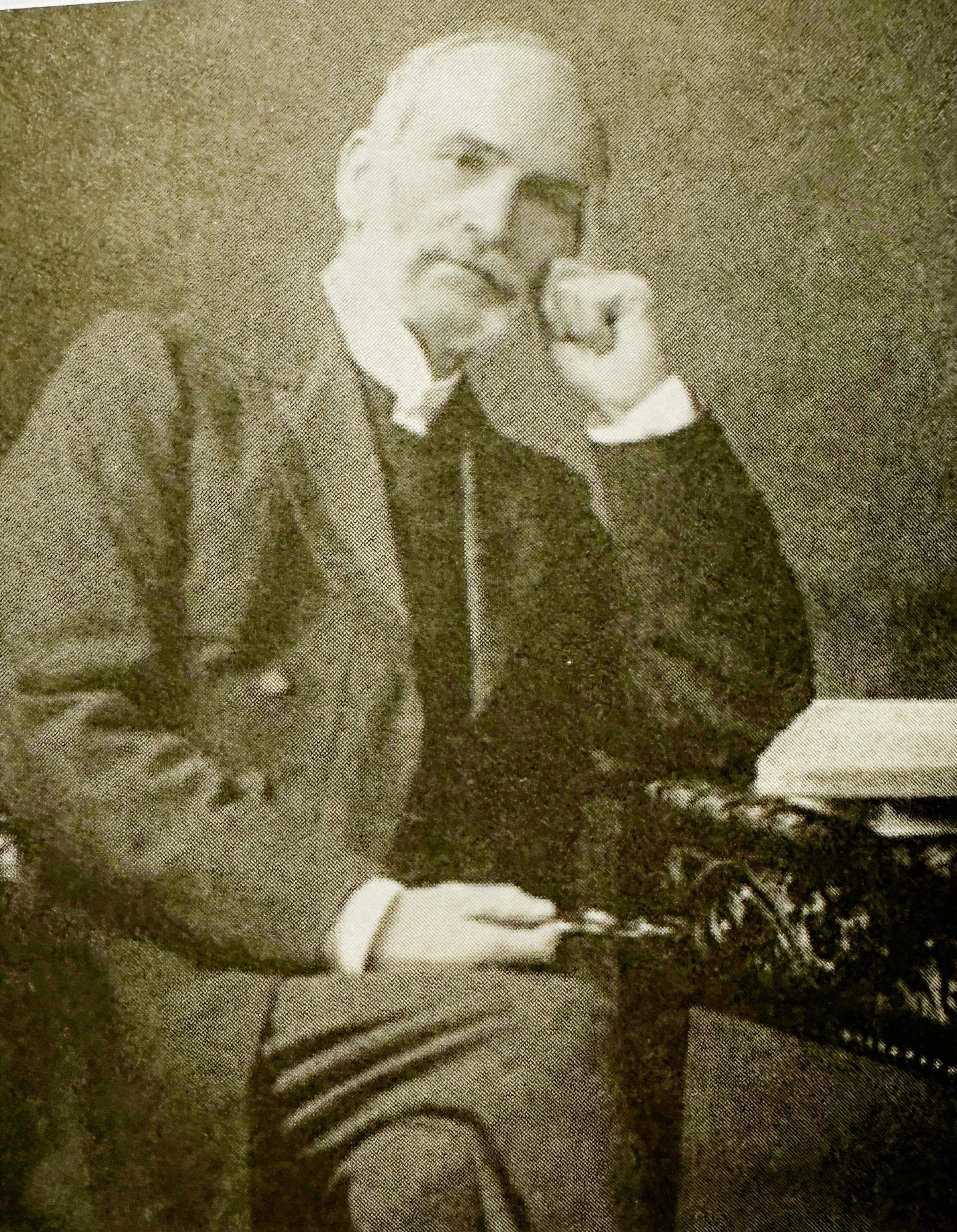
James Dodson
FULL REPORT OF THE PUBLIC MEETING
IN
ST. GEORGE’S HALL, DUMFRIES,
8th September, 1902.
Ex-Provost COWAN, J.P., Maxwelltown, in the Chair.
LECTURE by Rev. JAMES KERR, D.D.
GLASGOW:
WILLIAM ASHER, 128 RENFIELD STREET.
THREEPENCE.
[Page 1]
THE SCOTTISH MARTYRS DEFENDED.
The proposal to erect a memorial to the Rev. John Blackadder in the Parish of Troqueer, where he was minister before the times of persecution, was made by Mr. William Dickie, Dumfries, at a meeting of merchants in Maxwelltown in January last. The minister of Troqueer—Rev. J. A. Campbell—willingly approved of the movement and exerted himself to have it realised. Contributions were easily obtained, and the memorial took the form of a tablet in the Parish Church. The Rev. James Cooper, D.D., Professor of Ecclesiastical History in the University of Glasgow, accepted the invitation to dedicate the memorial.
A number of gentlemen of various churches in the parishes of Troqueer and Dumfries were much aggrieved at the strictures on the Covenanters by Professor Cooper, and they requested the Rev. James Kerr, D.D., Glasgow, to deliver a lecture in Dumfries in review of the Professor’s strictures and in defence of the Covenanters. This meeting was held in St. George’s Hall, Dumfries, on the evening of Monday, the 8th of September. “There was,” said the “Dumfries and Galloway Courier and Herald,” “a large attendance of people, who displayed enthusiastic feeling throughout.” Among those on the platform and in the Hall, there were ex-Provost Cowan, J.P., Glenview, Maxwelltown; ex-Provost Shortridge; ex-Bailie Kirk; ex-Bailie Herries; Hon. Sheriff-Substitute Clark; Revs. R. G. M‘Intyre, B.D., R. M‘Kenna, M.A., Charles M‘Neill, M.A., J. B. Frame, and Robert White, M.A.; Messrs. Robertson, Paton, Kirkpatrick, Grieve, Charteris, Watson, Murdoch, Halliday, Hendrie, M‘Gregor, Beveridge, Sharpe, Booth, Forsyth, Roddam, Chalmers, Gillies, Johnston, Hutchison, Thomson, Jardin, Hastings, J. J. Forsyth, Telfer, Wells, M‘Ghee, Lancaster, R. S. Forsyth, Carruthers, Gemmel, M‘Kean, Halliday, Gillison, M‘William, and Miller.
Ex-Provost Cowan was called to the chair. Psalm c. was sung and prayer offered.
THE CHAIRMAN’S ADDRESS.
The time and attention of the younger generation was so much devoted to public amusements and story reading, it was doubtful
[Page 2]
if they had any wide acquaintance with the lives of those heroes who suffered tortures by rack and imprisonment for the sake of Christ and His truth, were hunted on the mountains and moors of our own beloved Scotland, and suffered death by the gallows, at the stake, by drowning in the sea, or by being shot down at their own homes or in the open field. I am afraid the rising generation know so little about these things that it was only right that now and again we should be reminded of them. I fear that one cause of this might be found in a lack of love for the Lord Jesus Christ and the salvation He wrought for us. Of the heroes of this or any other country who were the servants of King Jesus, I am certain that, if we loved and honoured the King Himself, we would esteem those brave and noble men. We are assembled to hear of faithful and devoted servants of Christ who endured and suffered unto the death in order to maintain their position as followers of the Saviour.
In these days there was certainly a great change since the days I can well remember. In my boyhood I was often in the company of worshippers coming six miles on the Sabbath to the House of God. The men and women talked as they walked of the justice, of the mercy, of the sovereignty of God, and of the love of Jesus for a perishing world till their hearts burned within them and their faces glowed as they dealt with such weighty matters in a solemn and serious manner. How different to-day? How many of us could gladly do the same? How many would? I remember talking to an old man when on his death bed, who came from a different district with another company that had from eight to twelve miles to walk to the House of God, and the old man told me they never thought of the length of the way; they talked all the way about the things they heard and often thought they were too soon home. They sometimes spent half an hour at the parting of the ways before they had completed their conversation on the subject they had been occupied with during the day. It was well we should be reminded of these older times and doings, especially since the younger people of to-day were apt to take as authoritative and trustworthy the representations of the Covenanters by persons in high positions, whether the branding of these faithful and noble heroes as “fools and fanatics” by a former sheriff of Dumfriesshire; whether it was the caricaturing of these men by novelists of the present or a former generation, or misrepresenting them by a Professor of Church History in a great University.
We must be awakened on Scottish Martyrology, and we have to-night one qualified to arouse them in the Rev. Dr. Kerr, Glasgow. He had studied, written, and spoken as much about the lives and contendings of these reformers and martyrs as any other minister in Scotland. He had the history of their times at his finger ends, yea, in his heart. Dr. Kerr had written
[Page 3]
largely on these subjects and times. He had issued on the Covenanting Bicentenary, in 1881, “Sermons by the Covenanters in the Times of Persecution,” adding biographical notices of those Covenanters whose sermons were given, and his own sermon on the Covenanters delivered on that commemoration in Greyfriars Churchyard, Edinburgh, at Renwick’s monument, Glencairn, and in the Dock Park, Dumfries; and he had also issued, “The Covenants and Covenanters,” containing the Covenants and other official public documents of the Covenanted Reformation, and more recently a new edition of “The Scots Worthies,” with an introduction on the character and principles of those Worthies, of which 3000 copies have already been sold. And I must also mention his monthly contributions to the Reformed Presbyterian Witness, of which he is editor. As to his public appearances, I well remember him preaching to a large audience under the trees in the Dock Park, Dumfries, and also hearing him a few years ago away on the wild moors of Ayrshire at lone Lochgoin. Within the last few weeks I heard him in Belfast delivering a thrilling address on “The Psalms in the Struggle for Civil and Religious Liberty,” in which he showed that the Psalms were the battle songs of the Huguenots, the Waldenses and the Lollards on the Continent, and of the Puritans and Covenanters of England and Scotland. I do hope and believe that Dr. Kerr’s address to-night will excite a desire for more and more information about the men of the Covenant and their times, and thereby lead us to their Saviour and our Saviour.
REV. DR. KERR’S LECTURE.
ORIGIN OF THE DEMONSTRATION.
I consented with considerable reluctance to accept the invitation, earnestly pressed, to attempt the task now before me. This reluctance arose not from any feeling that there was not a cause sufficient to justify such a meeting as this, but from a strong fear that the great object for which we are now assembled would suffer in my hands. There is a cause, unhappily, and a sufficient cause for this demonstration. I did not wonder, as I read the report in your Standard of the dedication ceremony and service at the unveiling of the memorial to Blackadder at Troqueer, that a number of gentlemen in Dumfries and the neighbourhood were moved by a just displeasure at the strictures on our Covenanting ancestry pronounced by Professor Cooper of the University of Glasgow, and on that confessor of the Covenant who has made Troqueer famous in the ecclesiastical history of the land. The more you read and examine those strictures and think of the character of that prolonged struggle for freedom which the Covenanters waged and won, the more will, and should, that
[Page 4]
just displeasure swell into a righteous indignation. After due deliberation, I hesitate not to declare that the estimate of the Covenanting struggle of the seventeenth century by the learned Professor of Ecclesiastical History in the University of Glasgow is a libel on the achievements and memory of those imperishable heroes, and his representations of Blackadder utterly beneath the lofty character and magnanimous contendings of that illustrious sufferer for the faith of Christ and the liberty of man.
This controversy is not of your seeking, or mine. We are not the assailants; we are the defenders. Professor Cooper has broken the peace in throwing down the gauntlet, and so defiantly. By his discourse—he selected a text as the basis—he has challenged the verdict on the Covenanters pronounced by their posterity as the authors of a Reformation the most Scriptural and exalted in the annals of the world. Such aspersions as must come under review to-night have never before been cast by any Presbyterian minister or professor on the memory of the Covenanters—cast, too, at a service held in honour of a prominent leader in their valiant band; and it becomes their descendants in the Parishes of Troqueer and Dumfries and in the glens of Nithsdale, to repel the injustice, and do all that is possible to clear off the stains on their illustrious ancestors with which their district shall be associated for many a day. Professor Cooper was invited here to bless: the issue has been far otherwise.
What are the people of the districts and the whole country entitled to expect from the principal speaker at the unveiling of monuments to the Scottish Martyrs? Certainly some things, yes, much, to prove the worthiness of the sufferers of the monuments erected in their honour. What, if the whole service be conducted by one person, as in this case? And that person a Professor charged with the instruction of the students of a great Scottish University in the history of the Church? Are the people not entitled to expect that on such an occasion a clear statement be made of the doctrines, principles, and parties in the crisis through which those to be commemorated have come with honour and renown? That such doctrines as the infallibility of the Scriptures—the root principle of the whole Reformation, the headship of Christ over the Church and over the nations, the Church’s inherent jurisdiction and independence, Presbyterianism and Covenanting be, at least, affirmed? And that the contrary dogmas of Popery, Prelacy, and Erastianism be, at least, condemned—for these were the theories against which the Martyrs contended to the death? That the wild and guilty fantasy of the Stuart Sovereigns of the divine right of kings be proscribed in no apologetic tone? That the enormities of the persecutors be held forth to reprobation—the Ahabs and Herods of the times? That no concealment be attempted about the Courts of Commission, Star Chambers, Privy Councils, Indul-
[Page 5]
gences, and other parts of that imperial machinery by which it was sought to establish an absolute supremacy in the will of the monarch, and extirpate for ever the first rights of liberty in man? That a warm appreciation be pronounced on those who would not be crushed beneath the heel of despotism? On the bonds and covenants into which they entered with God and one another to maintain the religion of Christ, the independence of the Church and the freedom of the kingdom? That a tribute of admiration be offered to the hero in whose honour the memorial is being dedicated? And that joyous notes of gratitude and admiration be sounded out enthusiastically to those who triumphed in the long battle by banishing despotism from the throne and introducing an era of liberty and peace.
UNEXPECTED REPRESENTATIONS.
But what if the only speaker on such an occasion, and he a Professor of Ecclesiastical History in a Scottish University, omits all specific reference to the doctrines at the very foundation of the whole Reformation and the subsequent battles to maintain it? As Professor Cooper did! What if he eulogises one of the authors of the despotism as “a pious and accomplished Prince?” As Professor Cooper did! What if he declares that the aim of the Covenanters was “to extirpate Popery and Prelacy by the sword?” As Professor Cooper did! What if he describes the united efforts of the Covenanters and Puritans at the time of the Westminster Assembly as “a monstrous compact?” As Professor Cooper did! What if he affirms that “the triumph of the Covenants would amount to spiritual tyranny?” As Professor Cooper did! What if he should push into prominence the execution of Charles I. and the “horrid murder of Archbishop Sharp,” and forget the murders of Brown of Priesthill, of those two women at the Wigton sands, of those three men at Crossgellioch, and hundreds of others tortured and killed with a brutality unparalleled even in the days of the Inquisition or o Pagan Rome? As Professor Cooper did! What if he maintained that the Covenanters were the originators of the persecutions? As Professor Cooper did. What if he had complimentary words about the curates who were the willing assistants of Claverhouse and Lagg in apprehending the outlawed ministers and those who attended Conventicles? As Professor Cooper had. And what if he should speak of the Covenanting hero whose memorial he had consented to dedicate as a fence-sitter, a moderate and a persecutor? As Professor Cooper did!
What conclusions would an audience draw regarding those in whose memory they were assembled, and to one of whom they were devoting their memorial, if influenced by the persuasive eloquence of the orator into sympathy with his views? They
[Page 6]
would go away wondering why volumes have been written in praise of their reforming and martyred ancestry. They would wonder why monuments have been erected in St. Michaels to your own martyrs, at Glencairn to Renwick, at Cumnock to Peden, at Irongray to Welsh, and at Wigton to Margaret Wilson and Margaret Lachlan; and on the field of Drumclog, on the Ayrmoss, and at the Pentlands? And why John Howie ever wrote the “Scots Worthies,” immortalising the memory of unworthy men? And they would feel bound in honesty to commence a crusade of demolition of monuments to an ancestry of whom, because of their tyranny and deeds of blood, they are now ashamed. And if the originator of the movement for the erection of the memorial to Blackadder at Troqueer was present at the dedication service and captivated by the learned Professor, he would wonder what ever possessed him to suggest such a movement, and would be astonished that he had been living in a fool’s paradise, accepting as historical facts what were now unhistorical myths and regarding as the noblest heroes those who were tyrants and persecutors. And he would now endeavour to efface the lettering on the memorial he was so anxious to raise. A leader in the “Standard” said truly: “If the Rev. John Blackadder, sometime minister of the parish of Troqueer, could have been present in his old church on Sabbath morning, he would have been very much surprised. . . . For Blackadder was a Covenanting minister who resisted Prelacy and the prayer-book, and Professor Cooper is one of the ritualistic party in the Church of Scotland to-day.”
DENUNCIATIONS OF TYRANNY.
At the very outset of his discourse, Professor Cooper indicates the whole trend of the sequel. He condemned the “denunciations of the Government” which appear on some of the Martyrs’ tombstones. The two lines at the foot of the stone in the Lauder crypt of the Glasgow Cathedral are quoted by him for that purpose. That stone is inscribed to nine Covenanters who were executed as traitors at the Cross of Glasgow, and, at the close of some lines on their testimony, are these about their murderers:—
“They’ll know on resurrection-day
To murder saints was no sweet play.”
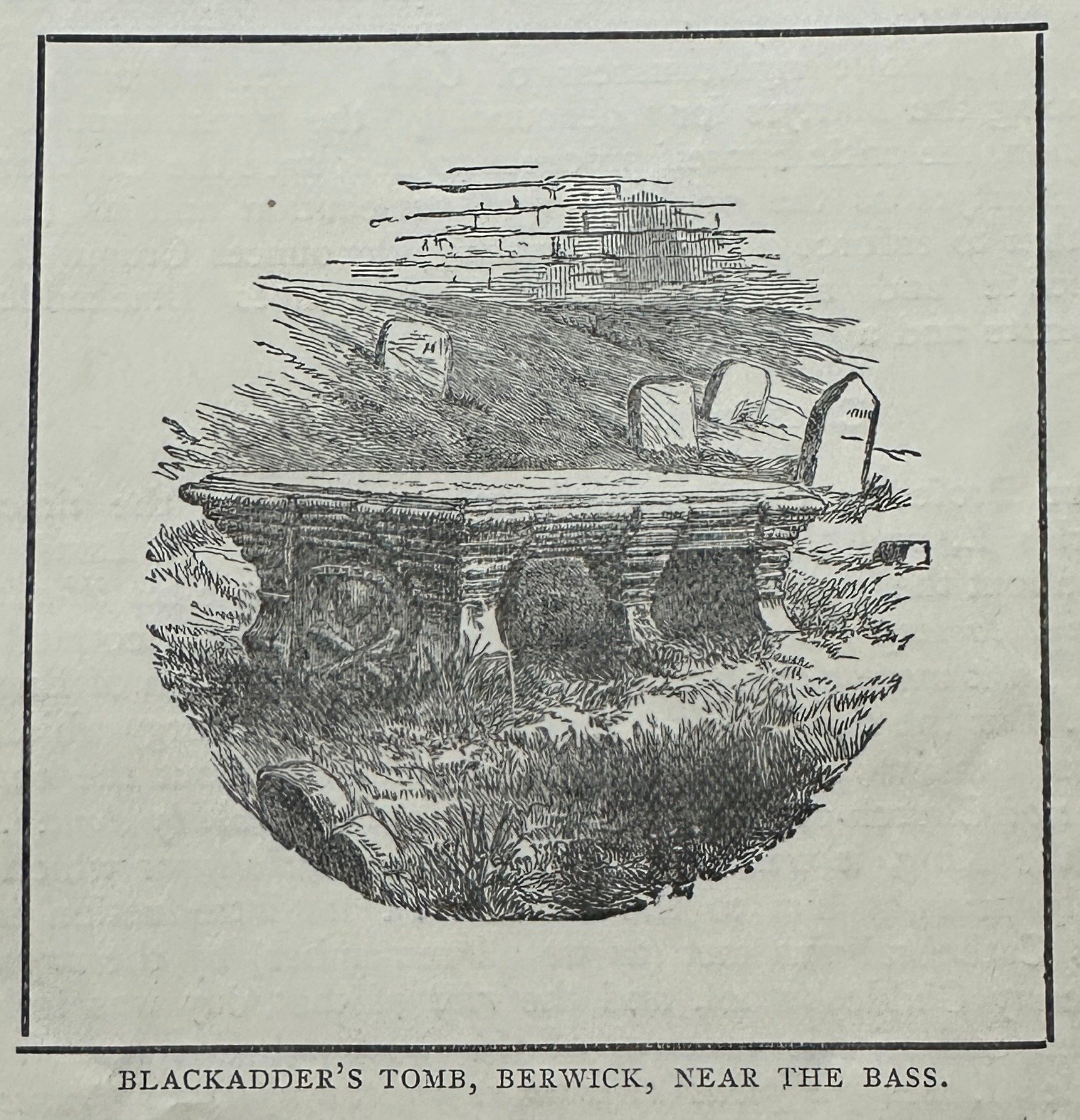
After citing the inscription on the monument to Blackadder at Berwick near the Bass, Professor Cooper says—“The epitaph is characteristically free from the denunciations of the government that disfigure others of the same period, as for example that in the Glasgow Cathedral.” “Denunciations of the government,” but of what government? A government which was the incarnation of as barbarous a despotism as ever the earth witnessed; a
[Page 7]
government which violated government and justice from within the very temple of government. Denunciations that disfigured the inscriptions! A few years ago, when the massacres in Armenia were in progress, Mr. Gladstone denounced the government at Constantinople as guilty of blood and branded the personal head of that government as “the crowned assassin of South-Eastern Europe.” What lover of the first principles of human liberty ever condemned Mr. Gladstone’s “denunciation,” or declared that the words “disfigured” the oration in which they were used? Who does not know of that sonnet of the great Milton which begins,
“Avenge, O Lord, Thy slaughtered saints, whose bones
Lie scattered on the Alpine mountains cold:
Ev’n them who kept Thy truths so pure of old,
When all our fathers worshipped stocks and stones,
Forget not:”
Who dare say that the magnificent sonnets of Milton are “disfigured” by these “denunciations” of the persecutors? In The Revelation, from which the Professor’s text was taken, it is written: “I saw under the altar the souls of them that were slain for the Word of God; and they cried with a loud voice saying, How long, O Lord, holy and true, dost Thou not judge and avenge our blood on those that dwell on the earth?” Do
[Page 8]
these “denunciations” “disfigure” the Book; and do those cries dishonour the souls under the altar? And if Professor Cooper had been present when the Lord said “Shall not God avenge His own elect which cry day and night unto Him. I tell you that He will avenge them speedily”; he would have tried to stifle the cries of the Lord’s own elect and reproved the Lord for “disfiguring” His book and teaching by encouraging such cries. But thus has the Professor his first fling at the noble sufferers for Christ’s crowns. Ah! men who are qualified to offer a proper estimate of the martyrs must have a profound sense of the spotless and infinite righteousness of God. Yet while thus denouncing the Martyrs for “denouncing” the government of persecution, the critic himself proceeds to denounce the Covenanters and Martyrs as the originators of persecution and as banded together to enforce a spiritual tyranny; denounces Cromwell as a hypocrite and a murderer, and pronounces Blackadder a moderate and a persecutor!
CHARLES I. AND LAUD’S LITURGY.
Our Professor then proceeds to comment on the times of Charles I., and the introduction of the liturgy of Laud. He says about the liturgy, that “King Charles I. made his ill-advised attempt to improve the service of the Church of Scotland and conform it more closely to the worship of the Church of England . . . But the Kirk was not ready for the new Liturgy which was imposed in an illegal and arbitrary manner without the consent either of Church or Parliament. The act was rashly done. . . . For the King, it was the source of those rebellions which ultimately brought him to the block. . . . Its introduction in St. Giles Cathedral was met (as we all remember) by the argument of Jenny Geddes’ stool, and the riot of that day was followed by the enthusiastic renewal of the National Covenant.” And Charles I. was “a pious as well as an accomplished prince. he was sincerely anxious for the well-being of the Church of Scotland.”
Such statements are wholly inadequate and misleading, as a description of the great crisis through which the Kingdom was then passing. For years, the battle between those who from the throne were employing every means possible to overthrow the Reformation under John Knox on the one hand and the followers of the Reformer on the other, was being keenly fought. Charles I. was resolved to assert “the royal prerogative,” which meant the unfettered exercise of his own absolute will from the supremest place of power in the Kingdom. Through Prelacy in the Sovereign, the Papacy, shattered by the first Reformation, sought to remount the throne; and in this, Charles was supported by Laud and other sycophantic counsellors. Kingcraft and priestcraft united in their ruthless work of demolition. The “Black
[Page 9]
Acts” were passed confirming “the King’s royal power discharging all Assemblies held without our Sovereign Lord’s special licence and commandment, and requiring ministers to acknowledge the ecclesiastical superiority of bishops.” A Court of High Commission was appointed—“a sort of English Inquisition,” writes Dr. M‘Crie, “comprised of Prelates and others, possessing the combined powers of a civil and ecclesiastical tribunal.” Then came the establishment of Episcopacy; the consecration of the first Scottish Prelates; the prescription of the infamous five Articles of Perth; the Canons and Constitutions Ecclesiastical, and, with many similar Acts and Measures, Laud’s Liturgy—a pro-Popish book of Common Prayer and administration of the Sacraments. The introduction of the Liturgy was one only of the blows rained down in rapid succession upon those who, delivered from a Popedom in the palace of the Vatican would not submit to as crushing a Popedom in the palace at Whitehall. Petitions, protests, remonstrances, were all of no avail to arrest the career of those who were bent on the annihilation of liberty throughout the length and breadth of the land. The attempt to impose Laud’s Liturgy gave opportunity for the freemen of the times, after long endurance, to rid themselves of the iron fetters being riveted on them. The flinging of the stool at the surpliced Dean was the signal for the outburst of the slumbering flame; and the awakened people flocked together to bind themselves by Covenant in defence of the reformed religion, their liberties, and their lives.
In the references to that crisis in the great contest, no note of sterling sympathy with the oppressed people is sounded by Professor Cooper. The conduct of the King was “arbitrary,” because it was “without consent of Church or Parliament;” his attempt was “ill-advised;” the act was “rashly done.” There is not one word of condemnation of the high-handed tyranny persisted in for years. The Professor seems almost to regret that Charles did not act in a more cautious and orderly manner. All he condemns is the irregularity and rashness of the procedure. Had Charles enjoyed the presence of the leaders of the present “Church Service Society” and “Aberdeenshire Ecclesiological Society,” in both of which Professor Cooper is a moving spirit, he would have received wiser counsels than those offered him by Laud and Dean Hannay, and, perhaps, under their more discreet instructions, the Liturgy would have been successfully introduced, and there would have been less necessity to-day for those two Laud-ward Societies in the Protestant Church of Scotland. Charles I., “the pious and accomplished prince,” was not acquainted with the tactics of the slim pro-Papal Boers of the present times behind their much-sought kopjes.
And the act of Jenny Geddes is flippantly described as “the argument of Jenny Geddes’ stool,” while the resistance of the
[Page 10]
people is characterised as a “riot.” “Rioters!” The men who could not bear despotism, and who rose to assert independence against the lawlessness of Prince and Prelate and for Christ and their country! Rioters! The late Lord President Inglis sums up this critical movement in words of gravity and dignity when
ST. GILES AND THE “RIOTERS.”
he wrote the inscription on the memorial to that heroine in St. Giles: “A brave Scotchwoman struck the first blow in the great struggle for freedom of conscience which after a conflict of half a century ended in the Establishment of civil and religious liberty.”
Professor Blackie’s lines will never be forgotten—
“And thus a mighty deed was done by Jenny’s valiant hand,
Black Prelacy and Popery she drave from Scottish land.
King Charles, he was a shuffling knave, priest Laud a pedant fool,
But Jenny was a woman wise, who beat them with a stool!
She conquered by the stool.”
That famous stool is still in a good state of preservation in a museum in Edinburgh, and had the “brave Scotchwoman” who used it so effectively on that memorable day been present in Troqueer three Sabbaths ago, and heard Professor Cooper’s misrepresentations of the Reformers and Martyrs, listened to his recital of the Apostolic Creed and quotations from the Church of England Prayer-Book, and witnessed his “booings”* and other attitudes, she might have again employed her three-legged “argument” against the learned imitator of Dean Hannay with telling effect. And no doubt, Provost Chicken and the Bailies of the Burgh would have joined in the “riot.” At any rate we here to-night are the “rioters.”
As to Charles I., to whom the Professor pays a warmer tribute than to the Covenanters—“a pious and accomplished prince; sincerely anxious for the well-being of the Church of Scotland,” hear the words of Carlyle. “Given a divine law of the Bible on the one hand, and a Stuart King, Charles I. or Charles II. on the other: alas! did history ever present a more irreducible case of equations in this world.”
DENUNCIATIONS OF THE COVENANTS.
Then our Professor proceeds to direct his heaviest artillery against the Covenanters at those periods when they framed and entered into their Covenants—renewing the National Covenant in 1638, and entering into the Solemn League and Covenant in
_____
* At the close of the service the preacher bowed twice to the magistrates’ pew in the front of the gallery.
[Page 11]
1643. The main sentences in this part of his discourse are these:—
“The riot of that day was followed by the enthusiastic renewal of the National Covenant. . . . Everybody in Scotland was compelled to take the Covenant. . . . The King had to submit. . . . Principal Strang* (Glasgow University) foresaw the spiritual tyranny to which the triumph of the Covenant would lead. . . . But the stream was too strong for him, and he gave in, signing not the National Covenant alone, but in 1643 the much more objectionable Solemn League and Covenant, whereby the Church of Scotland which had secured its own independence, entered into an alliance with the English Puritans, who were in open rebellion against their sovereign, for the utterly unjustifiable purpose of forcing Presbyterianism on England and on Ireland, and of extirpating with the sword both Popery and Prelacy. Charles I., to his honour, absolutely refused to lend any sanction to such a monstrous compact. . . . Nothing it is true, can justify the severities employed after the Restoration by the Scottish Government of Charles II., against the remnant of the Covenanters, but it is important to remember that the system of persecution did not begin with them but with the Covenanters themselves.”
In reading these and other parts of this discourse in professed honour of the Martyrs, one would suppose that the Covenanters had been transformed through their very acts of Covenanting into a horde of Mohammedans such as invaded Europe in the Middle Ages, sword and scimitar in hand, to compel the acceptance of the religion of the prophet of Mecca on the pain of instant death. “Everybody in Scotland was compelled to take the Covenant;” “King Charles *had to submit;” “the triumph of the Covenant” would bring a “spiritual tyranny;” the union of the Puritans of England and the Presbyterians of Scotland was “a monstrous compact;” they were united to “extirpate with the sword both Popery and Prelacy;” the system of persecution did not begin with the government of Charles II., but with the Covenanters themselves! What strange words are these! Hear them, souls under the altar! Argyle, M‘Kail, Cargill, Peden, Rutherford, Cameron, Blackadder, Paton, Guthrie, Nisbet, and Renwick. Hear them, you descendants of the Scottish Reformers and Martyrs! They contain a flagrant perversion of the facts of history, and as virulent slanders of the Covenanters as were ever uttered by a Sharp or a Claverhouse. It is not true that “everybody in Scotland was compelled to sign the Covenant.” It is not true that the King was compelled to sign the Covenant. The idea of such compulsion—as if with a drawn sword or shotted gun
_____
* Professor Cooper describes this Principal Strang as a very Vicar of Bray, and specially records that “the discipline of the belt was familiar to his arm.”
[Page 12]
before their eyes—was utterly alien to that first principle of liberty which the Covenanters constantly proclaimed and maintained—God alone is Lord of the conscience, and hath left it free from the commandments of men. They guarded the rights of conscience as a sanctuary of holiness. Often before have the covenants been represented as documents pledging to a policy of extirpation by the sword. The word extirpate is used, but not about persons but about false systems—Popery and Prelacy. Our Lord said, “Every plant that My heavenly Father hath not planted shall be rooted up.” In the exhortation of the Westminster Assembly, the offering of “violence to the persons of men” is distinctly repudiated. The authors of “The Informatory Vindication,” which is regarded as an authoritative statement, expressly say in answer to the charge of intolerance: “We disown as horrid murder the killing of any because of a different persuasion and opinion from us.” The people of this district are resolved to extirpate the glaring misrepresentations of history and the foul slurs Professor Cooper has cast on the Reformers and Martyrs, but it does not follow that we will armour ourselves with Maxims and march to Glasgow to do him violence. No, we would not touch a hair of his head, even though there rested on that head the mitre of a bishop—an honour which he has done much to merit by his appearances at Aberdeen, Alexandria, Barnhill, and now Troqueer. Why, the people must have gone from that unveiling ceremony wondering which were the greater persecutors—the dragoons of Claverhouse or the victors of Drumclog, the followers of Sharp or the followers of Richard Cameron.
INTOLERANCE TO KING EDWARD VII.!
True, the condition of their elevation to the throne required that the kings of the time should accept the Covenants; but this is an every day situation in all offices of trust and power. It was impossible for King Edward to accede to the throne till he accepted the oaths or covenants of his high office—among others the oath repudiating Popery with its monstrous dogma of transubstantiation and the Mass. And any member of Parliament who would sit in Parliament before taking the Oath of Allegiance is liable to a penalty of £500. But what would rational public opinion think of a successor of Professor Cooper in the Chair of Ecclesiastical History two centuries after this, who would indulge in a public tirade against the “intolerance” and “tyranny” of these requirements, and proclaim that King Edward “had to submit” and was “compelled” to swear that he would “extirpate Popery by the sword,” and that civil pains were threatened to members of Parliament to “compel” them to swear the Oath of Allegiance. Why, his University Court would “compel” the resignation of that Professor of his Chair through an Act
[Page 13]
of Inefficiency, and advise his removal to a primary school, where a Strang might “compel” him “by the discipline of the belt” to qualify for a merit certificate in his native English tongue. Nay more, if King Edward should renounce his oaths or covenants of office and become a Roman Catholic, the slave of the foreign priest and pretended prince at the Vatican, and attempt a revolution on constitutional monarchy such as the Charleses did, then King Edward would, I trust, be “compelled” to resign the throne, and, persisting in his despotic career, be banished the realm as the Stuarts were. An empire of freemen is so “intolerant” as to demand that its monarch be also a freeman.
The Covenanters in their very deeds and policy of Covenanting intolerant, persecuting, pledging themselves to a “spiritual tyranny” and uniting in a “monstrous compact!” When “the Scots,” as writes D’Aubigne, “laid hold of those legitimate charters of their nation and presented them before heaven,” they
SPIRITUAL INDEPENDENCE OR “SPIRITUAL TYRANNY?”
were, according to Professor Cooper, presenting the symbols of a “spiritual tyranny.” On “that day of the Redeemer’s strength,” as Alexander Henderson wrote, “on which the princes of the people assembled to swear their allegiance to the King of Kings,” the Covenanters, according to Professor Cooper, were uniting in a “monstrous compact.” The Solemn League and Covenant, writes Dr. Andrew Thomson, “was one of the grandest documents that ever emanated from the representatives of the people,” but according to Professor Cooper, it was a sworn pledge “to extirpate Popery and Prelacy by the sword.” And the late Joseph Cook of Boston, one of the profoundest philosophers of our time, has said, “The very touch of that document (the Solemn League and Covenant) is electric. That scene when three kingdoms adopted it for the guidance of their affairs, when Cromwell and Milton and the great Presbyters of Scotland were ready to lock hands in the Reformation of the foremost country of the present time, then just rising to its greatness, appears to me to be altogether too dignified and glorious a historic picture to be sneered at by any shrivelled successors of the Puritans and the Pilgrims;” but according to Professor Cooper, it was the symbol of a “monstrous compact” for blood. And when Guthrie on the Scaffold said, “The Covenants, the Covenants will yet be Scotland’s reviving,” he was, according to Professor Cooper, predicting the triumph of “a spiritual tyranny,” and that on the very threshold of glory! The monstrous alliance of those times was the alliance of Popery and Prelacy—natural in its character but monstrous in its object. Ah! when the parishioners of Troqueer listened that Sabbath day to Dr. Cooper raking up from Prelatic
[Page 14]
and other sources those foul accusations, exploded a hundred times, against Scotia’s noblest sons, heard they not a voice coming across the Nith from that mausoleum in St. Michael’s Churchyard to the national bard—
“The Solemn League and Covenant
Cost Scotland blood, cost Scotland tears,
But it sealed freedom’s sacred cause—
If thou’rt a slave, indulge thy sneers.”
It is pertinent to inquire what attitude Professor Cooper would have assumed had he lived in the days when the Covenants were taken by all classes throughout the three kingdoms. When the National Covenant was being renewed in Greyfriars amid a scene of the greatest enthusiasm, Professor Cooper could not have been there, joining with the “rioters” and “rebels.” When the Solemn League and Covenant was being subscribed at Westminster, Professor Cooper could not have been there, uniting in the “monstrous compact.” Where would consistency have compelled him to be? Why, he must have been advising the resistance of this compact for tyranny, and furbishing the weapons to be used by Claverhouse and his dragoons. He must have joined the drunken Parliament of Middleton in their Acts Rescissory pronouncing as rebellious and treasonable the national Covenants. Where would he have been when the Covenants were publicly consigned to the fire? Why, standing by the executioner, consenting to his deed, pleased to see these symbols of “tyranny,” these “monstrous” documents, extirpated by the flame. On his own public declarations, Professor Cooper can have no lot in our glorious Covenanted inheritance. Yet we will not extirpate him by either fire or sword.
THE TIMES OF BLACKADDER.
And now we come to the Professor’s estimate of Blackadder—the Confessor of the Covenant in whose honour the memorial was being unveiled. Blackadder’s ministry was carried on amid the very saddest times. As the author of the “Cameronian’s Dream” says—
“’Twas a dream of those ages of darkness and blood,
When the minister’s home was the mountain and wood:
When in Wellwood’s dark moorlands the standard of Zion,
All bloody and torn, ’mong the heather was lying.”
The Restoration of Charles II. signalised the exchange of a time of peace for a reign of terror. That infatuated monarch employed all his power to overthrow the whole Covenanted Reformation in Church and State. “In England,” writes Dr. Wylie, “a grim tyranny reared its gaunt form, with the terrible accompaniments of star chamber, pillory, and branding irons. The day of liberty in England went down into a night of tyranny. . . . The fall of Scotland into the abyss of oppression and suffering under
[Page 15]
Charles II. was like the disastrous eclipse of the sun in his meridian height, bringing dismal night over the shuddering earth at the hour of noon.” All Parliamentary laws in favour of the reformed religion were repealed; the Covenants rescinded as deeds of sedition; Prelacy re-established, indulgences offered as bribes; all ministers who would not obey the royal mandates ejected and outlawed; Claverhouse, Lagg, and others, sent forth on their mission of extirpation by sword, flame, and flood; Conventicles proclaimed;* scaffolds erected and prisons acquired—among others the Bass. Hundreds on hundreds of God-fearing men and woman were butchered to make a royal, yes, a Roman, holiday.
Professor Cooper poses as an apologist for the restored monarch and the enormities of his emissaries, and does gross injustice to Blackadder—one of the most valiant of the outlawed preachers. He says, “The Scots had compelled Charles II. to swear allegiance to the Covenants. . . . The extremer Covenanters had persecuted, even to the death, his most loyal supporters. . . . They could look for little at Charles’s hands. . . . So the matter was settled by the restoration of a modified Episcopacy, and the requiring only that those ministers who had been ordained since 1638 should accept collation from the returning prelates. Whether this demand was sufficient ground
THE COVENANTERS PERSECUTORS!
for rending the Church from one end of the kingdom to the other may be questioned. But there can be no doubt that on both side acts of a highly provocative nature were committed. Extreme men among the Presbyterian party denounced the King as a perjurer; some even went the length of renouncing their allegiance. Nothing, it is true, can justify the severities employed by the Scottish government of Charles II. against the
_____
* Professor Cooper says that “the Presbyterians could have whatever services they liked indoors.” No such services as these here mentioned were allowed. By an unrepealed Act of James VI. no person could hold a council or assembly anywhere without the King’s licence, and this very Act was cited against James Guthrie in 1661; and, by Acts of Parliament in 1672, the outed ministers were only allowed “to pray and preach in their own families, four strangers being permitted within doors,” but one of the Acts “doth not give allowance to any outed minister to pray in any family except in the Parish where they be allowed to preach.” In 1669, the city of Edinburgh was fined £50 for a conventicle held in February of that year in Widow Paton’s house in that city. In 1670, the Scottish Parliament of Charles II. enacted that “he or they who shall so preach, expound Scripture, or pray within any house shall be seized upon and imprisoned, and whosoever shall preach, expound Scriptures, or pray at any of these meetings in the field, or in any house where there be more persons than the house contains, so as some of them be without doors, or who shall convocate any number of people to these meetings, shall be punished with death or confiscation of goods.”
[Page 16]
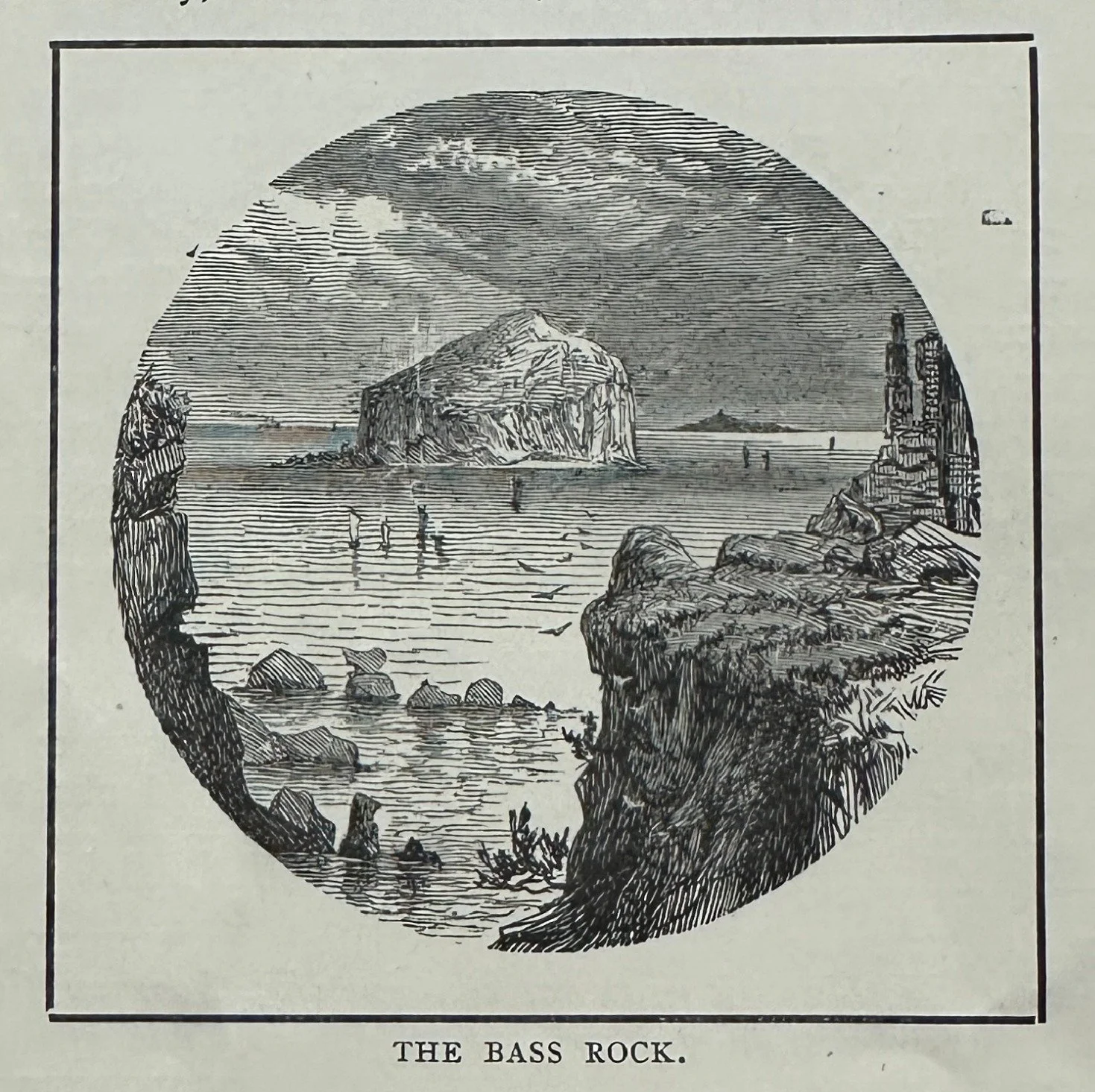
remnant of the Covenanters, but it is important to remember that the system of persecution began with the Covenanters themselves.” Then as to Blackadder, he was “comparatively moderate;” he “had recourse to what was practically persecution” towards the Roman Catholics in his parish; he “deemed collation a slight upon his former ministry (which, on purpose, it was not) as well as an invasion of the Church’s rights (which, I fear, it was), and he determined rather to surrender his living than comply. The measures taken to enforce conformity grew rougher. As Sir Walter Scott has observed in that wise and inimitable story, ‘Red Gauntlet,’ ‘the Covenanters were as dour as the Cavaliers were fierce.’ Dissent was irritated into rebellion. . . . Blackadder was ready to join the insurgents at Rullion Green. . . . He was apprehended and sent a prisoner to the Bass. A prison is not intended to be comfortable; but it does not seem that Blackadder’s confinement was for those days severe. He was treated as a prisoner of State, and the orders were rather for his detention than for punishment. . . . His health broke down. He complained to the Council that he was suffering from rheumatism and orders were issued for his release; but ere that could be effected he was attacked with dysentery and died.”
A more adroit apology for the enormities of Charles II. and his dragoons, and a more unworthy representation of Blackadder could scarce be imagined. Collation of the Bishops was one of the most insulting demands made on the Covenanting preachers.
[Page 17]
That “Bishops’ Drag Net” was an insidious attempt, backed by pains and penalties of the extremest character, to secure absolute supremacy for the King and abject subjection from the Covenanters.* The Provost and Town Council of Dumfries turned this Queen of the South into a Jezebel or a “bloody Mary.”† “Collation was,” writes Cunningham, “part of the systematic attempt to torture the country into compliance with Episcopacy;” but, according to Dr. Cooper, “it was, I fear, an invasion of the Church’s rights.” “The essential question,” writes Dr. Landels, “was, ‘Is Christ, or King Charles, Lord of the conscience?’ It was the vital question of religious freedom, the question which determines, according to the answer it receives, whether the battle for liberty is lost or won.” But, according to Professor Cooper, it “may be questioned” “whether this demand was sufficient ground for rending the Church.” The Professor has not one word of sterling reprobation for the powers by whose monstrous demands the Church was rent, and the kingdom deluged with blood. The men who refused collation and indulgences were now outlawed as traitors, they were hunted like beasts—their pursuers stealing upon them with all the stealthiness of ravening wolves; they were consigned to dungeons; they were tortured; they were shot, drowned, murdered:
“Their moans,
The vales redoubled to the hills, and they
To heaven.”
_____
* When the Act of the Privy Council, October 1662, was passed, declaring that all ministers who had not taken collation from the prelates had forfeited their livings and must remove from their pastorates before the first of November, 400 ministers went forth, choosing rather affliction with the people of God. “Scotland was never witness to such a day as the last on which those ministers preached,” wrote Wodrow; and Dr. Landels said, “It was a grand act. We cannot look back upon it but with unqualified admiration. It was an invincible testimony to the supremacy of conscience. It reawakened the spirit of resistance which, through all the persecutions that followed, waxed bolder and stronger, until it hurled the last of the Stuarts from the throne of his ancestors, and sent him, as Garibaldi did that crowned poltroon at Naples, whose ignominious flight we have witnessed, a trembling fugitive from the kingdom which his fathers had cursed.”
† The magistrates of Dumfries carried out the sentence against Grier and Welsch, to whom a monument is erected in St. Michael’s Churchyard. Having been required to “affix their heads and right armes upon the eminentest pairts of this Burgh,” they decided that the Bridgeport was the “fittest place quhereupon that the heids and armes should be affixed.” After exposure there for weeks in mid-winter, a rumour reached the Town Councillors that a design had been formed for removing them, the Council applied to Lauderdale to allow them to transfer the martyr’s heads and arms to the Tolbooth for their better security, and so disappointing the “disloyall persones” who, it was feared, would “take them away under cloudes of night, to the prejudice of this Burgh.” “Prejudice of the Burgh indeed!” writes Mr. M‘Dowall in his history of Dumfries, “Alas for the time when the honour or credit of the town was thought to be bound up in the safe retention of those ghastly mementoes of the tyrant’s persecuting rage!”
[Page 18]
And of all those enormities, extending over a period of forty years, the strongest words Professor Cooper uses are these, “Nothing, it is true, can justify the severities employed.” At the tragic death on Magus Moor of the man whose skirts were stained with the blood of countless men and women, Professor Cooper cries out “the horrid murder of Archbishop Sharp;” at the murder of Brown of Priesthill, Margaret Wilson at Wigtown, and at the Martyrs’ heads at Netherbow ports, Professor Cooper says “nothing, it is true, can justify these severities.” Hear this order for the execution of Hackston: “At the Cross of Edinburgh, and there upon a high scaffold, have his right hand struck off, and after some time to have his left hand struck off, and then to be hanged up and cut down alive.” What vivisection of human beings! Yet, says Professor Cooper, “nothing, it is true, can justify the severities employed.”
“They were Christians; and they cut the heart from out the living man,
And waved it as a flag is waved upon the battle’s van,
And burned it as a beast is burned, an idol to appease,
And cast the human ashes round like incense on the breeze;
And they did it in the name of God!”
Now, if the Covenanters were the originators of “the system of persecution,” if they were combined in a “monstrous compact” to enforce their principles “by the sword,” if they were “persecutors of their opponents to the death” and banded to obtain the triumph of a “spiritual tyranny,” there should be numerous evidences of this policy of blood when its authors wielded influence and power throughout the kingdom. In the period from 1638 to 1649, the principles and policy of the Covenants and Covenanters were in the ascendant—a period which is often described as “the golden age of the Church of Scotland,” and of which that diligent student of the Reformation,
PROOF OF PERSECUTION DEMANDED.
Professor Symington, wrote: “To the Christian, the lover of the Saviour and His Church, this period is pregnant with instruction and with promise, the brightest day of Scotland’s Church, a day on which millennial glory seemed to dawn.” But if Professor Cooper be correct, that period should present a record of deeds of intolerance and blood—a record of the works of tyrants and persecutors. Where, then, are the minutes of the Courts of Commission and Star Chambers held by the Covenanters, at which Acts were passed proclaiming the meetings of those of different religious opinions, declaring the banishment and death of those who held Conventicles without permission, and determining the doom of men before their trials, and the modes of their vivisection? Who were their advocates and military emissaries—like “bloody Mackenzie,” Claverhouse, and
[Page 19]
Lagg for the tyrants and persecutors who succeeded them? Give the names of the prisons they acquired for their numerous victims? Where are their engines for torturing, mangling, and executing their victims—their thumbkins, boots, and guillotines? Answer, Professor Cooper. Give the list of the prelates and curates they ran to earth and shot down on the moors; of their wives and daughters they tied to stakes within the mark of the flowing tide? Whose hands and arms did they cut off and affix to Netherbow ports and public bridges? And whose heads and hearts did their executioners cut from quivering bodies and hold up to an infuriated mob, crying out that they were the heads and hearts of traitors? Answer, Professor Cooper! Answer this public demand by citing ample and official evidence, or the aroused descendants of these noble servants of their Saviour must ever hold your accusations as baseless and wilful slanders. “The days are not yet come,” said the “Weekly News” of Dundee, “when the Scottish people will permit any blackening of the character of her Covenanters.”
“O Scotland! prize from hour to hour
The stream of freedom as it runs:
’Twas ushered by a crimson shower—
The life-blood of thy Martyr sons.”
The Professor’s meagre references to the facts of Blackadder’s sufferings, and especially his estimate of the Confessor’s character, must have disappointed and pained all who assembled to do the Covenanter honour. A company of troopers invaded Troqueer on the Lord’s Day to enforce the sentence of outlawry, and Blackadder finished his discourse from the steps of the manse; but no mention of this is made by the Professor. They returned and ransacked the manse, to the dismay and terror of the children, one of whom spoke of them as “roaring demons;” but there is no mention of this. Blackadder was cited by the Privy Council to “compear on pain of rebellion;” but there is no mention of this. A large reward was immediately offered for his apprehension; but no mention is made of that. He was apprehended one day, examined the next, hurried off
BLACKADDER—SUPPRESSION OF FACTS.
as a criminal to the Bass on the next; but there is no mention of this. The Bass is a solitary sea-swept rock, and the prison is like a tank or reservoir, receiving water dripping from the rock above, while on the front it is washed by the ocean, whose waters often wash up over the dungeon; but there is no mention of this. And the cell in which Blackadder was immured is still shown to the visitor, seven feet by eight, with a small barred window. From Dr. Cooper’s references one would suppose that Blackadder and the forty Covenanting prisoners there were like Napoleon or Cronje on St. Helena; that they were just enjoy-[continues]
[Page 20]
ing a little confined liberty! The petition for his release because he had contracted “a universal rheumatism and bloody flux” was presented on June 20th, 1685, but no reply came till November 19th—five months! What a difference from the haste for his apprehension and imprisonment! But no mention is made of this. The answer of the Privy Council granted power for his transference to another prison upon his finding sufficient caution, under the penalty of 5000 merks Scots, that he would not escape and that he would in January “re-enter his person as prisoner in the Bass;” but no mention is made of these conditions—which Blackadder rejected. In reply to another petition, release was granted, but on condition that he would not engage in preaching, and would re-enter the Bass, under a similar penalty as before; but Blackadder declined the ensnaring and impossible condition: but no mention is made of this. At many of the executions of the Martyrs, the soldiers beat the drums to drown the voice of the sufferers in giving their testimony: was this deliberate suppression of facts about Blackadder not a beating of the drums? Soon after, under this “universal rheumatism and bloody flux,” Blackadder, an old man of 70, passed away to the land of liberty and peace. A Covenanter: a Confessor: more—a Martyr; and a Martyr through a lingering death, at the hands of those on whom rests the crime of murder. Were such proceedings discovered in the treatment of prisoners in our own time, the whole United Kingdom from John o’ Groats to Land’s End would ring with the cry of murder against the responsible authorities, and the character of the Government that would be guilty of it would be stained with irreversible dishonour. John Blackadder is not a Confessor only; he is one of the noble army of Martyrs.
BLACKADDER A PERSECUTOR!
But not only are there other facts which deserve mention in the vindication of Blackadder of Troqueer and the Bass, but the estimate of his character by the Professor should rouse every impartial mind. As represented by Professor Cooper, this heroic Martyr was a Moderate. With evident satisfaction, Dr. Cooper cites the opinions of a son of the Confessor—Colonel John Blackadder, who wrote that “religion among us was greatly in the wrong channel, and may be called Presbyterianism rather than Christianity;” that the Scots got “too hot” in religious debate; that Protestant Churches were observing Christmas day, and that we should be moderate: and Professor Cooper warmly commends these opinions of “the first Moderate” as “free from bigotry” and “generous sentiments,” and adds there was “a good deal of this same moderation about the father.” Thus, Blackadder was as “dour as the Cavaliers were fierce.;” he was a Moderate; he was a supporter of those “tyrannical” Covenants;
[Page 21]
he approved of the “monstrous alliance” of the English Puritans and Scottish Covenanters; he was “irritated into rebellion;” and, in express terms, he was a “persecutor”—an accusation without an atom of proof! In commending Blackadder for his moderation in hesitating about rising in arms, Professor Cooper says: “In this of course he was quite right. Meekness is the weapon of the Gospel. It is ‘the blood of the Martyrs’ that is ‘the seed of the Church,’ not reprisals on their persecutors.” According to this “generous sentiment,” Professor Cooper could never have gone to an armed Conventicle. Had he been present at Loudon Hill on the morning of Drumclog, he would have entreated the Conventiclers to let the Dragoons butcher them; or, if not with them, he would have been among the camp-followers of Claverhouse, and carrying ammunition to the soldiers who were extirpating the “insurgents” and “persecutors.” Had he been at Blednock on that day when those two saintly heroines were being submerged by the flowing tide, he could not have interposed for their lives though he had had 10,000 men to aid him. No! for the Lord calls for a testimony “by suffering rather than by outward deliverance.” Professor Cooper never would have joined the Huguenots and the Waldenses in their struggle for religion and life; he must have resisted the efforts of England to meet the “Invincible Armada;” he could not have joined Sobieski and his brave army in withstanding and crushing the legions of Mohammedanism as they swept into Europe from the Hellespont; and he could not have approved of the alliance to punish the leaders of the Boxer massacres in China. No, for “it is the blood of the Martyrs that is the seed of the Church! not reprisals upon their persecutors.” And Professor Cooper should plead for the abolition of the army, the breaking up of the cruisers, and the disbanding of the police, for “meekness is the weapon of the Gospel,” and surely also of a Christianised Empire. What a meek and sweet lamb is Professor Cooper!
Toward the beginning of his discourse, Professor Cooper proposed to “apply to ourselves and the Scotland of to-day whatever lessons of faith or policy the occasion seems calculated to convey to us.” It is difficult to find in the discourse the lessons these words appear to promise. But there are some inferences from the Professor’s treatment of “the faith and policy” to which he addressed himself, that will be patent to
REVOLUTION IN POPULAR OPINION.
any reader of his discourse who will find himself in sympathy
[Page 22]
with its positions and trend. We must revolutionise our estimate of the Covenanters. No longer can we admit that they were the authors of a Reformation that brought inestimable benefits to Scotland and the world. We must now hold that they were banded together for the triumph of a “spiritual tyranny.” No longer can we maintain that the Covenants were, as Hetherington describes them, “the noblest of all that are recorded among the international transactions of the world,” but the symbols of a “monstrous compact” to enforce its objects by violence. We must no longer maintain that the Covenanters rose to a celestial elevation in resisting the despotism which sought to exterminate their religion and themselves; but we must now maintain that they were the originators of the system of persecutions which returned like a boomerang on their own heads, and that at Ayrsmoss, Drumclog, and Rullion Green, they were violating the principles of their Redeemer-King by taking up the sword. We must no longer attempt to restore the principles of the Covenanted Reformation, but bury them out of sight with a sense of relief and shame that our misguided ancestry ever asserted and applied them. We must now aim to be moderate like Blackadder, and especially like his son, the Colonel, for moderate opinions do not show “bigotry” but are “generous.” We must aim at a union between the two national Churches—the Presbyterian of Scotland and the Prelatic of England, but must not attempt that union on the platform of the Covenanted Reformation, for, says Dr. Cooper, “that platform is impossible.” We must no longer prosecute the movement of memorials to the Scottish Martyrs—bringing imagined worth into popular remembrance; we must cover up the inscriptions on these memorials—that of Troqueer among the first—and let the granite crumble to the dust. An Old Mortality once went round those monuments, and, with chisel and hammer, brightened up the letters. But now a Professor of Ecclesiastical History might be excused who, with a supply of mud from the Kelvin and mitre suspended over him, would go round those very monuments, and the fresh ones added at Lochgoin, Cumnock, and Troqueer, and silt up the lettering and scatter the silting material all over the stones. Ah! this whole performance was a tragic mockery of a Covenanting Memorial Service. Professor Cooper came to Troqueer to do honour to Blackadder and the Martyrs; he plunged a dagger into their reputation, their character, their hearts.
It is time to awake and meet these betrayals of the Scottish Covenanters and Martyrs, lest the very evils return to our land from which the God of our fathers saved us; lest, as the late Lord Beaconsfield said, “We may have to fight the battle of the Reformation over again.” The movement represented by men like Professor Cooper bears in one direction—Romeward. A revolution in the popular opinion about the Scottish Martyrs in the line of Professor Cooper’s misrepresentations, would be an important fortress captured in the crusade for Romish ascend-
[Page 23]
ancy in the British Empire. No Oxford movement toward Tractarianism and Rome must be allowed a footing in Covenanted Caledonia. “Some men,” said Rutherford, “think it wisdom to stand beside Christ till His head be broken, and sing dumb.” Oh! then,
“Snatch from the ashes of your sires
The embers of their former fires;”
and go forth to the help of the Lord against this flood of invasion; for—
“Never must this land, whose flowers
Spring fresh from Martyrs’ graves,
A moment’s parley hold with Rome,
Her mimics and her slaves.
A moment palter with the chain
Whose scars are on her yet:
Earth must give up its dead again,
Ere Scotland can forget.”
And thus, to-night, in admiration of those who fought and died in the battle for civil and religious liberty of two centuries ago and in righteous anger at their traducers, and in gratitude to the Lord of Hosts through Whom they prevailed, we would wreathe chaplets round the tombs of the Scottish Martyrs and over the memorial raised by willing hearts to Blackadder of Troqueer and the Bass.
“OF WHOM THE WORLD WAS NOT WORTHY.”
Rev. Ronald G. Macintyre, B.D., United Free Church, Maxwelltown, in moving a vote of thanks to Dr. Kerr, said:
I think I should move a vote of thanks to Professor Cooper, for had it not been for Dr. Cooper, we should not have had Dr. Kerr with us to-night, nor had the privilege of listening to this splendid vindication of the Scottish Covenanters. I was not myself in the parish of Troqueer when Dr. Cooper “dedicated” the memorial tablet. I happened to be away on holiday, but I must say that I was greatly amazed to learn that Dr. Cooper was to preach on the occasion; for I felt sure that my friend and neighbour, the minister of the Established Church of Troqueer—and we are very good friends and neighbours—could not have discovered any one in all Scotland less fit to form a just appreciation of the Covenanters than Dr. Cooper. I felt that something unusual was sure to happen when Dr. Cooper and a Covenanter got together. In the end of the day, the Covenanter—thanks to Dr. Kerr—has not come off second best. There are really great issues lying behind such questions as have been dealt with this evening, for we have not, I am afraid, quite finished the conflict that Blackadder and Blackadder’s friends and compatriots so nobly fought. They won a great inheritance for our country, won it at a great and terrible price, and it is for us to-day to
[Page 24]
stand firm on the ground of liberty of conscience, freedom of worship, simplicity of worship, and the free approach to God in Christ Jesus, no “saint” nor “priest,” nor the man-millinery of ritualism hindering us. I was in England recently, and there I heard a great deal of this ritualistic conflict, which Professor Cooper and his friends are trying to bring on in Scotland. I was told by a friend in England how a ritualistic vicar and the teacher of his school had some children—Protestant children—caned because they would not attend a service which the vicar called the “Mass.” My friend said to me, “It’s a terrible state of matters, what’s to be done?” I replied that all I could suggest was that when I got back to Scotland I might induce Scotland to lend them Jenny Geddes’ stool. But I feel to-night that if there is going to be much more of this mummery, falsely called worship, which Professor Cooper and his ritualistic societies are attempting to introduce into Scotland, we had better keep that famous stool at home, for we may need it ere long ourselves. The memory of Blackadder, and of the cause for which he contended is not the property of any one section of the Presbyterian Church. It is the common inheritance of all branches of the Presbyterian Church. But I feel sure of this, that in the branch of the Presbyterian Church where this memorial tablet was erected—and it was a good movement—the great mass of the members of the Established Church, and certainly in Troqueer parish, are thoroughly Protestant and Presbyterian, and if they were left—as in the end they must be—to settle such questions as these, they will not prove unworthy of the inheritance that is both theirs and ours. As a minister in the parish of Troqueer, I have much pleasure in moving a cordial vote of thanks to Dr. Kerr for his complete vindication of the memory of the Covenanters which has been traduced by Dr. Cooper,—a vindication which you have so enthusiastically followed this evening.
The motion was seconded by Mr. Robert White, Maxwelltown.
Dr. Kerr acknowledged the expression of gratitude, and moved a vote of thanks to ex-Provost Cowan for presiding.
The singing of the lines below and the Benediction brought the meeting to a close.
His name for ever shall endure,
Last like the sun it shall;
Men shall be bless’d in Him, and bless’d
All nations shall Him call.
And blessed be His glorious name
To all eternity:
The whole earth let His glory fill.
Amen, so let it be.
[Advertisement Page]
THE COVENANTS AND THE COVENANTERS
Covenants, Sermons, and Documents
of the Covenanted Reformation.
WITH ILLUSTRATIONS.
CONTENTS.
The National Covenant and the Solemn League and Covenant: Sermons at taking the National Covenant at St. Andrews, Inverness, Glasgow, and Edinburgh; and the Solemn League and Covenant at London and Westminster: Sermon and Ceremony at the Coronation of Charles II.: The Acts Rescissory: Declarations, Exhortations, and Ordinances of Covenanting Times: Sermons by Alexander Henderson and several Puritans: Torwood Excommunication by Donald Cargill: Introduction on the National Covenants by Rev. Dr. Kerr.
I read it with much interest, and deem it most opportune and valuable.—Professor Flint, D.D., Edinburgh University.
A most useful aid to all students of Scottish Church History.—Principal Lindsay, D.D., United Free College, Glasgow.
In these days of clerical re-action, from which Scotland as well as England is suffering, it is well to be reminded of the heroic stand made by the Covenanters against Popery and Episcopacy.—Daily Chronicle, London.
“The Covenants and the Covenanters” is a stirring book. Dr. Kerr writes about the Covenanters’ struggle for freedom in impassioned strains. The introduction by Dr. Kerr should stir the Scottish heart.—Scottish Reformer.
Dr. Kerr unquestionably deserves the thanks of every patriotic Scot for this volume.—Kilmarnock Standard.
Dr. Kerr knows as well as any living writer how to pack a long story into the compass of a few pages. A vivid idea of the splendid part which Scotland played in these Middle Ages.—Christian Commonwealth.
Dr. Kerr’s volume is the completest on the whole question in recent times, or, perhaps, at any time.—Northern Ensign.
This volume deserves a hearty welcome from all who wish to study the history of Scottish Presbyterianism at the original sources.—Stirling Journal.
Dr. Kerr’s brief yet comprehensive narrative, pervaded as it is by true patriotic fervour, reads like a romance.—Airdrie Advertiser.
The introduction by Dr. Kerr is a masterly production.—League Journal.
Dr. Kerr’s “Introduction on the National Covenants” is a noble piece of writing. The story is graphically told.—Christian News.
It has a distinct place as a bit of good historical literature, and also as the battle-cry from a worthy and noble past.—Christian Leader.
The rapid survey of the epoch-making events of the Covenanting period, forming the introductory chapter, is far and away the most attractive part of the volume. In the breadth of treatment, crispness of execution, and impetuosity born of conviction, the historic period lives again.—Orkney Herald.
POST FREE TO ANY ADDRESS FOR 2s. 6d.
WILLIAM ASHER, 128 RENFIELD STREET, GLASGOW.
[Back Advertisement Page]
THIRD EDITION.
THE SCOTS WORTHIES:
BIOGRAPHIES OF THE
Scottish Reformers, Confessors, and Martyrs.
DR. KERR’S EDITION OF “THE SCOTS WORTHIES.”
Bound in Cloth of Blue, with Embossed Design, and Medallion Portrait of John Knox in Gold.
The Scots Worthies contains Biographies of all the prominent Reformers and Martyrs in Scotland, from Patrick Hamilton who suffered at St. Andrews in 1527, to James Renwick who was executed in the Grassmarket, Edinburgh, in 1688. The Biographies number Seventy-one, and include those of:—
ARGYLE (MARQUIS OF),
BALFOUR,
BLACKADDER,
GEORGE BUCHANAN,
RICHARD CAMERON,
DONALD CARGILL,
DAVID DICKSON,
GEORGE GILLESPIE,
VISCOUNT KENMURE,
SIR ROBERT HAMILTON,
ALEXANDER HENDERSON,
JAMES GUTHRIE,
HACKSTON OF RATHILLET,
KER OF KERSLAND,
JOHN KNOX,
LIVINGSTONE,
LOUDON (EARL OF),
HUGH M‘KAIL,
ANDREW MELVILLE,
NISBET OF HARDHILL,
CAPTAIN PATON,
ALEXANDER PEDEN,
JAMES RENWICK,
SAMUEL RUTHERFORD,
JOHN WELCH,
GEORGE WISHART.
The Scots Worthies was written by JOHN HOWIE of Lochgoin.
The Scots Worthies is the classic of Scottish Martyrology.
The Scots Worthies contains 150 Illustrations.
The Scots Worthies contains 667 pages.
The Scots Worthies contains a Preface by Rev. Dr. Kerr.
The Scots Worthies has Medallions of many Covenanters.
The Scots Worthies should be in every Christian family.
The Scots Worthies should be in every Congregational Library.
The Scots Worthies should be in every Public Library.
PRICE, Post Free to any Address, - 3s.
WILLIAM ASHER, 128 RENFIELD STREET, GLASGOW.