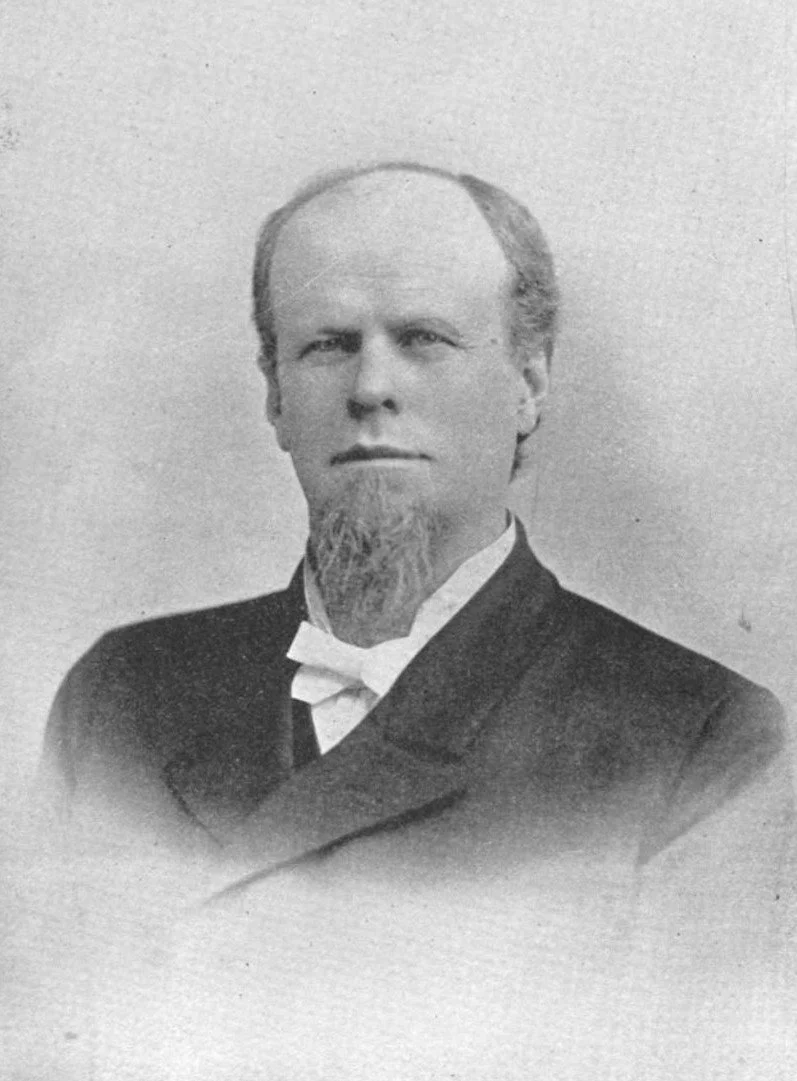
Songs of the Ages
James Dodson
BY
W. T. MELOY, D. D.
Pastor of the First United Presbyterian Church, Chicago, and author of “Lucile Vernon, or the Church at Lansing,” “Wanderings in Europe,” etc.
SECOND EDITION.
Price: single copy, 10 cents.
Twelve Copies, $1.00.
One hundred copies to one address, $3.00.
Address THE AUTHOR, 149 S. Paulina St.,
CHICAGO, ILL.
CHICAGO:
DONOHUE & HENNEBERRY, PUBLISHERS.
[WHY?]
The religious world is flooded with hymnals. Some of these are better than others because they are more closely conformed to the Scriptures. Many thoughtful Christians are dissatisfied with the matter that is given with which to praise God. All sorts of songs, sentimental, secular and patriotic are freely used in praise services. It seems, therefore, a fitting time to call attention to God’s songs. The inspired Psalter is held in higher esteem than ever before and those who use it exclusively are treated with more consideration. There is no claim for literary excellence or originality of expression or argument made by the author of this little treatise. Before these songs were uttered by human lips God breathed them into the soul. They are inspired.
May the Spirit reveal to us the matchless beauty and appropriateness of the Songs of the Ages, composed by the sweet singer of Israel.
W. T. M.
Chicago, January 15, 1894.
[Page 3]
SONGS OF THE AGES.
An Argument for Their Exclusive Use in the Worship of God.
The position of the psalm singing churches is to many, a matter of curiosity or surprise. They have never investigated the principle that is maintained, nor have they heard the arguments by which it is defended. As a result of this, the easiest solution is generally adopted. “Psalm singers are exclusive.” “They are bigoted.” “They entertain hereditary beliefs.” “They stand in the way of the union of the churches.” It is our duty to disarm prejudice, and in so far as
[Page 4]
we can, free ourselves from it. He that would see clearly to pluck the mote from his brother’s eye, must not undertake the operation with a beam in his own.
If we are standing in the way of the union of the Church of Christ on the ground of the truth, we should know it, acknowledge it, and forsake at once and forever the false position we hold. But if on the other hand we are only maintaining the truth, and conforming our worship to the will of Him whom we praise, it is equally demanded of us, that we prove ourselves to be clear in this matter. Silence may be uncharitable, cruel and cowardly. The minister of the truth ought to know without dictation from any human source, when to speak, and what to speak. In the exercise of this freedom of judgment, he is not to be called a sectarian if he present the peculiar tenets of his own denomination. The object ought to be to awaken inquiry and investigation, rather than to provoke controversy. Arguments should be calmly weighed. Intelligent Christians should, like
[Page 5]
the Bereans, search the Scriptures that they may know whether the doctrines presented are true or false. Our fathers may have erred in giving an undue importance to distinctive tenets. The presence at a church service of some one supposed to be guilty of entertaining heresy, was taken as a call of Providence to hurl forth an anathema, or give a blow in parenthesis, that would fall on the head of the culprit.
The past age was one of controversy. While we may not desire a return of it, we must confess that the present is not distinguished by investigation. Churches are filled with members, but few of whom are able to give a reason for the hope that is in them. Thousands subscribe to doctrines which they receive as true, and engage in worship without ever stopping to inquire about the divine appointment of it. This state of things is to be deplored. It is worse than those old days of religious chivalry, when in the midst of a two hours discourse, the pastor roused up his hearers by vigorous, orthodox blows at
[Page 6]
the unauthorized forms of worship which prevailed in other churches.
It is to the true worshiper a duty, privilege and pleasure to sing praise to God. There are few who will dispute this. We may not all have sweet voices, and few have cultivated the powers we have, as we should have done. We cannot all sing with a loud voice and skilfully, and unless our singing be skilful, the voice ought not to be too loud. There are no discords in nature. The singing birds, and sighing winds, and murmuring brooks, and rustling leaves, and loud tempest, and roaring sea, are never out of time or tune. When, therefore, intelligent beings praise God the Creator, there should be no jarring discords, and no lazy drawls. Not only the best we have, but the very best we can secure should be given to the Lord. As it was in sacrifice, so it should be in praise. The best should be offered to the Lord.
All the people should sing, and therefore all should have their hearts fitted by communion, and their lips fitted by training, to
[Page 7]
sing high praises to our God. We can no more praise God by proxy than we can pray by proxy. “Let all the people praise thee.” That certainly does not mean that a quartette should be perched up behind the pulpit to praise (themselves) at four thousand dollars a year. The old Directory of Worship that was used by the Presbyterian church before hymns of human composure were introduced, contained these words: “All the congregation should sing, every person who can read should have a psalm book.” What grand, soul thrilling music there has been when in the great congregation, the people all united in the swelling chorus of the songs of Zion!
A man of great distinction in the literary and political world, was called by official duties to the Empire of Japan. He spent several days there not knowing the language, as “one dead among the living.” When the Sabbath came, he repaired to the Union Mission church, and writes; “I can not describe my feelings, the raptures of my soul, as the congregation sang the inspired words
[Page 8]
of the one hundredth psalm:
“All people that on earth do dwell,
Sing to the Lord with cheerful voice.”
All admit the importance of praise. “It is comely for the upright.” The question, above all others, that keeps the Presbyterian family divided is, What shall we sing? A part of the family answer; “The songs of inspiration.” A still larger part: “Not these songs alone, but also the devotional composition of uninspired men.”
I. You will observe that this is not a question of translation or version. The strongest efforts used to be made to show that our claim is not an inspired psalmody, but a particular version. Arguments were used to vindicate an uninspired psalmody, such as; “Your translation is defective; you use obsolete words; the rhyme is bungling.” The champions of uninspired song proved what we very well knew before, that our version was imperfect, that it had occasional additions. Translations are human, and therefore imperfect. But that the book was not regarded by them as very offensive after all, is
[Page 9]
manifest by the fact that many selections from it were at one time sandwiched into their book of praise.
The proofs they presented were conclusive. But the conclusion did not indicate that we should forsake the principle of inspiration, but rather that we should show our loyalty to the Spirit, by removing all the human parts of the song, just as you would remove dust from the diamond, or dross from the gold.
Adherence to a particular version as distinct from inspiration, never was the position of the psalm singing churches. It was not their position before the Westminster Assembly; it has not been their position since it. In the oldest psalm books you can find these words; “more plain, smooth, and agreeable to the text than any heretofore.” What had been “heretofore?” The church of the Waldenses had sung, and sung exclusively, the book of Psalms, long before Sir Francis Rouse, or any of the delegates to the Westminster Assembly, were born. They were
[Page 10]
subjected to fiery persecutions and found sweet consolation and abiding comfort in singing to God as their Refuge, and Rock, and Sun and Shield, and Hiding Place. Their love for this part of the Word continues; “At their Divine services they use the Bible, and especially the Psalms.” The Huguenots of France, did the same. The words of the Spirit did much to uphold them, and they sang of God not only as their Refuge, but also as their Strength.
Chanting was the form of praise then employed. About the time of the meeting of the Westminster Assembly, the best talent was secured to prepare a metrical version of the Psalms. The version of which Sir Francis Rouse (a gifted nobleman), wrote the greater part was adopted and recommended until another “more plain, smooth, and agreeable to the text,” should take its place. It was used for more than two centuries and became endeared to the hearts of the people. Parts of it will doubtless be sung until the work of the church militant is done. But it was not exclusively
[Page 11]
used. Changes, in the form of improved versions, were prepared and sung, as of equal authority.
For many years there was a feeling in the church that the version in use did not furnish enough varieties of meter. Diligently and prayerfully the work of revision was undertaken, and completed about twenty years ago. This has largely disarmed the opposition, who rallied for an attack on the Spirit’s Psalter by the forcible cry of “Rouse’s version!” Faint mutterings of the old war cry have since been heard. The attempt to give the credit of versification to some who have since withdrawn from the fold has been only partially successful. But if wholly so it would be of little consequence. Noah employed ship carpenters, who perished in the flood, and many labored in erecting the temple who probably never enjoyed its worship. We can say to our brethren that scholarship and talent for versification are all we need now, since the Spirit of inspiration has given us the sublime text. But when you presume to speak
[Page 12]
against the Psalter itself, you challenge the wisdom of the Holy Spirit. Our principle is not a particular version, but the songs of inspiration in the best version that can be prepared.
The argument might be briefly stated thus:
“God has an undisputed right to appoint the worship that may be offered Him.
This right he has exercised.
It is the duty of the creature to conform thereto.
So fully have these principles been recognized, that the assent of all Presbyterian Ministers is required to the statement of the Catechism, “The second commandment forbids the worshiping of God by images, or any other way not appointed in his word.” Divine appointment for the Psalms of the Bible is conceded by all. The directions to use them are plain. “Let us offer the sacrifice of praise to God continually.” “Let the word of Christ dwell in you richly, teaching and admonishing one another in psalms, and hymns, and spiritual
[Page 13]
songs.” Christ and his disciples sung a hymn after the New Testament feast. Paul and Silas prayed and sang praises to God, at the still hour of midnight.
But it is to the exclusive use of the inspired Word that objection is made. Divine appointment is therefore directly or indirectly affirmed for the use of uninspired songs in worshiping God. Such authority has never been shown, and can not be shown.
Before using such songs, they must be prepared. The preparation of songs that will express the emotions of the soul, and at the same time show honor and glory to God, is a stupendous work. Who will undertake it? Where is your commission? Who has required it at your hands? Where is the promise of help? Without any authority from the court of Heaven, without any promise of help, you undertake this work. Is it any wonder that you make such a pitiable failure?
God raised up a sweet singer in Israel. He wrote under the directing influence of inspiration. He prepared a book of praise for the
[Page 14]
Church. If that is insufficient for us, is it not wonderful that God left the New Testament church without a psalmist? Jesus Christ before he ascended up, appointed the officers of the church, evangelists, pastors, teachers, that the body of Christ might be edified. There was no hymnist appointed. Why? Was it an omission? The church’s praise book was prepared, and hence no promise is made to any one doing the work. No one is appointed to do it, and no such office is even named. Promises are made to men teaching, preaching, baptizing, praying, singing, but there is not a single promise given to any one attempting to make hymns for the church. Why? The work was done by one appointed and empowered to do it. Gifts were conferred on him for this work. The Holy Spirit guided him in doing it; and you will grant us the privilege of believing and asserting that a book thus written may possibly (?) contain all necessary matter for the church’s praise. It is not wise to displace it to give room for the poetical effusions of such eminent and saintly
[Page 15]
characters as Pope, Byron and Moore.
Forget if you will the fact of inspiration, and reflect for a moment as the hymnal is opened. One book made up of the writings of David, Asaph and Moses; the other arranged by Mrs. Heman’s and Mr. Sankey! The latter know what is adapted to the peculiar type of Christianity that prevails among us.
And does there not a strange feeling take possession of the mind when using in God’s praise the sentimental verses of a disappointed lover?
He had been encouraged to hope that the young woman would consent to be his bride. He proposed marriage, but she said, “No.” In place of blowing out his brains like Goethe’s young Werther, he went home and wrote a hymn. The world looked dark to him, so he wrote a hymn. He was disappointed in love, so he wrote a hymn which became popular in the church.
“How vain are all things here below
How false, and yet how fair!”
Poor fellow! Everything here below is not vain Everything here is not false and
[Page 16]
everything is not fair by any means. The girl you fell in love with and gushed over in your hymn was not at all fair when she was not fixed up for you! But thousands have sung this sickly sentimentality in praise to God.
Pardon this digression, for the field is a very tempting one. There is no authority for using any such songs. Notice carefully the utter absence of divine command. There is no one appointed to compose hymns for the church, nor is help promised. No such office as hymnist is named and no intimation is given that such a work must be done. This in itself is enough to condemn uninspired psalmody. But beyond this, there is no direction given to use it, and not a single approved example of it ever having been done.
We find the advocates of uninspired song appealing to the Word. To this test we gladly come. Since they choose to sing something else, it is very refreshing to have them read inspiration. Two passages are relied on. “Speaking to yourselves in psalms, and
[Page 17]
hymns, and spiritual songs, singing and making melody in your hearts to the Lord.” Eph. v. 19. “Let the Word of Christ dwell in you richly in all wisdom, teaching and admonishing one another in psalms, hymns and spiritual songs, singing with grace in your hearts to the Lord.” Col. 3:16. Now if the songs here referred to are uninspired, notwithstanding the strange lack of appointment in the particulars referred to, hymns of human composure may be rightly used in the worship of God.
The interpretation must come from an unprejudiced source. The Princeton Repertory, volume for 1829, says, “It seems more correspondent to Scripture usage to consider the terms here used as referring to the Book of Psalms, to which the New Testament writers frequently refer for prophecies, proofs and illustrations of their facts and doctrines.” Ohlshausen says; “The psalms here mentioned are probably those of the synagogue, that passed into the church service.” The fact is, there were three different names given to the Psalms. These names were translated from
[Page 18]
Hebrew into the Greek language. Psalmos, Humos, Oda. These are rendered, a psalm, a hymn, and a song. It is to these, and not to hymns of human composure that the apostle refers. The 23d Psalm used to be found in the Old School Presbyterian Hymn Book, as the 214th hymn, and although the number was wrong, the name was right. Just where it is found now the writer can not tell, hymns and books of praise have been so greatly multiplied.
These three terms were used for the Book of Psalms. The three designations are given to different Psalms. The writers of the New Testament were familiar with the Psalms and honored them as their Master did. Our brethren make a terrible effort to uphold an unauthorized worship, that does little credit to either the scholarship or fairness of those who employ it.
The question resolves itself into this: Shall we make psalms and hymns and songs of our own composition, and sing them in the praises of God to the neglect of what He
[Page 19]
has provided for us?
You wish your child to be taught instrumental music. You provide an instrument of your own choice, and employ a teacher for her. You are skilled yourself, and select the music you would have her use. What would be your astonishment on finding that the teacher had cast aside both music and instrument, and procured others greatly inferior to the ones you had authorized? You are coolly informed that what you had provided was not suited to the purpose. You a fine musical scholar, an expert teacher, knowing more of music than all others, are treated with utter disrespect!
God gave man a book of praise. In his infinite wisdom He provided it as suited to the wants of the church. And men whose breath is in their nostrils, say, “Your servant David’s composition does not suit us; we will employ others, to give us other songs,—songs better suited to awaken devotional feelings in our hearts. We set yours aside, they belonged to a past age, to another dispensation.
[Page 20]
Some of them we will imitate, and others we will entirely omit, because the sentiment contained, is objectionable.”
Many devoted Christians are to-day deploring the fact that dishonor is shown to the Old Testament Scriptures. The Book of Psalms has been dishonored by the practice of the church. Is there nothing in present theological controversies showing the evil results of such a course? Let the defections of Andover and Union furnish the answer. If the Psalms are not suited for praise, why may not other parts of the Bible be set aside by modern taste and superior wisdom?
Though holy men of old spake as they were moved by the Holy Ghost, their writings are considered by many as effete and antiquated. The Spirit tells us that these writings were for our learning. Thus the practical result of rejecting the divinely appointed Psalter is the ignoring of all the Old Testament Scriptures.
But we are told that Christ and his disciples sung a hymn, and that their example
[Page 21]
authorizes us in doing the same. The reference here is to the hymn sung before going to the Mount of Olives, after instituting the Lord’s Supper. If this hymn was uninspired it would settle the question. But what was this hymn? A definite answer cannot be given. Several opinions must embrace all possibilities in the case.
It was an inspired hymn found in the sacred collection.
It was an inspired hymn, found in some other part of the Word.
It was an inspired hymn, composed by Christ, or some of his disciples, for this or a similar occasion.
It was an uninspired hymn, composed by some one who was simply a religious poet.
We know positively,
That this was called a hymn.
That many of the inspired collection used by the Jews at the time, were called hymns.
That Christ was familiar with the Psalms, and quoted from two of them, soon
[Page 22]
after this.
If this Psalm was composed by Christ, it was inspired. No candid mind will be willing to admit, that the hymn thus used was simply a religious song, that had been prepared by an uninspired poet. Was Jesus Christ left at such an hour to sing a song that was not produced by the inbreathing of God’s Spirit? Can any one believe that the giving up of the principle of inspiration, could have been done without calling forth the violent criticism of the Jews? Anxious as they were to cavil at Christ, we do not find the charge made that he and his disciples had forsaken the songs of Zion! This would not have been overlooked. The charge that this was done belongs to later generations. The hymn used by Christ and his disciples is almost universally admitted to be the great Hallel, containing the 113th and 118th Psalms inclusive, and always sung by the Jews at the close of their Paschal feast. While Dr. Clark advocates uninspired psalmody, he claims it was the Hallel, so called from Hallelujah, the first
[Page 23]
word of the 113th Psalm that Christ and his disciples sung, and states that his opinion is corroborated from the almost universal consent of Jewish antiquity. Albert Barnes, in notes on Matthew, xxvi, 30, says, “There can be no doubt that our Saviour, and the apostles also, used the same Psalms in their observance of the Passover.” It is very strange that any one seeking to know the mind of the Spirit, would base an argument against the Psalms on the example of Christ and the apostles.
Let us remember that while men pass away, and the voices of praise and censure are hushed in the presence of the dead, the ordinances of God will endure throughout the generations of men. He who labors to preserve these ordinances pure and simple as given to the church, performs a work, which, while it may not be appreciated by men, will be abundantly blessed and rewarded of God.
We are met in this connection with the objection, that we are pleading the example of the Jews, and that ours is a Jewish and not a
[Page 24]
Christian psalmody. But this objection, while directed against a particular use of a particular book of the Bible is really levelled against the use in worship of any part of the Old Testament. We must then expunge more than one half our Bible, with its thrilling history, sublime prophecy, wise proverbs, and exultant songs because it is Jewish!
“Ah,” says the objector, “you sing of a Saviour to come.” Do we? “Yes.” Then we are Jews and not Christians? “Yes.” How sad it is that God does not love Christians as well as he did the Jews! He gave them an inspired Psalter, but we must either sing of a Saviour to come, or else make songs of our own! There are three considerations, however dear Christian, that may give you some comfort.
We might sing of a Saviour to come, just as we read of a Saviour to come; rejoicing that the promise has been fulfilled. We would thus be reminded of the faithfulness of God, in fulfilling the promises made to his people.
[Page 25]
We might charge all who present this objection with inconsistency. They use fulfilled prophecy in the worship of God. They preach eloquent sermons from the sublime passages of Isaiah, that foretell the work and character of Christ. We might say “you are Jews or you would not preach from the Jewish Scriptures.” While it would highly offend our brethren to be called Jews because they use the Old Testament in worship, we will bear with becoming meekness all taunts about “Jewish songs.”
Our last answer to this objection, which logically comes first is, that it is not strictly true. There are a few instances in which the Psalms do speak of certain things connected with Christ’s first coming, as in the future. With these exceptions we do not sing of a Saviour to come in any other sense than we believe in a Saviour to come.
The 50th Psalm speaks of his coming as an event yet future, and we both sing it and look for it; but this refers to the coming of Christ not as a Saviour, but as a judge.
[Page 26]
“The 69th Psalm refers to the first coming of Christ?” Undoubtedly. We sing it, and the Jews sang it too; but it speaks of that coming as an event already past.
“They also gave me gall,
They gave it for my meat,
They gave me vinegar to drink,
What time my thirst was great.”
The same thing is true of the 68th Psalm, “Thou hast ascended on high, thou hast led captivity captive.”
The Jews sung of Christ’s coming as past. Was it an error, an anachronism of the Spirit? Is the wisdom of God in this to be challenged? or shall the objection urged be dropped? Some believe that the fact of the large part of the references being to that event as past, is an intimation that these songs will be used by the church through the ages, and that the objection urged should be silenced by the Psalms themselves. We find that our Presbyterian brethren have been of this opinion and that when the matter of organic union with us was being discussed, they said to our committee, “It is
[Page 27]
the will of God that the Psalms of inspiration be sung in the church until the end of time.” Yet we are told by them, “we will not use the Psalms because they sing of a Saviour to come.” When this objection is made, let it be put in connection with the declaration alluded to, and the conclusion is that we have found those whose consciences will not permit them to do what it is the will of God should be done until the end of time!
1.—First premise—We ought not to sing of a Saviour to come.
Second Premise—The Psalms proclaim a Saviour to come.
Conclusion,—we ought not to sing the Psalms.
First premise—We ought to sing of the Saviour.
Second premise,—The Psalms do not refer to the Saviour.
Conclusion,—We ought not to sing the Psalms.
Let us add a third.
[Page 28]
We ought to do the will of God.
It is the will of God that the Psalms should be sung in the church until the end of time.
Therefore we will not sing them.
A lawyer determining to gain the verdict for his client who had borrowed and broken a kettle, set up the following line of defense:
1st. The kettle was not broken when he returned it. It was whole when he borrowed it, and he returned it in the same condition.
2nd. It was broken when he borrowed it, and he returned it in the same condition.
3rd. He had not borrowed the kettle at all.
Take the arguments that have been popularly presented against the exclusive use of the Spirit’s hymnal, and attempt to form an argument with them, or draw a conclusion from them, and the stronger you make one of them, just so much weaker do you make the others.
It is not claimed that these argument have been offered at the same time, or by the same person; but it is claimed that they have been
[Page 29]
employed popularly by different persons, who have advocated them in the pulpit and press. In bringing them together in an argumentative form, the writer has performed a work, which he trusts, the advocates of human Psalmody will fully appreciate and gratefully acknowledge.
It may be well before proceeding with this subject, to get an outline of the thoughts presented. That for which we contend is an inspired Psalmody in opposition to all human composition. Our principle is not a particular version, but the very best that can be provided. In perfect consistency with this, there have been occasional changes, and an entire revision to secure this object. We have then considered the following points.
God raised up a Psalmist for the church. He was endowed with every needed gift, and specially with that of inspiration.
He performed the work and gave the church a book of praise.
God directed the church to use this book. In obedience to his requirement it was used
[Page 30]
under the old dispensation, and has been used under the new.
He has never intimated that another book was needed.
He has not raised up any one to prepare it, given any directions respecting it, or made a single promise of assistance to any one doing this work.
There is no authority given to use any other book.
“Psalms,” “hymns,” and “songs” are all contained in the book of Psalms, and the requirements of the New Testament, whether by precept or example, is to use these and not the devotional composition of uninspired men.
The objection that the Psalms are Jewish, has been considered.
The further objections that they sing of a Saviour to come, and do not sing of a Saviour at all have been noticed.
There has been a signal failure to show (from Scripture authority) the right to praise God with uninspired song. It can not be done
[Page 31]
by the text of the Word, nor by a fair inference from it. The next effort then, is to prove the rightfulness of their position independent of the Word. Thus we have:
An argument from analogy. “We have a right to use our own words in prayer, therefore we have a right to use our own songs in praise.” This kind of reasoning implies that prayer and praise, are either the same, or precisely similar acts of worship. It is not enough that they should both be parts of worship, unless they precisely agree. They differ in the object for which they are appointed. In praise we celebrate God’s glory, which is unchanging. In prayer we make known our wants, which ever vary. Prayer should be extempore, but from the very nature of the case, we must have a book of songs. In prayer, one leads, while the others follow, but in praise we lift up our voices together, in celebrating Jehovah’s glory. God has provided for these differences in his worship by giving us a book of praise and directing us to sing from it, but he has not given us
[Page 32]
a prayer book. He has given us specimens, patterns of prayer, and says, “after this manner pray ye.” “But,” says the objector, “are not these songs, specimens or patterns, as you call them?” Not at all, else the requirement would have been, after this manner sing ye. It would have been a difficult matter to prepare songs for the early church, and God relieved the disciples of this. The book he gave was for all time and suited to every age.
It is remarkable on the supposition that the disciples were left to do this work, that they did not ask for gracious help. They went to Christ with the words, “Lord, teach us to pray, as John also taught his disciples.” Why was it that they did not go to him and ask, “Lord, teach us to make hymns as thou didst thy servant David?” Was it because hymn making was such an easy task that they felt no need of help? Was it because hymn makers then, like some of more recent date, felt neither the need of nor the inclination to seek divine assistance, or was it because the early church used the inspired Psalter? When Christ
[Page 33]
told the Jews to search the Scriptures, they knew he meant the inspired Word, and when the apostle directed the Christians to praise God by singing, they knew that he referred to the Psalms and Hymns written under the guidance of the Spirit.
But does not this argument from analogy prove too much? Reading is also an act of religious worship, and if we may use our own words in prayer, may we not use human writings in place of the Word in worship? How intensely interesting family worship would be! The father takes down a volume of selected poems, and says, we will sing a song from Byron, or Pope, or Moore, or Mrs. Hemans, or Mr. Sankey. He lifts another volume to read for our instruction a few pages from Bacon, an essay of Macaulay’s, a sketch of Washington Irving’s or a few paragraphs from Ben Hur. The prayer following would be characterized by a like independence of the Spirit. One may be defended on the same ground as the other. “What matters it whether inspired or not, so that we sing to the praise of
[Page 34]
God?” What matters it whether inspired or not, so that we read for our edification? So thought Nadab and Abihu. “We need not take consecrated fire for our censers. This fire is as good as what God has appointed. It will burn as certainly.” But when they went forward with their false fire, a fire of judgment came out from the Lord and consumed them. And this is the explanation that applies to us as we offer up our praises; “I will be sanctified of all who draw near me.” It is a solemn thing to worship God. Let us be sure that when we come before Him, we bring that, and only that which He will accept. The argument from analogy is wholly inconclusive and fallacious.
“Hymns other than inspired are not expressly prohibited.” “We admit that the one hundred and fifty Psalms were given to be sung by the people of God that they were collected in a book for this purpose; but we deny that uninspired songs are prohibited.” The proposition thus presented, appeals to many as reasonable, but
[Page 35]
let us see the result of entertaining it; God has appointed bread and wine to be used as the symbols of the sacrifice of Christ. Why not use meat and milk? Where is the express prohibition? Why not baptize with oil, it is not expressly prohibited? You say, “God has required us to sing inspired, but has not forbidden other songs.” In the 12th chapter, 32 verse, of Deuteronomy, we find this language: “What thing soever I command you, observe to do it; thou shalt not add thereto, nor diminish from it.” The singing of mere human composition, is clearly forbidden by this precept for it adds to the divine appointment, and directly interferes with doing what all admit Jehovah requires. How great is the folly of man when he attempts to improve the ordinances of Jehovah!
Here this discussion might be brought to a close, and the decision left to the truth seeking Christian, But there are other reasons for opposing hymn books, which it is possible our friends may be curious to know;
[Page 36]
more reasons than a simple lack of Divine authority, though this alone is amply sufficient.
The use of man’s hymns, sets God’s aside. This is a necessity. We can not use both at once. One must give place to the other. The change is effected gradually. In a certain church that might be found in or near Chicago, hymns were to be introduced. It was done by singing one, while the offering was made. After awhile one was sung in the evening service. It was not long until psalm singing was as rare in that church, as the visits of Kings to America. Occasionly a psalm may be sung,—mark you,—not because God has appointed it, but to accommodate certain persons who may be present. What a compliment to you, dear Psalm Singers! Psalms are sung; hymns are displaced; not because God is honored by keeping his ordinances pure and entire, but to please you! Did the apostles make a mistake when they pleased God rather than men? It would not be safe to leave the decision of the
[Page 37]
question to the advocates of uninspired Psalmody! And when you are thus pleased, talented choirs will sing an old tune, with an old whine, to the old Psalter, as though this were a part of your belief.
The inevitable conclusion is that every time mere human composure is used in the worship of God, a sacred song is set aside. And if you may set aside once, you may on the same principle, and on no higher authority, set aside entirely and forever. If I am right in showing disrespect to the Word once, I am right in neglecting it always. The contest is one of poetical genius against the Divine Word. On the one side we have man’s thoughts, which are but vanity; on the other side the verses produced by the in-breathing of the Eternal Spirit. Which will you choose?
The interchanging of the song of man with the Word song, involves the same objection. If it were posible to use both together, human composition would be placed on the same level with divine. Thus you put the words of the Spirit, spoken through
[Page 38]
David, and Moses, and Asaph, in the same category with the words of poets whose highest inspiration is drawn from mere natural sources. The creature is, and shall ever be, infinitely beneath the Creator; and so are all his works, and all his words. God’s songs are superior to man’s, in their sublime conception, expressive beauty and adaption to our use. The only thing that makes human psalmody in any sense tolerable is the intermixture of what is not human but divine.
We say to our brethren in all kindness and faithfulness; you bind up in the same book, the words of men, and the words of God, and you sing them as of equal authority and appropriateness. Very soon, in practice, you sing the words of men nine or ten times for once that you sing the songs of the Spirit, and at last God’s songs are entirely omitted. If this is not dishonoring God, what language will express what it is?
A Christian said to me, “I admit that the Psalms are better than hymns of human composure, but I hesitate about uniting with a
[Page 39]
church where I am restricted in praise.”
“How often during the past two years have you heard a psalm sung in other churches?”
“Not once.”
“True love always offers the best to the person on whom it is bestowed. You love God supremely, and yet knowing that human hymns are inferior to God’s Psalms you hesitate about restricting yourself to the very best in praising Him, or you propose to place yourself in a position where, you will seldom, if ever, have the opportunity of singing Psalms in worship.”
Hymn books are sectarian. The charge is made that we are standing in the way of the union of the churches; that we are sectarian, exclusive, illiberal, bigoted. A few only of the milder adjectives commonly used have been inserted. Yet the Psalms are the only union hymn book in existence. All denominations say; “Yes, we can sing the Psalms, but—well, we prefer to use the hymns.” Now mark the result. There is, or used to be, a Presbyterian hymn book that presents the
[Page 40]
distinctive tenets of that church. There is a Methodist hymn book that teaches the peculiar Methodist belief; there is a Baptist hymn book that is also sectarian. When the church on earth becomes one organization, sectarian hymn books will be discarded. The moment we depart from the sacred letter, sectarian division appears. The psalmody of the denomination is an efficient means of inculcating its peculiar tenets. The plea of the sectary is put into poetry, and the metrical argument is sung in praise to God!
“Two objects are to be secured; the attachment of the members confirmed, and the unbelieving convinced. Praising God is made a matter of secondary consideration. Policy and conscience both require that the language of the song shall coincide with the creed of the sect.” (Princeton Repertory.) The distinctive tenets of the sect are sung into the hearts of the people. “Have not the different sects a right to teach their doctrines and thus extend their domain?” This is not denied, but I do insist that they have no right
[Page 41]
to do this under the plea of praising God while singing their dogmas. Those denominations which are not guilty of this, are the most charitable.
Union meetings, so called, are held; but there is often a feeling of dissatisfaction for the hymns used are generally insipid. The attributes of God, specially his justice, and righteousness, and holiness, are seldom mentioned in uninspired song. The union meeting must have a little hymn primer, carefully selected to offend no one unless it be the Master. The denominations feel comfortable when they get home again, and can sing predestination, and immersion, and the posibility of falling from grace, and the possibility of not falling from grace, just as loud as they please. While the union meeting lasts, they are consoled by thinking of what they have at home, like the smoker who must put up with the little cigarette when at his neighbors, but consoles himself with the recollection of the strong old pipe that is in a chink of the chimney of the cabin at home.
[Page 42]
Let us imagine a union prayer meeting with the Psalters of several denominations in use. Who will be received? The Methodist comes and lays down his book. “These are hymns. Yes, you can come in.” The Disciple comes and offers his book. “These are hymns. You can come in.” The Presbyterian comes and lays down a half dozen books. “These are hymns. Yes brother, you can come in.” The United Presbyterian comes, and lays down a modest little book.
“What is this?”
“The Psalms of the Bible.”
“You will sing something else?”
“No.”
“Why?”
“These are of Divine appointment, and are the songs of the Spirit, and we cannot see them set aside for any rival.”
“O we know of you! You are illiberal and sectarian, and can not enter.”
“But this book is God’s. It was sung in temple and camp, in synagogue and church. The Master used it. He sang it. He repeated
[Page 43]
parts of it in His agony on the cross, and died with a verse of it on His lips. Our fathers sang it. They sang it in dungeons and caves, on the rack, and at the stake. They sang it when hunted by the demon of persecution, and it will be sung on earth till Jesus comes to receive his ransomed home. It contains not the words of man, but the words of the Spirit, and when you reject this book, you show disrespect, not to us, but to the Holy Spirit.”
“Well, if you come in we will sing one or two selections just to please you.”
“No, if you cannot sing it to please God we do not want it sung to please your brother.”
The union meeting is opened. The hymn books of each denomination present, are used. The three choirs have each a part. The Presbyterians sing soprano; the Methodists bass; the Disciples alto; and a paid fellow, who does not belong any place sings tenor. What splendid music! At last a Methodist arises and announces “Number 886
[Page 44]
Please all sing loud as we used to do in the olden time.” But there are sentiments of that “number,” that the Presbyterian choir does not believe. There is a jar as the soprano sings very low, and finally ceases while the other parts are carried through. What is the matter? Sectarianism in a hymn book!
“Ah! Lord with trembling I confess,
A gracious soul may fall from grace.
The salt may lose its seasoning power,
And never, never find it more.”
Two members of the choir whisper something and because it was only a whisper, we will put it in parenthesis, (“He has a right to believe that if he pleases.” “He has no right to disturb our meeting by giving it out.” “And to offend us by it.”) Now let us whisper in parenthesis: (“Is it more important to avoid sectarianism in order to please you; than it is to please God?”)
But the meeting proceeds. A Disciple rises and says, “Sing the 378th ‘number’ of the Christian hymn book.” The poetry is good; the rhythm is perfect. As our teacher
[Page 45]
used to say, “it jingles well.”
The great Redeemer we adore,
Who came the lost to seek and save.
Went humbly down from Jordan’s shore,
To find a tomb beneath its wave.
With thee into thy watery tomb,
Lord, ’tis our glory to descend;
’Tis wondrous grace that gives us room,
To share the grave of such a friend.
Yet as the yielding waves give way,
To let him see the light again.
So on the resurrection day,
The bands of death prove weak and vain.
This time the choir would have sung a duet; alto very loud, and tenor as usual; but the tenor caring nothing for sentiment is angry at the effect, and closes his lips, so we have an alto solo.
A Presbyterian brother turns to his book and makes a selection.
“Life, death, and hell, and worlds unknown
Hang on his firm decree.
He sits on no precarious throne,
Nor borrows leave to be.
Chained to his throne the volume lies,
With all the fates of men;
With every angel’s form and size,
Drawn by the eternal pen.”
[Page 46]
This time it is plain soprano. Imagine an eternal pen “sketching” an angel’s form, or eternal steelyards getting his exact weight! Imagine the book of fate fastened by a chain to the throne, after the manner of a city Directory chained to the counter, or a tin cup to the metal fountain! Why chained to the throne? Doubtless to keep some angel from misplacing it! What orthodoxy and nonsense!
We may have been using bad poetry, and obsolete words; we have not improved our voices as we should; but we have not been exclusive and sectarian. The human hymnals of every denomination are sectarian. Our Psalter contains the grand old songs of the ages, given by the Spirit, chanted by prophets and kings, and warriors, and apostles, and martyrs, and sung by the Master himself. They are so exalted that they present truths which it would be profane for mere poetry to delineate. God calls all men to form a great choir and sing not alone in the words of Moses, David and Asaph, but in the words of the Eternal Spirit.
[Page 47]
Let us sing these songs; let us walk in the footsteps of Christ, and the coming unity of the church will be greatly hastened.
The Presbyterian family is no longer a unit. Many kindred ties still bind us together, but we do not sing with one voice. Look back to the opinion of the church on this question, at the time of the Westminster Assembly. In the 7th chapter of the Form of Church Government then authorized, we read; “The ordinances of a particular congregation, are prayer; thanksgiving, and singing Psalms.” Now our brethren use the word “praise” in place of “Psalms.” Again; “It is the duty of Christians to praise God by singing Psalms; every one that can read is to have a Psalm book.” Now the word “hymn” is inserted. In view of all this we ask, Who is schismatic, illiberal, sectarian? Who is responsible for the divisions of the Presbyterian church?
The use of human composition in praise, is a source of corruption. The influence of song is well known. Causes both good and bad have been stimulated and
[Page 48]
encouraged in this way. But the influence of the church’s song is more potent, for here impressions are made by the solemn acts of religious worship. Some poet skillfully arranges a hymn so as to express error in a half disguised form and very soon it issues from the mouth of the people in songs. We get to believe what we sing. Even the foolish rhymes of the nursery are cherished long in the heart as verities. If you will carefully examine the matter, you will find that a corrupt state of the church is generally preceded by corrupt songs. Our brethren find it very difficult to draw the line and say what may be sung, and what may not be. “Hail Columbia,” and “My Country ’tis of thee,” are sung as part of public worship. Had the children of our brethren been there, they would have sung. And verily they sing much that is really more destitute of the spirit of devotion.
The venerable Dr. —— assured the writer that he could sing America, in praise. I asked; “In praise of what?—of our country?” He
[Page 49]
replied, “No, of our Country’s God!” “I beg pardon for my dullness. I do remember now that after singing several verses about rocks, and rills until the heart is filled with rapture you do stumble on the fact that there is a God.”
Where do you draw the line? What is the authorized Psalmody of any of the hymn singing churches to-day? Is there among them any possible method of dealing with members for singing improper songs in worship? Even as conservative a paper as the New York Observer, gives frequent quotations of errors found in hymn books. Another Presbyterian journal is asked to give the meaning of a certain hymn and responds; “We cannot tell. Neither can we interpret the meaning of half the lyrical lunacy used in praising God.”
Songs have been sung for years, and at last discarded as teaching error. It was only a few years since hymn singing children all wanted to be angels; then they were taught to call the Lord Jesus Christ “dear,” and
[Page 50]
“dearest” with a familiarity that was both repulsive and profane. Mary in the joy of the Epiphany was forbidden to cling to him, and used the reverent expression of “My Lord and my God.” But the youth of to-day may use in hymn language, words of the most common endearment. It is not necessary to explore the volumes of rhyme which self appointed psalmists are preparing for the church’s praise. Many of them are full of sickly sentimentalism. They are all unauthorized. Some are better than others; but the very best are as far inferior to God’s songs, as the earth is inferior to the pearl-gated city above.
It is objected that hymns are limited to what we can make our own. They seldom refer to any of the attributes of the divine character save goodness and love. Holiness, justice and judgment, are almost entirely overlooked. Indeed it is urged as an objection to the Psalms of the Bible, that judgment finds a place in them. This objection so impiously challenges the divine
[Page 51]
wisdom, that we have not deemed it justice to our brethren to call special attention to it. It is readily admitted that there are many things in the Psalms which no poet might utter, and no worshiper sing without divine authority. This divine authority is plainly conceded by all. Rising above himself and the petty concerns, and feelings, and experiences of earth, he is taught to sing of the glorious majesty of God, the thunder of his power, the scathing lightnings of his judgment, the holiness of his way, and the uprightness of his doings. His praises are not confined to human experience, but he joins the choral host of heaven in praising Him who is known as the living God.
Let us select a few thoughts borrowed from the most gifted minds in regard to the Book of Psalms, tending to show that other songs are wholly unnecessary. “They are a complete manual of praise. They treat occasionally of the creation and formation of the world, the dispensations of providence, and the economy of grace; the transactions
[Page 52]
of the patriarchs; the exodus of the Children of Israel, their journeyings through the wilderness, and settlement in Canaan, their law, priesthood, and ritual, the exploits of their great men wrought through faith, their sins and captivities, their repentances and restorations, the peaceful and happy reign of Solomon, the advent of the Messiah, with its effects and consequences; His incarnation, life, passion, death, resurrection, ascension, kingdom and priesthood; the effusion of the Spirit, the conversion of the nations, the rejection of the Jews, the establishment, increase and perpetuity of the Christian church; the end of the world, the general judgment, the condemnation of the wicked, and the final triumph of the righteous with their Lord and King; in fine, whatever should be the matter of the Christian’s praise, the true convert’s exultation, or the penitent sinner’s song, is contained in this perfect manual of praise.” “What is there necessary for man to know, that the Psalms are not able to teach? They are to beginners an easy and familiar
[Page 53]
introduction; a mighty augmentation of all virtue and knowledge, to such as are entered before, a strong consolation to the most advanced among others. Heroical magnanimity, exquisite justice, repentance unfeigned, unwearied patience, the mysteries of God, the sufferings of Christ, the terrors of wrath, the comforts of grace, the works of providence over this world; the promised joy of that world which is to come; all good necessary to be known, or done, or had, this one celestial fountain yieldeth. Let there be any grief or disease incident to the soul, any wound or sickness named for which there is not in this treasure-house a pleasant, comfortable remedy ready to be found.” Here are the visible works of God as they hang in rich clusters on the vine of revelation, all leading us to the knowledge of that which is invisible; the Sun, that fountain of life and heat of the world, the bright leader of the armies of heaven, enthroned in glorious majesty; the moon illumined with a luster borrowed from his beams; the stars glittering by night in the
[Page 54]
clear firmament, the air giving breath to all things that live and move, the interchanges of light and darkness, the course of the year, and the vicissitudes of the seasons, the rain and the dew descending from above, and the fruitfulness of the earth caused by them, the bow bent by the hands of the Most High that compasseth the heavens with a glorious circle; the awful voice of thunder, the piercing power of lightning, the instincts of animals and the qualities of vegetables and minerals, the sea and its unnumbered inhabitants, all these we find here ready to instruct us in the mysteries of faith, and the duties of morality. Composed on particular occasions, but designed for general use, delivered out as services under the law to the Jews, yet no less adapted to the services of Christians under the gospel, they present religion to us under the most engaging dress, communicating truth which philosophy could never investigate, in a style which poetry can never equal, while history is made the vehicle of prophecy, and creation lends all its charms to paint
[Page 55]
the glories of Redemption. Calculated alike to profit and to please, they inform the understanding, elevate the affections, and entertain the imagination. Indited under the influence of him to whom all hearts are known, and by whom all events are fore-known, they suit mankind in all situations, grateful as the manna that descended from above, and conformed itself to every palate. The fairest productions of human wit after a few perusals, like gathered flowers wither in our hands and lose their fragrancy; but these unfading plants of Paradise become as we are accustomed to them, more and more beautiful; their bloom appears to be daily heightened; fresh odors are emitted, and new sweets extracted from them. He who has tasted their excellencies will desire them again, and he who tastes them oftenest, will relish them best.”
But why refer to human testimony to prove their absolute sufficiency? The name of their Author, the Spirit by whom they were given, are sufficient pledge of this. The Son of God,
[Page 56]
as on the cross He made atonement for our sins, honors the Psalter by its use, and cries out in the language of the 22nd Psalm, “My God! my God! why hast thou forsaken me?” Before he yielded up His spirit, he used the language of the 31st Psalm: “Into thy hands I commend my spirit.”
The memorable speech of President Garfield in New York has been repeated all over the world, as a noble utterance; and so it was; but the two words of it that gave it all its power and significance, are, “God reigns,” and this thought and expression were the song of the church, centuries before the government at Washington was formed. These inspired songs were used by the Saviour, and God will honor the churches that follow the example of His Son.