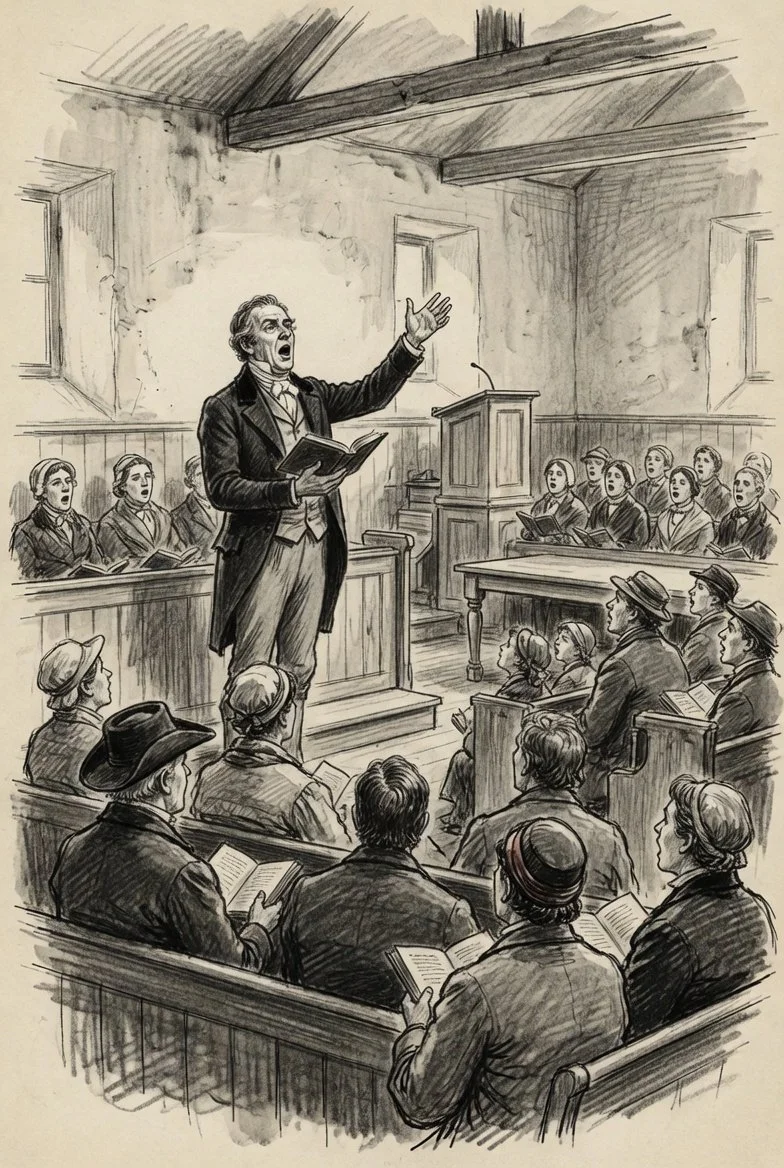
The Excellence of the Psalms as a Book of Praise.
James Dodson
By the Rev. James G. Reed, New Galilee, Pa.
Whatever men may think of the Psalter as a book of praise for the New Testament church, and whatever the churches may do with the Psalms in their services—vote them out or cling to them—without question the book of Psalms stand out as the most popular book of the Old Testament Scriptures. They are often bound with the New Testament and they are still the heart songs of multitudes of Christians. The Psalms are often read responsively where they are not sung.
We wish to emphasize the excellence of the Psalms as a book of praise.
The Psalms Give an Exalted View of God.
The sacred songs of pagan nations have sung the supposed qualities of their many gods, but they ascribe to them powers that are evil and debasing as often as that which is helpful and good. How different the picture drawn by the writers of the
[Page 2]
Psalms of Jehovah, of the true God whom we there learn to adore, to reverence and love! It is one of the reasons why the Psalms have been so precious to the children of God, why they turn to them in hours of sorrow and trial.
The Psalms ever lift our thoughts Godward. The blessings of nature are ascribed to Him. He defends us from our enemies. He is the shepherd who cares for us. He is the God of justice who punishes sin and rewards right doing. He is the God of mercy who forgives repentant sinners. His deeds of power and love were interwoven in all Israel’s history. Always God is exalted before our minds in the singing of these songs. They exalt God, and there is born the desire to serve Him. They are not only inspired, they are inspiring.
The Psalms Present Christ and His Gracious Work.
It has often been said in criticism of the Psalms as a book of praise for the New Testament church that “they have no Christ in them.” It is true the word Jesus is not there, but the truth of Jesus is, and many of his names and attributes. The Anointed, the Son, the Shepherd, the Lord-Jehovah, the Savior are there.
There are a group of Psalms we Call “Messianic” because of the special way in which they present the character, life and offices of Christ. These are too well known to call for mention here. And running through the book are many lines which point to Him and are prophetic of the events of His life. He is called the Shepherd, the Rock of Salvation, our sure Refuge. They tell of His obedience,
[Page 3]
sacrifice, betrayal, the parting of His garments, the gall and vinegar given Him to drink, His triumph over the grave, His ascension, His kingly authority, and many other events of His life.
But of greater value than these is the fact that the spirit of Christ’s teaching is seen in the Psalms: righteousness, faith, meekness, brotherly love, inward cleansing, denunciation of sin, the offer of forgiveness. Christ is in the Psalms.
The Psalms Are a Mirror of the Soul’s Experience.
Whatever the experience that comes to us there are words that give expression to it and the right and helpful thought concerning it. If there is trial, doubt and defeat, there we find comfort, guidance, and courage. If there is joy and love and victory, there are the fitting words to tell God and the world about it.
Athanasius said, “They appear to me a mirror of the soul of every one that sings them.”
Luther calls the Psalms his little Bible.
Calvin puts it, “Not without good grounds am I wont to call this book an anatomy of all parts of the soul, since no one can experience emotions whose portrait he could not behold reflected in its mirror.”
Hulley writes, “The Psalms sing human experiences over and over. One enters here into the heart struggles of the people of God, of Israel. The bitter agonies, the bloody sweats, the inward temptations, the pains of the spirit in its conflict with moral evil
[Page 4]
are felt through and through. It was in the hours of quiet communion, in the hush of midnight, in the moment of high resolve, when the soul on its knees before the throne of God, wrestled with the spectres of sin, that the triumphant faith that conquered doubt and torment was born. ‘Have mercy upon me, blot out my transgressions, wash me from mine iniquities, cleanse me from my sins, create within me a clean heart, renew a right spirit in me, take not thy Holy Spirit from me,’—these are not pretty rhetorical phrases designed to catch the ear of a congregation, but are the sincere pleadings of a broken and contrite heart.”
The whole portrayal of religious experience rings with the note of sincerity, deep feeling and honest conviction, and calls us into the same devotional spirit.
The Psalms Are a Book of Life.
Not of spiritual life only, nor even of human life alone, but of all life. The Psalter is a wonderful nature book, with God in it everywhere, and man the beneficiary. All creation speaks the praise of God.—The sun in its course, the storm that tells of God’s power, the rain, the seedtime and the harvest. The 104th Psalm is nature, glory and wonder all the way through, but it begins and ends, “Bless the Lord, O my soul,” for it is God who makes things happen in nature. His name is written large in it all. It is no place for the evolutionist to wander, who leaves God out of his world. The view of these nature wonders is not secular. All of them praise God. Dragons, deeps, fire, hail, snow, vapor,
[Page 5]
wind, mountains, trees, beasts, creeping things, birds—everything in sacred poetry sings praise to God and does His will. The Psalms help us to see God in everything.
And the Psalms are a portrayal of national life. In them are songs of an intense patriotism. There we find national history, national judgment and deliverance, national peace and prosperity. And God is in all the experiences of the nation.
Even the so-called cursing Psalms present a real phase of life. David is not praying for private vengeance. He is thinking of God’s honor. The words seem hard, but there is a response in loyal hearts to the principles of justice they invoke. They refer to public, unrepentant enemies of the Lord. They are quoted in the New Testament as a prophecy of the fate of Judas. God is a God of true justice. The New Testament is not a stranger to that sentiment. The church and the world today need a new emphasis on the vileness of sin and its fearful wages. It is a devitalized Christianity that remembers only mercy. We should not eliminate from praise all that savors of God’s holiness and justice. Altogether, the Psalms fit into our present need as Christians in a wonderful way. Let us sing them.
We recommend:
1. The daily singing of the Psalms in family worship, first to honor God, but also to cultivate Christian character in our children, and in ourselves.
2. That pastors and members speak a good word for the Psalms frequently, as occasion offers, because
[Page 6]
they deserve it and in order to offset the effect of criticism of the Psalms by those who have quit singing them.
3. A continuing campaign in our congregations for better singing. The Psalms are often wounded in the house of their friends by the way in which they are sung. They deserve to be sung with the Spirit, and with spirit, with skill and heartiness, such a singing as will lift men’s souls to God.
THE WITNESS COMMITTEE
Glenshaw, Pa.