An Address to the Students of the Theological Seminary,
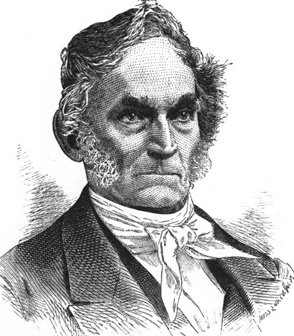
James Dodson
OF THE
ASSOCIATE REFORMED SYNOD OF THE WEST,
AT THE
OPENING OF THE SESSION,
FIFTH DECEMBER, 1836.
BY JOHN T. PRESSLY, D. D.
Pittsburgh:
PRINTED BY ANDERSON & LOOMIS.
1836.
[Unnumbered page]
Allegheny, Dec. 5, 1836.
DEAR SIR:
Being highly gratified with the sentiments of your ADDRESS, of this afternoon—and being desirous of giving them a more extensive circulation, we, in behalf of the students, respectfully solicit a copy for publication.—Respectfully yours,
WILSON BLAIN,
JAMES GRIER,
J. H. BUCHANAN,
Committee.
REV. J. T. PRESSLY, D. D.
My Dear Young Friends:
The Address, to which your note refers, discusses very briefly a subject of much importance to the friends of scriptural worship. If, in your estimation, its publication is calculated to promote the interests of truth, it is at your disposal.
Very affectionately yours,
JOHN T. PRESSLY.
Allegheny, Dec. 6, 1836.
[Page 3]
ADDRESS.
My Dear Young Friends:
After a separation of a few months, we have been permitted, in the good providence of God, once more to meet, in circumstances of general comfort, to resume those studies, which are designed to prepare us for the responsible office of preaching the gospel. On some former occasions, I have directed your attention to the great responsibility involved in the office of the Christian minister; the importance of correct motives in those who would preach Christ crucified; and the necessity of diligent preparation for a work so intimately connected with the eternal interests of our fellow-men. On these subjects you have, I hope, meditated prayerfully and deliberately.
I propose, on the present occasion, to avail myself of the opportunity of warning you against a temptation, to which the youthful inquirer after sacred truth is, in the present age, peculiarly exposed. The period in which we live is distinguished for the general diffusion of knowledge, and for great improvements in almost every department of human science. When we compare the intellectual character of our age with that of past generations, we are disposed to boast of the light of the nineteenth century. And it is but fair to admit, that the boundary of human knowledge has been considerably enlarged; and that, in the various arts, some valuable improvements have been made. And, under the prevailing influence of the spirit of the age, the theological student, in his researches after truth, is strongly tempted to cherish the fond idea of improvements in the science of sacred theology. Men have rendered themselves illustrious by making valuable discoveries in the arts. And the ardent and aspiring spirit of the young theologian is in danger of being captivated with the idea of acquiring celebrity, by making discoveries in the field of sacred truth. It must be evident to all who attentively observe the signs of the times, that there is, in some degree characteristic of the present age, a disposition to regard with contempt the attainments of former generations, and to substitute those speculations, which are the offspring of the boasted light of the nineteenth century, in the place of the old and long established theological views of our fathers. It should be remembered, however, that a knowledge of sacred truth is not the result of human experiments, or of the deductions of reason. The source whence all our knowledge of sacred theology is derived is the Bible; and the Bible is not a new book, but the same which our fathers possessed. The grand help to a proper understanding of the doctrines of the Bible, is, the tuition of the Holy Spirit. And as we have no reason to suppose that the influences of this divine Instructor
[Page 4]
are enjoyed in a more abundant degree by ourselves, than they were by our fathers, it is arrogance to suppose that our knowledge of the great system of truth, contained in the Bible, is superior to that of all past ages.
It may reasonably be supposed, that we, as a distinct portion of the general church, are in danger of being influenced by this prevailing spirit of the age, as well as others. We, too, are liable to be carried away by the fond conceit, that we are so much wiser than our fathers, that we should reject, as antiquated dogmas, many of those doctrines, which they regarded as sacred. While, therefore, you are to call no man master, on earth—yet, let me affectionately warn you against the influence of that spirit, which would prompt you to entertain contempt for those long received views of truth, handed down to us by our fathers, and which many of them sealed with their blood.
This remark may be extended to those doctrines, generally, which are embraced in our excellent standards. It is, however, my wish, on the present occasion, to call your attention particularly to the principles which we, as a portion of the Christian church, have adopted on the subject of Psalmody. Our views on this subject are plainly exhibited in the following language: “It is the will of God, that the sacred songs contained in the book of Psalms be sung in his worship, both public and private, to the end of the world.” In this declaration it is supposed, that the singing of praise to God is a part of Christian worship; and that, in performing this duty, we are to be guided by the revealed will of God. And we here declare our belief, that it is the will, or appointment of God, that the sacred songs contained in the book of Psalms should be used for this purpose. You are aware, that, on this subject, we differ in opinion with some portions of the Christian church, respectable for numbers, learning, and piety. And the diversity of opinion which exists, operates as a serious difficulty in the way of that Christian fellowship which ought to be cultivated among all the members of the household of faith. And it may deserve consideration, whether the principle exhibited in our standards is of such a character, that, for the sake of peace and harmony in the Christian world, it may be surrendered; or, whether, as faithful witnesses for the truth, we are bound to contend earnestly for it, as a part of the faith which was once delivered to the saints.
The conflicting views which are maintained on this subject, may all be reduced to two. The first maintains, that the songs contained in the book of Psalms were given by inspiration of God, to be used in singing his praise; and that we have no authority for the use of songs, of human composure. The other contends, that evangelical hymns, composed by uninspired men, may be sung in the worship of God, not only with propriety, but that they are preferable, being better adapted to the gospel dispensation. I request you to look distinctly at the question which is at issue; for it is rarely that you find it correctly stated in the discussions on this subject. The question in dispute, then, is not what metrical version shall be used,
[Page 5]
to the exclusion of all others; nor is the question, Shall we sing the Psalms of Rouse, or shall we use those of Watts? In the exhibition of our views, in our standards, to which I have already referred, there is no mention made of any particular metrical version: it is simply declared, that it is the will of God that the songs contained in the book of Psalms be sung in his worship. I repeat it, then, that the point in dispute is not what version shall be used; or whether the language of the Old or of the New Testament shall be preferred; or whether the productions of this man or that man shall be adopted. Neither of these is the question in controversy; but it is simply this—Shall we, in singing God’s praise, make use of the songs contained in the book of Psalms? or shall we adopt, in their stead, hymns composed by uninspired men? That this is a fair statement of the question at issue, I hope you will be fully satisfied, before we close.
In support of the position, that the songs contained in the book of Psalms are to be sung in the worship of God, my principal argument is drawn from,
1. THE DIVINE APPOINTMENT of the book of Psalms for this purpose. If it can be made to appear to your satisfaction, that these songs were given to the church for this purpose, you will then admit that the question is settled: for, with all who receive the Bible as a rule of faith, it will be conceded, that, in the worship of God, we ought to be guided by divine appointment. “In vain,” says our Lord, “do ye worship me, teaching for doctrines the commandments of men.” I ask your candid attention, then, to the consideration of the evidence that the songs contained in the book of Psalms were divinely appointed to be used in singing God’s praise.
The divine inspiration of the book of Psalms will be admitted by all who receive the Bible as the word of God. Though men may sometimes speak incautiously of the scripture Psalms, as though they were the productions of mere human genius, as when they represent David as giving vent to his private feelings of malevolence towards his personal enemies; yet all who really believe in the divine inspiration of the Scriptures, will admit that they, in common with other parts of the Bible, are the word of God. And while the book of Psalms is a part of the word of God, and, in common with all other portions of the Bible, is profitable for instruction in righteousness, it is peculiarly adapted to a specific purpose: it is profitable, as containing matter suitable for praise—an end to which some other portions of divine revelation are not adapted. Every thing contained in the sacred volume is of use to the church of God; but some parts of it are more particularly useful for one end; while some are profitable for another. And the book of Psalms is adapted to the edification of the church especially, as furnishing a collection of songs of praise. That they were designed to be sung in the praise of God, is evident from the use which was originally made of them, from their contents; and from the title by which they are distinguished. A slight examination of their contents is sufficient to lead us to the conclusion, that the specific purpose for which they were designed,
[Page 6]
is the celebration of Jehovah’s praise. Throughout, they abound with ascriptions of praise to God; and with urgent calls, addressed to all classes of persons, to engage in singing praise to God. And in the conclusion to which we are led by an examination of their contents, we are further confirmed, when we look at the title which the Holy Spirit has appropriated to these productions of infinite wisdom. This collection of sacred songs is denominated the “Book of Psalms,” or songs of praise. By this title, these songs are referred to repeatedly in the New Testament. For example—“David himself saith in the Book of Psalms:”(1) And again—“It is written in the Book of Psalms.”(2) These sacred compositions, then, are by their Author denominated, “Psalms,” or songs of praise. And from the name appropriated to the whole collection, as well as from the contents of these songs, it follows that the specific end for which they were intended was, that they should be employed in the celebration of God’s praise.
That we may be able to appreciate more justly the force of the argument from the divine appointment of the scripture Psalms to be used in the praise of God, it may be advantageous to take a brief view of the history of this part of religious worship, as it may be deduced from the sacred scriptures.
In the primitive age of the world, the worship of the Deity consisted chiefly in the offering of sacrifice. It does not appear, from any thing on record, that the singing of praise formed any part of the regular worship of God. The first instance on record, in which the people of God are represented as engaged in a social capacity in this exercise of religious worship, is, on the occasion of that signal display of the power and goodness of God, in their miraculous passage through the Red sea, and in the terrible overthrow of their Egyptian adversaries. “Then sang Moses, and the children of Israel, this song unto the Lord, and spake, saying, I will sing unto the Lord, for he hath triumphed gloriously; the horse and the rider hath he thrown into the sea.”(3) On a subsequent occasion, Deborah, a prophetess, furnished a song, commemorative of the divine goodness in delivering Israel from the yoke of Jabin, the king of Canaan. “Then sang Deborah and Barak, the son of Abinoam, on that day, saying, Praise the Lord for the avenging of Israel.”(4) At this time there had not yet been provided a book of Psalms containing a collection of songs adapted to the diversified circumstances of the people of God. Nor does it appear that the singing of God’s praise formed any part of the stated worship of Jehovah: but, on particular occasions, when the circumstances of divine Providence called for a public expression of gratitude, some individual was raised up, who, under the influence of the Spirit of God, furnished a song, commemorative of the divine goodness.
At least as early as the days of Samuel, there were established, in the Hebrew commonwealth, Schools of the prophets. These Seminaries of sacred learning were under the superintendence of
_____
(1) Luke 20:42.
(2) Acts 1:20.
(3) Exod. 15:1.
(4) Judg. 5:1.
[Page 7]
some distinguished prophet; and in them the youth, destined to the prophetic office, were employed in the study of divine things. Though the sacred history has given us but little information relative to the exercises in which the youth in these schools were engaged, we learn that one particular part of their employment was, the celebration of God’s praise in sacred songs, accompanied by instruments of music. Saul, as Samuel had foretold, when he came to the hill of God, which was the seat of one of these sacred colleges, was met by a company of prophets, who “prophesied upon the psaltery, and tabret, and pipe, and harp.”(1) And, seized by a divine impulse, Saul joined their company, and prophesied also. And on a subsequent occasion, when he sent messengers to Naioth, to apprehend David, we are told, that when the messengers saw the company of the prophets prophesying, and Samuel standing, as appointed, over them, the Spirit of God was upon the messengers of Saul, and they also prophesied.(2) By prophesying, in these instances, is evidently meant, the celebration of God’s praise in sacred songs, under a divine influence. Accordingly, the sons of Asaph and Jeduthun, musicians in the temple, are represented as prophesying with a harp—to give thanks, and to praise the Lord.(3) In these sacred colleges, then, among other employments, poetry and music were cultivated by the sons of the prophets; sacred hymns were composed under a divine influence, and were sung in the praise of God, accompanied by musical instruments. Whether any of the hymns composed in these schools of the prophets have been transmitted to us in that collection of sacred songs, denominated the book of Psalms, we have not the means of determining with certainty.
At length, however, in the person of David, a prophet was raised up, whom the Spirit of the Lord eminently qualified for this service, who composed a great variety of sacred hymns, and reduced the public worship of God into a regular system, of which the singing of praise formed a part. That David was divinely qualified for this service, and called to it, is sufficiently evident from the express language of the Bible: “David, the son of Jesse, and the man who was raised up on high; the anointed of the God of Jacob, and the sweet Psalmist of Israel.”(4) In the worship of the tabernacle, according to the appointment of Moses, the Israelites were directed to express their joy in God, by blowing with trumpets over their burnt-offerings, and over the sacrifices of their peace-offerings.(5) In connection with the offering of sacrifice, David introduced the singing of praise. By his direction, the Levites stood every morning, to thank and praise the Lord, and likewise at even: and when the burnt-offering began, the song of the Lord began.(6) And that these regulations in the worship of God were made, not by his own private authority, but by divine direction, we have sufficient evidence. In the instructions which David gave to Solomon, with regard to the temple, and its worship, he says, All this the Lord made me to
_____
(1) 1 Sam. 10:5–10.
(2) 1 Sam. 19:20.
(3) 1 Chron. 25:3.
(4) 2 Sam. 23:1.
(5) Num. 10:10.
(6) 1 Chron. 23:30—2 Chron. 29:18.
[Page 8]
understand, in writing by his hand upon me, even all the works of this pattern.(1) And in the reformation of the worship of the temple, effected in the reign of Hezekiah, this pious king set the Levites in the house of the Lord, with cymbals, with psalteries, and with harps, according to the commandment of David, and of Gad, the king’s seer, and Nathan the prophet; for so was the commandment of the Lord by his prophets.(2)
Previous to the age of David, then, it appears that the singing of praise was not a part of the stated worship of God. On particular occasions, when the providence of God called for a public expression of their gratitude, the people of God engaged in this delightful exercise; and, at such times, some one, under the influence of inspiration, furnished a song suited to the occasion. But, in the person of David, God raised up a prophet, by whom the public worship of God was reduced into a system, of which the singing of praise formed a part. David was also endowed by the Holy Spirit with those peculiar gifts, which were necessary to qualify him for the office of a SWEET PSALMIST OF ISRAEL; and by his instrumentality the church was furnished with a great variety of psalms, and hymns, and songs, adapted to every variety of condition. “In these songs,” as the celebrated Edwards(3) justly observes, “David speaks of the incarnation, life, death, resurrection, ascension into heaven, satisfaction, and intercession of Christ; his prophetical, kingly, and priestly office; his glorious benefits in this life, and that which is to come; his union with the church; the blessedness of the church in him; the calling of the Gentiles; the future glory of the church, near the end of the world; and the coming of Christ to the final judgment.” The singing of praise to God was now a part of the regular worship of God; and, by the sweet Psalmist of Israel, whom God raised up, Israel was furnished with songs to be used in this exercise. The divine appointment of these psalms to be used in this part of religious worship is, therefore, evident; and accordingly, as a matter of history, we are informed, that they were afterwards used by the church for this purpose. At the dedication of the temple, the Levites praised God, saying, “For he is good; for his mercy endureth for ever;” which words form a prominent part of the 136th psalm. And in testimony of the divine approbation, “The house of the Lord was filled with a cloud, even the house of the Lord, so that the priests could not stand to minister, by reason of the cloud: for the glory of the Lord had filled the house of God.”(4) And in the history of the reformation, under the reign of Hezekiah, we are informed, that Hezekiah, and the princes, commanded the Levites to sing praise unto the Lord, with the words of David, and of Asaph, the king’s seer.(5) David, the sweet Psalmist of Israel, was the principal individual employed in furnishing songs for the use of the church; but Heman, Jeduthun, and some others, performed their part in the same service. These holy men of God, who spake as they were moved by the Holy Ghost, fur-
_____
(1) 1 Chron. 28:11–19.
(2) 2 Chron. 29:25.
(3) History of Redemption.
(4) 2 Chron. 5:13, 14.
(5) 2 Chron. 29:30.
[Page 9]
nished for the use of the church a rich and varied collection of sacred songs, which constitute the book of Psalms. By whom these songs, which were composed by different persons, and on a great variety of occasions, were collected together into a book, and arranged in their present order, we are not able to determine with absolute certainty. It is probable, however, that it was by Ezra. This distinguished Scribe, according to Jewish tradition, by divine direction, collected and arranged the different portions of the sacred writings then extant, and digested them into a system. It is, however, sufficient for us to know, that the writers of the New Testament refer to these sacred songs by the title of the “Book of Psalms.” And, to use the language of the celebrated writer already referred to, “it is manifest that the book of Psalms was given of God for this end;” that is, that it might be used in singing God’s praise. “It was used in the church of Israel by God’s appointment. This is manifest by the title of many of the psalms, in which they are inscribed to the chief musician; that is, to the man that was appointed to be the leader of divine songs in the temple, in the public worship of Israel.”
Here, then, we rest. In the Bible we have a book of Psalms, given by inspiration of God, the original use of which, and the title and contents of which, manifest, that the specific end for which it was given was, that it should be employed in singing God’s praise; and being by Heaven communicated to the church for this end, it ought of course to be used in this part of God’s worship. Whether any other system of songs has been provided by the Head of the church, superseding the necessity of using these, shall be the subject of inquiry, ere we come to a close.
2. My second argument in favor of the exclusive use of the scripture Psalms is drawn from the fact, that there is no collection of songs furnished in the New Testament, nor is there any direction given on the subject of providing one. Having seen the divine appointment of the songs contained in the book of Psalms, we now direct our attention to the New Testament, and inquire whether the use of them has been set aside, and others introduced in their stead. On opening the New Testament, we at once perceive that the singing of praise is recognised as a part of religious worship. Immediately after the institution of the holy supper, the evangelists inform us, that our Lord and his disciples sang praise to God.* What was sung on this occasion, whether it was one of those hymns already provided for the use of the church, or whether it was one furnished by our Lord at the time, we are not expressly told; nor can it be determined with absolute certainty. It is, however, probable, and expositors generally, of every name, concur in the opinion, that it was the Hallel, which was usually sung by the Jews, in connection with the observation of the passover. This Hallel consisted of six psalms; commencing with the 113th. But that our Lord, the King of Zion, had a most perfect right to furnish a hymn for the occasion, if, in his
_____
* Matthew 26:30.
[Page 10]
wisdom, he thought it necessary, no one will deny. If he did, however, furnish a hymn on this occasion, it deserves to be remarked, that he did not consider it necessary for us; and consequently it has not been transmitted to us. Paul and Silas, when prisoners at Philippi, were employed, during the silence of the night, in singing praise unto God.(1) What songs they used on this occasion, we are not informed. Any one, however, who has a tolerable acquaintance with the book of Psalms, would have no difficulty in selecting a number of these divine songs, admirably suited to the circumstances of these servants of Jesus, who were persecuted for righteousness’ sake. But if any one differs in opinion with us, let him produce what the apostles used, and we promise to adopt it likewise.
In his epistles to the Ephesians and Colossians, the apostle Paul recognises the duty of singing God’s praise. “Be filled with the Spirit, speaking to yourselves in psalms, and hymns, and spiritual songs; singing and making melody in your hearts to the Lord.”(2) Again—“Let the word of Christ dwell in you richly, in all wisdom, teaching and admonishing one another in psalms, and hymns, and spiritual songs; singing with grace in your hearts to the Lord.”(3) And the apostle James says, “Is any merry? let him sing psalms.”(4) Both these apostles inculcate the duty of singing psalms; but give no directions on the subject of the composition of psalms. It is true that psalms must first be provided, before they can be used. But the Christians to whom these exhortations to sing psalms were addressed, had only to open the Bible, and there they would find a book of Psalms ready for their use. And that Paul had a particular reference to the book of Psalms, seems conclusively evident. He refers to three different kinds of sacred songs—psalms, hymns, and spiritual songs. And it is worthy of remark, that, in the Septuagint translation of the scriptures, which was then in common use, these three appellations are found in the titles of different psalms.
From the New Testament, then, we learn that it is a Christian duty to sing psalms. This is evident from the example of our Lord and his apostles, and also from the directions given to the churches. The New Testament, however, contains no system of songs; nor does it give any directions on the subject of making one; but recognises the existence of a book of Psalms already prepared. The conclusion, then, to which we come, is, that the songs contained in the book of Psalms are to be used in the praise of God by divine appointment, and that divine appointment can be claimed in behalf of none others.
3. The great superiority of the songs of inspiration is a sufficient reason why they should be used in preference to all others. The book of Psalms is admitted by all Christians to be the word of God. In these divine compositions, the character, and perfections, and will of God, are exhibited by himself. Here, that praise is ascribed unto God, which is due unto his name. Here, the exercises of the renewed soul are described by Him whose prerogative it is to
_____
(1) Acts 16:25.
(2) Ephes. 5:19.
(3) Colos. 3:16.
(4) James 5:13.
[Page 11]
change the heart. And with regard to every thing contained in this book, whether it may be an exhibition of the divine perfections, a delineation of the character of the true believer, or a declaration of what God has done for his church in past ages, or a promise with regard to what the objects of his love may expect from him, we know assuredly that it is the truth, without any alloy; and on it we can rely with unshaken confidence. The words of the Lord are pure words, as silver tried in a furnace of earth, purified seven times. But with regard to any other collections of songs, it must be admitted, that they are the productions of men, and partake, in a greater or less degree, of that imperfection which characterizes all the works of man. They may be recommended by the elegancies of language, and the charms of poetry; and, in addition to these things, they may possess no inconsiderable portion of evangelical truth; but still, after all that can be said in their favor, they are the productions of erring man. On the contrary, the songs contained in the book of Psalms are the word of Him whose work is perfect. And shall we substitute in the place of the word of God itself, that which at best is only a human exposition of it? Can this be done without offering an indignity to the Author of the Bible, and practically preferring the productions of men before his word? But perhaps some one will say, the point in dispute is not whether the productions of men are to be placed upon a level with the word of God, but, simply, whether one version of the psalms, or another version, shall be preferred. You may prefer the old version, but I prefer the improved version of Watts.
To this I reply, that the mere preference of one version over another, can have no application to the hymns in common use. It will not be pretended that these are a version of the scripture psalms. All that can be said of them is, that they are founded on different portions of scripture. In so far, therefore, as the use of evangelical hymns is concerned, it is perfectly plain, that the point in dispute has respect not to any particular version, but to an important principle, and that is, the propriety of introducing into the worship of God the compositions of uninspired men. But it may be alleged, that whatever may be the point in dispute, in relation to the use of hymns, the question with regard to the psalms is, simply, which shall be preferred, the version of Rouse, or the version of Watts? To this I reply, that Watts’ psalms are not, in any proper sense of the word, a version of the scripture psalms; nor was it the intention of their author that they should be. But let this distinguished writer speak for himself. In his preface he says, “I have entirely omitted several whole psalms, and large pieces of many others, and have chosen out of all of them such parts only as might easily and naturally be accommodated to the various occasions of the Christian life; or at least might afford us some beautiful allusions to Christian affairs. These I have copied and explained in the general style of the gospel; nor have I confined my expressions to any particular party or opinion, that, in words prepared for public worship, and for the lips of multitudes, there might not be a syllable offensive to sincere Christians, whose judgments may differ in the lesser matters of religion.” After this
[Page 12]
honest and candid declaration of the author himself, how preposterous is it to represent his performance as a version of the psalms! “Several whole psalms are entirely omitted, and large pieces of many others;” and yet will it be called a version of the scripture psalms? Nay—“out of all of them,” he says he has “chosen such parts only as might easily and naturally be accommodated to the various occasions of the Christian life;” and yet, after all, will it be pretended that it is a version of the psalms? Nor is this all that he has done. He states further—“Where the Psalmist uses sharp invectives against his personal enemies, I have endeavored to turn the edge of them against our spiritual adversaries. Where the flights of his faith and love are sublime, I have often sunk the expressions within the reach of an ordinary Christian.” Not only then has he, according to his own declaration, omitted much that is contained in the psalms, but he has greatly altered that which he has retained. In some instances, the Psalmist, it seems, has evidenced an unchristian spirit, and has used “sharp invectives against his personal enemies;” and, in his improvement, our author turns the edge of these invectives against our spiritual adversaries. In other instances, the spirit of the Psalmist is rather too heavenly; the flights of his faith and love are so sublime, that, in his improvement, Watts sinks the expressions within the reach of an ordinary Christian. And after many of the psalms have been entirely omitted, parts culled out of others, and the spirit of the remainder changed, will it still be pretended, that this is a version of the scripture psalms? I repeat it, then, it neither is, nor was it, the design of its author, that it should be a version of the psalms, properly so called. His professed design was to imitate the psalms of David in the language of the New Testament, and, as he expresses it, to make David speak “the common sense and language of a Christian.” The point in dispute, then, is not which shall be preferred, this version of the psalms, or that version of the psalms; but it is simply this—Shall we confine ourselves to the use of the songs of inspiration, or shall we exercise our liberty in using the evangelical hymns of uninspired men? And our argument in favor of the exclusive use of the songs of inspiration, is drawn from their entire superiority.
I have stated already, and I wish you to keep it distinctly in view, that the controversy on this subject does not relate to what particular version of the psalms shall be used. It is true, however, that in those branches of the Christian church, which plead for the exclusive use of the scripture psalms, what is termed “Rouse’s version,” is now used; and it may be worth while to notice briefly the history of the introduction of this version.
During the sitting of the Assembly of divines at Westminster, in the year 1643, this version was brought before that venerable body. Being carefully examined and amended by the Assembly, the use of it was authorized in the year 1645. It was afterwards laid before the General Assembly of the church of Scotland. By the General Assembly it was referred to the consideration of the Presbyteries, who reported such corrections and amendments as they thought proper. These amendments were reconsidered by the Assembly;
[Page 13]
and after the version had been improved by the combined wisdom of the Presbyteries and the General Assembly of the church of Scotland, the use of it was authorized in the year 1649, as being found to be, when compared with the original, more agreeable to the text than any version heretofore prepared. This version is now used, for the simple reason, that it is decidedly the best we have. It is framed upon the principle, of a translation of the original as literal as the laws of versification will allow. The version we do not suppose to be perfect; but admit, in relation to it, what all admit in relation to the received translation of the Bible, that, in some particulars, it might be improved. All expositors of the Bible occasionally suggest amendments of the common translation, by which they suppose it might be improved; and yet, the commonly received translation of the scriptures, we regard as substantially the word of God. And if the prose translation of the psalms deserves to be regarded as the word of God, the mere English reader may satisfy himself that the metrical version possesses substantially the same character. Not only is there generally between the metrical version and the prose translation, an exact coincidence in sentiment, but, to an extent truly remarkable, the metrical version retains the very words of the prose, only a little transposed, for the sake of rhyme. But if, in any case, it can be made appear that our metrical version does not fully and literally exhibit the idea of the original text, we then admit, in relation to it, what all are free to grant in reference to the prose translation, that it may be amended. It is, then, ungenerous and unfair, to represent us as contending for the use of Rouse’s psalms. As well might the Romanists represent Protestants as contending for king James’ Bible, because they use the translation of the scriptures which was prepared under the reign, and in conformity with the order of that prince. No—our principle is, that it is the will of God, that the songs contained in the book of Psalms be sung in his worship, both public and private, to the end of the world. Among Presbyterians it is a received principle, that the scriptures are to be translated into the language of every nation unto which they come. We use a particular metrical version of the psalms; because it is believed to be the best, most faithful and correct, which has yet been prepared: and we cannot use Watts’ psalms; because these are not, in any proper sense of the word, a version of the songs of inspiration.
But perhaps some one will inquire, what impropriety can there be in using, in the praise of God, the hymns of uninspired men, provided the sentiments they contain be strictly in accordance with the gospel? My answer is short—they lack the divine appointment. Evangelical hymns may be read for our improvement, just as we read evangelical sermons, or any other human writings, which are founded upon the scriptures; but, in offering religious worship unto God, we must be governed by his word: and, therefore, unless it can be made appear that God has appointed the use of uninspired hymns in his worship, their introduction is unauthorized, and consequently improper. The manner in which God is to be worshiped, is not to be determined by human wisdom, but must be learned from the divine
[Page 14]
appointment. If men were left to determine, in the exercise of their own discretion, what is proper to be introduced into the worship of God, what could be excluded? One considers that a band of musical instruments, as an accompaniment of our public praise, adds much to the solemnity and impressiveness of this part of divine worship; and thus our churches may be rendered centres of attraction to the fashionable and gay, who are delighted with “concord of sweet sounds.” And as it is important to bring all men under the influence of the preaching of the gospel—if we were left to determine this matter by our own sense of propriety—we might argue, that, to accommodate the fastidious taste of the giddy multitude, it would be perfectly proper to relieve the dullness of preaching by a musical entertainment. Another might plead, that his devotion is materially assisted by a picture, or visible representation, of the cross, of God, or of Christ. These pictures, he might plead, serve to bring to his remembrance the objects they represent, and thus assist his thoughts in soaring from earth to heaven. And thus the walls of our churches might be decorated with splendid images. And while these images might serve to help the devotional feelings of some, our churches might be rendered more attractive to those who have a taste for the fine arts. And where should we stop? There is such an endless diversity in the tastes of men, that one would like to have this, and another would choose to have that, introduced into the worship of God, until the simplicity of scriptural worship would entirely disappear in the midst of the fertility of human invention. But let us pause, and ask, who hath required these things at your hand? These things may seem to men to be improvements in the worship of God; but how do we know that they will be acceptable to Him who is the object of all religious worship? Have they the sanction of God’s appointment?
That you may appreciate the importance of attending to the divine appointment, in every thing connected with the worship of God, let me direct your attention to a particular case in the history of divine worship, under the law, as an example for illustration. In the directions given to Moses, relative to the making of an altar, it is said, “If thou wilt make me an altar of stone, thou shalt not build it of hewn stone; for if thou lift up thy tool upon it, thou hast polluted it.”* Now, if we for a moment keep the divine appointment out of view, it would be very easy to assign a variety of plausible reasons, why a different kind of altar should have been made. It might be said, that an altar of rough unpolished stone would not be respectful to the Deity: to make such an altar, would be to offer an indignity to God. A due respect to the glory of the divine character, would require that the altar should be constructed of stone, handsomely polished. If the matter were left to the judgment of men, such would certainly be our decision. But the divine declaration is, “If thou lift up thy tool upon it, thou hast polluted it.” To apply this example to the subject before us, it may be argued, in favor of the hymns of uninspired men, that they are evangelical, that they contain gospel truth,
_____
* Exodus 20:25.
[Page 15]
presented in elegant language, and adorned with the beauties of poetry; and it may be said, that they are much better adapted to the gospel dispensation than the old, antiquated psalms of the Bible. But the question meets us, who hath required this at your hand? Has God directed us to praise him in the use of uninspired hymns? We know that he has furnished a book of songs of praise, the use of which in his worship he has appointed; but where has he appointed the use of hymns of human composition? We know that the praises of God are uttered in an appropriate manner, in the songs of inspiration; for they are the productions of his own Spirit. And we are assured, that if we use these with suitable affections, our worship will be acceptable unto him; because it is regulated by his own appointment. But shall we leave these fountains of living water for cisterns which we ourselves have hewn out? Before we take a step of such importance, let us be very sure that we have the divine authority.
But it will be said, that in prayer we do not confine ourselves to the language of scripture, but express our desires in our own language, in accordance with the scriptures. Why may we not exercise the same liberty in framing our songs of praise? I answer, that the cases are entirely different.
1. There is furnished for our use, by the Spirit of infinite wisdom, a book of Psalms; but we have no book of prayers. There is consequently provision made in the one case, which is not made in the other. When the disciples desired our Lord to teach them how to pray, he gave them a form of prayer for their assistance; but instead of confining them to the exclusive use of it, he expressly says, “AFTER THIS MANNER PRAY YE.” But as it respects the exercise of praise, while we are directed to sing psalms, we have provided for our use, a book containing a great variety of songs, adapted to the various conditions in which the believer may be placed.
2. The Holy Spirit is promised for the express purpose of aiding us in prayer, while there is no promise of his assistance in making songs of praise. Among the precious promises recorded in the Bible, this is one of great importance to the Christian—“I will pour upon the house of David, and upon the inhabitants of Jerusalem, the spirit of grace and of supplications.”* Again, it is said, “The Spirit also helpeth our infirmities; for we know not what we should pray for as we ought; but the Spirit itself maketh intercession for us with groanings which cannot be uttered.”† We have, then, express encouragement to expect the assistance of the Spirit to teach us how to pray, and what to pray for; consequently we have no system of prayers furnished in the Bible. We are directed to pray always, with all prayer and supplication; and we are encouraged to look for the aid of the Spirit in making known our requests. But we have no promise of the Spirit to teach us how to express our praise: that service is already performed; the praises of God are already expressed in a great variety of songs, indited by the Holy Spirit himself. Consequently the believer does not now need the aid
_____
* Zech. 12:10.
† Rom. 8:26.
[Page 16]
of the Spirit to teach him in what language the praise of God is to be celebrated; and he is not, therefore, promised as a Spirit of praise. In the songs of inspiration, we are already taught how God should be praised, and what praise is proper to be offered to him; and all that the believer now needs is the gracious influence of the Spirit, to enable him to sing the songs which he has indited, with appropriate affections, making melody in his heart to the Lord.
But it will be said, that many men, eminent for piety, learning, and usefulness, are in the habit of using hymns of human composure; and is it not reasonable to suppose that such men would be left to fall into error. It is probable that this consideration has more influence with most persons, in favor of the use of uninspired hymns, than any other. The principles involved in the subject they have never examined, and do not understand: authority from the word of God, to support this usage, they have not inquired after: but they know that hymns composed by uninspired men have long been used by the largest and most popular denominations of Christians, and therefore it is considered right to use them, while it is regarded as bigotry, or a fondness for old usages, which induces any one to adhere to the use of the scripture psalms. But you, my young friends, must remember, that one is our Master, even Christ; and from his appointment, and not from the opinions of men, are we to learn what is proper in the worship of God. The opinions of men are fluctuating; and if we suffer ourselves to be guided by them, we can never expect to be established in the truth. The best of men are, in the present state, imperfect, and know but in part; and if we take such for our guides, we may expect, in a greater or less degree, to be led astray. One class of good and great men will tell you, that baptism administered in the form of sprinkling with water is no baptism; while another, equally eminent for piety and learning, maintains, that this is the proper mode of administering this Christian ordinance. One class of Christians, many of whom are respectable for talents and acquirements, regards the doctrines embraced in the Calvinistic system as horrible, while another, inferior to them in nothing which adorns the Christian character, esteems these doctrines as precious and comforting truths. And if we take good and great men as our guides, which of these conflicting views of divine truth shall we embrace? Respectable human authority can be adduced in favor of either; yet it is certain that the word of God does not teach doctrines at war with each other. We must, therefore, take our religious principles from no man, nor combination of men—for the best of men are liable to err—but from the word of God. To the law and the testimony must we appeal. To impress our minds with a sense of the danger of trusting in men, the scriptures have recorded the errors of men most distinguished for piety and wisdom. Take for example the case of Solomon. In relation to Solomon, God promised to his father David, saying, “I will be his Father, and he shall be my son.” And after he came to the throne, it is recorded of him, that “Solomon loved the Lord, walking in the statutes of David his father.” And, while he was remarkable for his piety, his superior wisdom rendered him the
[Page 17]
admiration of the world. “All the earth sought to Solomon, to hear his wisdom, which God had put in his heart.”* If, then, it were proper to take any man as a guide in matters of religion, here is one whom we may safely follow: here is a man, to whose piety and wisdom, we have the testimony of God. But the same testimony informs us, that, “It came to pass, when Solomon was old, that his wives turned away his heart after other gods.”† Lamentable instance of human weakness! And mark, it was when Solomon was old, at a period of life when we would have supposed that he would have been completely established in those correct principles of religion, in which his pious father had instructed him—it was when he was old, that Solomon went after Ashtoreth, the goddess of the Zidonians, and Milcom, the abomination of the Ammonites. How impressively are we taught by this example, that neither wisdom nor age are sufficient to preserve us from error! With this example on the sacred page before us, we need not be stumbled, if, in the present age, we see men who have been carefully instructed in the truth, relinquish it, at an advanced period of life, for principles of a more popular character. But let us learn from it, that it is not safe to take the opinions either of the wise or of the aged, as our rule, in things pertaining to the worship of God. Such a rule is liable to change with every succeeding age; and while we surrender ourselves to its direction, like Noah’s dove, we find no rest for the sole of our foot. But the word of the Lord abideth for ever; and on this foundation we rest securely.
In conclusion, then, I hope you will see that the principle involved in the controversy on the subject of psalmody, is one of no small importance. It is, shall we, in the praise of God, be governed by divine appointment; or shall we act according to human discretion? And if, in the exercise of human discretion, we introduce into the worship of God a system of songs which has not the sanction of the divine appointment, what is to hinder the introduction of doctrines which have not the authority of God’s word, but which accord with our views of the philosophy of religion? It is an inquiry which well deserves the consideration of the churches—What influence has the use of the songs of uninspired men, in the worship of God, exerted in promoting the introduction of doctrines which are contrary to the faith once delivered to the saints? No sufficient reason can be assigned why we should introduce into the worship of God any thing which has not the sanction of the divine appointment, any more than that we should be at liberty to teach doctrines which are not supported by the word of God: and where the one precedes, it need not seem strange to see the other following in its train. But let me say to you, in the language of inspiration, “Be not carried about with divers and strange doctrines; but stand ye in the ways, and see, and ask for the old paths, where is the good way, and walk therein, and ye shall find rest for your souls.”
_____
*1 Kings 10:24.
† 1 Kings 11:4.
[Final page]
CATALOGUE OF STUDENTS.
NAMES.
RESIDENCE.
WILSON BLAIN,
Greenfield, Ohio.
JOHN H. BONNER,*
Do. “
JAMES R. BONNER,*
Dayton, “
JAS. H. BUCHANAN,
Lancaster, “
JOSEPH S. BUCHANAN,
Washington county, Pa.
WM. G. CANDERS,
Westmoreland co. “
WM. CONNOR,
Allegheny co. “
JEREMIAH DICK,
Westmoreland co. “
JOHN EKIN,
Do. “
JOHN FREELY,
York co. “
J. G. FULTON,
Pittsburgh, “
RICHARD GAILEY,
Do. “
ROBERT GRACY,*
Cumberland co. “
JAMES GRIER,
Allegheny co. “
JOHN M. GALLOWAY,*
Mercer co. “
WM. R. HEMPHILL,*
Chester District, S. C.
STEPHEN L. HAT,*
Morgan co. Ohio.
WM. LORIMER,
N. Concord, “
WM. LOUGHRIDGE,
Mansfield, “
JOSEPH M’CREARY,*
Abbeville District, S. C.
JOHN M’CLURE,
Allegheny co. Pa.
THOMAS MEHARD,
Beaver co. “
ROBERT M’ILROY,*
Greensburgh, “
ALEXANDER MILLAR,
Perthshire, Scotland.
JOHN NEILL,*
Washington co. Pa.
JAMES PRESSLY,*
Pittsburgh, “
JOHN N. PRESSLY,*
Abbeville District, S. C.
JAMES F. SAWYER,*
Warren co. Ohio.
THOMAS L. SPEER,
Washington co. “
JOHN C. STEEL,
Oxford, “
WM. G. SHAND,
Dundee, Scotland,
JOSEPH THOMPSON,
Carrol co. Ia.
JAMES WALKER,
Cannonsburgh, Pa.
[TOTAL THIRTY-THREE.]
* Licentiates.