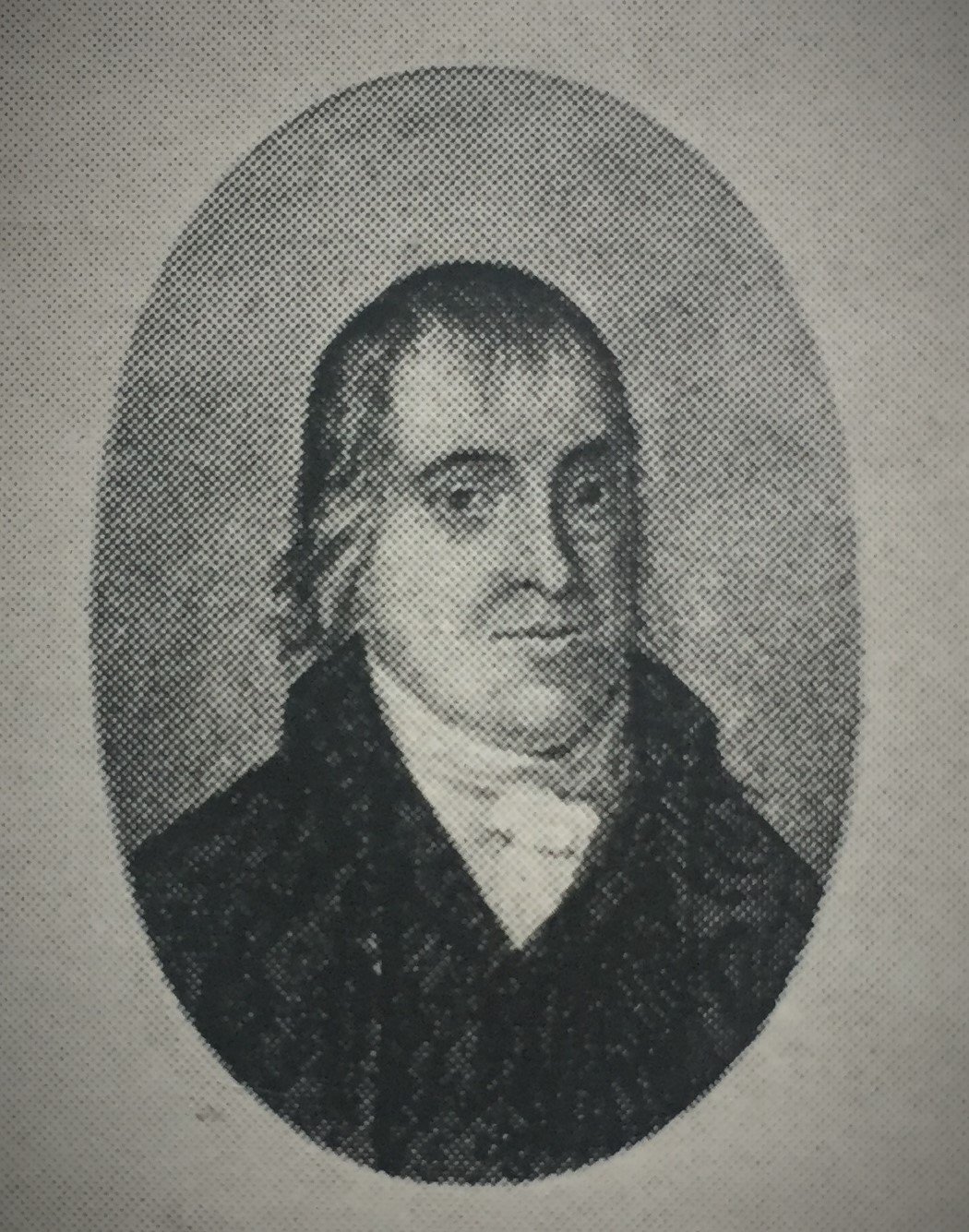
TWO ESSAYS ON DANIEL’S PROPHETIC NUMBER OF TWO THOUSAND THREE HUNDRED DAYS;
James Dodson
AND ON
THE CHRISTIAN’S DUTY
TO INQUIRE INTO
THE CHURCH’S DELIVERANCE.
BY ARCHIBALD MASON,
MINISTER OF THE GOSPEL, WISHAWTOWN, SCOTLAND.
NEWBURGH:
PRINTED FROM THE GLASGOW EDITION, BY
WARD M. GAZLAY.
1820.
[Unnumbered page]
ESSAY I.
ON
DANIEL’S PROPHETIC NUMBER
OF
TWO THOUSAND THREE HUNDRED DAYS.
THE eighth chapter of the book of Daniel contains the record of an extraordinary vision, which that prophet saw, when in the third year of Belshazzar’s reign, he was residing in the palace at Shushan, in the province of Elam, and standing on the banks of the river Ulai. The object which was first presented to his view was a ram, which had two horns; and the two horns were high, but one was higher than the other, and the higher came up last. This ram symbolized the Persian and Median kingdom, which was represented by the silver breast and arms of Nebuchadnezzar’s image; and by the second beast, like to a bear, in Daniel’s vision of the four monarchies. “He saw the ram pushing westward, and northward, and southward, so that no beasts might stand before him, neither was there any that could deliver out of his hand; but he did according to his will and became great.” This kingdom overthrew the empire of Babylon, and subdued, under its dominion, all the nations of the east.
While Daniel was observing the appearance and operations of the ram, and thinking on the meaning of the vision, his attention was immediately directed to another object. “And as I was considering, behold, an he-goat came from the west, on the face of the whole earth, and touched not the ground; and the goat had a notable horn between his eyes.” The he-goat represented the Grecian Empire, which was signified by the brazen belly and thighs of
[Page 4]
the king’s image, and by the third beast, like a leopard, in the vision of the prophet. The Grecian armies came from the west, under the command of Alexander, who was the notable horn between the goat’s eyes. Those armies marched with incredible rapidity, attacked furiously the Persian armies, defeated them completely in a few battles, overturned the empire, and subdued the nations, of which it was composed, under their authority. In this vision the prophet saw, that the “he-goat waxed very great; and when he was strong the great horn was broken; and for it came up four notable ones towards the four winds of heaven.” This part of the vision was most minutely accomplished, in the death of Alexander, and in the division of his empire into four great kingdoms; that of Macedonia in the west, the Syrian in the east, the Egyptian in the south, and that of Pergamus in the north. How exactly have Divine predictions been fulfilled! How perfectly does the Lord know the end from the beginning! How minutely has he fulfilled in his providence, what he has purposed in himself, and spoken in his word! We may therefore expect the deliverances which he has foretold, and the blessings which he has promised; for he will do as he has said.
The prophet’s attention was now attracted by another object, which was set before him in the vision. “And out of one of them came forth a little horn, which waxed exceeding great, toward the south, and toward the east, and toward the pleasant land. And it waxed great even to the host of heaven, and it cast down some of the host and of the stars to the ground, and stamped upon them. Yea, he magnified himself even to the prince of the host, and by him the daily sacrifice was taken away, and the place of his sanctuary was cast down. And an host was given him against the daily sacrifice, by reason of transgression, and it cast down the truth to the ground, and practised and prospered,” ver. 9, 10, 11, 12. This little horn cannot signify the Mahometan empire; for it did not come out of any of the kingdoms into which Alexander’s empire was divided. Neither could the little horn symbolize the Roman empire. This was represented by the legs and feet of the image in the King’s dream, and by the fourth beast in the vision of Daniel. Besides the Roman power had an origin very different from any of those kingdoms which came into existence by the division of the
[Page 5]
Grecian empire. This part of the vision was circumstantially fulfilled in the person and government of that Syrian king, Antiochus Epiphanes, to whose character and conduct, every particular in the foregoing description, and in the angel’s explanation of this part of the vision, in ver. 23, 24, 25, will most exactly apply. The object that is called in the vision, “a little horn,” is denominated, in the angelic explanation, “a king of fierce countenance,” importing that he was to be an individual man, vested with royal authority. Antiochus Epiphanes must be considered as a type of the antichristian and popish power of Rome. The angel informed Daniel, ver. 17. “For at the time of the end shall be the vision,” the full accomplishment of the vision. He adds, ver. 19. “Behold I will make thee know what shall be in the last end of the indignation; for at the time appointed the end shall be.” The angel concluded his explanation of the vision, with those words, “wherefore shut thou up the vision; for it shall be for many days,” ver. 26. The time of the end did not come, the last end of the indignation did not arrive, neither did the many days expire, at the miserable end of Antiochus. Some other power, therefore, must be signified by this part of the vision, besides that of the Syrian monarch; and this can be no other than the antichristian and idolatrous church of Rome. The idolatry, the policy and craft, the cruelty and persecution, the tyranny and success of this Syrian monster, and his hatred of the church of God, have been exemplified, exceeded, and for a very long time practised by the popes of Rome. The procuring cause of their ascendency over the church is the same. It was by reason of transgression among the Jews, ver. 12. that God gave them over to the power of Antiochus; and it was because professed Christians received not the love of the truth that they might be saved, and believed not the truth but had pleasure in unrighteousness, that God suffered them to fall under the delusions of Antichrist, to believe his lies, 2 Thes. ii. 10, 11, 12. To all professed Christians, these are awful warnings. How great should be our concern, and how careful our endeavours, to embrace and improve the truth, by faith and love; to abhor unrighteousness, and to study true holiness; lest the Lord give us up to our own heart’s lusts, and then we shall walk in our own counsels.
[Page 6]
After these objects were discovered to the prophet, his attention was engaged by hearing a voice, “Then I heard one saint speaking, and another saint said unto that certain saint who spake, How long shall be the vision concerning the daily sacrifice and the transgression of desolation, to give both the sanctuary and the host to be trodden under foot? And he said unto me, Unto two thousand and three hundred days; then shall the sanctuary be cleansed,” ver. 13, 14. Daniel heard an angel, or holy one, speaking; and another angel, or holy one asked that angel the important question which the 13th verse contains. When the angel returned the answer to Daniel, and not to the other angel, it plainly proved it was for the prophet’s information, that the question was both proposed and answered. The daily sacrifice, in this vision, signifies the instituted worship of God in the church; and the desolation and treading down of the sanctuary and the host, means the error, superstition and idolatry, that were established instead of that worship. The question is an inquiry into the time that must elapse from the date of this number, to the time when the profanation of the sanctuary and the host shall come to an end, and the true worship of God shall be restored. This question is answered in the following words, “Unto two thousand and three hundred days.” The answer also describes the event which will take place at the expiration of those days; and assures us, upon the veracity of that God whose servant the angel was, of the certainty of that event, “Then shall the sanctuary be cleansed.”
It does not seem possible to apply this number, in a satisfactory manner, to measure the duration of the temple’s profanation, by Antiochus Epiphanes. The most plausible and ingenious attempt at this, known to me, is made by Magnus Frederic Roos, a German divine, in the following words, “Now how long did this removal of the daily sacrifice, and the desolation of the temple last? Two thousand three hundred evening-mornings. The evening is placed before the morning, agreeably to the Jewish manner of reckoning their days. Two thousand and three hundred evening and morning sacrifices were omitted; consequently one thousand one hundred and fifty evening sacrifices, and one
[Page 7]
thousand one hundred and fifty morning sacrifices. If we turn to the books of the Maccabees, we will find that Antiochus Epiphanes caused the abomination of desolation, i.e. an abominable image to be set on the altar of God, on the fifteenth day of the month Chisleu, in the 145th year of the Grecian era, or B. C. 168; see 1 Macc. i. 54. and that the temple was purged, and the daily sacrifice restored on the five and twentieth day of the ninth month, which is the month Chisleu, in the 148th year of the Grecian era, 1 Macc. iv. 52. From the one term to the other are three years and ten days. The remaining five and forty days, or ninety evening-mornings, elapsed before the erection of the image, as may be concluded from 1 Macc. i. 38, 39, 40. it being naturally to be supposed that the Jews would be hindered by the soldiers of Antiochus from sacrificing, even while the idol was preparing, and before they placed it on the altar of God.”*
Without saying any thing about the method he adopts, in calculating the number of sacrifices, instead of the number of days, by which they are reduced to one thousand one hundred and fifty days; his statement, in other things, is far from being satisfactory. From the Maccabean history, nothing is certain, as to this number, but that one thousand one hundred and five days elapsed, from the day in which the abominable idol was placed on God’s altar, and that memorable day when the morning and evening sacrifices were restored. The manner in which he accounts for the remaining forty-five days, or the ninety evening and morning sacrifices, is all conjecture and supposition. We have no account of the preparation of the image at Jerusalem. The probability seems rather to be, that it was one of the idols which accompanied the army, and that it was placed on the altar of God, immediately after the king’s soldiers had most treacherously attacked, and cruelly murdered many of the inhabitants of Jerusalem, and forced a greater multitude to flee from the holy city. The three verses to which he refers us, in 1 Macc. i. 38, 39, 40, contain nothing concerning the ceasing of the evening and morning sacrifices, for the space of forty-five days, prior to the introduction of the heathen’s idol into the Lord’s sanctuary; and,
_____
* Roos’ Exposition of the Prophecies of Daniel, p. 216.
[Page 8]
therefore, this supposition cannot be admitted as a satisfactory proof.
Whether this number can be applied, in any sense, to the time during which the temple lay under the profanation of the heathen, in the days of Antiochus, is a matter of very inferior importance; for, we are assured, that the vision will reach to the time of the end. This expression is used twice in the last chapter of this book, as a description of the time at which the numbers that are mentioned there, will terminate; and, we are assured, that they refer to the commencement of the Christian Millennium. This number of two thousand three hundred days, is not connected with Daniel’s other numbers, which are mentioned, chap. vii. 25; xii. 7, 11, 12; nor with any of the numbers mentioned by John, in his Revelations. Its commencement and termination are different from the beginning and ending of any of them. The event, which will take place when it expires, is also different from the events which will happen when they run out. It is a collateral number, given to us by the spirit of prophecy, to guide us to the knowledge of the time of the end, and to confirm our belief of Antichrist’s fall, and the church’s deliverance. This number, therefore, belongs exclusively to the Popish pollutions of the sanctuary.
Two of the most popular English writers on Prophecy,* of late years, are of opinion, that this number should be dated from the pushing of the ram; or from the time when the kingdom of the Persians and Medes exerted itself in war to enlarge its dominions. They differ indeed about the particular time, or act, of pushing, from which this number should be dated. The pushing of the ram, no doubt, is one important circumstance in the vision. But there is no warrant to date this number from that circumstance. To mark the date of a Scripture number, which has a relation to the church of God, from a circumstance in the vision, to which the number is appended, without any authority from any part of the vision, must certainly be very hazardous. There are other circumstances of the vision which
_____
* Messrs. Bicheno and Faber.
[Page 9]
seem to have an equal, if not a superior claim to that honour. The appearance of the ram, the rising of the second horn, or the union of the two kingdoms under one ruler, may be some of those circumstances. Besides the warlike exertions and conquests of the Persians and Medes, continuing as they did for so long a time, and during the reign of several of their kings, renders it impossible to fix on an indisputable era; and, therefore, it is obvious that each of those writers has fixed on that period, which agrees best with his preconceived hypothesis. Since the pushing of the ram was to make him great, so that no beast might stand before him, nor could any deliver out of his hand, but he did according to his will; it must be very absurd, in one of those writers, to fix, for the date of this number, on an act of his pushing, in which he received a most decisive and ignominious defeat. Since this number must continue till the time of the end, and the last indignation, it must be equally absurd in the other writer, by cutting off an hundred days from the number, and fixing its date in such a way, as cause it to have expired many years ago. By this method of proceeding, the explanation of the most important things, relative to the prophetic numbers, is regulated by the conjectures of men. We may, therefore, feel ourselves authorized to dismiss all those calculations, as mere human inventions.
I have lately seen a small Pamphlet, which was first published in America, by the Rev. William E. Davis, South Carolina, and re-published in 1818, at Workington, in the North of England. This author asserts that the two thousand three hundred days commenced with Daniel’s seventy weeks, which are mentioned, chap. ix. [24?]. In this opinion, I am constrained to concur. Though there are some things in his manner of calculating them, with which I do not agree; and a number of his speculations, on the three last vials, in which I think he is wrong; yet, in his opinion, about the commencement of this number, I am persuaded he is perfectly correct. Having mentioned my obligation to this Author, I shall now endeavour to avail myself of the idea which he has suggested.
The Spirit of prophecy has not said, that the two thousand three hundred days began with the seventy weeks; and, therefore,
[Page 10]
positive certainty, on this matter, by express Scripture testimony, is unattainable. But if it can be shown that there is such a connexion between those visions, and that such things are said of them as do authorise us to conclude that the numbers mentioned in them, began at the same time; it will lay a foundation for a judgment or belief concerning it, amounting either to a high degree of probability, or to that certainty which arises from scriptural deductions. A statement of those things is now to be made:—
This opinion appears to be reasonable. The prophet is directed to give us a number, fixing the fall of popery, near the beginning of the Christian Millennium, a part of which must expire under the Old Testament dispensation, without giving us any information concerning its commencement. The prophet is also directed to give us another number, which terminated exactly at the end of that dispensation, the beginning and the ending of which number are clearly revealed to the church. Are we not warranted to believe, that the clearness of the latter number is intended to remove the obscurity of the former; that the seventy weeks are the first part of the two thousand three hundred days; and that both numbers commenced at the same time? If we reject this, all things about the beginning and the end of this number must be uncertain; but by adopting it, every thing about it will be satisfactorily ascertained. The two thousand three hundred days is the only number which is mentioned, either in the book of Daniel or in the revelation of John, that extends to the time of the end, and begins under the former dispensation. It does not seem consistent with the wisdom and goodness of God, to leave his church entirely destitute of light to guide her members to the knowledge of the time of the end, by this important and extraordinary number. Most certainly, however, this is the case, unless this method of ascertaining it is adopted.
This opinion is also highly probable, because the same angel, whom the Lord employed to explain to Daniel the vision of the ram and the he-goat, was despatched to him, to make the comfortable revelations concerning the seventy weeks. After Daniel had seen the former vision, and had been told how long it was
[Page 11]
to continue, he heard, between the banks of Ulai, a man’s voice, which called and said, “Gabriel, make this man to understand the vision.” When Daniel was finishing his religious exercise of confession, of prayer and fasting, for the deliverance of his people from their captivity, the same angel was caused to fly swiftly and touched him at the time of the evening sacrifice, and informed him that the promised Mesiah should appear, and finish his work at the expiration of seventy weeks. In both ministrations, the employment of this angel was the same. With respect to the former, his words are these, “Understand, O son of man, for at the time of the end, shall be the vision. Behold I will make thee know what shall be in the last end of the indignation,” Dan. viii. 17, 19. He says in the latter ministration, “I am now come to give thee skill and understanding. Therefore understand the matter and consider the vision.” Dan. ix. 22, 23. Since the same angel was employed in these two important services; since his work in them both is the same; since his name is not mentioned in any other of Daniel’s visions, it is highly probable, that the visions are intimately connected, and are so far one as to have the same date. They very much resemble the two ministrations which that same angel performed first to Zacharias, and then to Mary, when he intimated to the latter the birth of our Lord, and to the former the birth of his harbinger.
There is not only reasonableness and probability on the side of this opinion; but there is something in it very like certainty. Daniel’s words, when he describes the angelic messenger, who informed him of the seventy weeks, seem to prove the identity of those visions: “Yea, while I was speaking in prayer, the man, Gabriel, whom I had seen in the vision at the beginning,” ver. 21. The vision which is referred to in these words, is the vision of the ram and the he-goat, chap. viii. 16. This was not the beginning of Daniel’s prophetic visions. Many years before he had this vision, it is said of him, “Then was the secret revealed to him in a night vision. Then Daniel blessed the God of heaven,” chap. ii. 19. Two years before he saw the vision of the ram and the he-goat, he was privileged with a most extraordinary vision, in which were represented to him four beasts symbolizing the four successive monarchies; the little horn, or
[Page 12]
papal kingdom, which rose out of the fourth beast, or the Roman empire; the cruelty and prevalence of this horn over the church; the duration of this horn; the solemn judgment that was held for its destruction; its awful ruin; the glory of Christ, the prosperity of his kingdom, and the felicity of his saints, after this horn had gone into perdition, which discoveries comprehended all the grand operations of providence, from his own day till the end of the Christian Millennium, chap. vii. The vision of the ram and the he-goat was not, therefore, the beginning of his prophetic visions; and could not, on that ground, be called “The vision at the beginning.” The same original word which is used by the prophet, and rendered at the beginning, is also employed by the angel, ver. 23, and translated in the same manner, “At the beginning of thy supplications.” For what reason is it called the vision at the beginning? When Daniel, in giving an account of his vision of the seventy weeks, calls the vision of the ram and the he-goat, the vision at the beginning, it certainly imports, that the two visions are, in some respects the same; that there is such a connexion between them, that the first is an introduction to the second, and the second an explanation of the first, and therefore they must have commenced together; though, on account of the disparity of numbers which they contain, and the difference in the events which they predict, they cannot end at the same time.
This will be further evident, if it is considered, that the two thousand three hundred days must have commenced after the fall of the Babylonian empire, and when the Persians and Medes had in their hands the government of the world. Neither the first nor the fourth beasts are mentioned in this vision. This number must have begun after the fall of the former, and before the appearance of the latter. This is the very time when the seventy weeks began. They were to begin at the going forth of the commandment to build Jerusalem. Now, this commandment was given by one of the Persian kings, after the empire of Babylon, which brought them into captivity, had perished from the earth. This also strengthens the proof, that these numbers began at the same time.
Another consideration which will corroborate this opinion, is suggested by the object of Daniel’s concern, in his solemn exer-
[Page 13]
cises of confession, fasting and prayer, when he received the vision about the seventy weeks. After he had confessed his own sins, the sins of his people, and the sins of their fathers, from ver. 4th to ver. 15th inclusive; he presented his supplication to the Lord in the following words, “O Lord, according to thy righteousness, I beseech thee, let thine anger and thy fury be turned away from thy city Jerusalem, thy holy mountain. Now, therefore, O our God, hear the prayer of thy servant; and cause thy face to shine upon thy sanctuary, that is desolate, for the Lord’s sake.” Dan. ix. 16, 17. He also describes the object of his concern, ver. 20. “Now while I was presenting my supplication before the Lord my God, for the holy mountain of my God.” As the answer which he received contained much more than he desired, it was a most satisfactory reply to his requests. One principal design of the ram and the he-goat was to predict the desolation and cleansing of the sanctuary, and therefore the angel calls it “The vision of the evening and the morning” sacrifice, chap. viii. 26. Daniel’s chief concern on the other occasion, was to bewail the desolation of God’s sanctuary, and to pray for its restoration. When he, near the end of the captivity, was lamenting over the desolation of the sanctuary at Jerusalem, praying for the removal of the Divine displeasure from his house and his people, and pleading so earnestly, ver. 18, 19, for the Lord’s favour and mercy to them, we may conclude that he would have a fresh remembrance of the vision he had seen, concerning the profanation and the cleansing of the sanctuary, at the expiration of the two thousand three hundred days. Though those pollutions and purifications of the sanctuary are not the same, yet when both visions have a relation to the sanctuary, and to its defilement and cleansing, it forms such a connexion between them, and presents them to our view with such an identity of object, as encourage a belief, that the numbers belonging to them began at the same time. Besides, the sanctuary desolation which Daniel bewailed, and that sanctuary purification for which he prayed, when he received the vision of the seventy weeks, were eminent and special types of that profanation of the sanctuary, and of that cleansing of it, that were revealed to him, in the vision of the ram and the he-goat. This consideration forms another connexion between the visions.
[Page 14]
It may also be observed, that the angel’s words, with which he concluded the explanation of the seventy weeks, describe that very object which is foretold in the other vision, and plainly imply the church’s last deliverance, of which that vision assures us. As the angel, in ver. 26, predicts the destruction of Jerusalem and the temple, in those words; “And the people of the prince that shall come, shall destroy the city and the sanctuary, and the end thereof shall be with a flood, and unto the end of the war desolations are determined;” so, in ver. 27, he foretells the church’s desolation, by Antichrist, till the cleansing of the sanctuary, and his words also imply that cleansing, “And for the overspreading of abominations he shall make it desolate, even until the consummation, and that determined shall be poured upon the desolate.” These words do not refer to the destruction of Jerusalem, for that event is most distinctly predicted in the foregoing verse. In the words, there are the cause—the judgment—the duration of both—and the confirmation of the whole. The cause is the overspreading of abominations, by popery, the mother of harlots; the judgment, or the sufferings of the Christian church, she is made desolate, the inhabitant of a wilderness; the duration of both, even until the consummation, the time of the end, and the last end of the indignation, at the expiration of the two thousand three hundred days; and the certainty of all this, and that determined shall be poured upon the desolate. These words also imply, though they do not express, the church’s deliverance; for when the work of sin, and the course of judgments are terminated, at the consummation; and when that determined is poured on the desolate, then shall the church be delivered, then shall the sanctuary be cleansed. If this application of the prophet’s words to the Christian church is deemed a strained interpretation, our argument will lose nothing of its force, by confining their meaning entirely to the state of the Jewish nation. The moral and spiritual condition of that people is described, “Even until the consummation.”—This is the same with “the time of the end,” and “the last end of the indignation,” which are mentioned in the other vision.—This is the time, and these are the events that shall happen in that period; whether in the Christian church, or among the
[Page 15]
Jews, will make no difference, in the present argument; for the time and events in the vision of the seventy weeks, extend to the utmost duration of the number, in the vision of the ram and the he-goat. Since the angel, in explaining the vision of the seventy weeks, introduced the duration, the progress, and final results of the vision of the ram and the he-goat; we may conclude that the numbers in both visions must commence at the same time. The time and the events of the former vision, being referred to in the latter, give this vision an interest in the number of the former, and fix a connexion betwixt the numbers in both visions. As the time of accomplishing the prediction of the consummation, or the time of the end, goes far beyond the number of the seventy weeks, there must be another number, which fixes the termination of those events that are predicted in both visions; and this can be no other than the number of the first vision, commencing with the seventy weeks.
The seasons which the Lord was pleased to choose, for giving to Daniel those important visions, fix also an intimate connexion between them. Fourteen years expired between the third year of Belshazzar, when he saw the vision of the ram and the he-goat, and the first year of Darius, when the vision of the seventy weeks was given to him. The former vision could not be longer delayed, nor could the latter be enjoyed sooner. The former vision, representing as it did the Medo-Persian conquest of Babylon, as well as the Grecian conquest of Persia, behoved to be given before the fall of Babylon; that the Persian victories over the Babylonian empire might be the subject of this prophecy. The other vision could not be given, in connection with the prophet’s solemn exercise and concern about the church’s deliverance from her captivity, till the seventy years had nearly expired, till Babylon had fallen, and the deliverers of the church had obtained the dominion. The vision of the ram and the he-goat was given three years after the war was actually begun, and fourteen years before it was ended. The vision of the seventy weeks was given on the first year after the war was finished, in the total destruction of the Babylonish monarchy. The connexion of those visions, in the wisdom of God, with the beginning and ending of that glorious war, which destroyed Babylon and
[Page 16]
delivered the church, lends to confirm the opinion that the numbers in them did begin at the same period. The Persian war against Babylon typified the Armageddon conflict with Antichristian popery; the destruction of ancient Babylon, symbolized the overthrow of Babylon the great; and the church’s deliverance from her captivity, represented the salvation and prosperity of the Christian church after the fall of New Testament Babylon. These are the events which will be accomplished at the consummation, at the time of the end, and at the expiration of the two thousand three hundred days; and, therefore, since those visions are thus connected in the time when they were bestowed, in the circumstances that attended them, and in the matter which they contain, we surely have good grounds to believe in the corresponding commencement of their numbers.
The seventy weeks contain 490 days. Each day being put for one year, the period extends to 490 years, chap. ix. 24. This period commenced at the going forth of the commandment to restore and to build Jerusalem, ver. 25. The decree of the Persian king, mentioned in this prophecy, must be the decree of Artaxerxes given to Ezra, in the seventh year of that monarch’s reign. The decrees of Cyrus and Darius were too early, and the decree of Artaxerxes, in the twentieth year of his reign, given to Nehemiah, was too late, for answering the prediction.—Artaxerxes issued his decree to Ezra, in the 457th year before Christ. If we add to this number 33 years, which was our Redeemer’s age at his crucifixion, we have 490 years. This prediction, therefore, was most exactly accomplished. O how perfectly does the Lord confirm the word of his servants, and perform the counsel of his messengers!
In his calculations, Mr. Davies takes no notice of the time, at which this number began; but arbitrarily fixes its termination in the 37th year of the Christian era. He does this from the view he has taken of the seventieth, or the last week, which he extends to three years and an half, after Christ’s death. He thinks that the half of the last week reaches to the calling of the Gentiles, by the preaching of Paul, after his conversion, to the people of Arabia. From the two considerations which follow, this opinion, I think, is erroneous:—There are no dates of any of
[Page 17]
the Persian king’s decrees, in favour of the Jews, which answer to this calculation. The want of this is a very material objection to its accuracy. Besides, every one of those most important things, which were to be fulfilled in the seventy weeks, were most completely accomplished at Christ’s death. By the infinitely valuable sacrifice which Christ, in his death, offered to God for the sins of his people, He finished transgression; made an end of sin; made reconciliation for iniquity; perfected his everlasting righteousness, by which his people are justified; fulfilled all the predictions concerning himself, in the Old Testament visions and prophecies; and sanctified himself by his own blood, for conducting his mediatorial work, at the right hand of the throne of the majesty in the heavens. Since all those glorious things were accomplished at Christ’s death, and since the fulfilment of them was the sole reason why the seventy weeks were determined on the prophet’s people, and the holy city; it must be impossible that those weeks can be extended beyond this most solemn event.
These seventy weeks are divided into three parts. The angel Gabriel mentions seven weeks, or forty-nine years, at the expiration of which, the building of the temple, the city, and the wall should be finished. He also mentions sixty-two weeks, or four hundred and thirty-four years, which reach from the former number to the beginning of the seventieth, or last week. “After threescore and two weeks shall Messiah be cut off, but not for himself,” ver. 26. When these weeks have expired, Messiah shall be cut off, in the last week. This week, being the most important of all the rest, is spoken of by itself, and is divided into two parts. “And he shall confirm the covenant with many, for one week; and in the midst of the week he shall cause the sacrifice and the oblation to cease,” ver. 27. This week began “in the fifteenth year of Tiberius Caesar,” or the twenty-sixth year in the Christian era, when “the word of the Lord came unto John, the son of Zacharias, in the wilderness;” and it ended in the 33d year of that era, at the death of Christ. This week contained the public ministry of John, for about three years and a half, and the public ministry of Jesus Christ, for about the same time. This week began with the ministry of
[Page 18]
John, for he preached the kingdom of God; by instruction and baptism, he admitted members into it; and from his time, the life and power, and the peculiar Divine right of the Old Testament dispensation came to an end. When speaking of his forerunner, Jesus himself asserts those important truths. “And from the days of John the Baptist, until now, the kingdom of heaven suffereth violence, and the violent take it by force. For all the prophets and the law, prophesied until John. And if ye will receive it, this is Elias which was for to come. He that hath ears to hear, let him hear.”* Christ also declares him to be more than a prophet, ver. 9. The ministry of John was a blessed mean for confirming the covenant with many Jews, for their everlasting salvation. Christ’s public ministry and miracles, which immediately succeeded John’s ministry, accomplished the same end. By both the former and the latter, our Divine Lord confirmed the covenant with many of the Jews, even with them who believed on his name. It is added in this verse, “And in the midst of the week he shall cause the sacrifice and oblation to cease.” This seems to import that Christ died in the midst of that week. The original word which is here translated, the midst, signifies also the half, and is so translated in many parts of the Old Testament. It ought to have been so translated in this place. And in the half of the week he will cause the sacrifice and oblation to cease. Which half of the week is intended, may be easily understood from the scope of the verse, from the action, and from its effect. These will guide our view to Messiah’s being cut off in the last half of the week; for nothing but the death of Christ could cause the Jewish sacrifices and oblations to cease. All this was effected completely, on the last day of the seventieth week, when Jesus put away sin by the sacrifice of himself, and by one offering perfected forever them that are sanctified.
The reason which Mr. Davies assigns for extending the half of the last week beyond the death of Christ, he states in the following words: “The other half of the seventieth week was reserved for the apostles to go on in establishing the covenant, or in
_____
* Matt. xi. 12–15.
[Page 19]
preaching the gospel to the Jews, who were first to be converted to Christianity.” He asserts that Paul was converted three years after Christ’s death, and that he went into Arabia, and preached the gospel to the Gentiles, three years and a half after the day of Pentecost, and then the seventy weeks expired. The dates he mentions are uncertain, and the facts he states are not asserted in the Scripture. He has no dates but such as he assumes without proof; they may be somewhat probable, but they are not certain. In the sacred history, there is no account that Paul preached the gospel in Arabia. This is merely a conjecture. This is a way of ascertaining facts which cannot be admitted, especially in matters of such importance as these of which he is speaking. Not to the labours of the apostles, but to the ministry of John, was the half of the last week appropriated, for confirming the covenant with many of the Jews. The apostles entered on another scene, and laboured in another field, even in the Christian church, completely and meritoriously established at Christ’s death, and its ministrations begun about fifty days after his death, on the day of Pentecost. That John’s ministry, confirmed the covenant with many, is expressly declared to his father Zacharias, by the same angel who delivered to Daniel, the prediction concerning it. “And he shall be filled with the Holy Ghost, even from his mother’s womb. And many of the children of Israel shall be turned to the Lord their God. And he shall go before him in the spirit and power of Elias, to turn the fathers to the children, and the disobedient to the wisdom of the just, to make ready a people prepared for the Lord.” Luke i. 15, 16, 17. The same thing was recognized by his father, ver. 76, 77: “And thou Child shalt be called, The Prophet of the Highest; for thou shalt go before the face of the Lord, to prepare his way; to give knowledge of salvation to his people, by the remission of their sins.”
It does not appear that the apostles themselves, or the Christian church among the Jews, had any proper knowledge of this mystery, “that the Gentiles should be fellow-heirs, and of the same body, and partakers of his promise in Christ by the gospel,” till Peter saw the vision of the heavenly sheet, “wherein were all manner of four-footed beasts, of the earth, and wild
[Page 20]
beasts, and creeping things and fowls of the air;” heard that command, “Rise Peter, kill and eat;” made his objection to the Divine call; and received for answer, “What God hath cleansed, that call not thou common.” That the vision might be more satisfactory and convincing, it was presented to him thrice. While Peter thought on the vision, the Spirit said unto him, “Behold three men seek thee. Arise, therefore, and get thee down, and go with them, doubting nothing, for I have sent them.” These things prepared the apostle for going to the house of Cornelius, and for preaching the gospel to a congregation of Gentiles, “when the Holy Ghost fell on all them that heard the word.” When Peter returned to Jerusalem, the Jewish Christians contended with him, for going into the Gentiles. After he had given them an account of the whole matter, “They held their peace, and glorified God, saying, Then hath God also to the Gentiles granted repentance unto life.” That this was the first time that the gospel was preached to the Gentiles, seems evident from Peter’s words before the council which met at Jerusalem. “Men and brethren, ye know how that, a good while ago, God made choice among us, that the Gentiles, by my mouth, should hear the word of the gospel, and believe.” But this revelation about Cornelius happened in the forty-first year of the Christian era, the eighth year after the death of Christ. If Paul had preached the gospel, and planted a Christian church in Arabia, seeing he came to Jerusalem four years before Cornelius sent for the apostle Peter, joined himself to the disciples, and was with the apostles for some time, coming in and going out at Jerusalem; How could they be ignorant of God’s design to send the gospel to the Gentiles? What need could they have of an extraordinary vision to direct them in this duty? And what reason could the Jewish Christians have, when Peter rehearsed the matter to them, concerning Cornelius from the beginning, to exclaim, with wonder and joy, as if they had never formerly heard of any such thing, Then hath God also to the Gentiles, granted repentance unto life? It may rather be supposed, that it was in Arabia where Paul received from Jesus Christ, his apostolic office, and the full knowledge of the gospel. Accordingly he says, “I neither received it of man, neither was I taught it, but by the
[Page 21]
revelation of Jesus Christ.” Gal. i. 12. After giving them a view of his life as a Pharisee, and an account of his conversion, he says, ver. 17, “Neither went I up to Jerusalem, to them who were apostles before me,” to receive the apostleship, and the knowledge of the gospel from them; “but I went into Arabia,” where I received both, by the immediate “revelation of Jesus Christ.” We are assured, that he received those revelations from Christ, at some time, and in some place, and as he contrasts his not going to Jerusalem for this end, with his going to Arabia, it seems probable, that he went thither for that purpose.
Having endeavoured to fix the date of the seventy weeks, or the four hundred and ninety years, and having shown that the two thousand three hundred days, or years must commence with them; the calculation of the latter number may be easily, and, I hope satisfactorily made. The two thousand three hundred years began four hundred and ninety years before the death of our Lord Jesus Christ, and four hundred and fifty-seven years before his birth, at which the Christian era commenced. If we subtract 457 from 2300, the remainder will give that year in the Christian era, when the 2300 years will expire. By this simple operation, we find that this number will end in 1843. In that year, the Lord’s sanctuary shall be cleansed, the church and the nations will be delivered from the abominations of the Mother of Harlots, and Popery will perish from the earth. This year will not be the commencement of those judgments which will terminate in the cleansing of the sanctuary, as some, to accommodate it to their hypothesis, have explained the words; but, in this year, the work will be accomplished, and the sanctuary will be really cleansed. The angel said, Then shall the sanctuary be cleansed; not begin to be cleansed, but the cleansing work shall be finished.
By our former calculations concerning the prophetic numbers, in a Discourse on them, and in an Appendix to that Discourse, we were led to conclude, that the one thousand three hundred and thirty-fifth year of Daniel’s number, when the church’s blessedness shall begin; and the first year of John’s thousand years, when the church’s reign with Christ shall commence, will
[Page 22]
both come in the year eighteen hundred and sixty seven. The two thousand three hundred years will expire twenty-four years before that year which those calculations oblige us to fix for the commencement of the millennium. This difference, I humbly apprehend, is absolutely necessary. There must be a very great difference between the condition of the church, when the sanctuary shall be cleansed; and that state to which she will be advanced, when she shall be brought into her millennial rest. The cleansing of the sanctuary, or the destruction of Popery, will not immediately introduce the church into her state of glory and prosperity on the earth. These twenty-four years will be employed in preparing her for entering into her millennial state, for enjoying her millennial privileges, and for singing her millennial songs. Many important transactions must be accomplished, after the fall of Babylon the great, before the church can be made ready for this marriage supper of the Lamb. For perfecting the knowledge of popish and other darkened nations, for bringing in the residue of the Jewish people, for the reformation of protestant churches, for spreading the Scriptures among men, for the powerful preaching of the gospel every where, for the conversion of multitudes through the world to the saving faith of Jesus, for recovering the nations from the dismal effects of the last plagues, and for setting on its scriptural basis the ordinance of civil government, these twenty-four years will be signally appropriated. The lapse of twenty four days, in another solemn event, may be an emblem of those twenty-four years which intervene, betwixt the fall of popery, and the beginning of the millennium. To represent this clearly, I shall make the following statement, which is mentioned, not as proof, but for illustration.
The words which the angel spake, Dan. viii. 14, “Then shall the sanctuary be cleansed,” seem to contain an allusion to a period in the Old Testament church, when a work of the same kind was performed. In his answer, the angel, does not use the words which are contained in the question of the other angel. He does not say, unto two thousand three hundred days, then shall the vision concerning the daily sacrifice come to an end; or,
[Page 23]
then shall the transgression of desolation, to give both the sanctuary and the host, to be trodden under foot, be finished. But he said, Unto two thousand three hundred days; then shall the sanctuary be cleansed. There is no difference in the substance, or meaning of the answer; but the literal difference is both considerable and significant. This expression which the angel uttered would bring to the prophet’s remembrance, that solemn transaction which took place in Judah, at the beginning of the reign of Hezekiah. In the xxix. chap. of 2 Chronicles, we have a most particular account of this great work. “Hezekiah, in the first year of his reign, and in the first month, opened the doors of the house of the Lord, and repaired them.” ver. 3. He also brought in the priests and the Levites, and gathered them together in the east street. And said unto them, Hear me, ye Levites, sanctify yourselves, and sanctify the house of the Lord God of your fathers, and carry forth the filthiness out of the holy place. After he had delivered to them a most affecting speech, of which these words are the beginning, fourteen persons, the heads of seven houses of the Levites, obeyed the call. “They gathered their brethren, and sanctified themselves, and came, according to the commandment of the king by the words of the Lord, to cleanse the house of the Lord.” ver. 15. In the next verse, the method they observed in performing this work, is clearly stated. “And the priests went into the inner part of the house of the Lord to cleanse it, and brought out all the uncleanness that they found in the temple of the Lord, into the court of the house of the Lord. And the Levites took it, to carry it out abroad, in the brook Kidron.” The time that was spent in cleansing the sanctuary is mentioned, ver. 17. “Now they began on the first day of the first month to sanctify, and on the eighth day of the month came they to the porch of the Lord; so they sanctified the house of the Lord in eight days; and, in the sixteenth day of the first month, they made an end.” The deputation which they sent to the king, to inform him that they had finished the work, is mentioned, ver. 18, 19. Immediately after the sanctuary, or house of the Lord, was cleansed, both the king and the people brought offerings and sacrifices, which the priests offered to the Lord on his own altar, accompanied by the songs
[Page 24]
of praise by the ministry of the Levites, and the religious worship of the whole congregation, the account of which is continued to the end of the chapter. In the words of the angel to Daniel, there is such an allusion to this solemn transaction, as will authorise us to consider it as an emblem of that work, which will be performed for the Christian church, when the two thousand three hundred years shall expire.
In connexion with this, we may also consider the pollution of the sanctuary in the days of Ahaz, as an emblem of the defilement of the Christian church, by the errors, idolatry, persecution, and wickedness of popery. The reign of Ahaz was remarkable for idolatry, cruelty, wars destructive to his people, changing the altar and ordinances of God, cringing subjection to other potentates, oppressive exactions from his subjects, deserting the house of the Lord, spoiling its treasures, and destroying its holy vessels. Between these, and the conduct of the Romish church, there is a striking resemblance. If the profanation of the temple by Ahaz, is an emblem of the defilement of the church by popery, and the cleansing of the temple by Hezekiah, an emblem of the purification of the church at the expiration of the two thousand three hundred years, may we not also contemplate the solemn passover which Hezekiah kept, as an emblem of the Christian millennium? It was an extraordinary passover from the time on which it was observed. The whole congregation, availing themselves of the Divine law, respecting individuals,* kept it on the fourteenth day of the second month. It was extraordinary as to the worshippers. Having been invited by Hezekiah, many who belonged to the kingdom of the ten tribes, “humbled themselves and came to Jerusalem.” It was extraordinary in its duration; for the feast of unleavened bread was kept fourteen days. Solomon, indeed held a feast of the same duration. The first seven days, however, were the feast of the dedication of the temple, and the other seven the feast of tabernacles. But, in this instance, the passover feast itself was prolonged for fourteen days.
According to the original institution of this feast,† the solemn preparations for keeping it were to begin on the tenth day of the
_____
* Numb. ix. 10, 11.
† Exod. xii.
[Page 25]
first month. This law of the God of Israel was not forgotten on this solemn occasion. We are informed, chap. xxx. 13, “That there assembled at Jerusalem much people to keep the feast of unleavened bread, in the second month, a very great congregation.” In the days of Ahaz, the holy city was defiled, as well as the sanctuary. “And Ahaz gathered together the vessels of the house of God, and cut in pieces the vessels of the house of God, and shut up the doors of the house of the Lord, and he made him altars in every corner of Jerusalem.” chap. xxviii. 24. It was necessary that the city of their solemnities should be cleansed, as well as the sanctuary of the Lord. Accordingly we are told, chap. xxx. 14. “And they arose and took away the altars that were in Jerusalem, and all the altars for incense took they away, and cast them into the brook Kidron.” This was the work of the congregation. Though none but the priests and the Levites could be employed, in cleansing the sanctuary, any person might stretch forth his hand to demolish an idolatrous altar, and carry forth the materials of which it was constructed, to the brook Kidron. This great and laborious work they could not have accomplished on the day of their solemn feast; and, therefore, they must have performed it, together with their other necessary preparations, on the days which intervened betwixt the tenth and the fourteenth; for, it is added, ver. 15, “Then they killed the passover on the fourteenth day of the second month,” and celebrated this solemn and extraordinary feast to the Lord their God.
There were exactly twenty-four days between the sixteenth day of the first month, when the cleansing of the sanctuary was finished; and the tenth day of the second month, when the services relative to the passover feast commenced. If the profanation of the temple by Ahaz be an emblem of the popish pollution of the Christian church; if the cleansing of the temple, by Hezekiah, is an emblem of the church’s purification from the corruptions of Antichrist; and if Hezekiah’s solemn passover be an emblem of the Christian millennium, may not those twenty-four days, which elapsed between the cleansing of the temple and the keeping of that passover, be an emblem of the twenty-four years, which will intervene betwixt 1843, when the church will
[Page 26]
be delivered from popery, and 1867, when the blessed millennium will begin? To these ideas I have been led, from a conviction, that, in the words of the angel to Daniel, “Then shall the sanctuary be cleansed,” there is a most pointed allusion to Hezekiah’s cleansing the house of the Lord, as well as a reference to the cleansing the sanctuary from the profanation of Antiochus, and an ultimate respect to the cleansing the Christian church from the pollutions of “Babylon the great, the mother of harlots, and the abominations of the earth.” Since, in the words of the angel an allusion to Hezekiah’s words is plainly made, it cannot be unreasonable to extend the reference to his Father’s defilement of the sanctuary, to his celebration of an extraordinary passover, and even to the time which intervened betwixt his cleansing the sanctuary, and his celebrating this solemn feast, as an illustration, if not a confirmation, of the opinion which I have been constrained to adopt, concerning the commencement, and the termination of this number.
The view which has now been given of the two thousand three hundred days, furnishes us with much encouragement to believe the truth of the calculations, respecting the other prophetic numbers. Since the spirit of prophecy has given us a large number, entirely unconnected with the rest, terminating twenty-four years before that year to which the other numbers conducted us for the commencement of the millennium, and, pointing out a different and most important event which must happen before that happy time; we certainly must have some further grounds to believe either the truth, or the great probability of these conclusions. There is nothing in our former calculations that needs to be corrected, but the time that was mentioned for the termination of the vials. This was fixed for the year 1866, and their duration, from 1792, when it is supposed they began, was stated to be 74 years. From the discovery which Daniel’s number of two thousand three hundred days discloses to us, it is evident that they will end when that number expires, and the sanctuary is cleansed, in 1843, and that their duration will be about 50 years. It is not reasonable to suppose, that after Babylon the great is fallen, and the corruptions of
[Page 27]
popery are removed, that any of the vials of God’s wrath will be poured on the earth. Our former view of the conclusion of the vials may still be deemed correct, if their effects are taken into the account. It may be the year 1866, before the nations will be completely recovered from the effects of the last plagues. When any great public calamity is inflicted on a nation, its inhabitants feel the effects of it long after the afflictive visitation has been removed. The judgments of the last vials are represented by such terrific figures, as may convince us, that the misery which they will inflict on the nations will be exceeding great, and that their effects will be felt for a long time.
One great difficulty, which opposes our belief of those calculations, arises from the shortness of the time that remains for accomplishing those great operations, which may be expected on the earth, before the church can enter into her millennial state. It must be acknowledged, the time is short. From the present time, 1820, there are only twenty three years, until the final fall of Antichristian popery, at the cleansing of the sanctuary; and forty-seven till the millennium’s commencement. It is not unreasonable to suppose, that this blessed state of the church may begin in some nation of the world, or quarter of the globe, before it make any extraordinary appearance in some other parts of the earth.
For the removal of this difficulty, I have nothing to say, but the words of the prophet to the Lord, and the Lord’s words to the prophet, concerning the Jews’ return from Babylon, and their prosperity in their own land, after that return. “Ah, Lord God, behold, thou hast made the heaven and the earth, by thy great power and stretched out arm, there is nothing too hard for thee. I am the Lord, the God of all flesh; is there any thing too hard for me?”* If these calculations are correct, which it would be presumption to affirm positively, the Lord can easily accomplish the work, in the time that remains for its performance. But, if there is some mistake in them, we may be assured, that he will fulfil to his church his gracious promise, “I, the Lord, will hasten it in his time.” Those scripture calculations
_____
* Jer. xxxii. 17, 27.
[Page 28]
are so probable; the means which are now employed, for converting the nations, are so various, extensive and successful; and the operations of God’s providence, in many lands, are so alarming, as to encourage the hope, that some extraordinary thing will soon be accomplished among men. Every one, therefore, who has an ear to hear, should endeavour to hear that Divine call, “Prepare to meet thy God, O Israel.”
[Page 29]
ESSAY II.
ON THE
CHRISTIAN’S DUTY TO INQUIRE INTO THE CHURCH’S DELIVERANCE.
It is the duty of Christians, in this generation, to inquire into the things that belong to the church’s deliverance. Concerning the empire of ancient Babylon, Isaiah the prophet, chap xxi. had a grievous vision declared to him. With this proclamation, the vision ended, ver. 9. “Babylon is fallen, is fallen, and all the graven images of her gods he hath broken unto the ground.” As that empire brought the church into captivity, and as the church was delivered when it was brought down; it was a special type of the Roman Antichrist, who is called by its name, and whose fall is proclaimed in the same manner. “And after these things, I saw another angel come down from heaven, having great power; and the earth was lightened with his glory. And he cried mightily, with a strong voice, saying, Babylon the great is fallen, is fallen, and is become the habitation of devils, and the hold of every foul spirit, and the cage of every unclean and hateful bird.”*
After Isaiah had received the vision concerning Babylon, he was favoured with the burden of Dumah, ver. 11, 12. In this vision, a voice called to him out of Seir, “Watchman, what of the night?” To shew the importance of the question, and the inquirer’s concern to obtain an answer, the call is repeated. The answer is given in those words, “The morning cometh and also the night.” The morning light shall dawn for the deliver-
_____
* Rev. xviii. 1, 2.
[Page 30]
ance of Christ’s church, and a night of darkness shall fall down upon his enemies. Antichrist’s day shall become dark with night; and the church’s shadow of death shall be turned into the morning. The last part of the vision contains the watchman’s advice, “If ye will inquire, inquire ye; return, come.” To this advice it is both our duty and our interest to attend carefully. If we neglect this duty, we will sin against God, that day will come on us unawares, and we will be unprepared, both for the good and the evil which may either precede or follow it. But if we perform this duty, we will be found in the way of the Lord, that day will not come on us as a thief, and we will be enabled to endure the sufferings, and to rejoice in the blessings which may accompany it. In order to excite Christians to this exercise, and to assist them in the performance of this duty, the few following thoughts are submitted to their consideration:—
Respecting the church’s deliverance, there are five important things, which are, to every Christian, legitimate objects of inquiry:—
They ought to inquire into the nature of this deliverance. It is an appointed deliverance. It has its origin in God alone. It belongs to the things which were fixed in his eternal councils, which are faithfulness and truth. It is a predicted and promised deliverance. The Divine decree concerning it, has been declared to men, in the prophecies and promises of his holy word. It is a blessing which Christ purchased for his church. By the blood of the Lamb, as the procuring cause, his enemies shall perish, and his friends will overcome. It will be accomplished suddenly. In reference to it, he says, “Behold, I come as a thief.” It will be a complete deliverance. From every part of her wilderness sufferings, the church will be set free; and to every part of her promised felicity, she shall be advanced. O! what a joyful deliverance will it be; For, in that day shall the song be sung, “Alleluia, salvation, and glory, and honour, and power unto the Lord our God.”
Christians may inquire into the means by which it will be accomplished. These will be mercies and judgments; or the accomplishment of promises, and the execution of threatenings, on
[Page 31]
their respective objects. By diffusing light in his church, enlarging her extent and number, purging away her corruptions, filling her with comfort, blessing her with unity, and sanctifying her furnace of afflictions, the Lord will deliver his church. In sending his word through the world, bestowing education on its inhabitants, favouring them with the preaching of the gospel, the pouring out of his Spirit, and the communications of his grace, the Lord will bring the darkened nations into the kingdom of Christ. When God is bestowing those mercies on many, he will, at the same time, execute his judgments on the enemies of his kingdom. As these are the objects of the last plagues, the vials of his wrath will be poured on them. With wars, famine, and pestilence; with earthquakes, revolutions, and strokes from the hand of God, they shall be visited, till they are consumed. This system of means will resemble the pillar of fire and cloud, which stood between the tribes of God and the army of Egypt, when both were marching in the Red Sea. It will beam the light of day on the church of Christ, and will bring the darkness of the darkest night on his enemies; till the former are highly exalted in honour and privileges, and the latter are brought low into destruction.
Christians are authorized to inquire into the time when this deliverance shall be effected. God has given us such a revelation of this in his word, as brightly displays his omniscient knowledge, wisdom, sovereignty, and goodness. In its investigation, this revelation calls for the exercise of all our natural, acquired and spiritual endowments. So long as our researches are directed by the scriptures, conducted with prudence and humility, and expressed with moderation, they will be useful to ourselves and others. Since it is a great blessing to be among the wise who understand the times, and an awful misery to be among those who do wickedly, and will not understand them; it must be our duty to acquire that knowledge of them which is competent to us, with respect to things that are future.
Into the signs which indicate the approach of this deliverance, Christians should also inquire. That there will be such signs is evident, from Christ’s declaration and promise to his church, “And there shall be signs in the sun, and in the moon, and in
[Page 32]
the stars; on earth, distress of nations, with perplexity; the sea and the waves roaring.”* If there were signs of the approach of Jerusalem’s destruction, and the slaughter and dispersion of the Jews; will there not be visible signs of the coming of that time, when the Jews will be converted, the fullness of the Gentiles be brought in, false religion abolished, and the true religion established on the earth? Our Saviour also illustrates this duty in a short parable, and enjoins it on his followers by a most seasonable advice. Behold the fig-tree, and all the trees; when they now shoot forth, ye see and know of yourselves, that summer is near at hand. So likewise ye, when ye see these things come to pass, know ye that the kingdom of God is nigh at hand.”† A few years ago the earth was still, and none were signally exerting themselves for propagating Christ’s kingdom in the world; but now Christians are roused, the world is active, and great, persevering and successful endeavours are made, in different ways and in every land, to convey the knowledge of true Christianity to the ends of the earth. We have at present no wars, nor rumour of wars, of one nation against another, as in former times; but there are wars, and rumours of wars between rulers and their own subjects, which in their causes and extent, are a new thing on the earth. These are signs, different indeed in their nature, the former delightful, the latter terrific; these are signs which the prudent will observe, and the wise will understand.
Christians should also inquire into the effects which the church’s deliverance will produce among men. How changed will the heathen nations be, when they shall cast their idols away, and will know and worship the King, the Lord of Hosts! What an alteration will be produced on the votaries of Mahomet, when they, renouncing the absurdities of his system, shall become the followers of the Lamb! What a change will be accomplished on the followers of Antichrist, when they shall know and believe what their church has been. The mother of harlots, and the abominations of the earth; and when they shall join in that song, “True and righteous are his judgments, for he hath judged the great whore, which did corrupt the earth with her fornication,
_____
* Luke xxi. 25.
† Ver. 29, 30, 31.
[Page 33]
and hath avenged the blood of his servants at her hand!” How changed will the seed of Jacob be, when they shall find their Messiah, and shall worship the Lord their God, and David their King! And what an alteration will appear among the churches of the Reformation, when they shall receive the blessing like life from the dead! In their knowledge of God, and of themselves; of Christ, and the way of their salvation by him; of the Spirit, and its operations on men; of the gospel, and its doctrines and promises; of the law, in its precepts and threatenings; of spiritual worship and holy obedience, which they owe to God; of the moral and spiritual relations, in which they stand to one another, as believers in Christ; and of the hope, which is laid up for them in heaven, shall all the nations of the earth be greatly changed in that day, “When the knowledge of the glory of the Lord shall fill the whole earth, as the waters cover the sea.”
It is of importance to consider the way in which this inquiry ought to be conducted.
We must prosecute this inquiry by searching the Scriptures. These are, in every thing, a light to our feet, and a lamp to our path. By reading them carefully, by fixed meditation upon them, by comparing one part of them with another, and by forming conclusions from them, we must search the sacred oracles. If we neglect any of these things, a criminal and hurtful defect will attach to our searching the Scriptures. In this way we will not succeed in our inquiry. But when we are actively employed in those exercises, some comfortable fruit will be enjoyed, in our performance of this duty. Whether the objects of our inquiry belong to the public, the private, or the personal concerns of religion, our searching the Scriptures to obtain light from them, in any particular case, must be conducted in this way.
In the exercise of much prayer, we must inquire about Zion’s deliverance. The intent of the parable that Jesus spake, “That men should pray always, and not faint,” should be seriously considered. With fervent, persevering, and earnest prayer, we should address the throne of grace, that the Father of lights, may give us light, that Christ may open our understandings, and
[Page 34]
the Spirit may teach us the things that are freely given to us of God. There is a peculiar beauty in those discoveries which we obtain, either as the answer of prayer, or in the performance of that duty. If we conduct our inquiry in this matter with much prayer, we will pray importunately for this deliverance to the kingdom of Christ. When we are exercised in this manner, the Hearer of prayer may make some discoveries to us concerning the things which relate to her deliverance. When Daniel was engaged in fasting and prayer, for the church’s liberation from her captivity in Babylon, he was favoured with a glorious revelation concerning the salvation of the church, by the coming of Jesus, who saves his people from their sins. If we would inquire by prayer about the deliverance of the church, let us earnestly pray for that blessing to her, that we may obtain the desire of our hearts about the things that belong to it.
We must also inquire into those things with deep humility and self-denial. If we come to the throne of grace, in the pride of our own wisdom and research, rather seeking God’s consent to our own imaginations, than his counsel to discover to us his holy will; we will greatly dishonour God, pervert his religious duty, and wound our own souls. But if we inquire with self-denial and humility, we will be disposed to say, “Surely we are more brutish than any man, and have not the understanding of a man; we have neither learned wisdom, nor have the knowledge of the Holy;” accompanying this confession with the prayer of Job, “What I see not, teach thou me.” Gratitude to God for the discoveries he has made to us, and a resolution to wait on him for further instruction, belong to the genuine exercise of this humility. Since his judgments are a great deep, and his ways past finding out, we should approach them, for the purpose of investigating them, with humble reverence and godly fear. Were our hearts duly affected with the Divine majesty, wisdom and holiness, and with a conviction of our meanness as creatures, and our vileness as sinners, we would prosecute every inquiry into the things of God, with humility and self-diffidence.
We must conduct this inquiry in the use of those means, to which in the providence of God, we may have access. Our attendance on the public ordinances of Divine worship is one of
[Page 35]
those means. If we would inquire, we must inquire in his temple. When the Psalmist was in distress about the prosperity of the wicked, and the afflicted condition of the saints, the public ordinances were the means by which he obtained relief.—“When I sought to know this, it was too painful for me. Until I went into the sanctuary of God, then understood I their end.”* If we would succeed in our religious inquiries, either about the church’s deliverance, or the prosperity of our own souls, we must go and do likewise. A careful perusal and consideration of what has been published on those subjects, by these men who have directed their attention to the investigation of them, belong also to those means. This, however, must be done with caution, lest we be led astray. Christians must try the spirits, whether they are of God, or agreeable to his word, and endeavour to distinguish between good and evil, in human productions. Religious conversation with those Christians, who have made the things that relate to this matter, the object of their concern, is also a mean which should be improved for helping us in this inquiry. “Then they that feared the Lord spake often one with another; and the Lord hearkened and heard it, and a book of remembrance was written before him, for them that feared the Lord, and that thought upon his name.”† In this exercise, whether stated or occasional, the saints have often received consolatory discoveries, both of the Church’s present duty, and promised deliverance.
In this inquiry, Christians must observe the works, as well as they must search the word of the Most High God. A threatening is denounced against those who neglect this duty. “Because they regard not the works of the Lord, nor the operations of his hands, he shall destroy them, and not build them up.”‡ A blessing is promised to them that perform it. “Whoso is wise, and will observe these things, even they shall understand the loving kindness of the Lord.”|| As the operations of the Lord’s hand for the last thirty years have been exceedingly remarkable; so they still continue to be worthy of our most attentive consideration. We must constantly consider them as the doings
_____
* Psalm lxxiii. 16, 17.
† Mal. iii. 16.
‡ Psalm xxviii. 5.
|| Psalm cvii. 43.
[Page 36]
of the Lord, in the execution of his purposes; and must never indulge the atheistical thought that they are a chance that has befallen us. Divine providences ought to be contemplated, in those things among men by which they have been occasioned; in the manner of their commencement, whether sudden or gradual, unlooked for or expected; in their nature, whether judgments or mercies to men, from the Governor of the nations; in their progress, if they are increasing or diminishing; in their tendency, whether they are calculated to weaken or increase, either the kingdom of Christ, or that of his enemy; in their effects, or what events they have already produced; and in the places where they have happened, either in the kingdom of Antichrist, or where Christ’s church is established, either in the dark places of the earth, or among the seed of Israel. Such an observation of Divine providences will both direct and encourage us in this inquiry.
In the exercise of faith, hope and desire, this inquiry ought to be prosecuted. We must believe that glorious things are spoken of the city of our God. Our faith of the church’s prosperity must be founded upon a Divine testimony. Many of these are contained in the scriptures. From every one of them we may be assured, that the time will come, when the kingdoms of this world will become the kingdoms of our Lord, and of his Christ; and when to our Redeemer shall be given dominion, and glory, and a kingdom, that all people, nations, and languages, shall serve him. Doubts of this may hinder our inquiry; but an assured belief of it will quicken us to this investigation. A lively hope of this blessing must also prevail in our hearts. The stedfastness of our hope of the church’s deliverance will bear some proportion to the strength of our faith in it. If we truly believe that this blessing is promised to the church, we will earnestly expect its accomplishment, and this hope will influence our minds to inquire after it. With earnest desires of this mercy, we should search into the things which this deliverance contains. Having the faith and hope of any good, it will immediately become the object of our desire. A mere opinion about this deliverance may exist in our mind, without producing any desire of it; but the stedfast faith and hope of it, will create and
[Page 37]
increase vehement desires. As persons inquire into the objects of their desire, so those desires will quicken our inquiry into the church’s deliverance.
To conduct this inquiry aright, we must wait and watch for the salvation of the church. Respecting this great blessing, the former of those exercises is mentioned by the prophet Daniel, and the latter by the apostle John. “Blessed is he that waiteth, and cometh to the one thousand three hundred and five and thirty days.”* “Behold I come as a thief, blessed is he that watcheth, and keepeth his garments.”† Those who wait must wait with patience; and those who watch, must watch with care. A waiting and a watchful frame, for this coming of the Lord, is the duty of those who inquire after it. To determine us to study this frame, the Spirit of God, both by the prophet and the apostle, declares that those who attain it are blessed. While misery shall fall on those who neither wait nor watch for the church’s deliverance; blessedness shall be on the heads of those who wait and watch for the coming of their Lord.
If we prosecute this inquiry in an acceptable and profitable manner, we will endeavour to continue in all those things, unto the end. Every one of them should constitute a part of the Christian’s habitual employment. Both on the Lord’s day, and on the other days of the week; whether we are engaged in religious duties, or in our lawful employments; whether we are in the days of youth, or in advanced life; and whether we are in prosperity or adversity, either temporal or spiritual, it is our duty and interest to prosecute this inquiry. Desisting from it for a time, will darken our prospects, weaken our concern, and strengthen our indifference about this great and promised blessing. But by a patient continuance in this part of well-doing, Christians will glorify God, and obtain preparation for all the events of Providence.
When Christians are endeavouring to inquire into this object, and are striving to conduct their inquiry in the way that has been described, they must exercise an humble, and constant dependence on their Lord, who has said, “Without me ye can do nothing.” Not in their own strength, but in the strength of the
_____
* Daniel xii. 12.
† Rev. xvi. 15.
[Page 38]
grace that is in Christ, they should begin and carry on this inquiry, and all their other religious duties. Let us look to him, that he, by his word and Spirit, may give us direction and success in this matter, encouraged by his own promise, “But the Comforter, who is the Holy Ghost, whom the Father will send in my name, he shall teach you all things, and bring all things to your remembrance, whatsoever I have said unto you.”
There are many things from which Christians should return, if they would religiously inquire into the things which respect the deliverance of the church.
They must return from all sin in their hearts and lives. The Lord’s words to Ezekiel, chap. xiv. 1, 2, 3, verses, prove this truth:—“Then came certain of the elders of Israel unto me, and sat before me. And the word of the Lord came unto me, saying, Son of man, these men have set up their idols in their heart, and put the stumbling-block of their iniquity before their face; should I be enquired of at all by them?” In verses 7, 8, the Lord states this matter again, and adds to it an awful threatening:—“For every one of the house of Israel, or of the stranger that sojourneth in Israel, which separateth himself from me, and setteth up his idols in his heart, and putteth the stumbling block of his iniquity before his face, and cometh to a prophet to inquire of him concerning me; I the Lord will answer him by myself. And I will set my face against that man, and will make him a sign and a proverb, and I will cut him off from the midst of my people; and ye shall know that I am the Lord.” These alarming words, which describe the condition of hypocritical and presumptuous inquirers, should assure us that it is sinful and dangerous to inquire into the ways of God, while our hearts are impure, and our lives are unholy. If we would be accepted in this duty, and profit by it, we must, through the Spirit, crucify the flesh, with the affections and lusts; and put away sin far from our tabernacles. As the Lord is an holy God, and the duty of inquiring about his church is an holy exercise; we cannot have sanctified success in it, if we do not endeavour, by Divine grace, to be holy in all manner of conversation and godliness.
[Page 39]
Sincere inquirers into the church’s prosperity must return from their neglect of religious duties. If we often neglect the secret duties of the closet, the private duties of the family, and the public duties of the sanctuary, we cannot, with humble and holy confidence, present ourselves before the Lord, to inquire of him. He who neglects the duties of religion, “separateth himself from God” indeed. If we desire to inquire aright, we must bring all the tithes of religious duties into the Lord’s storehouse, and prove him therewith; and, by making scriptural discoveries to us, he will pour out to us a blessing. These duties are the honoured means, by which light comes to us from the Father of lights, in all our spiritual inquiries. Is it, therefore any wonder if we, in the neglect of those duties, wander in darkness, and have no light to guide our feet into the ways of peace and comfort? Those who wait upon the Lord in the performance of all commanded duty, will obtain from him those discoveries which will give satisfaction to their souls.
Inquiring Christians must also return from their want of religious exercise, either in their habitual frame, or in their performing the duties of Divine worship. An holy frame is required of us at all times. “Be thou in the fear of the Lord all the day,” is a Divine command which binds our consciences. If we are called to the habitual exercise of reverence and Godly fear, we must also be obliged, by the same authority to maintain the daily exercise of every other Christian grace. In the continued exercise of them, true spiritual mindedness consists. By a life of faith, love, hope, humility, godly sorrow, resignation, patience, joy, and peace, we will rank among those persons, concerning whom it is inquired,—“Who is this that cometh out of the wilderness like pillars of smoke, perfumed with myrrh and frankincense, with all the powders of the merchant?” But if this frame of spirit is neglected, and a wandering, carnal, and untender disposition is indulged, how unfit shall we be for inquiring into the deliverance of Zion! If in our daily walk, much more in the immediate acts of Divine worship, we must abandon this deranged and unholy frame of mind. What success can we expect, in any inquiry at the throne of grace, if we possess that deranged character, which is described by the prophet, and
[Page 40]
mentioned by the Saviour, “Ye hypocrites, well did Esaias prophecy [prophesy?] of you, saying, This people draweth nigh unto me with their mouth, and honoureth me with their lips, but their heart is far from me?”* Against this wretched frame we must watch, and from it we must speedily turn away, if we would usefully inquire into the Lord’s temple.
We must also subdue our worldly dispositions, and return from their prevalence over us, if we would religiously inquire after the welfare of Zion. “If any man love the world, the love of the Father is not in him.”† God has no complacency in him, and he has no delight in God. To persons in this situation, the church’s deliverance cannot be a matter of any spiritual interest. As the prevalence of a worldly spirit disqualifies us for making this inquiry, so it will render us careless about it. If the world is our chief good, we will see no beauty in that object which the prophet mentions, “Arise, shine; for thy light is come, and the glory of the Lord is risen on thee.” If the love of the Father is not in us, we cannot love his church, nor inquire about her prosperity. We must, therefore, overcome the reigning power of all worldly lusts, and contemplate the church’s interests in all their importance, that we may religiously inquire after her destinies.
Those who would conduct this inquiry aright, must return from their indifference about the accomplishment of Divine promises, concerning the coming of Christ’s kingdom in the world. How can we be zealously affected about this inquiry, while we are indifferent to its most glorious results? The coming of this kingdom will bring such glory to God, such honour to Christ, and such salvation to men, as will justify Christians for having their hearts filled with earnest desires of its approach. The coming of this kingdom will fill the earth with physical good; the rational creatures with intellectual and moral good; the church with spiritual good; and will bring multitudes in all nations to enjoy perfect and everlasting good in the world to come. Those who are disposed to say with all their hearts, in their supplications at the throne of grace, “Hallowed be thy name. Thy kingdom come. Thy will be done on earth, as it is in heaven,” are prepared to inquire about the church’s deliverance;
_____
* Matthew xv. 7, 8.
† 1 John ii. 15.
[Page 41]
but those who care for none of those things, are estranged from this important duty.
Christians, in their prosecuting this inquiry, must also return from the want of zeal for the fall of the kingdom of satan among men. This kingdom appears in the world in different forms, and in many things. There are existing on the earth the Heathenish, the Mahometan, the Popish, and the Jewish forms of that kingdom. It appears among men in doctrinal errors, superstitious worship, unscriptural administrations, profanity, infidelity, immorality, tyranny, oppression, seditious tumults, and gross ignorance. Our zealous concern should extend to all those abominations, that they may perish from the earth. It was a glorious prospect that Jesus had when he said, “I beheld satan as lightning fall from heaven.” This sight will be delightful also to his followers. As they see it, by faith in the promises; so they long and wait, and cry that it may be realized, by the grace and providence of God. While this zeal will enlarge the Christian’s concern about the deliverance of the church; the want of it will damp the spirits of men, darken their minds, and pervert their affections, with respect to this necessary duty. Did we know and consider, in a religious way, what this kingdom is, either as it prevails in the world or works in the heart, we would be ashamed before God for our want of zeal for its ruin.
When making this inquiry, we must, in our public professions of religion, turn from every thing that God will destroy, when he comes to deliver his church. All doctrines, all modes of worship, and all the parts of ecclesiastic administrations, which have not a warrant in the word of God, are plants which our heavenly Father has not planted; and, therefore, he will cast them out of his vineyard. These things have been brought from the Antichristian soil, and sowed in Christ’s church, by an enemy. In that profession we make of religion, we must beware of giving any practical approbation of those things. The Redeemer’s honour and our own safety requires this. We cannot glorify him as we ought, if we do not observe all things that he hath commanded, and turn away from human traditions, and the commandments of men. If we retain, in our profession of religion,
[Page 42]
any thing that is Antichristian, we expose ourselves to some part of her hail, to some concussions of her earthquake, to some roarings of her thunder, to some flashes of her lightning, and to some participation of her plagues. If we are involved in any popish abominations, we cannot make comfortable progress in the great inquiry about the church’s deliverance. We have a very alarming and instructive instance of this, in Ezekiel xx. 1, 2, 3. “And it came to pass in the seventh year, in the fifth month, the tenth day of the month, that certain of the elders of Israel came to inquire of the Lord, and sat before me. Then came the word of the Lord unto me, saying, Son of man, speak unto the elders of Israel, and say unto them, Thus saith the Lord God, are ye come to inquire of me? As I live, saith the Lord God, I will not be inquired of by you.” What is the reason of this most repulsive answer? In the following part of the chapter, the causes of it are stated by the Lord himself. He mentions the provocation of their fathers in Egypt, in the wilderness, and in the land of Canaan, by departing from his statutes and ordinances, and by adopting the corruptions of the nations around them. He also charges that generation with following the ways of their fathers. On this account, he renews the awful declaration, ver. 31. “And shall I be inquired of by you, O house of Israel? As I live, saith the Lord God, I will not be inquired of by you.” In the same way, those Christian churches, which have laid aside some scriptural attainments of their reforming fathers, and have embodied in their systems various corruptions which have originated with Antichrist, place themselves in a situation, which mournfully resembles the condition of those Jewish elders, and of that generation of the house of Israel.
Those who would inquire about the church’s deliverance must return from their inattention to death, judgment, and a future state. These are awful and certain things, with which we are all concerned. If our minds are not impressed with them, we must be in a very improper frame for making this inquiry. If we do not frequently remember our latter end; if we do not consider, with deep interest, that we must stand before the judgment seat of Christ; and, if we do not meditate on the world to come, and prepare for it, we must be in a most deplorable state
[Page 43]
of incapacity for inquiring of God concerning the church’s prosperity. Unconcerned about our own salvation, how can we either possess or exercise a proper desire, to inquire about the church? That we may be prepared for this duty, and furnished with right inducements to the performance of it, we must often remember that it is appointed unto us once to die; that we must receive one of the final sentences, at the last judgment; and that we must go away from the place of judgment, either into everlasting punishment, or into life eternal. Habitually affected with those solemn things, we will live a life of faith on the Son of God, we will study holiness in heart and life, and we will be prepared for this inquiry, and for all other religious duties.
There are several objects to which we must frequently come, that we may successfully conduct this inquiry into the church’s deliverance.
Christian inquirers must come to Christ. Our constant warrant for this exercise, is contained in his own invitation. “Come unto me, all ye that labour, and are heavy laden, and I will give you rest.” The daily exercise, which all Christians should study, is found in those words of the apostle Peter. “To whom coming as to a living stone, disallowed indeed of men, but chosen of God, and precious.” This duty consists in the exercise of our faith, receiving Christ, with all our heart, in his person, offices, righteousness and fulness. It is the very life of practical religion, when the Christian is enabled “to come to Jesus, the mediator of the new covenant; and to the blood of sprinkling, which speaketh better things than that of Abel.” Faith’s cleaving to the Lord Jesus is the fruit and evidence of our vital union to him, the happy token of the Father’s drawing us to him, and the sure proof of the Spirit’s saving manifestation of him to our souls. The Christian comes to Christ by faith, either for a general or a particular purpose. It is the former, when he believes in him, that he may be saved in him, with an everlasting salvation. It is the latter, when he receives and rests upon him, that his grace may be made sufficient for his soul, in any temptation, duty or trial. As faith is constantly required of us, so it ought to be our daily exercise. Destitute of the actings of this faith on Christ, and of the effects which the exercise of it produces on our
[Page 44]
hearts, we will not obtain that frame which best prepares us for inquiring into the church’s deliverance.
Religious inquirers must come to the throne of grace, and to God, the judge of all, sitting on it. Christ is our way to the Father; “I am the way, the truth and the life; no man cometh to the Father but by me.” In every act of our faith on the Mediator, we come to the Father, and believe in him as our God, reconciled to us in Christ. In all their approaches to God, believers enter into the holiest, and this entry is made by the blood of Christ. “Having, therefore, brethren, boldness to enter into the holiest by the blood of Jesus.” When Christians inquire in the Lord’s temple, they come even unto his mercy-seat, crying for direction, waiting for his counsel, and opening their hearts to receive his merciful communications. At such a time, they are disposed to say, “O send out thy light and thy truth; let them lead me, let them bring me into thy holy hill, and to thy tabernacles.” Abounding in this exercise, believers are well prepared for inquiring after the salvation of Zion.
Christians must also come to the seven Spirits, which are before his throne. The holy and eternal Spirit, who takes of the things of Christ and shews them to us, guides the saints into the knowledge, belief, and improvement of all truth. Divine predictions, and promises are given by his agency; “For holy men of God spake, as they were moved by the Holy Ghost.” Predictions and promises, respecting spiritual objects, can be properly understood by them only, who are favoured by his teaching and influence. For this reason, he is denominated the Spirit of promise and the Spirit of prophecy. In all our inquiries into the things which relate to our own salvation, or to the church’s deliverance, we must have our dependence fixed on that one and the self-same Spirit, who divideth to every one severally as he will. Since God will deliver his church, by fulfilling his predictions and promises, and, since the Spirit has indited them all, it must be the desire of all who inquire into those things, that the Lord would pour out his Spirit unto them, and make known his words unto them. Careful endeavours, on the one hand, to avoid quenching, grieving, or resisting him in his operations; and, on the other hand, to receive, submit to, and improve his teaching by his holy word,
[Page 45]
belong especially to the duty of inquiring into the things that relate either to our own everlasting peace, or to the church’s prosperity.
That we may inquire aright into those things, it is necessary that we come to God’s everlasting covenant. With those who are still under the bond of the broken covenant of works, God will have no fellowship; because they are under the curse, and are alienated from the life of God through the ignorance that is in them. With those who are instated in the covenant of grace, he holds communion; because they are accepted in the beloved, and are renewed in the spirit of their minds. We obtain an interest in this covenant by believing in Christ, who has confirmed it by his blood, and has purchased all its blessings, to them who have received him. By a powerful and gracious act of God, in bringing us within the bond of the covenant, and by our own act of taking hold of it, we become God’s covenant children. On the day of their conversion, God makes with his people this everlasting covenant, which is ordered in all things, and sure; and is all their salvation, all their desire. An interest in this covenant is necessary to our making such an inquiry into those things, as will be acceptable to God, and truly beneficial to ourselves. Persons who are not within the bond of God’s covenant, may have speculations about those things; but, to sanctified contemplations of them, they are strangers. As an interest in the covenant qualifies us for conducting this inquiry, so a daily improvement of it, by faith in the Mediator, and in the God of the covenant, will encourage and direct Christians in this exercise.
In prosecuting this inquiry, Christians must attend the ordinances of God, and worship in the sanctuary. This was David’s desire. “One thing have I desired of the Lord, that will I seek after; that I may dwell in the house of the Lord all the days of my life.” For what end did he so earnestly desire this privilege? “To behold the beauty of the Lord, and to inquire in his temple.”* That he might see the glory of the Lord, and the excellency of his God; that he might contemplate the beauty of the Divine perfections, the mysteries of the Divine word, and the
_____
* Psalm xxvii. 4.
[Page 46]
glory of the Divine works. Having his soul filled with the majesty of this object, it was also his desire to inquire reverentially in the Lord’s temple, concerning all those things, which were connected with the Divine glory, his own salvation, and the church’s peace and prosperity. Divine ordinances are the appointed means, by which we have access to God’s presence, engage in his service, and obtain intimations of his love and favour. In them we worship God, hearken to his voice, and pour out our hearts before him. In our attendance on them, we have an opportunity of inquiring of him, and of receiving his gracious answers. By inattention to Divine ordinances, Christians commit much sin, neglect commanded duty, and deprive themselves of much spiritual enjoyment. If we will inquire into the things which belong to the church; “Let us consider one another, to provoke unto love, and to good works. Not forsaking the assembling of ourselves together, as the manner of some is; but exhorting one another; and so much the more, as ye see the day approaching.”*
The Christian inquirer must also come to God’s holy law, and improve it as the rule of his thoughts, words and actions. Those who make this inquiry, must not cast the moral law, in any of its precepts or prohibition, behind their back. They must meditate on God’s law, day and night, and delight in his holy commandments, saying, “Moreover by them is thy servant warned, and in keeping of them there is great reward.” Being delivered from the law as a broken covenant, by their interest in Christ’s righteousness, they will receive the law from him, as the Ruler in Israel, and use it for regulating their obedience. An interest in the precious promises, and a title to the blessings which they contain and exhibit, through faith in Jesus, will powerfully determine Christians to purge themselves from all filthiness of the flesh and spirit, and to perfect holiness in the fear of God. By this purity in heart and life, Christians will be comfortably prepared for inquiring into the church’s deliverance. “Blessed are the pure in heart, for they shall see God.” To the man who orders his conversation aright, God will shew his salvation, both
_____
* Heb. x. 24, 25.
[Page 47]
with respect to himself, and to Christ’s church. But, to those, who are destitute of Christian morality, or gospel holiness, God saith, “What hast thou to do to declare my statutes, or that thou shouldst take my covenant in thy mouth? Seeing thou hatest instruction, and castest my words behind thee.”*
Religious inquirers must come to Christ’s church, and abide in her communion. Those who inquire after the due order, will join themselves to the disciples, and make the fearers of the Lord their companions. All the instituted ordinances they will religiously observe. Till Christians are receivers of all gospel ordinances, they do not fully declare themselves as members of the church; and, therefore, cannot be considered as manifesting a becoming zeal to inquire after her deliverance. If they are vitally united to the Head, they should also desire union in all Divine ordinances, with the members. Till they do this, they neglect one solemn mean of glorifying and enjoying God, of promoting their spiritual edification, and of inquiring into the church’s salvation. With respect to every ordinance that Christ has instituted, God has interposed his authority, by express commands, requiring all the professors of his name to observe them. For this reason, all those who would search after the knowledge of God’s designs respecting his church, must continue stedfastly in the apostle’s doctrine and fellowship, and in breaking of bread, and in prayers.
Inquirers into the church’s deliverance should come to the public profession that is made of Christ’s truths, and to the testimony which is displayed for his cause among men. Since the souls which John saw under the altar, were “the souls of them who had been slain, for the word of God, and for the testimony which they held;” it must be the duty of every Christian, and of every church, to profess all Divine truths known to them, to display and hold their testimony on their behalf, and against every thing by which those truths are opposed. Since God calls his ancient church “My Witnesses;” and his New Testament church “My two Witnesses;” it must be the duty of Christians to take their station before God as witnesses for his truths, and
_____
* Psalm l. 16, 17.
[Page 48]
to abide in that station, till the Antichristian abominations shall be no more. As Divine truths and ordinances, which Antichrist has corrupted and denied, are the things that God will establish, when the church is delivered, it is both our duty, and our happiness, to maintain them in their purity, while we are in the world and church of God. In this exercise, we will stand with the Lamb on the Mount Zion, having his Father’s name written on our foreheads. When the Lord will build up his church in her millennial purity, the wood, hay, and stubble of errors, superstitions, human inventions, and the commandments of men, in sacred things, will be burnt up, and these who have maintained them will suffer loss. By searching for the knowledge of Divine truths, adopting them into our public profession, adhering stedfastly to them, and contending earnestly for them, we will both obey Christ’s command, and prove our interest in his promise; “Be thou faithful unto death, and I will give thee a crown of life.” These Christians, who are holding fast Christ’s name, and are not denying his faith; who keep the commandments of God, and have the testimony of Jesus Christ; and who endeavour to overcome, by the blood of the Lamb, and by the word of their testimony, will be prepared both for inquiring into the church’s deliverance, and for welcoming its approach.
A serious and spiritual inquiry into the nature, the means, the time, the signs, and the effects of the deliverance and prosperity of the church, is an important and necessary duty. Some scriptural knowledge of those things, must be a profitable attainment. The causes of our ignorance and uncertainty about them, are found in our indifference and aversion to those inquiries. Were we truly concerned for this knowledge, and diligent in using the means of obtaining it, we would soon acquire such an understanding of those matters, as would give pleasure and satisfaction to our minds. The qualifications which prepare us for this investigation, are of the purest kind. Curiosity, learning, ingenuity and diligence, are not sufficient of themselves, to conduct us to a spiritual apprehension of those matters. Curiosity may stimulate us to exertion, learning may fit us for research, ingenuity may qualify us to form and support conjectures, and diligence
[Page 49]
may keep the rest in operation; but the qualifications, which truly prepare the mind for this investigation, are more noble and precious than these. To persons who do not conduct this inquiry in a religious manner; who do not return from every thing that is dishonouring to God; and who do not embrace, and improve, for their own salvation, the objects which the gospel exhibits to their view, I may say, Let them not think that they shall receive any thing that is truly good from the Lord. But these, who are experimentally acquainted with those religious exercises which belong to the proper manner of conducting this inquiry; who endeavour to turn from that which is evil; and who come and cleave to that which is good, they, in this duty, shall obtain satisfaction and comfort to their souls.
The saint’s religious exercises, duties and enjoyments, will not be injured, by a careful inquiry into the church’s deliverance and prosperity. In this inquiry, Christians are religiously exercised; itself is a commanded duty, and, in the performance of it, they often obtain special enjoyments. The more numerous the objects of their exercise, duties and enjoyments are, the more complete and extensive will be their frames, their service, and their attainments. The person who has been confined, from his infancy, to the district in which he was born, cannot have such knowledge of the country, as the man who has often travelled through every part of it. The word of God is a wide and extensive region, through which believers should travel; and the more enlarged their excursions in it are, the more enriched will they be with its treasures, and acquainted with the objects it contains. Every spiritual object, when religiously improved, has its own practical effect on the believer’s heart and life; and, therefore, the greater the variety of these objects is, about which they employ their minds, the more numerous and diversified will be their exercises and enjoyments. The Christian’s concern, then, about the interests of Christ’s church, cannot be injurious, but will prove highly beneficial to the prosperity of his soul.
To take a lively interest in the success of those means, which the Lord is now employing for the church’s deliverance and enlargement, is the duty of all Christians. This concern will
[Page 50]
produce sincere desires—fervent prayers—inquiries about what the Lord has done—thankfulness for his operations,—and pecuniary contributions for the support of this great work.
Christians will sincerely desire that success may attend those means. Their love to God, and his church, will excite those desires. Pity to their fellow-creatures, who are in gross darkness, perishing for want of knowledge, will also produce the same effect. A sense of duty, by the Divine command, will constrain them to desire this blessing. O, how many and fervent should our desires be, for the spiritual illumination of men, and the enlargement of the church.
Earnest prayer must accompany those desires. Without spiritual desires, there cannot be any fervent prayers; and without prayer to God, there will not be any dutiful expression of those desires. Many are the Divine promises which secure to the church deliverance and enlargement. We must carry them to the throne of grace, in the prayer of faith, and plead for their accomplishment. Admiring the grace of God in giving the promises, we will rely on his faithfulness to fulfil them, and depend upon the power of him, who is able also to perform. The means which God is now employing for the advancement of Christ’s kingdom, should encourage us to pray earnestly for this blessing. If our fathers prayed fervently for the church’s enlargement, when there were comparatively no means in operation to accomplish it; how aggravated will be our neglect of this duty, when the means that are now used for this end, are so many, so various, so suitable, and so efficacious?
An inquiry after the doings of the Lord, by these means, is also incumbent on us. Those persons, whose hearts indite desires, and whose mouth’s utter prayers to God for the church’s prosperity, will be filled with an holy anxiety to hear of the success of any of those means, in any part of the earth, and on any class of its inhabitants. Well authenticated accounts of these are, to Christians, good news from a far country, refreshing to their hearts, as cold water to a weary soul. With what earnest desire should we seek for information about the doings of the Lord, by those means which are intended to dissolve the kingdom of satan, and to establish the Redeemer’s kingdom in the world, and in the hearts of men!
[Page 51]
When comfortable information is obtained of the success of these means, joy and praise are suitable to the saints of God.—Concerning this success, we ought to say, “The Lord hath done great things for us, whereof we are glad.” On a survey of the change which has been produced on many, both in their personal and collective capacities, we have already some reason “to sing the song of Moses, the servant of the Lord, and the song of the Lamb, saying, great and marvellous are thy works, Lord God Almighty, just and true are thy ways, thou King of Saints.” Contemplating this auspicious commencement of the day of light, we may exclaim with joyous and grateful admiration, What hath the Lord wrought!
Liberal contributions for the support of these means, ought also to be made, by all Christians. The pressure and the confusion of the times have placed many, in a situation of total incapacity to do, in this matter, what they have formerly done, and still desire to perform. For this cause, and for many other reasons, it should be our earnest desire that those distresses, together with their causes, may be speedily and effectually removed. In proportion as many are disabled for giving assistance to this great work, those whose external circumstances are less affected, should consider that they are under strong obligations to contribute more liberally; that the defalcation occasioned by the present distresses, may, as far as possible be made up. Never did there pass over any generation a season, in which more urgent calls were given to Christians, or more important opportunities presented to them, to glorify God with their substance, and with the first fruits of their increase. The glory of God, the prosperity of Christ’s church, the comfort of our own souls, and compassion for the souls of others, unite in demanding this pecuniary assistance, from all the lovers of Christ, of his holy religion, and of the salvation of their fellow-creatures. To profess that we are friendly to the circulation of the scriptures, the conversion of the Jews, and the illumination of the darkened nations, and, at the same time to withhold our support from those means which are now employed to attain those ends, when this can be done without the surrender of any religious principle, or the approbation of any corrupt system, is certainly a
[Page 52]
great inconsistency, and a dereliction of a necessary and important duty. For the neglect of this duty, by those who are the enemies of the cross of Christ, whose end is destruction, whose god is their belly, whose glory is their shame, and who mind earthly things, it is easy to account; but how mysterious is the conduct of those who love Christ, and are zealous for his glory, in refusing to those means for promoting the kingdom of their Redeemer, their countenance and aid? Let us all manifest a proper concern for the church’s deliverance, by supporting those exertions which are now made for causing the wilderness and solitary place to be glad for them, and the desert to rejoice and blossom as the rose. You are not called to contrive plans, or begin operations. Schemes have already been devised, and operations have been begun; and the suitableness and perfection of both, have been clearly demonstrated by their astonishing success. But you are called to support those exertions, that they may continue and increase, till the Lord’s way shall be known upon the earth, and his saving health among all nations. The contributions of the Israelites, in the wilderness, for erecting the tabernacle, and in the land of Canaan, during the reigns of David and Solomon, for building the temple, are encouraging and instructive examples to us in this great work. Let us go on and do likewise. Large sums are collected for carrying on works of public utility, for executing schemes that are vain and foolish, and even for accomplishing purposes that are immoral and wicked. Shall the friends of national improvement, the lovers of vanity, and the votaries of vice, lavish gold out of the bag, to fulfil these designs in which they take pleasure; and shall not the lovers of God, the friends of Christ, and the believers of his Gospel, contribute with liberality and cheerfulness, for promoting the prosperity of Christ’s church, and the salvation of perishing sinners? How glorious is this object! How important above all others! O Christians, set your hearts to this work. Engage in it cheerfully, contribute for it liberally, and continue in it to the end; that you may approve yourselves to be among those who are earnestly longing for, and religiously inquiring into, the church’s deliverance. As the time seems to be approaching, when the Lord of Hosts will shake all nations,
[Page 53]
that Christ, the desire of all nations, may come in the glory of his kingdom; and as those means are calculated to introduce that blessed season; let us be conscientious in supporting them, not with a mere trifle annually; but with a contribution corresponding to the magnitude of the object, and to the Divine bounty to us, that he may say to us, at our latter end, on this, and on other grounds; “Well done, thou good and faithful servant; thou hast been faithful over a few things, I will make thee ruler over many things; enter thou into the joy of thy Lord.”
CONCLUSION.
In the former of these Essays, I have stated my opinion concerning Daniel’s prophetic number of two thousand three hundred days. If it convey to the reader any information about this important prediction, and produce in his heart any pious exercises about the event that will happen at its fulfilment, and about the church’s glory that will follow it, my labour will be abundantly rewarded. If what I have said, may be the mean of drawing to this subject the attention of others, who may be enabled to place it in a clearer light, my labour will not have been in vain. The conclusions to which we are necessarily led, by the manner in which the date of this number is fixed, does not invalidate any of the former calculations in the Discourse on the Prophetic numbers, or in its Appendix; but has rather a tendency to establish them.
The number of the beast, 666, distinguished from the number of his name, states the age of the Roman empire, from the time it became an Asiatic state, till the time it identified itself with the great Ecclesiastic apostacy. It is not the number of the beast, but the number of his name; over which the saints on the sea of glass obtained the victory. Neither is it the former, but the latter, which entitled men to a license from the Antichristian powers to buy and sell. Their meaning is totally different. From the year 133, before Christ, when the Roman empire became an Asiatic state, till A. D. 533, when the emperor Justinian constituted the bishop of Rome the head over all the churches, there are 666 years. From the 60th year before
[Page 54]
Christ, when the Romans had conquered Asia, till 606, when the emperor Phocas ratified to the bishop of Rome his Antichristian supremacy, there are also 666 years. From 533 till 1792 inclusive, we have Daniel’s 1260 years, when the judgment began to sit, and the vials to be poured out. From 1792 till 1822, Daniel’s number of 30 years is fulfilled. By adding his 45 years to 1822, we are brought to 1867. As the last year in this number belongs to the millennium, it must be taken from it, which gives us 1866. When John’s number of 1260 years is added to 606, we are brought to the very same year 1866.—The last year of Daniel’s 1335 years will be the commencement of the millennium; because he assures us, that those who wait and come to that year shall be blessed. The first year of John’s 1000 years, which immediately follows the last year of his 1260 years, will also begin the millennium; and both of these, according to this calculation, will come in 1867.
Daniel’s 2300 years, commencing with the 70 weeks in the 457th year before Christ, will terminate in A. D. 1843, when the sanctuary shall be cleansed from popish abominations. This is 24 years before the millennium begins; and during that period, the church will be prepared for entering into her state of prosperity and peace. These conclusions are not the effect of human contrivance; but they are forced upon us by the numbers themselves, viewed in that arrangement in which it is necessary to consider them.
By the latter of these Essays, the attention of Christians is invited to the religious duty of inquiring into the church’s deliverance. Advantageous will it be to the reader, if the call is not made in vain. From the conduct of many professors concerning Christ’s church, it may be said of her; “This is Zion, whom no man seeketh after.” With respect to many, the Apostle’s complaint may be renewed; “for all seek their own, not the things that are Jesus Christ’s.” From this spiritual lethargy, let us be roused. Let us seriously join in the call which was heard from Seir; Watchman, what of the night? Let us renew the call, and wait for an answer. Let us be assured that the morning shall come upon the church, and the night upon her
[Page 55]
enemies. Let us seek from the Lord a disposition to inquire, and let us engage in this necessary duty. Let us think upon the things into which we are authorized to inquire. Let us meditate on the particulars which belong to the proper manner of conducting this inquiry, reduce them to practice, and experience every one of them in our own souls. Let us depart from all the evils, from which we are called to return, that we, in making this inquiry, may please God, and edify our souls. Let us endeavour to embrace those objects to which we are called to come, that our labour in this duty may not be in vain in the Lord.
No opinion concerning this duty can be more erroneous, than that which considers it as a work of mere speculation. Every attempt we make to inquire into these things ought to be done religiously, and every discovery we obtain should have a sanctifying effect on our thoughts, words and actions. As the holy Prophets were in the Spirit, when they received those visions of God; so should we earnestly desire Divine influences, when we inquire into their meaning. As they were deeply affected and enlarged in spiritual exercises after they had received them; so should we be religiously exercised, when the meaning of them is discovered to our minds. In this way, we will honor God, and edify our souls, by inquiring into the Church’s deliverance.
THE END.