Principles and Position of the Reformed Presbyterian Church.
James Dodson
[by John Graham]
LIVERPOOL:—TURNER & DUNNETT, JAMES STREET; AND
GABRIEL THOMSON, 108, LONDON ROAD.
GLASGOW:—R. S. BROWN, 288, ARGYLE STREET.
EDINBURGH:—JOHNSTON, HUNTER & CO., 3, MELBOURNE PLACE.
1858.
[Price Two Pence.]
────────────────────────
NOTE.
The following pages form the conclusion of the doctrinal exhibition issued by the Reformed Presbyterian Church. As they contain within a narrow compass a comprehensive view of her principles and position, they are printed in this separate form, in the hope that they may go far to satisfy those inquirers who have not an opportunity of consulting the document of which they constitute a part. Besides having the stamp of Ecclesiastical authority, it may be interesting to those who admire his character, and revere his memory, to know that these paragraphs were penned by that distinguished theologian and eminent servant of Christ, the late Rev. Dr. Andrew Symington, Professor of Divinity to the Reformed Presbyterian Church in Scotland.
These pages embody the great distinctive principles of the Reformation of the seventeenth century. They present the battleground on which, during the period of persecution, many a saint and martyr struggled and fell; and thus embrace what, if not invested with the attractive charms of novelty, possesses, in addition to the sacredness of truth, the claim of high historical antiquity. On behalf of these principles the Reformed Presbyterian Church has been lifting up her testimony steadfastly and perseveringly ever since she emerged, nearly two hundred years ago, from a condition of deep conflict and fiery trial down till the present day. And relying firmly on the power and promise of her Lord, she continues to labour, not only for the defence but for the diffusion of the Gospel, sustained and cheered by the well grounded hope of a bright and glorious future, when “Men shall be blessed in Christ, and all nations shall call Him blessed.”
Liverpool, April 8, 1858.
J. G.
────────────────────────
[Page 3]
PRINCIPLES AND POSITION
OF THE
Reformed Presbyterian Church.
1. We have endeavoured to found our testimony for truth on the word of God. In common with other professors, we put forth the plea, that our confession is Scriptural, and we submit it to this test. To Scripture we make our appeal, we regard it as the first and paramount authority. Nor do we reckon ourselves justly liable to the imputation of substituting the Confession, or Testimony, of the church, in the place of the word of God, and of receiving, or calling upon others to receive it with a divine faith. No, the word of God alone is the foundation of faith. The testimony of the church is only the declaration of her faith in the truths of the divine word. It is adopted as compared with, and found agreeable to, the Scriptures, and is always subject
────────────────────────
[Page 4]
to revision. “To the law and the testimony; if they speak not accordingly to this word, it is because there is no light in them.”
2. We trust that our testimony is strictly Evangelical. It embraces the great doctrines of the gospel of Christ, respecting man’s sinful state and character, the necessity, reality, and efficacy of the atonement, the fulness and riches of divine grace, the influences of the Holy Spirit for regenerating and sanctifying the human Character, and the essential importance of faith in the Christian life. While we hold the word to be the rule of the christian profession, we equally contend for precious faith in the soul, as the grand subjective principle of this profession, in the absence of which it is impossible to please God, and the strictest profession is hypocritical and vain. We solemnly enjoin upon the members of the church, the love of God and of Christ, as the grand impelling principle, the word of God as the directing rule, and the glory of God and the Saviour, as the ultimate end, in the profession of Christianity, and in every department of the Christian life.
3. We regard our testimony as Protestant. In the authority ascribed to the word of God, and in the light in which it regards its doctrines and institutions, it claims this character. The reformation originated in a testimony against the errors, idolatries, and usurpations of Popery. Against these the National Covenant was particularly directed, as were the faithful contendings of the Reformers. We consider the testimony of the witnesses in western Europe, as specially pointed against the Romish Antichrist. Here is the faith and the patience of the saints. We lament that some of the evils of this system remain incorporated with our civil and ecclesiastical establishments, and involve us still in a sinful connection with Antichrist. We testify against the legal establishment of Popery in our colonies, against unhallowed alliances with Antichristian powers, against expending the public treasury in the maintenance of Popery, and the violation of our constitution, in the admission of its votaries to the legisla-
────────────────────────
[Page 5]
tive councils. We have no doubt on the subject of its final overthrow, but we cannot behold with apathy its recent visible increase in Britain. The general discontinuance of the application of the divine predictions to this system, and of particular prayer to God for its removal is ominous. The aspects of the times, and the universal agitation which is shaking society to its basis, give emphasis to the divine call, “Flee out of the midst of Babylon, and deliver every man his own soul; be not cut off in her iniquity; for this is the time of the Lord’s vengeance; he will render unto her a recompense,” Jer. li. 6. “And I heard another voice from heaven, saying, come out of her, my people, that ye be not partakers of her sins, and that ye receive not of her plagues.” Rev. xviii. 4.
4. Our testimony is also Presbyterian. A primary place is to be given to vital Christianity; and it should be the first care of the Christian, to be added to the Lord. But he has a social as well as an individual character, and it should be his care also, for his own sake, and for the glory of his Saviour, to be added to the church. In the performance of this part of Christian duty, the injunctions of the Holy Scriptures are to be obeyed, as well as in matters of faith, and of personal religion. The institutions, communion, and government of the church, pertain to the law of Christ, as well as the doctrines and precepts of the gospel, and may not be regarded with indifference. They conduce, under the blessing of the Spirit, to advance vital Christianity in the soul; they give visibility and influence to Christian character, and they enable Christians to work together, in accomplishing the great ends for which the church is erected in the world. Provision is made for this purpose in the intimations of the Redeemer’s will respecting the government of his house. We have stated, above, our reasons for adopting the presbyterial regimen; and regarding it, in its grand principles, as the will of Christ, we view it on this account, as important, obligatory, and, of course, more than any system of human device, conducive of the prosperity of
────────────────────────
[Page 6]
the church. Alas that it should so often have been regarded merely as the suggestion of human wisdom, and a device of worldly policy, to be modified as circumstances may seem to render expedient! We cannot regard in this light the kingdom of Jesus Christ. Presbyterianism we view as adapted to the nature and circumstances of man—as agreeable to the principles upon which society conducts its affairs, more or less important—as providing for the order, purity, unity, extension and perpetuity of the church—as happily removed from the despotism of Episcopacy and the anarchy of Congregationalism. By such considerations as these Presbyterian government is recommended. But we are constrained to recognize it on a still higher consideration, and to submit to it as the Institute of Christ, and as such, having the sanction of his high authority, and the promise of his special blessing.
5. The testimony which we have exhibited, also embraces the civil relations of man. It is not political, in the popular sense of this word; but we are not ashamed to avow the sentiment that the word of God is the supreme standard of the political conduct of men, in everything respecting morality and religion, whether they be viewed individually, or in a corporate capacity; and this sentiment is founded upon the fact, that God has given in his word plain, numerous, and diversified precepts, in reference to man’s civil relations, which we are not at liberty to disregard. The acknowledged importance of this subject, and the difficulty felt in all discussions on it, would suggest the wish, that divine wisdom and authority should interpose their sanction. The goodness of God might foster the expectation that it would be so. And when he has interposed, it is due to the divine authority to receive and obey his will, and to the divine goodness to regard this will as making the best provision for human happiness. Nor have the civil communities of men, or those who rule them, any thing to fear from genuine Christianity. It does not interfere with previous moral obligations and institutions, excepting in so far as it throws upon them a
────────────────────────
[Page 7]
clearer light, and confirms them with its peculiar sanctions; it will supply the surest bond of social union, nourish and cherish the social virtues, afford the most salutary and effective check against the abuse of power, and promote obedience and subordination. It will give dignity to the throne, energy and stability to the government, and promote and diffuse peace and felicity among the people. Hypocrites, who are destitute of religion, may assume its garb, to deceive and oppress, and persons under the influence of false views, may in the name of Christianity, persecute and destroy; but these things are not to be laid to the charge of uncorrupted Christianity, whose spirit breathes peace on earth, and good-will toward men. Prevailing ignorance, immorality, infidelity, and division, may place society in a state that it cannot avail itself of the advantages to be derived from the ascendency of the Christian religion in the laws and counsels of nations. But is not such a state to be deplored? What Christian can suppress the wish and the prayer, that the principles of pure and undefiled religion may so leaven mankind, that they shall enact their laws, and appoint their rulers, in agreeableness to it? Why should we argue from a disordered state of things, and from prevailing abuses, against a principle which all Christians wish to see adopted and acted upon, and which the word of God assures us shall finally prevail? For communities and their rulers absolutely to neglect the interests of religion, and of the kingdom of Christ, is to be wanting in duty to the Redeemer, and to omit that which above all things is calculated to promote their prosperity. We avow, then, the obligation of the word of God, over the nations and their rulers, and the subjection of both to the Head of all principality and power. We have protested against the violation of this principle, in different particulars, by the nation at the Revolution. We still protest against abuses of every description; but we dare not proscribe a sacred principle, which equally involves the divine glory, the honour of Messiah, and the interests of mankind. When we cast an eye upon the dis-
────────────────────────
[Page 8]
tracted state of the kingdoms, we cannot help regarding religion as that alone which can heal them, and the kingdom of Christ, appreciated and embraced, as that alone which can consolidate their peace, and union, and prosperity. “He shall judge thy people with righteousness and thy poor with judgment. The mountains shall bring peace to the people; and the little hills by righteousness. Yea, all kings shall fall down before him, all nations shall serve him. For the nation and kingdom that will not serve thee shall perish, yea, these nations shall be utterly wasted.” It is true, the special kingdom of the Redeemer is not of this world; but it is equally true, that the kingdoms of this world shall become the kingdoms of our Lord and of his Christ.
6. We have also to remark, that the great and leading truths of our testimony, have been embraced in solemn covenant with God. Ours is a testimony for the covenanted Reformation in Britain and Ireland. Divine truth has, in itself, a supreme authority over all to whom it is revealed. It has a claim to be believed with the heart and confessed with the mouth. But a distinct and superadded obligation arises from a solemn profession and engagement. This obligation is recognized in the word of God, in the transactions between man and man, and in those between God and man. It is specially brought into view in the transactions between God and Israel, in the capacities of a church and a commonwealth: the successive generations of which were held identified with their predecessors, both in respect of privilege and obligation. “He found him in Bethel, and there he spake with us. He turned the sea into dry land. They went through the flood on foot: there did we rejoice in him. The Lord our God made a covenant with us in Horeb. The Lord made not this covenant with our fathers, but with us, even us, who are all of us here alive this day.” Hos. xii. 4., Psal. lxvi. 6., Deut. v. 2, 3. How can posterity claim privileges, and plead promises, if they cast obligations behind their back?
Our fathers in the ages that are past consulted not
────────────────────────
[Page 9]
only for themselves but for posterity, in the reformation which they achieved, and to the prosecution of which they pledged themselves. In the National Covenant of Scotland, the errors, idolatries, and tyranny of Rome, were renounced, and a solemn pledge given to defend and preserve the Reformed religion. In the Solemn League, a similar pledge was given for the preservation of the reformed religion in the Church of Scotland, in doctrine, worship, discipline, and government; against common enemies, and the reformation of religion in the kingdoms of England and Ireland, according to the word of God. The National Covenant of Scotland was directed against Popery, and the Solemn League and Covenant was specially directed against Prelacy, or the government of the church by Archbishops, Bishops, and all other unauthorized officers belonging to that hierarchy. Viewing Popery and Prelacy in the light of the Scriptures, we find them condemned by their letter and spirit; and contemplating them in the light of history and observation, we know that they have exercised, and do exercise, a most pernicious influence upon the Church, and upon society. Our forefathers were warranted from the evil character and tendencies of these systems, to renounce them as they did; and they were loudly called by the peculiar circumstances in which they were placed, to put themselves in an attitude of defence against that ascendency which these systems, sought, plotted, and attempted to obtain, under the secret countenance of rank, and wealth, and power. In doing so they did well; and we owe to them, under God, our present civil and religious liberties. As we profess to identify ourselves with the generations that are past, in their covenants, and in their subsequent contendings for the truth, so we should recognize and feel the obligation of truth, and of vows. These covenants have been treated with the utmost contempt, and those adhering to them persecuted unto death; and even when Providence did put a stop to bloody persecution, the nation set them aside, and the Church suffered them to fall into neglect. We fear to participate
────────────────────────
[Page 10]
in the guilt of this conduct; and we lift our testimony against the sin; and we call upon ourselves and others to remember that the God with whom we have to do, is the great and dreadful God, keeping the covenant and mercy to them that love him and keep his commandments, and the jealous God who visits the iniquities of the fathers upon the children unto the third and fourth generations of them that hate him; a God who brings his sword or other instrument of his displeasure, to avenge the quarrel of his covenant. Shall we break the covenant and escape?
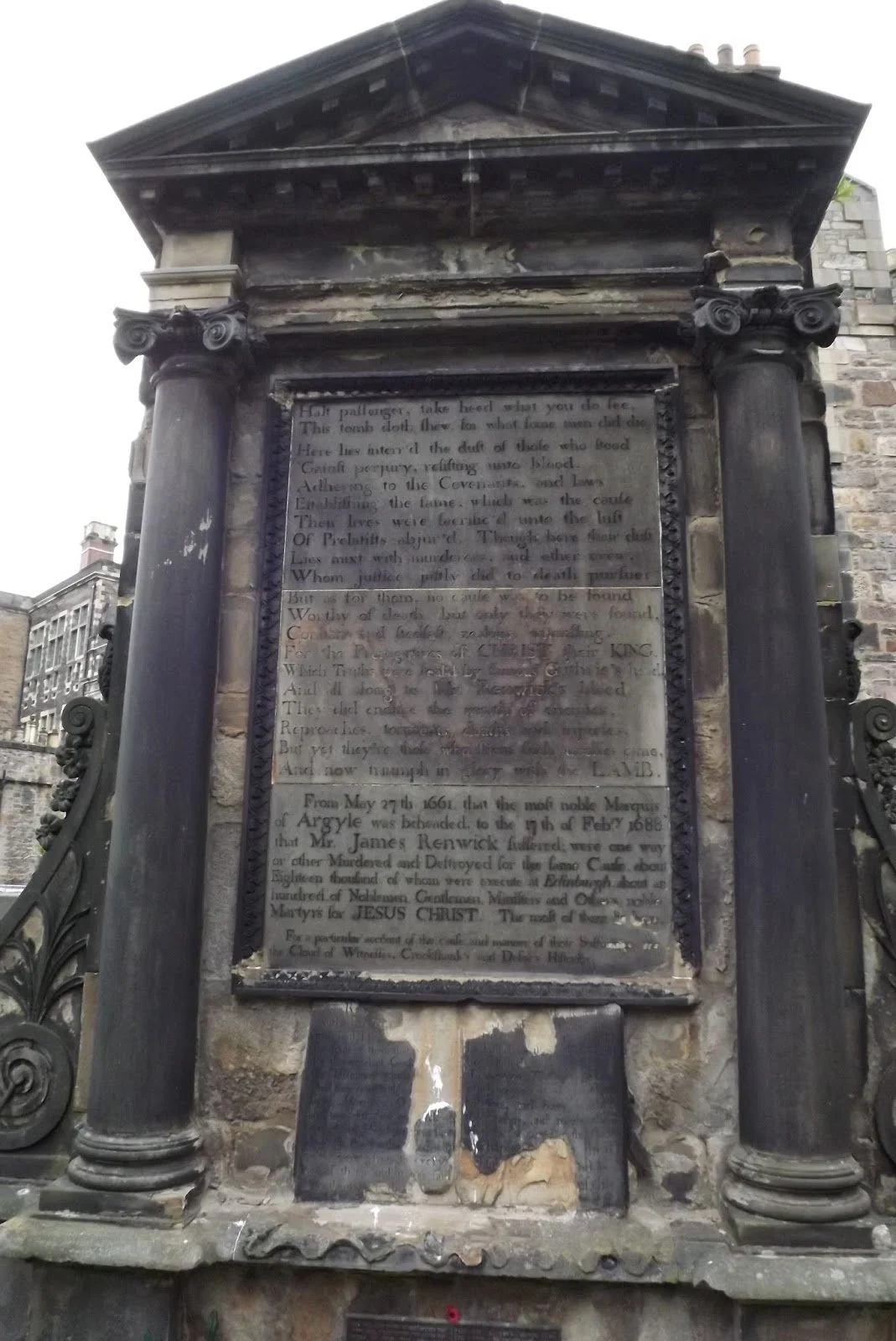
7. Our testimony has been sealed with the blood of faithful martyrs. This indeed is not the first consideration by which any doctrine is commended to our approbation. A martyr’s blood can give no authority to error. But when scriptural truth is held fast to the death, the blood of martyrs supplies a special obligation. “The blood of thy martyr Stephen.” “Antipas was my faithful martyr.” It cannot be denied that our land is stained with martyrs’ blood. Without going back to the period of a reformation from Popery, we refer to the blood that was shed from the time of the restoration of the 2d Charles, till the revolution, comprehending a period of twenty-eight years, during which it is computed eighteen thousand Presbyterians were subjected to severe sufferings. And for what did they suffer? They could not acknowledge the supremacy which the king had usurped over the church, and which was confirmed to him by national acts—they could not submit to the Episcopal hierarchy and superstitions—they could not renounce, as treasonable and unlawful, the covenants in which prelacy had been abjured—they could not give allegiance to power vested with supremacy over the church, depriving her of her liberties, and persecuting her members to the death. The page of impartial history testifies that these were the chief grounds on account of which the martyrs suffered. Their blood was shed like water in our land. The adherents to Episcopacy, and the flatterers of royalty, basking in its sunshine, may chime the stale charges of
────────────────────────
[Page 11]
rebellion and treason, and contrive apologies for a barbarous persecution, which should make them blush, and feel appalled; but these things will no longer deceive. The Presbyterians in Scotland know, or should know, and feel otherwise. And the moral and scriptural question in connexion with this subject is, At whose hands is this blood to be required? Has the nation repented of it, has the professing church of God given a faithful testimony against it? or do we in days of comparative ease remain silent, and content ourselves with building the tombs and garnishing the sepulchres of the righteous, and saying, if we had been in the days of our fathers, we would not have been partakers with them in the blood of the prophets? The subject is solemn. The moral Ruler makes inquisition for blood. He will avenge the blood of his servants. The lapse of a century of years or more will not remove the guilt of shedding innocent and righteous blood, nor exempt posterity, if found partakers in it, from the consequences. Blood cries to God from the ground, and will continue to cry till it is heard. And if God do not find repentance, we may expect that he will assuredly avenge the blood of his servants.
8. We have yet to remark, that important truths in our testimony have been publicly departed from, and the cause of the reformation seriously injured. This is, indeed, the immediate occasion of our assuming, and occupying our position of Dissent. Believing it to be our duty to identify ourselves with our fathers, in times of reformation, and in times of suffering for the truths of Christ, we are constrained, from conviction, to adhere to the views of the minority, who dissented from the conduct of the nation and the Church at the Revolution. Not to say any thing here of the sin of overlooking entirely the acts of the Reforming Scottish Parliament, and of leaving them under the degradation of an infamous rescission, we cannot shut our eyes from the fact, that in direct opposition to the public covenants, to the word of God upon which they were founded, and to the struggles and blood of the martyrs, Prelacy was
────────────────────────
[Page 12]
re-established in England and Ireland, and the crown of Britain re-invested with supremacy over the Church. We also disapprove of the Church of Scotland having received her Presbyterian Constitution, and her Confession, from the state, instead of acting on her own intrinsical authority, and immediately recognizing the supremacy of Jesus and of his law. We disapprove of her refusing to recognize the work of God in the reformation, commencing in the year 1638, and of her not condemning its subsequent sinful overthrow, and the cruel persecution of those who adhered to it. The civil supremacy over the church was not condemned, nor the exclusive headship of Christ asserted, as they should have been. The public covenants were not acknowledged; and after a short time, the liberty of the Church, in the election of her ministers, was timidly and faithlessly surrendered into foreign hands. The evils resulting from these departures from scriptural truth and reformation have been great, and continue still to be felt; and they loudly call, “Remember whence thou art fallen, and repent, and do the first works.” We rejoice to observe that the minds of many are now awakened to these things, and shall still more rejoice to see faithful efforts prosecuted till they shall be crowned with success, and the scattered friends of the Redeemer rallied, and united under one standard for his interest. We cannot view the re-establishment of Episcopacy, and of the civil supremacy over the Church, the neglect of the public covenants, and the surrender of the Church’s liberty as minor concerns. A dissent, under a testimony for the truth, however painful in itself, we still consider to be our present duty, and we view it as intimately connected with the glory of Christ, the good of Zion, the prosperity of our country, and the happiness of man.
9. In closing our general observations, we beg to remark, that we view the principles which we have exhibited, as forming an excellent ground-work for further reformation. Attached as we are to the Reformation, we do not hold it out as perfection. The word of
────────────────────────
[Page 13]
God is perfect. It admits of no improvement. We may neither add to it, nor diminish from it, nor change it in any way. It is not so with the Reformation. As compared with the state of religion in these lands, antecedently to its commencement, it was a great attainment. And when we compare it with the state of things which has succeeded, it retains a decided superiority; and it were equally the duty and the wisdom of the church and nation to return to it. Still the reformation was not perfect. It had been little more than begun. There was not time to have it completed and consolidated, when, in the mysteries of Providence it was stopped, undermined, and persecuted. But it contains, in our views, the great elementary principles which lie at the basis of the prosperity which we expect in future days. It provides for the duty and interest of man as an individual, and as a member of society. It provides for the prosperity of the Church, and of the kingdoms of the earth. And it provides for all this, by subjecting men, in all relations, to a perfect rule, and to one rightful Sovereign; and by bringing the original law of love to God and to man into full operation, in appropriate institutions, offices, relations, and duties, it promises to bind up the wound of the daughter of Zion, and to heal the breaches of society, under the reign of Him who is the Truth and Peace. This blessed consummation may the Lord hasten in his time!
We make no apology for exhibiting our Testimony, having acted from a conviction of truth, and a sense of duty. Other Christians will allow to us the liberty which they claim for themselves, of professing that system of divine truth which we deem to be in nearest accordance with the supreme standard, and of adhering to it, till one more comprehensive and faithful shall appear. The doctrines of our testimony have not the charm of novelty; they have been confessed by our fathers, and some of them sealed with their blood. It is not, however, their antiquity, nor the blood of our fathers, but their accordance with the Scriptures, which
────────────────────────
[Page 14]
is the primary ground of our attachment.—In making this profession, we arrogate to ourselves no superiority in Christian character and attainment, as if we were holier and did more than others. We appreciate the talent, piety, and benevolence of Christians in other churches. We lament the divisions which unhappily prevail, and would mourn over them as tokens of the divine displeasure. And, while we assign a reason for the preference which we give to the reformation cause, we are humbled, when we behold the defects in vital spirituality and visible sanctity which attach to ourselves as well as others.—We cannot admit that the views which we have taken are contracted, and illiberal. They comprehend the whole range of faith and practice, and provide, in a greater extent, than any other system we have seen, for the personal, the social, the temporal, the spiritual, and the eternal interests of the human family.—Nor can we admit the justice of the charge that our sentiments are unpatriotic or anarchical. We love the country that has given us birth and privileges, and know not how to consult better for its prosperity and happiness, than by striving to diffuse the knowledge of pure and undefiled religion. We are friends of order and peace; and we know not how to give better security to these interests, in the adjustment and subordination of society, than by a faithful application of the principles of Scripture, in all their amplitude and impartiality. We are not ignorant of the odium that has long been attached to the cause we have professed. But, not judging of a cause by the popularity or reproach in which it is laid, we wish to prove all things, by the infallible standard, and to hold fast that which is good. Having endeavoured to ascertain, by an application of the proper test, the cause of the Redeemer, we esteem it our duty and honour to go forth to him, even without the camp, bearing his reproach. And assured that truth shall yet prevail, we endeavour to be faithful to her interests.
In thus exhibiting our Testimony for what we consider to be the cause of Christ, we have our eyes on
────────────────────────
[Page 15]
the past, on the present, and on the future. In the light of history we have learned, and our fathers have told us, the great things which the Lord hath done for his Church, and we gratefully record them. In the light of observation we reverentially regard the signs and events of the present day. And in the light of prediction, we look forward to the future, with trembling, and with high anticipations. Viewing all these aspects of time, in the light of the Scriptures, we desire to do our part in serving our generation, according to the will of God. We call upon ourselves to know well the truth, to yield ourselves to its sanctifying influence, and steadfastly to profess and adorn it. We cast an affectionate and earnest look to our rising youth, inviting them to come to the help of the Lord, and to take our place. And we cast an anxious eye over the agitated face of Christian society, and beseech the friends of Christ to declare themselves, and to do their duty. And we lift up an imploring eye to heaven, that the Lord may look down and behold from the habitation of his holiness, and of his glory. “Thou shalt arise and have mercy upon Zion; for the time to favour her, yea, the set time is come. For thy servants take pleasure in her stones, and favour the dust thereof.” May the Lord, in the never-failing resources of his providence and Spirit, cause “the old wastes to be built, and raise up the former desolations—the desolations of many generations.
“Walk about Zion, and go round about her: tell the towers thereof. Mark ye well her bulwarks, consider her palaces; that ye may tell it to the generation following. For this God is our God for ever and ever, he will be our guide, even unto death.”
“UNTO HIM BE GLORY, IN THE CHURCH, BY CHRIST JESUS, THROUGHOUT ALL AGES, WORLD WITHOUT END. AMEN.”