Purity of Worship in the Presbyterian Church,
James Dodson
AS SET FORTH IN
The Westminster Standards,
AND ILLUSTRATED BY OUR HISTORY SINCE THE REFORMATION.
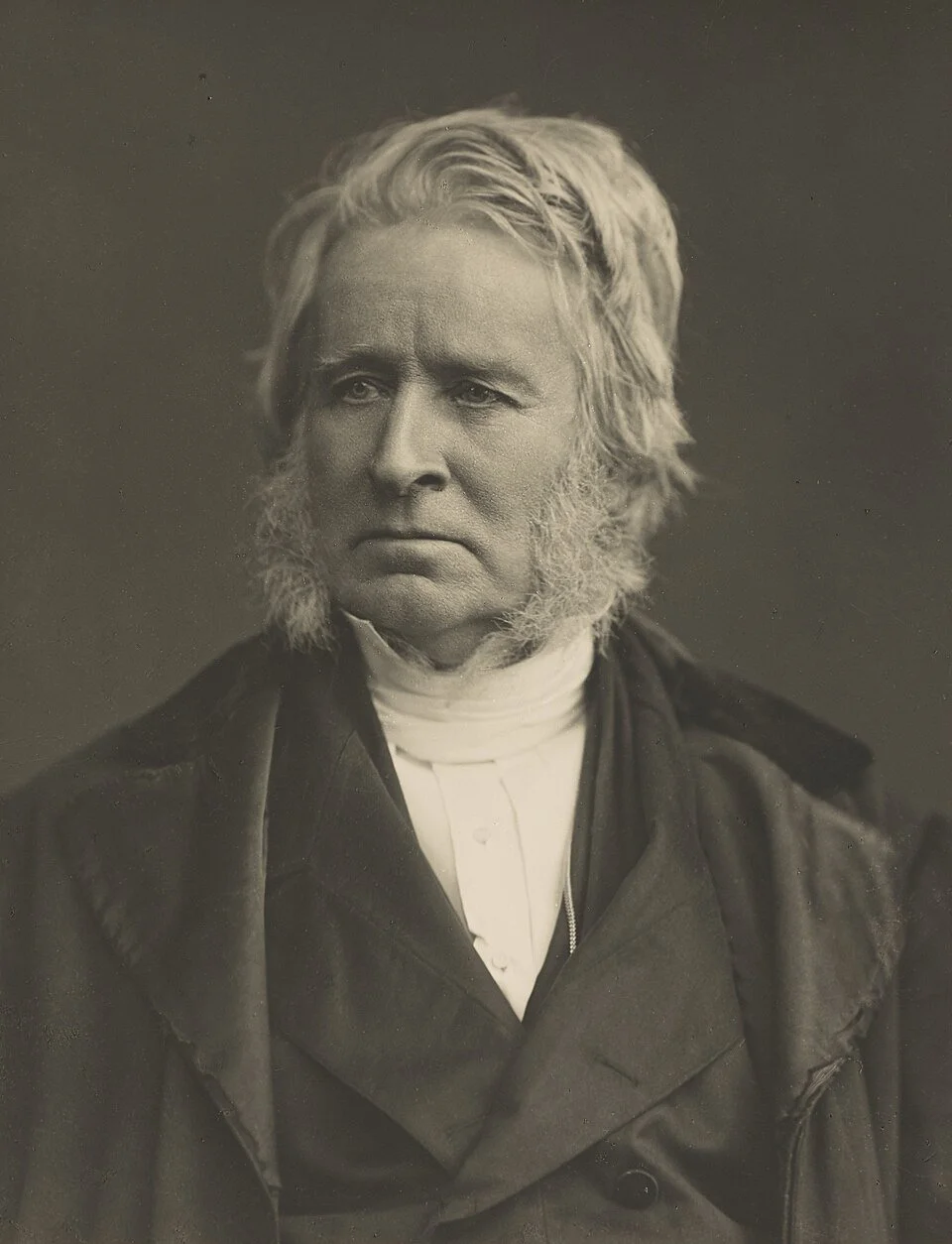
BY JAMES BEGG, D.D.
“In Popery . . . they employed organs and many other such ludicrous things, by which the Word and worship of God are exceedingly profaned.”
—Calvin.
“For my part, I am persuaded that, if the organ be admitted, there is no barrier in principle against the sacerdotal system in all its fulness.”
—Dr Candlish.
EDINBURGH:
LYON & GEMMELL, GEORGE IV. BRIDGE.
1876.
Printer’s Page
PRINTED BY BALLANTYNE, HANSON AND CO.
EDINBURGH AND LONDON
Page iii
PREFACE.
The object of the following treatise is to give a clear and consecutive view of the worship of the Scottish Church, both as a matter of doctrine and of history. It is many years since any controversy existed amongst Presbyterians on the subject of worship, and therefore much ignorance prevails in regard to it. Errors on this subject, however, must be fatal, not only because of the sacredness of the principles involved, but because the same principles affect the entire round of doctrine, discipline, and government in the Christian Church. In carrying forward the recent innovations in worship, there are very different classes engaged. There are the ignorant and thoughtless. But the most dangerous class are those who know perfectly well what they are doing and aiming at. They are seeking, for political reasons, and contrary to their solemn ordination engagements, virtually to upset the Revolution Settlement by bringing the Scottish Church into as near a resemblance as possible to the Church of England, and this
Page iv
through the agency of an equally unconstitutional congregationalism. In this aim we may venture to predict that, as on former occasions, they will be defeated. But it is sad to be plunged again into the old contest, from which great evils may result; while it is well to keep in view that in such a struggle there can be no middle course. Either the principles of the First and Second Reformation and of the Revolution Settlement in regard to worship, for which our fathers contended, are true and defensible, or Presbyterianism must be abandoned. So far from this, however, we believe that at the present moment Scotland is as earnestly Presbyterian as ever, although she requires enlightenment in regard to this new debate. She only requires to be thoroughly informed in regard to the true bearing of the questions at issue, and the real danger of the schemes pursued, to act with energy as she did of old.
An eminent minister of the Established Church, after condemning the false doctrine, instrumental music in worship, and decided antipathy in certain quarters to the Confession of Faith, adds:—
“With respect to worship, it is now notorious that a whole regiment of innovations has come upon us. There is—1. Liturgies or liturgical prayers, called ‘services;’ 2. Standing at psalmody; 3. Sitting at prayer; 4. Opening the act of public worship by reciting some verses of Scripture, which they call ‘sentences;’ 5. Arranging the Scripture readings,
Page v
psalms, and prayers, so as to have as close an approach as possible to Episcopal forms; 6. The use of uninspired hymns; 7. A constant depreciation of our Sacramental Fast and other days, and an eager recommendation of Christmas and Easter; and, 8. What is called ‘simultaneous communion.’ All these things are now being practised, and I daresay many other things of minor importance, so that it is ridiculous to say that ‘uniformity’ of worship prevails in any of our Presbyterian denominations.”
It is a very serious thing that, in the midst of all this, solemn vows are accepted by all office-bearers, to the effect that they will maintain “uniformity” of worship, and “follow no divisive courses,” whilst apparently by some these vows are taken only to be disregarded. It is high time that our state and prospects in regard to such matters were fully considered.
It may be right to say that the following pages have been the fruit of very considerable labour, including aid from various quarters, for which thanks are cordially returned; and as truth only is sought, suggestions from whatsoever quarter will yet be cordially welcomed. Since this treatise was written, although we rejoice in the emphasis with which the Dunse peculiarities have been rejected by the General Assembly of the Established Church, and in the frustration of the efforts of those who sought to relax the formula for elders, we regret that the Elgin case has been decided in entire opposition, as we think, to the Constitution
Page vi
of the Church and kingdom; but the end of the controversy is not yet.
This treatise has received the cordial approbation of a number of eminent Ministers and Elders; and the following important statement by the able and learned Editor of the works of John Knox will carry great weight, since there is no higher authority on such a question:—
May 9, 1876.
After carefully examining the various authorities (in manuscript as well as printed) that bear on the subject, I can have no hesitation in stating that the conclusions deduced in the following pages seem to me to be fully and satisfactorily established. In particular, I maintain—
1st. That no forms approaching a Liturgical Service were ever adopted or practised by the Church of Scotland, not even during the reign of Charles the Second, when Episcopacy, for nearly thirty years, was in the ascendant; and
2d. That anything resembling Instrumental Music used in Public Worship, until a very recent period, was altogether unknown.
DAVID LAING.
It is to be hoped that this treatise will receive a wide circulation, and be duly considered by all who really value the purity of our Presbyterian worship. It is worse than absurd to profess adherence to the Westminster Standards whilst men trample upon their distinctive principles in regard to the worship of God.
JAMES BEGG.
EDINBURGH, 50 GEORGE SQUARE,
July 1876.
Page vii
CONTENTS.
THE PRESENT DIFFICULTY, . . . . . 5
UNIFORMITY OF WORSHIP IN THE PAST, . . . 7
THE BEGINNING OF RECENT INNOVATIONS, . . . 11
THE ORIGINAL WORSHIP OF THE SCOTTISH CHURCH, . . 13
HISTORY OF SCOTTISH PSALMODY, . . . . 24
PRELATICAL INNOVATIONS, . . . . . 29
AN ORGAN IN THE CHAPEL ROYAL, . . . . 31
PRELATICAL AND PRESBYTERIAN WORSHIP CONTRASTED, . 34
THE INNOVATIONS OVERTURNED IN 1638, . . . 35
THE ENGLISH REFORMERS AGAINST ORGANS IN WORSHIP, . 39
THE WESTMINSTER ASSEMBLY AND WORSHIP, . . 40
THE WESTMINSTER AND SCOTTISH ASSEMBLIES CONDEMN ORGANS IN WORSHIP, . . . . . 41
THE WORSHIP NOT ALTERED AFTER THE RESTORATION, . 46
THE REVOLUTION SETTLEMENT, . . . . 47
THE PRESBYTERIAN WORSHIP CONFIRMED, . . . 50
PROVISIONS AGAINST INNOVATIONS, . . . 52
THE UNION WITH ENGLAND AND WORSHIP, . . 56
Page viii
THE VOWS OF MINISTERS AND ELDERS, . . . 60
THE FORCE AND BEARING OF THESE VOWS, . . . 65
REAL UNIFORMITY OF WORSHIP LONG EXISTED, . . 67
THE ACTUAL FORM OF WORSHIP AT THE REVOLUTION, . 68
KIRK-SESSIONS PROHIBITED FROM INNOVATING IN WORSHIP, . 72
A LONG PERIOD WITHOUT INNOVATIONS, . . . 75
RECENT QUESTIONS IN REGARD TO CHURCH POWER, . 76
POWER OF THE GENERAL ASSEMBLY IN REGARD TO WORSHIP, . 78
RECENT PROCEEDINGS IN REGARD TO INNOVATIONS, . 80
DECLARATORY ENACTMENTS, . . . . 82
CHURCH COURT PROCEEDINGS IN RECENT CASES, . 86
THE QUESTIONS OF PRINCIPLE EVADED, . . 90