The Psalms God’s Authorized Manual of Praise.
James Dodson
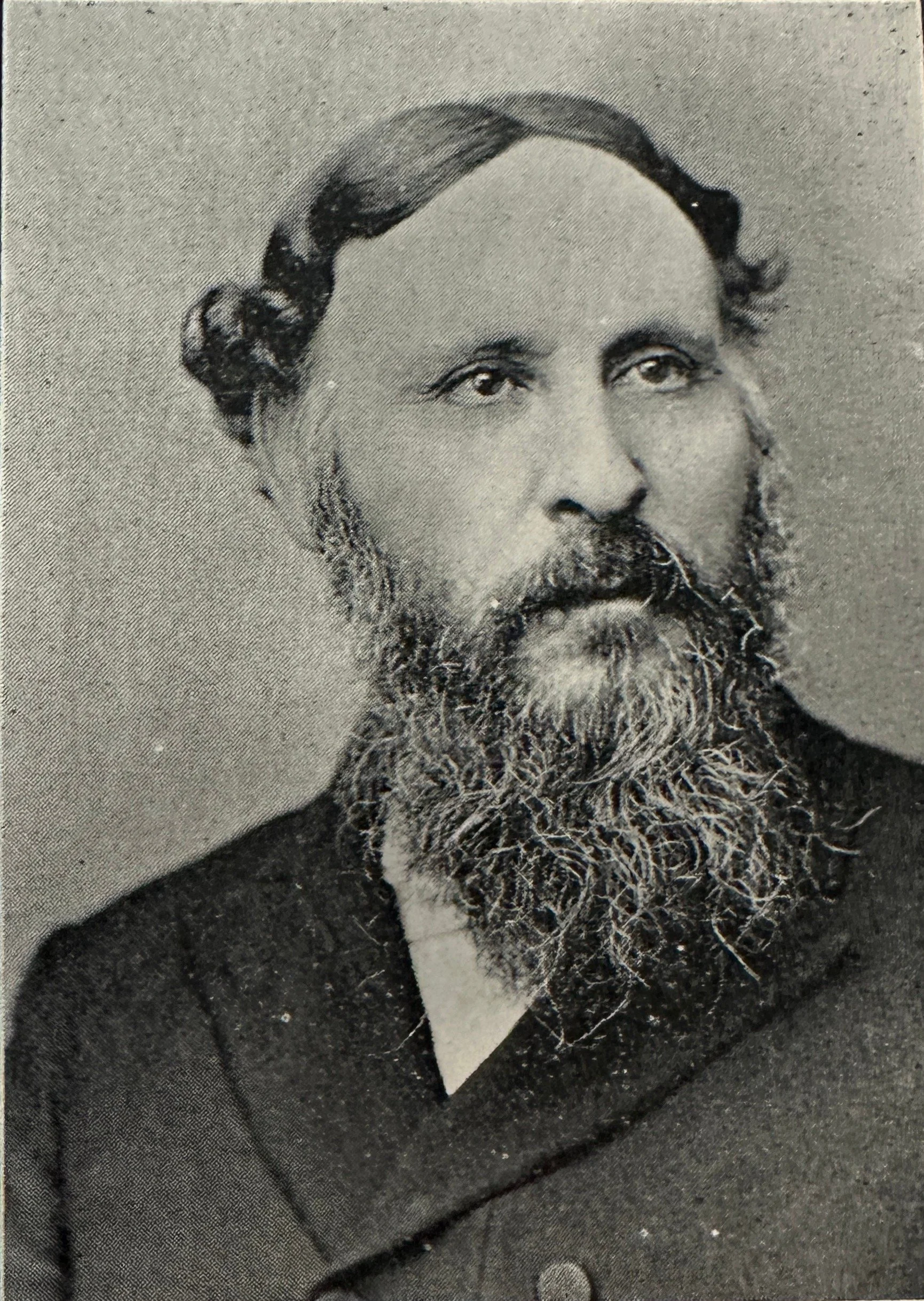
REV. A. J. McFARLAND
Less than two centuries ago, almost all protestant denominations sang the Psalms. However, like the young man who was given a farm in Africa and pronounced it “Barren Acres,” many denominations have left their first love, pronouncing the Psalms “Barren Acres.” But those of us who use them yet, are like the man who bought that farm, and found to his grand delight, that the so-called “Barren Acres” were actually acres of diamonds.
We love the Psalms. Volumes have been written on the beauty of the Psalms and their appropriateness as a manual of praise. There are Psalms for every occasion. The American Bible Society recently published a small folder entitled “Why and How you should read the Bible,” and in that folder they say “The Gospels and the Psalms should be read daily, and a little of each introduced into the daily life will make the whole year different by renewing our faith and bringing comfort and hope.” On the back of the leaflet, the Bible Society quotes verses to be read on different occasions, quoting from the entire Bible, but out of twenty-four suggested occasions, fifteen have Psalms for suggested readings.
Not only are the Psalms beautiful and appropriate, but they are full of Christ. The late Dr. R. J. George in a tract entitled “Psalmody” says “There is more of Christ in the book of Psalms than in any other book in the Bible, not excluding the gospel of John or the book of Hebrews.” He proves his statement by giving many quotations in the New Testament from the Psalms which can refer only to Christ. For instance, as to his Divinity compare Ps. 45:6 with Heb. 1:8, or Ps. 110:1 with Matt. 22:42-45; as to His eternal Sonship Ps. 2:7 with Heb. 1:5; as to His incarnation Ps. 8:5 with Heb. 2:7; as to His Mediatorial Offices—Prophet, Ps. 40:9,10 with Heb. 10:5-7; Priest, Ps. 110:4 with Heb. 7:17-21; King, Ps. 45:6 with Heb. 1:8; as to His Betrayal, Ps. 41:9 with John 13:18; as to His Crucifixion, Ps. 22 and 69 with Matt. 27:21-23 and Luke 23:18-23, as to His Burial and Resurrection, Ps. 16:9-11 with Acts 2:29-32; as to His Ascension, Ps. 47:5 with 1 Thess. 4:16; as to His Second Coming, Ps. 50:3-6 with Matt. 24:30, 31.
[Page 2]
Is it any wonder that Christ said, “IT IS WRITTEN IN THE PSALMS CONCERNING ME”? When Paul wanted his hearers to “Let the word of Christ dwell in them richly,” he told them to do it by “Teaching and Admonishing One Another in the Psalms.” Christ is in the Psalms in three ways. By His Spirit, He is their Author; in many of them He is the Speaker, and in many others He alone is the Subject; and apart from Him no one of them can be adequately explained.
Many churches make a practice of using the Psalms as a Responsive Reading. No doubt they are splendid for that, but their chief value is as a manual of praise. The Psalms were written to be SUNG. The Psalter is simply THE PLAN OF REDEMPTION UNFOLDED IN SONG. Those who sing the Psalms get by far the most out of them. What would you think of a leader of song if he were to say, “Now let us read responsively line by line, the words of ‘God Bless America’”? Would the audience be satisfied with that? Of course not; they want to SING IT. What a thrill goes through one when he sings some stirring song. Just so with the Psalms. Take Ps. 100 for example:
“All people that on the earth do dwell,
Sing to the Lord with cheerful voice.
Him serve with mirth, His praise forth tell,
Come ye before Him and rejoice.”
or Psalm 46:
“God is our refuge and our strength,
In straits a present aid;
And therefore though the earth remove
We will not be afraid.”
How the singing of the Psalms electrifies the true worshipper. And at the funeral there is nothing more comforting and consoling. I have had numbers of people, who do not usually hear the Psalms sung, say to me, “How we do love the Psalms at a funeral.” Such Psalms as the twenty-third or the ninety-first or the one hundred and third and many others are most appropriate when sung in the presence of death.
But we do not hold to the Psalms as God’s only Manual of Praise in Worship, merely because they are good poetry and lend themselves well to singing. There are other “songs” in the Bible besides those found in the Psalms, and they too are marvelous poetry. There are “The Song of Hannah,” “The Song of Moses,” “The Song of Deborah,” “The Lament of David,” “The Song of Hezekiah,” and “The Song of Habakkuk,” all of these outside the Psalter. Some of them were taken over and included within the Psalter, showing that they were to be used in the manual of praise. In II Sam. 22 we have David’s song following his delivery from Saul. Since God meant for this to be used in His manual of praise, He incorporated it in the Psalter as Ps. 18. The same is true of I Chron. 16:7-22. This passage is first of all a matter of history but what it contains is also matter of praise and so it is reproduced in the Psalter as Ps. 105:1-15; Psalm 96 is the 23rd-33rd verses of this chapter; while the closing verses of Psalm 106 are the 34th-36th verses of the
[Page 3]
chapter. Then some parts of “The Song of Moses” and “The Song of Deborah” were reproduced in the Psalter. Any portions of the Bible which were meant to be used in praise were taken up and incorporated in God’s book of praise.
Thus we have it very definitely established that God himself took the pains to provide such songs and such portions of songs as were meant to be used in His worship, collecting them into a book by themselves to be known as The Book of Psalms or The Book of Praises for all ages and nations. The Psalter was prepared with exquisite care, by God’s own hand for God’s own purposes.
But excellence was not enough to make a song, a song of praise. All of the songs of the Old Testament are excellent. Take the song of Habakkuk for example:
“God came from Teman.
And the Holy one from Mount Paran.
His glory covered the Heavens,
And the earth was full of His praise.
And His brightness was as the light;
He had rays coming from His hand:
And there was the hiding of His power.”
It is a Lordly song, magnificent in its imagery, excellent as God himself could make it, but its excellence did not give it a place in the Psalter; for the simple reason that excellence, however great it may be, is not enough to make a song a song of praise.
It is evident that inspiration isn’t either. The Song of Habakkuk is inspired; yet it has no place in the Psalter.
What then does a song need to make it a matter of acceptable praise to God? If the fact that it is poetry, that it is excellent and inspired; if all these will not do it, what will? In addition to these, a song, to be acceptable to God, must have HIS SEAL OF DIVINE APPOINTMENT. This seal the Psalter has.
Upon careful study, it will be found that the Divine appointment extends not only to each Psalm individually, but also to the specific place which each Psalm occupies in the construction of a great book. This no doubt explains why “The Song of Habakkuk” was omitted. It filled no place in the great theme of the book.
What is that theme? We have already intimated that the Psalter is “The Plan of Redemption Unfolded in Song”; thus the theme of the book, suggested in its first word is the “BLESSEDNESS Of Redemption”. This blessedness begun in the first verse carries right through the Psalter as a mighty stream filtering through the various problems and trials of our religious experience, swelling immeasurably as it proceeds, until it breaks over every embankment and pours through the floodgates of its riches, as the voice of many waters upon the shores of eternity.
And so, in addition to excellence and inspiration, the Psal-
[Page 4]
ter has the SEAL OF DIVINE APPOINTMENT, for a specific end; for it was by divine appointment that each Psalm got into the Psalter, and also that it was given its particular place in the book as a whole. The Psalter, in its present arrangement is the divine handiwork of God.
Supposing one were to sing in praise to God the Lord’s Prayer, or John 3:16, or any other passage from God’s Book, What Psalm would he remove to give the other passage a place? What authority would he have for doing it? We shall take up this matter further a little later.
But just now let us note the positive command from God for the singing of the Psalms found in both the Old Testament and in the New. In the Old Testament II Chron. 29:30 makes it very explicit. Hezekiah had reconstructed the worship according to the commandment of the Lord, and one of the definite commands was to “sing praise unto the Lord with the words of David and of Asaph the Seer”. A number of the Psalms themselves have direct commands to sing their words. Psalm 105 begins, “Sing unto Him, sing Psalms to Him.” I think however that no one questions the propriety of having had the Psalms as part of the Old Testament worship.
But we are commanded even more clearly to sing them today, than they were in Old Testament times. The two outstanding verses are those in Paul’s letters to the Ephesians and the Colossians. In Eph. 5:19 we read “Speaking to yourselves in Psalms, Hymns and Spiritual Songs, singing and making melody in your heart to the Lord” and in Col. 3:16 “Let the word of Christ dwell in you richly in all wisdom, teaching and admonishing one another in Psalms, Hymns and Spiritual Songs, singing with grace in your hearts to the Lord.”
In interpreting these two verses we need to keep in mind the rule so clearly stated by Chas. A. Hodge in his commentary on Romans, Pages 144-147—
“We are to understand the language of the Bible in its historical sense, that is, in the sense in which the sacred writers knew it would be understood by those to whom they wrote. If we do not, then the Bible ceases to have any meaning, and may be explained according to the private interpretation of every person’s opinion . . . There is no rule of interpretation more obvious and more important than that which requires us to understand the language of a writer in the sense in which he would be understood by the persons to whom he wrote.”
What we need to know then in reference to these verses in Ephesians and Colossians is what the Christian people of those cities understood Paul to mean when he said, “Sing Psalms, Hymns and Spiritual Songs.” If we can get the answer to that question, then we will have it answered for all time, for what Paul meant then, he means today.
Supposing that instead of going back to Paul’s time to find out, we go to the average church member today and ask him to interpret these verses for us. In almost every case, we
[Page 5]
will be told that the Psalms, evidently are the Psalms of the Bible, the Hymns are the hymns as used in churches today, and the Spiritual Songs are songs similar to the “spirituals” that are often used in worship.
But one need not go to the average church member to receive this reply. Ministers, Bible Teachers, and Theological Seminary professors will in many cases give a like answer.
When I was taking a course in the Biblical Seminary in New York, I submitted these verses in the class on “Biblical and Personal Problems” and the professor gave the answer I have suggested above. The Rev. R. J. G. McKnight, President of the Reformed Presbyterian Theological Seminary was taking a course in Princeton Theological Seminary some years ago and he asked the Professor of New Testament Exegesis the meaning of these verses and he received a similar reply. But in both Dr. McKnight’s case and my own when the Professors were shown their mistake they were big enough to readily admit it. In my case, I took with me to class a Polyglot Bible, which had the Greek and the Hebrew, and two other languages in parallel columns with the English; thus the Professor could quickly compare the English with the Greek and Hebrew, and when this comparison was made, it was evident that “Psalms,” “Hymns”, and “Songs” were titles for various Psalms, and the Professor was more than satisfied that the three terms referred only to the Psalms. After looking at the Psalms with these different titles in the Greek and Hebrew, he turned to me and said, “Mr. McFarland, I never knew that before.” In Dr. McKnight’s case, the Professor, after being referred to the Septuagint version of the Old Testament—the Bible, which the New Testament Christians used—readily admitted that his first idea was wrong—and that Paul was referring only to the Psalms of the Bible.
The thing that convinced both of these professors was a glance or two at the Septuagint. The Old Testament was written originally in Hebrew, but about 200 years B. C. it was translated into the Greek, and this was the Septuagint, the Bible used, at least for the most part, by the New Testament Christians. This Septuagint Bible can be secured at most any store which sells religious books, and it is worthy of study by anyone wanting to know the meaning of these verses in Ephesians and Colossians.
When Paul said, “Sing Psalms, Hymns, and Spiritual Songs”, the Christians of his day naturally turned to the Bible to see what he meant and they found there the 150 Psalms. That settled it as to the meaning of the first term. Looking further into these Psalms, they found “TITLES”, and those Titles remain with the Psalms even to this day. In this Septuagint version, the Psalms were called by all three titles: Psalms, Hymns and Songs. Everyone of us has read, for instance: “To the Chief Musician, a Psalm or a Song of David” as the title of some Psalm. Now at least six Psalms in the Septuagint version are given the title of Hymn—Psalms 6, 54, 55, 61, 67, and 76.
[Page 6]
Also at the close of the first book of the Psalter, Psalm 72, we read in the last verse in the Septuagint, “The HYMNS of David, the Son of Jesse are ended”. In our English translation the word “Niginoth” is nearly always used in the “Title” where the Septuagint uses the word “Hymn” Then many of Psalms have the Title “Song” even in the English. One group of Psalms 120-134, is known as “The Songs of Degrees”.
In the body of the Psalms there are many verses which refer to the Psalms as Hymns; Psalm 100:4 reads in the Septuagint, “Enter into His courts with Hymns”. Psalm 40:3 reads, “He put a new Hymn in my mouth”. Ps. 65:1 reads, “Hymns waiteth for thee in Zion”. Surely we do not need to go through the Psalter and show the many times the term “Song” is used, for it is so evident even in the English. But there is one verse which we do want to consider for it embodies all three Titles, and that is Ps. 137:3—“FOR THERE THEY THAT CARRIED US AWAY CAPTIVE REQUIRED OF US ‘SONGS’ AND THEY THAT WASTED US ASKED A ‘HYMN’, SAYING SING US ONE OF THE SONGS OF ZION.” This Psalm was written during the captivity in Babylon and you notice that the writer uses the word “Songs” to cover all the Psalms and then says that a “Hymn” might be selected from these songs. In other words these three words were interchangeable when referring to the “Songs of Zion.”
It seems quite probable that Paul had this very Psalm in mind when he wrote to the Ephesians and Colossians. Paul speaks of “Spiritual Songs”—songs inspired by the Spirit, and the 4th verse of Psalm 137 reads, “How should we sing the Lord’s song in a strange land”, “The Lord’s Song”, and “Songs inspired by God” mean exactly the same thing.
One may wonder why the different titles are given to different Psalms—why some are called Psalms some Hymns and others Songs—and often one is called both a Psalm and a Hymn, or a Psalm and a Song; and one, the 76th, is called by all three titles, a Psalm, a Hymn, and a Song. The reason is because each of these words have a different meaning. The word “Psalm”, means a Song set to music, thus built upon a plan; the word “Hymn” emphasizes the fact that the Psalm is addressed to God, and the term “Song” shows that it is to be sung from the heart. So what Paul is saying to these Ephesian and Colossian Christians is that praise consists in structures built by the Holy Ghost and offered to God from the depth of the heart. And every Psalm has been prepared precisely for that purpose. All of them are structurally built according to plan, all are addressed to God and when properly offered are the outpouring of the soul.
Every reference to praise in the New Testament refers either directly or indirectly to the Psalms. Not only that, but there is no place in the Bible where it is even hinted that we may of ourselves write our own songs of praise. Paul never told the Ephesian or Colossian Christians to write their own songs of
[Page 7]
praise. He told them to sing those which had already been written and nothing else.
In Paul’s day there was no such thing, in the Christian church, as uninspired hymn. The only songs they knew anything about, and the only songs we should know anything about when it comes to offering praise to God are the 150 Psalms. It was several centuries A. D. before the first man-made hymns were written to be used in the worship of the christian church, and one of the first acts of the Protestant Reformation, under Calvin was to put all uninspired hymns out of the church.
We stand for an inspired Psalm Book on exactly the same basis that we stand for an inspired Bible. Sir Walter Scott said, “Let me write the songs of a nation and I care not who makes her laws”. It is vitally important that we keep our singing pure. If we can, of ourselves, write words which are fit to sing in praise to God, then surely we can write other “Epistles” and make further additions to the Bible, and we know what that would mean. There is no doubting the Virgin Birth, or the Inspiration of the Scriptures, or the Divinity of Christ, or other great doctrines of the Bible, in churches where the Psalms are used exclusively. Such a record speaks for itself.
We want to suggest three reasons why all churches should use the Psalms exclusively in their praise service.
I. The first reason we hold to the Psalms exclusively is because we are COMMANDED TO DO SO.
This is what we have been trying to show in what we have said thus far. The first sin was the sin of disobedience, and if we have a “Thus saith the Lord” we had better follow it, unless we want to pay the price of disobedience.
It is not popular today to be a Psalm-singer if we are counting numbers. But just what is popular when it comes to keeping the first table of the Decalogue? When people do not want their religion to cost them much, they will not prize the Psalms very highly, but back in the days when men and women died for their faith, the days of the Huguenots, the Puritans and the Covenanters, you will find that they were Psalm-singers.
Supposing that I should stand in my pulpit and announce that we shall now praise God in the use of the Hymn, “Brighten the Corner Where You Are” or any other hymn not found in the divine book of praises, what have I done? This is what Christ says about it in Mark 7:7, “Howbeit in vain they do worship me, teaching for doctrine the commandment of men . . . V. 13 For laying aside the commandments of God, they hold the tradition of men, making the word of God of none effect.” I would have to lay aside what God has prepared before I could use what man has prepared, and by doing that I would make the word of God of none effect. It is absolutely impossible to use one of our own songs and one that God has prepared at the same time. One of them has to be laid aside in order to take up the other. And when one lays aside the Psalter and takes up the man-made hymnal, all history has shown that men invariably
[Page 8]
hold to their own, to the ultimately complete exclusion of God’s.
The last church to give up the Psalms was the United Presbyterian. They began by telling their people it was all right when in churches where hymns were being used, to sing hymns. Today their Psalter-hymnal contains 150 Psalms and 150 Hymns, but in the great majority of cases the Psalms are scarcely used. Maybe we wonder why, but the answer is simple. If the government of the United States were to allow a counterfeit dollar, selling for only a few cents, an equal field with a good sound government dollar selling for one hundred cents, there is little question which one people would use. A counterfeit will drive out the real thing every time, if allowed an equal field.
A counterfeit, as we know, is made as much like the real thing as possible, thus we find many of the hymns using Old Testament figures, talking about crossing over Jordan, about entering Canaan, Zion and Jerusalem. They speak of many things included in the Psalms. But if there is a single hymn that is better than the Psalms or compares equally with the Psalms, then a most marvelous miracle has been performed, for man has defeated God in His own field. If the Hymns are better or as good, then we should cast our Bibles aside and begin preaching for the hymnals.
But they are not as good and everyone knows they are not as good. The churches in their church manuals do not even attempt to put up any defense for the hymns. The only way they were brought into any church was by “PERMISSION” of the church court. They do not defend them, merely permit them. In fact some who use them speak scathingly against some of their own hymns as we shall see in a few moments.
But remember this, the distinguishing mark of the real thing—the silken thread which shows the Psalms to be genuine—is GOD’S COMMAND. When I was attending Sterling College of the United Presbyterian Church, about twenty years ago, when the United Presbyterians were still supposed to be singing only the Psalms, I was sitting in chapel one day beside a member of that church, one of the most brilliant students in the college, and we were looking at the book used in the praise service, entitled “Bible Songs”. It was the United Presbyterian book of praises. She said to me, “Do you see what I see?” I asked her what she saw and she said, “I see where the United Presbyterian Church will not be singing the Psalms exclusively very long.” I asked her why she thought so and she pointed to the choruses in that book—Those choruses were John 3:16, the Lord’s Prayer, and other parts of the Bible or New Testament. She had detected the lack of the silken thread. They had put something into their praise service that God had not commanded. The camel’s nose was in and the Psalms were on the way out. Her prophecy came true.
One reason we hold so tenaciously to the Psalms is because we stand in awe of that dreadful sentence which stands as a sentinel at the close of the sacred book, “If any man shall add to these things, God shall add unto him the plagues which are
[Page 9]
written in this book. And if any man shall take away from the words of this prophecy, God shall take away his part out of the book of life.”
We sing the Psalms therefore because we have been told to sing them and we have not been told to sing anything else.
II. A second reason we hold to the Psalms exclusively is because the HOLY SPIRIT is the only person qualified, and whose province it is to indite songs of praise.
“As it is written eye hath not seen, nor ear heard . . . the things God hath prepared for them that love Him, but God hath revealed them unto us by His word and Spirit.” “Even so, the things of God knoweth no man, but the Spirit of God.”
When Paul was taken up to the third heaven he saw things too marvelous for utterance; proving that to attempt to describe heaven to our finite minds is an impossibility. If the Holy Spirit cannot describe heaven to our satisfaction, how can mere man? And yet I have heard Hymns sung at funerals that attempted this. One that made a miserable failure of it, as Woodrow Wilson once took occasion to say, is “Beautiful Isle of Somewhere”. Another that I have heard sung recently several times “That Beautiful Land” is very similar, only it endeavors to tell us about heaven in these words:
“There are evergreen trees that bend low in the breeze
And perennial spring, where the birds ever sing
. . . And the sun never goes down.”
which, it seems to me, had it been true, Paul could easily have told us and we would have understood. One who has been there speaks of heaven and its realities as “Too marvelous for utterance”; another, who hasn’t, can describe it very minutely. Is there any question as to who is right?
A question that I have often been asked is “How can you make your own prayers if you cannot make your own songs of praise?” Both praise and prayer are addressed to God, but with this difference, we pray SUBJECTIVELY, while we praise OBJECTIVELY. We offer praise to God for what He is in Himself while we pray according to our continually changing needs. Thus as our needs change our prayers must change. Christ did not give us a model Psalm and say “After this manner praise ye”, as he did in prayer. He gave us 150 Psalms and told us to sing those.
What man living today knows how God wants to be praised, except as he finds it in the Bible? Whenever anyone tried to improve on the worship in Old Testament times, it meant death for someone. And God has said, “Behold to obey is better than sacrifice and to hearken than the fat of rams.” The very first principle of praise is to honor the one praised by our obedience. When you see a child disobey in the home, it doesn’t speak well for the parents. It reflects on them. The same is true in the worship of the church. We reflect on God’s character when we disobey His commands. We say in short, that God does not know best, that the Holy Spirit sold us short, that He should have given
[Page 10]
us better words by which to offer praise to God.
But let us see if we cannot find out why the Holy Spirit was right.
III. Our third reason why we should sing the Psalms exclusively is because THEY ARE THE BEST GROUNDS FOR TEACHING AND ADMONISHING.
Should we sing in praise to God something that we cannot use as a basis of instruction and of living? Is that why the Holy Spirit said, “Teach and admonish one another in the Psalms”? Surely that is correct. Teaching refers to doctrine, what we believe; admonishing refers to practice, what we do.
It is simply not conceivable that the Holy Ghost would put the writings of man on a par with the writings of God; especially when the writings are proved to be erroneous, as many of the man-made hymns have been proved to be.
The “Presbyterian” one of the periodicals of that denomination said a few years ago that the Hymn Book, “Hymns for the Living Age”, had sixty-seven hymns within its pages written by Unitarians. Think of singing praise to God, with songs written by men who do not believe in Jesus Christ, and yet one out of every eight songs in that Hymn Book was written by unbelievers. The “Presbyterian” adds, “What satisfaction it must give the Unitarian Vatican on Beacon Hill, Boston that unsuspecting churches should have literally dozens of Unitarians in the pew racks of their churches, who never once would be allowed in their pulpits.”
Furthermore, the Hymn Book prepared by the “World’s Christian Student Movement” has been published in three languages, and the twenty-third selection in that book is a heathen song. It is entitled “An Old Indian Song” but is simply the reincarnation of Brahmanism. One verse is as follows:
“How many births are past I cannot tell;
How many yet to come no man can say;
But this alone I know and know full well,
That pain and grief embitter all the way.”
Think of it, Christians all around the world are asked to sing that in praise to God.
At the funeral of a noted business man in Denver recently, only cowboy songs were sung—“Empty Saddles”, “The Last Round-up”, etc. Where will we stop when we use the compositions of men.
We sometime hear it said that modern hymns are trashy, that this is not a hymn writing age. The call now is “Back to the Old Hymns”. Let us go back one hundred years and see what we find. In 1838, the Presbyterian General Assembly O. S. appointed a committee to revise their hymn book, and in their report they said: “On critical examination we found many hymns deficient in literary merit, some incorrect in doctrine, and many altogether unsuitable for the sanctuary.” This was spoken by a church body in indictment of itself for having made such a miserable failure of substituting other songs for God’s book of
[Page 11]
praise, and this was their own conclusion over one hundred years ago. Dr. Cook of Belfast, Ireland said a good many years ago, “I have never yet found a compilation of hymns that I could pronounce free from serious doctrinal errors.”
Some ask, “Are the Psalms in metre the real Psalms?” They are as real as any other translation. Christ and Paul preached from a translation. It does not destroy the water of life to have it filter through various translations. Those who have made an intensive study of the metrical version of the Psalms say that in almost every instance the meaning of the original is brought out more clearly by the metre, than in the King James version. So we are not objecting to the Psalms in metre.
But maybe someone is saying, “For all that there are some Psalms I do not like.” We grant that the Psalms are hard on the flagrantly wicked. In that respect they are just like Christ. Read the twenty-third chapter of Matthew. The Psalms pronounce judgment upon evil doers and so does Christ. He said, “Ye serpents, ye generation of vipers, How can ye escape the damnation of hell?” and the Psalms speak in very similar language.
Such Psalms have been called “CURSING or IMPRECATORY” Psalms, and when people want to object to the Psalter they are almost sure to speak of these “Cursing” Psalms. But these Psalms are PSALMS OF JUSTICE. They are what the world most needs today. The love of God has been extolled and his justice overlooked. The late Dr. R. J. George, over forty years ago, sat down with a woman who was troubled about these Psalms and read with her Psalm 109, one of the Imprecatory Psalms and then turned to the first chapter of the Acts, verse 16, and read to her the words of Peter, where he refers to this Psalm, “Men and brethren this scripture must needs be fulfilled which the Holy Ghost by the mouth of David spake before concerning Judas, which was guide to them that took Jesus”, and V. 20 “For it is written in the Psalms, Let his habitation be desolate and let no man dwell therein; and his bishopric let another take”, almost a direct quotation from this 109th Psalm. In this Psalm, V. 18, we read, “He (Judas) clothed himself with cursing, let it be to him as the raiment”. Judas picked his own suit, God let’s him wear it. That’s fair enough. He offered Judas a wedding garment, but Judas wouldn’t have it. “Sin when it is finished bringeth forth death.” It is not what God does, it is what sin does. The trouble with man-made hymns is that they teach men nothing about the justice of God, while the Psalms tell what happens to a man who hardens his heart against God. If we should take out these Psalms of Justice, to be consistent we would have to take out every reference to the Justice of God in the rest of the Bible and what would we have left to preach? When God indites a Psalm, a Christian is safe enough in singing it. If God does the thing predicted, a Christian need have no compunctions against praising God for what he does.
The Psalms were sent down to us to bear up any message of praise to God that we might have, we know the Psalm message
[Page 12]
in the right spirit will reach God’s ear, but we have no assurance that any other words of praise will.
But maybe someone is saying that he does not always sing to God, that he sometimes sings to men. In churches where Godless people are paid to do the singing that would have to be true. It could be nothing else than singing to people, for certainly such worship never gets past the sound of the voice of the singer. But we have our “Gospel Singers”, conscientious Christian people, we trust, who make a practice of singing the Gospel to men. The divine command however is “PREACH THE GOSPEL”. And if this were done by a devout and intelligent ministry, ordained for that purpose, and done in the way prescribed in the Revealed Will of God, this ‘light militia of the lower sky’ would soon find itself retired from the field. “Whoso offereth praise glorifieth Me”. “Sing unto the Lord, sing praise to God”. Any person who attempts to “Sing the Gospel” to men can do it only by setting aside the commandment of God. Whenever men are under consideration the command is always—“PREACH THE WORD”, “Go ye into all the world and preach and teach and command and exhort, but no place are we told to sing the gospel. The gospel is for men, but praise is for God. God is the only Being worthy of praise. “The poor have the gospel PREACHED unto them” not sung.
Today, almost anything that hits the fancy passes for worship. Programs of all sorts are presented in churches on the Lord’s Day, and they are supposed to be perfectly acceptable to God—humorous readings, songs, plays, Santa Claus, Dance Sos. Christmas Cantatas, almost anything can get by in worship service today. But the place of the true Christian is within the command of God, and that is THE PREACHING OF THE WORD TO MEN, and THE SINGING OF PSALMS IN PRAISE TO GOD.
Hymns have their authors. Some of them are written by Roman Catholic Priests, Some by Unitarians, some by Brahmans, some by godly men and women, but supposing you were offered such a book to use in worship, in praising God; and on the other hand you were offered a book which contained 150 songs all written and inspired of GOD, which would wisdom choose?
In this treatise we have tried to extol the 150 Psalms written by God, and by these Psalms we stand. They are God’s authorized Manual of Praise.
I wish, gratefully, to acknowledge the splendid help received from the Rev. W. J. McKnight, D. D. in the preparation of this tract, and also help received from books already published on this subject.—The Author
The publication of this manuscript has been accomplished through the interest and efforts of members of the Session of the Reformed Presbyterian Church of Sterling, Kansas.