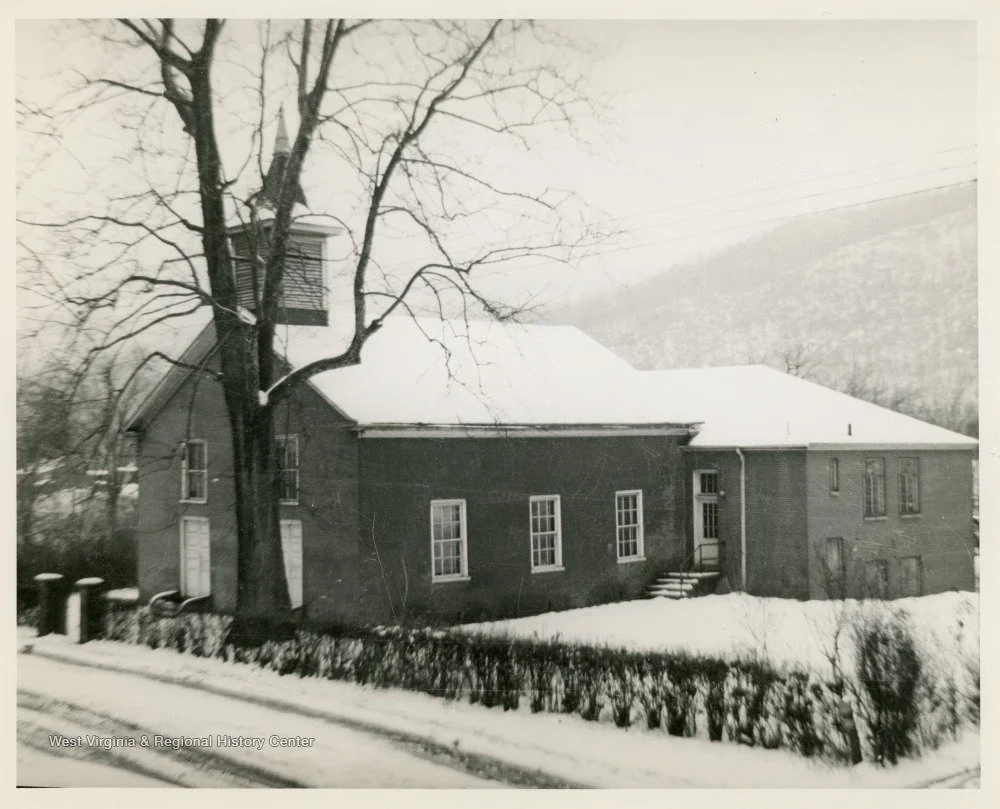
In Synod of Pennsylvania, Complaint and Appeal
James Dodson
—OF—
J. H. BROWN,
—FROM—
Presbytery of Parkersburg.
BUTLER PRINTING CO., CHARLESTON.
[p. 1]
In Synod of Pennsylvania.
COMPLAINT AND APPEAL OF J. H. BROWN, FROM PRESBYTERY OF PARKERSBURG.
To the Synod of Pennsylvania:
Your Complainant and Appellant, James H. Brown, for himself and others in like case, having given due notice in writing within the time required to the Clerk of the Presbytery of Parkersburg, of his complaint and appeal from the decision of said Presbytery, rendered at its session in Charleston in April, 1898, in the case of Protest, Complaint and Appeal of Elder J. H. Brown, to the Session of the Kanawha Presbyterian Church in the matter of the recent introduction and use of Responsive Readings of the Scriptures in the public worship in said Church, with the leave of this Rev. Synod, hereby amends his said complaint and appeal from said decision as follows, viz:
1st. By inserting therein the name, “The Synod of Pennsylvania,” as the proper tribunal and judicatory, understood and intended in his said complaint and appeal and notice thereof.
2nd. He complains and appeals from said decision for the several reasons and errors stated in the Resolution rejected by said Session; and also for the several reasons, errors, and specifications thereof further set forth in the
[p. 2]
printed Complaint and Record of the case in said Presbytery, which reasons, errors and specifications and record are herewith filed and made part hereof, and the Rev. Synod asked to look into and consider the same so far as applicable to this case.
Complainant and Appellant assigns further errors in said judgment, with reasons for reversing the same, as follows, viz:
a. It changes the long established mode of worship in the Kanawha Church, which all approved and accepted and practiced till the innovation complained of, and thus deprived them of their right and comfort of worshiping in the accustomed way they and their fathers worshiped in, without responses, and so violates Form of Government, Chap. 9, Sec. 6, which charges the Session to concert the best measures for promoting the spiritual interests of the congregation, but this mars them.
b. It forces on the people a different mode of worship, which they disapprove, and so invades the rights of conscience and of private judgment, and violates Form of Government, Chap. 1, Sec. 1.
c. It deprives the people of the right and comfort to hear the Minister of their choice read the Scriptures, as the Directory for Worship, Chap. 3, Sec. 1 and 2, says “he ought to do,” “that all may hear and understand,” which, in the Confession of Faith, Chap. 21, Sec. 5, is called, “Conscionable hearing of the word with faith and reverence,” and
d. It substitutes the discordant responses of many persons, not as well qualified to do it as the minister.
e. It mars the spiritual edification and worship of those who do not approve the practice, nor join in it, and so violates Book of Discipline, Sec. 3.
[p. 3]
f. It places the dissenters, as of old, in a false position, of having to change their religion so far as the two modes of worship differ, and accept that of others, which they do not approve, and so violates B. D., Sec. 3, by tempting dissenters to sin, by conforming to a practice they think wrong. Or
g. By refusing to conform to the new rule, thereby become liable to censure for such refusal. Appear odd, and set bad example.
h. It is a departure from the simplicity of the Presbyterial standard of worship without reason or benefit, and trends towards the pomp and ceremony of ritualism, in restoring a part of the old rejected liturgy, and not the least objectionable part; for the responses of the litany are less objectionable than the disjointed and unresponsive reading of verse and verse about, first by Minister, and then by congregation.
i. It denies to the people the right to be heard when their mode of worship is to be changed, and, their right as members of the church, their rights of conscience, and right of private judgment are to be invaded.
j. It indirectly countenances a change in the mode of worship, by the Minister, on his mere motion.
k. It sustains the session in not suspending the innovation, introduced without their authority and the authority of the people.
l. It is founded on mistakes and does injustice to complainant and appellant and all others in like case.
FACTS.
The mode of worship in the Kanawha church was that set out in the Directory for Worship without responses, and practiced from the organization of the church.
[p. 4]
That mode was changed by the pastor by introducing Responsive Readings without authority of session or congregation.
The change was objected to, with request to suspend till the congregation should be heard on the subject. The change was persisted in by the pastor. Then a resolution was offered for the session to suspend the practice till the congregation should be heard, which resolution the session rejected. To which rejection there was protest, complaint and appeal to the Presbytery, which sustained the session, and refused to entertain the complaint and appeal. Then complaint and appeal from the Presbytery to the Synod.
POINTS.
The record of the case presents the following points for consideration, viz:
1st. Had the pastor any right or authority to change the established mode, and introduce Responses, without the authority of the people and session?
2nd. If he had not, but did it, was it the duty of the session on complaint and request, to suspend the innovation until the congregation should be heard on the subject?
3rd. Had the session a right to do it, without giving the congregation an opportunity to be heard on it?
4th. Was it right under the circumstances to make the change as done in this case.
HISTORY.
Complainant shows that the Kanawha church was organized about eighty years ago, and has uniformly practiced the simple mode of worship prescribed in the Di-
[p. 5]
rectory for Worship, without Responsive Readings, till the innovation complained of.
That he has been a worshipper in it for fifty years and an Elder in it for over forty years, and his family members of it, and his children and grand children baptized in it.
He has attended the ministrations in it, of the Rev. Dr. Henry Ruffner, Senr. distinguished both as author and divine; of Dr. McElhenny, who planted Presbyterianism in West Va. and ministered to the Lewisburg church for sixty-three years; of Rev. Dr. James M. Brown, who was the pastor of the Kanawha church for a quarter of a century and died in that office, and of his two sons Rev. Samuel and John C. Brown; of Dr. Stuart Robinson who never preached to empty benches; of Dr. J. McBlaney who piloted the church through the sharp angles and ragged edges of the civil war; of Rev. Mr. Downing; of Rev. J. C. Barr; of Rev. Wm. N. Geddis; of Rev. Dr. James Richard; of Rev. Dr. Whiting; of Rev. F. A. Stanley; and of Rev. Dr. Torrence; all of whom, with other casual ministers, without an exception followed the customary mode of worship, without Responsive Readings.
Complainant has also served in the eldership of the Kanawha church with Isaac Noyes, Senr., a pioneer in the Kanawha valley and an early salt maker. Judge Matthew Dunbar, Wm. J. Rand, long a leading merchant and banker, Majors Andrew Parks and James L. Carr, both able learned and distinguished lawyers, Joel Ruffner and John A. Truslow, both justice of the county court, and the latter Mayor of the city of Charleston, Major Isaac Noyes Smith, a prominent lawyer and legislator, whose distinguished father Col. Benj’n Harrison Smith was a senator of Va. and long the U. S. atty for W. Va., and used to claim the Methodist for his church, though he belonged to none, but attended the Presbyterian, and compared the liturgic service of the Episcopal church to the spelling out loud in the old field schools, when he was a boy; and he oft repeated the excuse of Mr.
[p. 6]
McFarland the worthy president of the Branch Bank of Va. for being late at church, that he waited till they got through washing the dishes in the Episcopal service.
Richard Walls, John Sentz, sheriff of Kanawha Co. and Dr. Comstock, a leading physician, all of whom are since dead. John Claypool, removed, and the present eldership. All these followed the time honored mode of worship without responses.
This service of complainant in the eldership having thus far run through four generations of elders in one family, viz: 1st with Isaac Noyes, Senr; 2nd with his son-in-law Wm. J. Rand; 3rd with Isaac Noyes Smith the grand son of Isaac Noyes, Senr. and nephew of Wm. J. Rand; 4th with Harrison B. Smith the present elder, son of Isaac Noyes Smith and great grandson of Isaac Noyes, Senr.
Complainant is also one of the trustees of the church, and has served in that capacity for nearly forty years, and stood security for many years and still does so for large part of its indebtedness for parsonage and church edifice now valued at many thousands of dollars, from small beginnings.
He has shared in its struggles in division and adversity, resulting from civil war and divergent opinions. He has, and feels a deep interest in said church and people, and in its prosperity and progress. He would regret to be placed in the dilemma of having to change his religion or his church, after so long a time, or forfeit his rights therein.
He joined the Kanawha church because its faith and practices were more in harmony with his views and feelings than any other church, and especially did the charm of simplicity in its form of worship contrast favorably with the imposing ceremonial and responsive liturgies of the Episcopal and Catholic churches.
Complainant was surprised and grieved at the recent change by the pastor in the mode of worship, and on several occasions called the attention of the pastor and session to it with his objection, before offering the resolution,
[p. 7]
which was rejected, and which forms the basis of this proceeding.
Complainant also, while said resolution was pending, and before action had on it, offered to withdraw it, if the pastor would suspend the responsive readings till the question should be submitted to the congregation, and their views and wishes ascertained. But the pastor declined to do so, and expressed his regret, if the resolution was adopted. And it was not adopted.
As no act of the session had ever been had, changing the mode of worship, it is believed that the rejection of the resolution was in deference to the wishes of the pastor and without due consideration of the consequences. For had it been from a sense of felt duty, it would hardly have been neglected so very, very long. Nor would they have likely overlooked the declarations of the General Assembly in matters affecting others, “Recommending great caution, prudence, love and forbearance in regard to it,” (Min. G. A. 1884. p. 115), “to the end that harmony may be promoted and all things done unto edifying.” (Min. G. A. O. S. 1867, p. 366).
“That the substance of the action by the General Synod and General Assembly since the establishment of the Church, is to the effect, that liturgical forms of worship are neither necessary nor Scriptural.” (Manual for Ruling Elders, p. 190.)
“That singing is the only part of the worship in which the congregation distinctly and audibly unite.” (Mins. G. A. O. S. 1867, p. 366).
“That Responsive service is without warrant in the New Testament, and is unwise and impolitic in view of its inevitable tendency to destroy uniformity in our mode of worship. And the Sessions are urged to preserve, in act and spirit, the simplicity of service indicated in the Directory for Worship.” (Mins. 1874, p. 83.)
“That the simplicity of the New Testament, in respect
[p. 8]
to worship, is universally desirable, and is free from the burthensome expenses and distractive entanglements.” (Man. for Ruling Elders, p. 189.)
All which show authoritatively the impropriety of Responsive Readings, even if they were not contrary to the Directory for Worship, and unjust to those who do not approve or practice the responses.
RIGHTS OF THE PEOPLE.
It is said in the Manual for Ruling Elders, published by the Church Board, (p. 19,), “That the right inheres in all believers, as members of Christ’s body, to participate in Church affairs.”
“That men may not bind the consciences of other men as to right or wrong, except in harmony with God’s word.”
“That only those ordinances and forms are of authority in worship, which are indicated in the word of God.”
“That Christians have the right to associate voluntarily together in denominations, and prescribe the terms of communion.”
“That the office of Elder is purely an office of rule.” (p. 66.)
“That the particular churches, therefore, are the organizations for whose good the several judicatories have been established, as well as the foundation upon which they stand.” (p. 314).
“That election of Trustees, Deacons, Elders and Pastors, the disposal of Church property, &c., the prescribing the term of office of elders to be elected, whether for life or term of years, the discharge of trustees or minister can only be done by congregational meeting,” and “that in the mode approved and in use in the congregation” (p. 79-80.)
“That it is agreeable to Scriptures, and the practice of the primitive Christians, that the Church be governed by congregational, Presbyterial and Synodical Assemblies.”
“That in case of difference between Session and Trus-
[p. 9]
tees about the use of Church property the appeal is to the congregation” (p. 388.)
From the above authorities it is clear that the congregation has rights and powers, and when they are to be affected by any material change, the congregation has a right to be heard, and especially in those matters that affect their religion, feelings and consciences.
As the shadow follows the substance, so the right of self defense follows the invasion of any right. The right of the people to elect officers to conserve their interests includes the right to resist all encroachments on those rights by those officers.
As self preservation is the first law of nature, so the will and the right of the people are to be respected by their representatives and rulers.
By the constitution of both the Church and of the State. It is an inalienable right of the people to worship their creator according to the dictates of their own consciences, in the mode of their choice.
And, it is a violation of that right to require them to worship in an other mode, which they do not approve.
The Directory for Worship makes it the duty of the minister to read the scriptures in the public worship. The people called him to the pastorate for that and other purposes. They have a right to hear him do it. It is a violation of that right to impose on them a practice, which deprives them of that right, and remits him from that duty, and imposes it on the congregation, less qualified to discharge it.
It is a right which the congregation have lawfully exercised and enjoyed for half a century and more, and ought to be respected.
Nor is it competent for either minister or session now to deprive them of such right without their consent.
But it is the first and highest duty of the session, as the chosen representatives of the people, to protect those rights
[p. 10]
against invasion: the session being “charged with maintaining the spiritual government of the congregation,” “with power to concert the best measures for promoting their spiritual interests.” (F. G. chap. 9, Sec. 6.)
The session has “power given it for edification, not for destruction.” (C. chap. 31, Sec. 1.)
It was error, therefore, in the session to suffer a practice, which violated the rights of their constituents to be imposed on them, without authority
But, it should have declared its dissent, by adopting the resolution suspending the innovation till the congregation should be heard.
There is no authority in scripture, nor in the church standards, nor in the rulings of the General Assembly, nor in the history or practice of the Kanawha church, for the minister to change the established mode of worship on his mere motion. And when it was so done, and notwithstanding objection, persevered in, the session erred, in not asserting its authority and duty to protect the rights of the people by suspending the practice, by passing the resolution referred to, and, for which error its decision should have been reversed by the Presbytery.
Had the session even approved the innovation, still it erred in permitting it to be continued without its express authority and direction, which, it would have been equally erroneous to give without the consent and approval of the congregation, whose views and consciences were to be affected by the change.
The session has never introduced such Responsive Readings by any official act, nor did its official act rejecting the resolution to suspend this practice, do so. Yet its failure to suspend it, when asked, left the practice, if not indirectly approved, at least, in force, at the option of the minister.
And the action of the Presbytery has added to the injury. The Presbytery’s committee seems to have exhausted its efforts and learning to ascertain and declare:
[p. 11]
“First; That the action of the session in the matter of adopting Responsive Readings of the scriptures as part of divine worship, was well within the scope of their authority and duty as the spiritual leaders of the Kanawha Presbyterian church.”
(Vide M. G. A. (O. S.) 1845, p. 21, and M. G. A. 1893, p. 90.)
“Second. That the introduction of these Responsive Readings of the scriptures as a part of divine worship, as complained of and protested against by Elder Brown, is not contrary to the constitution of the Presbyterian church.
(Vide M. G. A. 1888, p. 112.)
For these reasons they recommend that the action of the session be sustained as regular, and the complaint and appeal of Elder Brown be not entertained.”
That Report was adopted by the Presbytery by a divided vote and constitutes the ground of complaint and appeal for review and reversal by this Rev. Synod.
That committee seems to have overlooked the fact that a court may have jurisdiction of the case, and yet render a wrong judgment. The Session has power to admit members to the Church, and power to turn them out, but cannot rightly turn anyone out without good cause shown for it.
No more can the Session by any act or rule, directly or indirectly, deprive any members of their rights, or withhold or debar them from their exercise, without having their action reviewed and reversed by a superior judicatory. The Committee ignored the questions of right and wrong in the case, its violation of the rights of the people, its imposition of one man’s creed on other men’s consciences, its subjection of worshipers to liability to censure for contumacy in not worshipping in a way they do not approve and never practiced; nor did their fathers before them; its injustice in depriving them in part of the right to the service of the Minister of their choice and substituting in
[p. 12]
lieu thereof the uncertain sound of different voices—not music to the ear—nor instructive to the mind—nor solemnizing to the heart, and which mar their spiritual edification and worship.
The committee forgot, the tree is known by its fruit. In their search for power, they, by mistake or oversight, disregarded all these incidents and consequences, which are, not simply possible and prospective, but actually operative, and apparent on the record in the case, incidents and results affecting the rights, feelings and consciences of the worshipers, and disturbing the peace, harmony and fraternity of the Church.
The Anglican liturgists claimed that the dissenters might conform without sin, and that they were perverse and undutiful in not doing so. But the Dissenters braved fire and fagot rather than conform.
And cui bono? For what good on the other side is all this mischief, wrong and injury done? Not a benefit is alleged, no reason assigned for the change, save and except that Responses are not unconstitutional.
If my eating meat make my brother to offend, what then? I have power to eat, whether hungry or not, and so do it.
They say, the session had power to do it, and it was their duty to do what they had power to do, and having done it, they heartily approve and uphold them in it.
That is, the report in effect approved and upheld a flagrant wrong, injury, injustice and oppression; and the only reason assigned for it is that it was well within the scope of their authority and not contrary to the constitution.
The two authorities cited to sustain the report are not convincing nor authorative. That of 1845 was a decision not on a case of Responsive reading, and was made during the division of old and new school, by one of them and is not authority by the terms of re-union. And besides, it only affirms the power of the session and minister in that case to
[p. 13]
arrange the order of worship, and not to change the established mode of worship, nor to introduce a mode, then, before and since, condemned by the general Assembly in word and deed.
The other, and only other authority in 1888, cited in support of the report, simply declared that “the practice of Responsive Reading is not contrary to the Constitution,” without giving the facts of the case, or the reasons for the ruling; nor does it pretend to review the history, struggles, conflicts and triumphs of the church against liturgic service, nor the repeated condemnation by the assembly of liturgics and responses, nor does it consider the general practice without them for ages; nor does it pretend to overrule all former rulings on the subject; nor to interpret the Directory for Worship, or explain its plain and express words setting forth the mode of worship without responses, nor does it attempt to reconcile its ruling with all that had gone before it, but simply says galore, “not contrary,” and no more.
It does not say, what ever be the power, that it was the right of pastor or session to change a peoples mode of worship without their consent and impose on them a practice they did not approve.
Nor is it intimated in the case that the General Assembly did not state the truth when it solemnly declared “that congregational singing is the only part of the worship in which they distinctly and audibly unite.”
Yet that excludes congregational Responses in which they directly and audibly join, i.e. some of them try to.
Nor does the case pretend that the Assembly was ignorant and foolish and didn’t know the scriptures, when it declared that, “the practice of Responsive service in public worship is without warrant in the New Testament. And is unwise and impolitic in view of its inevitable tendency to destroy uniformity in our mode of worship.”
If, in that case the Responses had been the established mode of worship with the assent of the congregation,
[p. 14]
session and pastor, and practiced by the church for years, as in this case, and some member sought to change it against their will, such attempted change might well have been rejected, and the rejection be sustained by the Assembly.”
Or the question may have been proposed by the pastor to the session and referred to the meeting of the congregation called for the purpose and by them approved, and so the Responses, by the approval and adoption of people, session and minister, become the established mode of worship.
In such case no right of the people would be violated nor private judgment disregarded, nor conscience invaded, nor adverse practice imposed on the people, and so the assembly might well decline to interfere.
But the present is no such case as that. The case cited is therefore inapplicable and without authority affecting this case.
The Form of Government Chap. 1, Sec. 1, declares—“That God alone is Lord of the conscience, and hath left it free from the commandments of men, which are in anything contrary to his word, or beside it in matters of faith or worship.
Therefore, they consider the rights of private judgment in all matters that respect religion, as universal and unalienable.”
These provisions of the constitution are violated by the innovation.
1st. By the minister and session lording it over the conscience in commanding it to worship in a way it rejects.
2nd. By manacling the will and extinguishing the right of private judgment in a matter that respects religion, and the right to worship according to the dictates of conscience.
3rd. In placing dissenters in a position of recusants and
[p. 15]
liable to censure for contumacy for failing to conform to a practice they do not approve. But it is impossible to reconcile Responsive Readings by the congregation, with the oft commended and commendable simplicity of the presbyterian mode of worship prescribed in the Directory for worship; nor with the words in which it is expressed. Calling black white and white black, right wrong, and wrong right does not eradicate the difference between them, nor commend the “candor
That loves in seesaw strains to tell
Of acting wickedly but meaning well.
Sees no great difference between wrong and right,
Thinks black’s not so black nor white so very white.”
Error is never without advocates, but they never call it so. To the question: If you call a cow’s tail a leg, then how many legs has she, the Sunday school with one exception, responded five, and the teacher said, right. But the silent boy, when required to speak, said four, because he said, calling the tail a leg did not make it so.
The Directory says “The Minister and teacher ought to read the Holy Scriptures in the public worship of God.” “That all may hear and understand” “with faith and reverence.”
But Responsive Reading reverses the order and imposes the Reading on the people, and the hearing on the Minister and teacher. It puts the saddle on the wrong horse. So the prophet told his servants to saddle his ass, and they saddled him, i. e. on the man, or the ass, as you lay stress on the verb or the noun. When a long line of action and interpretation under the rule as set forth in the Directory exhibits a purpose to reject Responses, and some sporadic case is met with apparently in conflict with the general understanding and habitual practice, like a knot on the trunk of a stately tree or a wart on beauty’s nose, it is not to mar the object, but to be removed and the anomaly explained by something peculiar to the case, though not ap-
[p. 16]
pearing, yet possible for the imagination to supply. And in no case should the general rule be reversed by such sporadic case, that gave no reason for its departure from the general understanding and common practice.
It seems strange the report ignores the fact that the responsive readings were introduced by the pastor, and not by the Session. But it treats the case as if the Session had introduced the innovation. The effect was to present a case that the record showed did not exist, and ignore the case that it showed did exist, and thereby leave the innovation in force, though not introduced by the action of the Session, as alleged. The report sustained the action of the Session, which was a refusal to suspend a practice introduced by the pastor. So that, however constitutional it might be for the Session to change the established mode of worship, the Session did not do it, and if it was not competent for the pastor to do it, the effect is to leave in force a practice without authority, and without the consent of the people.
The Report seems to be anomalous also, in that it professes to consider and determine the case on its merits, and then recommends the Complaint and Appeal be not entertained. The Report was adopted.
The only correct rule of interpretation of an instrument is to read it by the light of the times and circumstances preceding and at the time of its formation and the action of its makers under it afterwards.
The constitution of the church makes no provision for liturgy or responses.
It was the work of the Westminster Assembly, whose anniversary the General Assembly celebrated this year. That assembly sat in the midst of Reformation and Revolution, when the conflict in church and state, between Episcopacy and liturgy on one side, and Presbyterianism and Puritanism and no liturgy on the other, was fierce, bitter and unrelenting. Presbyterianism triumphed in the
[p. 17]
work of that assembly, and the Westminster Confession and Directory were adopted by the British house of commons and the Scotch parliament, and put in practice throughout the commonwealth without responses; and the liturgy with its responses, displaced in the churches. The King beheaded and Cromwell protector.
The Directory for worship then adopted still stands in full force declaring “the reading of the Scriptures a part of the public worship and ought to be performed by the minister and teacher that all may hear and understand, with faith and reverence.”
It would be unreasonable to suppose that, that Assembly, in the spirit of the times, in thus rejecting the liturgy with its Responses, intended to leave the question open for its restoration under the provisions it made in the Directory for the simple mode of worship, without it and in lieu of it and without responses. But the contemporaneous practice then and ever since, conformed to the Directory, viz: Reading by the minister, without responses. Had Responsive readings been attempted during the Protectorate of Cromwell it would have been regarded as a flagrant violation of the Directory for Worship, and suppressed promptly. The interpretation at the time by the actors in the drama is ever the best index of their intention, as expressed in their words and acts, and the true key to their meaning.
Not only was the conflict between liturgists and non-liturgists fierce and the struggle long; but it was political and religious, and intensified by principle, prejudice and passion.
Macaulay in his Hist. Eng. Vol. 1, p. 28, says: “In the days of Edward VIth the defenders of the Anglican Ritual had generally contented themselves with saying that it might be used without sin, and that therefore none but a perverse and and undutiful subject would refuse to use it when enjoined by the magistrate.”
[p. 18]
“Some practices which had long been disused, and which were commonly regarded as superstitious mummeries were revived.”
“The controversies which had divided the Protestant body in its infancy had related almost exclusively to church government and to ceremonies.”
Thus it appears that practices long disused, were revived, which were regarded as mummeries.
And now we have a Responsive part of the old long disused liturgy revived after being repudiated for three hundred years.
The liturgists thought the non-liturgists might use the liturgy without sin, and the non-liturgists thought the liturgists might omit to force it on them without sin; and that by forcing it on them they committed a great sin.
The reformers rather than submit to a liturgy they disapproved and rejected, suffered persecution, torture, imprisonment, confiscation and even death.
The psychologist might well consider whether the spirit which would now impose on a people a form of worship part of that rejected liturgy, against their will, is essentially different in nature or degree from the spirit that lighted the fires of Smithfield, or excited the pious zeal of Torquemada.
The evil effects of this Ministerial action is still operating prejudicially in the Church, now left vacant by the departure of the Minister who introduced the innovation, soon after his installation, and did not stay long enough to see the end of the contention thus engendered.
The Church is now perplexed in its efforts to call another Minister to fill the vacancy—some wanting a man who will conduct the worship in the good old way, without responses, and some wishing one who will conduct it, in the new way, with responses. Nor is the difficulty ended, nor way clear to satisfactory end. The case presents an object lesson of the evil of more zeal than discretion, and the re-
[p. 19]
vival of the Athenian spirit of discontent, ever seeking something new.
If the judgment complained of is allowed to stand, in the humble opinion of Complainant, the Session becomes no longer a representative body, but a despotic oligarchy as arbitrary and irresponsible as the Czar or the Sultan.
It says in effect, if not in words, the Session has constitutional power to do what it pleases in the matter of Church worship, and those who don’t like it, can lump it. That its powers are absolute, unconditional and exclusive, and whatever it does within the scope of those powers, is right, or, if wrong, it is without remedy.
The Constitution allows complaint and appeal from the inferior to the superior judicatory, but what boots it if the only question of review, is the Constitutional power of the court to adjudicate the case, and not whether it did right or wrong in it?
Complainant appellant respectfully prays that the decision of the Presbytery complained of, be reversed, and the decision of the Session be also reversed, and the case remanded to the Session with instructions to rehear the case and adopt the said resolution, or that this Rev. Synod proceed to render such judgment as the said Session ought to have rendered, and reverse the action of the Session and declare the said resolution adopted.
And as in duty bound he will ever pray, &c.
J. H. Brown.