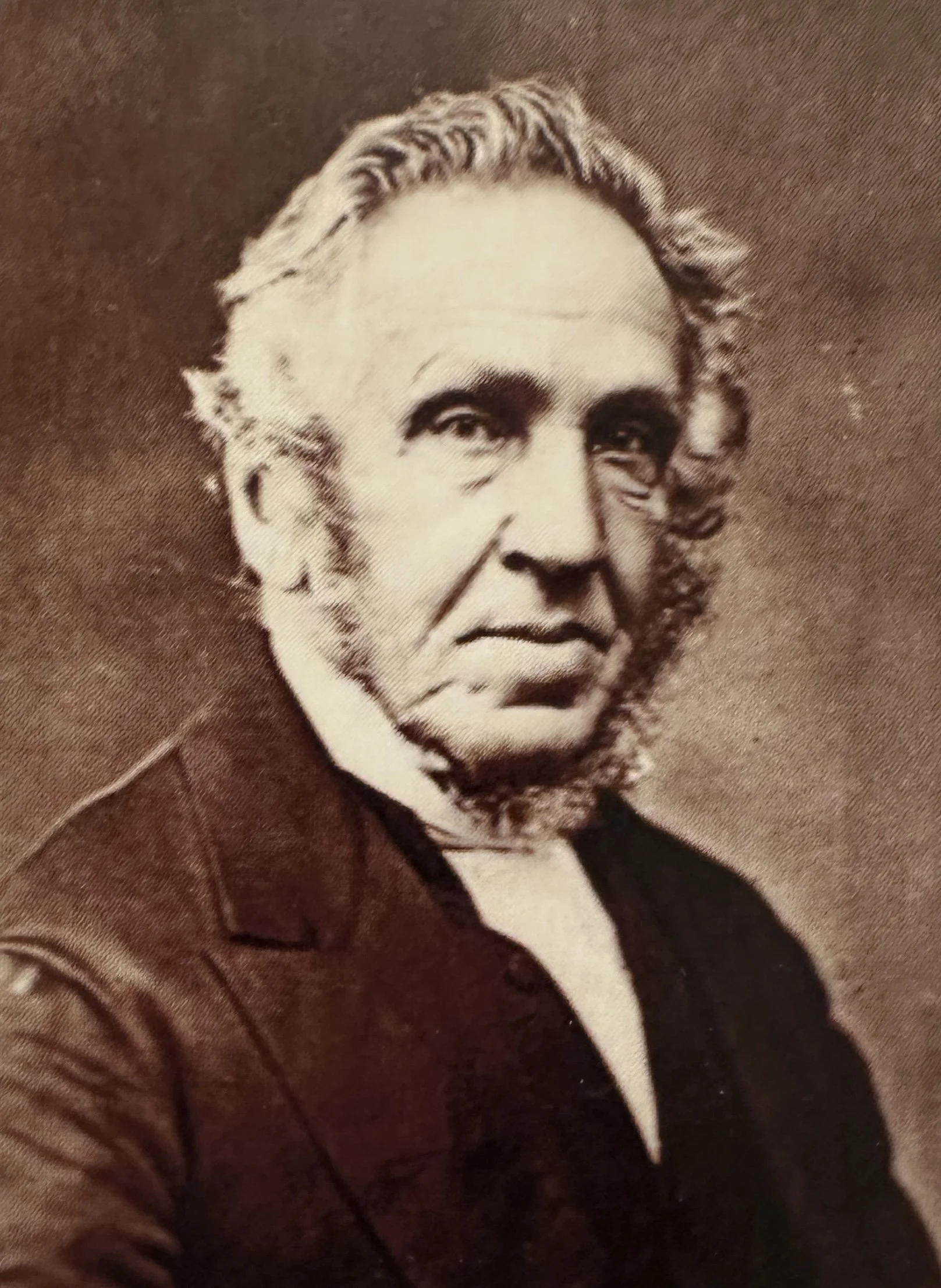
A Pastoral Letter to the Members and Other Individuals
James Dodson
CONNECTED WITH
The Reformed Presbyterian Congregation
OF
KNOCKBRACKEN.
BY THE REV. THOMAS HOUSTON,
Minister of the Gospel, Knockbracken.
“Holding forth the word of life: that I may rejoice in the day of Christ that I have not run in vain, neither laboured in vain.”—Phil. ii. 16.
“Ye are saved, if ye keep in memory what I preached unto you.”—1 Cor. xv. 2.
“Teaching them to understand all things whatsoever I have commanded you.”—Mat. xxviii. 20.
BELFAST,
PRINTED BY LANKESTREE AND WILSON.
1829
Dedication
DEDICATION.
TO THE
MEMBERS AND OTHER INDIVIDUALS
CONNECTED WITH
THE REFORMED PRESBYTERIAN CHURCH
OF KNOCKBRACKEN,
This Address,
As a token of sincere and affectionate regard, and with earnest prayers,
that, in the hands of the Divine Spirit, it may be conducive to
their comfort and direction here, and may tend
to promote their everlasting benefit,
IS INSCRIBED BY
THE AUTHOR.
5
A
PASTORAL ADDRESS.
DEARLY BELOVED BRETHREN,
WHEN ministering to you in spiritual things, often have I thought of that solemn scene when you and I will be called to appear before the Judgment-seat of Christ; and often has it been my earnest prayer, when thinking on such an appearance, that it might then be found that I “had not run in vain, neither laboured in vain.” When the Great Head of the Church fulfilled your desire, by placing over you, during the year now expired, the weakest and unworthiest of his servants, it was a deeply weighty injunction that He laid upon him, “Son of man, I have set thee as a Watchman unto the house of Israel; therefore thou shalt hear the word at my mouth, and warn them from me.” To this charge, as it respects you and me, there was attached an awful responsibility;—in the one case, if the Watchman should be found unfaithful—if he warned not the people, and told them not of the coming danger,—the blood of every soul that would perish, it is declared, would be required at his hand;—and in the other, if those to whom he was sent, obeyed not his voice and took not warning, it is said of them, that “they shall die in their iniquity, and their blood shall be upon their
6
own heads.” The consideration of this weighty charge is all the apology I have to offer for addressing you, on the present occasion, through the medium of the press. I have endeavoured myself to feel its pressing importance and to show you your personal concernment in it, when speaking to you from the pulpit, and when ministering to you in a more private manner; and now, that you may have similar exhortations to those which you have received, in a form such that you can daily refer to them, and that you may have before you instructions on some points of great practical utility, but to which there is little opportunity of making allusion in the exhibitions of the pulpit, you will bear with me, while, with all plainness, I attempt in the simplicity of the Gospel, to give you warning and instruction.
One thing is to be premised—you are not to expect in what may be presented, much that is new or striking. The topics adverted to in this address, will be truths which you have heard frequently inculcated, and they number among some of the plainest maxims of our holy religion. It is not necessary to say, in order to justify the introduction of such subjects into a publication like that which is now put into your hands, that plain truths are often the most profitable, and that of the way of salvation itself, it is declared that it is so plain, that “he that runs may read;” and elsewhere it is said concerning it, that “the wayfaring man, though a fool, shall not err therein.” Suffice it to observe, that experience shows us that there is a vast difference between knowing a principle, and practically acting upon it. Proceeding on this acknowledged fact, my object will be gained, if any into whose hands, this address may come, are brought thereby to feel the importance of eternal things, and if any of you, my
7
brethren, are led, under such feeble instruction, to a more diligent attendance upon duty—to a closer walk with God—to a more entire separation from the world—and to a more single-hearted devotedness to the service of your Heavenly Master.
Of the subjects which may be suitably brought before you, it gives me peculiar pleasure to think, that on that which claims a prominent place—the reception of Christian doctrine—you have no need that I write unto you. To the venerable persons who compiled our Confession and Catechisms, and to those faithful pastors who maintained the doctrine and discipline of the Church in their purity, and who have entered into their rest, you owe it under Providence that you have, from childhood, been trained to an acquaintance with the truth as it is in Jesus, and that the communion of the Church which you hold, has been preserved from the errors with which the fellowship of sister churches has been marred. While I cannot but consider this an invaluable privilege which you enjoy, and while I shall ever view it as bringing you and me under special obligations to the Great Head of the Church; let me warn and direct you even on this head. Our privileges are liable to be abused. If we are not aware of their importance—if we do not improve them aright, they will only prove to our aggravated condemnation.
In relation then to the reception of Christian doctrine, it concerns you first of all, to see that you embrace the whole truth of the Word. An enlarged acquaintance with the revealed will of God is of the utmost consequence to all who would enjoy the blessings of salvation. Though it is possible that persons may be the subjects of gracious operations, who have not clear views
8
on every article contained in the Inspired Volume—such as was the case with the Patriarchs and Old Testament saints, and such as is still the case with those in the present day, who, having grown up in the darkness of Heathenism, are but slowly brought to the full knowledge of Gospel-truth—yet I hesitate not to affirm, that that person will be held inexcusable who does not, according to his opportunity, study to know the whole will of God. Let it be remembered that the faith which justifies, is expressly said to be a “belief of the truth.” (2 Thess. ii. 13.) and that the instrument by which the Holy Spirit sanctifies, and confers a meetness for Heaven is declared to be the truth of the Word. (Jn. xvii. 17.) Both declarations clearly imply that it is the whole truth that is concerned in these unspeakably important matters, and that, if we would reap the benefits of justification and sanctification, we must be conversant with every part of the testimony of the Word—with all its precepts and doctrines. I the rather insist on this point, because there is a principle avowed and acted upon by many, in the present day, of a most dangerous tendency, against which it behoves you to guard. It is fashionable to speak of some parts of revealed truth as essential, and to represent other parts as unessential; and while it is admitted that all should embrace the former, it is said the latter are to be viewed as immaterial, and may be safely left out of the creed of the profession of the faith. This representation, my brethren, is by no means correct. It receives not the slightest support from the sacred oracles. To admit the distinction, is as if it should be contended, that, because a person might exist, and maintain his identity, after he had lost a leg or an arm, or various other members, these parts were not essential to his personality, and he might therefore be de-
9
prived of them. Would he, after such privation of his members, be a complete man? All the members were designed by the Creator to serve valuable and important uses, and it is not for us to say that any of them may be dispensed with, without arraigning the wisdom of Him that formed them, and assigned them their place in the human frame. Even so it is in the system of revealed truth. No part of the revelation sent down from Heaven, the testimony that God gave of his Son, was in the estimation of its great Author, unessential, else he would have withheld it. Some doctrines of the system of revealed truth, it is true, are like the foundation or the pillars of a building, and are therefore more conspicuous than others. But, so compacted is the whole, that the least article is not to be given up without marring the beauty and proportion of the glorious superstructure. Let it be your desire and your aim then to know the whole of your Father’s will. Remember the solemn command of the Divine Spirit—“Buy the truth and sell it not,” (Prov. xxiii. 23.) You must contend earnestly for the faith once delivered to the saints. Every article of it is most precious truth. To gain the realizing possession of it, is, to all of you, unspeakably important. If, through remissness or negligence, you lose it, great will be your loss. It is the Lord of glory that says to you, “Search the Scriptures, for in them you think you have eternal life; and they are they which testify of me.”—(John v. 39.)
In rendering compliance with this injunction, it will be for your advantage to enlarge your acquaintance with the Confession of Faith and Catechisms—the subordinate standards of the Church to which you have given your accession. God forbid that we should ever
10
claim for these an equal authority with the Divine Word. They have no separate authority. They derive all their authority from the Scriptures, and they are indebted for all their excellency to their agreement with the Volume of Inspiration. But regarded in the light of explanatory standards, giving the sense of Scripture, and condensing its testimony, and bringing it to bear on separate points, they will be found to contribute most materially to your instruction in righteousness. It is to be feared that, in the present day, even some who profess to believe the doctrines they contain, are wearing out of acquaintance with these invaluable documents. If you would advance in the knowledge of the Saviour’s truth, this must not be the case with you. Take them, and study them together with your Bibles. Compare their statements with the declarations of Scripture. Thus will you be prepared effectually to repel those attacks which are sometimes wantonly made upon the advocates of creeds and confessions. Such attacks, we believe, in many cases, originate from complete ignorance of the documents against which they are directed. Few there are who will take the course we recommend—who will read deliberately the chapters of our Confession, and the expressions of our Catechisms, comparing them with the Scriptures advanced in proof, who will not rise from the perusal with a fuller conviction of the excellency of these standards. And, what is of more consequence to you than to find weapons to meet the attacks of gainsayers, you will thus find your acquaintance with Scripture doctrine increased, and your views of Gospel-truth greatly enlarged. I have conversed with many who have been diligent readers of Scripture, but who had not consulted our standards; and though their views of evangelical truth, as far as
11
they went, were correct, yet were they very deficient in their acquaintance with some parts of the system of grace. Indeed, it is capable of being demonstrably shown, that, whether we would successfully study the doctrines of the Word, or preserve the purity of the communion of the Church, such a method as is followed in our Confession and Catechisms is indispensably requisite to the attainment of these ends. Do you who, by profession, have adopted these standards, as containing the symbols of your faith, show that you value them, by studying with diligence their contents. Thus will you “Hold fast the form of sound words which you have received.” Thus will you be prepared to render to every one “a reason of the hope that is in you.”
And let it be finally borne in mind, that, in relation to doctrine, every thing depends on your holding the truth in such a manner as that it may exert a sanctifying and subduing influence on your hearts and lives. Believe me, my brethren, none of the doctrines of the Word are points of bare speculation. In this is the Gospel distinguished from every other system that has been established among men. All the truths which it reveals are living and abiding principles, and they then only are rightly received, when, in enlightening the understanding, they purify, at the same time, the heart, and shed the light and purity of the religion of Jesus around the walk and conversation. One thing is very observable in adverting to those statements of doctrine which are made in the Inspired Volume—that, in no instance, is the practice of holiness disjoined from the reception of doctrinal truth. The chain of the closest reasoning is continually interrupted, and every where the arguments of the Apostles are interspersed with close and pointed appeals to the con-
12
science, and with the most earnest exhortations to the cultivation of godliness. Let any one read attentively the Epistles to the Romans and the Hebrews—two pieces of the most powerful and systematic reasoning in the New Testament—and he cannot fail to be struck with the frequency of practical admonition, and with the digressions from the main argument, which the Apostle makes, in order to show the practical bearing of the points which he handled. And what is yet more convincing on this head—very often, the main doctrines of the Gospel are so stated, as that the practical part must be taken as an essential ingredient of the doctrine itself; a part which if it be not received, the doctrine is not embraced at all. Thus, is it the doctrine of Original Sin that claims a place in our creed?—This important article is never rightly believed, but where there is an accompanying life of holiness; for this is the statement which the Holy Spirit gives concerning it, “The love of Christ constraineth us, because we thus judge that if one died for all, then were all dead; and that he died for all, that they which live, should not henceforth live to themselves, but unto him which died for them, and rose again,” (2 Cor. v. 14, 15.) Are we required to believe in the Saviour’s Supreme Divinity?—The fullest and most striking exhibition of this fundamental doctrine that is to be found in the Scriptures of the New Testament, stands in inseparable connection with the injunction laid upon all that would receive it, to “let the same mind be in them which was also in Christ Jesus,” (Phil. ii. 5.) And, not to pursue a subject with which every diligent student of the Bible must be familiar, when the subject of the Future Judgment is brought before us with clear and awful manifestation, the Spirit, as it were, says that there
13
can be no right belief in the doctrine without a life of holiness, by addressing to us the solemn inquiry, “Seeing then that all these things shall be dissolved, what manner of persons ought ye to be in all holy conversation and godliness,” (2 Pet. iii. 2.) It would appear, then, that there can be no real belief in any article of Gospel-truth, when that article is not so embodied into the principles that influence our minds, and the motives that actuate our conduct, as to produce holiness in the life and conversation. Such a view of the subject is unquestionably taken by the great doctrinal Apostle, when he tells the Corinthian Christians, and through them speaks to us, (1 Cor. xv. 2,) “Ye are saved, if you keep in memory what I preached unto you.” It is not a mere recollection of the plan and method of the discourses he had delivered, that he intends, nor is it the mere recalling by memory of the doctrinal truths they had heard in waiting on his ministry. But the Holy Spirit, speaking by the Apostle, did mean to tell us, by this remarkable declaration, that our salvation is inseparably connected with a lively and constant remembrance of the great truths concerning the Saviour’s person; his atoning death; the perfection of his righteousness; and the necessity of his Spirit’s influences. When these doctrines are not so meditated upon as to be digested as the food of the soul; when they are not brought to act daily as constraining motives to influence the conduct, they have never been rightly believed, and the individual maintaining them, with all his zeal for the faith, has reason to dread that he is not a partaker of that salvation, a chief part of which is the keeping in memory of the truths that have been heard. Besides, it is in this way of studying the doctrines of the Word in their practical bearing, that
14
you are to look for an establishment in the truth. “If any man,” says the Redeemer, “will do his will, he shall know of the doctrine whether it be of God.” (Jn. vii. 17.) And to the same import is the declaration of the Psalmist, “What man is he that feareth the Lord? Him shall he teach in the way that he shall choose,” (Psalm xxv. 12.) Let every one of you then be jealous over himself with a godly jealousy, lest you should be found in the condemnation of those that “Hold the truth in unrighteousness.” And while such doctrines as the Divinity of the Saviour; the Atonement; Justification by grace; the necessity of the Spirit’s Influences to renew the heart, and produce holiness in the life; should be, as it were, bound as frontlets between your eyes, and graven on the posts of your doors, and should never depart from before you, all the days of your lives, Oh! remember that your belief in these is not real, and you are deceiving your ownselves, if your acquaintance with them has not the effect of “casting down imaginations, and every high thing that exalteth itself against the knowledge of God, and if it bring not into captivity every thought to the obedience of Christ,” (2 Cor. x. 5.)
Having thus adverted to the manner in which you are to embrace and maintain the doctrines of the Gospel; amid a great variety of topics which might be brought before you, permit me particularly to notice three, which appear to me to merit your frequent and serious consideration. Often have I wished, (God is my witness, whom I serve in the Gospel of his Son;) in relation to you, the people of my charge, that these points were engraven on your minds as with the pen of a diamond, and that they were so impressed on your hearts, as that you
15
might daily act under a conviction of their immense importance. The three articles, with the exhibition of which the remainder of this Address shall be occupied are—the practice of religious duties in connection with a profession of the truth—the obligations of Christians to be zealous for the spread of the knowledge of the Redeemer—and the necessity of seeking more earnestly for an effusion of the Spirit upon yourselves as individuals, and upon the ministers and members of the Church, and on the means of grace enjoyed in connexion with her fellowship.
I. It is altogether requisite, if you would profit by the institutions of religion, and would advance in the divine life, that you should, with your profession, show diligence in your attention to the practice of religious duties.
It is a great mistake to regard Christianity as a mere system of doctrines, by assenting to which persons become entitled to its privileges and blessings. Nothing could be farther from the declared intention of its Divine Founder, than this: if any view it in this light, they may rest well assured that they wholly mistake its nature. The religion of Jesus is in its every feature practical. No man deserves to be considered as having cordially embraced it, on whom it has not wrought an entire transformation of mind, and a complete reformation of character and conduct. The command of the Redeemer laid upon all his followers—a command which every true disciple of the Lord Jesus earnestly desires to obey—is, “Let your light so shine before men, that they may see your good works, and glorify your Father which is in Heaven,” (Mat. v. 16.) Obedience to this injunction, he teaches us elsewhere to consider the sure mark of a
16
right disposition of mind towards Him, as the author of salvation. “If ye love me,” says he, “keep my commandments,” (John xiv. 15.) It is not necessary to remark, that the sacred writers uniformly represent LOVE to the Saviour, as the grand ingredient of all Christian principle; and they unequivocally declare the absence of it as the chief feature of a state of unregeneracy: “If any man love not the Lord Jesus Christ, let him be Anathema Maranatha,” (1 Cor. xvi. 22.) Now the Saviour himself teaches us, in the passage referred to, that whenever this principle has taken possession of the heart, there the individual will be found keeping his commandments, observing his ordinances, and practising, with diligence, the duties which He requires. The Holy Spirit speaks to the same effect, when He represents the “Grace that bringeth salvation,” teaching those to whom it comes to “deny ungodliness and worldly lusts, and to live soberly, righteously, and godly in this present world,” (Tit. ii. 12.) This is, in effect, telling us, that those who are made partakers of the grace here that ushers in and is inseparable from future glory, are effectually led to forsake the ways of wickedness—to refrain from the sinful practices of others—to cultivate sobriety, temperance, and strict integrity in the intercourse of civil society—and to perform, with diligence, the duties that arise from the relation which they occupy to God. If any of you that bear the Christian name, if any of you, my brethren, are not living thus, you have reason to fear that the grace that bringeth salvation—the grace, without the present possession of which there can be no reasonable hope of future happiness—has never visited you. Remembering your high vocation, you are required to excel in all the moral virtues. The practices which are common
17
in the world—drunkenness, licentiousness, dishonesty—should not be named among you, as becometh saints. It is not enough for you not to be notorious in the society in which you live, for the practice of these things; but, if you will be followers of the Lamb, you must keep away, at the farthest distance possible, from the commission of them. Unquestionably, you have not yet learned to walk as “the children of light,” if you are “having the least fellowship with the unfruitful works of darkness, and not reproving them”—if you are not avoiding every appearance of evil—and if, in your concerns with fellow men, you are not studying to act according to that golden maxim of the Great Teacher, “Whatsoever ye would that men should do unto you, do ye even so unto them.”
And then, it is not enough that you should testify your love to the Saviour by the diligent cultivation of the moral virtues; you are called to live godly in the present world, as well as soberly and righteously. This term plainly refers to the practice of the duties that are commonly called religious. The habitual neglect of these as fully proves a person to be destitute of the grace of God, as the commission of the most open acts of transgression—as the perpetration of murder, or perpetual indulgence in sensuality and dishonesty. It is possible, we will not deny, that a hypocrite may be found attending to the outward part of religious duties: there may be the form without the power of godliness. But it is equally incontrovertible, that none is entitled to be considered a lover of the Lord Jesus, who is not living in the constant keeping of the commandments that enjoin upon him the practice of religious duties; in other words, that none can have a comfortable evidence of being a partaker of grace, who is not living godly, by attending to all the duties of our holy religion.
18
The duties which, in virtue of your profession, you are required to perform, and which are clearly enjoined in the Word, respect you as individuals—as members of families; as belonging to the great family of mankind—and as connected with the Redeemer’s Church. It is not expedient that I should enumerate the various duties which arise from each of these relations. But there are some which, by reason of their importance, deserve notice—some that may be called hinging duties, inasmuch as the manner of their observance will go far to determine the character whether it be religious or not, and as the performance of them will insure the discharge of others which flow from them.
As individuals, a main duty to which you are called is secret Prayer. The divine Word sufficiently attests the importance of this duty, when it commands us to “pray without ceasing;” when it tells us “that men ought always to pray and not faint;” and when, in numerous declarations, it represents prayer as the channel through which Jehovah causes every good and perfect gift to proceed to the children of men. These declarations fully warrant the conclusion, that wherever true religion has obtained a seat in the heart, prayer will be an exercise in which the subject of it will delight; and on the other hand, where this duty is habitually neglected, or only occasionally and formally attended to, there is no real growth of godliness within. Such a representation, (and it is one which the whole testimony of the Word gives) speaks terror to the prayerless. It tells them that, in this state, they are without the favour of God, and assures them that a main ground of their future condemnation will be that they “restrained prayer before God!” Let this view of the matter be a warning to those who have never been brought to delight in the duty. Let it urge them to the
19
throne of grace, while yet they may “obtain mercy and find grace to help.” And to you, my dear hearers, who have imbibed something of the spirit of this duty, it need hardly be said, that you should ever consider an access to the throne of grace your highest privilege. Learn more and more the duty of being “careful for nothing, but in all things by prayer and supplication, make your requests known to God.” Let your errands to the Hearer of prayer be frequent. For yourselves,—earnestly, imploringly, perseveringly, seek the blessings of salvation. You are encouraged to use importunity. Like the Patriarch, you may say, in pleading with your Covenant God, “I will not let thee go, except thou bless me,” (Gen. xxxii. 26.) Let your approaches to God in prayer resemble those of the Divine Redeemer, when he toiled in the work of redeeming the children of apostacy, and of whom it is said, that, in the days of his flesh, “he offered up prayers and supplications with strong crying and tears,” (Heb. v. 7.) Above all things, watch against a cold, lifeless form in addressing God in prayer. It is presenting the lame and the blind on the altar, which God can never accept—it is serving Jehovah with the lip, while the heart is far from Him. Two things will mainly contribute towards the right performance of this duty. When about to engage in it, labour to have your minds deeply impressed with a sense of your dependence on God—with a view of his glorious character,—and a conviction of the absolute need you have of the blessings which you supplicate. And, secondly, after prayer, watch against the evils from which you prayed to be kept, and let there be a diligent and earnest looking for the blessings which you desire. By attending to the former directions, you will be brought to realize something of what
20
it is, to have communion with the Father and with his Son Jesus Christ; and you will know what is meant by ordering the words aright and filling the mouth with arguments, in coming before God. And, attention to the latter part of the direction, will serve to impress more and more on you the necessity of abounding in the duty, and will be the means of leading you into the exercise of which the Psalmist speaks, when he declares his intention of looking up and expecting an answer, (Ps. v. 3.) The truth is, those are not in earnest in their petitions, who pray to be kept from temptations, and yet throw themselves into the way of being tempted; and that person has reason to fear that he has been mocking God in his petitions, who has given place to the evils of temper, and disposition, and life, against which he prayed. While you should labour then to imbibe the spirit of prayer, lest while “you ask, you receive not, because you ask amiss,” let your petitions often be presented to God in behalf of yourselves—your brethren in the Church—him that ministers to you in holy things—and the cause of Christ in the world. All these demand—all of these require your prayers. If there will good come to any of them, it must be through this channel. “For this,” says Jehovah, “will I be inquired of by the house of Israel,” (Ezek. xxxvi. 37.) Oh! that the Spirit of grace and of supplication were poured out!
Nearly allied to the duty of secret prayer, are those duties which you are required to perform as the members of families. As Covenanters, you have engaged to the regular maintenance of family worship, daily in your household, and to the religious education of your children and dependents. It has frequently afforded me comfort to reflect, that I am connected with a Church, and minister to a
21
people with whom the morning and evening sacrifice is daily offered up in the family, and who are transmitting the testimony which God placed in Israel to the succeeding race, by training up their children in the nurture and admonition of the Lord. Let these duties be diligently cultivated; let them be attended to in a right spirit, and they cannot fail to minister to you great spiritual advantage. Parents, while you bring your children around the family altar, think of the solemnity of the charge that is yours. You have been the means of giving existence to those who have an immortal being, and whom you shall unquestionably either behold at the right or left hand of the Judge at last; who will either rejoice through all everlasting in the presence of God, or will have their eternal portion in the lake that burneth with fire and brimstone, execrating you as the authors to them of a miserable existence. You have the souls of your servants intrusted to you, while they are under your care, and you are called to watch for them as they that must give account to God. Let the weight of this responsibility be felt pressing upon you. Let it lead you, in family-worship to be so in earnest, as that every member of your household may perceive that you carry about with you, a deep concern for their salvation. To discharge your duties aright, you will need much watchfulness and circumspection. Your children, being naturally depraved, will readily observe any thing inconsistent in your conduct, and it may be reserved for you, in your declining years, to see them estranged from the good ways of the Lord, by means of the very sins which you committed in their presence, and which, at the time, you perhaps did not expect would meet their notice. And if you be not circumspect in conducting the affairs of
22
your family, your servants will justly set down all your practice of religious duties as hypocrisy, and will, through you, be led to build themselves up in ungodliness. While it behoves you to enforce the authority which the “God of the families of the whole earth” has entrusted to you, and while you should see to it especially that the good order of your house should be strictly observed, you should always rule with gentleness. “Fathers, provoke not your children to wrath, but bring them up in the nurture and admonition of the Lord,” (Ephes. vi. 4.) “Husbands love your wives, even as Christ loved also the Church, and gave himself for it.” “Wives, submit yourselves unto your husbands, as unto the Lord,” (Ephes. v. 25. 22.) “Masters give unto your servants that which is just and equal; knowing that ye also have a Master in Heaven,” (Col. iv. 1.) “Servants, obey in all things your masters according to the flesh; not with eye-service, as men-pleasers; but in singleness of heart, fearing God,” (Col. iii. 22.) Let the heads of families labour to show their children and dependents always that they love them; that they are concerned for their welfare; and they will find their commands obeyed with alacrity; and above all, they will have the satisfaction of beholding their house a Bethel, in which God will delight to dwell. And you, the youthful part of my congregation, who occupy the relation of children, remember it is the command of the Saviour that bids you “reverence your parents”—“love them”—“obey them in all things.” In obeying these commands, you have the example of the Redeemer himself, who, when he continued on earth, was subject to his parents, and who cherished even in his last agony, his mother; and when his own heart was pierced with innumerable sorrows, dis-
23
covered an anxious concern for her welfare. Manifest ever a reverential regard to the worship of God in the family. Account it your highest privilege; and let nothing prevent your being present when the morning and evening sacrifice is offered up. Imitate the adorable Redeemer in his sympathising concern for his parents, and in his dutiful obedience to them. Bad as the world is, it fails not to stamp with approbation the performance of the duties enjoined in the fifth precept of the Decalogue, and to hold up to censure any instance of their neglect. And, what is infinitely of more consequence, it is God himself who has said, “Honour thy father and thy mother.”
There is another of your relative duties, on which you will permit me, my dear hearers, to give you exhortation with all plainness. It is that of attendance upon Social Meetings for prayer and religious conversation. I have always considered this one of the most excellent parts of our profession. Fellowship-meetings, I do believe, have been the means of preserving the life of religion in the Church with which you are connected, in a greater degree than any other ordinance we enjoy, the preaching of the Word excepted. Without them, the preaching of the Word itself would lose much of its efficacy. Considered in this light, and I am clear in saying the history of the Church in former times bears me out, in speaking of them thus, I cannot fail to recommend to you, in the strongest manner, your duty in relation to this institution. If there be among you, brethren, any fault in this matter, it is altogether incumbent on you to strengthen the things that remain. By your voluntary covenant, in entering into the communion of the Church, you engaged to be diligent in your attendance on social meetings. It
24
is on the faith of your doing so, that you are retained in her membership. If you have become remiss, and neglectful of the duty, the compact is, on your part, broken, and you have forfeited your right to fellowship. But I would not speak on this point in the language of compulsion. Fellowship-meetings are a most precious means of grace. Look at the privilege as it appears in the promise of the Saviour: “Where two or three are gathered together in my name, there am I in the midst of them,” (Matt. xviii. 20.) Here, a motive to a diligent attendance upon this ordinance is held out, than which it is difficult to find any more powerful. The society of fellow-worshippers is a place where the gracious presence of the Redeemer may be expected; where, on many occasions, as the past experience of believers can testify, it has been enjoyed, and where, in consequence, many have had their doubts resolved, their hearts cheered, and have been enabled to retire from the exercise with abounding consolation. As “iron sharpeneth iron, so a man sharpeneth the countenance of his friend,” (Prov. xxvii. 17.) You must go to fellowship-meetings, that you may meet with Him who is the friend and the counsellor of his people. If you are really seeking his face, it will be your incalculable loss to be absent from any place where he has held out the promise of a visit of his love. What is such absence, but saying that you delight not in his company, and you desire not his fellowship? Let your conduct in this matter testify for you, that the Redeemer is esteemed precious by you; that you value his favour more than life; and that you desire nothing more than the visits of his mercy. Remember it is the spirit of Jesus, who has given it as the character of the fearers of the Lord, who are hidden in the day
25
of Divine visitation, and shall be the jewels that shall shine in the Redeemer’s crown at last; that they “spoke often one to another,” (Mal. iii. 16.); and has represented them as “not forsaking the assembling of themselves together as the manner of some is,” (Heb. x. 25.) Seeking for the presence of the all-gracious Redeemer in the society of his people, and making this the chief object of your desires, you may derive comfort, and experience advantage, in meeting with the weakest of your brethren of the Church. If this be, as it ought to be, the constraining motive to lead you to the duty, you will regard the service as a solemn and most important privilege; you will be found abounding in it; you will not be alone content with assembling regularly with your brethren in the society with which you are more immediately connected, but you will embrace opportunities of going occasionally to others, and there seeking the Beloved of your souls. You will thus, as travellers Zion-ward, take sweet counsel together. You will know what it is to “see the King in his beauty;”—and, with enlargement of heart, your desires will be raised after the exalted communion of the saints in the kingdom of glory.
Congregational duties, finally, demand of you a diligent observance. You enjoy it as an invaluable privilege to have a nail in God’s holy place, a seat and a name among his professing people. Is it unreasonable to ask, that you should discover your esteem for this privilege by endeavouring to fulfil individually the duties which you owe to the brethren with whom you are associated? I dwell not particularly on those which arise from the relation that subsists between you and me, as people and pastor. Let the weak instrument that ministers to your edification have your prayers; let him be received by
26
you as “an ambassador for Christ,” let him be nothing in your eyes, that Christ may be “all in all;” and, oh! let the message he delivers be followed in your lives and conversations, and then does he not fear that you will ever be found deficient in whatever service the relation which he sustains to you, under the Great Shepherd, may demand. He trusts he can adopt the language of the great doctrinal Apostle, and say, respecting you, that he has no greater joy on earth than to see his children walking in the love of the truth. And his earnest and unceasing desire, is, that you may be so blessed, may so live and so act under his ministry that “in the day of Christ he may rejoice that he has not run in vain, neither laboured in vain,” (Phil. ii. 16.)
The duties which you owe to your brethren in the membership of the Church are various, but they may all be summed up in mutual and warm-hearted love. It need not be told you, that the Spirit of God attaches much importance to this principle. The love of the brethren, is the great distinguishing feature which the Redeemer’s Church is to exhibit to the world. The Saviour himself mentions it, as the grand evidence of discipleship—“By this shall all men know that you are my disciples, if you have love one to another,” (John xiii. 35.) And the apostle who leaned on his bosom, and who, living and dying, delighted in the exhibition of this principle, has, in very explicit terms, settled the point: “If a man say I love God, and hateth his brother, he is a liar; for he that loveth not his brother whom he hath seen, how can he love God whom he hath not seen?” (1 John iv. 20.) Let these injunctions have their proper weight with you. “See that ye love one another with a pure heart fervently.” If this one principle, the love
27
of the brethren, has a right hold of your affections, then will the communion of the Church on earth be delightful. Peace will be within the walls of Jerusalem. The ungodly world will acknowledge of you that you have been with Jesus, and may yet say of you, as the Pagan persecutors said of the first Christians, “See how these Christians love each other!” And the fellowship of the Church on earth will put on the resemblance of the exalted communion of the Church of the First Born in Heaven, “where perfect love casteth out fear.” We can judge of the existence of this principle only as we do of any other, by the effect it produces in the outward conduct and deportment. Let your words and actions then evidence that your love is without dissimulation, by bearing each other’s burdens, and thus fulfilling the law of Christ,—rejoicing with them that do rejoice, and weeping with them that weep.
The society of the Church on earth is composed of imperfect beings, and you must calculate on seeing in your brethren a portion of the common imperfection—tempers unsubdued; dispositions in some cases unamiable; and many other things which you may dislike. The manifestation of such things is never to lead to any thing like retaliation or alienation of affection. He that knew from the beginning “what is in man,” foreseeing that such things would exist, gave his commandment, as one which in every case was to constrain his disciples, that they should love one another. Remember the peace of the Church is dear to the Redeemer, and it is not to be slightly broken. The communion of the saints is an unspeakable privilege, and it never has been, it never can be enjoyed, but in connexion with a pure and fervent love to the members of the household of faith. This love is
28
to manifest itself in a ready and full forgiveness of your brother, if he has done you wrong—such a forgiveness as was shown by the Saviour of sinners, who waited not our return to him, but on the back of our rebellion and ingratitude, came and sought for us and brought us back; and, when we had no disposition to acknowledge our fault, stretched out his arms of compassion to receive us, and who, when he brings us to himself, never mentions to us any more “the evil we have done,” (Ezek. xxxvi. 16.) Show your love to the brethren, by bearing their cases, trials, temptations, failings, duties, often to a throne of grace, and there, in earnest supplication, seek for them a share in the same redeeming mercy that you ask for yourselves. It was the declaration of the first murderer, “Am I my brother’s keeper?” The reverse of the disposition that could prompt such an expression, must be yours, if you would evidence yourselves to belong to the family of God. You must bear with the weakness of your brethren, be careful of casting a stumbling-block in their way, and be exceedingly cautious lest you should wound their consciences, or give an occasion to fall to any. Would you like to have it for the reflection of a dying bed, that you had disturbed the peace of the least follower of the Lamb, or made him go on his way heavily? Would you wish to find it recorded against you, when you shall appear before the tribunal of God, that you were the occasion of sin to any, or that you had led them so to stumble that they fell to everlasting ruin? And you must evidence your love to the brethren, by positive acts of kindness. If in poverty, you are bound to relieve them—if in sickness, to visit them and comfort them—and when under any kind of distress, you are “to weep with them that weep.” Let the exhortation of the Spirit, en-
29
joining such conduct towards the brethren, ever dwell in your recollection, and be the maxim to regulate your deportment in the fellowship of the Church—“Be kindly affectioned one to another, with brotherly love; in honour preferring one another,” (Rom. xii. 10:) and again, “Put on, therefore, as the elect of God, holy and beloved, bowels of mercy, kindness, humbleness of mind, meekness, longsuffering; forbearing one another, and forgiving one another, if any man have a quarrel against any; even as Christ forgave you, so also do ye,” (Col. iii. 12, 13.)
II. It is solemnly incumbent on you, that you should manifest ZEAL for the spread of the truth as it is in Jesus.
The command of the Spirit of Jesus, as he spake by his servant John to an early Christian Church, was,—“BE ZEALOUS,” (Rev. iii. 19.) It cannot be supposed that this command was intended only for the people of the Apostle’s day, and that afterwards it would cease to lay any obligation on the faithful followers of the Redeemer. As all Scripture is given for instruction, the duty enjoined must be regarded as one of perpetual and permanent obligation, to the performance of which the Holy Spirit equally calls us, as he did the members of the church at Laodicea, to whom it was first addressed. The blessings of the Gospel were intended for universal diffusion, and all who in any measure enjoy them are solemnly required, in virtue of the privileges they profess, to put forth efforts for bringing others to share with them in the invaluable inheritance. If they are unmindful of this duty—if they are not zealous for the truth upon the earth, it is the sad but sure evidence, that they are either utter strangers to divine truth, or that it
30
has not yet obtained its rightful ascendancy in their hearts—and it affords a melancholy presumption that the love of Christ has never been felt as a constraining principle within. The whole of Scripture-representation leads us to expect, that wherever this principle has obtained the ascendancy, the person who is under its influence will feel a concern about the state of those that know not the Saviour, and will seek out means by which he may discover to them their danger, and bring them to the hope of the Gospel. The proper character of the Redeemer’s kingdom is comparable to leaven, which extends its influence all around, till the whole mass is leavened. Not only is the principle of grace in the heart fitly set forth, by this similitude, as a growing and expanding principle, which, in its working, brings the whole inner-man under its power; but, as one particle of the mass that is leavened extends its influence to other particles in its neighbourhood, and brings them to a similar state—so is it designed to be in the kingdom of the Saviour’s grace. The Church is destined to be the instrument of her own enlargement. One sinner that has himself been rescued from the bondage of sin, and has been brought to know the Saviour’s loveliness, is to go and tell the glad tidings of salvation to those that are in darkness. He is to begin with his friends and acquaintances—those over whom he has influence, or with whom he is in frequent intercourse. He is to give to his efforts a wider range, and to employ his prayers, and whatever other means he possesses, for the enlightening of his countrymen who are in ignorance. And he is not to consider himself having the proper character of a member of the Redeemer’s Church, till he has assisted in exertions for the evangelization of the Heathen—for the in-bringing
31
of the Jews—and for the overthrow of the systems of the Beast and False Prophet. To this, every follower of the Redeemer is called, in virtue of his profession. To such service the inestimable privileges which he enjoys lays him under obligations, which he may by no means dispense with at his pleasure. The first Christians, who had learned to set a high valuation on the blessings of redemption, seem to have fully recognized the duty as theirs, of endeavouring to bring others to the knowledge of the truth. Being scattered by persecution, it is said of them, they “went every where, preaching the word,” (Acts viii. 4.)—and elsewhere the character of one of the early churches is given in these words—“from them sounded out the word of the Lord not only in Macedonia and Achaia, but also in every place your faith to God-ward is spread abroad,” (1 Thess. i. 8.) Indeed, we may safely declare, that this is a feature for which the Church should ever be distinguished—that of active and lively exertions made by her members for the extension of the Redeemer’s kingdom. In the latter day of Millenial glory, such exertions will be unnecessary, for then “the knowledge of the Lord will cover the earth, as the waters fill the channels of the deep.” But, till that period arrives, the Spirit of God inculcates it most explicitly as the duty of every man to say to his neighbour, Know the Lord, (Jer. xxxi. 34.) This duty has hitherto been sadly neglected; this feature has been but little exhibited by the Church in the days that are past. In the place of holy zeal, languor in their profession, and a cold and a hard-hearted selfishness have become the characteristics of her members. There are many that sit in their ceiled houses, while the house of the Lord lieth waste. Many, in relation to exertions for the spread of the truth, have con-
32
tracted a Laodicean spirit, and are become lukewarm; and it is mournfully apparent that a great majority of the professors of the faith practically act upon the maxim of the first murderer, and, in their unconcern about the souls of them that are perishing for lack of knowledge, answer the dark delineation drawn by the pencil of Inspiration of such as shut up their bowels of compassion against the needy, and, while they see a brother or sister naked and destitute, can, with the most heartless apathy, bid them “depart in peace, and be warmed and filled”—and yet give them nothing to relieve their necessities.
I would not, my dear hearers, exempt ourselves from blame in this matter. Prayers, I know, are offered up in public and in your families for the conversion of the Heathen and the in-gathering of the Jews. You have professed your belief in the coming of a period when the Redeemer’s name shall be one, and his praise one through the whole earth; when the heathen shall be given him for his inheritance and the uttermost parts of the earth for his possession; when “the glory of the Lord shall be revealed, and all flesh shall see it together.” And resting on these declarations, you have sought their accomplishment, and have entreated the Lord to bring again the captivity of Zion. But you have reason to dread the sincerity of your prayers, if they have been unaccompanied with other exertions—if you have not cheerfully dedicated a portion of your time, and devoted a part of your substance, to the advancement of the Redeemer’s cause. I would not dissuade you from employing earnest prayer in reference to the conversion of the Heathen and the evangelization of the world. On the other hand, I would recognize this as the first grand part of the duty which every professing Christian is under obligations to perform, to-
33
wards ameliorating the condition of those that sit in darkness, and the region of the shadow of death. The Church must ask, not in feeble and languid prayers, but in earnest and persevering entreaties, ere she may expect the Heathen given the Redeemer for his inheritance, or the uttermost parts of the earth for his possession. The work is peculiarly the Lord’s—that in which, though he has declared his intention of employing human instrumentality, he will have for himself exclusively the glory: “Not by might nor by power, but by my Spirit, saith the Lord.” So much is the evangelization of the world connected with the offering up of constant prayer by the Church and her individual members, that I hesitate not to say, that it will never take place to any great extent, till the Spirit of grace and supplication be more universally poured out upon Christians at home. Sadly does that person judge amiss, who hopes by contributing of his substance, to effect this great work, while he neglects making the illumination of them that are in darkness a subject of special and frequent prayer at a throne of grace.
But we are not to suppose that all our duty in relation to the cause of God is discharged, when we have prayed for the conversion of the Heathen. As it was remarked, that that person who does not daily guard against those evils from which he sought to be kept, has reason to inquire whether ever he prayed aright, so it is here—there is cause to suspect your sincerity in prayer for the extension of the Redeemer’s Kingdom, if you employ not every means in your power to bring about its establishment. The LORD has expressly declared that he will work by means.—“How shall they believe in him of whom they have not heard? and how shall they
34
hear without a preacher? and how shall they preach except they be sent?” (Rom. x. 14. 15.) You are required then, in addition to fervent and unceasing prayer, to contribute a portion of your substance to the work. Preachers of the Cross must go into Heathen countries. They can neither reach the places of their destination nor continue there, without means of support. The Scriptures must be printed and circulated in various languages, ere the light of scriptural knowledge can chase away the gross darkness that involves the nations. All this, if the work is undertaken as the wants of them that are perishing would demand, will require considerable sums of silver and gold, and will present extensive claims upon the Christian charity of them that know the Gospel. It is evident, from the magnitude of the work, that, before any great change can take place in the condition of the millions that are under the darkness of Paganism, there must be a general movement in the Church. Every energy must be summoned to the work. The flame of holy zeal must be kindled up; and the members of the Church must, as in the days of old, when the Tabernacle was erected, and the Temple rebuilt, excite and encourage each other to strenuous and individual efforts for rearing again the House of the Lord. Let me urge you, my brethren, to this important duty. Too long have you been remiss and indolent on this point. You must be up and doing. The Christian world is beginning to stir itself around you, and you must not be found the last in going forth to bring the king back. Let holy hands be stretched out, and “give the Lord no rest, till he arise and make his Zion a praise in the earth.” And as the silver and the gold are the Lord’s, dedicate cheerfully a portion of your substance
35
to his service. And, by your influence, and by every means in your power, seek to bring all with whom you are acquainted to a deep concernment about the salvation of those who are daily descending to the sides of the pit, with none to compassionate or relieve.
Do you want motives to impel you to this undertaking? Think of the vast multitudes that know not God, and have never heard of a Saviour’s name, and to whom the glad tidings of salvation have never been proclaimed! It has been calculated, that there may be at present eight hundred millions of human beings peopling our globe. More than six hundred millions of these are Heathens, unvisited by the least ray of that light which might illuminate their path to Heaven. Thousands of them, every day, are swept into eternity, and brought before the tribunal of that Holy One who, out of Christ, is a consuming fire. Can you think of their condition, and not be affected by its awful horrors? Can you behold them perishing, and feel no disposition to relieve them? Look at the wretched outcast condition of the Jewish people, whose dispersion has been the reconciling of the world, and whose restoration will be accompanied with such a revival in the Church, that it will resemble life from the dead, (Rom. xi. 15:) and do not gratitude and mercy call upon you to do something to bring them to the knowledge of the Saviour? Think of the awful state of the votaries of Antichrist, and of the judgments to which those who have “the mark of the beast,” are fore-doomed of God; and does not compassion impel you to labour to bring a people out of her, that they may not be partakers in her plagues? And is it possible you can, with the feelings of Christian men, view the low and sunk state of the Protestant Churches—the ignorance of the way of sal-
36
vation, and the practical neglect of divine ordinances, by many around you, who claim connexion with them—and never regard it as your duty to tell them of their danger, and to provide means, as far as in your power, for their spiritual illumination? I would have you, my brethren, to consider these things in the light of ETERNITY. Would you justly raise your voice against the hard-hearted cruelty of the man that saw some stroke of overwhelming temporal calamity coming upon his neighbour, and who, when his friendly admonition might have been the means of his preservation, warned him not of his danger? How vastly more culpable, in the sight of Heaven, is he that can behold men perishing around him, and make no effort to save them!—how greatly more guilty is the man that can see thousands descending daily to the sides of the pit, and when he has a knowledge which, if imparted, might be the means of arresting their headlong course of ruin, will yet stretch forth no hand to relieve them? And oh! view, I beseech you, the state of those to whom I have pointed, and your own duty in this matter, by the light that shines from the Saviour’s cross. It is the sufferings of the Redeemer alone that, if rightly viewed, will effectually teach you the worth of the human soul—will discover to you the melancholy condition of those that know not the Saviour, and will bring you to feel your own indispensable obligations to make known his preciousness to others. If you have never reflected on these subjects before, or viewed them in this light, as I fear some of you have not, it is high time for you to awake now to consideration. I hesitate not to say, that that professed follower of the Redeemer is living in the neglect of a solemn and important duty, who is not concerned for the salvation of fel-
37
low-sinners; and who is not doing something in the way of personal exertions towards bringing sinners to the knowledge of the Saviour.
Let me not be told by any, that they have little influence, and can do little. Every one of you has some influence, and you are bound to employ it for the advancement of the Saviour’s cause. To every one of you is committed a talent, with the solemn charge of the Saviour himself,—“Occupy till I come;” and remember, at his coming you shall have to render account for the manner in which you have improved it. The Saviour requires you to dedicate a portion of your substance—of your silver and gold—for promoting the spread of his Gospel in Heathen lands, and for the dissemination of his word. Let those that have this world’s goods in abundance think, if it is at their peril to shut up their bowels of compassion against the bodily distresses of their afflicted brethren, it is still worse to withhold that which is meet for the extension of the Gospel of Jesus. Let them, in every scheme for the spread of the truth at home or abroad, be found devising liberal things, and then may they expect the fulfilment of the promise that by liberal things they shall stand. Let them not be high-minded, nor trust in uncertain riches, but in the living God, who giveth us richly all things to enjoy; That they do good, that they may be rich in good works, ready to distribute, willing to communicate. And let the poor remember the conduct of the poor widow, recorded in the Gospel, who cast her mites into the treasury of the Lord, and seek the same honourable attestation that was borne to her—“She hath done what she could.” A few pence, (five or six,) will purchase a copy of the New Testament in some of the languages of the Heathen into which it has lately been translated. Who is there, that
38
could not, even from the earnings of daily toil, save what might bestow this inestimable boon upon some destitute Heathen family? Who, that might not, in a length of time, be the means of sending many such copies to those that are now, for want of the Scriptures, sitting in the region and shadow of death?
Of late years, many throughout these countries, have acknowledged the obligation of the duty to which I invite you, and have formed associations for the specific purpose of sending the bread of life to them that are perishing for lack of knowledge. There are Bible, and Education, and Missionary Societies—Societies for the evangelization of the Heathen—for the in-gathering of the Jews—for the revival of true religion on the Continent of Europe, and, what must ever be viewed as an object of vast moment, there are exertions making for dispensing the blessings of salvation to the poor in our towns, and to the neglected population of our country. It is pleasing to observe, that, while these Societies are jointly and individually sending forth to the work many faithful and devoted labourers, they derive the greatest part of their support, not from the donations of the mighty and the noble, but from the penny-a-week subscriptions of those whose circumstances in life are far from being affluent. There are channels then opened, and you are to regard it as your solemn and incumbent duty to cause the streams of the water of life to flow through them, that thus the wilderness may be refreshed, and the desert and solitary place may rejoice, and blossom as the rose. If you think there is any thing objectionable in the method by which some of those Societies seek the evangelization of the Heathen, or in the principles and character of the men by whom they are conducted, remember this will not
39
excuse you for sitting idle, or for withholding your support from efforts that are made for the spread of the Gospel. There are others against which grounds for such objections do not exist. Let your contributions go to them. I object not to your giving a preference to those societies and those men, who approach most nearly to the maintenance and exhibition of the whole testimony of Jesus—but I do most pointedly condemn the conduct of such as attempt to cover over their own want of zeal in the cause of God, by raising up objections against valuable Institutions, and, because they think they can find such against almost all the means that have been hitherto employed for the evangelization of the nations, take no part whatever in this great work. Suppose your scruples concerning many of the other missionary institutions that exist in the present day, incapable of being obviated, you have the Missionary Society of our own Church, partaking of the nature both of a Home and Foreign Missionary Society, and designed not only for the extension of the Gospel generally, but also for the spread of the principles of the Covenanted Reformation. Let your zeal be manifested by your efforts to advance the interests of this valuable Institution. The Covenanter who does not, in one way or other, do this, cannot be freed from the censure which our venerable and suffering fathers recorded against those who were indifferent to the spread of the truth, when they spoke of them as characterized by a “detestable neutrality.” Let this disposition not be found pertaining to you. Arise to efforts of holy zeal. The night speedily cometh wherein no man can work. In one way, let me beseech you, to let your zeal for the Saviour and his cause appear: try to bring sinners around you to the Saviour. You may not be able
40
to go as Missionaries to the Heathen, but you may all yourselves be labourers in the Redeemer’s vineyard. Of one of the Saviour’s first disciples, we are told, that when he himself had found the Christ, he immediately went and searched for his brother, and brought him with him to the Redeemer. This is an example worthy of your imitation. Let your friends and acquaintances have your daily prayers, that they may be made partakers in the blessings of redemption—and whatever influence you possess over them, employ it faithfully for the honour of the Master whom you profess to follow. And, in the neighbourhood wherein you live, and among all with whom your advice has any weight, show yourselves zealous for the truth upon the earth. If there be any poor and neglected families within the circle of your acquaintance—any ignorant of the way of salvation—any neglecting their own eternal interests; do the work of an evangelist to such. Show them that you are their best friends, by manifesting a real concern for their spiritual welfare. Put into their hands the words of life; point them to the Saviour; and rest not satisfied respecting them till you have some hopeful evidences that they have begun to feel that the “redemption of the soul is precious.” Let the young in this way show that they have chosen the service of the Lord. Let all, by their prayers and contributions, and personal exertions, discover themselves really concerned for the advancement of the Saviour’s glory. Let them thus exhibit the features of genuine disciples of Him that went about continually doing good, and who lays it as his solemn injunction upon all his followers, that, in his cause, they should be zealous.
41
III. There is one other topic, brethren, to which I shall briefly advert, and then I shall conclude this address—it is the urgent necessity of seeking for yourselves and for the Church, an outpouring of the Spirit.
It is a matter of painful observation, that, in our day, the state of vital religion among the professors of the faith is very low. Many, it is to be feared, have a name to live, while they are dead; and with many, it is too obvious, there is a form of godliness, without its power. What is now become of our men of prayer, who were mighty wrestlers with God, and to whom the interests of Zion were dearer than life? Where shall we now find such effects attending the dispensation of word and ordinance as followed it in our fathers’ days—when many cheerfully gave up all that on earth is reckoned dear, for the service of the Redeemer—when there was a visible power accompanying the word preached, and when, in the solemn assemblies of mount Zion, the members of the Church enjoyed hallowed communion with her exalted Head, and could testify, in their happy experience, the excellence of eating and drinking in the King’s presence? Is it not too apparent that many have forsaken their first love? Where, O! where shall we see visible fruits of holiness resulting from the means of grace, even when they are enjoyed in their most copious abundance, and dispensed in their greatest purity? If these inquiries bring painful reflections to the minds of any who are trembling for the ark of the Lord, and if they discover true and vital godliness in a low and languishing condition, the cause is to be found here—THE SPIRIT, IN HIS QUICKENING AND SANCTIFYING INFLUENCES, IS WITHHELD. When, to the eye of ancient prophets, the beauty and the glory of the New
42
Testament Church appeared, its splendour was attributed to the abundant effusion of the Spirit. When the Spirit of grace and supplication should be poured out, many, it is declared, would see the suffering Redeemer pierced by their sins, and, in the exercise of genuine repentance, would be brought to mourn for Him, “as one mourneth for an only son and a first born,” (Zech. xii. 10.) And, that we may have a full view of the altered condition of the Church when this great blessing shall be conferred, it was predicted that then, “when the Spirit shall be poured upon us from on high, the wilderness shall be a fruitful field—judgment shall dwell in the wilderness, and righteousness remain in the fruitful field. And the work of righteousness shall be peace; and the effect of righteousness, quietness and assurance for ever,” (Is. xxxii. 15, 16, 17.) In the writings of the New Testament, as by the coming of the Saviour, the way was prepared for the introduction of the ministration of the Spirit, his office and work are most fully exhibited. The gift of the Spirit is pointed out as the greatest and most desirable of the ascension-gifts of the Redeemer. He is represented as engaged in every work that can conduce to the benefit of the Church, or to the safety and comfort of her members. In the assemblies of the Church, He produces unity and peace, and love; brings the word preached home with power to the heart; adds efficacy to all the services of the sanctuary; and renders all the ordinances of religion well-springs of salvation, or breasts of consolation. Nor to individuals are his operations less gracious or less excellent.—It is He that instamps the Image of God on the soul in the day of regeneration, and seals to the day of redemption, (John iii. 5. Eph. iv. 30.) By his powerful and heavenly influences, he enlightens—
43
strengthens—sanctifies—revives—comforts. All holy dispositions are of his implantation. It is his, to kindle a flame of divine love within; to work faith and increase it in the heart; to revive and strengthen decayed graces; to discover the glory of the Saviour to the mind, and to render the view of it absolutely transforming, changing the subject of his power into the image of the Lord, (2 Cor. iii. 18.) In short, it belongs to the Holy Spirit to apply the whole finished Redemption—to renew and guide in life—to induce a meetness for the inheritance of Heaven; and, at last, to finish his work by bringing the object of his care to the wealthy place above.
From this hasty enumeration, is it not evident that the Influences of the Spirit are of unspeakable value to the Church, and of indispensable necessity to all that would enjoy the comforts of God’s salvation? And may we not infer, when under the ministry of the Gospel the effects to which we have alluded are little discernible, the Spirit has been grieved, and, for a season, he has withdrawn from the Church? I fear, my brethren, there is too much room to draw such a conclusion in the present day. It does appear to me to be a main duty of all that would desire to see the fellowship of the Church flourishing, to set themselves, by deep contrition of heart, and by earnest and imploring prayer to God, to seek the outpouring of the Spirit. If you would perform this duty aright, you must entertain and carry about with you, a deep and constant conviction of the necessity and importance of the Spirit’s Influences. Without the Spirit working in you by his mighty power, your own salvation can never be advancing. Without his enlightening and sanctifying operations, the state of religion must remain low; the fellowship of the Church be profaned by carnal profes-
44
sors; even the plants which are in the garden will be of weak and sickly growth; and the services of the sanctuary will be, in a great measure, lifeless and unprofitable. For yourselves, brethren, the gift of the Spirit is of inestimable value, and you should seek it with all earnestness. And if you would seek the good of Zion, let the impression be settled deep on your minds, that it is in the way of the Spirit of demonstration and power accompanying it, that the dispensation of word and ordinance alone can prove effectual. It is the more necessary to warn you of this, because, in the present day, there is obviously too much stress laid on instrumentality. I seek you not to withhold your affections from those who are the means of instructing you in the path of righteousness, and perhaps it is not possible, in the frailty of our nature, not to give some degree of preference to one spiritual instructor who may exhibit the truth with greater clearness than another. But it is especially incumbent on you, that here you should be jealous over yourselves with a godly jealousy. You are to consider every instrument only as an earthen vessel, frail, perishable, worthless, and you are to seek that the “excellency of the power” may be, not of men, but of God. The most highly-gifted can effect nothing towards the great objects of a Gospel ministry, except he is led by the Spirit, and taught to speak, not in the words which man’s wisdom uttereth, but in the words of the Holy Spirit. And the weakest labourer in the Redeemer’s vineyard may, by the illumination of the Spirit, be rendered a “burning and a shining light,” and may have given him many for a crown of rejoicing in the day of Christ Jesus. With such a persuasion firmly established in your minds, let it be your constant work to look beyond all instruments to the Di-
45
vine Spirit, by whose teaching and influence alone the means of grace can be found saving. Give yourselves to earnest prayer for the outpouring of the Spirit. At the present day, it is gratifying to learn that some, in other parts, are beginning to recognise the voice of the Redeemer calling them to this duty. We are informed, that in some places of the United States of America, where revivals of religion have taken place, persons there have been found giving themselves to solemn prayer three times a-day, for this special object—the effusion of the Spirit on the Church. Such an example is worthy of imitation. It is the way in which the blessing is to be expected; and if the duty were essayed with earnestness by the members of the Church generally, it would be a sure indication that ere long the Lord would return to visit his Church, and to recal her bondage. Seek for yourselves much, the teaching and guidance of the Spirit. Let the unworthy instrument who labours among you have an interest in your prayers. Let him have the comfortable reflection, that he ministers to a praying people; and let your constant requests for him be, that the Spirit may cause his influences to descend as the rain and the dew from Heaven upon the word which he may preach, and on all his ministrations. And, finally, discover your relation to the Church universal, by seeking that the Spirit may be poured out on all flesh—that times of refreshing and reviving may be sent from the presence of the Lord—and that the Lord would revive his work in the midst of the years, in the midst of the years that he would make known, and in wrath remember mercy.
That these prayers may be such as that, looking up, you may expect a favourable answer, you must be found in your lives acting as those that set a high value on the
46
Spirit’s Influences. There is such a thing as grieving the Holy Spirit of God—such a thing as doing despite to the Spirit of Grace. We are chargeable with such conduct, when we trifle with his convictions, when we resist or improve not his invitations; and when, in our tempers and habits of life, we walk in such ways as are opposed to his holy nature, or are expressly condemned in his word. The Holy Spirit is the guide appointed to lead the flock of the Redeemer, and bring them to the rest prepared for them in Heaven. If we would desire his guidance, either for ourselves or others, we must see to it that we be not only attending diligently to all the instructions he has given, but that we are maintaining the temper and disposition of those that greatly value his direction. Elsewhere is this Divine Agent represented dwelling in the hearts of the people of God, as in a temple, (2 Cor. vi. 19;) and the most fearful declaration that is any where to be found in the Sacred Volume, is connected with this view of his character. “If any man defile the temple of God, him will God destroy,” (1 Cor. iii. 17.) Would we expect his presence in this way? Then it behoves us to live in the separation from all unrighteousness, and in the cultivation of holiness, in a manner befitting the entertainment of so glorious a guest. The Spirit of God is a spirit of peace—of unity—of purity. And never can you look aright for his guidance for yourselves or others—assuredly never will you enjoy it, if you are not following daily the things that make for peace—if you are not seeking to promote, by your influence and example, the unity of truth and love; and if you are not, by abstaining from every appearance of evil, labouring more and more after the attainment of holiness in heart and life. Consider what I say, and thus let your desires be ever
47
after the enjoyment of the Heavenly Influences of the Spirit.
Under the conviction of their indispensable necessity towards the success of the Gospel ordinances, and their immense importance to yourselves, seek earnestly that there may be a copious effusion of the Spirit’s Influences on the Church, that thus the Lord’s work may be revived, and the good of Zion may be greatly advanced. And, avoiding in every way what would grieve the Spirit, and walking always as men ever desirous of his guidance, and persuaded that no step can be taken in safety without it, let your chief desire for yourselves be, that you may obtain a more abundant communication of the Graces of the Spirit of God. Here is your encouragement,—“He will give his Holy Spirit to them that ask him,” (Luke xi. 13.) “Knock then, and it shall be opened—seek and ye shall find.”
On other topics, that present themselves, I will not enlarge. Those to which I have directed your attention have appeared to me vastly important to every one of you, and therefore have I been the more anxious to inculcate them with all earnestness. The exhortations I have addressed to you, ought to have with you additional weight from the circumstance that they come to you as Covenanters,—either yourselves members of the Covenanting Church, or the children of such as enjoy her fellowship, or persons who, though they have not yet fully embraced her testimony, yet prefer it to that of any other section of the visible Church. The testimony of your fathers holds you pledged to the firm maintenance of every article of the Redeemer’s truth: The Covenants of your God, to which you have given your solemn adherence, and which you consider still obligatory on these lands, enjoin on you the practice of all commanded duty: And
48
the profession, on the faith of which the ordinances of our holy religion are dispensed to you, calls you to a holy separation from the world, and to a life of spiritual obedience. One article of it—an article, on your professed assent to which you alone have the Seals of the Covenant administered to you—you know is, that there be found in your lives “a practical adorning of the doctrines of God our Saviour, by walking in all his commandments and ordinances blamelessly,” (6th Term of Communion).
These solemn engagements render it more than an optional matter with you whether you will walk as other Gentiles walk, or not. They require of you to show, by your abounding in all known duty, and by lives on which are legibly instamped HOLINESS TO THE LORD, that you are a peculiar people, redeemed from all iniquity, zealous of good works. Fearful will be your condemnation if any of you be found, while you enjoy superior means of religious instruction, unmindful of the services to which your high privileges call you, or practising open or hidden wickedness. It is the awful voice of him that has power to save and to destroy, that pronounces the doom of the unfaithful servant—“to him that knoweth to do good, and doeth it not, to him it is sin,” (Jas. iv. 17.) Earnestly do I beseech you to beware of this condemnation. Let your privileges often be called up to grateful remembrance; and let the view of them frequently suggest to your minds the deep personal inquiry, “What manner of persons ought ye to be in all holy conversation and godliness?” You are surrounded with “a great cloud of witnesses.” To the example as well as to the testimony of your fathers, the martyred followers of the Lamb, you will do well to take heed. They were men that made trial of the resources of religion, and they found them
49
sufficient to bear them up under complicated sufferings; and, amid dark and evil days, in the hopes and consolations of the Divine Word, they experienced a joy and peace, of which the malice of enemies could not deprive them. Such enjoyment can only be yours in the way of exhibiting in your lives a transcript of their example, at the same time that you steadfastly maintain your adherence to the testimony which they held. And, while encompassed by a great cloud of witnesses, you are exhorted to “lay aside every weight, and the sin that so easily besets you,” and to “run with patience the race set before you”—remember, if you would have comfort in your course, or arrive at a happy termination of it, the great business of your lives must be a looking unto Jesus.—The excellency of your characters, if you are regenerated, consists in conformity to his holy image—and all your strength and safety lie in living near to him. Let the same mind be in you that was also in Christ Jesus. Look to the fountain of his blood, for pardon and purification; and even bear it in your remembrance, that if you will be admitted to stand with the glorious throng which the beloved apostle saw in prophetic vision before the throne, you must be daily, while you remain here, “washing your robes, and making them white in the blood of the Lamb.” Consider then “the Apostle and High-Priest of our profession.” Walk in his steps. Seek the possession of entire likeness to him. The promise is abundantly gracious—“Ye shall know, if you follow on to know the Lord,” (Hos. vi. 3.) Incited by this exalted encouragement, walk as the children of the light. May the Lord give you understanding in all things! I commend you now brethren to God, and to the word of his grace, which is able to build you up, and to give you an
50
inheritance among all them which are sanctified. May the very God of peace sanctify you wholly; and I pray God your whole spirit, and soul, and body be preserved blameless, unto the coming of our Lord Jesus Christ!
Your affectionate Pastor,
T. H.
Knockbracken, May, 1829.