Instrumental Music in the Worship of God.
James Dodson
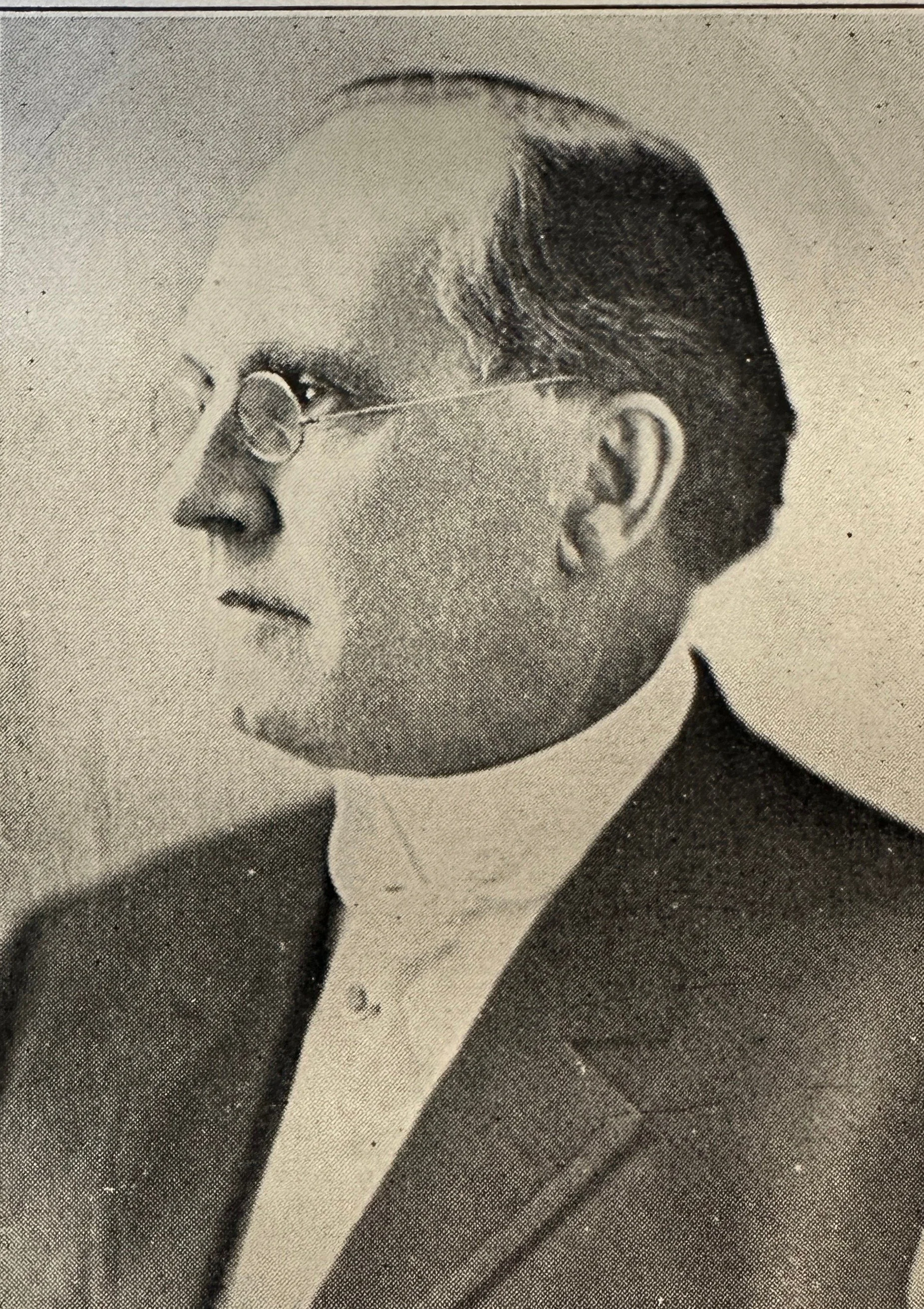
BY REV. J. S. THOMPSON.
Two questions arise concerning the praise services of the church. The first relates to the matter that shall be used. The second to the manner in which the service shall be rendered.
In regard to the first of these questions, it is believed that the following propositions can be easily sustained: First—Only that which has been divinely authorized may be acceptably offered to God in worship. Second—The only manual of praise that can claim the distinction of divine warrant is the Psalter of the Bible. The conclusion is therefore inevitable. The Psalms of the Bible, to the exclusion of all other sacred songs, are to be offered to God in praise.
This discussion will be devoted to the second of these questions: Shall these divinely authorized songs be sung by the unaided voice, or shall they be sung with the accompaniment of instruments of music? Perhaps many christians have given little thought to this question. It is not, however, a matter of little importance. If instrumental
Page 2
accompaniments in the worship of God are of divine warrant, then to omit their use is a grave infraction on the completeness of the worship of God. But if their use is without divine warrant, then the use of them is a grave infraction on the purity of the worship of God.
Question—Should instruments of music be employed by the New Testament Church in the worship of God?
1. A divine warrant is necessary for every element of worship in the Church of God. The alternative statement is, Whatever is not commanded by the scriptures in the worship of God, either by explicit statement, or by necessary implication, is forbidden. This statement may be supported by two lines of argument.
The first is drawn from explicit statements of the word of God. The Protestant doctrine is that the scriptures are a supreme, perfect and infallible rule of faith and practice. For everything, therefore, which we offer to God in worship, we must have a divine warrant. A few of many scripture passages are cited in support of this. “Remember all the commandments of the Lord and do them; that ye seek not after your own heart or your own eyes, after which ye used to go a whoring; that ye may remember and do all my commandments, and be holy unto your God.” “What thing soever I command you, observe to do it; thou shalt not add thereto, nor diminish from it.” “In
Page 3
vain do ye worship me, teaching for doctrine the commandments of men.” “For I testify unto every man that heareth the words of the prophecy of this book, if any man shall add unto these things, God shall add unto him the plagues that are written in this book; and if any man shall take away from the words of the book of this prophecy, God shall take away his part out of the book of life, and out of the holy city, and out of the things that are written in this book.” Now, since God makes his worship a matter of positive command, as we shall yet see more fully, it is evident that the principle that runs through these passages applies to the worship of God. Nothing is to be added to that which God has commanded, and nothing is to be taken from it.
The second line of argument is drawn from specific instances of God’s displeasure against those who disregarded this principle. Nadab and Abihu offered strange fire, which God commanded them not, and for their sin they died before the Lord. Korah, Dathan and Abiram assumed to perform acts of divine service which God had not authorized them to perform, which so displeased God that he caused the earth to open its mouth and swallow them alive. Moses sanctified not the Lord, by speaking to the rock, as God had commanded him, but smote it with the rod that was in his hand; and for this act of disobedience God would not permit him to go over into the land of
Page 4
promise. Uzza died before the Lord for an unauthorized act of ministry, in laying his hand upon the ark of God. Uzziah was smitten with the leprosy because he assumed to offer incense to God, an act of worship which he had not been commanded to perform. The Jews, after the days of our Lord, as the argument of Stephen clearly shows, brought upon themselves the divine displeasure in the unparalleled sufferings which they endured, and in their final dispersion throughout all the world; because they sealed their rejection of their Messiah and Savior by persisting in continuing the ritualistic services of the temple, after God had withdrawn his warrant for these, by the fulfillment of all these types and ceremonies in Jesus Christ. If these, and like instances, teach us anything, they teach us that unauthorized worship is unacceptable to God, and awakens his displeasure.
But it may be objected, and many regard this objection as fatal to the argument, God’s blessing manifestly rests upon those churches that employ instruments of music in their worship. The same line of reasoning would say, God must have been pleased with Moses, and blessed him when he smote the rock, instead of speaking to it, as God had commanded him; because he was successful in bringing water from the rock by that stroke of the rod. But we know that God was not pleased with Moses, and that, notwithstanding the external success
Page 5
that attended his act, he severely punished him for his disobedience, by refusing to permit him to go over Jordan. There were good reasons, no doubt, why God should give Moses success at that time, but his act of disobedience was highly displeasing to God, and brought its own punishment. And so God may, for various and good reasons—because of the many elements of acceptable service in their work and worship, give a good measure of success to those churches which are thus corrupting his worship; but we are not therefore justified in reasoning that these unauthorized parts of their worship are pleasing to God, or that they will bring no divine displeasure upon those who join in them.
It may be further objected: If instrumental music is unauthorized in the worship of God, and therefore displeasing to him, why does he not, as in those cases cited, visit with swift punishment those who thus displease him? Ordinarily God is long-suffering and slow to wrath, bearing long with the weakness, and folly, and sinfulness of men. Such instances of swift visitation are the unusual rather than the usual in the dealings of God. There may have been circumstances that rendered these cases peculiarly displeasing to God, and thus called down the swift execution of his wrath. Or they may have been meant to stand out as beacon lights of warning to all the generations that should follow, of the jealousy of
Page 6
God for his worship, and his displeasure against those who knowingly and persistently corrupt it. Ananias and Sapphira were by no means the last persons ever guilty of the sins for which they were stricken with death. But because no others were ever punished as they were, does not justify us in saying that God has ceased to regard with displeasure the sin of which they were guilty.
2. Instruments of music were never employed in the worship of the Old Testament Church except by the command of God. Moses, David, Gad and Nathan were the prophets under whose administration the worship of God was amplified, to meet the requirements of a church whose doctrine and worship were in the process of development. Such worship as was rendered with acceptance to God prior to the exodus, was undoubtedly rendered in accordance with instructions received from God. He taught our first parents how to worship in the offering of sacrifices. These first acts of worship were very simple, and for twenty-five hundred years the development of a system of worship progressed very slowly. Prior to the exodus the service of praise seems to have occupied a very subordinate place in the system of worship, if indeed, for the most part, it had any part in it at all. But at the time of the exodus, under the prophetic ministry of Moses, the system of worship was much enlarged. This, however,
Page 7
was done under the direction of God, and every reader of the Pentateuch knows that only that which was explicitly commanded by God was introduced into his worship. For everything introduced there must be a “thus saith the Lord.” The tabernacle was made the center of this enlarged worship. The praise service, though perhaps somewhat enlarged, still occupied a very subordinate position. The only instruments that could at all be called instruments of music, prepared for the tabernacle under the prophetic ministry of Moses, were two horns or trumpets of silver. It is manifest that they were not capable of such modulation of sound as would make them suitable accompaniments of the human voice in singing. Indeed they seem to have been capable of producing only a single tone. Still further, explicit directions were given as to the use that was to be made of these trumpets. “And the Lord spake unto Moses, saying, ‘Make thee two trumpets of silver; of a whole piece shalt thou make them; that thou mayest use them for the calling of the assembly, and for the journeying of the camps.’” “If ye go to war in your land against the enemy that oppresseth you, thou shalt blow an alarm with the trumpets.” “Also, in the days of your gladness, and in your solemn days, and in the beginnings of your months, ye shall blow with the trumpets over your burnt offerings, and over the sacrifices of your peace-offerings.” These
Page 8
trumpets were instruments of sound rather than instruments of music, and were used for giving signals, and not as accompaniments to singing. They performed much the same office then as a church bell does now. No other instruments of music or of sound were provided by Moses for the tabernacle. That system established by Moses remained unchanged until near the close of the reign of David. There was no instrumental music in it as an accompaniment to the praise of God.
Towards the close of his reign David, under divine direction, made preparation for the building of the temple, which was to supercede the tabernacle, which was no longer adequate to meet the necessities of a growing nation. Here we come to the place where instrumental music was introduced into the worship of God. David gave to Solomon material which he had prepared for the construction of the temple, and also a pattern which he says he “had by the Spirit.” “All this, said David, the Lord made me understand in writing by his hand upon me, even all the works of this pattern.” The instruction which David left Solomon related not only to the construction of the temple, but also to the worship that was to be rendered in it. For the most part this worship was patterned after that rendered in the tabernacle, but greatly enlarged and adorned. In this new ritual of service praise was given a much more prom-
Page 9
inent place than it had ever before occupied in the worship of God. Among the things which David had from the Lord, and which he delivered to Solomon, were instructions regarding the “courses of the priests and the Levites, and for all the work of the service of the house of the Lord.” I Chron. 28:13. In II Chron. fifth chapter, from the twelfth verse to the end, is described the service of these priests and Levites at the time when the ark was brought into the temple, and a part of that service was to sing praise to God, accompanied with cymbals and psalteries and harps. II Chron. 5:12-13. All this was done by the command of David, the prophet. II Chron. twenty-ninth chapter tells of the reformation under Hezekiah, and of the re-establishment of the worship of the temple. Here it is clear that such instruments of music as were used in the temple worship were used by the command of God. “And he set the Levites in the house of the Lord with cymbals, with psalteries and with harps, according to the commandment of David, and of Gad the king’s seer, and Nathan the prophet; for so was the commandment of the Lord by his prophets.” Note these four points: First—Instrumental music never was divinely warranted as an element of the tabernacle worship, and never was used in the tabernacle worship, until David received inspired instructions to introduce it, as preparatory to the transition that was about to take place to the more elaborate
Page 10
ritual of the temple service. Second—When the temple was to be built, and its order of worship instituted, David received a divine revelation in regard to it, just as Moses received a divine revelation in regard to the tabernacle and its worship. Third—This direct revelation to David was enforced on Solomon, and upon the priests and the Levites, by inspired communications in regard to it from Gad the seer and Nathan the prophet. Fourth—Instrumental music would not have been introduced into this worship had not God expressly authorized and commanded it. Such an innovation never would have taken place except by the command of God.
In addition to the tabernacle and the temple worship of the Jews, was their synagogue worship. The origin of the synagogue is uncertain. It is frequently spoken of as dating from the Babylonish captivity. There is good reason, however, for believing that synagogues existed long prior to the captivity. It is at least certain that the people were accustomed to meet together on the Sabbath day for the essential parts of divine worship. The seventh day was to be an holy convocation. During the wilderness journey it is possible that this might have been a single assembly, about the tabernacle, though this seems hardly probable. After their settlement in the land of promise it could not have been a single assembly, but they must have met in numerous
Page 11
assemblies. Now it is universally admitted that instrumental music was never employed in these synagogue services, or in these holy convocations apart from the tabernacle or temple. The only instruments of sound employed in connection with the synagogues were trumpets, which were used to give signals, announcing the new year, the beginning of the Sabbath, the decree of excommunication, and the fasts. They were not sounded in the synagogue, but usually from the roof of some adjacent house, that they might be the better heard at a distance. From the nature of the instruments used it is evident that they could not have been accompanied with singing. Instruments of music are not used in the synagogues of the Orthodox Jews even at the present time, nor were they used in the synagogues of the Reformed Jews until 1810. No intelligent Christian would appeal to the present custom of the Reformed Jew as a proof that instrumental music had a place in the synagogue service of the Old Testament Church, or as affording a warrant for its use in the Christian Church.
It may be objected that there are a class of cases recorded in the Bible where instruments of music were used in the public worship of God; as when Miriam led the women with a timbrel in singing praise to God; when Saul and David were welcomed by the women in singing and dancing, with instruments of music; when Jephtha’s
Page 12
daughter met him on the occasion of his return from the slaughter of his enemies; and when David and all Israel, with bands of music, brought up the ark of God to the place that David had prepared for it. It is sufficient to reply that these were not instances of formal public worship in which all the people joined, but were occasions of national rejoicing and celebration, more like our Fourth of July; and that they were not participated in by a general assemblage of worshiping people, but by restricted classes, as the women, who would never have been permitted to lead a general gathering of worshiping people, or the priests and Levites. It is also to be noted that when Moses led all the people in celebrating their deliverance from Egypt they sang, but no instruments of music were used. Instruments of music were never used by the Old Testament Church except in connection with the later tabernacle, and the temple worship, and then only when divinely commanded.
3. Instrumental music, as employed in the later tabernacle worship, and the temple worship, was a part of the typical and symbolical system, and terminated with the termination of the temple worship. The worship of the Old Testament Church consisted of two distinct parts. First—That which was generic or essential, embracing those permanent elements of worship which are fundamental to all worship, such as the reading and exposition of the word of God,
Page 13
exhortation, prayer, singing of praise, and giving of alms. Second—That which was typical and symbolical, and therefore temporary in its nature, such as the offering of sacrifices, the burning of incense, the various washings, sprinklings and anointings, and the continually burning lamps. The synagogue worship consisted exclusively of those essential and permanent elements of worship. Nothing that was typical ever found a place in this service. No sacrifices were ever offered, or incense burned, or anointings performed in connection with this worship. In the worship of the tabernacle and the temple, however, it was different. Here both kinds of worship were offered. In respect to these permanent elements of worship, there was no difference between that which was offered in the synagogue and that which was offered in the tabernacle and the temple. But in addition to this, the typical and symbolical part of the worship was offered in the tabernacle and the temple. This typical and symbolical part of the worship consisted in whatever elements of worship were permanently absent from the synagogue, but which, whenever offered, were offered in the tabernacle or the temple. If this distinction is correct, and we do not hesitate to assert its correctness, then the only instrumental music ever used in the Old Testament Church constituted a part of the typical and symbolical worship. We have seen that it was never offered in the
Page 14
synagogue. We have seen that the only place where it ever was offered was in the tabernacle or temple. And further, in the tabernacle and temple it was only offered by those who were divinely set apart to offer this typical and symbolical worship—the priests and Levites. None except the priests and Levites ever used these instruments of music. The lay worshipers never used them, any more than they offered sacrifices or burnt incense. It is extremely doubtful whether any except the priests and Levites ever joined in singing when accompanied with these instruments of music. These instruments were used exclusively by those who were set apart to minister about the altar, and in connection with their ministrations about the altar. “And the Levites stood with the instruments of David and the priests with the trumpets. And Hezekiah commanded to offer the burnt offering upon the altar. And when the burnt offering began, the song of the Lord began also with the trumpets, and with the instruments ordained by David, King of Israel. And all the congregation worshiped, and the singers sang, and the trumpeters sounded; and all this continued until the burnt offering was finished.” “And Hezekiah appointed the courses of the priests and the Levites after their courses, every man according to his service, the priests and Levites for burnt offerings and for peace offerings, and to minister, and to give thanks, and to praise
Page 15
in the gates of the tents of the Lord.” The offering of the sacrifices, the playing of the instruments, the singing of the songs, were by special classes, the priests and the Levites, especially set apart and trained for this service; but the whole congregation worshiped in silence, taking no more part in the singing or in playing the instruments than they did in offering the sacrifices. The conclusion is irresistible, that the instrumental music was in its very essence a part of the typical and symbolical worship. And the further conclusion is irresistible, that it passed away with the passing away of all the rest of that which was typical and symbolical. The temple and its services had accomplished their purpose when Christ died upon Calvary, and a few years later they were completely and permanently destroyed. Though destroyed before, the temple had been rebuilt. But after its destruction in 70 A. D. it never was rebuilt, not because no efforts were ever made to rebuild it, but because God in his providence thwarted all such efforts. And the Jews never to this day revived that part of their ancient worship, which belonged exclusively to the tabernacle and the temple. And among the other parts of this typical and symbolical worship that then disappeared, having found its fulfillment, was this of instrumental music. I wish this point to be made emphatic, for I regard it as the crux of the whole question. In its very nature a part
Page 16
of the typical and symbolical worship of the tabernacle and the temple, in no sense a part of the permanent and essential worship which belongs to all ages and all places, instrumental music, as an acceptable element of divine worship, terminated with the termination of that of which it was a part, and until the temple is restored, and its typical and symbolical worship re-established, it can have no proper place in the worship of the Church.
It is objected, if instrumental music was a part of the typical and symbolical worship of the Old Dispensation, of what was it the type? We might dismiss this objection by replying that if we have shown it to be, in its very nature, a part of the typical worship of the Old Dispensation, it is not incumbent upon us to show of what it was a type, at least not until our reasoning has been shown to be at least doubtful. It might also be answered that there were other things that are generally admitted to have been typical, yet whose typical significance is not entirely clear. But it is not difficult to discover the typical significance of this part of the worship. Some of the typical elements of the temple worship found their fulfillment directly in Christ, especially in his priestly work, as the sacrifices and the incense. Other things were typical of the combined work of Christ and the Holy Ghost, as the sprinklings and the washings. Other things were typial [sic] exclusively of the work
Page 17
of the Holy Ghost, as the anointing oil and the oil in the golden candlestick. While the instrumental music was undoubtedly typical of the joy and triumph of God’s people through the plentiful affusion of the Holy Ghost in New Testament times. Because of its exhilarating effects upon the senses it is well adapted to typify this joy. Now a type always disappears when the antitype has come, and as all these types have been fulfilled all have passed away.
4. Instrumental music was never commanded in the worship of the New Testament Church. The Old Testament command to worship God in the use of instrumental music has found its fulfillment and passed away, just as the Old Testament command to worship God in the offering of sacrifices has found its fulfillment and passed away. Unless plainly commanded in the New Testament Church it can have no rightful place in her worship. That command must come from one who is authorized to speak in the name of God. Moses was the great prophet of the Old Testament. Christ is the great prophet of the New Testament. “The Lord thy God will raise up unto thee a Prophet from the midst of thee, of thy brethren, like unto me; unto him ye shall hearken.” The apostles were also New Testament prophets, as David and Gad and Nathan were Old Testament prophets. These are the only New Testament prophets authorized to speak authoritatively in the name of God.
Page 18
It is universally admitted, and is easily capable of demonstration, that our New Testament worship is the successor of the Old Testament synagogue worship, and not of the tabernacle or temple worship. The apostles of our Lord made no effort to merge the temple worship into the worship of the New Testament Church, but they did seek to merge the synagogue worship into the worship of the New Testament Church. They appropriated for the Christian Church those universal and permanent elements of worship which they found in the synagogue, simply engrafting upon them the two simple symbolical rites of the New Testament Church, Baptism and the Lord’s Supper, which Christ, the New Testament Prophet, commanded them to observe.
Since the only instrumental music commanded in the worship of God terminated with the termination of the typical worship of the Old Dispensation, before it may properly be introduced into New Testament worship a new command must be given, either in explicit language or by necessary implication. A command is as necessary for instrumental music in the New Testament Church as for Baptism and the Lord’s Supper. The voice of the New Testament prophets is heard on the subject of worship, both by precept and example. The general principle governing New Testament worship is found in the words of Jesus, “The hour cometh, and now is when neither in this moun-
Page 19
tain,” that is in Samaria, and in accordance with the Samaritan rites, “nor in Jerusalem,” that is at the temple, and in accordance with the temple rites, “shall men worship; but the true worshiper shall worship the Father in spirit and in truth.” It is to be a spiritual, not a sensuous worship. Christ proclaimed vain all those acts of worship which rest only on the authority of men. In view of all this, must we not have a “thus saith the Lord,” for the introduction of instrumental music into the New Testament Church? That command cannot be found. Christ did not command it. The apostles did not command it. They commanded praise to be offered to God by singing, but conspicuously failed to say anything about the use of instruments. Considering the well known relation of New Testament worship to synagogue and temple worship, this silence is clearly equivalent to a prohibition. Neither word nor act of our Lord or his apostles can be cited in defence of the use of instruments in New Testament worship, but all the weight of their example is against their use. They never engaged in any act of worship after Pentecost in which instruments were used. New Testament worship being the successor of the Old Testament synagogue worship, and not of the temple worship, our Lord well knew that his followers, the first of whom were gathered from among the Jews would not use instruments of music in their worship unless he
Page 20
plainly commanded their use. And their successors have no right to introduce them into the worship of God unless they can produce a command for so doing. That command cannot be found for the reason that it was never given.
5. The history of the introduction, and the effects of the use of instrumental music in the New Testament Church, bear strongly against it. We have seen that neither Christ nor his apostles used, commanded, or sanctioned instrumental music in the worship of the New Testament Church. All the evidence of history goes to show that instruments of music were not used in the New Testament Church prior to the year 660, and that it was more than 1200 years after the introduction of the Christian era before there came to be any general use of them. A writer of the Anglican Church, who could hardly be accused of being prejudiced against the use of instrumental music, says, “Organs were not used in the ancient Church for many ages. Music in churches is as ancient as the apostles, but instrumental music is not.” Thomas Aquinas, about 1250 A. D., wrote, “Our church does not use musical instruments, as harps and psalteries, that she may not seem to Judaize.” It certainly is a fact of great significance that instruments of music were not used by the Christian Church during the first 600 years of her existence, and that it was more than 1200 years before they came into any general
Page 21
use. It shows how strong was the conviction of the early Church that it was not the will of Christ and the apostles that they be used. And when we remember the condition into which the Church was rapidly sinking at the time of their introduction, it certainly does not add any weight to the argument in their defence.
During the fourteenth and the fifteenth centuries the organ made rapid progress toward universal triumph in the Romish Church. Then came the Reformation, and it is interesting and instructive to observe how the reformers regarded the question. Zwingle designated the employment of instrumental music in the present dispensation as “wicked pervicacity.” Calvin strongly condemned the use of instruments of music, and the French Reformed Church, in the period of her power and glory, excluded them. Even in the Church of England the sentiment against them was so strong that in the year 1562 their use was retained by a majority of a single vote. Knox, as was to be expected, was uncompromising in his opposition to their use, and the Church of Scotland wholly repudiated their use. Their introduction into the various Presbyterian bodies in this and other lands has been a matter of comparatively recent date, and has not been a mark of growing spirituality and power.
Two effects have uniformly followed the introduction of instrumental music into the
Page 22
worship of the Church. First—The deterioration, if not the entire destruction, of congregational singing. Is not this fact a very strong indication that God never intended it to be made a part of the permanent and universal worship of the Church? Its use is adapted to choir singing, but not to congregational singing. This was its use under the Old Dispensation, and its introduction under the New Dispensation proves the death blow to congregational singing. Second—The introduction of hymns of human composition into the praise of the Church, to the exclusion of the Psalms of the Bible. No Church that has ever admitted the organ has been able to long retain the exclusive use of the Bible Psalms. The Psalms go out by the door through which the organ comes in. It verifies the well recognized principle that evils seldom go single handed.
It is objected that the Psalms themselves mention instruments of music, and call upon the worshipers to use them. They also mention dances, and bloody sacrifices, and sprinklings, and two-edged swords, and call on the worshipers to use these. The objector must be consistent with himself, and until he is his objection carries little weight. If he must have instruments of music because the Psalms mention them, he must also have an altar, and a bloody sacrifice, and a smoking censor, and a basin of blood, and a bunch of hysop, and a two-edged sword, and a dance. By the side of the
Page 23
organ he must build an altar, for the only authorized use of the instruments of music linked them with the sacrifice upon the altar. “And when the burnt offering began, the song of the Lord began also with the trumpets and with the instruments ordained by David, and the singers sang, and the trumpeters sounded. And all this continued until the burnt offering was finished.” The objection proves too much.
It is objected, the saints in heaven will use harps, and why not the saints on earth? Rev. 5:8; 14:2; 15.2. But if they are to have harps they must also have vials or bowls, containing the prayers of saints, presumably liquified by some process known perhaps to the advocates of the harps, but unknown to us, for John saw them have both golden harps, and bowls full of odors, which are the prayers of saints. Much of the language of Revelation is figurative, and this doubtless is. Besides if the saints in heaven will play on golden harps it will be a commanded worship, and hence will fall within the conditions that God has established for acceptable worship. Let the same command be shown for their use on earth and no one will object.
It is also objected, if a tuning fork or pitch pipe may be used, why not an organ or other instruments? The cases are not parallel. The one is used as an accompaniment to singing, the other is not, but is merely used to give the leader the tone and
Page 24
its sound is silenced before a single word is sung. Let the organ be used in the same way and no one will object to its use, and the word of God will not condemn it.
(For fuller discussion the reader is referred to “Instrumental Music in the Worship of God,” by Prof. Girardeau, of Columbia Theological Seminary, to which the author acknowledges himself much indebted in this discussion.)
Committee on Testimony Bearing
Appointed by the Synod of The Reformed Presbyterian church.
REV. W. J. COLEMAN, D. D., Chmn.,
1205 Boyle Street, Allegheny, Pa.