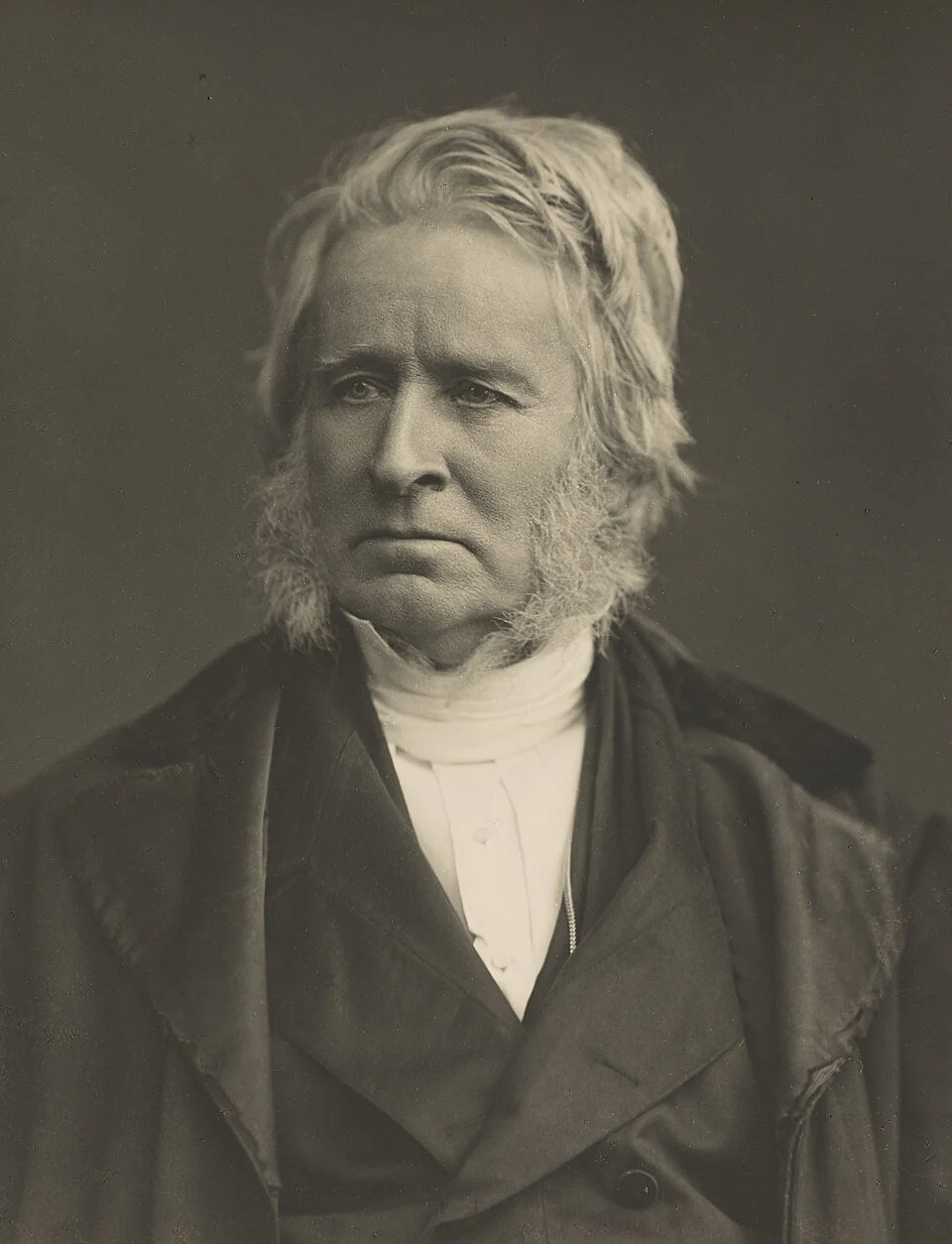
Begg, Appendix II.
James Dodson
[Page 240]
No. II.
IS THE ESTABLISHED CHURCH LEGALLY ENTITLED TO USE ORGANS, OR TO ALTER ITS WORSHIP?
THIS is a very important question, which every man called upon to pay one farthing towards the support of the Scotch Establishment is entitled to raise, and which, probably, the sooner it is raised and settled in a court of law the better. The following opinion was given upon the subject many years ago by Mr Reddie, Town-clerk of Glasgow, in connection with the struggle in that city (which ended in the defeat of the organists) in 1806, 7, 8. Mr Reddie was one of the soundest and ablest lawyers of his day, and the law has, of course, remained unaltered since. He is quite clear against the legality of any such right, in so far as the change is introduced by any power short of the General Assembly, and in accordance with the concurrent opinion of the whole Church. If the whole Church were to
[Page 241]
sanction the change, he would in that case think favourably of its legality. But the grounds of that idea are not stated, and we may safely defy any one to state them. It is pretty evident that if the Church, established and regulated by statute, has power to alter her worship in an essential particular, so as virtually in fact to make it a totally different Church, the most serious results might follow. Meantime, this supposed state of the case has not yet arisen, and on the actual case as then and now occurring, he is quite clear, and this was all the more remarkable as his own private opinion was in favour of organ worship. Some may imagine that the mind of the whole Church has been expressed on the subject, since last Assembly authorised Presbyteries to act in the matter in the case of unanimous congregations; and in accordance with this authority some of the organs have actually been introduced. But this is only a manifestation of ignorance. Whatever the intention of last General Assembly in their bungling and incompetent enactment, they had no power, in any case, to give authority to Presbyteries to sanction
[Page 242]
organs, or indeed to do anything in regard to such a serious matter, without sending their proposal down to Presbyteries under the Barrier Act. Anything that has been done in virtue of such an assumed authority, is therefore, we believe, utterly illegal, both in regard to ecclesiastical and civil law.
The proceedings of the Magistrates of Glasgow in former times in taking a legal opinion before allowing the introduction of an organ into one of their churches contrasted, we must say, very favourably with those of their successors in the present day, who have incurred a very serious responsibility by encouraging the innovators. But again we say, let the matter by all means be brought to a legal issue, and the sooner the better. Let a subscription be immediately raised for trying this question by interdict or otherwise, either in Glasgow or Edinburgh, or in any country parish where the mischief exists. This would put the whole Established Church at once upon its defence, and let us see whether the security of the Revolution Settlement is really so utterly worthless as some of the innovators are
[Page 243]
disposed to think. If it shall be found that, as one of the organists alleges, “the Church may adopt any form of worship she pleases,” it is high time to consider whether such a dangerous liberty is to be allowed to remain; in other words, whether the bargain to pay on the side of the people is tamely to be continued, now that the supposed condition on the other side is found to have no existence. The keeping up of the Establishment on such a footing would be a monstrous folly on the part of the Scottish people.
Copy of Opinion by MR REDDIE, Town Clerk of Glasgow, on the Introduction of Organs into the Church of Scotland.
GLASGOW, 6th September, 1806.
MY LORD,
I have perused, and deliberately considered, the petition of a number of most respectable inhabitants, who possess seats in St Andrew’s Church, requesting the permission of the Magistrates and Council to introduce an organ into that church. I have also perused the letter of the Rev. Dr Ritchie, transmitted to your Lord-
[Page 244]
ship, along with the petition. Agreeably to the direction of your Lordship, and the other Magistrates, I shall now, as briefly as I can, state what occurs to me on this subject. And I have no doubt, whatever resolution the Magistrates and Council may ultimately adopt, that they will be guided by views at once liberal and prudent, and that the grounds on which they proceed will be such as to command the respect of their fellow-citizens and of their country.
Were I called upon to express my own individual opinion and feeling, I should perhaps lay claim to the honour of participating in the sentiments and wishes of the enlightened congregation of St Andrew’s Church. But on this subject my individual opinion is a matter of no importance whatever. It is my opinion, as one of the legal assessors of the City of Glasgow, that your Lordship and the other Magistrates require.
In the petition, and in Dr Ritchie’s letter, it seems to be hinted that the Magistrates and Council have the power of granting or refusing the present application, “merely on the ground of expediency or inexpediency as to the removal of
[Page 245]
the seats” in the church. With me, this opinion has no weight; because I do not conceive it to be warranted by the law of the land.
Of the present application the Magistrates and Council have a right to judge in two characters—as representative heritors, and as civil magistrates. As heritors, they have a legal right to insist that their patrimonial interest shall not be impaired by the proposed measure. These patrimonial interests the gentlemen of the Magistracy and Council might, perhaps, on such an occasion be disposed to waive, were they heritors in their own personal right. But the members of the Magistracy and Council are not heritors in their own right. They are heritors merely as representing the community of Glasgow. And to the interests of that community they are bound, on this as on all other occasions, to attend. Whatever resolution, therefore, may be ultimately adopted, it will be necessary that due precautions be taken to secure effectually the pecuniary interests of the community.
But there is another and a more important character in which your Lordship and the gen-
[Page 246]
tlemen of the Magistracy are called upon to judge of the present application: I mean as civil magistrates.
That there is any express Act of the Legislature prohibiting the use of organs in our Established churches, I am not aware. But that the introduction of organs into our churches would be a material alteration and innovation in our external mode of worship, there cannot be a doubt. The argument which would identify an organ with a pitch-pipe does not merit a serious answer.
Whether the use of organs in our Established Churches would be an expedient or an inexpedient measure, in a religious and ecclesiastical view, it is unnecessary here to inquire; because your Lordship and the other Magistrates are not an ecclesiastical judicature, and have no right to take cognizance of the matter in that character. But as civil magistrates you are legally bound to maintain our constitution in Church and State in its present condition; and by express statute you are bound “to take order, that unity and peace be preserved in the Church.” That there is great danger of the introduction of organs disturbing
[Page 247]
the peace and interrupting the harmony of the Church of Scotland, I should be sorry to suppose. At the same time, such an event is possible. Whether for the auricular gratification of one congregation, ground of offence should be afforded to other congregations, is a matter that requires serious thought. Some respect is due by the civil magistrates, even to what many individuals may be disposed to term the prejudices of their weaker brethren. And at all events, if any innovation in our external mode of worship be expedient and salutary, the reform or improvement ought to originate with the ecclesiastical branch of the government—with the constitutional guardians of our conduct and our welfare in such matters. When the use of organs in our Established churches has been sanctioned by our ecclesiastical legislature, then it will be the duty of your Lordship and the other Magistrates not merely to permit the use of these musical instruments, but to protect in that use those congregations who may conceive such instruments to minister to their edification. Till the ecclesiastical branch of the constitution have sanctioned
[Page 248]
the use of organs in our Established churches, I do not see that the Magistrates and Council can, with any propriety, directly or indirectly, approve of such an ecclesiastical innovation.
I have been told that the only way in which this matter can be brought before our ecclesiastical judicatories, is by a complaint and interdict. I pretend not to be conversant with the forms of our Church Courts. But I am much mistaken indeed if our Establishment be so grossly defective as not to afford some way sufficiently formal of obtaining the permission or sanction of our ecclesiastical legislature, for what may be an expedient alteration in our mode of worship.
From the language of the petition it seems to be supposed, that were not the Magistrates and Council heritors of St Andrew’s Church, the subscribers might, of their own authority, solely introduce an organ. In this opinion I cannot coincide. To the happiness and glory of this nation, every man may worship God as he thinks fit. But while unlimited toleration prevails in this country, we have at the same time an ecclesiastical Establishment recognised by law. Under
[Page 249]
that Establishment, a certain mode of worship is and has been for ages observed. And to that mode of worship, until altered by constitutional authority, whatever Dissenters may do, the members of the Establishment are bound to conform.
In former times, the inhabitants of Glasgow stood forward the steady supporters of civil and religious freedom. And although firmly attached to the simple and unadorned form of worship handed down to them by their forefathers, I am convinced the gentlemen who at present compose the Magistrates and Council are, at least, as anxious as any of their predecessors ever were, to promote every rational and liberal improvement. But zeal for improvement ought to be tempered with prudence. And, I own, I should be sorry indeed, were the Magistrates and Council of Glasgow to commit themselves so far as to sanction, authorise, or approve, in any capacity, directly or indirectly, expressly or tacitly, what it is possible the General Assembly of the Church of Scotland, in the exercise of its constitutional functions, may afterwards disapprove and prohibit.
[Page 250]
Upon the whole, then, my opinion is, first, That the Magistrates and Council, as representative heritors, are bound to take such measures as may prevent the funds of the community from sustaining any injury by the introduction of the proposed organ. And, secondly, That the Magistrates and Council ought to recommend it to the gentlemen subscribers, and to the able and learned pastor of that most respectable congregation, before proceeding farther, to apply for the permission and sanction of the ecclesiastical branch of our constitution. If the measure be expedient and salutary, there will surely be the less difficulty in obtaining that sanction. And whatever may be the result, the measure will be fully and fairly discussed by that deliberative assembly, whose province it is to take cognisance of such matters.
I have to apologise for trespassing so much on the time of your Lordship; and I have the honour to be, with much respect and esteem, my Lord, your Lordship’s faithful servant,
[Signed,] JAMES REDDIE.