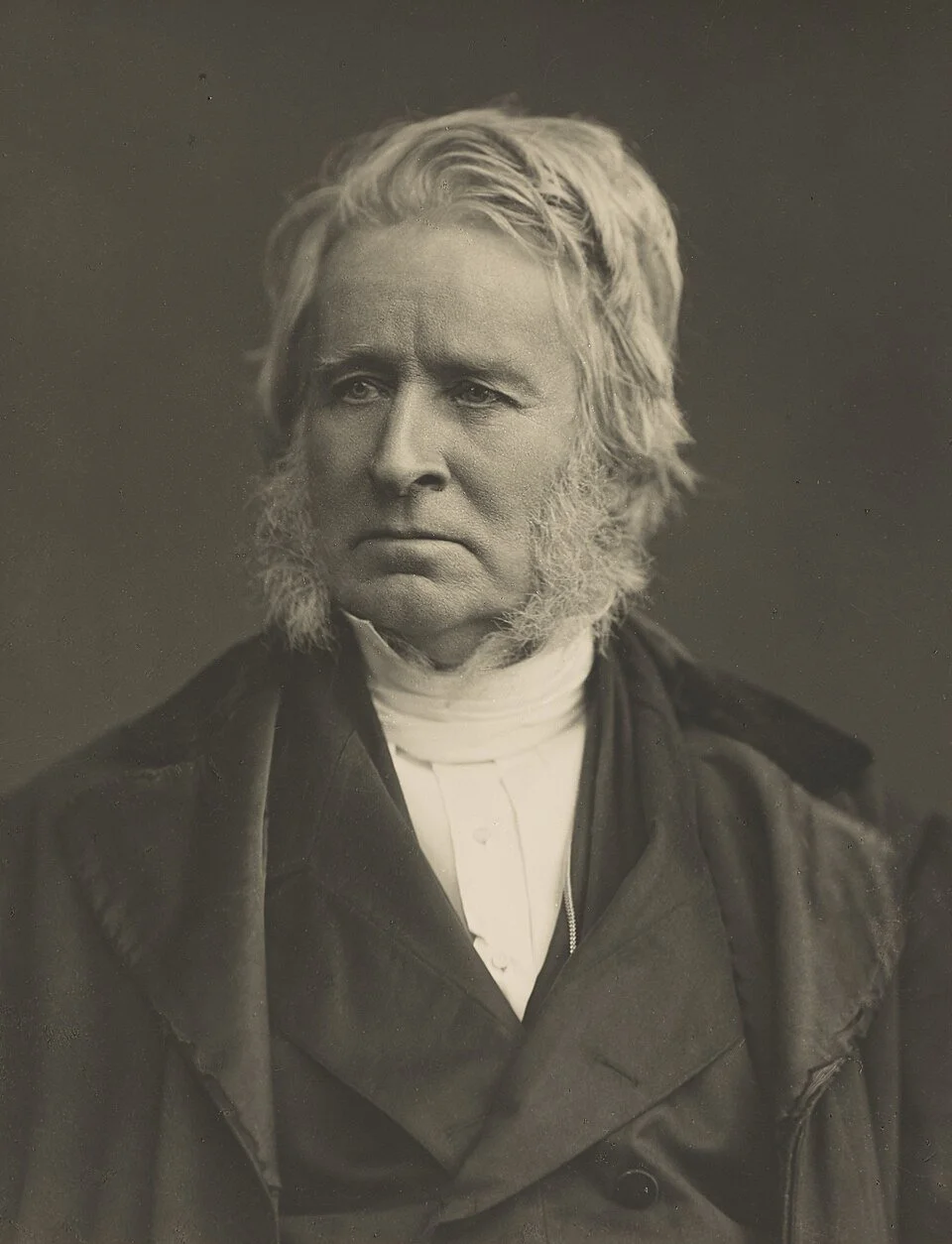
Begg, Appendix I.
James Dodson
APPENDIX.
No. I.
MODERATISM PAST AND PRESENT.
THE following paper is of considerable importance at the present time. When the Moderate party had formerly an object to serve, viz., to force on the violent settlement of ministers, and compel their evangelical brethren to take a part in them, they maintained the most extreme doctrines of even unlawful submission and implicit obedience, as will be found in the following extracts from a paper, generally entitled the “MANIFESTO OF THE MODERATE PARTY,” and understood to have been chiefly written by Principal Robertson. It certainly embodies the very essence of the spirit and policy of that booted and spurred ecclesiastical despot. We have copied it from Morren’s
[Page 220]
“Annals of the Church of Scotland,” a book of great value in reference to former proceedings. Now, when a new object has sprung up, many of that party (we always specially except Dr Hill), now constituting the Established Church, preach and practise the most thorough disregard to ecclesiastical authority, and the wildest congregationalism. It will be interesting to see what shape this struggle may ultimately take, but meantime, Mr Morren says—“The Reasons of Dissent” (against refusing to censure those who would not intrude a minister) “may be described as The Manifesto of the Moderate Party, of which Dr Robertson (who was at this period minister of Gladsmuir) afterwards became the acknowledged head. This paper,” says Principal Hill,* “though evidently a hasty compo-
_____
* In that portion of Stewart’s “Life of Dr Robertson” which relates to church politics (pp. 158-176), which was drawn up by Dr Hill, and communicated by Mr Stewart, after being revised and approved by three of Dr Robertson’s most confidential friends—Drs Blair, Carlyle, and Grieve—Dr Hill repeatedly refers to the above paper, as embodying the great principles of ecclesiastical polity professed by the party in the leadership of which he succeeded Dr Robertson.—Morren.
[Page 221]
sition, bears, in various passages, the marks of Dr Robertson’s hand.”
Reasons of Dissent from the judgment and resolution of the Commission, March 11, 1752, resolving to inflict no censure on the Presbytery of Dunfermline for their disobedience in relation to the settlement of Inverkeithing.
1. Because we conceive this sentence of the Commission to be inconsistent with the nature and first principles of society. When men are considered as individuals, we acknowledge that they have no guide but their own understanding, and no judge but their own conscience. But we hold it for an undeniable principle, that, as members of society, they are bound, in every case, to follow the judgment of the society. By joining together in society we enjoy many advantages, which we could neither purchase nor secure in a disunited state. In considera-
[Page 222]
tion of these, we consent that regulations for public order shall be established; not by the private fancy of every individual, but by the judgment of the majority, or of those with whom the society has consented to entrust the legislative power. Their judgment must necessarily be absolute and final, and their decisions received as the voice and injunction of the whole. In a numerous society it seldom happens that all the members think uniformly concerning the wisdom and expediency of any public regulation; but no sooner is that regulation enacted, than private judgment is so far superseded, that even they who disapprove it, are, notwithstanding, bound to obey it, and to put it in execution, if required; unless in a case of such gross iniquity and manifest violation of the original design of the society as justifies resistance to the supreme power, and makes it better to have the society dissolved, than to submit to established iniquity. Such extraordinary cases we can easily conceive there may be as will give any man a just title to seek the dissolution of the society to which he belongs, or at least will fully justify his withdrawing from it. But as long as he continues in it, professes regard for it, and reaps the emoluments of it, if he refuses to obey its laws, he
[Page 223]
manifestly acts both a disorderly and dishonest part; he lays claim to the privileges of the society, whilst he contemns the authority of it; and by all principles of reason and equity is justly subjected to its censures. They who maintain that such disobedience deserves no censure, maintain in effect that there should be no such thing as government and order. They deny those first principles by which men are united in society; and endeavour to establish such maxims as will justify not only licentiousness in ecclesiastical, but disorder and rebellion in civil government. And therefore, as the Reverend Commission have by this sentence declared, that disobedience to the supreme judicature of the Church neither infers guilt nor deserves censure; as they have surrendered a right essential to the nature and subsistence of every society; as they have (so far as lay in them) betrayed the privileges and deserted the order of the constitution; we could not have acted a dutiful part to the Church, nor a safe one to ourselves, unless we had dissented from this sentence; and craved liberty to represent
[Page 224]
to the Venerable Assembly that this deed appears to us to be manifestly beyond the powers of a Commission.
2. Because this sentence of the Commission, as it is subversive of society in general, so, in our judgments, it is absolutely inconsistent with the nature and preservation of ecclesiastical society in particular. The characters which we bear of ministers and elders of this Church render it unnecessary for us to declare, that we join with all Protestants in acknowledging the Lord Jesus Christ to be the only King and Head of His Church. We admit that the Church is not merely a voluntary society, but a society founded by the laws of Christ. But to His laws we conceive it to be most agreeable that order should be preserved in the external administration of the affairs of the Church, and we contend in the words of our Confession of Faith (Chap. i. Sec. 6), “That there are some circumstances concerning the worship of God, and the government of the Church, common to human actions and societies, which are to be ordered by the light of nature and Christian prudence,
[Page 225]
according to the general rules of the word, which are always to be observed.” It is very evident, that unless the Church were supported by continual miracles, and a perpetual and extraordinary interposition of Heaven, it can only subsist by those fundamental maxims by which all society subsists. A kingdom divided against itself cannot stand. There can be no union, and by this consequence, there can be no society, where there is no subordination; and therefore, since miracles are now ceased, we do conceive that no church or ecclesiastical society can exist without obedience required from its members, and enforced by proper sanction. Accordingly, there never was any regularly constituted Church in the Christian world where there was not, at the same time, some exercise of discipline and authority. It has indeed been asserted,* “That the censures of the Church are never to be inflicted but upon open transgressors of the laws of Christ himself, and that no man is to be constructed [sic] an open transgressor
_____
* The allusion is to the Reasons of Dissent in the Torphichen Case.
[Page 226]
of the laws of Christ, for not obeying the commands of any assembly of fallible men, when he declares it was a conscientious regard to the will of Christ that led him to this disobedience.” This is called asserting liberty of conscience, and supporting the rights of private judgment, and upon such reasonings the Rev. Commission proceeded in coming to that decision of which we now complain. But we think ourselves called upon to say, and we say it with concern, that such principles as these appear to us calculated to establish the most extravagant maxims of Independency, and to overthrow, from the very foundation, that happy ecclesiastical constitution which we glory in being members of, and which we are resolved to support. For, upon these principles, no Church whatever, consisting, as every church on earth must consist, of fallible men, has a right to inflict any censure on any disobedient person. Let such person only think fit boldly to use the name of conscience, and, sheltered under its authority, he acquires at once a right of doing whatsoever is good in his own eyes. If anarchy and confu-
[Page 227]
sion follow, as no doubt they will, there is, it seems, no remedy. We are sorry to say that brethren who profess to hold such principles, ought to have acted more consistently with them, and not to have joined themselves to any church, till once they had found such an assembly of infallible men, to whose authority they would have acknowledged submission to be due. We allow to the right of private judgment all the extent or obligation that reason or religion require; but we can never admit that any man’s private judgment gives him a right to disturb, with impunity, all public order. We hold, that as every man has a right to judge for himself in religious matters, so every Church, or society of Christians, has a right to judge for itself what method of external administration is most agreeable to the laws of Christ. And no man ought to become a member of that Church who is not resolved to conform himself to its administration. We think it very consistent with conscience for inferiors to disapprove in their own mind of a judgment given by a superior court, and yet to put that judgment in execu-
[Page 228]
tion, as the deed of their superiors, for conscience’ sake; seeing we humbly conceive it is, or ought to be, a matter of conscience with every member of the Church, to support the authority of that Church to which he belongs. Church censures are declared by our Confession of Faith to be “necessary not only for gaining and reclaiming the offending brethren, but also for deterring of others from the like offences, and for purging out the leaven which might infect the whole lump.”—(Chap. xxx. Sec. 3.) What these censures are, and what the crimes against which they are directed, is easily to be learned from the constitution of every church; and whoever believes its censures to be too severe, or its known orders and laws to be in any respect iniquitous, so that in conscience he cannot comply with them, ought to beware of involving himself in sin by entering into it; or if he hath rashly joined himself, he is bound, as an honest man and a good Christian, to withdraw, and to keep his conscience pure and undefiled. But, on the other hand, if a judicature which is appointed to be the guardian and
[Page 229]
defender of the laws and orders of the society, shall absolve them who break those laws from all censure, and by such a deed encourage and invite to future disobedience, we conceive it will be found that they have exceeded their powers, and betrayed their trust in the most essential instance.
3. Because we conceive the sentence of the Commission to be not only inconsistent with Church government in general, but in a particular manner inconsistent with Presbyterian Church government, which we have acknowledged to “be founded upon, and agreeable to the Word of God.” The two capital articles by which Presbytery is distinguished from every other ecclesiastical constitution, are the parity of its ministers and the subordination of its judicatories. By the one, the Church is preserved from exercising that lordship and dominion over our brethren which is condemned by our Saviour, and which is inconsistent with that liberty wherewith Christ hath made us free. (Luke xxii. 25; Gal. v. 1.) By the other we guard against that anarchy and confusion which
[Page 230]
is the unavoidable consequence of the Independent system. Our Church, therefore, may well boast that her government is, of all others, the most consistent with the natural freedom and equality of her members, considered either as men or Christians. But it is an undoubted maxim, that the more free any constitution is, with the more exactness should its orders and systems be preserved. As great liberty will always encourage subjects to presume, so it should teach governors to watch with double vigilance. Wherever there is a subordination of courts, there is one that must be supreme, for subordination were in vain if it did not terminate in some last resort. We do not pretend to vest any court with infallibility; but we cannot help being surprised that any of our brethren should have been at a loss to conceive this plain and obvious principle, that it is essential to the very idea of a supreme judicature that its decisions be absolute and final. Such a supreme judicature, by our constitution, is the General Assembly of the Church; and therefore, if the decisions of the General Assembly
[Page 231]
may be disputed and disobeyed by inferior courts with impunity, we apprehend the Presbyterian constitution to be entirely overturned. There is no occasion for this Church to meet in its General Assemblies any more; our government is at an end; it totters from the very basis; and we are exposed to the contempt and scorn of the world, as a Church without union, order, or discipline; destitute of strength to support its own constitution; falling into ruin by the abuse of liberty. Our wiser ancestors took the proper steps to guard against such dangers. They established solemn subscriptions and engagements to bind the ministers of the Church to obedience and submission to its judicatories; which engagements, as they continue to this day, we heartily wish were more attended to and regarded. By the formula which all ministers subscribe to at their ordination, they solemnly promise “To assert, maintain, and defend the doctrine, worship, discipline, and government of this Church by Kirk-sessions, Presbyteries, provincial Synods, and General Assemblies; in their practice to conform them-
[Page 232]
selves to the said worship, and to submit to the said discipline and government; and never to endeavour, directly or indirectly, the prejudice and subversion of the same. They promise to follow no divisive course, from the present establishment of this Church, renouncing all tenets, doctrines, and opinions whatsoever, contrary to or inconsistent with the said doctrine, worship, discipline, or government of the Church.” To the same purpose is the 5th Article of the engagement which ministers at their ordination come under before the whole congregation. “You promise to submit yourself willingly and humbly, in the spirit of meekness, unto the admonitions of the brethren of this Presbytery, and to be subject to them and all other Presbyteries and superior judicatories of this Church where God in his providence shall cast your lot; and that according to your power you shall maintain the unity and peace of this Church against error and schism, notwithstanding of whatsoever trouble or persecution may arise; and that you will follow no divisive courses from the present established doctrine, worship,
[Page 233]
discipline, and government of the Church.”
Such are the engagements to obedience and submission which this Church lays upon her members. And these her general principles of subordination and obedience she hath explained and asserted in the strongest terms, so often as there was any apprehension of danger from licentious principles. About an hundred years ago the same anti-constitutional maxims which were advanced to support the sentence of which we complain, were brought into this kingdom by English sectaries, or by certain persons, who, living amongst them, had imbibed their principles, and endeavoured to import them into our Church. But to give a timely check to their progress, the Assembly “appointed some brethren to prepare articles and propositions for vindicating the truth, against the dangerous tenets of Erastianism and Independency, falsely called liberty of conscience.” And when these propositions were exhibited, A.D. 1647, they unanimously approved of this, among others, “That the lesser and inferior ecclesiastical assemblies ought to be subordinate and
[Page 234]
subject unto the greater and superior assemblies.” To this declaration, which we humbly conceive is a decision in point, and to the whole spirit and system of the Presbyterian government, this sentence of the Commission is manifestly repugnant, and therefore we doubt not but the Venerable Assembly will justify our dissent; and will find that the Commission have exceeded their powers.
4. Because this sentence of the Commission, as it is, in our opinion, contrary to the principles, so it is inconsistent with the uniform practice and procedure of the Presbyterian Church. Our judicatories have all along not only asserted the general principles of subordination and obedience, but have expressed a proper degree of displeasure when these principles were trampled upon. It were easy to show that in every period of the Church, censures of all kinds, from the lowest to the highest, have been inflicted upon the undutiful and disobedient. We shall only take notice of one instance, which will demonstrate, with what a different spirit, but how much more consistently
[Page 235]
with Presbyterian principles our ancestors exercised discipline, in a case that falls under the same general rules with the behaviour of the Presbytery of Dunfermline. The case is found in the unprinted Acts of Assembly, 1646. Mr James Morison, being suspended by the Presbytery of Kirkwall, his immediate superiors, did appeal to the General Assembly; and in the meantime, notwithstanding his suspension, continued in the exercise of his ministerial functions, for which the Presbytery deposed him. Yet he, adhering to his appeal, went on and preached. The matter coming before the General Assembly, they find, “That the Presbytery hath not upon sufficient grounds suspended the said Mr James Morison.” Notwithstanding their condemning the sentence of the Presbytery, it is very remarkable that they found, at the same time, “That the said Mr James was contumacious, in that he did not give obedience to the Presbytery in forbearing to preach during the time of his suspension, as also in preaching after his deposition. They therefore appointed the Moderator to reprehend him sharply, in the
[Page 236]
face of the Assembly, for his contempt and disobedience, and ordain him to humble himself before the Presbytery, and acknowledge humbly his offence aforesaid, and his sorrow for the same. And in the meantime repone him again to the full exercise and benefit of his ministry.” At the same time they appointed the Presbytery of Kirkwall to be rebuked for their unjust suspension of Mr Morison. Yet they by no means condemn the sentence of deposition which the Presbytery had pronounced against him for his disobedience to their sentence of suspension. The whole of this procedure, as it is worthy of an Assembly convened in what is justly called the pure and reforming age of our Church, so it appears to us to be warranted by justice, agreeable to the general maxims of government, and founded upon the essential principles of the Presbyterian system. In that age our judicatories were peculiarly attentive to the preservation of the order and subordination of the Church. The same torrent of licentious principles, which, in England, had borne down before it all ecclesiastical government, was ready to
[Page 237]
break in upon us. Our Church saw and dreaded its approach. She bewails the increase of dangerous tenets, particularly of “Independency, and that which is called (by abuse of the word) liberty of conscience; being indeed liberty of error, scandal, schism, heresy, dishonouring God, opposing the truth, hindering reformation, and seducing others.”* As the same errors seem to be again revived, as the dangerous tenets of Independency spread fast, and have in all appearance infected some of our own members, we do humbly conceive that it would have become the Reverend Commission rather to have imitated the vigour of their forefathers, in supporting the Presbyterian discipline and government, than by this unprecedented sentence to have given admittance, and promised impunity to the most unconstitutional tenets and practices.
5. Because we conceive this sentence not only encourages disobedience to the decisions, but will justify any contradiction to the doctrines of
_____
* Declaration to their Brethren in England. Session 15, Assembly 1647.
[Page 238]
the Church. It belongs to every ecclesiastical constitution to have some common standard to which its members are required to conform, in order to preserve purity of doctrine and uniformity of faith and worship. Accordingly, every minister and elder of this Church is obliged to acknowledge and subscribe our Confession of Faith; and whoever hath at any time publicly departed from or denied the form of sound words, therein contained, not only became liable, but actually felt the censures of the Church. But if the Church, for the future, shall follow the precedent set them by the Commission, and shall adopt the reasonings which were used to vindicate the sentence complained of, the doctrine of her standards may be deserted and contradicted with the greatest impunity. If any minister of the Church shall think proper to espouse and publish the most wild, erroneous, and hurtful opinions, let him only declare, “that it was a conscientious regard to the will of Christianity, according to the best of his understanding of it, that led him into this opinion;” let him say, “that he is per-
[Page 239]
suaded his notions are agreeable to the will of the Lord, of which every man has an unalienable right to judge for himself, as he shall be answerable to the Lord;” and then (according to the declared principles of most of the brethren who voted for this sentence) “no Assembly of fallible men can encroach upon his rights, or stretch their power so far as to inflict any censure.”*—Annals of the Church of Scotland, 1739 to 1766.
_____
* Here are also references to the Dissent in the Case of Torphichen, at p. 210.