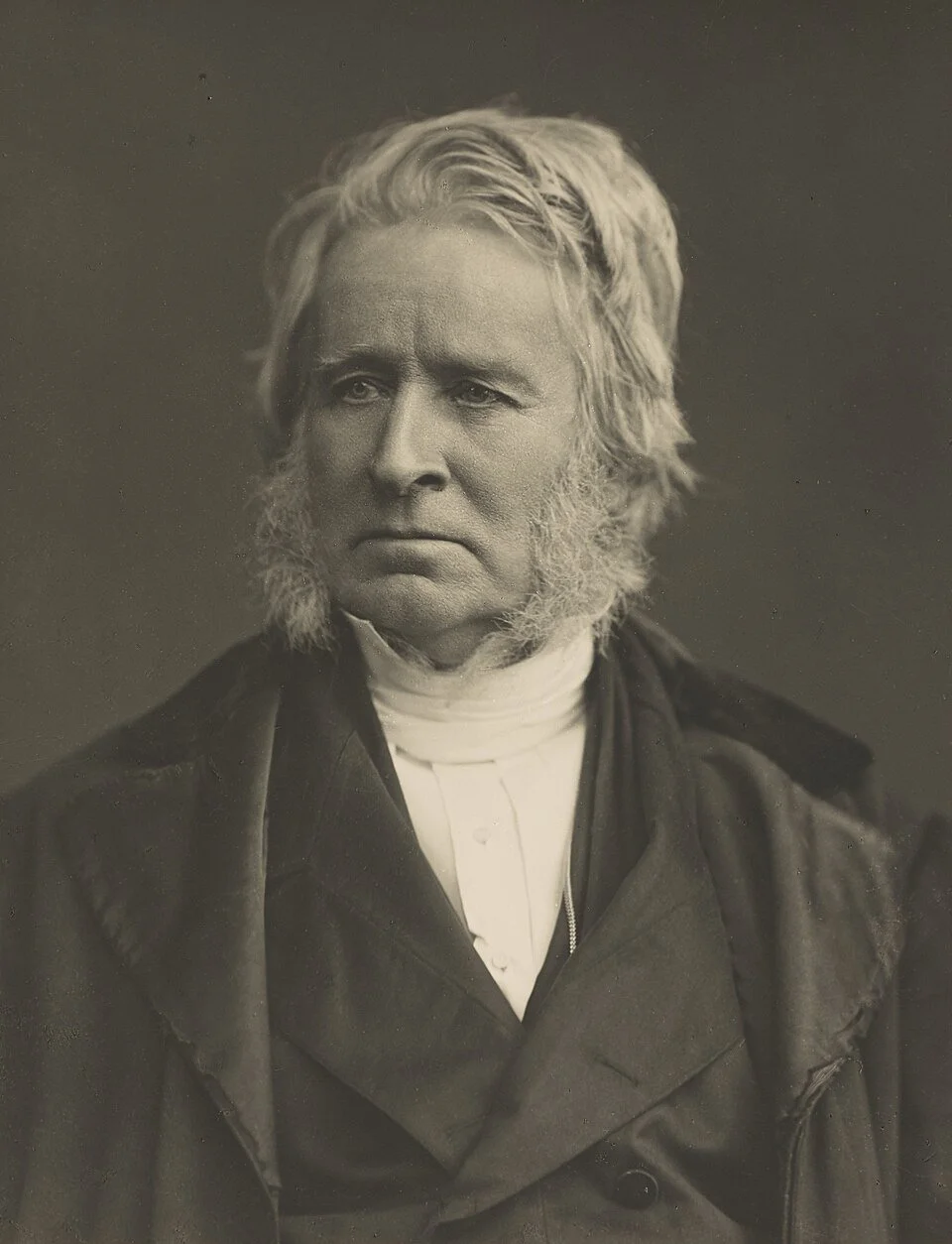
Begg, Appendix III.
James Dodson
[Page 251]
No. III.
EXPENSE OF MUSICAL INSTRUMENTS FOR CHURCHES, AND HOW THIS IS SOMETIMES DEFRAYED—STRANGE PROCEEDINGS IN NEW SOUTH WALES.
ONE of the difficulties in the way of securing and maintaining organs in worship, as Dean Ramsay hints, is the large necessary expense incurred by those who indulge in them; and the landlords and people of Scotland may make up their minds to this, that if organs and other expensive things are to be used in the parish churches, they will ultimately be forced to meet the expense. The present partial introduction of organs is purely tentative; and if the people are prepared to tolerate, they will soon be compelled to pay. History proves that the expense of the Prelatical system had more to do with its exclusion from Scotland in former times, in so far as the heritors were concerned, than any other cause. As old Braxfield said, no doubt expressing a general feeling, the Scotch Church was founded on the rock of
[Page 252]
“purity,” because it stood upon the rock of “poverty;” and the landlords had no objection to the “dumb dogs that could not bark,” so long as they were not also the “greedy dogs who never said it is enough.” When Charles I. sent down his Commissioners to persuade the Scottish nobility to give up some portions of their Church lands for the use of his Bishops, they determined to offer the most violent resistance to this aspect of the question; and one of them, a blind man, desired to be placed next one of the Commissioners, that he might despatch him with his dagger, if no other argument prevailed. The affair looked so threatening, that the Commission was never opened; the noblemen kept their lands, and remained zealous Covenanters till the danger was past. Matters are now assuming a similar aspect, only with less general intelligence on the part of those who will ultimately be forced to pay the costs.
In the Liverpool Presbyterian Congregation, if we remember aright, the poor minister who had been so zealous for the organ, found the organist a very heavy charge on the funds of the congrega-
[Page 253]
tion, whilst his own stipend was rather inadequate. The case ended for him rather sadly. When men, however, are determined to gratify their own desires for sensuous worship, they are not apt to be very scrupulous as to the means employed, and thus one evil leads to another, and the leaven of corruption spreads. Still, we were scarcely prepared for the extraordinary scenes which seem lately to have occurred in connection with the introduction and expense of instrumental music in the Presbyterian Church of New South Wales—scenes which are fitted to bring all religion into contempt. We quote from a paper called The Testimony, published at Sydney, and from the number dated January, 1866:—
“Our readers learned, some time ago, that an harmonium was introduced, and how it was introduced, in the Presbyterian congregation of Glen Innes; and we have now to inform them that instrumental music, having taken that ill-defended outpost of Presbyterianism to the north, pushed on to Tamworth, the Presbyterian congregation of which at once surrendered. The raising of funds to carry out the intended inno-
[Page 254]
vation presented some difficulty. But happily this difficulty was not insurmountable. If funds could not be raised, and it seems they could not, by means that it would be quite in keeping with the character of the Church to employ, why, they could be raised by means that had the highly respectable sanction of the world; means, too, which were attended with the great advantage that the use of them, conveying a compliment and affording gratification to the world, would secure its co-operation. Accordingly the Tamworth Presbyterians, or a majority of them, adopted means of this latter class. They got up an ‘Amateur Ethiopian Entertainment,’ which proved a ‘great success.’ We give the following account of it from the Tamworth Examiner:—
“‘The entertainment was begun by the reading of a short prologue, written for the occasion, when the “niggers” appeared, and were greeted with hearty applause. We do not propose to go through the whole of the programme, but will simply indicate those portions of it which were most warmly applauded, or that were more especially well rendered. We may place in the first
[Page 255]
rank the “nervous cures,” which was done to perfection by Bones and Toney, and elicited, as it richly deserved, a burst of applause, and an encore. Next were the “Stump Speech” and “Sensation Song” of Romeo, which were both well received, the local hits in the former being very good. “Toney’s” ballad was also exceedingly ludicrous, and the make-up, in dress, as in the others we have mentioned, could not have been improved ludicrous, and the make-up, in dress, as in the others we have mentioned, could not have been improved upon. The duet, “Silver moonlight winds,” was splendidly rendered, the expression being perfect, an incident frequently wanting, but one of the most charming features in ballad singing. “Gone are the days” was very tenderly sung, and the choruses in several of the songs were very well executed. The concert concluded with an exceedingly comic affair entitled “Billy Paterson,” which was admirably given. The accompaniments were very fairly played. Altogether this concert has been the most successful that has yet taken place here; and, with better accommodation for the audience, when a proper room has been secured in which to hold them, we hope our amateurs will again favour us with
[Page 256]
another. The sum realised must be considerable, and will go a long way to pay for the harmonium.’
“You will probably object, reader, with old-fashioned puritanical strictness, to the employment of such means to provide for the celebration of the worship of God; but you must remember that this is a liberal age. Means are not to be too curiously and squeamishly inspected. The end is the thing. It would not be safe to say, from the odium which attaches to the statement, that the end justifies the means; but, still, it effects not a little in that direction. This answer may not satisfy you, reader, and we hope it does not,” &c.