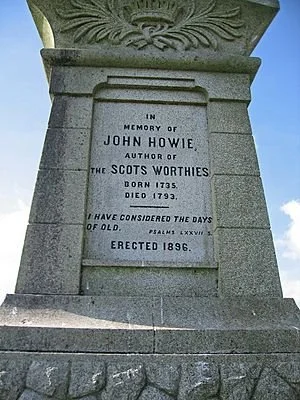
Memoirs of the Life of John Howie:
James Dodson
Who lived in Lochgoin, Parish of Fenwick, and died
January 5th, 1793.
CONTAINING
A Series of Religious Exercises, Soul Soliloquies,
Meditations, and an Account of the Lord’s
Goodness to him in general.
PSALM lxvi 16. Come and hear, all ye that fear God, and I
will declare what he hath done for my soul.
TO WHICH IS SUBJOINED,
A SHORT LATER WILL, or DYING
TESTIMONY OF JAMES HOWIE,
Who lived in Lochgoin, and died soon after the
Revolution.
GLASGOW:
Printed for JAMES HOWIE, Lochgoin.
1796.
( iii )
TO THE READER.
IT is a distinguishing mark and characteristic of the people of God, that they love him, have a delight in religion, and in the internal exercises thereof. They have a respect for his cause and interest; and his people are esteemed by them, as the excellent ones of the earth. They find that religion is not a vain, empty, and nominal matter. Believers, the mystical body of Christ, (not his human body, as that sectarian heretic A. W. maintains) finds a sweetness in union, communion, and fellowship with a God in Christ. His thoughts of peace and goodwill towards them in their lapsed state, they see are the ineffable product of his eternal love, and infinite condescension. This they view to be a matter that no tongue of angels or men is sufficient to express, no strength of mind fit to conceive, no sublimity of intellectual faculties able to comprehend the depth of that spring, the height and breadth of that ocean of God’s unbounded love, manifested towards sinful man, by a Mediator. This egress of his eternal love, will afford them that participate thereof, matter of wonder and admiration through the revolving and endless ages of eternity.
It is presumed that these memoirs may not be unacceptable to the godly, pious, and religiously exercised Christian: For, as in water face answereth to face, so the heart of man to man. As iron sharpeneth iron, so the religious experiences, soul exercises, and godly conversations of the saints and people of God, has sometimes been useful to, and a means blessed of the Lord, for the quickening and reviving, strengthening and refreshing, of his children in their Christian course, and journey to the heavenly Jerusalem.
As the limits of this epistle will not admit of prolixity, all that is intended farther is only a few hints relative to the Author of the following Memoirs; and then, with pre-
A 2
( iv )
mising a few things respecting them in general, shall conclude. And,
1st, Without entering into a large detail of the moral character, and religious principles, of the Author, as being beside our intention, and might be judged superfluous here let it suffice to tell the candid reader, that he had a plain and honest way in his dealings between man and man. He was a good neighbour, and respected in the place where he lived. He was always good and generous to any poor person that came to him in necessitous circumstances. He was friendly, and affable to friends and strangers who paid him visits, giving them such entertainment as his circumstances, and the place afforded, with a free conversation, in which respect he was very useful. With regard to his religious principles, he adhered strictly to the holy scriptures of truth in the Old and New Testaments, as the holy and blessed will of God revealed, which he looked upon as a complete rule of faith and manners. He adhered to the Confession of Faith, Catechisms Larger and Shorter, the Sum of Saving Knowledge, and the Practical Use thereof, the Directory for Worship, the Presbyterian Form of Church Government, Covenants National, and Solemn League, &c. as founded upon, and agreeable to, the divine oracles.
He was still a lover of Scotland’s covenanted work of reformation, and the four pillars on which the church of Scotland stood in her meridian splendor; viz. doctrine, worship discipline, and government, which she attained unto, under the direction of her glorious and exalted head, the Lord Jesus Christ. He also adhered to all the reforming acts and laws in church and state between 1638 and 1649; likewise to all the faithful testimonies, and earnest contendings, of our noble reformers, in the time of reformation; and also to our faithful martyrs in the time of the late persecution, from the year 1660 to the Revolution; and to all other faithful declarations and testimonies since that time, that are consonant to the former, in matter, scope, and design.
He was of no antigovernment principles, as is falsely by some (non compos mentis) palmed on the whole of Old Dissenters. No, he held that magistracy is an ordinance
( v )
instituted by God, as well under the New Testament as under the Old, for the good of human society, the encouragement of piety and virtue, and the restraining and punishing of vice and immorality, and such as break either the first or second table of the moral law. His principles on the head of civil government are exemplified at a considerable length, in the Plain Reasons published by him in the year 1787 *
It was matter of grief to him when he saw (and who cannot see, who have any spiritual discernment) what a flood of error, profanity, confusions, and divisions, with neutrality and apostacy, become so prevalent, and still on the advancing hand, and going on almost omnia contradicente over this poor land. He complained also of the inconsistent and disagreeable walk of many, who appeared to be professors, and even amongst those of his own persuasion, with whom he had nearest connection; yet he still looked on their testimony as the most faithful of all parties in the land, who were going on with the complex courses of the times.
And in a word (so far as man could judge) he was a lover of God, and all who carried his image, and owned his righteous cause; sound and orthodox in his belief of the different articles of our most holy faith (Jude 20.) and against innovations therefrom, in principle or practice, (not like some in these days, who must needs have creeds, confessions, and covenants, corrected and modelled according to the spirit of the times, or else they will not adhere unto them;) and that whereunto we had already attained, we were to walk by the same rule, and mind the same things. In the latter end of his life, he spent much of his time in reading,
_____
* If the reader pleases to consult the Plain Reasons, from page 382 to the end, he will find an answer to thirteen objections, proposed to Dissenters by their antagonists, anent civil government, and owning the present occupants in power. And as Mr Clarkson, the supposed author of the first edition, deserted this piece of his faithful contendings, the Lord in providence brought the author in to give a lift thereto, with several paragraphs, and foot notes interspersed through the book, as occasion served, and in no mean way.
A 3
( vi )
and writing, and was singular in his station beyond many, according to his learning, which verified the words of the wise man, spoken in another case, the hand of the diligent maketh rich,
He designed to have written a dying testimony, with some other things; but by reason of his trouble coming on, he was frustrate of his designs, and so they proved abortive. He hath a number of religious letters, and other papers, left behind him.
2dly, With relation to the book, we may premise, that as it is mostly of a religious nature, it will not please the fancy of the Galios of this generation, who care for none of these things. For O how many are there to be found in these lands, that look upon religion, and religious exercises, such as are contained in these memoirs, as a mere chimera, nothing but hypocrisy, enthusiasm, or the effects of melancholy !* To speak of religious matters now, is nauseous in the ears of such as reckon themselves most polite and wise of
_____
* It is not pretended to enter the lists with such high pretenders, but only desires them to take a view, with their elevated reason, of the great volume of creation, and look up to the heavens and tell why the sky is of a blue or azure colour, and not another? Why the rainbow is of a variegated, and not of one uniform colour? By what means the parts of matter are united? or by what nexus or ligament they are tied, and fly not asunder? Why one body is hard and another soft; and why one is solid and another fluid? Let them tell why one flower is red, another blue, some white, others yellow, and some variegated; yea, why the piles of grass are green, and not another colour? Let them look unto their own make and different contextures, and tell by what bands their souls and bodies are united and cemented? or even how their natural food contributes nourishment to their bodies? and a solid reason or cause for the amazing diversity and dissimilitude of mens and womens faces, voices, and tempers? If they cannot investigate these, with many more that might be named, by their most refined reason, why then spurn at the most sublime and mysterious points of religion, as that of three divine and eternal substances in one undivided essence; the hypostatical union, or union between the divine and human natures, in the person of our Lord Jesus Christ; the mystical union between Christ and believers; the resurrection from the dead, &c? which cannot be known without the light of divine revelation, can only be discerned by the spiritual eye of faith, and not of carnal sense and reason.
( vii )
the age. And for religious books, or books on religious subjects, they are unpleasant and superannuated. The books (say they) that we wish to read, we care not, though there be nothing about God or his word in them at all;—we want none of your canting whims about religion—your religious mysteries we cannot away with—we will believe nothing but what we can comprehend by our reason. And thus divine truths is believed and assented unto, only in so far as they can, by their carnal reason, conceive of them, whereby they exalt their corrupt reason above the divine law, the eternal rule of righteousness. Some are become so audaciously wicked now, as to assert that the blessed and holy word of God is but a romantic fable. Creeds, confessions, and covenants, are cried down, and every one is to live according to the light of his own conscience. It is no matter (say some) what religion ye are of, for all religions are alike in the sight of God; and it will never be asked at the day of judgment of what religious profession ye were of, providing ye be sincere. Contending for the purity of God’s ordinances, according to the pattern shewn in the mount, and the faith once delivered to the saints, is said to be a work set on foot by Satan; and contending against immoral practices, and standing aloof from the sinful customs and profanity of the times, is said to be only the devil raising a dust among men, and looked upon as unpolitical, and the effects of a narrow contracted spirit by our free thinkers, who seem not to know what they say, nor whereof they affirm.—These wandering stars, for whom (if the mercy and free grace of God in Christ Jesus prevent not) the blackness of darkness is reserved for ever.
It may be observed farther, that another staminal point, or article of the Christian’s belief, asserted in these memoirs, is the corruption and depravity of nature; or what is called original sin; this being the fountain, source and spring from whence all actual transgressions proceeds. But this, alas! is also denied in our day. Some has gone the length to assert, that man’s actual sinning did not begin until they were 14 or 16 years of age, when entering on civil business, capable of giving an oath, and punishable by the laws of
( viii )
nations. In lieu of much that might be said in opposition to this, we want only to know at these Pelagian gentlemen, How infants become sufferers, if they be not sinners? Does God, without cause, afflict the children of men? Is not affliction and death the fruit and wages of sin? Why should infants suffer these, and yet have no sin? If they have no sin, then they can have no pollution, and so no need of washing: What idle and insignificant ceremony must the baptising of children be!!! Does any thing point out the pollution of nature more, than the baptizing of children doth, whereby washing from sin is represented? Christ came only to seek and save them that were lost;—What honour or dignity can accrue to him from those who have no sin to save from? Neither are there any such in heaven; for the covenant of works cannot admit them; the covenant of grace being calculated for elect sinners, no entrance here; and so this glorious place must be altogether empty of such a train of young inhabitants. What needs such as have no sin for the prayers of the church, for either purchased or promised blessings? Job xiv. 4. Psal. li. 5.
Also, in these memoirs, the free grace of God is exalted; man’s utter inability, in his lapsed state, to will or to do that which is spiritually good, asserted and maintained; and salvation looked for only through the complete righteousness of a Redeemer imputed, and received by faith alone. But ah and alas! What legal doctrines and unhallowed tenets on this point, are sounding and resounding in the ears of many congregational assemblies in this land? To this it might be said, that man, bad as his situation is, has still a power of knowing, a faculty of willing, and other affections, otherwise he behoved to be destitute of a rational soul, and so cease to be a reasonable creature. And so in point of duty (though not in condignity of merit) might do much more than oftentimes he doth. Nay, the exercises of true principled morality, are commendable in the life of both saint and sinner; and if there were more of it, matters would not be so bad in the present generation as they are. But these are not our saviours, nor can they do any thing in point of merit: For to say that acts of charity could ex-
( ix )
piate our numberless train of offences, or that our lame and defective performances could answer the demands of a perfect law;—or that our wandering acts of devotion can screen us from the wrath of an offended God. We might just as well say, that the Ethiopian could change his skin, and the leopard his spots; and that it was possible for a single drop of pure fresh water to sweeten the whole briny ocean; or our spreading hand to eclipse the orb of the shining sun, or to intercept the rays of lightning when darting throw the bursting clouds. Nay, it might be said, that it is just as possible for the devils to be saved, these fallen angels, who are said by the apostle to be reserved in chains of darkness until the judgment of the great day, as for lapsed man, in a natural state by his own free will, or yet by his natural and acquired abilities, to answer God’s holy law; or save himself. For an imperfect principle can be no ways sufficient for a perfect operation. Nothing less than the all prevailing name and merits of Jesus Christ, can procure pardon, reconcile to God, and save from wrath. Fix on any other object or mean, be it what it will, everlasting confusion must eventually ensue: For other foundation can no man lay than that is laid, which is Jesus Christ. 1 Cor. iii. 11. The act of divine power must enable both to will and to do. So it was with the man that stretched out the withered hand, and the woman to whom Christ said, maid arise. An apostle could say, in me dwelleth no good thing. And, says the divine and eternal Saviour himself, without me ye can do nothing. No man can come to me, except the Father which sent me draw him.—No man cometh to the Father but by me.
The reader is not to be surprised, when in these Memoirs he finds the duty of personal and family fasting holden forth, and in part put in practice. Though no doubt it may be flouted at by the openly profane, and judged a needless, hypocritical, whimsical, or freakish humour; and by the carnal professor altogether overlooked and disregarded; yet we find the church called to such a duty, in sinful and backsliding times; every family was to mourn apart, says the prophet, even all the families that remain, every fami-
( x )
ly apart, and their wives apart. Zech. xii. 12, 13, 14. The prophetess Anna served God with fastings and prayers night and day. Luke ii. 37. and the Corinthians were enjoined to fasting and prayer, 1 Cor. vii. 5. and it was the practice of John’s disciples to fast oft; and Christ told his disciples, that the days will come when the bridegroom shall be taken from them, and then shall they fast. Matth. ix. 14, 15.
As for personal covenanting the reader need not wonder when he finds this duty essayed although in a dead time of religion.* For sure every judicious Christian will look upon it as their duty to fast and mourn for their sins before the Lord, whether personal or relative; yea, for all sins whereby God is dishonoured: And will also dedicate themselves to the Lord, to be for him and not for another; and that either viva voce, or otherways, by subscribing with their hand to the Lord, and joining themselves to him in a perpetual covenant, that shall not be forgotten. Isa. xliv. 5. Jer. l 5.
The reader is not to quarrel and criticise, when he finds the want of grammatical order in these Memoirs, as those nearly concerned in publishing them, choose to let it go into the world, without any alteration from the rude draught composed by the Author. And as it contains a series of secret soul soliloquies, mostly composed either in his deep downcastings, or his upliftings of spirit, Some chaff may appear among the corn, (a rare matter if it be not so), as there is no perfection to be found with us in this mortal body; yet, as the scope and end thereof being to exalt, extol, and magnify the matchless and unparalleled love, mercy, and free grace of God in Christ Jesus; and to debase sinful self, and self-righteousness. This being the scope, it is hoped that it will be acceptable to such (and the faults overlooked) as are truly exercised persons with godliness, and a life that is hid with Christ in God, and are acquaint-
_____
* Mr Guthrie wrote in behalf of this duty. And Mr Willison, and many others since his time, has both put it in practice, and defended the equity thereof to good purpose, which the reader may, if he pleases, consult.
( xi )
ed with the various vicissitudes of the Christian life and spiritual warfare, knowing (with the apostle) what it is to be troubled on every side, without were fightings, within were fears. If any shall allege that the author gave too much way to unbelief, and entertained doubts and fears, whereas he might have rested himself upon Christ dying for him in particular. No doubt unbelief is a great evil, so is a vain presumption. “To believe that God is my Lord (said godly Mr Rutherford) who from eternity did choose me, and of intention sent Christ to die for me, is not essential to saving faith†. Mistake not the nature of faith: For there may be such a persuasion where there is no faith. How many are there who are confident Christ died for them, and they shall be saved through him; who yet know not the Lord! Many a poor believer, that receives and rests upon Christ, is yet full of fears that he may be damned‡.” Faith is a humbling grace, and will be so to all such as have it in exercise. There is need for persons to search and try whether their faith be of the genuine kind, and fixed on the right object, as a mistake must be of great danger here.
But may not some say, that the believer’s life is hid with Christ in God, Col. iii. 3. and so these secret transactions that passes betwixt God and believers, the world hath no concern to know. But it may be observed, not hid from us only, in point of secrecy; but hid for us, noting security. Because I live ye shall live also. John xiv. 9. For (as has been observed already) in water face answereth to face, so the heart of man to man. As iron sharpeneth iron, so doth the experiences of a dying saint, (or one dead) comfort a living saint in like cases; he sees his face, he sees the struggles and soul exercises by which he laboured, and so is strengthened in spiritual things. Further, the rapid and admirable success of the gospel, was greatly owing to the holy lives of its professors; especially their shining in the peculiar and distinguishing duties of Christianity, and their cheerfulness and undaunted boldness in suffering for Christ.
_____
† Sermon before the House of Commons, 1643 p. 27.
‡ Gouge’s Works, p. 471.
( xii )
To conclude, as the advice of a dead friend hath more weight with the living, than twice so many from one who is alive, who knows but this book may be of some use to rouse decayed Christians, waken such as have a name to live and are dead, give a check to the vicious and loose lives of the immoral, and convict Atheists, Deists, and carnal professors; And though it should be wholly fruitless in this respect, yet it shall be a standing testimony and witness against the dangerous and growing evils of this perilous time.—They shall know that there has been one that feared the Lord.
That these sheets following may meet with thy candid reception, and prove, by the blessing of God, for thy edification and growth in grace, is the desire of the
PUBLISHERS.
Lochgoin, August 22. 1796.
[ 13 ]
INTRODUCTION.
IF ever it shall please Divine sovereignty, that the following Narrative shall come into the private or public view of any, it is my earnest desire that the few following premises may be adverted unto, that is:
1st, After the Lord determined or inclined my heart to fall in love with him, and his word, by a more close and fervent application to him in the more secret duties of religion, it cost me some thoughts of heart, whether or not I should commit any thing concerning these feckless, simple, and insignificant exercises of soul into writing, fearing, that should I be in a mistake, or my designs prove abortive, (similar to those spoke of, who begin in the Spirit, and end in the flesh,) which the Lord in mercy prevent; then it should rather be an aggravation of my guilt, than beneficial to any: on the other hand, should the Lord, who separated me from my mother’s womb, by his grace, enable me to do, or finish, what I hope, he had begun, according to his own gracious word given me, then it might afterward be useful, upon a reflex view, unto myself, if not to others also after I was gone. These motives resolved me at last to set about what is in record; only with this proviso, if I should see cause afterwards to destroy it, or mine to conceal it after my decease, it should be done. His own word, that occurred in writing these lines, encouraged me, Come here, &c.
2dly, If it is thought, in what I have narrated, that I have skipped over the most part of my life, some of my reasons were, it might be of small benefit to either myself or others; my public sins being already known; and for these that were hitherto secret, I have hitherto endeavoured to confess them to the Lord, and hope forgiveness from him; and what
B
[ 14 ]
he has been pleased to have concealed, I found myself, as they did not much respect or prejudice others, to let lye in silence; of what seemed good in my conduct, I have little to record in that time. I indeed had some respect to God’s word and ordinances, and a love to these I took to be his people. But, alas! I had little or no delight in either; and although I spent a number of my more advanced years in writing, a part of which is published, and, I think, upon the testimony of many, has been useful, at least some of them, in the present generation; and which some eminent and judicious Christians flattered me to be a noble generation work, in transmitting the memories, contendings, sermons, &c. to succeeding generations: yet, I disclaim all these things, and account only that the principal part of a man’s life, that is spent in the more immediate exercises of religion, in being united to a God in Christ, and to have communion and fellowship with him; truly our fellowship is with the Father, and his Son Jesus Christ.
3dly, I have been more full in the first year, or years that I give any account of, not that I allowed myself to slack in the exercises of religion, or duties mentioned, but that I found a true walking with God, or an habitual living with him, as to divine manifestations, or tender frames, did not merely depend upon set times, or forms of duty, though duty must never be omitted; but in a daily application unto the blood of Christ for cleansing, and manifestations of his gracious presence, tender frames, and enlargement of heart in prayer, and other duties, depend on his own holy and good will: we may crowd sails, but it is God, by his Spirit, must make the wind to blow; and when his north and south wind come, then it is good to hoist up sails, and make out of the harbour heaven-ward to the desired haven.
Lastly, Many times since I began to write, through
[ 15 ]
the deceitfulness of my corrupt heart, indwelling sin, Satan, and a wicked world, I was made to doubt, if ever I should add a line more; but he who at first said unto me, the man will not fail until he hath finished the thing this day, has hitherto helped, and, I hope, will help, until it is finished:—I will see you again, and your hearts shall live;—rejoice not against me, O mine enemy; when I fall, I shall rise again; when I sit in darkness, the Lord shall be a light unto me.
A BRIEF
NARRATIVE
OF SOME
RELIGIOUS EXERCISES, &c.
ALTHOUGH I had a religious education, and my grandfather and grandmother (with whom I was brought up from the time I was a year old, at Black’s Hill, in the parish of Kilmarnock) were reputed, in the place where they lived, for honest, religious persons; yet, in my younger years, I was mostly taken up with the common vanities of childhood and youth, having no certain views of religion, or my own depraved, lost state, and condition; and though, for a number of years, my lots consisted more in a thoughtless, careless, and secure omission of duty, even the religious exercises competent to my age, than any certain vice, (only I inclined to too much vain and unprofitable discourse when in company,) yet, when grown up to years, such was the prevalency and corruption of my nature, flowing from that cursed root, original depravity, that I soon found predominate evils ingrained in my constitution, which,
B 2
[ 16 ]
through the want of restraining grace, and a due attention of an application to the God of all grace, for restraining grace; and particularly through the omission of secret prayer, I fell into some vices, some of which being public, I need not mention,—others more private, which, I think, are not necessary here to put a name upon.—Being married, and my wife dying soon after, I was somewhat affected; yet this soon went off, and my corruptions revived upon me, with such violence, as through my loose behaviour, and some bad company, I was laid under some reproach by some in the country-side, and by none more than by some of my relations; and, though I gave too much occasion for this, yet, as oft-times is the case in circumstances of this nature, things were aggravated, and made much worse than what they really were, and many things were wrongously laid to my charge by some people, for which I wish the Lord may give them forgiveness, as I wish, and expect forgiveness for what occasion I gave them, and for what I was justly chargeable in the sight of a holy God with.—All this time I kept up family worship, attended ordinances, and society meetings; but even omitted sometimes the formality of secret duty (for I could claim no more in it) itself.
At last, I married again a cousin of my own, who was of a quiet disposition, and under the character of a religious woman; after which I kept more to the form of an outward profession;—and having, from my younger years, had great pleasure in reading Biography, the eminent lives, and comfortable deaths of Christ’s faithful Witnesses, both under Antichrist Popish and Prelatic, and having thereby gained a strong regard for the memories and contendings of our Scots Worthies, both in the reforming and suffering period; in process of time, I thought of publishing Mr. James Renwick’s large life, which was wrote by Mr. Alexander Shields; but, upon second thoughts,
[ 17 ]
I took up a resolution to collect what materials I could obtain, and write a kind of lives of a number of them, which I did at leisure hours, with small views, that ever any thing I could do, should merit the publishing of them: however, my motives were ingenuous, out of love to them, and their contendings, or cause they contended for; and the Lord determined that they should both be published, and much esteemed by men of all ranks and denominations.—While I was writing and collecting the first draught of the Scots Worthies, sometimes in the morning;—one morning my wife, who was not without an inclination to religion, being in bed in the little closet where I was writing, she was just going to give me a reproof for my folly in writing; what would I do but make people laugh at my folly; immediately these words came into her mind, Mark vii. 37. He hath done all things well; he maketh both the deaf to hear, and the dumb to speak. After which she durst never speak against it. And, indeed, from the testimony of many, the consequence was no way unanswerable to what as to this I have observed.
After which I published a Collection of their Sermons, which cost me no small pains, with some other pamphlets and publications, which, being so well known, I need not mention: but that which cost me most thought and study, was the writing of one upon the administration of the Lord’s Supper, when the controversy took place among the Antiburgher side of the Secession, about taking the bread before consecration. Although the protestors furnished me with much of the authorities or materials,—it was always my custom, before I entered upon any thing of this nature, in writing, which was designed for the public, to pray to the Lord for light and direction; and, if it was not for his honour and glory, that it might be frustrated: and I may, in humility, say, that all the different pieces were very well taken,
B 3
[ 18 ]
and esteemed in general; yea, some declaring, that they reaped advantage by some of them: And whatever I shall receive for my labours therein, which has not been small, considering one of my parts, learning, or circumstances, which rendered things of that nature more difficult, as worldly advantage was not my view, so I never received much that way: But this I may say, I had the literal accomplishment of that promise as to the outward, Them that honour me, that is me in my mystical members, him will my Father honour; that is, will cause to be honoured: for thereby I gained much respect, yea, ten times more than I deserved, from many of all ranks, which occasioned me to get not a few visits, and many letters of correspondence from judicious religious persons, some of whom I never saw in the face in this tabernacle, nor expected to see in time, only wishing for a joyful meeting at God’s right hand, when time shall be no more, and that through all the endless ages of eternity. But, after all, one may do much for the cause of Christ and religion in the world, and be much esteemed on that account, and yet be a stranger to the new birth, and the efficacious workings of the Spirit of God upon their own soul; yea, their labours may be profitable to many others, and useful to the church in their generation, and to after ages, and even receive the answer of prayer in many cases:—for instance, it has been my request unto the Lord in prayer often, that he would keep me straight in the way, from falling into any thing in my practice that should dishonour him, and be offensive to his people, and bring a reproach upon religion, and discredit the cause I had done so much for in public: and I was so far answered, that I was not only grieved, when I saw the laxness of principles and practices amongst dissenters, and the slight censures in discipline that were executed therein; but even helped to contend to such a degree against them, that I was
[ 19 ]
accounted by some to be given to needless reflections and too critical upon what they thought but small circumstances, as in their words and conduct appeared.
Another instance, having now a numerous family, several of whom were but young, and meeting with an outward loss of cattle, I was much cast down, (it coming so sudden and unexpected,) yea, more dejected than ever I had been, upon the account of my many heinous sins; yea, more cast down and grieved anent what would become of me, and my small family, if it should fall out thus, than ever I resolved, through grace, to be for any worldly interest again, as I thought, I got a reproof in the Sabbath following, and likewise some comfort in a lecture upon the Gadarenes, and the loss of their swine, from Matth. viii. 28,—34. But what I was to observe, that soon after, being at dinner, and all my children sitting around me, I began to think, what will become of these poor young ones, if things go thus with us, which, sure, was a distrusting of the Lord’s mercy, yea, of his common benevolence and goodness, in upholding all the works of his hands, and deserved a severe check from his hand; yet, behold a gracious God, who does not requite us as we deserve! For, at that very time and instant, these words darted into my mind, who feeds the ravens young that cry. I knew it was in the Psalms, but knew not where till I found it, Psal. cxlvii. 9. He giveth unto the beast his food, and to the young ravens that cry. Now, could I doubt, but he, which feedeth the ravens, the most despicable of creatures, could support me and mine, if we would give credit to his word of promise. This word I often remembered, and pleaded afterwards; and, for a number of years, though several of them were very bad, we had more than before, and was in no scarcity, when many others, especially the poor in towns and cities, in this and the neighbouring
[ 20 ]
kingdoms, were in great want, and endured much hardships; which evidences, that one may be more troubled and grieved on account of worldly things, and for a through-bearing here, than for their eternal concerns, and the world to come; and in which I behoved to meet with this reproof by Christ himself, anent the cares of this life, Matth. vi. 25. to the close, in which he concludes, But seek ye first the kingdom of God, and his righteousness, and all these things shall be added unto you.
I could give more instances of the same kind, but shall omit them, as no way pertinent here.
I always, of a long time, had some melting of heart, when I read the Dying Testimonies and last words of our late sufferers, and other martyrs, and did covet their lot and condition at death. Amongst other books or writings which I had or seen, which were not a few, I took a longing to have a Collection of the Dying Testimonies, Personal Covenantings, and Soul Soliloquies, of about twenty of them that were old dissenters, the most of whom had lived in the persecuting period, and died since the Revolution; and I had it a little time from a correspondent before, when I transcribed out my great grandfather’s dying testimony and last words; now I intended to transcribe more of them; so I sent for and got them, and William Wilson’s dying testimony along with them; I transcribed them; and, amongst other duties they were accustomed unto, that of personal fasting and humiliation for sin, either at set times, or on emergent occasions; this, they declared, had been most beneficial to them in the house of their pilgrimage;—and, though I had sometimes before this, prayed, sung psalms, read the word of God, and prayed in secret by myself alone, that the Lord would reach my heart with a thorough conviction and conversion, yet I could perceive no return of these supplications, nor
[ 21 ]
any word of scripture suitable, in order to hope for obtaining my requests: I now proposed to set a-part a day, or so much time for this duty of fasting and humiliation, and that in a more solemn and precise manner than ever I had outwardly observed in public fasts, in abstaining from food, &c. Accordingly I kept a day in November 1784. And though I cannot say that I got much enlargement of heart, or such a sight of sin, and measure of grief, as I could have wished or desired, yet, I both fixed upon portions of scripture suitable to my case, and came to make a more full, free, and particular confession of my sins, both of youth, middle, and older age, together with the pollution of my nature, than hitherto I had done. As to my frame, it was little altered: I had still a regard for any person wherein I thought any thing really good was, or even in appearance; and still I inclined more this way.—Sometime after, having a week-night’s meeting, wherein two members were proposing to be admitted, one of whom, I was afraid, should prove nothing to the honour of religion; I resolved to spend the forenoon in prayer, both in behalf of the church of Christ, which was now low in her decline, and our meeting in particular, that we might be kept from that which would be offending to the Lord, and detrimental to his cause, which was by many, yea, many of our own party, little regarded, or laid to heart. The portion of scripture I fixed upon was the 74th Psalm, from the beginning, part of which, (being in the fields,) I did sing, read it all over, and prayed with some enlargement of heart, especially on these words, verses 2d and 3d.
O call to thy remembrance
Thy congregation,
Which thou hast purchased of old,
Still think the same upon.
[ 22 ]
The rod of thine inheritance
Which thou redeemed hast,
This Sion hill wherein thou hadst
Thy dwellings in times past.
And though I could not say, that this did proceed from one in a converted state, being never to my apprehension, suitably grieved for my manifold sins, and the pollution of my nature; yet it had, I thought, some small effects and success; for I was enabled to a free discharge of my duty as a member of the meeting, to one who was admitted; and, for the other, the Lord brought out as much as retarded his entrance at that time; wherein I was enabled to be free with him on several things, as they stood betwixt him and the society at that time.
Nothing more observable occurred in my case till February 1785, that I took a resolution to keep another day in humiliation, as I could observe no return as to my being fully humbled for sin; and, as I was now advancing in age, and likewise troubled with something like what is called a rheumatic disorder, having a pain in my back and left knee. And so the 20th day of February, I set a-part for this duty. In the morning, I began to think upon an enumeration of my most particular sins, and for some word of scripture suitable for me, in my petitioning the Lord on that account, but could find none; nay, such was the case, that I began to doubt, if I could find one in scripture that got their sins, similar to those that I was guilty of, ever pardoned, being some of them against those who were now dead; and, if they were in hell, that loss could never be repaired to them, and to me pardoned; not that I doubted that the Lord was not able to pardon them to me, but being of that nature, he would not vouchsafe to do it. This put me to a kind of nonplus, not knowing what to do; meantime, I considered if I could find any instance in scripture that would afford me any hope or consolation in
( 23 )
this: then the instance of Manasseh, who caused men to commit idolatry, and then shed innocent blood, some of whom we must conclude to be of that number;—I likewise remembered our Lord’s words—All manner of sin shall be forgiven. I had been solicitous for some word of holy writ, in order for an hearty acknowledgment of my sins, after some turning and perturbation of mind, as above related, that word came in my mind,—Make me to know my transgression and sin. I could not, at first, condescend where this was to be found, though I was not unacquainted with the literal texts of scripture; but, getting my Concordance, found it, Job xiii. 23. How many are mine iniquities and sins? make me to know my transgression and my sin. Which last clause of the verse I was made in prayer to urge with great vehemency, until a flood of tears flowed from mine eyes. In this condition, I continued for some time, crying to the Lord for light, help, and pardon of mine iniquities, which I could neither number nor express in their genuine nature and aggravation. While in this condition, these words, on a sudden, darted into my soul,—The man will not rest till he hath finished the thing this day.—I knew this was the part of the type of the true Kinsman Redeemer, Boaz, in the book of Ruth. These words, I was made, with great ardour of mind in prayer, to repeat many a time over and over before the Lord, as his own word, to make it out to my soul; and, from thence, was led to cry for strength and through-bearing grace, that, if the Lord should enable me, I would now with my whole heart and desire, avouch the Lord to be my God, and, by faith in the blessed Jesus, endeavour to take hold of his covenant, and, through Divine grace, if he would be pleased to strengthen me, to commit no known sin with deliberation, nor omit any known duty; begging, he would subdue my heart and affections, and bring me to a conformity to his image
( 24 )
in holiness, and that I, and all that I had, should be at his Divine disposal, if I could but glorify him upon earth, &c. with much more, that I cannot express, still pronouncing these words—For the man will not be in rest, until he has finished the thing this day. All the time a flood of tears did run down from mine eyes; at the same time these words, uttered in the application of the last sermon I had heard by one Mr. Mason, to which sermon I had gone with much difficulty, from the prevailing disorder of my body, came fresh to my mind: “Can you remember,” said he, “the time when you were made to acknowledge your lost state and condition, and cry undone, undone, before the Lord, with tears in your eyes?” These I also expressed while employed in this exercise.—After this was over, I began to consult this portion of scripture, impressed on my mind on such a sudden, and from such a circumstance, as I neither expected nor had been thinking on before, as any matter of subject, I found it in Ruth iii. 18. being the words of Naomi to Ruth, concerning Boaz’s performing the part of a kinsman to her; now, upon recollection of mind, I thought, that whatever should be my case, in this it was most suitable and pat to my condition, as the next chapter does evidence.—Ruth was in a poor forlorn condition, so was I, because of sin. She was a stranger, and in a strange land, tho’ in the land of promise, so was I, in a great measure, to God, to Christ, and to the graces of the Spirit, though in the place of hope, and where himself and these were to be found in his word and ordinances. The nearest kinsman could not redeem her: so, this prefiguring the law, or broken covenant of works, with which I, and every one, as in a natural state, are most nearly connected, which cannot redeem or give deliverance to the weary and heavy laden soul; for by the deeds of the law can no man be justified. Here Boaz, who acted the part of a true kinsman, under-
[ 25 ]
took the matter, and stepped into the kinsman’s place, prefiguring the true Kinsman Redeemer, the Lord Jesus Christ, who acts this kinsman’s part to all, who through grace, are made cordially to make faith’s application to him.—But what to make of these words, till he has finished the thing this day. Ah! thought I, there is too much ground to suspect that I am not yet thoroughly sifted to the bottom; my sins require another sort of conviction than this; I despair that it shall be finished in such a sudden: here I could find no satisfactory answer from the words to myself, only thought I, this may not be restricted to a day of time, or natural day, but might be as properly rendered the day of grace; and may not that be begun this day, which the true Kinsman Redeemer will finish in due time before my day of grace and mercy be expired? which calmed my mind a little for the present.
But, alas! I found this frame soon went off, like the morning cloud, or early dew, that soon vanisheth away, which made me conclude all was not right; that my sins must have another kind of work than this. My frame, after this, not being as I expected, this made me resolve to spend the 20th day of March next in the same exercises of fasting and humiliation; accordingly I addressed myself the morning of this day to the same duty; but could find nothing but deadness of frame, and wandering of heart, though I fixed on that word,—Thou hast played the harlot with many lovers; yet return again unto me, saith the Lord,—which I found to be in Jer. iii. 1. which made me cry unto the Lord, that these might be removed. But, there being no appearance of this, I began to see, that it was hard and difficult for one to regain such a frame when once lost; and that nothing but Divine and sovereign love, and the efficacious working of the Spirit of all grace, can do it upon a hard heart. I continued till after mid-day by intervals
C
[ 26 ]
in the way of duty, singing, reading, and praying, though oftentimes in a cold and dead manner; but, pouring out my complaint, in as eager and pathetic a way as I could do, craving for a sight of sin, and that my hard heart might be softened; that wandering affections might be gathered in, for the merits of the great High Priest’s atonement, at least words to this purpose, I attained unto some warmth of affection, in so much, as abundance of tears flowed from mine eyes; and lo, in this frame, these words suddenly came into my mind, of which I had not the least thought of before, in Song ii. 16, 17. My beloved is mine, and I am his, he feedeth among the lilies. Until the day break, and the shadows flee away: turn, my beloved, and be thou like a roe, or a young hart upon the mountains of Bether, particularly these words,—My beloved is mine, and I am his,—which I pronounced over and over, with such vehemency and fervour of spirit, with other words of supplication; and even such was the case, that, amongst other expressions, I pleaded, that if Christ would come in unto my soul, I would he should even make a passage or vent, through my very breast to my heart, I would be willing to open it for that purpose, which I know not whether such language was lawful, or rather enthusiastic. However, such was my vehement desires and supplication, through my disorder of body, and want of food, I was in a faintish situation, which made me plead that I might be hungering after righteousness, and anon these words were represented to my mind; I knew not where they were, but found them afterwards in Psal. cxix. 28. as they are in the metre,—My soul doth melt and drop away,—or with words in the 20th verse,—My soul within me breaks, and doth much fainting still endure.—I was made to plead the last clause of the 28th verse,—Give strength, and send relief.
When I took a second look of these words, Song
[ 27 ]
ii. 16, 17. above mentioned, I thought they were too high for me to lay claim unto; yet these words, and those from Ruth, are yet savoury to me, and most applicable to true humbled and self-loathing sinners, though I could not lay claim to this qualification, although I times without number have supplicated it should be so; and I found they were the language of faith, or the believer’s appropriating Christ unto himself, the words bearing a beautiful representation of the believer under Christ’s sensible presence: I am my Beloved’s, and he is mine; he feedest among the lilies: that is, he delights to walk amongst believers, who are compared to lilies, or feeds his people in a most pleasant verdant and fruitful place, until the day break, until the resurrection morning, when the shadows of ignorance, sin, and darkness, yea, ordinances, and every other mean of instruction, shall fly away.—Return my Beloved; that is, come swiftly and speedily (for my soul is deserted) with thy blessed presence, and be like unto a roe or a young hart, upon the mountains of Bether, or Bithron, where such creatures abounded.
However, these frames and exercises, such as they were, were short-lived; for they soon went away, and I still recurred back to a lifeless dead situation, and could not win to that heavenly mindedness and circumspection I could have wished; however, on the Sabbath, being out, and reading on Mr. Shepherd’s Sincere Convert, and, while going over the objections made against the offers of Christ in the gospel, some of whom are as follow: “I am an enemy to God, and have an heart so stubborn and loath to yield,” &c.—“I have despised the means of reconciliation, and rejected mercy.—Can the Lord offer Christ to me, so poor, that I have no strength, no faith, no grace, nor sense of my poverty?—But is this offer made to me, that cannot love, prize, nor desire the Lord Jesus?—Oh! but I have fallen from
C 2
[ 28 ]
God oft, since he hath enlightened me: and doth he tender Christ to me?—Oh! I fear time is past, I might once have had Christ, but now my heart is sealed down with hardness,” &c. All which he answers in the affirmative, yes; and proves it at large. My heart was made to sob at every one of these, and to apply them home to my very own case: and, when coming to the terms on which Christ may be had, viz. by giving away one’s self, soul and body, to him,—giving away all their sins, casting them on Christ,—giving away all honours and pleasures for him,—and, lastly, all the rags of one’s own righteousness, for his perfect and imputed righteousness.—I was made, in prayer, to desire to resign myself over to him on all these accounts; and, again, to avouch him for my God, resigning all my beloved lusts and idols, desiring him to subdue them by his kingly and subduing power; taking trees, and all, to witness, as formerly, that if he would enable, I would endeavour holiness of heart and life to my life’s end. Amongst other things, these words in the last of the Revelation, which I had read in the morning in private, came upon my mind,—The Spirit and the Bride say, Come; and let him that heareth say, Come, and let him that is athirst come; and whosoever will, let him take of the water of life freely. Which words I was made to repeat many times over, both then, and in prayer afterwards.
But, ah! after all, deadness and wandering of heart prevails, which makes me question all as only common operations; only, I have now more pleasure in reading the scripture, and divine subjects; especially those on conversions, and the soul exercises of other eminent persons, among whom I have not a few, among so many books.
I might have noticed, that, during the foresaid exercises, lame and insipid as they were, one Lord’s day, thinking upon my former ways, and considering what light and knowledge I had concerning the great
[ 29 ]
staminal leading points of the doctrines of the gospel, both from reading the scripture, reading and hearing of sermons upon them; and yet remaining a stranger to the saving knowledge of a God in Christ; not only so, but in a manner rejecting and despising the offers therein, by a neglecting to put those things inculcate therein into practice, I thought I might be guilty of the unpardonable sin, which made me to consult (amongst others on conversion) Mr William Guthery’s Trial of a Saving Interest in Jesus Christ, on this head, where he makes that sin out, in substance, to be a rejecting and opposing the chief gospel truth, and way of salvation, made out singularly to a man by the Spirit of God, in the truth and good thereof, and that avowedly, freely, wilfully, maliciously and despitefully, which he proves from Matth. xii. 31. Heb. vi. 45. and x. 26. that it is done by free choice;—upon which I could not say, that of all the evils I was guilty of, either in sins of omission, or commission, that ever I did any thing maliciously or despitefully.—But, when answering the objection, he condescends on these following marks to clear from the charge of this sin, viz. 1. If one does not hate the way God has devised for saving sinners, &c. 2. If, whatever one has done, he rues and wishes it were undone. 3. And to be content to be his debtor for pardon, &c. 4. Whatsoever one has done, if he has a desire after Jesus Christ, looks with a sore heart after him, and cannot think of parting with his blessed company for ever; or, if thou must part with him, yet dost wish well to him and all his for ever, &c. 5. And wishes to be above the reach of all sin, and secured against it, &c. To all these, if my corrupt heart deceived me not, I think I could cordially assent unto; but particularly these words: “To think of parting with his blessed company, and wishing well to him and his for ever,” I could not think on it without abundance
C 3
[ 30 ]
of tears, and expressing these words with great vehemency, or the like, “Let me never part with lovely Jesus Christ; I desire to wish well to him and his, do with me what he will,” yet, after all, I had ground to suspect my case still, and I thought more than ever, both on account of my many heinous sins, and likewise on account of my frame, both in heart and life, as to the duties and exercises of the true Christian life. As for my sins, I found those I had condescended upon before the Lord were those, mostly, of the more gross sins of commission; whereas I had neglected many sins of omission, particularly in religious duties, such as neglect of, or formal, lifeless, slight, and dead prayers, unconcernedness when attending ordinances, seldom reading the word alone, or for matter of meditation, neglect of parental duties, little or no attention to the voice of God in his word and providences, towards myself, my own family, or others, little desire for the advancement of his glory in the heart, or in the world, or small concerns for the salvation of immortal souls, or grief for the dishonours done to him, either in a public way by church or state, or in the immoral practices of men, contrary to his holy law, Divine will and commandments.
This made me resolve to take a short list of as many of my sins original, and particularly actual transgressions, sins of commission and omission, that I might, on particular seasons of fasting and humiliation, run over them before the Lord, and hold up my case before him on that account, for pardon by the blood of Jesus Christ, which cleanseth from all sin.—For the other things, as to the true exercises of the Christian life, I found it no small difficulty to be duly affected before the Lord for sin; this has made me, many times, conclude, that all my essays this way to be in vain, because I ever thought my sight, sense, and sorrow for sin, was never what they should and ought to have been,
[ 31 ]
considering their number and aggravations; I also found it a hard to fix any agreeable matter of meditation, upon Divine or spiritual things, for any certain space of time, so that in duty, secret, family, or social, needless, vain, and oft-times, wicked wandering thoughts crouded in themselves upon me, which marred all, and none more than on the Lord’s day, so that oft-times I have been made, when conveniency would allow, not only to put up thoughts to the Lord, but even to read or sing a few verses of a psalm, that if I should be no otherwise quite of them, I might be divested of them for a little. Again, I found mortification to sin, and holiness or sanctification of life, a most arduous matter; and that it was but a small thing to leave off the great or outlines of sin, but it was another thing to notice the least flaw or evil, in thought, word, or deed; and what it was to have a due respect and regard unto every thing that was good, and a hatred of every thing that is a breach of God’s holy law, and that out of a principle, because of its contrariety to the holiness of his nature. This I found none could attain unto, but such as had their will, affection, conscience, and memory, enlightened and sanctified, by the powerful operation of the graces of the holy Spirit, which guides unto all truth, as the great Enlightener himself says;—for he shall take of mine, and shew it unto you.
Upon the above reasons, and many others, I remained, not only under great deadness, oft-times, as to frames, but even when comparing myself with the marks of conversion, given by divines from the word of God; particularly, Messrs. Shepherd, Allan, Guthrie, Gray, Welch, Rutherford, Brown of Wamphry, Collins, Pearce, Spalding’s communion sermons, and Webster’s select sermons, with the Sum of Saving Knowledge, &c. wherein the lowest they could condescend upon were comprised in these two following; 1. A denying and renouncing all confidence in the flesh, in
[ 32 ]
ourselves, or in our own works, acquiescing with all our heart in, and venturing upon God’s plan of salvation, in and through Jesus Christ, resting and relying upon him for salvation, as he is offered to us in the gospel, Phil. iii. 3. 2. In a real hatred of all sin, as sin, and being willing to part with every lust and idol without exception, yea, the most beloved predominate that is even ingrained as it were in our nature, and to comply with every duty that the Lord makes known, or shall make known unto us. I have respect unto all thy commandments, Psal. cxix. 6. grieving we could not be grieved for sin, hungering after more of Christ, &c.
These marks made me to stand, considering that a hypocrite could go all the length, in counterfeit graces, at least in appearance, that a true believer could do, which made me oft-times to cry unto the Lord, Search and try me, O Lord; and what I know not, teach thou me. Yea, it made me shun sometimes (considering my former ways) to speak to others as I should and would have done, lest it should not have been taken well off my hand, or I should have been branded for hypocrisy: But I can safely say, I never inclined, that, whatever I did in duty, particularly my more retired duties, should have been known of any, nay, even of my own family; I was ever bashful unto a fault this way; and yet I cannot clear myself of hypocrisy, hypocrisy being a sin in the best as well as others; but it is one thing to do a thing with hypocrisy, and doing a thing only in hypocrisy; will he always call on God? will he always delight himself in the Almighty? No, he will not; but the true believer must bewail this sin, when mixed, or slips into his best performances.
My frame, such as it was, was become so dead, that I was sometimes made to think, that I should be made to give over this method, as all should prove delusive, or a beguiling of myself; for my predomi-
[ 33 ]
nate, in its three streams, were not yet cut, but got up upon me at every temptation; yet I continued at duty; and sometimes one word or sentence of the Lord’s word, and sometimes another, came into my mind, by night, or by day; but they were but passing, leaving no great or savoury remembrance; only, that word came some way unto my mind,—If ye follow on to know the Lord.—It continued until I was obliged to seek for it in my Concordance, and found it to be in Hos. vi. 3. Then shall we know, if we follow on to know the Lord: his going forth is prepared as the morning; and he shall come unto us the rain, as the latter and former rain unto the earth. These words I found to be so suitable to my situation, that I was made to admire it; only, thought I, if my heart was once right, that I durst apply them to my present case and situation.
We resolved upon a family fast, upon particular accounts I need not notice; only one with respect to my numerous family of children; those come any length of years, though not so prone to the fashions of the age, ranting, &c. yet seemed more backward to duty, attending ordinances, &c. than we could have wished or expected; so we condescended on Thursday, May 22d, Old Style, 1785. One thing occurred (though, perhaps, it may be thought frivolous or superfluous to notice) in the morning, I dreamed, I was going to her who was my present wife, and the minister was come for that purpose, and had a great deal to do, shifting clothes for the occasion, namely, a shirt very white, which I put on. I awaked, and it still recurred: I thought, had it rather been, or signified, a marriage with glorious Christ, I should have been more engaged with it: however, it for sometime remained with me. Before I rose out of bed, I thought upon several portions of scripture to fix upon, for to begin the exercises of the day, as suitable to the matter in hand,
[ 34 ]
and thought on that in Zechariah xii. Every family a-part, as the mourning of Hadadrimmon, &c. came often into my mind, yet I could take footing upon nothing. I arose, and took my Bible, (which was that which Captain John Paton gave to his wife off the scaffold, which I had lately got in a compliment from my wife’s mother, my wife’s father having got it from the said Captain’s son’s daughter’s husband after her death,) and went out to my little orchard, or garden of plants, as oft-times I did in my secret retirements; I looked over many places of scripture of the Psalms, in order to begin with singing, as was my usual now, but could find nothing suitable to my apprehension, which made me almost at a stand what to do. At last I cast mine eyes upon Psalm xxxviii. 17. to the end, which I sang, and then spread it before the Lord, and prayed over each verse, as suitable to my case, when upon these words,—*For I am near to halt; my grief is still before mine eyes.—*I found nothing could be more suitable to my halting case, and when upon the words, For I’ll declare my sin, and grieve for mine iniquities,—I was led out to name a catalogue of my sins, so far as I remembered them before the Lord, crying that they might be laid upon the head of the great Scape-goat, or atoning sacrifice, and be led out to these words, or the like; if I could be rightly humbled for them, he is ready to forgive.—These words came at that instant to my mind, and as soon to my tongue,—All things are ready, come to the marriage.—This I could not but repeat many times over, before I could stay myself, and declare I desired to be made willing to the bargain; and, as formerly in the place, I took all things witness, that I desired to give myself, and all mine, and what silly service I could do, to be for him, and for his service, as far as he would condescend to make me know my duty, and enable me by his grace to perform. Taking my Bible, I found it the marriage
[ 35 ]
of the King’s son, Matth. xxii. 4. and my dream suddenly recurred; and what to make of it I knew not; but it for the present gave me some satisfaction. After this I went in, and calling the family, hinted the ends respecting the children, with a few words of advice; then sang Psal. xxxii. from the beginning to the middle of the 5th verse; and read Jer. iii. in which many things are most applicable to the day’s exercise, both to our own case, and to the world around us; after exercise, I retired to my former retirement, and after, and, in the intervals of secret prayer, or singing, I read over some sermons of Mr. Gray’s on Humility, on 2 Cor. xii. 7. Lest I should be exalted above measure, &c. casting up, I ran over it, and found that he gave these six evidences, to know if ever, or whether one had met with communion or enjoyment with Christ, viz. 1. If ever your enjoyment increased your thought and opinion of Christ, &c. 2. Strengthens your delight in duty, &c. 3. Strengthens hatred against sin, &c. 4. Strengthens your decay from idols, &c. 5. Brings you low and humble, &c. 6. Did your love to Christ increase, &c. To which heads a 7. Constraining to long for the endless and unchangeable enjoyment of Christ. These marks made me begin to doubt all I have mentioned, as I was afraid I could not come up to any of them, particularly the four last; thought I, my idols are yet strong and lively; I am never yet truly humbled for sin; my love to Christ is little, alas! too little; and though I could heartily wish to have an uninterrupted enjoyment of him, yet I cannot get clear off in this, till I be confirmed of some or all of the foresaid evidences. I was somewhat cast down, and moved slowly in duty, till casting my eyes upon that sermon of his on Prayer, from 1 Thess. v. 17. wherein, going over ten excellent commendations of prayer, he mentioned some of those things I have already noticed; and, in the 3d, holds out, that tho
[ 36 ]
we get not Christ at the first, yet we shall get him at length, if we hold on in the noble exercise of prayer. This encouraged me a little in the way of duty; about three o’clock I called the family again, and sang some verses more of the 32d psalm, and read Zech. xii. xiii. and prayed, wherein I was somewhat refreshed in the 7th verse of the 13th chapter, Smite the Shepherd, and the sheep shall be scattered; and I will turn mine hand upon the little ones. O! that this may prove the case with my poor young ones in the family. After a little refreshment then, as I allow myself no liberty in eating or drinking any thing now in such solemn exercises, except in travel, or infirmity, till that time, i. e. after dinner time. After which I read over the foresaid sermons to them, and then retired.—On the evening I did sing Psal. xviii. 21. my ordinary, and read Matth. v. for a conclusion, and prayer concluded the exercises in the family.—I have been the more particular in noticing those things done on this day, as it was the first day (to my shame be it said!) kept in a family way as a day of fasting and humiliation, it being also, I suppose, Mr. James Reid’s communion fast in Galloway, which I had also an eye unto, though at such a vast distance, and no other way except in general connected; and I am afraid, that, even in that respect, few out of that congregation observed so much: alas! unto such a low pass are things now brought, and so little concern are there on people’s spirits about the matters of religion, men’s hearts being almost become key-cold to God, Christ, and Godliness!!
And however unworthy I had been, both as a church member, and as a member of society, yet I was vexed, and still the more in a pursuit of the duties of religion, when I saw the partiality both in the admission of intrants into societies and church privileges; particularly lax discipline, which I had on several occasions witnessed against; and what grieved
[ 37 ]
me more, was, that the party with which I was connected, had not only practically given up with some things that they once accounted points of testimony, which our ancestors, since the Revolution, contended for; but even some went so far as to ridicule and contradict some of the points of doctrine contained in our Confession and Catechisms, although solemnly engaged thereunto, either on receiving church privileges, or by office, or both; this grieved me more, as I found the Lord had not only countenanced those men who compiled these standards, but even all our martyrs had particularly adhered unto them, in their dying testimonies, and sealing their approbation of all the truths therein contained with their blood.—I never was so tenacious, as to contend for every word or clause in grammatical expression; but then I ever intended to adhere unto the principal doctrines contained therein, as to their scope and design; and therefore could not but be offended, when I saw or heard any advance or defend points opposite or unreconcileable thereunto, or yet to speak diminutively of them, and more when by professed witness-bearers, who owned their adherence to these and our covenants, (which they also could not be persuaded to a renovation of,) as a distinguishing part of their testimony, from the present generation. Another thing which gave me great uneasiness, was, when I saw the light behaviour of a great number of our community, wherein little else but the name was to be found, (which they seemed to glory in,) from the heedless and unthinking generation around us; and yet these men were, in many of these practices, such conduct and conversation, overlooked by ministers and leading men; yea, ministers and leading men were generally become more light, fashionable, and conform unto the fashions, practices, and conversation of those we were conversant with; which, alas! evidenced too much that like of those mentioned by the Psalmist, where it is said,
D
[ 38 ]
—But were mingled among the heathen, (I mean the baptized heathen,) and learned of them their works—All which, through Divine grace and pity, I desire to mourn over, with many other things that may come afterwards to be noticed.
But, to return to my own case, I was, after the family fast, made often to repeat these words, All things are ready, come to the marriage.—But the savoury influence they had on my heart, began, in a few days, to evanish, through my own mismanagement, and to go away as the morning cloud, or early dew; so that, by Saturday, I became more dead in duty. And being, through my wife’s persuasion, to go to her mother’s, where her brother’s clothes, and some other things, were to be exposed to sale, by way of roup or auction, I went, and though I gave way to no great lightness in conversation, yet, I still became worse; and, at night, giving way to my predominate corruptions, by carnality in thoughts and otherwise. When I awaked in the Sabbath morning, I was so attacked with wandering thoughts about worldly things; my heart, with the fool’s eyes, going through the ends of the earth, so that I could fix upon no scripture as matter of meditation, upon any thing spiritual or religious; however, at last, that text came into my mind, Keep thy heart with all diligence, for out of it are the issues of life, Prov. iv. 23. But it was not in my power to keep my heart for a few minutes, I may say a minute; and, although I besought the Lord to send me help and strength, to strive against them, yet I was denied this, and that justly. I rose, essayed duty in private, singing, and reading some portion of the word in private, praying over and over in secret, and then in the family; yet still continued so. I remembered I had some sermons of Mr. Gray’s on the text; I got them; but, not having time, I went to the meeting, where still carnal thoughts crouded upon me the whole time, and on my return home; so that neither read-
[ 39 ]
ing nor singing, as usual in such cases, could divert me from them. After my return, I got the sermons, and found five considerations expressed anent keeping the heart, viz. 1. That, after manifestations or enjoyments of God, the heart is most prone to fall asleep, and commit iniquity, which is proved from Song v. iii. Matth. xvii. 17. and John’s worshipping the angel, &c. 2 That a stroke given by the enemy is a very sore stroke, and has baffled many, and made them say, Who can stand before the children of Anak? I shall one day fall before mine enemies. 3. That if temptations are embraced, then they are hard to shake off. 4. That those are hard to be repented of. And, lastly, They are very displeasing to Christ, and dangerous, &c. Whether I could call the former a manifestation or not, I was now made to doubt; but, if it was, then I might, I thought, to my sad experience, seal the truth of these considerations. I began to be discouraged, and thought that I was not ready to die, and, should I live any time, this would be a warfare and a struggle I should never endure, or get the mastery of; at which I was very much dejected, perplexed, cast down, and grieved, so that I could scarce do any thing in way of duty; yea, I was afraid to go to my ordinary place for that purpose, in the evening, or at night, yet adventured and went, where I began to be somewhat eased, from, I think, the 23d Psalm, My soul he shall restore again, &c. ver. 3. and, in the last verse, Goodness and mercy all my life:—and, in reading Rev. v. particularly concerning the opening of the sealed books, which I could not but apply to my sealed hard heart, which I was made to plead over and over in prayer before the Lord, that the Lion of the tribe of Judah would undertake this difficult work, for none other would or could do it; and not without some ground to expect I should meet with a favourable return in his own due time, though much discouraged, yet was a little relieved. On Wednesday following, I had to
D 2
[ 40 ]
go to Glasgow, where there was to be an execution; I had sometimes attended them, having still a great desire to hear the last or dying words of people, whether on a death bed or scaffold, as they had most impression; whether viva voce, or recorded in writ or print; but any thing of that kind now, amongst other evils and deadness in the generation, became rare amongst such; yet I still looked for something there, that would leave some impression upon my mind, for improvement; but here I can observe little more than the falling of the scaffold, (when the person launched into eternity,) it being now made after the English form, which I thought had for some time death’s sound in my ears; one thing I might also observe, that, in the morning, though my time was short, yet my ordinary, in secret, fell upon these words in the 27th Psalm,—For he in his pavilion shall me hide, &c. And now, even at this present time, mine head shall lifted be.—This yielded some satisfaction and comfort to me, in the prospect of the great multitude that I knew would be there; and, amongst such a great number of people, the danger that sometimes was to be met with; all which I found made out to me ere night, for which I desired to be thankful unto the Lord, although I may say that this was the first thing of this kind, I either observed, or had the comfort of at such an occasion, although the Lord, who is ever merciful, preserved me, a poor heedless and unthinking creature, through many unseen and unknown difficulties and dangers.
Amongst the many that came to visit me, some of them from a good distance, upon the morrow, while we were at family worship, in the morning, an old pious exercised Christian, came from beyond Dumfries, one David Halladay, to whom I had once wrote, at the importunate desire of the laird of Auchencloich, the said David being acquaint with them, and desired them to intimate so much to me, that he wanted to correspond with me by word or writ; however, the
[ 41 ]
letter miscarried, and the grand laird died, so that he took a resolution to come from Galloway sacrament, some sixty miles to see me; we had a most friendly conversation; he had been exercised from his youth; I was but a stripling (if so much) in this kind of warfare; however, we were both in some measure refreshed and comforted in our contendings, both as to our inward and outward man in the world around us, our mind and cases being similar: he prayed in the family before he went off; I convoyed him, (and the laird of Auchencloichs brother who attended him) with a horse some distance of way. He spoke of praying before we parted; but, being in the open fields, and people going, and I having to attend our week day’s meeting, it was thought not so expedient; however, each of us engaged one another not to be forgetful of each other’s cases, though at so great a distance, and we, if spared, might have a correspondence by letters; so, wishing for a joyful meeting at Christ’s right hand, on the resurrection day, as probably we should never in these mortal bodies behold one another on earth again, we parted.
Being now to enter upon the 29th Psalm, in my secret singing, I thought I could not have much answerable to my case here, as it was mostly upon God’s power over the works of nature or creation in the earth, or elementary world; but the Lord, who is ever gracious, and ready to prevent poor witless, ignorant, sinning creatures, soon discovered to me my folly here, as he had done in many other things; for, on the Saturday morning, going to my little orchard of plants, where I had some summer-seats prepared for my private retirement, I came to sing the last verse of it; after which, I endeavoured as he would enable me, to pray over the words lying open in my hand, wherein mentioning,—his dividing the flames of fire,—his sitting on the floods,—and making the forest bare, &c.—I was led out to supplicate him, as he
[ 42 ]
ruled both in the moral world, and actions of men, and in the elements, and seasons, and had for these years past still mercifully interposed in the time of our extremity; that he would divide these flames of lust, and make this fertile soil of corruptions, wandering thoughts, and carnal mindedness bare, but particularly on the last verse, the Lord shall give his people strength, and with peace bless them all. I was made to cry out, that he would give me an happy outgate, and bless me with the pardon of all my sins, peace of conscience, increase of grace, and perseverance unto the end of my journey; that he would give me strength of memory to recollect all my many numerous sins that was offending to him, that I might lay them out before him, (thus I intended to write down a list of them about this time, in order to lament over them,) and that I might have them all remembered, and unremembered, laid over upon the head of the Scape-goat, the Lamb of God, who taketh away the sins of an elect world, to be carried to the wilderness of the Father’s forgetfulness, who was an able Saviour, and powerful to bear them; and I desired to believe and hope he was also now willing to do it, with other pathetic expressions I cannot well remember, at which my heart rose to such a degree, that I burst out into tears, and could not speak one word for some time; at last, recollecting myself, I was obliged just to conclude with a few words to his commendation, in singing the first eight lines of the 30th Psalm, where I left off.
Lord, I will thee extol, for thou
Hast lifted me on high,
And over me to rejoice
Mad’st not mine enemy.
O thou, who art the Lord my God,
I in distress to thee
With loud cries lifted up my voice,
And thou hast healed me.
On the morrow, being the Lord’s day, there was
[ 43 ]
sermon at Crookedholm, I went thither, thinking if I could meet with any thing in the public ordinances suitable unto my case and condition, in the morning, and when going there, I thought my frame was somewhat composed; one thing I observed, when going there, I never could observe before, that still the thoughts of God and of Christ recurred in my mind, the one under the notion of a Father, and the other of an Elder Brother, which warmed my heart somewhat similar, (but far superior) to one when thinking on a loving father or brother, whom they loved; I desired that this might continue, I would be happy in it, it were good, thought I, to be here: But, alas! I soon found my heart deadened,—I waited to hear what would answer me; the lecture was in Heb. x. which, when read and explained, I thought were just pointing out my yesterday evening’s exercises. The text being principally these words, To whom shall we go? thou hast the words of eternal life. The heads of the doctrine were three: 1. Some of the oppositions in coming to Christ were pointed out, such as original corruption, a wicked heart, Satan’s temptations, the world, the lusts of the flesh, carnality, worldly mindedness, &c. all which I could declare by experience. He then, for a second head, laid out some considerations that moved believers to go to Christ, such as a law-work, the all-sufficiency and beauty of Christ, with many other excellencies I cannot now mention. I desired, in much weakness, to assent unto; but still I thought I had never thoroughly come through this strait gate, by a due measure of penitential sorrow for sin, which made me a little suspicious of myself. Yet, in his 3d, or last head, on the words of eternal life, when shewing it was a convincing word, a converting word, a powerful word, &c. I was obliged to acknowledge, in my own mind, that it was a word, at least his own word, that I never had experience of any like it, though they were new to me in this man-
[ 44 ]
ner, and might soon be, by my misconduct, turned otherwise.
I had always a difficulty of participating of the sacrament of the Lord’s Supper, and it was but seldom I adventured upon it: my principal reasons were these two following, and of consequence.
1. I judged, and, alas! and not without too good grounds, that I was not worthy, and that text concerning the man who wanted the wedding-garment, had some weight with me: I wanted suitable qualifications, and, to my shame, I used too little means for that purpose, I could fix upon no certain meditation, nor self-examination for it; and though I went forward at a seldom time, in obedience to the call and invitation, as from the Master of the feast; yet, in such a situation, I could reap little or no advantage thereby. And,
A 2d reason was in point of terms of communion, a paper being still read on the Saturday, at such occasions, agreed on by the presbytery, adhering to Auchensaugh renovation of the covenants, 1712, and that at Crawfordjohn, 1745, with the several Declarations before and since the Revolution, Informatory Vindication, their own Judicial Act and Testimony; which Act and Testimony, reduplicating upon these, behoved to be agreeable thereunto; but, contrary, it was faint, and came short in several things; such as, anent publics, law processes, &c. which were condemned in these, were, in the Testimony, either darkly distinguished, or rather accounted a matter of suffering, no sinning, contrary to the scope of these renovations and declarations, referred and adhered unto, in said Testimony; so that people practically and avowedly guilty of these things, went forward, and were indiscriminately admitted, which sure was an ambiguous and contradictory way of doing and stumbling to some, and offensive to others: so that some could not join, willing to have the matter set in a more clear
[ 45 ]
light, that people might see on what footing they were now standing, seeing that those that were strict, complained of lax practices, and a toleration therein; those that were lax (which were the major part) complained of strict principles,—so the cause, or party rather, losed on both sides by these kind of distinctions or evasions.
The consequence was, that this liberty given, (at least taken,) begat light, loose, and lax practices and behaviour; so that a serious, tender-hearted Christian behoved to be vexed, grieved, and offended to see such admitted, and caressed, particularly men of circumstances in the world, and sometimes in enormities, which, alas! now abounded, some were but slightly censured, and others overlooked, and many things put by in a private way, for fear of giving the offenders offence, whereas the offence rather came from their own quarter, and complainers were either not heard, or got little redress, the little leaven gradually leavening the whole lump, whereby the wonted life and power of godliness, even in the outward face of affairs, both in the more ordinary, and more solemn ordinances, began to wear off amongst dissenters, as well as in the established church, and dwindled away; nothing to be seen of the Lord’s remarkable presence at these solemn occasions, as formerly had been seen, felt, and experienced, which, alas! is matter of lamentation, and mournful complaint before the Lord.
The time of the Sacrament, which was to be at Crookedholm this year, 1785, July 11, approaching, I began to think of setting a-part some time for personal fasting and confession on that account, and to obtain light and direction in the matter; the time I pitched on was Tuesday, June 10th, the week before the preparation Sabbath; thinking where I should fix upon, the night before, I came to be resolved on 1 John i. 9, 10. verses. If we confess our sins, he is faithful and just to forgive our sins, and to cleanse us from all
[ 46 ]
unrighteousness. If we say that we have not sinned, we make him a liar, and his word is not in us. On the morning, before I arose, I got my Bible, and looked over the words, and the beginning of Ezekiel xvi. concerning the new-born infant cast out in its natural pollution; I rose, and went out to my garden, and began, with much deadness and drawing back, to sing in my ordinary place, the 16, 17, 18 verses of the 34th Psalm, which I took not to be unsuitable. I then prayed, after I read the first nine verses of Ezek. xvi. already mentioned, then prayed again, for help to see my none-such-like deplorable condition by nature and practice; then, being called in to family worship; after which I took paper, pen, and ink, and noted down some of the most heinous of my sins I could remember, beginning with my original pollution, and breach of all God’s commands; and then proceeded to write or note them down in order of the decalogue; having classed these, I glanced over the sins forbidden, and duties commanded or required in the ten commandments, as they stand in the Larger Catechism, then took my Bible and the paper, and went out to a more retired place, proceeding very heavily, I began with reading Exod xix. prayed, as I could, for strength, memory, light, and preparation, for this work, which I desired to be earnest in; I did sing Psal. xxxii. 5, 6. I thereupon have unto thee my sin acknowledged, &c. and some verses of the beginning of Eph. v. having considered the sins in the paper a little before; I proceeded to prayer, and read it all over, spread it before the Lord, prayed over it, beginning with my original pollution, and proceeding through the different periods of my life, to the present time, reserving nothing; nay, the thing I took most pleasure in, I confessed and lamented over; after which I cried for mercy, that they might be laid upon the head of the Scape-goat, the blessed Mediator: I continued a considerable time; but, not meeting with what heart-melting I
[ 47 ]
would have been at, I determined to end and try it again; but ere I came to a conclusion, that word came unto me,—shall bruise the serpent’s head, Gen. iii. 15. The words, I found, were,—It shall bruise thy head, and thou shalt bruise his heel: together with that word,—He hath spoiled principalities and powers, and made a shew of them openly, which I found afterwards to be in Col. ii. 15. These I repeated many times over with great importunity, praying, that this great and blessed Days-man, the seed of the woman, might bruise the serpent’s head, and spoil the principalities and powers of all my lusts and corruptions, till the tears gushed from mine eyes, and my heart rose for a little time to such a degree, that I cried I would be willing to go from the place to the higher regions, never to turn back to the world any more, to fight with a body of sin and death, the world, &c. This continued not long. I concluded with singing the last sixteen lines of the 66th Psalm.
Burnt-sacrifices of fat rams,
With incense I will bring;
Of bullocks and of goats I will
Present an offering.
All that fear God, come here, I’ll tell
What he did for my soul:
I with my mouth unto him cry’d,
My tongue did him extol.
If in my heart I sin regard,
The Lord me will not hear.
But surely God me heard, and to
My pray’rs voice gave ear.
O let the Lord, our gracious God,
For ever blessed be,
Who turned not my pray’r from him,
Nor yet his grace from me.
I then prayed a little, desiring the Lord would enable and clear up my way, in entering upon an explicit or formal transacting or taking hold of his covenant;
[ 48 ]
and, amongst other things, used this semblance, that, as when I began this exercise of confessing, the day was dark, lowering, hazy, not a glimpse of the sun to be seen; now, of a sudden, all the horizon was cleared, and the sun shining on me most brightly with great heat, that so it might prove as to the light, heat, and influence of the glorious Sun of Righteousness. I concluded the whole with singing the last verse of the 84th Psalm.
O thou that art the Lord of Hosts,
That man is truly blest,
Who, by assured confidence,
On thee alone doth rest.
I returned home to the yard, reading some portions of scripture, and Mr. Guthrie’s form of personal covenanting; I then did sing Psal. xxv. 11, 12, 13, 14. verses, read Jer. xxxi. and prayed over them for Divine influence, light, and direction in this weighty matter; I then wrote down a form of words, and read it over; after which, in the afternoon, I prayed a few words, for to be enabled therein, and that I might be kept therein, being to engage to nothing but what I was already engaged unto, and that I did not engage in my own strength: then I repeated or read over the words, by way of prayer, before the Lord, and subscribed it with my hand; the tenor of it, simple and imperfect as it is, follows:
“O ever living and eternal Jehovah, I desire to acknowledge before thee, this day, that I am a poor, lost, and undone creature; for, though man was at first planted a noble vine, yet, by his apostacy from thee, he soon became the plant of a degenerate and strange vine unto thee; in virtue of which, I must confess myself to be wholly corrupted, and laid under the curse in the first Adam, through a breach of the covenant of works; and I have from that source added innumerable multitudes of transgressions, some of whom, as far as I could remem-
[ 49 ]
“ber, I have desired to acknowledge before thee this day, begging forgiveness for them—But here I desire also to acknowledge, and be convinced, that it is above my power to convert myself, and that I am utterly unable to help myself any manner of way out of this woful gulf of sin and misery; and, though I have come under many obligations to be for thee, yet, alas! I have for so long a time lived, as it were, senseless and ignorant of thee, and of these obligations. But, in so much as thou hast been pleased, in sovereign mercy, to make known unto me, that glorious plan of redemption, laid out to sinners, in that covenant transaction, between thee and thine eternal Son, in the place and room of elect sinners, upon his fulfilling all righteousness in their stead, satisfying Divine justice for them, and has made over that as a covenant of reconciliation upon their being enabled to believe in him; I desire earnestly, in thy strength, and by thy grace, to be here enabled to take hold of that covenant, and righteousness, for life and salvation, and to believe in the name of Christ, crucified on Mount Calvary, without the gates of Jerusalem, the living Head thereof; and to be well pleased with the whole plan and device of salvation, offered unto lost sinners, in and through him; and to rely upon him for the pardon of all my sins; for spiritual strength and support under every difficulty, he may, in his Divine sovereignty, see meet to try me with, thro’ the whole course of my life, and in death at last.
“And now, O my God, I desire to accept of this Saviour, as my Saviour, into my heart, in all his offices, as a Prophet to teach and instruct me; as a Priest to satisfy, atone, and intercede for me; and as a King to subdue and crucify all my lusts and spiritual enemies: and freely and fully to accept of thee, O heavenly Father! as my covenanted God and Father; thee, O Son! as my Elder
E
[ 50 ]
“Brother, sufficient and powerful Kinsman-Redeemer, and sufficient Saviour; and thee, O Holy Spirit! one God, blessed for ever, for my alone Sanctifier and Comforter; renouncing all other lovers, lusts, and idols, confidence in the flesh, in doing or suffering, with all my heart’s desire: and desires to be only and wholly thine for ever, and an eternal debtor to free grace and sovereign mercy; desiring to be divorced from the devil, the world, and the flesh, and from the works of the flesh: yea, every thing that is hateful and offending to thee a holy God; and to be wholly guided and directed by thee, in all things, by thy word and Spirit; disclaiming all mine own wisdom, righteousness, and power, as filthy rags; resolving to live in the practice of no known sin, no, not my predominate lusts or idols; nor omit any known duty habitually; protesting, that, through thy grace, I desire to be willing to have them discovered, and, when discovered, to part with these sins, even that I now know not, and even my faults and failings, in this transaction, I allow not, and so expects acceptance of thee, in and through the Beloved, purging away these, with all my other sins, in his precious blood, the blood of the covenant. Now, as I desire to receive, rest, and rely upon Jesus Christ, by faith, and hereby to give away myself, my wife, and children, and relations, all over to thee in him; and therefore the care of whatsoever concerns me, or them, in soul or body, shall be on thee, my Lord, Head, and Husband, expecting that thou wilt be Surety and forth-coming for me, and them, in every thing; that so failings on my part, which I resolve against, (as thou knowest,) as thou shalt enable me, shall not make void or null this transaction.
“And, O Lord, as thou art merciful, and a covenant-keeping God, though I am a covenant-
[ 51 ]
“breaking creature, pardon whatsoever is done here amiss, or in this day’s exercise, and let it be recorded in heaven, O Lord: And let heaven and earth, these plants and trees, that are growing around me, bear witness, that I have this 10th day of June, in the 1785 year of God, desired thus to avouch thee, Father, Son, and Holy Ghost, to be my God, as exhibited in the tenor of the covenant, and gospel offer; and to take thee on thy own terms, for better and for worse, and to set to my seal that God is true, and the man, Emmanuel, a full and complete Saviour; and that I have endeavoured to engage to be one of thy covenanted people, from henceforth and for ever.
“Subscribed at LOCHGOIN, in the little
“Garden or Yard, June 10th, 1785
“Years. “JOHN HOWIE.”
Before I engaged prayer-wise over the above, (except some additional words in transcribing) in the short prayer mentioned, I ran over these texts, which I had been comforted and delighted with, formerly related, such as,—the man will not rest till he has finished the thing this day.—I am my Beloved’s, and my Beloved is mine, &c.—the Spirit and the Bride say come, and whosoever is athirst, let him come—all things are ready, come unto the marriage—it shall bruise thy head, and thou shalt bruise his heel.—To which add, I will betroth thee unto me for ever.—And that word which ran in my mind for some days past, which I took for a prelude of what was to follow;—and entered into a covenant with thee, saith the Lord God, and thou becamest mine, &c. After which, I concluded the action with singing the last verse of the 17th Psalm.
But as for me, I thine own face
In righteousness will see;
And with thy likeness, when I wake,
I satisfied shall be.
E 2
[ 52 ]
I thought now, I should have more than ordinary enlargement in duty, and freedom from sin, vain and carnal thoughts, misbelief, and worldly-mindedness: but oh! and alas! I, like another mad fool, got a great disappointment, which made me conclude that all was wrong, either I had gone wrong in the matter, or manner of the above day’s exercise and transaction, of personal engaging to be the Lord’s. This made me supplicate him, that he would give me light in the matter. Upon considering and running over things in my own mind, I thought either I have been too studious to have a formality in the thing, more than to have been led by the direction wholly of the Lord’s word and Spirit; or than I have broke too soon off the duty, and not been so importunate with the Lord, neither before nor after the transaction, as the nature and solemnity of the thing did require; or else I have not been so free and explicit in the thing itself as I should have been. As for the first, I could not justify myself, but I was too intent upon going through the work in form, although I had no by-end as to the duty itself; but thought it might be most advantageous in prosecuting things before him, who is a God of order and not of confusion. As to the second, I saw I was greatly deficient, both before and after the transaction, and so could not justify myself, before the great Searcher of hearts, and beholder of all the doings, and actions of the children of men. For the transaction itself, I had indeed used the word, I desire, if he would enable me to do so and so: But this I thought proceeded from some sense of my strong corruption, and diffidence in myself, fearing I should fail, and durst be no more peremptor before an all-seeing God, considering my own weakness, ever failing in my resolutions before him; However, I subjected the thing to his will and determination, and whatever he should be pleased to discover to me in it, to be any way amiss, I desired to mourn over it before him,
[ 53 ]
and to have it rectified, as he should enable and give light in the matter afterwards.
On the Sabbath following, being the preparation Sabbath, I was at home, and made it part of my exercise, to go through several cases of conscience*, as described by divines, if I could gather any thing from thence as to my present circumstance; and, indeed, found many things very pat to my case, whereby at times I was made to fear all was wrong, and other-times and cases, I was made to entertain some hope, that all should be yet well, though I was in the dark yet, especially when I came to that Case, what that sense of sin is which is an evidence of conversion, and is therefore accompanied with salvation. These I found to be, 1. A sight of our guilty, naked, helpless, and wretched condition, having no righteousness of our own, no faculties of soul but what are depraved, and so are made wholly to flee to Christ for these. 2. A hatred of sin, and self-abhorrence for it, not so much on account of the fear of eternal punishment, as being opposite to the holy law, and infinitely spotless nature of God, &c. 3. An earnest desire to be freed from sin. 4. A being made willing to look to, and rest upon Jesus Christ for all righteousness and salvation.
All these, if my deceitful heart deceive me not, I thought I could heartily say amen to; only, as to the second, I was still much afraid, that I had never been truly humbled and grieved for sin, on account of its heinous nature, being contrary to the holy law and nature of God; yet it was my earnest desire, it should be so, and I made it my exercise in duty before God, that it should be so; and, in the end, when I came to the following conclusion, I was made to pray it over, with much fervency, before the Lord, assenting to each article and word therein, I think, with the tear in my eye, the words were as follows,—
_____
* Pike and Haywood’s Cases of Conscience.
E 3
[ 54 ]
“Lord, says he, (which I turned to, I,) viz. the truly convicted sinner, whom have I in heaven but thee, and there is none in the earth I desire besides thee; I would give up all to thee; I would cheerfully part with all my own righteousness, leave my darling lusts, give up with my dearest Delilahs, and come to thee naked and guilty, weak, helpless, and polluted, that I may be justified, sanctified, and saved by thee. To these I cordially assented with my whole soul; at least, I endeavoured, through the strength of a three-one God, to do so; and yet, alas! how soon did my darling lusts, and dearest Delilahs, beset me on every side, to my great disadvantage, and down-casting, as I could not justify myself, in giving too much way to these, notwithstanding of all my former resolutions.
But when I came to what true and saving faith in Christ really is, I became somewhat puzzled and embarrassed, for though I could assent, that true faith was just a fleeing out of one’s self, and all self-confidence into and under the shadow and canopy of that law-magnifying righteousness of a Redeemer, and receiving him into the heart, and relying on him for all our salvation; like one who being in the open fields, and sees a terrible storm approaching, and no place of safety to be found, sees, or hears of a safe and good shelter, but doubts if he shall get to it, or be admitted; yet, in the midst of all his fears, attempts it, and so from necessity, is, as it were, driven thereunto, where he comes at last, and is graciously admitted: For he that cometh unto me, I will in nowise cast out, and so is for ever in safety from the condemning power of a broken law and covenant of works.—Though I could assent to this, and desired so to do; yet, when I came to the true marks or evidences of faith, such as the person who attains it: 1. Sees himself vile. 2. The gospel precious. 3. Sin hateful. 4. Holiness desirable. 5. Christ to be honourable. And, 6. That God’s children are amiable. When I came to exa-
[ 55 ]
mine myself upon each of these, I found it difficult to come to a true sense of my own vileness, and of the preciousness of the doctrines of the gospel, from a felt power of these upon the heart; only I could say, that now I waited upon the word and doctrines of the gospel, with application to my different cases, which, in many cases, I could apply to myself as suitable to my case, both as a sinner, and as one endeavouring to obtain mercy. For the hatefulness of sin, I was still afraid it had never been so hateful, that is upon true evangelical motives as it ought to have been, yet it was still matter of exercise before the Lord that it should be so: But then I found it an ardent task to desire true holiness, upon solid grounds, all by-ends, selfish, and self-righteous views excluded, and to have a love to Christ, and high esteem for him, flowing from a desire to serve and glorify him, from a sense of his love, and view of his loveliness constraining thereunto: alas! thought I, I could once adventure to say, that I thought I loved God and Christ, and that the very remembrance of their name occurred upon my heart in the character of a loving Father and Elder Brother: but, ah! that continued not long; it was but a very short time, scarce a full day to an end; now, that is gone, and I am afraid I shall never meet with the like again in this world, though I cannot put an estimation on what I would give for such a day again. For love to the children of God, I thought I had such a love to them, that if I knew them, I could wipe their feet with the hair of my head, nay, do all in my power for them in every respect; wishing that I were in this happy number; for we know that we are passed from death to life, because we love the brethren, 1 John iii. 14.
The word on the night before the fast day, that came to my mind, that I intended to fix upon, was,—Take with you words, and turn to the Lord; say unto him, Take away all iniquity, and receive us graciously;
[ 56 ]
so will we render the calves of our lips. Upon application to my Concordance, I found this to be in Hos. xiv. 2. On the fast morning I was very dead and dull; I found things would be wrong; I sang, read, and prayed in secret, as soon as I arose, but got no enlargement; came in, and put on my clothes for going to the Crookedholm, time being but short; I went out a second time, and prayed, but, to my great grief, I could not drop a tear for sin; only I committed the matter to the Lord, and determined to wait the issue, declaring I was willing to be any thing he was pleased to make me, committing my case, and all I was, or had, over to him, and to be at his disposal. I went to the ordinance; the work was begun, with some observations, from Exod. iii. anent the Lord’s speaking out of the Bush, and Moses’s turning aside to see this great sight, &c. I continued till the first minister, one Mr. Henderson, a probationer, went up, who, to my surprise, read the very words for text, that I had fixed on upon my private fast, on June 10th, If we confess our sins, he is faithful and just to forgive us our sins, 1 John i. 9. His heads were: 1. The way and manner to confess our sins, such as, 1 Fully every sin, freely, without constraint, particularly, all and every sin sincerely, &c. all which I thought I had aimed at, though very imperfectly. His 2d head was, what sins we were to confess, i. Generally, all sin,—particularly, the sin of our nature, our predominate and beloved sins, sins of the heart, unbelief, carnality, worldly mindedness, abuse of the means of grace, &c. family sins, sins of church and state; and the manner we were to do it. I had endeavoured to do all this, thought I; but, alas! I was afraid I was not duly sensible of the heinous nature of it, as dishonouring to a holy God. In course of this discourse, he went through several things in what had been my exercise, which gave me some thought. And, in his 3d head, he treated of God’s being faithful and just
[ 57 ]
to forgive them; faithful, not to reveal any sin confessed to him in private, and just to forgive them, for Christ’s sake; and, when on the true way of confessing, noticed what I had been perplexed with in the morning, anent not dropping a tear, which he said one was not to place the nature of confessing, or acceptance upon this, if serious; because their constitution, perhaps, was not of such a turn, if they did not tear at other things of a worldly nature, they could not make this a determinating question. In his application, he read the very text, Hos. xiv. 2. I had fixed on in the morning, as an evidence, &c. all which I heard with much pleasure. But Mr. Fairley, coming up next, his text was Rom. vi. 14. For sin shall not have dominion over you; for ye are not under the law, but under grace. In his four different heads, I did not gather much, when distinguishing betwixt these under the law, from these under grace, till the application, when giving some marks of these, some of which are those mentioned above, concerning these that have true and saving faith; and then I began to doubt all, concerning my former exercises; however, I remained, in the evening, and next day, but very dead in frame, both in family and secret duty, was not so sensible of the crouding multitude of vain and needless thoughts, in the time of duty, as sometimes I had before been. In course of waiting on the ordinances in public, on the preparation Saturday, Mr. Reid preached first on these words, Matth xi. 28. Come unto me all ye that labour, and are heavy laden, and I will give you rest. In discoursing from this remarkable gospel promise, he endeavoured: 1. To shew what was the burden we were to bring to Christ; such as original guilt, all actual sin, Satan’s temptations, desertions, or hiding of God’s face, straits, or present troubles, &c. All which I desired to be, in some measure, made sensible of. 2. What it was to come, or how we were to come to Christ; that it was, by
[ 58 ]
being thoroughly convinced of sin, humbled for it, &c. Here, I was afraid, I had been deficient. He then spoke of the way of fleeing to Christ by faith, &c. On this head, which was somewhat trying to me. 3. He spoke of that rest, which was a rest from all these particulars spoke upon in the first head, with several other things I do not remember.
Mr. M‘Millan, senior, succeeded from these words, Zech. xiii. 9.—I will say, it is my people; and they shall say, the Lord is my God. In the entry here, I thought the text made fair for a subject of covenanting, namely, personal or sacramental covenanting, which I was now intensely waiting for, both on account of my former exercises of this nature, and that which was in view at hand. But here I was a little disappointed; for, though he mentioned these, both public and personal covenanting, yet he turned the whole scope of his three heads and application upon the nature, language, and exercise of an appropriating faith, which I found, indeed, was included in the words, and essentially necessary for the solemn work in view. Whether his definition of true faith was satisfactory to all, I know not; but one thing put me to a stand; when he came to give some marks or evidences of those who had saving faith, who could say, the Lord is my God, v z. that all are brought to the foot of the burning Mount, that is Sinai, or broken covenant of works, alas! thought I, I am afraid that I have never been rightly set down there, and therefore all may, or must, be yet a delusion. From the handling of this subject, I was made almost to conclude that I had been more intense upon the form of personal covenanting, than the true act of an applying and appropriating faith in the soul upon a crucified, but an arisen Redeemer: However, I durst not but own and adhere to the thing, wishing the Lord might strengthen unto this, upon a further review of the solemn transaction itself at an after occasion.
[ 59 ]
At this time my frame was but dead and dark; the duty went heavily on; on the Sabbath morning I rose, having but short time, being to go into the tent to wait on the elements, as I had sometimes before done, being read out for that small piece of service. I went out to the little yard or garden; the words I resolved to sing in secret were, Psal. xl. 11, 12, 13. I prayed over them, insisting that the Lord would not restrain his tender mercies from me, now acknowledging mine iniquities over and over in the words of the Psalm, pleading much upon the last verse,—Rescue me, Lord, hasten to mine aid. But not finding liberty or outgate in these, I ended, and read a portion of the New Testament, and prayed over again, wherein I was most importunate, that the Lord would favour me with the light of his countenance, or, if not, not to carry me to the place. In the course of this duty, which ran out longer than I expected, these words came unto my mind, and was as soon almost in my mouth, I will not let thee go, until thou bless me, Gen. xxxii. 26. I became so peremptory, as it were, (if I might use such freedom with him, who is an absolute Sovereign over all his own works, and me a poor clay worm of the earth,) that I absolutely refused to give over prayer, until he blessed me with the light of his countenance, endowing me with some measure of tenderness of frame, suitable to the exercise of the day, and clear me in what was duty on this solemn occasion: upon which my heart warmed, and tears began to flow in my eyes; I concluded, by singing a verse of a Psalm suitable to my circumstance.—I went to the place; in the action sermon, Mr. Steven spoke what it was to be crucified with Christ, to be dead unto all sin, particularly the corruption of our nature, every sin in heart and life, some of which he enumerated. Then shewed how we were to have them crucified in Christ; what he went thro’ for his people. And, in the 2d head, shewed how we live, or, are made to live in him; went through some
[ 60 ]
of the things we should be made victorious in him, such as our corrupt hearts, pride, carnality, worldly mindedness, Satan’s temptations, yea, death itself; in which I was somewhat revived, on thinking of what I had been exercised with: But what refreshed me much, was in his invitation; when enumerating some of the things; if one was sensible of, that is, were oppressed with a body of sin and death, carnal and worldly thoughts, even in duty, (with other things I cannot now remember,) yet, if these were our burden, if we desired to be freed from, which I thought I could say was once my case, then it was an evident token we were amongst those that live in Christ, and are crucified with him, and has a right to come forward, &c.—I went, with some thought, and perturbance of mind, to the last table but one; but, through the outward gazing of people, and ordinary cumbrances, was confused: only I endeavoured, at the table, to urge the words I used in the morning, that as I had absolutely refused to let a God in Christ go until he blessed me, he would now take hold of me, and keep my person, family, and concerns, which I endeavoured to give all over to him, adhering to my former transactions; and to take a view of him, as hanging on the cross, on Mount Calvary. My frame was nothing to what I desired, yet I had some tenderness of heart the most part of the day, except when sinful or unnecessary thoughts crept in, which I endeavoured, through grace to stifle in the bud.
Mr. M‘Millan preached a very comforting sermon at night, on 1 John iii. 2—For we shall see him as he is, wherein he shewed, where and how we were to see God, and at last to be taken from faith’s vision, to an open view and fruition eternal of him. But, on the Monday, my frame became worse, instead of being made better; wandering thoughts, in time of the public ordinances, crouded in upon me like a torrent, which, by no means, I was able to gainstand; yea,
[ 61 ]
some of my loose thoughts, wandering of the eyes, and other vain imaginations, crept in. The sermons had no great weight with me, and several others. Mr. Reid preached first, from Heb. iv. 14. Let us hold fast our profession. His sermon was most of a public nature: 1. Shewing the profession we were to hold. And, 2. How we were to hold it, &c. And, though what he said was plain and simple truths; yet I did not think he did hit the vein of the text, either as to an outward or inward profession. Mr. Fairly discoursed last, from 1 Cor. iii. 11. For other foundation can no man lay, than that is laid, which is Jesus Christ. He endeavoured, in several heads, to shew, negatively and positively, what was not, and what was, built upon this foundation.—I gathered little from these two discourses, till he came to the application, where he gave some marks and advices, for building upon this foundation, and, amongst others, we were to dig deep through all our corruptions, good works, &c. to the Rock, Christ; we were to go deep down in conviction, having a deep sight of sin, and dig deep in contrition, or humiliation for sin, and to flee to the Rock, Christ, who was both the foundation, builder, chief corner-stone, and house itself. All which was very trying unto me on the conclusion of the solemnity; however, these things went off, and things went unto their former current. My frame still declined, it had never come to what I expected, but made a most sensible decline that I had felt for some time; yea, my predominates, especially one attacked me, which, alas! I may say, has often foiled me, and for which I desire to be humbled before the Lord; only, I cannot say that I am altogether insensible of these decays, as sometimes I have been; yet a dead and lifeless heart and frame prevailed with me all the week following.
On the thanksgiving day I went to Crookedholm, where the fore-named Mr. Henderson preached; he had a very suitable subject in the forenoon, from Col
F
[ 62 ]
ii. 6—11. and discoursed in the afternoon, from Rom. viii. 32. He that spared not his own Son, but delivered him up for us all, how shall we not with him also freely give us all things? From these words, he shewed, that it was love: 1. Free love, everlasting love, invincible love, unchangeable love, electing love, law-magnifying-love, &c. 2. In what was imported in God’s not sparing his own Son, &c. He did run through the several periods of the sufferings of a Saviour, and Redeemer. 3. Shewed some of the promised benefits and blessings purchased by Christ to believers; such as union to Christ, conviction of sin, enlightening of the mind, renewing of the will, regeneration, justification, adoption, sanctification, or holiness of life, dominion over sin, a conscience sprinkled from evil works, assurance of God’s love, though this was not attainable by all, an happy death, a blessed resurrection, and secured glory for ever in glory. 4. He spoke of the manner we were to come or obtain these, namely, that it was free; we were to come with nothing in our hands, as a price, either in whole or in part, but just to come and accept and receive Christ into our souls, by faith, which, in the mean time I endeavoured to give the whole consent of heart and soul to these terms, and desired to strike the bargain on this footing; he spoke of what would hinder many, viz. love to the world, riches, honour, preferment, pleasures, and I added, in my own mind, lusts, which, I experienced, kept me from Christ so long, and, I was afraid, did yet still. He concluded his application with a word to saints and sinners. In returning home, I was still in a more dead frame than I wished for; but, in prayer, in family exercises, such a flood or current of carnal and unclean thoughts assaulted me, that I found there was no resisting; the flood was now come into my soul; and, as I could not properly express my case in public in a family way, I was obliged to close, and went out immediately to the yard, where I was, in some measure,
[ 63 ]
helped to pour out my complaint and case before the Lord, though I was afraid, when going out, as I have been many a time, to bow down, being, as one ashamed before him. I was most particular, craving an outgate, giving myself, soul and body, and all, over to him, to make of them what he pleased; but cried for subduing grace, to be conform to his holy law, pure and spotless nature;—upon continuing in this way and manner, acknowledging the wickedness, filthiness, and corruption of my own heart, the sink of all sin, wherein Satan might have some hand, &c. These words came in my mind, and were repeated from my tongue—My grace shall be sufficient for thee,—I will perfect strength in thy weakness.—Whether this came from the Spirit’s impulse, or passing in my mind, (being expressed in the day’s discourse, as what the writings of the most learned heathens in the world could not produce to any soul.) However, I considered it was a gracious promise given to an eminent saint, when buffeted with a temptation or messenger of Satan, as I was, at least with a wicked heart and wicked lusts. I endeavoured to stick to these words, and they abode with me for some time; but, alas! by far infinitely too short a time.—I obtained some outgate from these, though they still shewed their heads; I as often used the argument: yet my frame was not so tender, or affected, as I would have had it; yet I behoved to be thankful to the Lord, for what I had received, and to wait on in the way of duty, to see what he would do towards me.
On the morrow morning, as soon as I awaked, these words returning to my mind, I began to think of my situation; and, amongst other things, I thought I would have been willing to have exchanged all I had in the world, wife and children, though I loved them dearly, (such as were heirs of glory, I thought I should meet with them in a little time again,) for a manifestation of the love of a God in Christ, with
F 2
[ 64 ]
just so much assurance, as that I should be for ever freed from eternal wrath, and made conformable unto his image in life and in death, and to be his, that whether I live or die, I might be the Lord’s.
However, my frame continued mostly in a dead way; only, in this situation, I could remark, that on the Saturday’s night after, as I now usually did, I desired the Lord, in secret duty, to bring something suitable from his own word unto my mind, on the Sabbath, that might be some matter of exercise or meditation to me, at least, if no more, I might keep by it as a war-word, against carnal, needless, and idle thoughts, which so much troubled me, especially on the Sabbath. When I first awaked in the night or on the morning, these words (words I had not been reading or thinking upon, as a matter of any exercise) was in my mind, Gen. i. 2. And the earth was without form, or void, and darkness was upon the face of the deep; and the Spirit of God moved on the face of the waters. ver. 3. And God said, let there be light, and there was light. At first, I could not tell, or well understand, how this could come to hit the mark, for any matter of exercise through the day; but, on a very short review of the words, and my own case, I found them exactly to agree in several respects.—Here the earth was without form or void, so was I; I could form no just idea of my case; it was just like a thing gone out of form—Darkness was upon the face of the deep,—so I could well say, darkness was upon the face of my soul, now in the deeps of decays and desertions, might I say too, if ever I had tasted of the least manifestation of the Lord’s goodness, as to the light of his countenance: but what follows? The Spirit of God moved upon the face of the waters—he said let there be light, and there was light.—Here the Divine word passed upon the shapeless mass at the beginning, the finer part of, or upward from the grosser parts: so it became matter of supplication, that
[ 65 ]
he would move upon my soul by his Spirit, and say, let there be light in it, that so my heart and affections might soar aloft, ascend up, and leave the dregs of corruption to be buried, so that, by the light of his countenance, I might have light, according to his own word.—Lift up upon us the light of thy countenance;—cause thy face to shine; to shine on us, and we shall be saved. This continued on the Sabbath, and was some help unto me amongst other means, in the way of called-for duty. But my frame continued still in a dead lifeless way, which made me sometimes begin to resume my former fears and doubts, that I behoved to be in a mere delusion all the time; and, if so, then my conduct anent the sacrament was a conclusion, or final hardening in apostacy. Amongst the arguments my mind afforded to support this conclusion, or doubt, were these two following: 1st, Although I had, I thought, at several times, particularly on personal fast-days, got several choice texts, some of whom might be confirming promises to believers in Christ; yet none of all these were a proper intimation of the pardon of sin; and so I might, by the deceitfulness of my own heart, and craft of Satan, be deceiving myself, by claiming what I had no right unto; and more, as I thought I never had a sufficient grief upon my spirit for sin, as dishonouring to a holy God, nor a proper fear of eternal punishment for so heinous breaches of God’s holy law and commandments. The 2d reason was, that notwithstanding of these doubts and fears; yet all this time, in reading of scripture, singing of psalms, and hearing the word preached or explained, I could never think of applying any thing therein that were threatened against wicked, obstinate, and ungodly sinners, unto myself, though I was many times made very intense upon every verse and particular pronounced as respecting my case; and many times thought it exactly suited me, as to my present par-
F 3
[ 66 ]
ticular frame, or matter of exercise. Here, thought I, Satan may, for my sins, and deceitful dealing with God, be permitted to blindfold me, in going on in a presumptuous way, to my utter ruin at last.
All I could think on to balance these was; as to the first, any kind of outgate, or tenderness of frame I obtained, was still from God’s word; all the above texts, mentioned in their proper places, were from thence, at, and in the different times and stages already observed, although it came to be otherwise afterwards, when every threatening expression from God’s word gave me ground of suspicion as to my condition. For the 2d, I could not say that I allowed myself in the practice of any known sin, or that these scriptures gave me flattering hopes of heaven, under the practice of these; for I doubted often anent my right unto such a state of eternal happiness; neither could I say that these were means to lull me into security, or false hopes of happiness at last; for, although I thought I wanted many marks of the true application of God’s promises, and had many false ones, yet I durst not conclude upon these two in gross, which divines condescend upon as the touch-stone, to know whether a promise, or comfortable portion of scripture, comes from the Spirit of God or Satan. I would gladly have signified my case, as to the above, to those in the ministry, for their help or solution in the public, it the Lord would enable, if I had thought to have got myself concealed; and thought sometimes of falling about writing a note to some of them whom I oftenest heard for that purpose; but knew not how to fall about it, lest it should come abroad, and be accounted arrant hypocrisy. In the mean time, I thought of setting about a day, or part of a day, for fasting, on account of my frame since the sacrament, and other things I found myself culpable in, in point of sin and duty. Accordingly, on Thursday’s night, I thought, or Friday the morrow,
[ 67 ]
as our hay season of business approached, and desired, as usual, the Lord would give me some word from himself, for my matter of exercise, in the morning; accordingly, in the time of sleep, or in first awaking, as I fell asleep afterwards, these words were in my mind, how they came, I cannot say, O Israel, thou hast sinned from the days of Gibeah. I found them to be in Hosea x. 9. But though they ran still in mind in slumber and awake, I could not know what to make of them; however, I arose, and retired some distance from the house to a secret place, and began with singing the 17th part of the 119 Psalm, and then prayed, as I was enabled, for strength in the exercises, to make a full and free acknowledgement of my sins, and, by faith’s application, to apply to the blood of Jesus. I particularly insisted on these words, Psal. cxix. 18. Open mine eyes, that of thy law, the wonders I may see. After which I read over the first part of the Sum of Saving Knowledge, concerning man’s lost state, the form of the covenant of redemption, and of grace, convincing a man of sin by the law, of righteousness, and of judgment and the gospel, by faith in Jesus Christ. Then I sang the last 16 lines of the 50th Psalm, read the 9th and part of the 10th chapter of Hosea, namely the words above, and downwards: I found them applicable this way, that they had sinned from the days of Gibeah. This was a very early trespass, after their settlement in the promised land; so I might say, I had sinned from the very first period of my life, since the very first struggle of sin and corruption in my soul, &c. I prayed, wherein I endeavoured to run over the sum of my former confession, and added what I could remember since, with my sins of omission, namely, in the affair of the sacrament; and endeavoured to flee to Christ for cleansing, and to reject all other means or remedies, excepting him, and him alone, petitioned for forgiveness, renewed my often presented petitions
[ 68 ]
formerly requested, that he would give me a thorough conviction for sin, make me flee to Jesus Christ, that he would take unto him his great power, and subdue all my corruptions, give me conformity to his holy law, in heart and life, and give me strength to repel carnal, wicked, and worldly thoughts, words, and actions, and enable me to glorify him, in heart, life, and conversation: and, as I had by my sins so grievously dishonoured him upon earth, with much more I cannot here mention, nor will not mention, though I could remember them. I returned home to family exercises, then I retired to the fields again, taking only my Bible, and Mr. Gray’s select sermons. I sang Psal. li. from the beginning, prayed, as enabled, upon the words, applying them to my case; then read over some of Mr. Gray’s sermons, particularly that entitled, “The comfort and blessedness of a pardoned sinner,” from Matth. ix. 2. Son, be of good cheer, thy sins be forgiven thee. And on the seasonableness of divine grace manifested in the returns of prayer, wherein I found many things sweet and suitable to my case, both as a saint and sinner, and prayed several times, by intervals, in way of application to myself, in both respects: at last I was led out to cast mine eye on Psal. iv. 6. and the last chapter of the Revelation. I sang the first 16 lines, and read that chapter, then prayed a long space, wherein I was led out on various petitions, requests, and matter of praise, which made the tears many times to gush from mine eyes. Amongst other things, I desired to adhere to my former covenant-transaction, and with it all the doctrines contained in our standards and covenants, as founded upon the word of God; and to bewail over my own, the party with whom I was connected, the nation’s apostacy, and breach of these and other solemn vows; and was led out to shew my willingness to go out of this world, that I might have a complete victory over sin, death,
[ 69 ]
Satan, and all my spiritual enemies, and wicked, carnal thoughts, words, and deeds; and desired to long for the happy day of enjoying the presence of a three-one God in Emmanuel’s land, on the other side of the banks of time, if the Lord fit me for it; only I desired to glorify him on earth, if he saw good to put an opportunity for it in my hand, and would enable me for it. I insisted on this River, which makes glad the city of our God, the tree of life, and leaves for the healing of the nations. In time of this, several places of scripture were seasonably brought in, which I used and expressed before the Lord with much ardour: particularly,—Thy sins are forgiven thee—In the day when I make up my jewels, thou shalt be mine—And Hannah went away, and her countenance was no more sad. I concluded this exercise with singing the last verse of the 45th Psalm.
On my return home, these words came into my mind, Thou art my Father, he shall cry, thou art my God alone, &c. I’ll make him my first-born, more high than kings of any land.—I sought for them, and found them in the 89th Psalm; and though applied to David, as a type of Christ, or rather to Christ himself, yet they behoved to respect every one of his true children, as part of his mystical body in him.
On my approach, I espied a hawk pursuing a small bird (I suppose a lark) violently. The poor pursued bird made for the house with all speed possible; the cruel pursuer, fearing he should lose his prey, so much desired in view, was most hot and vigilant in the matter; the bird thought to shelter itself in a yard, or about some stacks of peats, but could not make it; she, at last, with great precipitancy, hurried to the house, went in, or over it, got shelter; so the cruel enemy was, to his mortification and disappointment, made to return back without the so much desired prey. This, I thought, was a lesson; the poor bird might represent every one, who came
[ 70 ]
to see themselves thus pursued; whether we shall take the pursuer for the justice of God, a broken law, or covenant of works, or Satan, that grand enemy of man’s salvation, who is ever greedy of his prey, in devouring, and making shipwreck of the souls of men and women, or both, it was a most striking emblem; and, as the bird thought to shelter itself, and not to be beholden to the house, whether from the bashfulness, or timorousness of its nature, so it was driven out of all these shifts at last: so man, thus pursued by a guilty conscience, and a cruel enemy, Satan, takes many shifts; as negative holiness, a new course of life, conforms to both tables of the law, takes a form of religion, falls a borrowing from Christ, to make up his wants, falls a bargaining with him, vowing on conditions, &c. but loth to be wholly and solely indebted to him, for once good and all; until, like the bird, he sees, he must either do, or perish for ever: and so in this, that occurred to mine eyes, just at such a juncture, I endeavoured to apply it to my own situation, wishing, from my heart, that I should be found in the same case and situation of the bird, who escaped a cruel death, and remained in safety. And thus we may learn a lesson of the utmost importance from a very small object and unobservable occurrences; upon which I desired to lay my whole stress upon this blessed shelter, and city of refuge; this Advocate, who has pleaded many a desperate cause at the court of heaven, and never one of them was lost; never a person, who was enabled to come to Christ, were they fighters against Heaven, and their iniquities never so great, but, coming to him, he was willing to pardon them to the utmost. A Manasseh, a Paul, &c. can say there is pardoning grace in Christ? What brought all these who now stand upon that sea of glass? but pardoning free mercy. So that, in conclusion, I desire to live here a debtor to Christ, to die a debtor
[ 71 ]
to Christ, and to reign eternally a debtor to the freedom of the grace of precious and lovely Jesus Christ.
On the Saturday’s night after, (there being to be sermon to-morrow, by Mr. M‘Millan, senior, at Burnhouse, Mearns,) I petitioned the Lord, as usual, for some suitable exercise on the morning, from his own word. In the morning, when I awoke from my first sleep, I think these words were in my mind, which I found afterwards to be in the 118th Psalm, Bind ye unto the altar’s horns with cords the sacrifice. After I arose, I looked for the place, and found it, and was made to observe both the words before—God is the Lord, who unto us hath made light to arise, and those following—Thou art my God, I’ll thee exalt. I thought this would be a good prelude of what I was to meet with in public. In secret I sang these verses, and was led to read the 19th of the Revelation; after which I prayed over both, first over the Psalm, and then over the chapter, wherein I was, with tears, led out on these words—The marriage of the Lamb is come, and his wife hath made herself ready. I declared to be willing to be made any thing for him; and that he would glorify himself in my salvation; and that I only desired to live that I might glorify him, if he would be pleased to employ me, and put any opportunity in my hand; with many other things I had to praise him, for binding this sacrifice to his altar; both on account of myself, my family, outward concerns, and the church: yea, if he should pass sentence against me, I desired to acknowledge him just, holy, and righteous, in this, with many other things, in different respects, I cannot, nor need not, relate. In the public, the lecture was in Micah vii. 18, 19, 20 where he insisted much on the pardon of sin, its nature, freeness, and of these who received it, of which I might have learned many lessons. He preached on these words, Matth. xvi. 8. O ye of lit-
[ 72 ]
tle faith, why reason ye amongst yourselves? His first head being formerly discussed, he treated on the second, viz. The evil of such kind of reasoning in the people of God, against their own evidences, through the prevailing of unbelief—Mentioned Moses on his commission to deliver Israel, and refusal—Paul on his peremptory obedience—I consulted not with flesh and blood; with many other instances contrary one to another. And though what he advanced, I thought might reach some light unto me, yet they came not to my objections; though he mentioned several: yet sometimes the Lord gives the solution of a doubt, though not in the express way we oft-times state ours; but, alas! when he came to what was just grounds of objection of those against themselves, who never had come to Christ, I became to be afraid that these would bear more hard upon me, than the other side would make for me; so that I now laboured betwixt hopes, and doubts, and fears: but, alas! my lightness, and carnal fleeting thoughts spoiled all, and marred it: so that corruptions and indwelling sin prevailing, my predominate evils gathered feet and strength, whereby, in a little time, I was again foiled; so that, what tenderness of affection, and warmth in the performance of duty, I had gained on Friday, Saturday, and Sabbath morning, now disappeared, and deadness seized all my inner and outward man. Woes me, for I can manage nothing to God’s glory, and my own advantage; so that I behoved to return to my former complaint, and cry out, Unclean, unclean, who will deliver me from this body of sin and death? I mean the strength and body of sin, or dominion of it, that reigns in this my mortal body, and to long for that day, when I should, on solid grounds, be able to say, with the apostle, But thanks be to God, who giveth us (that is to me) the victory in and through our Lord Jesus Christ.
Soon after I went to Saltcoats, for the benefit of
[ 73 ]
the salt water: I thought I should have good conveniency in the fields for retired exercises, and took my Bible and some books along with me; but, alas! my vain expectations were here also disappointed; for, upon beholding the great throng of business carried on there, the great profanity, namely, gross and ignorant swearing, even by infants, especially sailors, as usually prevails in such sea-port towns, I was much disturbed, and profited little or nothing there, which made me see, that we poor, vain, empty creatures, can promise ourselves nothing; for, without the Lord’s gracious presence, and out-lettings of his Spirit, and light of his countenance, we are ever wanting; yea, as nothing in his sight, in respect of any part of acceptable service; for, says he, without me ye can do nothing.
On the Sabbath, after my return home, I was in a most dead and heavy condition, both wearied in body and mind. I read some sermons, and particularly near the evening; when reading on one, my heart rose to such a degree, that I was obliged to retire out of the house, the tears flowed from mine eyes, and I thought to have rent the very hairs from my head, under this apprehension; oh! shall I, for ever, for my many grievous sins, never get beholding the glorious face of Jesus Christ in the heavenly city above.
On a Sabbath morning following, I went out to the fields, and sang part of a Psalm, and prayed over it; then read the 20th of John, as my ordinary in private, then prayed. I got much enlargement on these words of Thomas—My Lord, and my God! which I repeated many times over with great fervency. These words coming in my mind—Cast all thy cares upon me, I returned, With all my heart and soul, let all my cares of soul, body, estate, family, relations and concerns, and the church, be upon thee, wherein I got great freedom for sometime before the Lord,
G
[ 74 ]
in pleading with him. I found the words to be in Judges xix. 20. of the old man of Gibeah, to the Levite of Mount Ephraim—Let all thy wants lie upon me, only lodge not in the street. How to apply this, I knew not, only I record it, as it occurred to me at that time.
I went to Sandihills sacrament on the Sabbath morning. Mr. M‘Millan, senior, preached the action sermon, from Gal. i. 4. Who gave himself for us. And though he had a very suitable discourse: Shewing who it was that gave himself. What way he gave himself. And the happy effects of this. Yet, through the heat of the day, great confluence of people, the stir, and want of a proper situation for hearing, I gained little or nothing by it; nay, upon a general view of the conduct of many, great numbers spending their time, running to and from drinking, and discoursing as in a public market; nay, half dozens sitting and standing in the very skirts of the congregation, talking and laughing, so grieved me in spirit, that I was made to hesitate, whether God was most glorified by ordinances, word, and sacrament, in such a place, or his name dishonoured, and the Sabbath profaned, by these common occasional attendants on such an occasion; and although one of the ministers, in the evening, made it matter of thanksgiving, that so many were led out to attend these ordinances, and pay so much regard to the church; yet I thought, had he seen what I had seen, it was rather a matter of lamentation and grief, before the Lord, to see ordinances so ridiculed and disesteemed, by those whose presence behoved rather to be an offence, than matter of praise, for edification.
Mr. Steven preached, at night, on these words—Then shall the righteous shine forth as the sun in the kingdom of their Father; where he had only this one head, What way it was, or how they should shine forth in their Father’s kingdom, viz. In their name,
[ 75 ]
number, faculties of soul and body, which he went through. This was the only sermon I had any pleasure or satisfaction in at all the occasion, (all being quiet) mainly in the application, when he came to observe, that the people of God, in this life, even in pursuing duty, they were so oppressed with corruption, temptations, and wandering thoughts, that they were often made to conclude that all was in vain, that they should be obliged to give over, &c. but at that day all such should disappear, and they should be made to shine forth as the sun in their Father’s kingdom.
At this solemnity, Mr. Steven, for some reasons known to himself, refused absolutely to give any tokens to any of his congregation, at least in our bounds, who were not up on Saturday, (being the throng of the hay season and the weather sometime before not so agreeable,) and yet one of his elders, who came up Sabbath morning, went in upon service, and, I suppose, communicated too: and though some looked upon this rather as a pet, rather than from principle, as it was never in our broken and disaccommodated state practised before; yet I cannot help thinking it was no less unscriptural and antipresbyterial, than it was inconsistent for him to admit of an elder, whose office required more preparation, (if any difference was to be made,) and refuse others to participate of this ordinance;—for, although I was ever a contender for strict discipline, and admission to the seals of the covenant, yet this was groundless in different respects.
1. It was, in some sense, a making that an absolute test or constitutional right to that privilege, which the reformed church of Scotland (yea, I may say, the primitive, and every well reformed and regulated church,) made only to be a help or preparative mean, for the more comfortable partaking, or for clearing up doubts and fears in this, who had a
G 2
[ 76 ]
proper right prior to this their attendance; but here, in this instance of unparalleled conduct for the want of this day’s attendance, they behoved to be, or rather were, excluded from this ordinance. But I would be glad to see any record of Saturday’s or Monday’s sermons, at sacramental occasions, before that at the Kirk of Shots, June 21st, 1630*.
2. It was a judging of the person’s state for the time, at least, that they were unfit to partake of this seal of the covenant; I confess, the best of saints are sometimes but very bad judges themselves in this, according to their frames and exercises for the time; but, sure, any person must know better as to their own internal frame or fitness, than any other man or minister, when no objections can be raised against them, but coming up upon the Sabbath morning.
3. It was a lording over, or taking all power from the eldership, and entirely episcopacy and episcopal; when an elder could not procure a token for the most serious and unexceptionable person, because it was not the mind of the minister to give it, they should not have it; whereby this office of ruling elders be-
_____
* If any are disposed to quarrel what the author says here, let them take under their consideration a few of the words of a late writer’s Address to the R. P. who professes to be one of themselves: “If they,” says he, “would allow none to attend “sermon on Sabbath, unless they had also engaged in these exercises with them, I should have no hesitation in saying, that “their zeal had run away with their judgment.—It is incumbent “on those who consider public fasting, and week-days sermons, “as an essential part of this preparation, to give us a scriptural “proof in support of their opinion;—but I confidently aver, that “no church upon earth hath authority to render them essential “to the enjoyment of this ordinance,—and am certain that no “consistent presbyterian will ever attempt it.—Whenever they “are pled for, as essential to the administration of this ordinance,—then to us it may be said, who hath required this at “your hands? In vain do ye worship me, teaching for doctrines the “commandments of men. Behold, to obey is better than sacrifice, “and to hearken than the fat of rams.” Address, pages 57, 58, 62, 63. Appendix, p. 2, 3, [&c.]
[ 77 ]
came null and void, and they were reduced merely to deacons to gather collection, and serve tables.
4. It was unprecedented; in so far as I know, no church, since the commencement of Christianity, nor no judicial act, nor former practice to warrant such a part of proceeding.
After this my dead frame continued. About two weeks after, having a looseness for some days, one night, about midnight, I took a terrible vomiting with it, so that they continued for some hours without intermission, together with a gravel; my very legs drew all together, whereby I was reduced to a dreadful agony. I endeavoured to plead with the Lord, any moment’s mitigation I had, for what he had done for me formerly, even in outward deliverances; at last I was reduced to lye upon the cold floor, and could not move for some time; but here the Lord again pitied, and I got some relaxation; for all the three concomitant maladies began to abate, although the disorders did not altogether remove. But, alas! I soon forgot this; and, though I endeavoured to set about the duty of thankfulness, yet it was but superficial; so that I was almost like to conclude, that word, ordinances, nor the Lord’s hand in affliction, would do unto me nothing, but wrath and indignation would awaken me; the enemy, as it were, pursued my soul, and did tread down my life to the dust. I was on the Saturday’s night following made to cry unto the Lord, that, when all other means proved unsuccessful for awakening me, he would send his own word, by his Spirit, as a quickening word. In the night, or Sabbath morning, that word ran in my mind,—He sent his word, and healed them. When going about secret duty, I looked for it, and found in Psal. cvii. 20. and found the words, prior to it, so suitable to my former situation, viz. Fools, for their sin, and their offence, do sore affliction bear;—they cry unto the Lord in their trouble,
G 3
[ 78 ]
he saveth them;—he sent his word, and healed them, and delivered them from their destruction. These verses I sang, and prayed over them, particularly on the last verse. I got some freedom or enlargement to plead with him, that he would make it out, in some measure, in his ordinances, private worship, or public. There being sermon at Eaglesham, by one Mr. Mason, this I took for a kind of prelude of something to follow: Accordingly, after he had prefaced very pertinently on Psal. lxxii. 13, 14, 15, 16. concerning the poor and needy, &c. he read for text these very two verses, which I had for my exercises, above noticed, in the 2d of the Song, last verses, My Beloved is mine, and I am his: and this being brought so surprizingly forth, I knew not what to make of it, he went distinctly thro’, shewing that it was the language of an appropriating faith, that the believer was Christ’s, and he, and all he was and had was theirs, in his person, offices, sufferings, titles, relations, brother, husband, friend, &c. was theirs, which greatly refreshed me, namely, on the last verse, concerning the shadows fleeing away, when, after mentioning the judgment of some, concerning the shadows of ceremonies, under the Old Testament dispensation, being now fled away, he came to the true meaning of the text, that all these shadows of sin, security, darkness of the mind, deadness in religious duty, prevailing of corruption, and relapse into sin, worldly mindedness, should flee away, when the day should break unto the poor believing, oppressed soul, with which I was much affected.
In the afternoon, his text was in 1 Tim. vi. 12. Fight the good fight of faith, in which I found another subject no less suitable to my case. Here he held out three general heads:
I. What we were to fight against, viz. Satan, sin, the world, false spirits of error, and fears of death.
II. How we were to fight, or by what we were to
[ 79 ]
fight and overcome; that is, by the blood of the Lamb, the power and Spirit of God, the Christian armour mentioned, Eph. vi. and the word of our testimony. In the
III. Head, he shewed what was imported by this fight: 1. The cause was good; Christ was our Captain. 2. It was a honourable and reasonable fight; the victory was annexed to it. He last of all offered two reasons, why the Christian warfare was called a fight; all which I heard with great pleasure and satisfaction, particularly in the application, when speaking to those who experienced any thing of this fight. He exhorted them, though they should fall before their spiritual enemies seven times a-day, never to give over the combat; they should be victorious at last: and gave some marks of these fighters; such as, when wandering thoughts on the Lord’s day, and in duty, were a grief to them, though they could not get quit of them. This mark I thought I could set my seal to: but, when he came to give that as a mark, a true love and respect to all God’s holy laws, and his word, then I found myself far out: Oh! thought I, I never could win to this! He gave several other marks, wherein I found myself most lame and defective. And then concluded with a word to those who knew nothing of this fight of faith, that they would flee unto Christ without any further delay, and to lay hold on eternal life. But here I have to lament, that, although I never heard a day’s work with more satisfaction; yet the enemy, and my own wicked heart, soon marred all; so that I could not well say, whether it was like the seed sown by the way-side, which the fowls, or Satan, came and picked up, or that sown amongst thorns, or on stony places, which had not root, and the cares of the world springing up and choked; such frames being but for a very short time, and then they wore off, and vanished; and still I thought all was going
[ 80 ]
to wreck, the stream would run in the old channel again, with that man, whose lost state was worse than the first, or of those, of whom it is said, that having begun in the Spirit, end in the flesh.
Formerly I observed, that I could not, in reading or singing, apply those texts, concerning the wicked, unto myself; but those relating to the exercises of the children of God. I still thought there was something in them suitable to my case daily: But now I lost all application for the most part in this, and began to doubt, that what tenderness of heart, and other exercises, taken from scriptural grounds, had been a mere delusion of Satan, that grand enemy being permitted, in God’s just and divine sovereignty, for my many great sins, and long obstinacy, to deceive me, so that I should be carried on in a stupid and secure state, till death made a final conclusion or determination in the matter, when all remedy should be irrecoverable. Some of the principal reasons that occurred in my mind, at different times, were such as these: 1. I had never been suitably affected or grieved for sin, with such a conviction as they required. 2. What tenderness of heart, and what I took for the assistance or working of the Spirit, by the instrumentality of the word or ordinances, in duty, was of a short continuance, and so seldom. 3. That I never could obtain a due fear, reverence, and apprehension of the majesty and greatness of that Divine Being or Trinity and Unity of persons in the Godhead, in all my exercises, in way of duty, suitable unto the dignity of that Being I invocated. Indeed, I had it for my complaint and petition, in almost every secret duty before the Lord, that I could not be duly affected and grieved for my sins, and that he would bring me to a right and true sight and sense thereof; at length, having Mr. Parking’s Cases of Conscience, amongst other practical pieces, one Sabbath, I cast mine eyes upon these sections concerning true humi-
[ 81 ]
liation, repentance, love, and new obedience, together with the distresses arising from a divine temptation, wherein he differently gives it in the trial that must be made, whether the party which is under such temptations, hath in him any tokens of grace or not,—a grief, because we cannot grieve for sin, as we should, a serious will and desire to believe and repent, a purpose to sin no more, and such like. The first of these, though I take it to be almost the lowest mark in a believer, yet I would gladly have nibbled and laid claim to it, as it had so long been my complaint before the Lord. For the second, being reading through Mr. Welch’s forty-eight sermons, a book most useful, sweet, and comfortable unto me, coming the same day to these, from the twenty-first to the twenty-seventh, on Divers Points of Religion, in Sermon XXIV. he comes to what is the least measure that God bestows on his own, that is, some kind of hungering and thirsting for Christ and his righteousness; and though thou wentest to thy grave with no more, (says he,) I can persuade thee, thou shalt be filled with the joys of heaven at last. And in this, and the foregoing sermon, when speaking concerning temptations, and distressed souls, how far a believer and a reprobate go together, and in what they differ, when trying the marks or stamp of the Spirit, if ever one has had it; the first of which is a felt blindness, a felt hardness, a felt absence of the Spirit, &c. He says, once and again, if ever thou has gotten these things, or felt this sight, though it were but once in thy life-time, thou mayest be glad, (says he;) for in all thy temptations, God shall be with thee; and I know well these are chosen to eternal life; and I know that they shall be crowned with endless glory; for the gifts and callings of God, says the apostle, are without repentance, which somewhat calmed my mind, anent the first two particulars. But, for the third, I had heard Mr. M‘Millan, junior, the
[ 82 ]
two preceding Sabbaths but one, from that text, Glorify God with your souls and bodies, which are the Lord’s,—wherein he treated of glorifying God in his divine attributes, viz. truth, justice, goodness, mercy, omnipotence, and omnipresence, in which he insisted on a due apprehension, and thoughts of the greatness and majesty of God; which made me to conclude, it was a very difficult thing to attain unto; but, this day, casting my eye also upon that section in Parkin’s Cases, upon that question in his 3d book, How God is to be conceived in our minds, when we perform any service or worship to him, wherein I found such rules in that question, and the following chapters, concerning inward and outward worship, as almost made me conclude, that I never had had any right or due thoughts or apprehensions of that God whom I had worshipped at all; and so all I had performed, or the best of my performances, behoved to be but splendid sins, which again gave me some thoughts of mind; but I resolved to continue in duty, and to wait for the Lord’s assistance, in this particular, if it would please him to enable me to what I found I had been so much wanting in, and, with the Lord’s servant of old, I beseech thee, shew me thy glory. At the same time, I was somewhat comforted with the fore-named sermons of Mr. Welch, wherein he describes these four different classes: 1. Those that feel wrath, that is, the terrors of the law, and yet are not under wrath. 2. Those that feel no wrath, nor yet are under wrath. 3. Those that feel no wrath, (that is insensible and hardened sinners,) and yet are under wrath. 4. Those that feel wrath, (awakened sinners,) and are under it, &c. Of the second sort also he makes four kinds: 1. Some, whose hearts are opened, as Lydias. 2. Some, not troubled with terror, but receive the sincere milk of the word. 3. Some, who has had a law work, but are got beyond it, and so feels no wrath. The 4
[ 83 ]
sort, which is most difficult, who are not much moved either with the sweet sense of God’s mercy, but apply the promises; nor are they touched with the want of God’s wrath and bitterness, yet believes all God’s curses and threatenings to fall on the reprobate, neither feels the angry face of God, striking a fear in their soul, for sin; nor his sweet mercies alluring them to love him again for his goodness. In such cases, it is hard to persuade, that the Holy Spirit can dwell with such; and yet he gives these marks from a reprobate; thou shalt know it by this: the security of thee, that art a child of God, it is a seen and felt security, a seen and felt hardness of heart; thou seest and feelest it, mournest for it as thou canst, &c. which I would gladly have hoped to have been my case, as I still found ground of complaint of these before the Lord.—The same ground of comfort I had from what he says on the Christian Armour, Sermon XIV. on the Girdle of Truth, when giving the mark of those who have the truth, or worship in sincerity,—says, tell me, if thy inner man says to the Lord, I dare take thee to record, that the thing under heaven I would gladdiest do, is to please thee in thy worship; and my conscience bears me witness, that I would serve thee in the truth and honesty of my heart,—all which I endeavoured to express over in prayer before the Lord, at reading thereof. If thou hast so much, says he, then thou hast truth.
While in this situation, I heard Mr. Steven at Balgry Mill in Finwick, where he lectured on the New Birth, from Christ’s words to Nicodemus, John iii. and preached from Christ’s words to the woman who had the bloody issue,—Thy faith hath made thee whole. His doctrine ran thus, That free and saving faith, which was the gift of God, was instrumental in making whole from the disease of sin:
I. He shewed what this faith was.
II. How it cured the disease of sin.
[ 84 ]
III. And what was imported in the text, which he ingrossed into the application.
In the lecture, though he pressed more the necessity of regeneration, than shewed the marks of having it, yet I got several things to render my case suspicious. But, on the 2d head of the doctrine, when shewing that faith was instrumental in making one apply the threatenings of God’s law,—to flee to the blood of Christ,—to cure the obstinacy of the will and affections, to mortify sin, to withstand Satan’s temptations, to be subdued from the lusts of the flesh, the cares of the world, &c. I found myself still more deficient in these things.
The presbytery had appointed the winter fast sooner this year than usual; at least one was kept, November 10th. But, on account of public markets, I suppose, Mr. M‘Millan, senior, and the north side of Mr. Steven’s congregation, kept their diet the Thursday, that day eight days before. I had all along, from the sudden illness that I had, had in the hay season, had it in my mind to keep a day for private thanksgiving, for my recovery, and other mercies received and enjoyed through this season, but had hitherto been retarded. I now took the opportunity to keep this day in private, both in way of humiliation and thanksgiving, as our public fast was to be next week. The causes that I proposed to myself, for fasting and humiliation, were the addition to the former list of causes, viz. deadness of heart and frame, under all the means of grace I enjoyed, carnality of mind,—the case of my family not being so promising in a prospect of religion, in heart and life, as I could have wished—the prevailing and increasing sins of all ranks of professors, particularly our own denomination, who gave recent proofs of their unstedfastness and untenderness in the cause of Christ, both as to point of testimony, and immoral practices. These for thanksgiving, were the Lord’s great good-
[ 85 ]
ness towards me and mine, and the lands in general, in raising me up from the gates of death, preserving my family all in life and health, feeding us with a more plentiful crop than we at first expected, worldly things prospering better than deserved;—with the Lord’s averting of threatened judgments upon these lands, notwithstanding of the former personal, family, and national sins noticed. In this exercise, as formerly, I begged the Lord would determine me to suitable portions of his own word for my assistance. Accordingly these came in my mind, when I awaked in the night or morning, Psal. xxxvii. 8. Fret not thyself in any wise to do evil. This I found to relate to a circumstance, which I had for some days been in anent a certain thing, I apprehended, would fall out, wherein I might be cast into some inconveniences, both as to religious matters, and outward charges, at which I was like to repine and grudge, although I had the whole hand in it myself. Another text presented itself to me, which I found, 1 John ii. 1. If any man sin, we have an Advocate with the Father, Jesus Christ the righteous. This I endeavoured to make my foundation of plea through the whole exercise. As the former words related to a particular circumstance, I added to them these texts in the 2d and 3d of the Revelation, Remember from whence thou art fallen, and do thy first works.—Hold fast, and repent, &c. some sermons of Mr. Welch’s on the first of these, which were useful. It were needless to go through the different exercises in order, or weak endeavours in the way of duty; only, I began with my ordinary in private in the morning, and then proceeded to sing, read, meditate, and pray over the different parts of scripture, in much weakness, branching out as the nature of the subject required, and as the Lord enabled me. The humiliation work went on very heavily, so that I was obliged to add another cause, that was, to lament and mourn before the Lord, that I
H
[ 86 ]
could not mourn over these evils, and to supplicate for the grace of repentance. In what respected the other branch, thanksgiving, I chose the 103d Psalm from the beginning, and Moses’ Song, Deut. xxxii. wherein I was somewhat enlarged, more than in the other; only, when pleading on Psal. xxxvii. 8. for an outgate, I think I got this,—These enemies which thou hast seen, shalt thou see no more for ever. I think, on the back of this, the beginning of the 8th of John, being my ordinary in secret; upon reading these words, Woman, where are thine accusers? hath no man condemned thee? She said, no man, Lord: and Jesus said unto her, neither do I condemn thee: go, and sin no more. There came such an energy and melting of heart, that I could not refrain weeping, pleading in prayer with some encouragement of assurance, that the law, mine accuser, was now put to silence; lovely Jesus had said unto me, from this word, neither do I condemn thee: but then I found it would be beyond my power to fulfil this last part, viz. the injunction, go, and sin no more: which put me upon a new errand to him, that I might be kept, in some measure, to live to the praise of free grace, and glory of his ever blessed name, not only in keeping me from the prevailing power of sin, but that ever he favoured me with his own blessed word, and had made that and other parts of it so delightful, sweet, refreshing, and comfortable unto me, in the house of my pilgrimage.
The Sabbath before the public fast, from the distance, and other circumstances, I had little or no thoughts almost of attending the public ordinances, till singing these words in private, after I rose in the morning, Psal. cxxxii. 7. We’ll go into his tabernacles, and at his footstool bow, &c. and reading the last of the 10th of John, And he went beyond Jordan, and many believed on him there. These texts, with other circumstances, resolved me to go. The lecture was in Rom. ix. upon election or predestination, and the text in
[ 87 ]
Heb. xi. 16. But now they desire a better country. Being on the same text the Sabbath before, the two last heads of the doctrine, viz.
How it might be said to be a country; and in what respects it, or heaven, might be called the better country.
In the first, it was but a short, and I think a faint, representation that was given. In the last, he was pretty large, showing that it was a most glorious—it was a pure—a peaceable—a beautiful country, the inhabitants were cheerful, ever singing; they were victorious, with palms in their hands; and, finally, it was a durable and lasting place of habitation. In the time of the doctrinal part, I was much troubled with wandering thoughts, through inattentiveness to this glorious theme; but, coming to the application, amongst other things, he observed, for a mark, that those who were really travelling to this country, however they might be otherwise carried off in a worldly, yet they would be still thinking upon this country at times, which reached a reproof unto me, who professed to be going there; and yet I was sensible, that I thought little, O! too little, on this heavenly Jerusalem, which made me conclude, that though I got no more there, there was a need or cause why I was determined to attend, contrary to my previous intention, upon this day’s exercises.
On the public fast, the words I was led unto, as a matter of exercise of confession, was, Isa. i. 5, 6. The whole head is sick, and the whole heart is faint; from the sole of the foot, even to the crown of the head, there is no soundness, &c. And here, both with respect to person, family, party with whom I was connected, and the nations in general; I knew not where to begin, nor make an end.—The other text, for pardon of sin, I was led unto in private, as usual with me now on fast-days, was, Heb. ix. 14. How much more shall the blood of Christ, who through the eternal
H 2
[ 88 ]
Spirit, offered himself without spot unto God, to purge your consciences from dead works to serve the living God; which I endeavoured, in prayer, to plead as a ground of acceptance before God.—When I came to the public, I was somewhat surprized to find the same portion of scripture, Isa. i. read out for lecture, and that in 1 John i. 7. The blood of Jesus Christ, his Son, cleanseth from all sin, read for text, which had been one of the former texts of exercises to me on a former occasion of this nature, and that text above, in Heb. ix. 14. being more than once expressed through the course of the day’s work. The doctrines, if I mistake not, was:
I. What the blood of Jesus cleanseth from, viz. the guilt, the pollution, the tyranny, and prevalency of sin and Satan.
II. How this blood cleanseth from all sin; that was by the sufferings of Christ, the merit of his blood, and its virtues, when applied.
III. What made this blood, more than other blood, cleanse from all sin, viz. the Godhead being united to the human nature; that it was pure blood; that it was shed voluntarily; that he had power to lay down his life; that it was his own property.
IV. How to apply this blood.
1. Conviction for sin, to see there was no other blood could cleanse. 2. Faith’s application and union with Christ for justification. 3. Sanctification of life, &c.
On the Sabbath following, I was somewhat dull in going the course of duties, as to their spirituality. I continued on imploring the Lord, to keep me from carnal, sinful, wandering thoughts, and my predominate evils, having in the week past shewed their heads. I was made, in prayer, to doubt if any thing but a destruction or cutting off of my life could cure them; yet I would fain hope, against sense, that after so many petitions to the Lord on that account, I should, even on the banks of mortality, get an outgate from them. Before I went to bed, taking up
[ 89 ]
Mr. Gouge’s Directions how to walk with God all the day long; and running over the right keeping of the Sabbath, I was, in some measure, conscientious unto myself, that I had been, in some measure, enabled unto the things required as to the external, although far behind as to their spirituality; however, it yielded some peace and comfort of mind unto me, and more, that I had not been so much molested with wandering thoughts on this day; else they had passed more imperceptibly unto me, which could not be seen. I lay down, and when I awaked, some thoughts concerning the glory of heaven, and the great privileges of them that were admitted there, came into my mind, wishing that I, and her who lay beside me, might be admitted into this glorious company. This led me back unto myself, as to my present condition, wherein that portion of scripture, which I had read in private, and pleaded upon on the Lord’s day; but not meeting with that melting of heart I wished from it, John xi. 43, 44. Jesus cried, Lazarus, come forth,—and he that was dead came forth;—and Jesus saith unto them, loose him, and let him go. This came into my mind with great power and enlargement of heart: with that other text, Psal. xci. 15, 16. He shall call upon me, and I will answer him; I will be with him in trouble; I will deliver him, and honour him; with long life will I satisfy him, and shew him my salvation. Here I found a promise which respected the whole life, death, and salvation of a poor perishing sinner, fleeing into Christ: his calling upon him in the early day of conversion; his answers unto him; and afterwards in all his difficulties; to be with him in the day of trouble, to deliver him; and then honour, if not here, yet in the world to come, and sometimes both; and what more? to satisfy him with long life, that is, die old or young, to be satisfied; it is the Lord’s time, a good time, longing to be freed from this wrestling, fighting state, with a wicked heart, a
H 3
[ 90 ]
wicked world, and tempting enemy; and what recompensed all, I will shew him my salvation; he shall behold my countenance, and dwell in my blessed presence for ever. These scriptures, with that mentioned above, John viii. concerning the woman, which returned with much power into my mind, made me, that I could not contain myself, but was obliged to communicate some of my thoughts to my wife, tho’ in much reserve as to myself; which discourse was always much pleasing to her. This was one of the best frames I ever had, I think, except one, formerly mentioned, wherein I thought I could call God my Father, Christ my Beloved, and elder Brother, &c. I now began to consider, that a true and kindly repentance, or grieving for sin behoved to flow only as an effect of a saving faith, union, or closing with Christ. But, oh! and alas! this frame, through my misconduct, and bad guiding, continued but short: O short! we are poor, wandering, unstable creatures, even a full sea, and must of necessity ebb again.
On the Sabbath morning following, sermon being in Darvel, the day being short, with stormy weather, and a dark moon, I had no thought of attending; but that word coming into my mind,—Whosoever will not go up to worship the King, the Lord of Hosts, at Jerusalem, upon him shall be no rain. These words recurring oft in my mind. When in secret, these words in John xii. being my ordinary, Sir, we would see Jesus; these two scriptures solely determined me to go to the place. I went; the lecture was in Isa. xl. 1, 2, 3, &c. Comfort ye, comfort ye, my people, &c. The text was Heb. iv. 16. Let us come boldly to the throne of grace. The subject treated of, was:
I. Some of the properties of this throne.
II. What was the foundation or basis of coming unto this throne of grace.
III. What was imported by coming boldly, viz. by faith,—out of necessity, &c.
[ 91 ]
All which I heard with some degree of pleasure; however, the Lord, in his holy sovereignty, was pleased to deny me what I had prayed, wished for, and expected; the cause, no question, proceeded from myself; but he is a free agent, comes and goes, gives and withholds, when he pleases. Blessed be his holy name. I desire to wait when the wind will blow, and to say, with the spouse, Awake, O north wind, come thou south wind, and blow upon the garden of my soul, that the spices thereof may flow out, that is, by the cooling and warming beams of the Sun of Righteousness.
It having been my custom in summer, ordinarily, when no necessary business intervened, (similar to what is recorded of the earl of Argyle, who was executed at Edinburgh, 1685,) to take an hour’s sleep after dinner, and, in winter, an hour, or more, after seven o’clock at night, except the Sabbath, and fast-days, which occasioned me to be more apt to lye awake sometimes in the morning; and, being somewhat carried in my cogitations, it was difficult for me to fix my mind upon any certain divine subject, for any tolerable space: I had some scripture texts, as they occurred in my mind, as a matter of meditation; but still something unprofitable intervened; for, if not sinful or carnal, yet unnecessary thoughts presented themselves; I therefore took up a resolution, towards the end of this year, (though not exclusive of scripture meditation,) to begin with the Shorter Catechism, and a question in the morning, for a matter of consideration. Accordingly I began; and, although I found the very first question contained the substance of the whole, respecting man, both for time and eternity. Glorify God, and enjoy him for ever; and then the scriptures were the only rule for this, both as to faith and practice; yet, when I came to What is God? I was altogether put to a nonplus; my thoughts were wholly sunk into an ocean, wherein I could find no
[ 92 ]
beginning, end, side, nor bottom; and so I was constrained to say, Lord, give me to wonder, love, and praise, that which I can neither understand nor comprehend; for never to have an end was a great mystery; but, to be from eternity, or eternity itself without beginning, is what man nor angels can never understand nor account for: however, upon the last Sabbath morning of this year, I came to What is Sanctification? This put me upon a second stand, finding it the most difficult part of the Christian life, wherein I was some how led out to think on the sufferings of Christ, as a help for sanctification, or mortification of the lusts and corruptions of the heart and life, in which I came to a more settled view of Christ, and him crucified, than what I formerly had attained unto, but nothing to what I would have gladly been at; yet this followed that in the portion of scripture which was my ordinary this morning, were these words, And he said it is finished, and gave up the ghost, which had much impression on my mind for the time; but the same day, being inquisitive to find out some circumstances as to the time of our Lord’s sufferings, I took up a Dictionary on the Bible, and went over the history of his sufferings, which made my heart rise to such a degree, when thinking upon every part of it, what he did and suffered for poor sinners, miserable and helpless sinners, of whom I could heartily subscribe myself one, that I was made to burst out in tears, that I could scarce read any longer, but endeavoured to turn it to matter of prayer and praise, for the time; though these times were but short, O short in their continuance! only this word,—The Spirit of God resteth upon you, came to my mind, which I expressed with much earnestness ere I gave over the exercise.
This year being expiring, and notwithstanding my daily request unto the Lord, as enabled by him, for sin, subduing, and mortifying grace, yet my lusts and
[ 93 ]
corruptions, particularly my predominate, as the temptation proceeded from one of my greatest comforts in life, and from an excess, and not from that which was unlawful in itself, yet they still overcame me more unperceivably, which made me resolve to set some time apart in the beginning of this year 1786, both on account of this, and to take a review of my conduct of life last year, both in respect of sins of commission and omission. This was on different occasions delayed, on account of business that intervened. I once thought upon the first day, then the first Tuesday, yet did not engage in the exercise that day, not knowing but one of my intimate acquaintances would come from a distance, as was proposed, though the time was not set, to review some papers of contendings, however he came not, but one of the young Burgher ministers, (Mr. Shirra, afterwards settled in the south-east country,) an elder, and one of our own folk, came from Finwick this day, as I had got several visits from different ministers and respectable persons this way. At last, I resolved on Thursday, January 8th, to enter upon the exercise, although with many fears, and that upon a twofold account: 1. Although I may say that my best days had been reserved for this time, since I had been determined to a more close exercise in the duties of religion, had been Sabbaths and fast-days, and in which I endeavoured to take much delight, as I found outward and ordinary employments were great hinderances to a walking with God in the Christian life; yet, on those days I was most harassed by Satan, and my own corrupt heart, with wandering thoughts; and, when I was not attacked with thoughts carnal, wicked, and atheistical, then thoughts concerning things that were lawful and necessary on other days immediately started up, and presented an idea of these things unto my mind, which made me both glad and afraid, upon the approach of such days; glad for their
[ 94 ]
return, to be employed in religious duties, and afraid that sin and Satan would prevail through my carelessness and unguarded disposition. 2. I was jealous over myself, on account I had found far deficient in this exercise, and the more as my frames were so bad, and so various; for, thought I, if ever the Lord did good unto my soul, sure sin and Satan would not be suffered to prevail over me thus; which not only discouraged me in duty, but made me almost think, that notwithstanding my endeavours to struggle against them, and daily supplications to the Lord for strength, and the sanctifying influences of the Spirit, that sure my supplications were not right, and so I should be totally overcome, and my last state should be worse than the first, as I have already, on a similar occasion, hinted.
All I shall narrate concerning this day’s exercises, are some of the causes I condescended upon from experience; some of whom were, on similar occasions, expressed; and the principal portion of scripture I was determined unto as the ground of the work. The causes were, 1. Some, or the prevalency of my predominate lusts and corruptions. 2. Carnal, wandering, and wicked thoughts on Sabbaths and fast-days, and when attending public ordinances, in the time of social, family, and secret duties. 3. Formal, dead, and lifeless prayers. 4. Want of a true hatred at sin, and Satan, though the primitive sinner, or author of sin. 5. Want of a due measure of grief for sin in myself, family, or others. 6. Neglect of parental or relative duties. 7. Was with respect to public affairs in religion, they grew still worse and worse, in so much, that I was, in conscience, obliged, about this time, to leave the society; some of the causes of these, I take to be want of true love and zeal for God, and his glory, too little of the awe and dread of his Divine Majesty, power, omnipotency, and omnipresence, the having of which might, or must be, notable helps, as an antidote against committing sin,—Thou, God, who
[ 95 ]
seest me, said Hagar.—And shall I do this wicked thing, said Joseph, and sin against the Lord? The text of divine inspiration which the Lord brought into my mind, or directed me on this occasion unto, was,—Surely, after I was turned, I repented; and after that I was instructed, I smote upon my thigh, I was ashamed, &c. This, upon search, I found to be in Jer. xxxi. 19. They shall come with weeping; and with supplications will I lead them; I will cause them to walk by the rivers of waters, in a straight way. Here I could not help observing: 1. That there could be no true and evangelical repentance, and mourning for sin, but in virtue of being turned to God, and united unto Jesus by a lively faith;—After I was turned, I repented. 2. That wherever true weeping or mourning for sin, and supplication to the Lord is found or promised, there is also the healing waters of the Spirit for cleansing annexed to them;—I will cause them to walk by the rivers of waters, in a straight way. But here I found, it was an easy thing to make a formal confession of sin by far, than what it was to undergo a true gospel repentance; for, when I came to try myself by some of those of whom, 1. A godly sorrow for sin. 2. A holy indignation and hatred at it, whether in ourselves or others. 3. A fear to commit sin. 4. A longing to be freed, not only from its reigning power, but even in struggling against it, to be freed from a body of sin and death. 5. A holy revenge against sin in every branch or breach of the least particle of God’s holy law, &c.
As to the first, second, and last of these, though I could many times have gladly, with all my heart and soul, been avenged on myself, or revenged on these sins, even to the utter killing and rooting them out of body and soul, though it were at the expence of outward life, and all that was near and dear to me, so that God might be honoured, and my soul saved through the blood and merits of Jesus Christ; yet, I
[ 96 ]
found that I was so far deficient and wanting of a godly sorrow for sin, and such a degree of hatred at it, either in myself, or in others, as dishonouring to God, and a breach of his pure and holy law, that it became matter of mourning, at least I desired of the Lord, that it should be matter of mourning and sorrow, to me, that I could not, on right motives, mourn for, turn from, and hate sin as sin; indeed, for the 4th mark, I desired to be freed from it; and that if the Lord would subdue it in me, I was willing, or desired to be made willing to submit cheerfully to whatever way or means his holy will and sovereignty saw meet to accomplish it in me. I likewise desired to have a respect to all and every one of his commands and precepts, on the terms and footing of the new covenant; and, to obtain the desired end, I endeavoured to view myself, and sins, in the glass of God’s word, the threatenings and promises therein, and in the sea of a Redeemer’s blood and sufferings. But O! the want of a due measure of these things! O! the cold, dead, and lifeless duties, when the gracious influences of his Holy Spirit does not come and blow upon the soul! These words, nevertheless, I desired to lay claim to, or found my acceptance with, and forgiveness from him on this occasion, whether he should be pleased to grant me a favourable return of his sensible presence, (which, above all things, I desired) or not, as the time, hoping for the happy effect of it afterwards, as I had no sinister or by-design, besides his glory, and my own good, in it. These words were in Jer. xxxi. 33, 34. I will put my law in their inward parts, and write it in their hearts, and will be their God, and they shall be my people. I will forgive their iniquity, and will remember their sin no more, connected with Rev. i. 5. Unto him that loved us, and washed us from our sins in his own blood. Which were comfortable texts, could I have, by an applying faith, enjoyed comfort of his sensible presence in them; but holy, just, wise, and good
[ 97 ]
in all his dealings with me; the fault still remains in, and proceeds from myself; and I desire to say, he is my God, and I will wait upon him, my Father’s God, and I will bless him.
For a few days after this, my frame was nowise noticeable; only, I may say, that, for some time, I could observe these two things: 1. That my conscience immediately upon the least unguarded expression, wicked carnal thought, or uncautionable action in life, checked me, and even in omitting any thing that was duty, it would come soon upon me, which in the former part of my life, was not the case, or I was not sensible of it. 2. That for the most part praising work went best on with me; and sure never one had more reason to praise God than I, though there had been no more than his long-suffering and sparing mercy, that I was in the land of the living, and place of hope; and much more, that he had been good to me all my life, even when thoughtless of God, religion, and my own soul’s case; not only so, but had given me several warnings, which terminated, in very remarkable deliverances; a few of whom, to the glory of his free and undeserved mercy I shall hint at. And,
1st, After I had escaped with life and sight, from the epidemical disease or distemper of the small pox, which were none of the most hartsome or promising like, about the age of eighteen years, I fell into a fever, and a lingering one, which at last threatened me with a kind of consumption (which disease was not so frequent then as now) in so much, as the physician, one Dr. Muir of Bruntwood, signified to my grandfather’s brother, that he feared me, that I was just betwixt the tining and the winning, as the proverb, or common way of speaking, is, or words to that purpose; yet the Lord mercifully interposed, and raised me from the gates of death, contrary to the expectation of severals, for which I have reason to praise him, who can bring even to the gates of death, and recover again. But,
I
[ 98 ]
2dly, And more remarkably, about the month of June, 1781, having a strong young horse, but not so agreeable in the cart as some; being bringing home our peats, he got off, and broke the cart; I repaired it, and yoked it again; but he being strong and I weak, and no proper thing on his head to command him, when I set off with him, he got off again, and carried me at pleasure on the benty ground, on which I kept my feet; but, running with great fury and velocity toward the house, he came through a large span of water we had, which was not perfect dry, hard and stoney in the bottom. I lost my feet against the nethermost dyke or sluice, against which I was driven with much fury; I let the grip go, and the cart-wheel went over me: I lay sometime insensible, but coming to myself, I found I was much hurt, but in a hopeful way; whereas, had the cart been loaded, or the horse’s feet come on my head or belly, I might have been killed outright, and gone to eternity: and, oh! and alas! how unprepared! but glory to his Name for this deliverance.
3dly, About the beginning of February, 1784, going to a correspondent meeting in Darvel, in the break of a thaw, snow being on the ground, I was detained till dark night came on; the night was both wet and misty, they would have had me staying, as some of Darvel society also wanted to converse on some points with me; but not having adverted to this when I came from home, I could not well stay, but came off; the moon-light was weak, and the waters all coming down, with great difficulty, and a great deal of bourgoing; I got through the first water above Croilburn, a good way; and then what we call Birkburn, which were all roaring as I approached them; at last, all were. I came to our own Burn, and thought to ford it at a place I was well acquainted with; I stept in, and though the water was not deep, yet it was running above the ice very thick, and the ice being glide, it
[ 99 ]
carried me entirely off my feet; but Providence so ordered it, that, on the same side, I entered at a brae, the ice being broke, the water turned in like a whirlpool, to which it carried me about with it; at last, I got hold of a rash bush, on the brae, and got out: after which, I had to go a long way about, under the disadvantage of a great heavy wind and rain; but withal got home at last, with much difficulty, which was another remarkable deliverance.
Lastly, in October 1786, upon the same morning my brother son’s barn was burnt, being repairing an old gable on the east end of the house, while the top being uncovered, and not fully repaired, I was on the ground, chopping in a stone with a hammer, a stone, perhaps six or eight pounds weight, came off the top, unobserved, and fell on my head, above the right temple, and slid off, which felled me down to the ground; the wound did bleed considerably, but it recovered in a few days; I was afraid it had been a mean of benumbing my senses; yet I have no reason to complain. Here my life was wonderfully preserved; for, had it been a sharp stone, or fallen on my forehead or crown, probably I had never stirred off the place; but glory to his blessed Name, who ordered it otherwise, for which, thou, my soul, praise thou the Lord; and, while I being have, I will praise my God!
But, to return to my last mentioned exercise of fasting, it was noticed, that the prevalence of my corrupt lusts, want of love to God, and a true fear and dread of him, became ground of complaint and petitioning to him, no visible return I can relate; only this I must record, that, in the beginning of next week, being at my ordinary employment, I was thinking in my mind, that, if the Lord would be pleased to give me the victory over my predominate evils, I would be very glad and joyful. In a moment, like the twinkling of an eye, these words came to my mind, while
I 2
[ 100 ]
I had no thought of any place of scripture at all,—But rather rejoice that your names are written in heaven. This continued in my mind for some days, and still it returned for some time; and, I think, on the morrow, another text occurred,—Thou meetest him that rejoiceth, and worketh righteousness, which I found, on search, to be in Isa. lxiv. 5. From this I found, there could be no solid joy, but in the way of righteousness:—but, for the first, I knew not what to make of it; I was wanting the subduing of my sins. Here is an intimation of a seal or right to the heavenly inheritance; thought I, if I could prevail upon myself to take this, for the Spirit’s intimation, this was more than I had been, for the time, asking, though I had many times supplicated the Lord for it; however, I found out the place, Luke x. 20. The disciples, upon their returning, told our Lord, the spirits were made subject to them. In the foregoing verse was a most gracious intimation of overcoming grace and power; Behold, I give unto you power to tread on serpents and scorpions, and over all the power of the enemy, and nothing shall by any means hurt you. I had been requesting of the Lord, to be freed from the power of sin and Satan; but here was no promise of being altogether freed, but a sufficiency of power, that these should not hurt them; and therewith a kind of reproof. Notwithstanding in this rejoice not, that the spirits are made subject unto you, but rather rejoice, &c. Here was more than they were dreaming of, and what was the only security of all, to be written among the living in Jerusalem. I found the text wholly suitable to what was my exercise: but O the difficulty! to know if this was really intimate to me by the Spirit of God, as I was still in suspense, and wished to be guarded against mistakes, it being hard sometimes to discern and determine betwixt the two intimations of the Spirit of this kind into the soul, and the common operations flowing or recurring upon the memo-
[ 101 ]
ry, especially in one so much conversant in scripture, and the soul’s exercises of others, with marks of conversion and non conversion, as I had been for sometime employed in: However, I must relate that towards the end of this week; One morning, after I awaked, these words came into my mind, without any previous thought on the place at the present,—Simon, son of Jonas, lovest thou me more than these? I took this for a word of trial unto me; and my wife being awaked, who was one, though quiet, yet always religious, and well disposed from her infancy, which, alas! I could not say, though I had always had a respect to what was good, and some kind of love to these whom I took for good persons.—I put the question to her, and demanded a positive answer; she modestly refused at first; but, at last, I proposed it in the way I had in my own mind answered it, previous to her awaking; and that was, Lord, thou knowest that I have desired often, and still desires to be enabled to love thee above all things in a world. Here my former fast day’s exercises recurred in that article, concerning love to God; but what to make of it, I knew not; only I found, that these there spoken of, was surely the rest of the disciples: and sure nothing here on earth deserves more love than the saints, the excellent ones of the earth, where my delight is all placed; yet, here, love to Christ must be above all these; all I can say is, that, for a considerable time, when in secret prayer, no sooner did the word LOVE proceed in my mouth, but as soon did this text present itself in my mind, which I answered still, Lord thou knowest that I love thee above all things, and to go to thee, my chiefest joy. But here I found it a difficult thing to walk with God, even when things are at the best; for I got an awful instance of it, to my sad experience, after that; as our Lord said to Simon, Simon, Satan hath desired to have you, that he may winnow you as wheat, &c. Might it not be presumption to mention
[ 102 ]
this instance from blessed Jesus’ words: so, on the very next Sabbath morning, I endeavoured to begin the day with God; I called on him as soon as I awaked, and endeavoured to meditate on heavenly and spiritual things, although I found my mind still carried off; after I rose, I renewed my petition to the Lord for help and strength, to go through the day’s exercises; after which, going out to secret duty, to sing, read a portion of the word, and pray, as usual, in secret, in the morning, for some time; but, on the way, espying something that seemed to be somewhat destroyed by the negligence of some of the family in the night before; and it being a certain thing I was ever careful of, my corruption rose, which disturbed me; I endeavoured to suppress it, went to duty; and though it went off, yet I found, to my sad experience, I had yielded too far to it; for, before night, the same circumstance, through their heedlessness occurred, to almost the destruction of the article. I was too anxious for, though it was but very trivial, Satan, and my own heart, brought me into a most terrible condition: I endeavoured to suppress it, but in vain; I was brought to that, that I did fear, lest the Lord should lay some visible stroke upon me. I was reading on a treatise anent the covenant, on David’s salvation and desire; I went out, but was afraid to pray; at last I ventured, and fell flat on the ground; I could scarce lift up mine eyes; I cried to the Lord for relief and pardon; I continued for some time; things grew some better; yet I found it hard work afterwards; and the more, though I had always desired to perform every duty in virtue of an union in, and application to Christ by faith; yet it is observed by divines, that without taking Christ’s righteousness, and his Spirit, attempts to love and serve God, will but stir up sinful lusts, instead of stirring up to new obedience; thought I, now lusts and Satan’s temptations are more violent (though not so often) as ever; only from the last circumstance, I
[ 103 ]
saw, that the few following lessons might be learned:
1. That persons internal frames or exercises of this kind bears a very near similitude to the external forms and frames of the seasons in the different turns of the weather; for sometimes a very tempestuous week, will have a pleasant sunny blink on the Sabbath; again, at another time, a week tolerably good and serene, will have a most severe blast on the Sabbath day. 2. That whatever good frames one finds himself in, he has no reason to glory or boast; for the more agreeable it is, he has the more reason to be on his guard; for the more will indwelling corruption, and Satan by his temptations, set upon him in an hour of trial. 3. That every thing of this nature should learn us to avoid the like for the future, and not suffer our hearts to be carried off by any worldly thing, especially, by things of so little consequence; although I evidently saw, that the evil one seemed to have a most active hand (by divine permission, for some wise ends) in it.
On the next Sabbath, Mr. M‘Millan was at Eaglesham; I resolved to go, desiring the Lord might there open up my case, so that I might be able to form some idea of my present condition, which I now had grounds to suspect my state as much (as I apprehended) as ever. He lectured on Zeph. i. 1, 2, &c. and though he applied it to the present time, yet not so particularly as I could have wished: But, what made for my purpose was in the sermon, which I was waiting for; his text was, Gen. xxxi. 13. I am the God of Bethel; where thou anointedst the pillar, and where thou vowedst a vow unto me.
In prosecuting of which, he,
I. Shewed what we are to understand by a Bethel manifestation.
II. What is imported in his being the God of Bethel to his people. He
1. Shewed, it was these manifestations that he made
[ 104 ]
of himself, by his gracious Spirit, upon the hearts of his people.
2. The gracious communications betwixt him and his people, in their various exercises, which ordinarily was by his own gracious word brought into their heart and mind; and this presupposes, that they had been previously made sensible of their lost state, and brought in to close with Christ.
3. That still, after one of these glorious manifestations and communications of God’s presence, by the means of the promises of the word, they had been in a very forlorn and helpless condition; so it was with Jacob, when he vowed this vow; and so it was now; but still greater trials from cross dispensations, desertion, and Satan’s temptations; or both, followed upon the back of these manifestations, which called every believer forth, to be upon their guard, in making progression heavenward, in preparing for such storms; for Jacob had now the worst of all just before him. And could I have been really persuaded, or had had no ground to suspect myself for one now formed in Christ anew, by a lively hope, I should have concluded, that nothing could have come nearer to my case and situation than this. But oh! thought I, I am far deficient in conviction and conversion work; and if I could have claimed that gracious intimation of assurance lately mentioned,—Rather rejoice that your names are written in heaven, could I ever have been left to fall in to such a situation as this?
The II. Head shewed, that it imported God’s providential hand in and about his people, in all their different cases, situations, and conditions in the world, wherein his angels, which ascended and descended on Jacob’s ladder, were instrumental.
2. It imported, that his people were in covenant with him, whatever their frames were, that their state was secured.
3. They were a people under vows to God; and
[ 105 ]
that he saw and took much notice in their vowing; and that they ought to pay what they had vowed, both baptismal and personal, or in the loins of their fathers; all which yielded much comfort to every child of God. But my loss was still to conclude myself so, after all that the Lord had done for me in all these respects.
He applied in some inferences to saints and sinners, and exhorted to flee into Christ, and cast all our salvation on him,—which, in the mean time, I endeavoured, in the Lord’s strength, to do; and, if I perished, I resolved to perish at the foot of the throne of his mercy, where I think never a poor sensible sinner yet perished. But O! my want of a true sight and sense of my own wicked and deceitful heart, which had carried me off so many times, after many such resolutions.
He held a diet of examination on the Monday; I attended; he treated on the Spirit’s application, and the different parts of effectual calling; and if his Sabbath’s sermon was somewhat comfortable unto me, this was discouraging, when I found my ignorance in this gracious work upon the soul, and that after all the various exercises I had come through, and fallen under, I behoved yet to learn, at the school of the true experienced lively Christian’s life and conversation.
It had been some exercise unto me, for the want of a due measure of conviction, or godly sorrow for sin, as I formerly have noticed; I found from scripture, and the saints experience, that in some, all, or the greatest flood of their convictions are in the beginning of their conversion,—others get them in the progress of their sanctification;—and many have their praying, reading, believing, &c. as it were, mingled with drops of terror;—yea, some has it reserved for them, as it were, in the last hours of their life. But however, or what way, if once in the covenant, all will be well.—We have it related of a great divine
[ 106 ]
one Mr. Leaver, who prayed for such terrors, that he might know what they were, that the Lord’s people so often were made to complain of; and it is said, that the Lord answered him to the full; so that he went off the stage of time, forbidding all men to be too intense on terrors of the law; which I took for a caution. But now this began to appear in another view; that is, hardness of heart, that I was plagued with, especially, that I could never be grieved as I should be, for sin, particularly the sin of my nature, original corruption, which made sanctification work slow in progress; the mortification of sin, I now found to be more difficult work than ever I apprehended, being but one continued combat or conflict betwixt the flesh and the spirit; and even I found from God’s word, and the cases of his people, that some one sin or other were left to try them; the Canaanite behoved to dwell in the land still, until a final separation of soul and body, to try the graces of the Spirit, and to make the poor fighting believer have many errands to him. This made me almost conclude, when I found indwelling corruptions, and predominate lusts, remaining, but sometimes after they seemed almost dead, to rise so strong upon me, that grace could not exist or dwell in me, and so all behoved to be a delusion. I found this objection amongst others, well answered by Mr. Dickson, in his Cases of Conscience, and the famous Mr. Brown, in his book, Christ the Way, the Truth, and the Life; in this, as we cannot expect a full conquest of the body of death, so long as here; so we cannot expect a full victory over any one lust, which we ever have been troubled with: A believer may be kept from gross outbreakings, which once prevailed, as Peter, from an open denial of his Master; yet he fell to dissimulation; a predominate may lye dead for some time, and stir, or Satan may cause an attack on another quarter, where the temptation lies, and that the devil may rage most by lusts and temptation after con-
[ 107 ]
version, when he thinks he is to be expelled, and trouble the believer most when he is to be put out of his strength. One, say they, (which I think a believer may confirm by experience,) may be growing in grace, when, to his apprehension, he is going backward, and doubting of their growth therein, thinking corruption is strongest, when making most noise, whereas it is from their being more sensible of it than when in a natural state. Sanctification does not consist in a man’s freedom from some corruption; for there may be some corruption one has a natural inclination to, whence wrestling and protesting against even an overcoming corruption, (says Mr. Brown,) may evidence more of grace, than freedom from some evil men are less tempted unto; nor must we think corruption is always master of the soul, when it carrieth the soul headlong at a time; a soul may be carried off so, that he may be laid on his back ere he is aware; it is much if the soul dare enter a protest and dissent against what is done: Every believer attains not the same measure of others, nor even in himself at all times alike; some of the reasons given, are from the soul’s not laying the whole weight on Christ, for sanctification as well as justification, a slackening in duties, or laying too much weight upon his own strength, in duty, or the number of duties, or to chasten for some sin or negligence.
Matters still continued, indwelling sin and corruption discovered itself, in hardness of heart, loose and wandering thoughts, especially on the Sabbath, and in time of religious duty.
I concluded upon a day for family fasting, upon the 26th of April this year. I shall not relate the different parts of this exercise, further than to notice the portion of God’s word I was led unto, as the principal matter of exercises, and some of the causes resolved upon. The word borne in upon my mind, on this occasion, was,—The heart is deceitful above all things,
[ 108 ]
and desperately wicked, who can know it? This I found, upon search, to be in Jer. xvii. 9. where I found many things, besides this verse, pertinent to my purpose, and the causes resolved upon; which, besides others already related on similar occasions, were my personal hardness of heart, unbelief, carnal wandering thoughts in time of duty, want of sanctification in heart and life, and mortification of sin. For my family, they did not improve mercies, nor what means the Lord bestowed upon us, though ungrateful for his goodness, both as to our bodily health, domestic affairs, and outward affluence, and even his goodness in the spring season, to the country in general: All which might be said to proceed from the deceitfulness of our heart, which opens a large field; all which particulars I cannot here condescend to enter upon; for God only knows and observes the diversified methods, that the heart of man takes in contriving sin, bringing forth, and protecting sin, being above all things deceitful, never satisfied in contriving and pursuing after sinful actions; nor is the heart restrainable by engagements, mercies, or judgments. It manifests itself in many particulars, some of whom I shall, from experience, mention. It diverts from spiritual things in present duty, by pushing unto other things that are even religious, though not seasonable at the time;—leads to a natural and presumptuous exercise of faith, to divert from seeking after true faith;—either diverts from performing duty, or, if not, inclines to rest on duty;—renders the mind sluggish and inattentive concerning God’s divine attributes, and the wonderful works of man’s redemption;—disposes to rest in faint and fruitless attempts towards recovery from backsliding and spiritual deadness;—makes us believe that conscientious conduct is stiffness;—that sin is duty, and duty sin;—an imprudent passion, a fervent zeal for God’s glory;—extenuating of sin in ourselves, and
[ 109 ]
aggravating it in others, strangely hiding of wicked facts, from the shame and danger attending them.
On the afternoon of this day, when consulting some of Mr. Gray’s sermons, and others, on marks of true grace, repentance, and sanctification of life, I was cast down, finding, that presumption leads some on even in an unconverted state, unto pretences of higher attainments than ever I could attain unto, by apparent marks of true grace, opposing of their sin by vows and resolutions, struggling and avoiding of temptations, a delighting in God’s word, a trembling at his word, a receiving it with joy, delighting in ordinances, and the company of the saints, ardent zeal, and suffering for Christ, much abounding and enlargement in prayer, strong hopes of heaven, a remarkable alteration in affection and conversation, remarkable acquaintance with inward trouble and pleasant frames, &c.
On the Sabbath morning after this, being reading concerning the various ways and manner that Satan tempts men, both in a converted and unconverted state; I was, in the mean time, like to be tempted to think, that it was a corrupt heart, and not Satan that had a hand in the most of these; but, before I went to bed, I got a sad heat to my experience; for, going to secret prayer on the very same place, and when expressing one of God’s divine perfections, or attribute of his omniscient and all-seeing eye, a most diminutive blasphemous thought darted into my mind; much terror seized upon me; I was obliged to leave off, and cry to God for somewhat from his own word to enable me to repel that; after some fruitless struggles, my mind fixed upon that expression of our Saviour’s to Peter. I could not say whether it was pertinent for me or not:—Get thee behind me, Satan, for thou art an offence unto me; however, I could get nothing else, and was made to plead it, and repeat it many a time over, the violence of the temptation wore off; but it still re-
K
[ 110 ]
curred at different times, for a considerable time after, which makes me afraid to remember it.
However, I continued under much deadness of heart, in duty, and unbelief; but O! carnal and wandering thoughts therein molested me most of all;—backwardness to self-examination, and spiritual meditation. When I essayed any of these, I made small progress, and soon was broken off by the vanity of my mind, lightness of heart, and roving imaginations; and though I heard a most affecting sermon on the last judgment, from these words—For we must all appear before the judgment seat of Christ. In the mean while, oh how little impression did it make upon me!
On the Sabbath following, being about the 1st of May, I heard another on these words:—The kingdom of heaven is brought nigh unto you.
The method was,
I. The nature and properties of this kingdom of heaven.
II. In what respects it was brought nigh to every hearer of the gospel. And,
III. What was imported by its being brought nigh unto us.
The last use of the Application, was an use of exhortation: 1. To them that were never brought nigh, or into this kingdom. 2. To those who had been brought nigh unto it, but were now through the prevalency of sin and corruption, made to doubt if they had been brought nigh unto it. I would gladly have griped at this, if I durst claim any thing; and when he advised and invited to make a full close and surrender to Christ, to make that sure we were doubtful of, I essayed to say Amen, so be it; I am willing; Lord, make me willing to be whatever thou wilt; let me be thine; let me be brought into this kingdom of grace, kept in it, as an expectant of the kingdom of glory for ever. But oh! before I got home, Satan, but more especially my own corrupt heart, entered upon the old scheme,
[ 111 ]
going out after this, and the other vain imagination O! how long shall my glory be thus turned to shame? and be made like unto those that follow after lies? I mean vanity and vexation of spirit. I was very much in the dark; for unbelief, wandering carnal thoughts, prevailed more insensibly still upon me, so that the Lord’s days, and other times set a-part for religious duties, were not so delightful unto me; so that I stood much in need of that glorious driver, represented by the chariots of Amminadab.
The sacrament drawing near, which was to be in Eaglesham, it was agreed that Mr. Steven should come to my house, to give it out, as Mr. M‘Millan could not conveniently. That day two weeks, being the Lord’s day, in the time of secret duty, when supplicating if it were so, it might be for my good, and the benefit of others, that word did still bear upon my mind, spoke to Zacheus,—This day is salvation come to thy house, in so much as he is the Son of Abraham. I looked upon this as a token of some good to me, or some of mine; yet found little noticeable as to the eye of sensible enjoyment. His lecture was in Isa. lxiii. 1, 2 &c. Who is this that cometh from Edom, with dyed garments from Bozrah? &c. His text was, Song i. 7. Tell me, O thou whom my soul lovest, where thou feedest, where thou makest thy flock to rest at noon;—from which was shewn:
I. Some of these resting places for his people, viz. Christ himself, his ordinances, word, reading, preaching, prayer, meditation, &c.
II. On the food he feeds them with, Christ himself, the arms and bowels of the covenant, &c.
III. Some of the times and seasons of feeding; a time of conversion, a time when darkness and deadness had prevailed, a time of temptation, desertion, persecution, death, &c. wherein several things were suitable, I thought, especially a time of deadness in duty, formality, forgetfulness, &c.
K 2
[ 112 ]
However, nothing occurred therefrom suitable to my expectation, which has not been the first of my disappointments this way, the Lord being sovereign in all his ways; his thoughts are not as man’s thoughts, nor his ways as our ways; but, blessed be his holy Name, his thoughts and ways are all holy, right, just, and good.
As to the sacramental occasion, I reaped but little, for several reasons I shall not here insist upon, partly the fault was my own; but there were a number of grievances, and still increasing, both as to defections in practice, principle, and discipline, besides inconsistencies in term of communion, which I shall refer to a paper, at the desire of some, and for my own satisfaction, I drew up about this time, containing some fourteen or fifteen articles or particulars, which is yet in retentis amongst my other papers.
The text on the preparation day was in Luke xiv. 22. And yet there is room.
I. For whom there is room.
II. Where this room was.
On the fast-day Mr. Mason preached on these words, Jer. iii. 22. Return ye backsliding children, and I will heal your backslidings; behold, we come unto thee, for thou art the Lord our God.
His I. Head was on backsliding: 1. In heart. 2. In duties. 3. In practice. 4. In profession, which I desired to apply.—He then spoke anent the way of our healing in backsliding, &c.
Mr. M‘Millan, junior, preached on Ezek. xviii. 31. Cast away from you all your transgressions, whereby ye have transgressed, and make you a new heart, and a new spirit; for why will ye die, O house of Israel?
On the Saturday, Mr. Mason preached again on Psal. lxviii. 9. Thou, O God, didst send a plenteous rain, wherein he treated of the effusion or down-pouring of the Spirit.—His I. Head was, in what respect the Spirit was compared to rain.
[ 113 ]
Mr. M‘Millan preached on these words, Eph. iii. 18. May be able to comprehend, with all saints, what is the breadth, and length, and depth, and height of the love of God.
Mr. M‘Millan, senior, preached the action sermon, on Heb. xii. 22, 24. But ye are come unto Mount Zion, and to Jesus, the Mediator of the new covenant, and to the blood of sprinkling, &c.
On Monday Mr. Steven preached first, and Mr. Thorburn concluded, from 2 Thess. ii. 16, 17. Now, our Lord Jesus Christ himself, and God, even God our Father, which hath loved us, and hath given us everlasting consolation, and good hope, through grace, comfort your hearts and establish you in every good word and work. The different heads and branches of all which sermons, were too tedious for any thing of this nature to mention.
About three weeks after, we had sermon by Mr. Steven, in our parish, at Collorie. The text was in Matth. xi. 27. All things are delivered to me of my Father.
The doctrinal point was to this import, That all things being delivered to the Son by the Father, was the greatest ground of believing in him.
Heads: I. Shewing some of the grounds or reasons of the Father’s giving all power unto the Son.
II. To specify some of these things given to the Son.
III. To shew the import of this as a ground of encouragement to believers.
On the 2d head, he shewed that all things in the kingdoms of grace and providence were delivered to Christ; that all believers, the redeemed;—the covenant was put into his hand as Mediator; the world, and all things therein, were put into his hand, not only as God essential with the Father, but by a delegated power, as Mediator, in subserviency to the good of his church; all things in nature, such as
K 3
[ 114 ]
stormy winds, hail, rain, on the earth, and in the sea; he commanded the tempest to be still, and there was a calm; and they said, Who is this, that even the winds obey him? All power in the moral world, and government thereof; not that the office of magistracy was formally derived from him, as Mediator; but he, as Mediator, had a power over all rulers, civil as well as ecclesiastic, to make them subservient for the good of his interest, either to bring them in, or down, by his iron rod, Psal. ii. and cx. otherwise how could he bring out men and women, who were the right or subjects of another, into his own kingdom, if he had no power over them as Mediator? It were very odd (so to speak) to say that Christ, as Mediator, set up his spiritual kingdom, the church, in the midst of another kingdom, wherewith he was nothing concerned in, or had not power over as Mediator;—so that he was not only made the head of the church, but in all things to the church; that is, he had the rule and government of all things in the kingdom of providence put into his hand, even all the events that fall out concerning his church and people; he presided over these; I will send the angel of my presence before you, &c. He has also the power of death, hell, and the resurrection, put into his hand, &c. I only mention these things on this head, as it was a controverted point with those in the Secession.
In the application, he again proposed a free offer of Christ, which, if my wicked heart deceive me not, (as it has often done,) I desired, with my whole heart, to be enabled to embrace and close with him, saying, in effect, Lord, I am willing, or rather make me willing, by thy power; Lord, I believe, help thou mine unbelief. As to my case in general, deadness and formality in duty prevailed over me: I benefited little by attending public ordinances; some of my predominate lusts also seemed to have retained their usual strength, though in another way than formerly,
[ 115 ]
though they did not point unto what was a direct breach of the divine law, in thought, word, or action, yet they attacked me in things, as formerly noticed, that were in themselves lawful; so that I was the more insensibly led into the temptation, and foiled, and in such a way and manner, that the world, nor almost any other person, could perceive or charge me in these I was disquieted with.—Another thing, vain carnal thoughts about worldly things still crept in upon me, and more, when as outward circumstances in the world (which was now become better, yea, no way despicable, for which I still saw ground of thankfulness to God) nowise laid me under such temptations; for these, and a number of other reasons, slips, and personal faults and failings, made me set a part a day, about the end of October this year, for personal fasting, humiliation, and crying to the Lord concerning these things, and likewise for light and direction from him, as to what was my present duty, both in these respects, and what was of a more public nature, being providentially called out, at this time, to write somewhat on point of Testimony, and the principles of the old Dissenters, by republishing the Renovation of the Covenants at Auchensaugh, and Plain Reasons, both in a Preface and Additions to that Part on Civil Government, and some Advices to Dissenters in the Conclusion.
All I observe, as to the duty intended, was, that being designed to take my ordinary in singing and reading, for secret duty in the morning, before I entered more directly on the work of the day, taking inadvertently another Bible, which was Captain Paton’s, which I sometimes used on such occasions, not from any superstitious end, but only out of respect, and for conveniency. When I came to read that chapter, being Heb. x. it was a wanting, on which I was directed, providentially, to turn back to the 5th of Matthew, where I read, and fixed more particularly
[ 116 ]
on these words,—Blessed are the poor in spirit, for theirs is the kingdom of heaven. Blessed are they that mourn, for they shall be comforted,—which proved somewhat refreshing unto me through the day; and, having accidentally cast my eye on a small treatise of Dr. Owen’s, entitled, The Evidences of the Faith of God’s Elect, which was providentially taken out of my book frame, and laid on the table in my little room, but by whom I knew not; I cast, providentially, mine eyes upon the opening of it, on the last evidences, which I consulted in the intervals of duty, through the course of this exercise; and from which, and the former words recited, I came to learn and see, that the grace and duty of true gospel repentance, did not alone consist in set times, days, &c. of confessing and mourning for sin; but that, though there may be causes and occasions of greater degrees, and higher exercises at sometimes than at others, as we are to attend to duties according to, or as our circumstances call for, so that we may most glorify God, and advantage our own souls; yet, as to the habit or root of true repentance, and in its fruits and effects, there behoved to be a particular, prevalent, and constant exercise of this grace and duty in all our performances of religious worship, even unto our lives end; the corruption of our nature, indwelling sin, our daily slips, and breaches of God’s law, requires it; and much more one of my aged circumstances, who had, through the most part of my life, been guilty of so many great sins before the Lord; and even, as to outward attainments, might say, with Solomon, that the issue of all was vanity and vexation of spirit, or, with Jacob of old, Few and evil have the days of my pilgrimage been; for which, and other reasons, I must be called forth, in a special manner, unto this exercise all the remainder of my life.
And though I did not attain unto what degrees of true gospel repentance, and godly sorrow for sin, and
[ 117 ]
of heart tenderness, and soul contrition before God, that I aimed at or desired; yet, I was some how led out, this day, in secret prayer several times, (if it would not seem presumptuous to relate it) to endeavour, in a most solemn and formal manner, before the Lord, to renounce all my sins, all my duties, in point of merit, and all my own righteousness, yea, every thing in and about me, in soul and body, and fully, freely, and for ever, to cast myself over upon Jesus Christ, the blood of the everlasting covenant, for forgiveness and remission, for strength to perform what duties the Lord should require, for persevering grace, and an everlasting salvation, and deliverance from the strength, sting, victory, and power of sin, even in this life. Here it was I came to understand, that the principal genuine act of saving faith consists in chusing, embracing, approving, and relying on God’s way of saving sinners, by the mediation of Jesus Christ, renouncing all other ways, methods, and means for obtaining salvation and eternal happiness. And although I thought afterwards I could have answered the following positions in the affirmative from my very heart: 1. Are you satisfied with God’s way of saving sinners by Christ, as proposed in the gospel? 2. Are you satisfied in it, that it is such as becomes God, and answers all the glorious attributes of his Name, without any other way proposed in its room? 3. Can you commit the eternal welfare of your soul unto the grace and faithfulness of God this way, having no desire to be saved in any other way? 4. Doth the glory of God, in any measure, shine forth unto you in the face of Jesus Christ this way? 5. Do you find any secret joy in your heart, arising upon the satisfaction taken from this way of saving sinners? 6. Do you, in all your fears, temptations, yea, in death itself, resolve to renounce all other reserves, and ways of relief, and to betake your confidence to this way alone for salvation or eternal life? Yet
[ 118 ]
there stood still two formidable mountains in my way. The first in respect of a thorough conviction of my sin of nature and apostacy, a due apprehension of the holiness and purity of God, and curse of the law in the nature of sin, and its demerit, with a full conviction of actual sins of every sort, and their aggravations, the sense of the guilt of secret unknown sins, and proneness thereunto, and serious consideration of the just judgment of God to be passed upon me, or such as come not to a thorough conviction of the same, by flying into Jesus Christ for the remission thereof. The second was the want of, or difficulty of obtaining, and prosecuting true gospel obedience, and feelings of being created anew in Christ Jesus unto good works, having the whole law of God written in the heart, transforming it into the image of his divine holiness, the properties of which, are sincerity in, and universality with respect to all the duties revealed and required in his word. The true criterion, or mark of which, from hypocrites, is to be grieved and offended with one’s self, for every thing that does not resemble the holiness of God in ourselves or others.—The unbeliever will run the round of many duties, but not every one; he will avoid many sins, but in some beloved one, similar to Naaman, the Syrian, begs to be excused; but true faith makes one to hate all sin, known and unknown, because contrary to the law and nature of God; to love and esteem all duty, because God commands it, and to endeavour to be holy, as he is holy, and that purely out of a love and regard for all his precepts:—I will have respect unto all thy commandments.
One of the ends of this exercise I was led unto, was, that the Lord would enable me to make myself loose of all worldly things, and to be ready to let the mantle of all earthly enjoyments fall at God’s command, his good time, when I must be called off the stage unto eternity: Yet such was the matter with
[ 119 ]
me, that it cost me tears to think, that, as the woeful fruits of sin, my body behoved to go to the grave, and lye and rot, so that for a time I behoved to be destitute of these bodily organs, to praise and magnify the wonderful love of God in Christ, for what he had done for poor lost sinners—I was also made to bewail myself, that ever I had so sinned against him; yet I thought the more glory would redound to his Name, in my salvation, unto the endless ages of eternity; nay, had I been free of these, and had had a good practice to boast of, as I saw some do, perhaps I had been like the proud Pharisee, thanking God I was not guilty of such and such sins, and so had insensibly perished to all eternity; so, under these consideration, I resolved to submit, and begged for contentment, spiritual and temporal, and from being left to fall under a delusion, by spiritual presumption, pretending to that which I had no right unto, desiring, for a conclusion with the author, or, rather the possessor and practiser of true godliness, to say or sing,
I.
True Godliness is come to me,
And with him also, lo! I see,
His glorious train, who will attend
My precious soul unto the end.
No day like this hath ever been,
Content with Triumph’s enter’d in.
II.
I love thee, and admire thee too:
What works remain help me to do.
My chiefest bus’ness it is done.
Possess the house which thou hast won.
The fruits of conquest now begin,
Content with Triumph’s enter’d in.
III.
What this!* I do not boast, what can it be?
Remains there still an enemy?
_____
* Indwelling sin moves again.
[ 120 ]
Have I o’ercome all deadly foes,
And shall this old Man me oppose?
The fruits of conquest now begin,
Content with Triumph’s enter’d in.
IV.
I shall, I’m sure, be rid of thee,
And then how happy shall I be!
When Godliness in me doth reign,
Alone with his most glor’ous train;
And not a foe dare once appear
O! then what triumphs I shall hear!
V.
Can man on earth more happy be?
I peace possess, I glory see!
Sith God and Christ with me doth dwell,
I’m sure of heav’n, and sav’d from hell.
The fruits of conquest now begin,
Content with Triumph’s enter’d in. KEACH.
Although we were ungrateful to the highest degree to conceal the Lord’s loving-kindness, whether in the occurrences of Divine Providence to me or mine, or of what he has done for me otherwise; yet, I think, if days had not been otherwise than at this time and afterwards, it is a question if I had ever wrote any thing of this nature, but altogether omitted it; yet, being engaged, and hoping for better times, I will carry on, and shall only notice a few occurrences, not altogether in order of time, but as they occur, to cast them together.
About the beginning of this year, 1787, as I had formerly been made to observe in the practice of many, even professors, and some Dissenters, that some of them made some kind of imitating that old heathenish custom (first dedicated to the god Janus, amongst the Romans, afterwards creeping in amongst Christians) of observing a better meal on or about the first of January, commonly called New Year’s Day, likewise attending what was called New
[ 121 ]
New Year’s Day Friday, (being the market-day in the place, in a ranting way, as well as for business. I found this to be quite dissonant to the practice of some of the Lord’s people, who were most exemplary for religion, who set a-part this first day of the year, or a day as near it as conveniency could serve, for humiliation and fasting before the Lord; which duty was oft-times of great advantage, and blessed with success in their Christian course. I therefore resolved, this year, to keep a family fast on the first day of January, being a day wherein we were least disturbed by others, which practice I never saw the least ground to repent of. I need not relate the circumstances of this day’s exercise.—After the example of the godly, and as a commanded duty necessary in the Christian course, the subject-matter of exercise was, to recollect former sins, both as to commission and omission, particularly these in the last year now expired; and to beg of the Lord a true and proper view of them, and grace from him to mourn over them in an evangelical way, in order to obtain forgiveness, and to enable to enter upon another new year, under the divine influences of his Spirit, to prosecute a life of faith, and necessary dependence upon him, for covenant strength in and through the strength and merits of our now exalted and glorified Redeemer. In this manner I often, if not always, either observed a day, or at least set some time a-part for this exercise, about this time, as near as could be got conveniently kept, at least personally, afterwards.
As I said before, I intend not a particular account of every occurrence, or even a narration of the exercises of duty, only some things noticeable; for instance, next year, 1788, one of our boys, had been threatened, for some time, from a kind of brash he took in the night, while in bed, at first but seldom, but becoming more frequent, in about two months
L
[ 122 ]
time, began to discover some symptoms of an epilepsy, or what is called the Falling Sickness, from the checking of his teeth, his eyes and other marks pointing that way, gave us somewhat uneasiness; the more, that it was not an ordinary trouble; for, besides the great distress the persons underwent, both from scripture and daily examples, it was still thought that, besides natural causes, Satan was, in holy providence, permitted to have a hand, or some power over the persons affected, from several circumstances. This gave me the most uneasiness of all; I had endeavoured to lay the matter before the Lord, as also, we had applied and used some external means; it still continued, though in a moderate way: this made me think of setting some short time a-part for prayer on his behalf before the Lord, (besides ordinary supplication in private duty.) I need not mention the matter of this exercise: I was most importunate, that, whatever way the Lord had determined, whether death or life, that the Lord would keep him from the power of sin and Satan, both in soul and body; namely, purge him of sin, and give him a name amongst the living in Jerusalem; but I could not think that Satan should be permitted to have power, even in an external way, in this exercise. These words were brought into my mind, and were the subject-matter of my plea before the Lord, which I constantly insisted upon at that time, and since, viz. when the prophet Gad was sent to David, to propose three things to him, for his sin in numbering the people; when in a great strait for an answer, he said, Let us fall into the hands of the Lord, for his mercies are great, and not into the hands of men. So I desired the Lord to take him into his own hands, and never, for our sins, give him over to the power of the enemy, from which I gained some hope, that the Lord would be gracious this way; and O! how great are his loving-kindnesses; Those who forsake him, (or apply not to
[ 123 ]
him, in the time of their straits, forsake their own mercy.
In this year great part of our hay season was not agreeable for our purpose; we were cast behind, and trouble became frequent amongst many, similar to a bad cold, called an Influenza, whereof a few died in towns; just at this juncture my family was infected. This put me into a fear at this time under such circumstances; but the distemper was very gentle; after a few days it was over, and the weather cleared, and we got all things concluded in a most agreeable way. Here again was undeserved mercy! This, and the boy’s case seeming more hopeful, with other reasons, made me conclude on a day of family thanksgiving, for family mercies, before harvest; but not obtaining it on different reasons, we set about it after harvest. What makes me notice this; I was, on this occasion, more than ordinarily anxious, lest we should be disturbed by persons coming in transiently; and so it fell out; for I scarcely remember any one time that there were more came to the house. However, I think, (if I recollect right,) it was at this time, that, amongst others, one of our society, while we were engaged in family exercises, came in, whom we called join us in this duty. However, I found my mistake here, that, while I should have been most anxious about the principal part, I gave way to such thoughts about a circumstance; here my fears came upon me; and here I was reproved, and made to learn a lesson; so that, on a family fast after this in the spring, I made it my care to act on the contrary; and, indeed, I was so favoured as to externals, we were troubled with none; yea, one, a travelling merchant, who used to quarter with us, coming to us, was observed to sit down at a distance from the house, perhaps to sort some of his small articles, till near the sun setting, so we met with little or no disturbance. Here I have it to remark, that, if we could
L 2
[ 124 ]
truly right motives, and what is properly the exercises of present duty, he would so dispose of us, and of our service, as would be most glorifying to himself, and advantageous to those who fear him, and trust in his Name.
This spring, 1789, one who had for some time been a suiter to my eldest daughter, (who was but about twenty years of age,) came to insist upon marriage. This gave me some uneasiness or difficulty; one reason was, she was but of a tender weakly constitution, besides some other ailments, which had inclined me to decline consenting for sometime before this. However, he insisted, and it went on.—About the beginning of May this year, her and my two eldest sons, had never joined in church communion, upon several reasons and seeming discouragements, and I could not press them, though I never dissuaded them from it: And no appearance of things being got better, I now thought of appointing a family fast, and to cause them take on their own engagements, in as solemn a way as we in a private capacity, and the circumstance of things would admit. Accordingly, a little before her marriage, we appointed a day, wherein, besides the ordinary duty or exercise of the day, I set about this, by telling them what was intended, and somewhat of the nature of the thing, and then proceeded to the articles or questions to be proposed, in which I copied after that form that had been used in an adjacent parish, who had of all the west country been most punctual in this method with young ones, before their admission to the sacrament, which was as proper and suitable in form, as what I could have proposed anew: the substance, index, or import of which follows:
1. Do you believe the holy scriptures of the Old and New Testament to be indeed the word of God, and Testament of Christ, the charter of your privilege, the only infallible rule of faith and practice,
[ 125 ]
and the rule by which you are to be judged at the last day?
2. Agreeable thereunto, Do you believe in God the Father, the maker of heaven and earth, who is infinite, eternal, and unchangeable in all perfections, blessedness, and glory, and whose kingdom and providence ruleth over all?
3. Do you believe in Jesus Christ, his only Son, our Lord, who came from the bosom of the Father, to seek and save lost sinners, to redeem them from sin and misery, and to bring them to a state of salvation, by fulfilling all righteousness in their stead, in his birth, life, and sufferings even unto death?
4. Do you believe in God the Holy Ghost, the third person of the ever blessed Trinity, as the great Sanctifier of his church, and applier of the redemption purchased by Christ, without whose gracious assistance you can do nothing that is spiritually good or acceptable to God?
5. Are you convinced that you are sinners by nature and by practice, are guilty creatures before God, in a lost and perishing condition, deprived of his image, liable to the wrath and curse of God, out of which, by your own endeavours, you cannot extricate yourself out of this deplorable state of sin and misery?
6. Do you, from the bottom of your heart, approve of, and acquiesce in God’s covenant of grace and peace, which he entered into with his chosen from eternity, that you have exhibited unto you in the gospel, avouching God for your portion, Christ as your Surety and Redeemer, the Holy Spirit as your Guide and Sanctifier, and resolves to abide in this choice while you live?
7. On the other hand, and in terms of the same covenant, are you willing to be, and live as his redeemed ones, to devote yourselves to him as his peculiar people and willing subjects? &c. &c.
L 3
[ 126 ]
8. Do you now own the obligation of your baptismal vows and engagements, to be the Lord’s, and acknowledge the equity and reasonableness of what your parents did for you in your infancy? &c. &c.
9. Respects the admission to the Lord’s table or supper.
10. Is it not your fixed purpose to cleave to God’s covenant; and whatever others do in a world, you will, by divine grace, seek and serve the Lord your God, and him only, renouncing all other lords and masters, particularly the devil, the world, and the flesh, and that you will cleave to him with full purpose of heart, and endeavour after new obedience?
11. Do you accept of Christ’s people for your beloved friends, firmly resolving to join his little flock, &c. and purpose, through grace, not to follow a multitude to do evil, but resolutely to avoid all temptations, snares, and evil company, saying with David, Depart from me ye evil doers; for I will keep the commandments of my God?
12. Finally, Is it not your fixed resolution to take up your cross, and follow Christ, and his holy religion, whatever may befal you in the world, to fight the good fight, in opposition to all and every temptation, denying all ungodliness, and worldly lusts, live soberly, righteously, and godly in this present evil world, till God shall be pleased to take you out of it by death?
And therefore I call heaven and earth to record this day, that the way of life and death, blessing and curse, has been laid before you, and that you (profess to) have chosen life; that you love the Lord your God, obey his voice, and cleave unto him;—yea, you are witnesses against yourselves, that you have chosen the Lord to serve him.—If there is joy in heaven over one that repenteth, as the father rejoiceth over one prodigal son, &c. Certainly the day of espousals is the day of the gladness of Christ’s heart, and the friend
[ 127 ]
of the Bridegroom must greatly rejoice likewise, &c. &c. &c.
These, and more, having been gone over at full, and somewhat of the danger of being remiss, though not called out at present to the seal of the covenant, the supper; yet the same duties were engaged unto, all relative, and absolutely necessary, in the Christian course;—they were admonished in as solemn a manner as the circumstances would admit, and as the Lord enabled. After which, the whole was concluded by singing and fervent prayer, as the Lord was pleased to countenance, in way of devoting them, and the rest of the children over to him; and craving his pity, countenance, and direction in, and through the whole course of the Christian life; that so, having finished it with joy, our feet, at last, might be found standing within the courts of the new Jerusalem.
And here, perhaps, some may censure this part of my conduct; but in this they must take their freedom. All I shall say, as a reason for my conduct, is, altho’ I did not look upon this to free me of parental duties, even to these while under my hand, yet I thought it might lighten and sweeten it a little. And should any say, I had no right, it was ministers and public persons, when admitting such to the church, that this action belonged unto:—To this I only say, I imposed no oath, nor any thing more (if my treacherous heart deceive me not) but what, as a parent, I had a right to do. And, amongst all other reeling confusions, on a retrospect view of my past actions in life, I have hitherto never had the least grudge or challenge for what I did in this. But rather, I was negligent, and has not done what I might have done with respect unto my children, and other connections and relations; for which I implore and beg forgiveness from him, whose prerogative it is to forgive and pass by transgression, and pardon sin, through the all-prevailing merit of his only Son, our Saviour, and
[ 128 ]
the Spirit of all grace, one God over all, blessed for ever. Amen.
Sometime after this, while in bed one morning, and being thinking or meditating somewhat concerning the different turns or dispensations of the Lord’s holy providence, and adorable ordering concerning persons and affairs in this world;—this, concerning my daughter’s situation, though she was married in a most agreeable way, to one of the same profession, and no despicable situation, or way of living in the world; yet, if she continued of such a tender way, (with some other circumstances I forbear to notice here,) what would she do? This had oft-times been matter of thought unto me, which I desired to commit and lay before the Lord, who had hitherto done all things well for me. Suddenly these two texts, or words of scripture came into my mind, which had no connection with the matter I was anxious about. The words were,—Secret things belong to the Lord our God, but those things that are revealed belong unto us, &c. connected with Christ’s own words,—It is not for you to know the times and seasons. These scriptures I found to be in Deut. xxix. 29. and Acts i. 7. And here I found myself reproved, which had this effect upon my spirits, that I was never so anxious afterwards; for, if the case had at any time presented itself unto my mind, then these scriptures, Secret things belong unto the Lord;—it is not for you to know the times and seasons, occurred as fresh as at first, and so my anxiety evanished. If any thing be noticeable here, let free grace, and God’s goodness to me, a poor, worthless creature, be exalted.
And though some may think the mentioning of this frivolous, yet it may have its own proper effects, whereby something may be learned, if seriously considered, as a reproof against our too anxious prying into the hidden mysteries of his providence.
In 1790, being now come so far, I may observe,
[ 129 ]
that (as hinted before,) some others and me had been in no amiable terms, for some time, with the society meeting in Finwick, which difference, on account of things growing no better, to our real apprehension (at least) but still worse, and seemed to increase rather, which moved a few dissatisfied persons to give in some of their reasons to the meeting, which was taken very ill, both by some in the meeting, whom it touched, and likewise minister and session seemed offended. Besides, somewhat had been said by Mr. Steven concerning punitive justice, viz. “that God punishes sin as naturally as fire burns;” and concerning “Christ’s power as Mediator” These points, we thought, were handled in a way somewhat remote to the received judgment of the reformed and suffering church of Christ in Scotland; and we had no will to have their doctrine condemned, until it was tried. We never charged what was said by him for being error, though, for these reasons, we could not be satisfied; for though, with the orthodox, both ancient and modern, we granted that there was a moral necessity on the first point, but we see no ground to ascribe a natural and physical one. For the other, we granted all the power to our glorious Redeemer that himself in his word claims as Mediator: but I shall refer to some papers, for further information on these points, wrote on them, in retentis, beside me. Meanwhile, Mr. Steven got notice, and seemed somewhat offended; whereupon a meeting was appointed in Finwick society, at Glenfen, to which he was to attend, with a number of the eldership. And the blame of almost all being laid on me, I knew it would be somewhat arduous for me; and therefore I had ground to be perplexed for two reasons. The first, being blamed for being the instigator of all these animosities, and from bad designs too. The second was, I was to bear the stress of arguing, and being somewhat of a fast or quick temper, which some-
[ 130 ]
times is detrimental to a good cause. Although I had the testimony of a good conscience, that I designed nothing but a defence of the doctrines and discipline of the reformed church of Scotland, that we were by solemn covenant engaged unto, and the late martyrs sealed with their blood. Yet, contending now with church-men, became difficult for several reasons, which, perhaps, might be unsuitable for a thing of this nature, and therefore I may wave them. Only, what I have to observe relating to a thing of this nature, is, that being much distressed that morning, and very discouraged on many accounts, namely, I had no pleasure in such wranglings as I foresaw might ensue; and that God’s name and truths might be dishonoured and injured. However, I laid the matter before the Lord, as far as he enabled, and made it my request, that these might not be injured, come on me what would.—My ordinary in private or secret duty was Psal. xxxvii. near the beginning, which became most comforting, namely, these words in the 4th, 5th, and 6th verses,
Delight thyself in God, he’ll give
Thine heart’s desire to thee.
Thy way to God commit, him trust,It bring to pass shall he.
But most of all in this following,
And, like unto the light, he shall
Thy righteousness display,
And he thy judgment shall bring forth
Like noon-tide of the day.
Which scripture came with much power and assurance on my spirit, that I should yet be vindicated in the Lord’s due time, say what they would now; and this has sweetly recurred upon my heart ever since, when puzzled concerning these matters. My ordinary was of Christ’s attending the two disciples to Emaus, where it is said, he talked with them by the way, &c. and they constrained him, saying, abide with us. This came so
[ 131 ]
seasonable, and being, in some measure, helped to plead with him to attend me, and abide with me, which I was, in part, so persuaded, that it should, in some measure, be accomplished. As for this conference, I leave it to those who heard it, and to what was written concerning it at that time (while preserved) to determine who had the best of it, and who had least truth on their side. However, after this, I was much reflected on by these of the other side, even mine own familiar or natural relations, of that side of the question, were not a little emboldened upon my conduct. So that, with respect to those concerned in the contest, I might have said, the archers have sorely grieved him, and shot at him; or, with the Psalmist,—the plowers plowed upon my back, they made long their furrows, &c.—they talk of thee by the walls, &c. Yet all this could not discourage me, having wherewith to answer all my accusers, namely,
1. That, in the whole course of my contending, however feckless and unbecoming a faithful contender, the worst of my opposers, upon solid argument, could never charge me, for contending for, or against any one article, but what was commanded or condemned in the word of God, and our reforming acts and laws, in the reforming and suffering period, and sworn to in our National Covenants, and other solemn engagements.
2. I could declare, I had no bye or biassed ends in my contending, no hypocritical baits cast before me here. What pleasure, profit, honour, or religious esteem and applause to be gained here? but the quite reverse. Besides, I never knew any ministers, or other men that meddled with our Reformers, that ever came creditably off at last, which deterred me from risking the matter.
3. Though we were cried out against, and even sometimes (if we judged aright) preached and prayed against, yet I desired of the Lord to be humble still,
[ 132 ]
and self-denied, whatever of corrupt nature might discover itself, and to sympathize with, and intreat the Lord for these who opposed me, notwithstanding of all such treatment; yet this did not hinder me to testify against such persons, in what I judged wrong in them: for, tho’ we are to love, esteem, and sympathize with all we can perceive any thing of the image of God in; yet this binds not to the communion or disagreeable practice of any particular person or party; for the least denial of truth, is a denial of him who is verily a God of truth, and so belongs to him; but our enjoyment of communion, or even ordinances, are our privileges, (which, though next to his glory, and sight of his countenance, I mean himself, is most desirable;) yet the one, viz. partaking of ordinances and church privileges, must never be purchased at the expence of hurting the other, that is, the truth.
4. When I thought again and again of the matter in my own mind, applying to the Lord for light and direction in such important affairs, concerning the present defection crept in, prevailing and increasing, but also attended with this aggravation of defending such practices; like the adulterous woman, who wipeth her mouth, saying, She hath done no evil—And I received no other answer from the Lord but this word, which, upon search, I found to be in the 115th verse of the 119th Psalm.
All ye who evil doers are,
From me depart away;
For the commandments of my God,
I purpose to obey.
Here I came to see, that we were to relish and retain every point, whether it bear weight of contending to such a degree as a separation; yet there was no other way now left, to testify our disapprobation of such loose practices, but to stand aloof or at a distance from the practisers, and such as justified such
[ 133 ]
practices, which, in some cases, were worse than the other;—and, as I came often to ruminate the matter in my mind, still this text recurred upon me, so that I evidently saw that these, who really intend to love God for his purity, and obey him, must keep at a distance from such practices, else they come to have sullied garments; for still there is these two evils in such practices: 1. They are a reproach to the cause of Christ. 2. They are incompatible with the life of real religion in the heart and conversation.
Lastly, on this article, for my being blamed for counselling, or stirring up others, in a way of fomenting division, I here honestly declare, I never intended any such thing; when any came, and, in a serious way, asked, or desired information anent the principles, doctrines, and discipline, and practices of our reformers and sufferers, I still thought it would be a most disingenuous thing for me to conceal this, to humour any man or minister, contrary to the practice and example of the Lord’s people or church, as expressed, Psal. lxxviii. 4, 5, 6. We will not hide them from their children, shewing to the generation to come the praises of the Lord, and his strength, and his wonderful works that he hath done. For he established a testimony in Jacob, and appointed a law in Israel, which he commanded our fathers, that they should make them known to their children. That the generation to come might know them, even the children which should be born; who should arise and declare them to their children. But I could refer to the consciences of all who came unto me, which were not a few of different stations and professions, (even several ministers,) if ever I imposed upon, or essayed to palm my judgment upon them in the least, or even bid them do this, or that, or any other way, but still admonished them to be cautious, and do nothing but what they were really convinced in their own mind was agreeable to the only rule of faith and practice, and take nothing from
M
[ 134 ]
me upon trust; for, as I did not intend an implicit faith with any, so I thanked none for taking my bare word upon it;—that they were still to be in the way of duty, seeking light and direction from the Lord, and consult the divine oracles, and our standards, and the contendings of Christ’s flock gone before us, in thinking and cleaving unto the truth; sometimes urging that scripture, Phil. iv. 8. Finally, brethren, whatsoever things are true, whatsoever things are honest, whatsoever things are just, whatsoever things are pure, whatsoever things are lovely, whatsoever things are of good report, if there be any virtue, and if there be any praise, think on these things. This is a summary of what I desired such to keep in their eyes: and if I was culpable here, the case is related. And, upon the whole, I grant, that many times I have been faulty, in contending on things, before I made it my endeavour thoroughly to make it matter of exercise to my own soul. Yet I was fully persuaded, that they were truths, and of weight, and therefore every defection, or denying of truth, even what may be called the least of truths, (of whom none is little) was, by consequence, a denying of him who is truth. And once lose one foot, be the things never so small seemingly, it was but uncertain if we should find where to foot the other right again: so, I designing well, yet I was not free of misdemeanours in my Christian course; but whatever course or turn affairs took, I still aimed to be on truth’s side, and whatever faults and failings, escapes, &c. I stand chargeable with, I have endeavoured to lay them, with all my other sins, in one heap, before the Lord, begging forgiveness; and if I have injured any this way I could wish forgiveness from them, hoping the Lord will be gracious. And oh! that I had been more zealous for the concerns of his declarative glory and kingdom in the world, that I could have said with the Psalmist, Psal. lxix. 9. For the zeal of thine house hath eaten me
[ 135 ]
up, and the reproaches of them that reproached thee are fallen upon me; and that it might have been said of me, as it is said to the commendation of Hardhill, the martyr, that “he was zealous against the least compliance with sinful defections from our covenanted work of reformation, and had his mind marvellously reconciled to the cross of Christ*.”
As for my exercises of a more spiritual nature, I grant my soul was often in a dead and lifeless languid condition, still harassed and borne down by prevailing lusts and corruptions; having many spiritual enemies and foes to encounter with, before whom I was often foiled, yet not altogether left without some distinguishing marks of the Lord’s favour and loving-kindness; a few instances at this time (as a specimen of which) I shall just hint at.
One time, being made to flee and fall before my spiritual enemies, by yielding to a certain temptation, in a thing many, yea, myself, once a-day, would not have made much of; however, I was sore vexed after, could have no rest, nay, I was in a manner afraid to go before the Lord on that or any other account; did not know what hand to turn to; I had, I thought, broken so off with him, it behoved to be no less than mockery, to pretend to appear as a supplicant on that account. The Sabbath-day I was most heavy, and in a most dejected and cast-down condition; however, I did adventure to bring my case before him, acknowledging my sins; and this, particularly, in the most aggravated, awful, and striking manner, as a hell-deserving creature: I continued till the evening; and pouring out the case of my soul often on this account. Near the evening, in prayer, when pleading before him, this expression, in the last of Joel, and last verse, was brought into my mind, and expressed often by my mouth, as a ground pleadable before him,—For I will
_____
* See the Life of Serjeant Nisbet, Brown’s Lives, page 54.
M 2
[ 136 ]
cleanse their blood that I have not cleansed, for the Lord dwelleth in Zion This I found afterwards to correspond so far with my case and situation, as I looked upon my sin as a moral pollution, yet the Lord, who dwelleth in Zion, amongst his covenant people, though he be most angry with them, in a way of correction for their sin; here is a most gracious promise, that he will purge away, both by the blood of a Redeemer, and the Spirit of sanctification, as also by the waters of affliction, with the water of regeneration, and renewing of the Holy Ghost. These moral pollutions, compared here to blood, for their sinfulness, even those he had not before taken away; and, when thus pardoned and purified, nothing against them can succeed, to their danger and hazard. And though this sanctification can be perfected but in part here, yet in the Zion above, they shall be pronounced holy, and meet for the enjoyment of Zion’s God, to the revolving ages of eternity. And as renewed acts of sin, or reiterated breaches of God’s holy law, calls forth to renewed acts of repentance, and godly sorrow for it, with renewed engagements against these, by taking hold of God’s covenant.
A second instance was on a Sabbath evening, being all alone in the yard or little enclosure, and reading and meditating on Dr. Collin’s Cordial for a fainting Soul, and coming to this paragraph, wherein he says, Christ deals well with many a soul before he tell them of it; the child of light may sit in darkness, the doors of light may be shut, and yet Christ in the midst of the room.—Many a soul has been wooed and married to Christ, and yet never see him, till it meet with him in his Father’s house. The Jews may be throwing the last stone at Stephen, before he sees the heavens opened. Thou needs not doubt whether the sun shine or not, for the present, because the black curtain is drawn before it, and some black cloud has made a storm in thy soul. This, by divine direction, came
[ 137 ]
with such power upon my heart and soul, as made me burst forth into a flood of tears, in fervent prayer before the Lord, wherein I was drawn out to acknowledge my own unworthiness, the corruption of nature, and daily breaches, both in sins of commission and omission, my negligence and slothfulness, for which the Lord justly with-held the outlettings of his countenance; and, at the same time, to adore his free grace, and sovereign mercy, that there was yet ground of hope in Israel concerning these; that there was some ground to credit his word and faithfulness, that all should be well at last. This made the place (at least it might have been termed so) to me, Allon-bachuth (being near a tree) the tree of weeping, and, in some respects, both a Bochim and a Bethel, a place of mourning for all my misgivings and leanness, being kept on such a small and scanty pittance and allowance;—and yet what matter of joy, to live in the expectation, though with a trembling heart, and shaking hands, that, thro’ much difficulties, I should yet land in my Father’s house, and there behold thrice lovely Jesus Christ, and his blessed face, so much hid and obscured now. At last, after prayer, I sang Psal. xxvii. I think five or six verses, namely, the first four lines of the 6th verse, which occurred, and became pleadable before the Lord in prayer.
And now, even at this present time,
Mine head shall lifted be,
Above all those that are my foes,
And round encompass me.
A third time, being in my little room, looking over the dying words of some of the late martyrs, I think faithful unto the death, Mr. JAMES RENWICK, when hearing with what calmness he met death, in all its gloomy aspects, saying, “That death to him was like a bed of rest to the weary; that he waited for his coronation hour,”—when hearing the drums beat for his execution, in joy, he cried, “Yonder the
M 3
[ 138 ]
“welcome warning to my marriage; the Bridegroom is coming, I am ready, I am ready,” &c. These are only to shew their joy, courage, and fortitude, in so good a cause. This made me fall into a fit of weeping to such a degree, that, for sometime, I scarcely could utter words in prayer before the Lord; but, at last, getting my heart vented this way, I was made to cry unto him in prayer, wherein it was my desire, he would enable me to some measure of faithfulness, and to lament I had done so little for him, had only sinned against him, and therefore could not be counted a faithful witness, or worthy of that honour; yet, thro’ his grace, I would have coveted nothing more, than to have suffered for glorious Christ, and his honourable cause! O! highly honoured and noble cause! that if he had any thing for me to do yet in a world, that I could, through his aid, contribute in the least for his declarative glory in the world, here am I, send, employ me, I am willing to become any thing that his great and glorious name may be exalted!—And tho’ I had much more reason than the prophet to say, Woe’s me, for I am undone, a man of unclean lips! yet, I was willing to do any thing for him as to his cause, and to witness for it, and to say, Here am I, send me.
Nor was this the only time I was so moved, I think I could condescend on several other instances; when consulting the faithful lives, and honourable deaths, the heavenly airs wherewith these renowned heroes went off the stage of time, with full assurance of a blessed and happy death, and glorious resurrection; for those that sleep with Jesus, will God bring with him. This year I took a resolution to set some time apart for prayer. Upon the 14th of November, being what was called my birth-day, or time when I was born, as related to me: It is needless to relate the nature of all these exercises; I endeavoured to be sensible of my low mean extraction, being conceived in sin, and brought forth in iniquity; that I was born a
[ 139 ]
sinful creature, a helpless and hopeless creature, a true descendant from rebellious Adam, with whom I sinned, and with whom I fell; and I might say, A Syrian ready to perish was my father; for so says the Spirit of God, Thy father was an Amorite, and thy mother was an Hittite. All I shall notice on this occasion was, that, in course of prayer, this scripture occurred, or presented itself unto my mind, with some warmth and energy, Exod. xii. 2. This month shall be unto you the beginning of months. This I was made to plead before the Lord, that he would enable me henceforward unto what would be glorifying unto him; and, as I was now entering into another year, I might have a true and proper view of my passing and pilgrimage state, being now entering upon the winter, or last age of my life, the winter of the year; and, to my loss in a great measure, the winter of the spiritual life and exercises being to my sensible apprehension, in a dead, dry, and withered condition; all which are discouraging circumstances in the Christian course and warfare.—Now, when I took a back-look of this feeble attempt, I think I may make this one simple observation, that, as it has been the custom to keep anniversary days, for the birth of great men, and so is annually, and even no small rejoicing, has oft-times been made for the birth of such as have been a pest and plague unto these infatuated creatures thus employed, such is the depravity of human nature. This exercise has no foundation in scripture.
We have it recorded in scripture of some eminent saints of the first magnitude, viz. a Job, a Jeremiah, that, in the bitterness of their soul, cursed the day of their birth; but no instance can be found of such revels, of Bacchus drinking and carousing. By the least serious reflection it may occur, that it is only the free grace of God that makes the difference amongst men, and can nobilitate; for, otherwise, there is no respect of persons with him, and hath made of one blood all
[ 140 ]
nations that are upon the face of the earth; but the particular difference is, and has made those Kings and Priests unto God, and to the Lamb, to reign with him for ever and ever.
However, on the evening of this day, I was a little diverted, or turned off, by converse with some friends, which I thought provoked the Lord to mar my frame upon the back of this exercise; therefore I set apart a little time upon that day eight days, for the same exercise, to resume what was past, and seek pardon and forgiveness of the Lord for it, and his protection and direction, in the present time specified, and for the time to come; and so resolved to be more careful and circumspect, as the Lord should be pleased to pity, countenance, and direct.
I had formed some design, under a reflection or a consideration of the Lord’s goodness towards us in a family way, to keep a day near the end of the year, in way of thanksgiving for his mercies; but in this, one way or other, the time was prolonged and retarded, until hearing one was to be held in public by those of our own profession. We took the opportunity on the same day for this exercise; the day and way being disagreeable, none of the family could attend conveniently on the public exercises. The few causes I was led out to condescend upon in private, some of whom had perhaps been formerly matter of thanksgiving on former occasions, viz. 1. For that glorious covenant transaction for the redemption of sinners, that ever a Saviour was proposed, sent, came, and accomplished a full indemnity, for a certain number of poor lost sinners, which must be looked upon as the chiefest of mercies. 2. That ever this was made known to us in our lapsed and darkened state, by an objective revelation of himself; and this way and method of salvation in and by a Saviour in his own word; that this was continued with us; that we were in a land of light, where Christ in the gospel was freely offered, exhibited, and
[ 141 ]
set forth in his glorious person, offices, character, and relations. 3. That we were all spared alive, and within the reach of this invitation; that some of us, especially my mutual help or consort, who had been for sometime threatened with a growing disorder, has all along had a respite, and some intervals of relief; the boy, formerly mentioned, had been now freed longer from the symptoms of his disorder than for a considerable time before. Lastly, The Lord’s great goodness, both in a general and particular way, as to the season, being again and again threatened by a cold wet summer, with cleanness of teeth in all our borders; yet, by a good and seasonable interposal of providence in the fore-end of harvest, and in harvest itself; this was prevented, and suitable provisions for man and beast were provided: How manifold are thy mercies? yea, manifold are thy works, O Lord;—the earth is full of thy riches. All which are matter of praise and thanksgiving to him.
Sometime about the end of November, I having yielded too far to a temptation to one of my predominate evils, or evil inclination, I fell into a very sore remorse of conscience, and trouble of mind, which came to such a height on the Sabbath morning, (which day sermon was to be in the neighbourhood,) that I could have no rest of mind, I cannot properly express my case and situation; I went to the duty of prayer, in secret, again and again, but could have no ease; yea, in prayer, I was made to utter several things before the Lord, in the bitterness of my soul, in which I cried to him, and came to this of it, that though I durst not doubt but the Lord was able to pardon my sins, and subdue all my wicked and corrupt affections; yet, it seemed all was a delusion, he would never do it, I behoved to be given over of him. It was as impossible to have these predominate evils utterly subdued, as for one not to breathe, and yet be alive; that nothing but death would put an end to them; that I had cried
[ 142 ]
a long time, and yet had not been heard, as the Psalmist expresses: I cry all day, and yet am not heard by thee. This made me conclude, that I had not cried aright, else it would never be thus with me. At last, I came to this before him, that I was willing to wait, to hear what he had to say unto me, from his own word, in private or public; and so, with a mournful and heavy heart, I was made to give over the duty. I went to sermon with a heavy heart, and downcast countenance, and so continued until the lecture was read, which were the three last verses of Micah. Whenever I heard the chapter and verse named, before a word was read, my heart was moved; I knew perfectly what was to be the conclusion, and where they would point: The words are,—Who is a God like unto thee, that pardoneth iniquity, and passeth by the transgression of the remnant of his heritage? he retaineth not his anger for ever, because he delighteth in mercy. He will turn again, he will have compassion upon us; he will subdue all our iniquities: and thou wilt cast all their sins into the depths of the sea. Thou wilt perform the truth to Jacob, and the mercy to Abraham, which thou hast sworn unto our fathers from the days of old. I cannot express my situation on reading of these words, and reasoning upon them, or what to make of them. Amongst other things noticed, this was one, That there was no iniquity of this time but the Lord would pardon, because he delighteth in mercy; and that it was one evidence of the pardon of sin, when the strength of sin was subdued. This put me to a stand again. He proceeded to tell us, that these whose sins were pardoned and subdued, were the persons who to their apprehension were not so, and had it for their complaint before the Lord; and instanced one, an eminent man, who came to that of it, that God would not pardon his predominate or constitutional sins; and yet it came about, that he could not observe the least vestiges of this predominate evil.—I sat
[ 143 ]
all the time, sometimes with a sorrowful heart, and sometimes with some glimmerings of hope, which made me shed silent tears secretly. After which my case was somewhat various, sometimes some small ground of hope, and then matter of fear. However, shortly after I kept a day of private fasting and humiliation before the Lord on that affair. In the course of this day’s exercises, in the afternoon, I went out to the fields, that I might have more freedom for what I was led out unto: And having sung a part of a Psalm, and read the 22d of Ezekiel, wherein is a catalogue of great, grievous, and land-defiling sins: This, connected with the 18th chapter, in prayer I made matter of confession before the Lord, in as far as I was guilty of any of the things there specified, which, alas! were too many; and so for what the land, these sinful lands, were involved in; and was made to lament over myself, and these sinful lands, acknowledging all my sins I could remember, begging the Lord that these might be pardoned; amongst others, the sin of my nature, practice, infancy, youth, and older age, sins of my family, connections, party I was religiously connected with, the sin of all other parties, and land in general, sins of omission and commission, hardness of heart, and unfaithfulness, from these words, Thou art the land that is not cleansed nor rained upon in the day of indignation—and have hid their eyes from my Sabbaths, and I am profaned among them. This duty being ended, I set about the most solemn part of the exercises, by singing again a part of the 51st Psalm, near the end, namely,
My closed lips, O Lord, by thee
Let them be opened;
Then shall thy praises by my mouth
Abroad be published.
For thou desir’st not sacrifice,
Else would I give it thee;
Nor wilt thou with burnt-offering
At all delighted be.
[ 144 ]
A broken spirit is to God
A pleasant sacrifice;
A broken and a contrite heart,
Lord, thou wilt not despise.
And then read the three last verses of Micah, formerly mentioned; afterwards proceeded to prayer in as solemn a manner as I could, or was enabled by the Lord, wherein I acknowledged my sin; cried and pleaded for mercy and forgiveness, from the 18th verse,—and sanctification of heart and life, a subduing of sin and corruption, latent and more open, from the 19th verse. And from the last verse, Thou wilt perform the truth to Jacob, and thy mercy to Abraham, which thou hast sworn unto our fathers from the days of old. Here I was led out to a hearty acknowledgment of my breach of covenant, with every engagement had come under; with the land’s breach of covenant, and solemn vows unto the Most High. And, again, I avouched the Lord to be my covenanted God, and engaged, in his strength, unto my former engagements this way; endeavouring, by faith, to take hold of God’s covenant, accept of lovely Jesus as my alone Saviour, in his person, offices, and relations; engaging in his name and strength, to all known duty, and against all known sin; and though it should prevail yet against me, yet not with consent of my will; I desired to be enabled to remonstrate against it, against sin, Satan, the world, and the flesh: and to maintain and prosecute these solemn national engagements as far as I could understand them, and my place and station called for, and God by his grace enabled thereunto, taking all things around me witness that I was heartily willing to renounce sin, and self, all in me, or about me, and to take the Lord for my strength and righteousness, avouching him to be my God, and willing henceforward to be taught, instructed, and guided by him.
Immediately after this action, I was apprized I
[ 145 ]
should be assaulted on some quarter or other, which fell out before I got home; a very remarkable instance, from a small and trifling occasion or circumstance, occurred, to provoke rising of mind, by a ruffled temper, which was not the side (yet one of my sore sides) on which I had been last attacked, which gave me some uneasiness of mind, to see and feel the inconveniencies, that any one who would in sincerity set about religion, to follow, obey, and serve the Lord, may meet with.
This year expiring, and matters anent testimony-bearing growing no better, but still worse; however, I was confirmed more and more as to our duty in contending for the despised truths and word of Christ’s patience, and the necessity of closing with Christ, and laying a good foundation for the time to come.
1791. This year, notwithstanding of what is above related, my case was but very indifferent; my leanness testified to my face; security and worldly-mindedness, were attendants that I could not so easily shake off; my state of health had been broke for sometime, better and worse sometimes, being threatened with a sore cough and spitting. About the end of February, and beginning of March, it returned, and continued a considerable time, I took a sore throat, and was threatened with a hoarseness at this time, though but in a languid condition. I was enabled at times, in prayer, to beg of the Lord these two things, as the matter of my petition, amongst other things, viz. that this disorder of my throat might not gain so far upon me, as to hinder me from singing Psalms of praises to him, an exercise I particularly and peculiarly, (namely, in private) delighted in;—Sing loud to God, our strength. And that I might not, with the virgins mentioned, Matth. xxv. be taken at a surprize, but, if I was to be called off the stage at this time, I might be apprized by his own word and Spirit, be stirred up to look beyond death and the grave (for of myself I could not
[ 146 ]
prepare) unto a happy death, and blessed immortality; and though my case did not, for the time, seem deadly, yet such distempers, oft-times, in the present age, terminated in death with almost all sexes, sizes, and ages, tending to a consumptive disorder, which afforded a lesson to me, because of my frailty, fading, and decaying state by nature, being advanced in age. During this, I might observe, that Mr. Steven’s wife died of this kind of disease.—I was somewhat desirous to have heard if he treated upon this subject of death on the following Sabbath, but heard he did not much alter from his ordinary. Upon the fourth Sabbath after, coming to Finwick, just in the neighbourhood, I had little thought to be able to attend until the morning of the Sabbath; I was, contrary to my expectation, led out to attempt it, and so went. He had chosen for his lecture Job xiv. from the beginning. As soon as I heard the book and chapter named, I knew what I had desired to hear would occur. This portion of holy scripture afforded many beautiful strictures and observations upon the shortness and uncertainty of man’s life, namely, upon the 1st and 2d verses. Man that is born of a woman, is of few days, and full of trouble. He cometh forth like a flower, and is cut down; he fleeth also as a shadow, and continueth not. From hence it is noticeable, that the most part of mankind, comparatively, are of few days; they are so short; it is specified by the wise man, that there is a time to be born, and a time to die, but no time specified to LIVE; and what is the longest life, but just as a moment in comparison of the duration of eternity;—he cometh forth as a flower; how sudden do flowers spring up? and how sudden do they do they die? They are either cut down for the pleasure of the possessor, or of themselves crumble down. Nay, more, the most beautiful, tender, and elegant, for instance, the lily and the rose are of the shortest standing; they are only a sight, and away; the most beau-
[ 147 ]
tiful rose has its prickles, and must fade, that ever appeared on earth. No rose, but the comely, sweet, delicious, and charming Rose of Sharon, with his thousands of leaves, will stand it out, and will appear fragrant, gay, and blooming to the believer to eternity; and the more he beholds and preys into the beauty and glory of this Rose, the more beautiful and excellent mysteries will be observable therein, which will take up endless eternity to investigate, discover, admire, or display. 3. Time fleeth away as a shadow, as the intervening cloud, carried by the swift wings of the wind, flees away, or evanisheth to nothing; or like a swift wind that soon passeth away, yea, sooner than sight, passes away, and returns not at all, but sweeps along to remote corners of the earth, and whirls about, as its great Lord and Creator expresseth it: It bloweth where it listeth, and thou hearest the sound thereof, but whence it cometh, or whither it goeth, thou cannot tell, &c.
All which, and much more, may learn us important lessons, in beholding them, concerning the frailty, shortness, and uncertainty of human life, as mirrors, to express the precarious state of frail man by reason of sin, crying aloud to prepare for death: But why, said I, prepare? This is not in our power, the expression being too low, name and thing, for a heaven-born soul, who must, by the habits of faith, be looking beyond death and the grave, to discover the morning blush, or dawning of the day of complete redemption, laying hold of immortality and eternal life, through him who is the resurrection and the life.
By reason of my heart-faintings and discouragements, so often up as quite dead, proceeding from an active and continual stirring of a body of sin and death;—weakness in grace, yea, doubtful of grace many times;—want of the sensible incomes of comfort and joy;—want of access with God in prayer, freedom and liberty;—so that my tongue, with the weeping church,
N 2
[ 148 ]
cleaveth to the roof of my mouth. Oft-times these, and other reasons, make my chariot-wheels drive heavily, with a motion slow in progression, or proficiency in the Christian course; yet, in this case, it was my resolution, or serious desire, to keep mine eyes upon Christ, and have recourse for help from him, being unable of myself to wrestle against such difficulties; yet I desire to believe he is able to bear up through every discouragement; so that, come what will, I resolve never to quit with Christ, nor rue the bargain, nor take back my subscription to the marriage contract, if I should die by the way; let me lye at his door, and die there. Though my strength be quite gone, and often is in danger of yielding the quarrel, yet would fain hope to be carried through, and to wait on him, resolving never to give over, to be a humble supplicant at mercy’s gate, and if I am disappointed, it must be there where never one was disappointed who were really helped to rest, rely, and cast their burden upon him,—his royal word is patent:—Cast thy burden upon the Lord, and he shall sustain thee; he shall never suffer the righteous to be moved. Come unto me all ye that labour, and are heavy laden, and I will give you rest. Say to them that are of a fearful heart, Be strong, fear not, behold your God will come with vengeance, even God with a recompence, he will come and save you, Psal. lv. 22. Matth. xi. 28. Isa. xxxv. 4.
During this illness, one day being discouraged upon meeting with some opposition from some of the family, they not being so pliable and encouraging as I could have wished; when I took the matter before the Lord in secret prayer, at night, I was not a little comforted from those words in the 133d Psalm, last verse, and last member of the verse, which I was enabled to plead before the Lord with some fervency, namely, For there the Lord commandeth the blessing, even life for evermore. Or, as it is in the metre, Life that shall never end. Here I found that the Psalm-
[ 149 ]
ist was treating upon the unity and harmony of brethren, which may comprehend brethren, natural, civil, and religious, from which I was made to conclude, that although peace and concord in the church, civil societies, and individual families, was a most desirable thing, and what every church, society, and family should study after, and long for, being a privilege that only can be enjoyed, in its perfection, in the heavenly Jerusalem, where shall be no contention, discord, or wrangling division, but the most vehement love to God, I mean a Trinity of persons, and to one another; yet this is not the peculiar happiness of every one upon earth; nay, I may say, not any one, there being still something in the Christian’s lot and condition, while on the stage of time, aggrieving and molesting; so that it must be above; in the higher house, that we must expect this, and its equivalents, more than on earth, life, with this peace, for evermore, that shall never end; which must be a most comforting and alleviating circumstance and prospect, while under such cases, in this howling wilderness, upon these mountains of leopards, right, left-hand, and middle-way difficulties.
Sometime after this, about the beginning of the spring, my indisposition still continuing, I was cast down, under my prevailing deadness, as to a lively religious frame, which alarmed me, what should become of me, should I meet with that irresistible summons and messenger, the king of terrors, in this frame and condition, this would be most discouraging. While under this kind of demure, one time, amongst others, in secret duty before the Lord, while renewing my complaint and petition, that this might not be the case, but that he might give me an outgate, and blessed prospect of my sins, with their aggravations, of the remedy through the merits of a Redeemer, and the staff of the promises, on which he caused me sometimes to hope;—that sweet and comforting word, re-
N 3
[ 150 ]
specting old Simeon’s case was darted into my mind, Luke ii. 26. and it was revealed unto him by the Holy Ghost, that he should not see death before he should see the Lord’s Christ. This I was made to plead with great urgency, that it might be made out unto me, and that in a weeping frame and condition; and that this might be useful to me afterwards, if it was directed to my case by the Spirit of God; and indeed I have been made to plead it with tears since; what comfort it shall yield unto me at last, I cannot yet say: It is God’s own word, the language of his Spirit, and well worth the pleading and waiting upon. However, when I came to review this portion of scripture, as I often found more in the text or context, than what was expressed in the words, borne in upon my mind, so here I found, he not only got the promise fulfilled, in seeing the lovely Jesus, the Ancient of Days, a Babe, but he got him in his arms, or an armsful of him; and so the better of the bargain, (so to speak) was made to exult and rejoice upon a prospect of death, desiring, as it were, to live no longer, with an air of assurance, Lord, now lettest thou thy servant depart in peace, according to thy word; for mine eyes have seen thy salvation.
The beginning of the year 1792, being arrived, and notwithstanding of all this above related, yet both my trouble continued, and deadness was not removed. Sometime about February this year, being assaulted by my corrupt heart, and Satan, to a certain predominate evil, which though it was not premeditated, but hurried on, and which, of itself, had not been so sinful, had it not been under my frail circumstances, under views of death, while I should have been otherwise employed; this came so upon my conscience, with my other sins, that I was sometimes in such an agony, that I was made to smite upon my breast, and tear my head, and groan out, Lord, be merciful to me, a sinner, with the poor Publican in the gospel, and some-
[ 151 ]
times durst utter little more. This prevailed upon me one morning, before rising, being in a most weakly state and condition before I rose; for I was not able to go to secret duty in the fields. My ordinary reading falling to be in the 2d of Mark, at the beginning, and, when coming to these words to the sick of the palsy, Son, thy sins be forgiven thee; which came with such power upon my heart, that I could scarcely read any more, but went to prayer, pleading over and over again, that this might be applied unto my soul by the blood of Christ; and, what was comforting, was from the context, That ye may know that the Son of Man hath power on earth to forgive sin. Here was a Saviour, and a complete and powerful Saviour; yet, such was my rashness, and present distress, lest I should deceive myself, on false hopes, I made it my endeavour to beg of the Lord, that he would confirm this his gracious word, by some other word of promise, which he so far undeservedly granted, that afterward these words came upon my heart, which I was made to plead, I cannot say how many times over, John xiv. 3. And receive you unto myself, that where I am, there ye may be also; which is a most strong assurance of eternal life to a poor doubting sinner, when they have faith’s evidences thereof. When I came to run over this portion of scripture, I found it was a double or running promise, being in substance repeated afterward in different words, that because I live, ye shall live also. After I had pled this with many tears, and sung a small portion of Psalms, I rose, and came to the family, where I took a brief, seeming like death, being very weak, yet I still pleaded these texts, Son, thy sins be forgiven thee, and that where I am, there ye may be also, with the tear in mine eye; and although death many times appeared with horror, about, before, and after this time; yet I do not know, but I could have gone off the stage at this time, more cheerfully than many times afterward, when Satan, the
[ 152 ]
world, and my corrupt heart, set upon me, with carnal worldly thoughts, about things trivial, idle, and unnecessary, which I found were not easy to get clear of, and that it was more easy for one to be convinced of a direct breach of the divine law, than to be fully convicted of these idle and wandering thoughts, and sins of omission; these were not so readily come by, resisted, and watched over.
Another thing I might mention, that, under this indisposition, though a little before this I found several things that called for the duty of fasting and prayer, though my frail circumstances could scarcely hold out as for what constitutes the name of fasting, abstinence from ordinary food; my frailty would neither admit of any meat of consequence, nor could I want any considerable time: so I thought, at different times, of setting sometime a-part for prayer, petition, and supplication: the grounds and reasons were, one of a spiritual nature, one on the church’s account, and two concerning our external circumstances in the world.
1. Concerning my dark frame and condition, as before noticed.
2. Anent the difficulties of the church, the defection of all parties, namely, by pretended witness-bearers, and what would become of the small handful up and down the land, who, from a true and real principle to God’s glory, desired to stand their ground, and contend for the good old way, in testifying against compliance and defection, whether as to point of testimony, or the fashionable (but I may say unnecessary) and sinful practices of the time.
3. One of my sons was to be bound an apprentice to a wright or carpenter, in a little time after this, which required some consideration.
Lastly, The lease of our farm was just going out, and no agreeable settlement appeared to be got, but rather a report prevailed, (though it turned out false,)
[ 153 ]
that several persons were giving in offers in a secret way for it.
My exercises on this occasion were but very faint and languid, through my weakness of body, and deadness of spirit, being a little sunk in both respects.
As for the first, I cannot say I got any thing new from his word; and so I resolved to abide by what I have related, concerning old believing waiting Simeon.
As to the church, I apprehended her case very dark and deplorable; yet durst not entertain thoughts of the Lord’s totally and finally leaving covenanted Scotland, as he had accepted a sacrifice by the blood of his faithful martyrs, on all his threefold offices. And concerning the present witnesses, and to be continued in a succession of witnesses, I was comforted, from Zech. ix. 15, 16. Here their instrument of victory is pointed out, The Lord of Hosts shall defend them, and they shall devour them, and subdue with sling-stones; and their glorious conquest follows, and the Lord their God shall save them in that day, as the flock of his people; for they shall be as the stones of a crown, lifted up as an ensign upon his land.
For the third, I found it was a lawful calling, and more honourable, as our blessed Lord and Saviour, sometime upon earth, learned and followed that employment.
As to the last, I got no other answer but what is recorded in Jer. iv. 1. If thou wilt return, O Israel, saith the Lord, return unto me, and if thou wilt put away thine abominations out of my sight, then shalt thou not remove.
Here was declining Israel’s situation, which, no question, was similar enough; our house had been very ancient in suffering for religion; (some have said, that our first progenitors in this land fled from the French persecution in the 9th century;) however, we, with others, have declined from the fortitude of our
[ 154 ]
forefathers in the suffering period; and the promise is only in following the footsteps of those who through faith and patience inherit the promises, that serve themselves heirs to the faithfulness, &c. of those noble contenders gone before them; so it bears, Return unto me, and thou shalt not remove;—thou shalt be in a quiet and peaceable habitation, shall not be turned and tossed from place to place, but be made to rest upon the promise, The young lions do lack and suffer hunger; but they that seek the Lord shall not want any good thing.
The continuance of my trouble occasioned different prospects, sometimes some little hopes of a recovery, upon a little mitigation. Again, things appeared more dark and gloomy: However, in one of my bad times, I was made to pour out my complaint before the Lord, all other refuges failing me. I came to this resolution before him, that if he had any more for me to do in a public way, on a little recovery, I was willing to do what he should enable me unto.—If it pleased him to continue me on the stage even in this frail way, if I could do any thing for his glory, as an example of his long suffering patience, then I desired to be content; nay, when I heard of the futile and gallanting practices of my relations and acquaintances, I was so far from grudging or repining, that I would not exchange lots with them, nay, with the most noble potentate, while a stranger to Jesus Christ; but if he said unto me, as David in another case said, when going out of Jerusalem in a most dejected case and condition (as what I was really then in) If I shall find favour in the eyes of the Lord, he will bring me again and shew me both it and his habitation. But if he thus say, I have no delight in thee; behold here am I, let him do to me as seemeth good unto him. If he would make me willing and ready to die, give me my soul for a prey, whatever of these ways it go, that should be most glorifying unto the riches of his free grace and unde-
[ 155 ]
served mercy; only, in this situation, I made it my request, that he would direct me to what means I should use for a little recovery; so I was directed to take a vomit, and on the morrow got a sweat, which eased me a little; but at that time wrought no real or thorough amendment, which was grounds of thanksgiving and praise: And O! praise unto him, who has many times helped me in difficulties!
May 2d. I had made it my request before the Lord, that he would subdue my corruption, particularly these two things; anxiety concerning worldly things, which was the more aggravated, as my outward circumstances no way needed to lay me under any temptation, being of no despicable or mean circumstances; yet, the enemy wrought me on this quarter, as some other of his temptations were not likely to gain upon my weakly constitution. The other was, I could not take much food, from the undigest and filling up of my stomach, and boundness of my belly; yet, (like others in the same case,) I took sometimes a kind of longing for different meats and drink, and yet could take little when obtained; so I desired a freedom from this needless anxiety, least he might blast it, as he did to Israel, who lusted in the wilderness; they were plagued while the meat was in their mouths; many of whom, no question, died insensible of their want of that true bread that cometh down from heaven, this being that which can only satisfy the longing soul: for he the longing soul doth fully satisfy. On the Monday morning before I rose, which was well up in the day, I chused, on account of the coldness, to go about some kind of secret duty; my ordinary, in the Psalms, was Psal. xxxiv. 7, 8, 9, 10.
The angel of the Lord encamps,
And round encompasseth,
All those about that do him fear,
And them delivereth.
[ 156 ]
O taste and see that God is good:
Who trusts in him is blest.
Fear God, his saints: none that him fear
Shall be with want opprest.
The lions young may hungry be,
And they may lack their food:
But they that truly seek the Lord
Shall not lack any good.
There was nothing remarkable in singing these verses till afterwards; when considering the former request, anent longing for different kinds of food, upon which these two last verses returned upon my heart with such power as I can scarcely express, which made me cry out unto the Lord, with many tears, that he would let me see and taste that God was the only true summum bonum, chief good, and that they that trusted in him, should not want what was really good and necessary for them here, and more in the end, to everlasting perpetuity and duration. And here, with many tears, I would not have wanted what I got from these texts, for all the meat I should ever receive in this life. I sang the last verses over, as perhaps I had not sung it before; and so might (tho’ very unworthily) say, my couch I watered. What use this shall be to me afterwards, I refer unto the Lord’s determination of the matter in after periods of time; yet I desire to cleave to his own word of promise, yea, though it may be thought a foolish and childish resemblance, I came to that on the word, trust thou in the Lord, to stretch out my two hands as an emblem of gripping and holding Christ; and, rather than let him go, I would see both my hands cut off, such was my vehement ferment of mind. But oh! I have it to lament, how soon doth such exercises become like the morning cloud, or early dew, that soon passes away, but the loss should be, if he should never return with the gracious and divine influences of his Holy Spirit, which I have
[ 157 ]
frequently provoked him to do, or finally withdraw, should he deal with me as I have sinned.
What I have further to remark, to the praise of free grace, is, that upon May 16th, being the Sabbath, and going out to my little garden for secret worship, and sitting down a little to rest, before I began, thinking on my present weakness and condition, that sudden death might be at the door; and, under the dreadful apprehension of my great and grievous long continued sins, original and actual, that all the precious texts I had from time to time, might be but presumption, and that I might be left and given up of God in the hour of my extremity, which made me cry, or rather roar out, under these awful thoughts, with many tears; so that I might say, in the words of the Psalmist, Psal. xxxix. 12. Hear my prayer, O Lord, and give ear unto my cry; hold not thy peace at my tears; for I am a stranger with thee, and a sojourner, as all my fathers were. But what was yet further noticeable, sometime after, when I came to read the portion of scripture I had designed, unforeseen to me, it was the very same passage before noticed, when I was under the same perplexity, Mark ii. 5. related Luke v. 20. Man, thy sins are forgiven thee, which I knew not what to make of at the time; such was my destitute condition, that I could scarcely be brought to any present composure of mind.
Sometime after this, I finding my trouble still increasing, partly through persuasion, and for other reasons, I adventured, in a very weakly way, to go to Saltcoats, for the benefit of the salt water, as many other feeble and infirm persons do, (as the impotent man did at the pool,) though it is accounted none of the most religious places; however, during my stay there, though I was rather in a better way, yet, one night, whether occasioned by the cold, or sea water, I know not, but, when I went to bed, I was greatly
O
[ 158 ]
swelled; my feet, legs, loins, and belly, in such a manner, that I began to be afraid that death was approaching, and in a strange place too; this gave me sore exercises; on the morrow it was a little fallen; my secret course in singing fell out to be in Psal lxvi. from the 5th verse, but these words in the middle of the 6th verse, Even marching through the flood on foot. This gave me sore exercise; this represented itself as the Jordan of death to me, in my present case, and on foot, no horse, no rolling surges to swift sailing, no galley with oars to help me through, but must go through to the bottom, sometimes on the surface; but, from my dark case and condition, possibly below water, and none to help. Oh! a dolorous case! how many tears were shed! for though the last clause of the verse might have yielded some comfort, There did we rejoice, or, There we in him were glad, as our metre expresses it; yet I could take little or no encouragement from that; this partly continued, unless in time of amusement. I remembered him who perished on the bundle of sticks or reeds, and what it cost Tender Conscience, how he got over head and ears before the shining one came*. All I could cry for, was just one grip of Christ’s hand, thus I resolved never to let go, come of me what would; and here I sifted till to-morrow, which was the Sabbath. I went out to a little spring-well, to receive some cooling water, the day being hot; amongst other exercises, which, alas! were too trifling in such a case, I was looking through my Bible for some suitable place of scripture, as sometimes I did in like cases, and so fell upon that short chapter, Jer. xlv. particularly the 3d and 5th verses, Woes me now, for the Lord hath added grief to my sorrow: I fainted in my
_____
* Any that would be pleased to consult the Third Part of Bunyan’s Pilgrim’s Progress, may see this relation anent the man perishing on the bundle of reeds, with many other parabolical things worth notice.
[ 159 ]
sighing. But particularly the last verse, Seekest thou great things for thyself? seek them not—but thy life will I give unto thee for a prey in all places whither thou goest. These calmed me a little; however, I may say trouble did remain.
I returned home; my trouble continued upon me; my deadness and darkness remained; I was sometimes in a very sorry situation; my eyes sore with weeping. Though in my ordinary course in secret, being in the first chapter of John, and that concerning the woman who said to him, The well is deep, and thou hast nothing to draw with, which was some exercise to me. I endeavoured to fix upon that sweet and precious promise,—He that cometh unto me, I will in noways cast out. Yet, from my dark and precarious situation, I was afraid if faith’s footing was sure here; and therefore I was still kept somewhat in my former condition.
Being now, according to all outward probability, approaching nearer and nearer the gates of death, and still, for the most part, in a darker way as to my soul’s case; my very body became dead, and of a sleepy condition. Besides, my family, which was another alarming circumstance, being now, by appearance, entering upon a sea of troubles, one of nine children having just now taken the small pox, and being mostly advanced to a considerable age, which aggravated the circumstance somewhat; which inclined me to come to the following purpose or resolution, to enter into the following short engagement, my frailty admitting no more. And having been thereby detained, and put off from time to time, and after some short acknowledgment of my sins, from different places of scripture, I came, after singing Psal. lvii. from the beginning to the 4th verse, namely, that 2d verse:
O 2
[ 160 ]
My cry I will cause to ascend
Unto the Lord Most High,
To God, who doth all things for me
Perform most perfectly.
And reading part of the 28th and 35th chapters of Genesis, concerning Jacob’s vow, but very faintly and weakly from what sometimes my exercises had been, for which I must flee to the blood of the everlasting covenant, for pardon and sanctification, amongst my other sins of omission and commission, both respecting myself and family, of whom I might sometimes take up David’s complaint, Although my house be not so with God, yet he hath made with me an everlasting covenant, &c.
“O eternal and ever blessed Trinity of persons,
“One in Three, and Three in One unity of essence,
“I, a poor miserable creature, broken under a body
“of sin and death, doth come this day, and cast
“myself prostrate before thee, here on this bed,
“acknowledging, at least desiring, from the very
“bottom of my soul, to confess myself an heir of
“hell and wrath, by nature and wicked practices;
“for which I desire to draw near unto thee for the
“complete remission of sin. And here, with the
“deepest of humility, avouches thee, O heavenly
“Father, to be my covenanted God: Thee, O ever
“blessed Son, to be my complete Saviour and deliverer
“from sin through thy blood. And thee, O
“Divine Spirit, as my Sanctifier, one God in divine
“being, equality, personality, and essence of nature.
“And here, as solemnly as the nature of the thing
“will admit, renounces all other lords, lovers, and
“lusts, in principle, heart, and life; and hereby
“gives myself over to thee, soul and body, solemnly
“engaging to be thine, what little time I have allotted
“me to live in this world, and thine for ever to
[ 161 ]
“the endless ages of eternity; that so thou may be
“my God in covenant, and the covenanted God of
“my seed: I give them, wholly, soul and body, wife,
“and children to be thine, and for thy service, while
“on the stage of time; and, in that day, when thou
“makest up thy jewels, they may be thine; that thou
“mayest make them dwell in peace, and lye down
“in safety, saying to every one of us, I will betroth
“thee unto me in righteousness, and in judgment, and in
“loving-kindness, and in mercies, and in faithfulness,
“and thou shalt know the Lord, &c.
“And I do here solemnly renounce and abandon
“all such as have spoke or written opinions diminutive“unto Father, Son, and blessed Spirit; or those
“who have contrived or vended damnable notions“or doctrines contrary to the doctrines of the ever
“blessed word of God, whether Atheists, Deists, Arians,
“Unitarians, Pelagians, Socinians, Arminians,
“Antitrinitarians, ancient or modern; all that maintain
“any tenets or opinions contrary to our Reformation
“and standard doctrine, contained and summed
“up in our solemn covenants, which covenants“and standard doctrines I have lived in the belief of,
“and desires to die in the persuasion and belief of
“them; and through divine strength I would have
“been willing to have died, or laid down my life for
“the cause and interest of Jesus Christ, as Zion’s
“King and Lord, if called by him thereunto. And
“hereby gives over all these, be they never so despicable
“in parts or number, who have desired to witness
“and contend for thy truths, cause, and interest,
“in this dark and cloudy day, that thou mayest
“defend them, whether from open or secret enemies,
“as it were, with sling stones, that so they may
“be as the stones of a crown, and lifted up as an ensign
“upon his land. And now, resolving and adhering
“to any thing of this nature I have formerly
“engaged in, resolving what little time I have to
O 3
[ 162 ]
“ live, that I shall strive and resist all manner
“ of sin and self; hereby taking hold of God’s
“ covenant, renouncing and abandoning, irrever-
“ sibly and irrevocably, the devil and all his works;
“ the world, with all its allurement; the flesh, with
“ all its sensual pleasures; and study to live holily
“ and soberly all the short days of my appointed
“ time here; and commits whatever I am concerned
“ in at present, over to thy management.—And now
“ glory and eternal praise be to thee, O eternal Fa-
“ ther! who ever devised such a plan of salvation,
“ through the medium, merits, and blood of thy
“ own Son: And to thee, O Glorious and Eternal
“ Son of the Father’s bosom! whom I take as my
“ Prophet, Priest, and King, who did undertake and
“ finished this work honourably. And to thee, O E-
“ ternal and Blessed Spirit! who applies, by saving
“ faith, and sanctifies all that come unto thee;—
“ so, resolving to be thine, living and dead, for time
“ and eternity, and that no misconduct, or failure on
“ my part, shall make void this transaction, though
“ I be a covenant-breaking creature, yet it is thy pre-
“ rogative, to be a God keeping covenant, truth,
“ faithfulness, and mercy: Pardon what is done a-
“ miss on my part; and let what is here done on
“ earth be for ever ratified and recorded in heaven.
“ In testimony whereof, whatever becomes of me,
“ I set to my seal and hand, in testimony that God
“ is true, whereof all things are witnesses.
LOCHGOIN } “JOHN HOWIE.”
Sept. 28th, 1792. }
This feeble undertaking, done in the greatest of weakness, was far inferior both as to manner, and matter of form, to what was intended; but more as to its spirituality, the principal thing in such cases;
[ 163 ]
however, for a conclusion, I sang these few lines of 119 Psalm, 115 verse,
All ye that evil doers are,
From me depart away;
For the commandments of my God,
I purpose to obey.
Which concludes this transaction, perhaps the last upon the stage of time, before my entrance into an eternal world of spirits: And O! that it may be in the apostles dialect, the martyrs conclusion, in going to an eternal world,—unto Mount Zion, and to the city of the living God, the heavenly Jerusalem, and to an innumerable company of angels, to the general assembly and church of the first born which are written in heaven, and to God the Judge of all, and to the spirits of just men made perfect, and to Jesus the Mediator of the new covenant, and to the blood of sprinkling, &c. &c.
As I cannot enumerate all the things and circumstances, with their various vicissitudes, that has gone over me, which, alas! alas! is little and mean in comparison of the exercises, and various outgates of many of the Lord’s covenanted people; yet I may sum up a short and feeble compend of some of the principle ordinances, means, and duties called for from such as shall be heirs of salvation, &c. And,
First, As for the duty of Prayer, one of the ordinances, or avenues, wherein God discovers himself unto his people; and though our Westminster Divines describes it, “An offering up of our desires to God, for things agreeable to his will, in the name of Christ, with confession of our sins, and thankful acknowledgment of his mercies;”—and what is warranted from scripture, Jer. x. 25. Matth. vi. 6. Luke i. 10. yet it may be expressed in other terms; it is the travel of the soul betwixt emptiness and fulness;—between misery and mercy;—between inabi-
[ 164 ]
lity to help ourselves, and complete ability in a prayer hearing God to help us;—or, in shorter terms, it is one deep crying to another deep, or the depths of our necessities crying unto the depths of God’s fulness;—the messenger of the soul, that keeps up an intercourse and correspondence with heaven. But, as to my own case, the greater part of my life, I may say, with lamentation, though having the form, yet I was a stranger to the life and true spirit of prayer; and, even, after I began to think about religion, oh! how manifold misgivings of heart have I had, cold, formal, and lifeless prayers! Said the disciples, We have toiled all night, and have catched nothing: yet, at thy command, we will let down the net. Sometimes I have prayed without a due awe or reverence of the majesty and omnipresence of that God whom I invoked:—Sometimes I have prayed, and very often without due consideration, never minding to look after a return, and what became of my petitions, which, indeed, is the cause that there are so many unanswered prayers. Sometimes, being so conscious of my guilt, and breach of God’s holy law, it was a terrification to go unto the place of secret prayer, and, when there, I scarce durst utter a word.—At other times, I began with much amazement and discouragement, and could scarce utter any more than God be merciful to me a sinner!—Sometimes I have been strongly inclined to the duty, but was retarded.—At other times, when attending to it, I began with some fervency, but by reason of my wandering heart, and straying affections, Satan cheated me out of my frame, petitions, and all, and so all came to little or no account. Again, I have been dry, and in a dead frame in the family, and more lively in private; and, on the contrary, in a more lively frame in the family, and more dead, languid, lifeless, and hurried, in secret.—Sometimes, in company, I have been more afraid, that I might utter some ill-guarded expression, or unsuit-
[ 165 ]
able words, noticeable to my fellow-christians, than of offending the glorious Object of all divine adoration.—Yet, after all, I cannot say, but I have many times had much fervency and enlargement of heart, and has been much comforted from God’s word brought in upon my soul, which I was enabled to plead with great fervency; which texts, in part, being formerly mentioned, though not all, I shall not recite here. And,
Secondly, As to Praise, a well warranted duty, Isa. lii. 8. Eph. v. 19 James v. 13. I may safely say, that this exercise of praising was the most delightsome to me, and went best on with me of all the duties of religion. I mostly, in the latter part of my life, carried a little Psalm-book on me, in which I took the opportunity to sing a short part sometimes beside my secret duty of singing, reading a short portion of scripture, and prayer; and particularly such Psalms as I frequently used, and took most delight in, besides my morning and evening ordinaries, viz. Psalm i. Psal. xvi. and Psal. xvii. Psal. xxxiii. and Psal. xxvii. Psal. xxxii. Psal, xlv. and that precious bundle of promises, Psal xci. with Psal. cxix. and Psal. cxiv. with several others, which I would gladly have claimed as my own Psalms; and that ciii. and cvii. Psalms, which I have often with great pleasure sung, in way of thanksgiving for his mercies, or in straits. And indeed, I must say, that such as will not sing Psalms, or do it only for the fashion’s sake, or with reluctance, either in public, or private in families, shall never be admitted or honoured to sing these anthems of praise with these hundred forty and four thousand, standing upon Mount Zion, with harps in their hands, singing the song of Moses and the Lamb, saying, Worthy is the Lamb that was slain, to receive power, and riches, and honour, and blessing, &c. &c.
Thirdly, With respect to personal vowing or co-
[ 166 ]
venanting, though I saw, and maintains it to be a most useful and desirable duty, of great utility and advantage, pleadable in all cases, Remember how unto God he sware, and vowed to Jacob’s mighty One; and though I have the formality of two transactions, recorded here in writ, to which many times I have, when enlarged in prayer, reading, or hearing, desired to adhere unto; yet never entered into any formal renewals, finding a great difficulty in multiplying of engagements, many of whom were broke, or little minded; though I grant it has been the laudable practice of many of the Lord’s eminent saints and servants, whose practice I do nowise discommend; but oft-times eminent duties call for eminent strength, and Satan watches all our movings, for we are not ignorant of his devices.
Fourthly, Reading, another appointed mean; and though I have, in the former part of my life, had much unprofitable reading; yet, for sometime I have scarcely met with any subject, treating upon the large volume of creation and providence, but what afforded some lessons to me, of the infinite power, divine sovereignty, and omnipotency of God; but particularly God’s word, as has been already noticed, especially that expression of Christ’s to the woman, John viii. 11. Neither do I condemn thee. John xi. 43, 44. Lazarus, come forth—loose him, and let him go. Thomas’s words, chapter xx. 28. My Lord, and my God. Mark ii. 5. Son, thy sins be forgiven thee. John xiv. 3, 19. Because I live, ye shall live also—that where I am, there ye may be also. To which I may add secondary helps, the practical writings of sound approved divines; particularly the writings of Mr. Guthrie, Mr. Shepherd, Mr. Brown of Wamphrey, Mr. Gray, Mr. Durham, Mr. Rutherfoord, Dr. Collins, and I may add these three great standard-bearers, ministers and martyrs, Messrs. Cargil, Cameron, and Renwick, all of whom, I think, spake from experience, and where-
[ 167 ]
in you will read few paragraphs, or particulars, but you will find something of a spiritual and heavenly nature.
Fifthly, For Meditation and Self-examination, it became sometimes difficult to me, through the instability of my mind; but I was often obliged to cry out in the words of the Psalmist, Search and try me, O Lord, examine and prove me; help me to this exercise of thy own appointment.
Sixthly, As to Hearing I profited little, by what I might have done, partly from the deceitfulness and treachery of Satan, and my own heart, betwixt whom the word was often stolen away, or lost. Besides, as was already some-where noticed, my apprehension of want of due caution, and faithfulness in the preachers, and sometimes treating on points no way advantageous to my real apprehension to our standard doctrines, and the doctrine of approved divines, reforming and suffering gone before us; all which, to say no worse, were means of marring my success in hearing the gospel preached; yet in the applications of sermons, when I heard a full offer of Christ, and of that purchased salvation, I made it my practice, and endeavoured with what ardour of affection, and desire the Lord enabled unto, to accept of the offer, take hold of God’s covenant, and adhere to my former engagements, as far as enabled by the Lord thereunto; yet sometimes, when I expected much in attending, it came to little, as expressed by the prophet. And again, I have been unexpectedly taken among the stuff of my own imaginations and inventions.
Seventhly, For the Sacraments, particularly the Supper; I durst but scarcely partake of it, and that with much fear, and but seldom, not only on account of the terms of church communion, which I, and others looked upon to be somewhat difficult, but also on account of my own unworthiness, diffidence, and want of suitable exercises and frame; so that I may
[ 168 ]
say, my case in this was similar to those mentioned by the apostle, Heb. ii. 15. Who were all their life time kept in bondage through fear.
Eighthly, For that approven duty of Fasting, Luke v. 35. 1 Cor. vii. 5. I was in a great measure a stranger unto for a long time, at least family and personal. (After I came to practise it on different occasions, and found it, together with diets of thanksgiving, of no small advantage. Some professors, perhaps, will tell you, that they do not look upon this practice as necessary; they place all in what they call a practical daily walking with God; true, this is the life of religion, could they but do so*. And though I got not what I expected, or gladly would have been at, a thorough acknowledgment of, and grieving for sin, particularly as hateful, contrary to, and grieving to a holy God; yet I found sometimes Satan, and my own corrupt heart was upon my top soon after, which made me conclude, that it was an eye sore to him, and what a true Christian will find a commanded and practised duty by the church and people of God, particularly in dangerous and necessitous times.
Ninthly, Instructing of children and servants, Gen, xviii. 19. a duty I acknowledge myself greatly deficient in, and partly through my bashfulness and diffidence, and being unqualified, and that it should not be well taken off my hand; and yet, I acknowledge, the neglect of masters and parents in this, is
_____
* Although the most part of mankind be great strangers to this duty of fasting, and instead thereof, are taken up with feasting; yet the godly exercised Christian, many times is led out to this duty, and will be countenanced of the Lord therein. And, indeed, in such a day as this, when deadness in religion is so very great, would men but spend as much time in fasting, mourning, and supplication to the Lord, as they spend in gallanting, madness and folly, it would be more promising like, and would yield them more comfort in a dying hour: but such as will not mourn for sin in time, will get a long eternity to bewail their folly when it is too late.
[ 169 ]
one of the reasons of the corruption of youth, and the dissolute manners of the young and rising generation.—I cannot say that I was altogether negligent of using means of instruction, from sound and approven Catechisms, and giving them advices; and, what was an alleviating circumstance in my condition, they were still continued alive with me, (except two who died in nonage*), so that this opportunity still offered for supplying in part this omission, if the Lord should strengthen, fortify, and enable thereunto, as Christ, in another case said, concerning the woman to his disciples anent the poor;—For ye have the poor always with you, and when ye will ye may do them good.
Lastly, I may add Public Testimony-bearing: and, indeed, I have lived in an evil time; and, in this respect has seen, or done little good; and in this I was often no less deficient in, than injured; for some accounted me noisy and obstreperous, for making discords, and judged very far upon by them, for which I beg the Lord’s forgiveness to them;—whereas I was often too easily prevailed upon, when a fair way was taken with me; and, amongst other sins of omission, I have this to lament over, my faintness in this respect, and that I was not more fervent and bold in defence of Christ’s despised and borne-down truths, and abstraction through human frailty, by a fast temper, or loud, quick way of speaking, &c. Yet I would retract nothing, but the nearer prospect of death, the more confirmed views of this, that the least of Christ’s precious truths ought to be contended for; and that this he will approve of in a day of defection and division; and what may comfort and encourage every poor contending Christian, whether
_____
* His old son, being the son of his first wife, died in harvest, 1792, of the epidemic trouble of youth, the small Pox. But it would seem from what is said here, that he was alive when this was wrote.
P
[ 170 ]
against internal difficulties, or external prevailing evils, that however much tribulation they may have in a world, by Satan, their own corruptions, and from compliers, in an apt state and degenerate generation, all going down the stream, the track or current, thro’ its constant running, or rolling on, is still waxing wider and wider: That Gad, as a troop, he shall overcome at last; and it cannot be otherwise; for the Lord hath that glorious title to himself, JEHOVAH NISI, The Lord is my Banner.
Upon the whole, these, amongst others, may be the reasons or grounds of a few reflections:
1st, I no sooner began to set about the more fervent exercises of the duties of religion, than the more furiously I was assaulted and opposed by Satan, and my own corrupt treacherous heart, so that my predominate lusts set out their heads, with a most alarming appearance, and carnal worldly, unnecessary thoughts, so crowded in upon me, that (as worthy Mr. Blair in his case,* has before me observed) I could have known the Sabbath morning, before I well awoke, though I had never known a certain day of the week by another; a shocking discovery of Satan’s attempts, upon the depravity of human nature. And,
2d, When, by divine permission, Satan was permitted to assault me with any blasphemous ejection, or sudden temptation upon the Sabbath, or in time of duty; sometimes an outward terror upon my body appeared, which made it more difficult to make any effectual or honourable resistance against the enemy; so that I was in danger to come foiled off the field of battle.
3d, In all the exercises or duties of religion, I found watchfulness, mortification of sin, heart humility, and sanctification of life, to be most difficult, and that upon a new surrender of myself to God, or resolution to
_____
* See Blair’s life, Page 20, Edition 1754.
[ 171 ]
duty, I thought I should have a renewed freedom, or outgate from the assaults, and prevelancy of sin; but behold, I found, by experience, the contrary, which made me often hesitate, yea, almost conclude, my spots could never be the spots of God’s children.
Finally, When I look back upon my short and despicable life, I find it altogether made up of deficiencies, faults, and imperfections. My disposition was somewhat soft, my bodily constitution weak or tender, which soon brake; so that no apparent probability yet occurs, that I shall attain either to an advanced age, or even to the age of some of my mediate progenitors: but it is a question, whether it is the greatest difficulty to live, or die well? to be united unto Christ, to live unto, and die in him, is the summary of all. A God reconciled in Christ, a complete Saviour. Here we are often in the dark, see and know but in part: but when once admitted into the higher house, we shall see face to face, and know as we are known. Here the believer sees and lives by faith, but there by open vision, where all the graces must give place to love and wonder. The great volume of God’s creation, word, and providences must be folded up, and the heavens depart as a scroll, and then the believer must read on the book of God’s essential properties only. Here they are freed from the power of sin, but there is an eternal freedom from the very indwelling of it. Here there is only a deliverance from Satan, but there shall be a freedom from all his temptations. It is only here that begun grace shall be raised to perfection. Here affliction is only sanctified to us. But there will be a deliverance from all trouble, with the sanctified fruits of it for ever. And here only he supports us against the fears of death, but there he shall set us beyond the reach of death, and we shall die no more; because I live, ye shall live also.
But there we shall be admitted into the company
P 2
[ 172 ]
of the first born, that stately troop, whose glory it has been to have their garments washed in the blood of the spotless Lamb, and continually flourish before him, one glance of whose glorious and beautiful face, shall make all sighing and sorrow for ever to fly away.
OBSERVATIONS
CONCERNING
THE AUTHOR.
HAVING now had a view of the many struggles and exercise, both internally and externally, by which the author laboured under, in body and mind, for the space of little more than nine years. For the reader’s further information, it may yet be proper to observe a few things: In the year 1791, he began to be troubled, to appearance, with the rheumatism, by pains through his body, and more fixed in the knee. He went a few days to the salt water; but did not stay so long, as to reap any great comfort.
From that time, till February 1792, he continued in the same way; but afterwards his troubles still advanced, under a complex of various disorders, till the day of his exit. Afterwards, in the month of May, and his brother with him in the fields by themselves, he asked, what did he think of his trouble he now had? To which he replied, what did he think about it himself? Then he said, he did not know what to think. Then his brother said, as to what views he
[ 173 ]
had at present, it appeared that his trouble would not bring sudden death, but, at the same time, would never leave him, and it might be proper for him to set his house in order before he left time. To which he answered, as to that, I am in a strait or difficulty, he said, what to do: but the main reason of difficulty, before his death, was removed, and to the public serves of no end to be known, with other things of the like nature.
When in his trouble, one time a conference took place about the marks of true and saving faith, and what an indispensable duty it was for a true believer to have; for, without faith, it is impossible to please God: for there were much speculation about faith; but oh! how few were there to be found, that could give a true definition of it, by felt experience, from the heart?
First, It was observed in the 11th of the Hebrews, the apostle gives the definition of faith to be “the substance of things hoped for, (or, as in the margin, the ground or confidence) the evidence of things not seen; for by it the elders obtained a good report.” It was the worthy fruits thereof in the fathers of old time. Through faith those holy men were strengthened to undergo torture, not accepting deliverance, that they might obtain a better resurrection. They had trials of cruel mockings, scourgings, of bonds and imprisonments, stoned, and sawn asunder, tempted, and slain with the sword; they wandered about in in sheep-skins and goats, destitute, afflicted, tormented, and wandered in deserts, and in mountains, and in caves, and dens of the earth, of whom the world was not worthy; were strengthened through Christ, their glorious Head, to undergo all these hardships and cruel sufferings; and ought not all his people in trouble patiently to bear under, and undergo, on account of their sin, for Christ’s sake, the shocks of sore affliction, and at last death, who unstinged death for
P 3
[ 174 ]
them “chusing rather to suffer affliction with the people of God, than to enjoy the pleasures of sin for a season.”
Secondly, It was observed, that, by our standard doctrine, we were taught, that, by saving faith, a Christian believeth to be true whatsoever is revealed in the word, for the authority of God himself speaking therein, and acteth differently upon that which each particular passage thereof containeth, yielding of obedience to the commands, trembleth at the threatenings, and embracing the promises of God for this life, and that which is to come. But the principal acts of saving faith, are accepting, receiving, and resting upon Christ alone for justification, sanctification, and eternal life, by virtue of the covenant of grace.
Thirdly, It was observed, that our first reformers held, that faith in Christ is a sure persuasion, that he is the only Saviour of the world, but ours in special, who believe in him. And Peter said, We believe, and are sure, that thou art Christ, the Son of the living God, John vi. 69. See also the whole chapter.
Fourthly, It was observed, that Mr. Guthrie, in his Trial of a Saving Interest, says, “Justifying faith is not to believe that I am elected, or that Christ died for me, or the like. These things are very difficult at the first hand to be won at.”—He says, “Justifying faith is not any of the foresaid things.—I grant,” he says, “he that believeth on Jesus Christ, believeth what God hath said anent man’s sinful miserable condition by nature, that there is life in his Son, who was slain, and is risen again from the dead, &c. But these things, or many such truths, do not speak true and justifying faith; for then it were simply an act of the understanding; but justifying faith is chiefly and principally an act or work of the will.” With the heart, that is, believed unto righteousness; Rom. x. 10. “It is not to believe that God raised Christ from the dead—devils have that faith also: The scripture
[ 175 ]
hath clearly resolved justifying faith into a receiving of Christ: As many as received him, to them gave he power to become the sons of God, even to them that believe on his Name, John i. 12. It is called a staying on the Lord, Isa. xxvi. 3. and a trust in God, often mentioned in the Psalms; and the word is a leaning on him: All that the Father giveth me, shall come to me; and him that cometh to me, I will in nowise cast out. No man can come to me, except the Father, which hath sent me, draw him, John vi. 37, 44.
And, lastly, by faith, he said, “we were to understand, as if a man fallen into a river, carried down the stream by the current of the water, and ready to perish, grasps at a twig or willow on the beach of the water with his hand, and there rests, having taken a fast hold, till he gets further relief: so a man, seeing his sinful and miserable condition, and sinking situation by nature, and ready to perish, stretcheth out the hand of faith, taketh hold of Christ in the promises from his word, and there rests, as his sure city of refuge, lest the avenger of blood overtake him.”
In conversation, and not far from his end, was asked by friends, what he thought now? for by some he had been judged too strenuous in way of testifying and testimony-bearing, in contending for the faith once delivered unto the saints?
As to the manner he had, but not as to the matter. He said, nature had sometimes overcome him, and he had been led into anger, which afterwards he lamented; but, if he were to begin his life, or live longer, he thought he would be more strict than he had been, and adhere more closely to the work of our Reformation, and testimonies left to us by our noble cloud of martyrs and worthy confessors. He had done too little, and not been so faithful in advising others as he ought: We ought not to flinch or go backward from the truth, but stand our ground, and see the salvation of our God: And that where-
[ 176 ]
unto we had attained, we were to walk by the same rule, and mind the same thing.
About the month of July he went to the salt water at Saltcoats, and staid near two weeks, but was not so long as he ought to have done. He appeared to be a little better when he came home, but soon returned again to his old stance. We have seen what some of his exercises were there, but shall pass them.
In the month of September, one of his sons came home with the small pox, and after him another, till all became infected; and, last of all, his oldest son John took them, and still appeared badly, and about the 14th day from the beginning died.
In the time of the trouble, and being near to others, and also others of the children, any person who came to see them, and went about worship, could perform it where almost all of them could hear. A person, who in worship sung a part of the 39th Psalm, from the 9th verse to the end, and from the last verse and these words,
O spare thou me, that I my strength
Recover may again,
Before from hence I do depart,
And here no more remain.
He said, from these lines, it carried on his mind when singing, that he would recover somewhat before his end. Which came to pass; for he lived more than three months after this.
That morning, being Tuesday, that his son John died, he was desired by his wife, and another friend, to rise and see him, if he could, before he died. To which he replied, he is not yet at that of it. But they insisted on him to rise, and got him some clothes, and he being then in a surprise, came to the bed-side where he lay; and, to his great grief, found that it would be death presently.—He asked a few things at
[ 177 ]
him; but, as he could not be heard, although he understood what was said, and essayed to answer, we will pass them in silence, and what his father asked also.
The old man then said to a friend standing by, he might observe this as a lesson, two dying persons speaking to one another; and then kneeled down before the bed, and in prayer made a free and ample acknowledgment to the Lord, in his son’s behalf, as to his sins, original and actual, omission and commission; and then interceded to the Lord for mercy to his soul; and also confessed his own neglect in duty towards him; implored for mercy to them both, to the great surprise of those standing by, being both long and particular as ever they had heard; and he being so weakly in body, became the more wonderful; and then went into the byre, and prayed by himself. This he did, while one was praying for the young man at the close of life, and about seven in the morning, his soul went from him into eternity, to experience a world of spirits. One going to his father, to inform him, who in haste creeping up, fell down again, and received a hurt, and then said to a person, when he knew that he was dead, “And has the Lord done this, and hid it from me; it wont not to be so some time past; what poor sinful creatures are we! I see I must yet have more haggings,” and then repeated the words of David, when he knew that his son Absalom was dead, several times over; and then said, “If I had known this, I had rested none this night; O what is this!”
On the day of his son’s interment, he rose, got on some clothes, and spoke with friends as much as possible, and convoyed the corpse a few falls from the door; and then bid farewell to the whole company, and said they would never all see him again, till in the same way would have the occasion. After this he was
[ 178 ]
never out at the door but once or twice at the most, till carried the same way.
In the time of his trouble, many friends and neighbours came to see him, and conversed with him; he made all welcome, but would invite none, because he had not clearness to join in prayer with all these different denominations of professors in our divided times in the church, but only such as, in appearance, had a religious walk and conversation, and carried a testimony against the sins and defections of the times, in part, some way or other.
On the Thursday before he died, a person asked at him, how he was? To which he answered, “That he thought that surely he could not be very long now; but what did he think? was he not fast a-dying? To which the person said, that he might have a little time yet; but he would like to know what comfort he had got under his trouble now? was he afraid to die? He answered, That he was not without fear, and had been so for sometime. To which the person returned, Of that he nothing doubted: but had he never gotten any promise from the word, as a ground of hope, on which the Lord had caused him to trust; faith was a trusting or leaning on the promises? Then he said, Yes, as,
1st, From the words of Naomi to Ruth, Ruth, iii. 18. For the man will not be at rest till he hath finished the thing this day.
And a 2d was from the words of Jesus to a dead Lazarus in the grave, whom he raised from the dead, John xi. 44. Jesus saith unto them, loose him, and let him go.
And a 3d was from these words in the song, My Beloved is mine, and I am his. That in a particular way I was made to apply, and had been comfortable to me, he said, many times; but now I am even like to be dark, and am even afraid. To which it was return-
[ 179 ]
ed, Stronger saints than he had been shaken; as for instance, David and Heman, who in that melancholy of all the Psalms, Psal. lxxxviii. 16. is made to cry out,
The dreadful fierceness of thy wrath
Quite over me doth go;
Thy terrors great have cut me off,
They did pursue me so.
These, and many others, have had both their good times and their bad times; and he was not to doubt the stability of God in the promises, that what he had begun, he would not fail to perform to those he had a mind to redeem; and although darkness had the power over sense, and faith like to stumble at these promises through unbelief, and darkness or weeping may endure for a night, yet joy cometh in the morning, and was hoped would prove so with him before the end, he would be more clear. Then he said, I am a poor lifeless dead creature in body and in spirit, and can do nothing for myself; I am borne down with this mortal dying body; this trouble is advancing on my senses; I find I cannot hear what is said to me, and cannot speak; this swelling is growing, and has brought me all into a dead way, and is like to master me. To which it was answered, That persons in great age, and persons in sore trouble, and near death, were brought into confusion, and their parts and abilities became greatly impaired through fear, and the strength of trouble even seized on the sensitive faculty, and yet the foundation stands sure to those who in reality have so received the promise, and it was hoped would be so with him.
And, indeed, by this time, he was become very deaf, and could not be got to hear (but with loud crying;) and a lethargy, in part, became prevalent, which obstructed spiritual and friendly intercourse
[ 180 ]
with him at the end. On Friday, with loud crying, he was made to hear; when asked, If his fears were yet removed? he said, O I am not without fear; I am yet dark. Which case seems to be with him as with many others, and, as himself has observed, that many are brought into great straits, before they, by faith in Christ, “attain unto any comfortable assurance of their interest in him, Plain Reasons, page 244. nay, some have advanced unto heaven’s threshold (so to speak) wrestling through the dark avenues of doubts and fears, and yet have anchored safe within the vail at last.” On Saturday his wife asked, What he thought would become of her? He said, Take no thought, she would be seen too; and were amongst his last words to her that she could well discern.—But what passed within himself, and was several times overheard repeating these words, “Christ would come;” And between nine and ten at night, his soul was removed from its clay tabernacle, and weary wilderness of sin and corruption, over Jordan, it is hoped, into the heavenly Canaan, aged fifty-seven years, one month, and twelve days, and death was swallowed up in victory. “And God shall wipe away all tears from their eyes, and there shall be no more death, neither sorrow, nor crying; neither shall there be any more pain; for the former things are passed away: and I will be his God, and he shall be my son,” Rev. xxi. 4, 7.
As the Memoirs have fallen short of the pages specified in the proposals, it was thought proper to subjoin the Author’s Great Grandfather’s Dying Testimony, who lived in the time of the late persecuting period, and came through a series of hardships therein, upon account of his non-compliance with the tyrannical measures of the then powers.
[ 181 ]
The Dying Testimony, or Latter Will, of JAMES HOWIE, who lived in Lochgoin, parish of Finwick, and died November 1691.
I am a poor sinful man, compassed about with many sinful infirmities, which have prevailed over me; and strong corruptions in my wicked nature has kept me slack-handed, and overly formal in the exercises of duty; wanting that tender love and zeal for the honour and glory of God: and self-righteousness often prevailing over me, with many other infirmities; which things provoked the holy Lord to hide the glorious light of his sensible presence from me; for which I beg grace to mourn before him; and that I may get all mine iniquities pardoned, through the blood of him who satisfied divine justice, and is now at the right-hand of the holy Father, making continual intercession for them that are his elect people.
Now, it is my advice to all who pretends and wishes to be lovers of the welfare of our Zion, that nothing be so much before your eyes as the glory of God, and the advancing of the buried work and interest of Christ Jesus. But, alas! it is to be feared, that self has been the mark that many aimed at, to suffer, rather than to be an Israelite indeed, in whom is no guile, John i. 47. The idol of self has been set up above God’s glory, which has prevailed in many, which once set fair forward, but are now turned back, and have joined those that have not been friends to the interest of Christ, and the covenanted work of Reformation, or else fallen secure or unconcerned in his cause. Therefore, O ye friends of Christ, let nothing be your affliction, or trouble you so much, as the buried work and cause of Christ in these covenanted lands, which was once glorious to the engaging of many thousands that are now in glory. And alas! when I think on the overthrowing and breaking down of that glorious
[ 182 ]
work, the burning of the covenants, the setting up of that idol of prelacy and indulgence, and the shedding so much innocent blood, which is not yet mourned for, nor taken away. What may we look for, but the wrath of God hanging over these lands, which, in all appearance, will fall down when we least expect it, (except speedy repentance prevent it,) when he will come and make inquisition for blood, and hear the cries of the souls under the altar, slain for the word of God, and for the testimony which they held, saying, with a loud voice, How long, O Lord, holy and true, dost thou not judge and avenge our blood on them that dwell on the earth? Rev. vi. 9, 10.
Many noblemen, gentlemen, and professors, that have not appeared for his persecuted interest, and have shewed no favour or friendship, but rather reproached those who suffered for it, and opened their mouths against them: Whereas they hid themselves in the day of the Lord’s rebuking;—when the Lord shall come and plead with Scotland, for the breach of covenant, and innocent blood that have been shed, I shall not speak that which is ground for me to speak; but let them remember that word, Matth. x. 33, Whosoever shall deny me before men, him will I also deny before my Father which is in heaven. And, chap. xvi. 25, Whosoever shall save his life shall lose it, &c.—And, lest any should think, when I am going to eternity, and must soon appear before my Judge, and get another sight of that which I formerly testified against and disowned, therefore I consider these as more grounds and reasons that I have to testify against it, and a more inducement to love and own these broken, burnt, and buried covenants, and glorious work of Christ; and pray that he would come and darken man’s glory, and come in his power, which is not yet seen, nor faithfully sought after. There is much fasting and praying for the prosperity and establishment of the kingdoms of great men; but there are few or none praying, fasting,
[ 183 ]
and mourning for all the abominations that are done in the midst of the land; and that the crown is not set upon the head of King Christ. I therefore testify against keeping of fast-days for man’s interest; and that no days are set apart to get the land purged from its iniquity, and from under the guilt of innocent blood; and also because the covenanted interest is not repaired and built up again.
Therefore I, as a dying man, do testify against all those that have been enemies to the covenanted cause of Christ, and against all those who have not shewed themselves friends thereto. I testify against all compliances with, and joining in confederacy with the enemies of Christ Jesus, by taking of bonds and oaths, to disown his persecuted cause; and all confederacies and compliances with those that have been open enemies to the very image of Christ.
And especially, I do testify against these three men, Messrs. Shields, Linning and Boyd, because they have deserted and forsaken that worthy cause which they once owned, and did bear public testimony for in the open fields; and have not only joined themselves with the open enemies of God, and the bloodthirsty ministers, but has drawn with them as many as they could get, as if they had been doing God good service; and have sitten down in ease, and such as have rendered up the keys of Christ’s house to corrupt men, and vindicated their commission from them, though stuffed with so many sinful instructions and injunctions, contrary to diverse places of scripture, and contrary to the testimonies of all his faithful servants that have witnessed against all the horrid indignities done to the Son of God, and his kingly government in and over his own house.
I testify against those that have been carried away with these foresaid three men, and have left their former testimony, without considering better what they were doing, and the way they were going.
[ 184 ]
I testify against all indulgences, first and last, that have been so hurtful to the church of Christ, and have rent the bowels thereof; and have done more hurt than all the prelates and malignants in the land, by subjecting their ministry to the pleasure of men, which is not according to presbyterian principles, nor never was the practice of the Lord’s faithful servants.
I likewise testify against the deadness, security, and unconcernedness with the low case of the glorious work and interest of Christ that is kept under this grave-stone. You that seemed once to be very forward and zealous for carrying on the cause of Christ, remember that sad word,—If any man draw back, my soul shall have no pleasure in him, Heb. x. 38.
I testify against those that were called Mountain Men, (a name given to the persecuted party, when chased on the mountains,) for raising and making up an argument, called the Angus Regiment, to join in arms with the enemies of God, and such as have overthrown the government of his house, and have been traitors to his covenanted interest; and not only so, but have gone abroad, and have joined with men of a Popish religion: The like was never heard tell of men in all the reformed churches doing so, that professed to be of a presbyterian persuasion.
Next, I testify against the present ministers, who are presbyterians by profession, but are not so in practice. There is a mark of a true presbyterian in the 2d epistle to Timothy, chapter i. 6, 7, 8. Wherefore I put thee in remembrance, that thou stir up the gift of God, which is in thee, by the putting on of my hands: For God hath not given us the spirit of fear, but of power and of love, and of a sound mind. Be thou not therefore ashamed of the testimony of the Lord, nor of me his prisoner; but be thou partaker of the afflictions of the gospel, according to the power of God. Let our indulged ministers, with their sinful toleration, compare their practice with this piece of scripture, and they will find them-
[ 185 ]
selves to be far short of a true presbyterian principle: For a presbyterian, that is one indeed, must be stedfast, sound, straight, and honest, and that both in judgment and practice; which the time-serving ministers have not been, but have served the pleasures and appetites of corrupt sinful men, in their owning them as civil magistrates, whereas they were but tyrants and usurpers over the presbyterian church and ministry. And they who were approvers of such magistrates, or yet subjects unto them, when many to be pleasers in receiving liberty when such magistrates pleases, and to be restrained when they command, and to preach no doctrines that shall displease them; surely that looks more like an erastian than a presbyterian.
I testify against the present powers and authority, in so far as they are not just men, ruling in the fear of God, 2 Sam. xxiii. 3. and not down-right to rule for Christ, and to build up his ruined work, and for the propagation and advancement of the kingdom of our Lord, and of his Christ, which has been so long waited, destroyed, and burnt up by the fire of his enemies. Let never the kingdoms of men prosper, and their dominions flourish, so long as they are not for the advancement and propagation of the kingdom of Christ, that is yet travailing, and not delivered, and which none of the powers of the earth have put to their hands to assist. How then can it be thought that these fast-days kept for mens interest, that are doing nothing but seeking their own glory, and to be great upon the earth, are lawful? and the glory of God, and the advancement of his kingdom is not much sought after, can such fasting days be accepted of the Lord? Isa. i. 13, 14, 15, Bring no more vain oblations; incense is an abomination unto me; the new moons and sabbaths, the calling of assemblies, I cannot away with; it is iniquity even the solemn meeting. Your new moons, and your appointed feasts, my soul hateth: they are a trouble unto me; I am weary to bear them. And when ye
[ 186 ]
spread forth your hands, I will hide mine eyes from you; yea, when ye make many prayers, I will not hear; your hands are full of blood. Wash ye, make ye clean; put away the evil of your doings from before mine eyes; cease to do evil. This may be applied to such fasts; and I may leave it to the consideration of all such as have shed the blood of the Lord’s people innocently. Are they yet taken away from the earth, according to the law of the Lord? or yet put off from power and trust, and that both in church and state? If such be watchmen, who are called watchmen, or friends to the souls of men, that have not given faithful warning, nor testified against these things, I am mistaken. Can any expect that such fasting and praying will be accepted of God, when ministers disown not the authority of such magistrates as have been open enemies to Christ? Joshua, a godly man, lay on the ground, and cried unto the Lord, with his clothes rent, and dust upon his head; and that for the sin of one man; and the Lord said, He would not be with them any more, except they destroyed the accursed thing from them. And the reason was, that the Lord would not be with them because they had broken his covenant, even that covenant that the Lord had made with them, Josh. vii. 6. to the 16th. So then, if the Lord owns such magistrates, or yet them that owns them, that has broken his covenant, and been enemies to his church, in making void the laws thereof; we find it not in God’s word. But the accursed thing behoved to be taken away, and put out of the camp of Israel, before the Lord would hear Joshua, or help Israel. But O sad! that many should think and say, that our fast-days had turned away the Lord’s anger and wrath for all the abominations that have been done in the land against the great God of heaven! and none is now punished in any degree, or laid aside, or deserves (says such) to be punished, by the laws of the land, for their breaking of the laws of God. But magistrates and ministers are so linked and confederate to-
[ 187 ]
gether, in one chain and band, that none of them will testify against one another’s defections and abominations, were they never so great against the Lord; for magistrates are not chiding with ministers, as Joash did with Jehoiada, 2 Chron. xxiv. 6. Because the house of the Lord was not repaired. Nor is yet ministers chiding with magistrates; and the reason is, both has had a hand in breaking down the carved work, and glorious fabric of the house of God. O! for a fountain of tears, to weep and mourn, for thinking so little of all the wrongs and injuries done against the great God of heaven and earth!
My advice therefore is, to all who seek and look to be saved by the Lord, to set more time apart for mourning, and to be humbled before him, for all the wrongs that he has gotten in these covenanted lands. And especially that ye strive to be in covenant with God yourselves, and have love and tender zeal for his glory, which is so undervalued. And beware of resting on the external part of religion and godliness, without the substantials and power thereof; for, when you will meet with death, it will try your religion and profession otherwise, than often (it may be) you have thought on; and it will make us get another sight of our sin and duty, than, it may be, we would have believed that it would have done. Therefore study sincerity, and heart reformation, in the sight of an holy and all-seeing God, who searches all hearts; and rest not upon light and knowledge, and a profession even of the controverted truths of Christ Jesus; for all these will be casten at God’s bar, without being in Christ, and a serious walking, and endeavouring to walk suitable thereunto. Proud and lofty religion, that flies in the wind, will never be countenanced of the Lord; and have his presence; for it is the humble, he has said, that he will dwell with.
I shall not reflect much upon these who are called sufferers for the persecuted cause of Christ. But alas!
[ 188 ]
that they should have so far countenanced them, that were no friends to the suffering church of Christ in Scotland, but stood on the other side in the time of Jacob’s calamity,—and does join in keeping these set fast-days, that is, for the throne, that may be justly called a throne of iniquity, by law established, which is (and where so many under it is, that has their hands) reeking in the blood of the saints. O! who would ever have thought that the sufferers in Scotland would have sitten down in ease with them that had rent the bowels of their mother-church, and murdered their brethren, without compassion or pity on the young or old, satisfying their erroneous and tyrannical lusts! Oh! it would be, and ought to be, matter of grief, sorrow, and affliction of soul, that a covenanted presbyterian church should have fallen down to the Dagon of supremacy, and that has not had for such conduct the mourning of Hadad-rimmon, and as one that is in bitterness for their first-born, and the land to be mourning every family apart, Zech. xii. 9. to the end. O! pray, friends of Christ, for much of that day, that you may get that mourning yourselves, every family apart, and their wives apart, even all the families that remain, for all the wrongs our Lord and his Christ has gotten both from friends and enemies in these lands.
Now, in the last place, I own all the faithful testimonies that have been given for the precious truths of Christ, and the covenanted interest thereof, and all them that have suffered faithfully, in less or in more, either imprisonment, banishment, suffered on scaffolds, field, seas, or by wandering, plundering, oppressions, mocking reproaches, stripes, or whatever any has come under for the cause that has been persecuted, or the interest of Christ. I am a poor unworthy man, to testify against all these abominations, defections, and backslidings that have been in the land. But oh! for a heart to mourn for mine own sins, and for the sins of others, as they have dishonoured and provoked God to depart
[ 189 ]
and to go far away from poor covenanted Scotland, (and even from these who professed to be a suffering people for his covenanted work of reformation,) wherein his presence was once seen: But oh and alas! it is not now seen or felt in private or public, as the souls of his people have met with formerly. O! the dispensation of deadness and security upon these lands, may reach unto us a provoked and departed God. There is ground to fear that he is on his way to punish the inhabitants of the earth for their iniquities. I shall but mind you (his professing people) of that word, Amos iii. 2. You only have I known of all the families of the earth; therefore will I punish you for all your iniquities. I shall say no more, but O! friends walk so, and live so, as you may have the glorious supporting presence of God;—For Satan will seek to winnow you, to have you, that he may sift you as wheat, Luke xxii. 31. Therefore be oft oft at a throne of grace, that Christ may pray for you, that your faith fail not; for you may be sure, that the devil will shoot more arrows at you than many besides; for he knows that the Lord gets more dishonour from the fall of one noted professor, than many hundreds of others. Therefore take unto you the whole armour of God, that ye may be able to withstand in the evil day, and having done all, to stand; stand therefore, &c. Eph. vi. 13, 14. And let not the reproaches of the world stumble or offend you; for ye may lay your account with them. And it may be you may meet with the most sharp treatment from these who joined sweet counsel, and went unto the ordinances and house of God with you. And though you should be called Schismatics, Renters, and Dividers, and men of other Strange opinions: Yet of all these be not ashamed, or cause you to desert the good old way, wherein much of the Lord’s presence has been found.
And now unto him who is able to keep you from falling, and to present you blameless at his coming, be glory for ever and ever. Amen.
Sic subscribitur JAMES HOWIE.
[ 190 ]
A short NARRATIVE of JAMES HOWIE’S Sufferings in the late Persecution: With some of his last Words at the Time of his Death.
JAMES HOWIE, great grandfather to John Howie, the author of the foregoing Memoirs, was born in the parish of Mairns, in the shire of Renfrew, and was married to Isabel Howie, oldest daughter of John Howie in Lochgoin. He came to Lochgoin, and lived along with his father-in-law till he died. In the year 1666, his hardships began; for that winter was called Pentland hills winter, because these persons who had been at the battle of Pentland hills had to flee into corners and muir places, of which Lochgoin was one; and in these concealed places they spent their time in prayer and religious conference in a social way; and it will be worth the reader’s consideration to observe the following things:
One night, during the persecution, a number of these poor people, harassed by the severity of the times and the cold, sheltered in Lochgoin; and the old man, John, on account of his frailty, being troubled with a cough and asthma, went to his bed for some rest, and, in his sleep, dreamed, that he was at Kilmarnock Cross, and General Dalziel gave orders to a party of his men, to go to Lochgoin, a muir place, and search for these persons who had been at Pentland; and they came to him (as he thought), and compelled him to go along with them for a guide; and when they had passed the way for about two miles, one of the soldiers maltreated him badly, as he thought, for which he awoke, and thereon thought a little, and then fell asleep again, and then met with his old companions, and came along with them, till they had to cross a water, and, as he then thought, one of them took him by the shoulders, and put him into the water up to the knees, and so he awoke; thought a little thereon, and
[ 191 ]
fell asleep a third time, and fell in and came along with them, till he came to his own hill-foot, where they again maltreated him, and he awoke, and in haste cried to them to look out, for he had a strange dream; and, as they went to a little height at the house-end, being the grey morning, they observed the guns, and the points of their bayonets on their shoulders within forty falls of the house, which caused them to disperse in great haste, to a low lying ground and a moss, which led into a brook that took them out of sight. The old man got up, and took his cloak about him, went out to the house-end, where the first of the party met him, and cried, By God, what was this here? To which the old man replied, A poor breathless man come out to get the air, who cannot get rest in the house by reason of the smoke and this cough; and the cold, obliged him to keep on a fire. And, by this miraculous dream, gave warning to his friends, and his intercourse with the soldiers, they made their escape, and the enemy, at this time, never discerned the true cause of the house being full of smoke at that time in the morning, because they thought he had been up all night; and after they had taken what meat answered them, they went back to Kilmarnock.
Again to observe, Capt. John Paton, John Kirkland, George Woodburn, and other two, with James Howie, watched all night, and spent the night in prayer and religious conversation, and by turns, looked out when the morning drew on. The night being very stormy, made them the more secure. But the enemy was like their master, Satan, knew that, and at these times got out, being never at rest; and, ere ever they were aware, one serjeant Rae came to the door, having left the rest for security, and came boldly in on them, while Isabel Howie interposed between him and the men, hurried him backwards out at the door again, and, by the scuffle, he fell to the ground, and the gun fell out of his hand. He again got up, came about the west
[ 192 ]
end of the house, while the fore-mentioned persons passed out at the byre-door; and, when he saw that, he discharged his gun at them, while John Kirkland returned his fire again, and took the knot of hair from the side of his head, and so they passed on, and he at a distance from them, till his men came up; and so they pursued; and a Highland serjeant coming up very near to them, thinking to take them, John Kirkland turned back, till the captain got forwards, who was old and breathless, and could not run so fast as the rest; then they discharged their guns, and John shot the Highlander through the thigh, and so he lay till the rest came up to him. They halted, and when the foremost came up, cried to them, was that one of the dogs they had gotten; but they told him, it was his Highland serjeant; then he said, he wished it had been through his heart. By this time the other party had gotten ground of them, and coming to a falling ground, got out of their sight, and when they had run about four or five miles, before they got altogether free of them; and James Howie, with his son John, made their escape out at the other byre-door, and took another way. It is here to be observed, that Isobel Howie, after this, had always to flee, and lay many a cold night in a moss hag for her shelter, with a young child at her breast, and sometimes to a neighbour house, till their fury was a little abated. On the morrow they came back to Lochgoin, and carried all the cattle, young and old, with them, to Kilmarnock, but the young calves they could not get them, because the cows run after them, and would not go off the field. At this time the neighbours brought milk to the calves, till their mothers came home. They shut up the whole of the cattle, great and small, in a close at the old castle of Dean, where they continued for eight days, and Sir William Muir of Rowaland sent a few car-fulls of straw, to keep in life, and at last bought the whole of them from major captain Inglis, for six hundred
[ 193 ]
merks, and turned them back to the ground, in a way that they then called steel-bow, and in all their after plunderings they had still to let the cattle alone. And it was observable, with the sore usage, and the great pushing the small cattle received from the strong, and the hunger they sustained, there were little dung but blood intermixed, and yet before the end of the year none of the milk-cows were barren, and before the Revolution, James Howie had them all relieved in a private way, and Rowaland paid.
At another time, the enemy came to the house about the month of November, staid all night, put up large fires through the house and byre, and took their whole winter’s beef, and boiled and eat it, and carried the rest of it with them; and, in their fury, when raging through the house, got a new Bible, some of them said it was a Whig book, threw it into the fire, and burnt it. Two young boys were thrust in a corner, and some of them, when eating, said, give them a piece, but others said, devil a bit, and so they got nought.
But there is not room enough here to rehearse all the hardships, and the way of their escaping, that passed over them, and some of them very strange.
I shall only mention one.
One morning, before the sun, the young man, John, was raised by his mother; and charged to run out of the house, and before he was ten falls from the door, a number of guns were discharged at him for his good-morning, and after these a great number more; but, being speedy of foot, soon got from them, and, or ever he was aware, was hard on his father, James, who could not run so fast: then he turned another way, and got into a hollow place, and that place had a recess, where the water runs below ground, and, being a dry time, got in there, where otters staid sometimes, and drew a heather turf into the hole after him, and lay. They came to the place, and he heard them swearing,
[ 194 ]
one part of them saying he would be there, and another that he was not as a wild beast got below ground. But another party got a view of his father, and went after him; but in a little a height interposed between them and him, and they lost sight of him, but got sight of a herd keeping sheep, got after him, and at the last catched him, and examined him upon oath, (for by this time each man of them might impose and take an oath, according to their wicked law,) the words were, “Did you see a black dog with white hose and shoes on his feet pass you;” a strange expression! His answer was, “I did not see a black dog with white hose and shoes on his feet,” and yet, at the same time, with his eyes, saw James Howie; for, by this time, he had thrown off his coat, which was black, and his hose and shoes, and was running bare footed, and had on him a brown waistcoat, and was within a quarter of a mile of them, but their eyes were hid from him, that they did not see him, but got a sight of another muir herd, and after him they went; but he was swift of foot, and after they had chased themselves several miles, lost sight of him, and James fairly escaped. But, in the end, came back to the house, took all that answered them before they went away. They robbed the house of all they pleased when they came, for the matter of twelve times before the Revolution.
That worthy minister and martyr, Mr. James Renwick, came one time to Lochgoin, when under his hidings, with his shoes almost gone off his feet, by his long toil in his wanderings: and, before he went away, James got a new pair for him to keep his feet dry.
Mr. Shiels, and the laird of Kersland, with the laird of Kinloch, frequented the house; he was one who refused to pay the black cess, or ten-terms-cess, imposed for the bearing down the gospel in the fields; and also he, with his son John, were put into the fugitive roll, because he would not attend at the church of Fenwick, and hear the curates therein. After the faithful Mr.
[ 195 ]
Guthrie was put out, (which were three,) the last of which was one Main, there were always some of the poor sufferers lurking with him; and yet for all the disadvantages he was brought to labour under these many years, the Lord, in rich mercy, and good providence, brought him through. He lived till after the Revolution. He never fell in with the Revolution church, because they were not established according to the pattern shown in the mount of our worthy Reformation, between the years 1638 and 1649, but went back to the year 1592, which was more restricted to an Erastian footing. 2. There were many who were guilty of all the sinful oaths and tests, in the time of persecution, admitted into the bosom of the church, without a due acknowledgment of their sins. 3. They received curates into ministerial communion, without the least shadow of repentance. And, 4. They received into the church, ministers and elders who were guilty of these oaths, but also of the Lord’s people’s blood shed for the interest of Christ, in adherence to the work of Reformation and Covenants, and other grievances that he testifys against in his latter will, with a number of weighty things too large to mention here. Mr. Foulis, the first minister in Fenwick, in visitation, came to see him, and had a very long conversation; he told the minister, that he could not own him as his minister. The minister asked at him, if he looked not on it as his duty to pray for the gospel? He said, I look upon it as a duty to pray for the interest of the gospel of Christ. But, said he to the minister, what is the reason, or how comes it, that ye own not the covenants? Mr. Foulis answered, we own them as well as you. He replied, if ye own them, how comes it, that ye have left both legs, limbs, and hoofs behind you? you know the son of Jonadab, the son of Rechab, Jer. xxxv. would obey, not break the commandments of their father, therefore the Lord commended them; and shall we break the covenant
R 2
[ 196 ]
of God, and think to prosper?—After much that passed between them, they parted in a friendly way as Christians, and Mr. Foulis had still a more favourable opinion of him, and these five or six that joined with him in society after the Revolution.—Mr Shiels came to him, but they could not agree; for, at the Revolution, he was sore against these who fell in with Angus regiment, or Cameronians, and would not let his son go with Kersland, who offered to make him a captain, but caused him to come home after he was at Glasgow.
Sometime before his death, he had a mind to leave a testimony behind him, in adherence to the work of Reformation, and sent for one Mr. Meior, schoolmaster in Eaglesham, who wrote, at his desire, what is related in the short testimony, in agreeableness to these in the Cloud of Witnesses. Many of them were acquainted with him in life, and subscribed it before his two sons, John and Robert Howie, as witnesses.
A few days before his death he fell into darkness, and doubted of his interest in Christ, and told his sons, if he died in this way, and got no relief, they were to destroy his latter will; but, if he got any relief and clearness before death, they were to let it alone.—But it pleased the Lord to grant him his presence before his exit; for he was so far strengthened, three times, to pour out his heart’s desire to his God in Christ, with his wife and children present, on a couch a little from the fire-side, and at the end of the first he was made to cry out, HE IS COME, meaning his comfortable presence; and, at the close of the second, cried to the same purpose, being only about half an hour before death, and was strengthened to do it with the greatest fervency. And,
At the last, he removed, singing praise to the Lamb that ever he came to save poor sinners, of whom he was the chief.
He died on November 19th, 1691, and was inter-
[ 197 ]
red in the church-yard of Fenwick on the 21st, and since which time a large grave-stone was erected to his memory, with the following verse:
The dust here lies under this stone
Of James Howie, and his son John;
These two both lived in Lochgoin,
And by Death’s pow’r were call’d to join
This place. The first, November twenty-one,
Years sixteen hundred ninety one.
The second, aged ninety years,
The first of July was brought here,
Years seventeen hundred and fifty-five,
For owning truth made fugitives.
Their house twelve times, and cattle all,
Once robb’d, and fam’ly brought to thrall.
All these, before the Revolution,
Out-liv’d Zion’s friends ’gainst opposition.
And he said unto me, these are they which came out of great tribulation, Rev. vii. 14.
Another verse:
The voice said cry, what shall I cry,
All flesh is grass, and so must ly,
As flow’r in field withereth away,
So the goodliness of man decay, Isa. xl. 6, 7.
R 3
[ 198 ]
SUBSCRIBERS NAMES.
Given in by John Glen,
PORT GLASGOW.
William Brown, gardener.
William Boag, grocer.
Archibald Brown, taylor.
John Glen, junior, do.
James Barclay, shoemaker.
John M‘Grigor, do.
William Smith, do.
Joseph Reid, do.
John Livingston, merchant.
Dougald Drummond, do.
William Smellie, brewer.
Ja Montgomery, hair-dresser.
Rob. M‘Luckie, carpenter.
John Hunter, do.
Walter Russel, candlemaker.
John Malcolm, butcher.
Annabella Laird.
John Taylor, wright.
Daniel Sharp, weaver.
William M Bride, do.
Charles Richie, do.
James Houston, do.
Thomas Stewart, do.
Robert Houston, do.
William Fife, do.
Thomas Allan, smith.
Wm. Hutchison ropemaker.
Andrew Graham, sawer.
Agnes Lang.
Elizabeth Crumb.
A. B. one copy.
GREENOCK.
James Shaw, farmer.
John Shaw, do.
Peter Rennie, gardener.
Arch. M‘Gown, merchant.
Daniel M‘Gown, do.
Alex. Ferguson, do.
Hugh Aiken, hatmaker.
Jn. M‘Gilchrist, hairdresser.
John Crawford, senior.
William Hart, baker.
Thomas Scot, cooper.
James Sinclair, do.
Duncan M‘Farlane, do.
James Service, shoemaker.
James M Alaster, do.
Alexander Hall, do.
John Wight, do.
Alexander Mitchel.
Peter Hall.
James Gillies, sawer.
John Fleming, smith.
Andrew Main, weaver.
Katharine Chalmers.
WEST KILBRIDE.
William Moore.
Alex. Dunn, ship carpenter.
John Kyle.
William Dunn, farmer.
John Fleck, do.
William Hunter, do.
Alexander Hunter, do.
John King, wright.
John Mitchel, weaver.
James Duncan, tanner.
John Hood, shoemaker.
SALCOATS.
Hugh Wilkie, shipmaster.
Rob. Craig, jun. merchant.
James Morris junior, smith.
Thomas Millar wright.
John Young carpenter.
James Fulton, wheelwright.
[ 199 ]
George Ross, cooper.
Gavin Crawford, farmer.
George Young, do.
James Paton, merchant.
Rob. Brownlie, shoemaker.
Malcolm Currie, labourer.
William Kelso, weaver.
John M‘Millan, do.
John Hamilton, do.
James M‘Bride, do.
John Hamilton, do.
Robert Barclay, do.
KILWINNING.
Walter Mathie, farmer.
James Johnston, do.
Alexander Robison.
Robert Rankin, dyer.
John Barclay.
David Boyle, weaver.
Thomas Robison, do.
John Paton, do.
DALRY.
Hugh Brown of Benthead.
William Kyle of Linn.
Hugh Brown, merchant.
James Sturrat, do.
John Auld, baker.
Ja. Boyle, cotton-manufacturer.
David Sturrat, do.
John King, wright.
William Blair, shoemaker.
Hugh Kerr, wright.
Andrew Luk, carter.
James Orr, weaver.
William Jack, do.
Thomas Jamieson, do.
James Logan, do.
John Semple, do.
Robert Craig, do.
John Kerr, do.
Thomas Paton, do.
John Dunlop, do.
Thomas Aitken, do.
William Kerr, do.
Robert Allan, do.
Wm. Galloway, jun. smith.
John Mair.
William Hunter.
Robert Speir, farmer.
William Kerr, do.
BEITH.
Wm. Wilson of Thirdpart.
Alex. Ramsay, merchant.
James Wilson, do.
John Stevenson, do.
James Morris, do.
Robert Pringle, cooper.
John Patrick, mason.
William Whyte, bookseller.
Adam Hunter, taylor.
William Pollock, smith.
David Snodgrass, wright.
James Love, flax-dresser.
William Kirkwood, do.
William Fulton.
James Pollock, labourer.
James Gardener.
Andrew Wilson.
Thomas Blackwood.
William Fleming.
Samuel Brown.
John Miller, shoemaker.
Robert Aitken, Longside.
Robert Barr, farmer.
David Arnot, weaver.
William M‘Rosie, do.
William Knox, do.
John Brakenrig, do.
Joseph Gay, do.
Francis Miller, do.
[ 200 ]
Samuel Wright, weaver.
Robert Reid, do.
KILBIRNER.
William Orr in Place.
Ro. Jamieson of Chapeltown.
William Allan, shoemaker.
John Barber, cotton spinner.
Gavin Riddel, wright.
Matthew Mackie.
William Shedden, weaver.
John Fife, do.
James Allan, do.
James Fife, do.
William Craig, do.
John Houston, do.
John Whiteford, do.
Daniel Craig, shoemaker.
Robert Patrick, do.
LOCHWINNOCH.
Andrew Carruth, smith.
Hugh Caldwell, farmer.
James Smith, do.
KILBARCHAN.
Ja. Gavin, cotton-manufacturer.
Hugh Gavin.
Elizabeth Andsrson.
Andrew Barr, flaxdresser.
John Caldwell, farmer.
James Allison, labourer.
John Hunter, servant.
PAISLEY.
Alex. Barr of Fairhill.
Robert Craig, merchant.
Ja. Brown, stocking-maker.
James Whyte, labourer.
Thomas Findlay.
James Baird, inkle factory.
Ja. Morton, clerk, do.
John Swan.
Rebecca M‘Grigor.
James Anderson.
Colin Finnie, schoolmaster.
John Mathie, weaver.
John Dunlop wright.
Matth Brown, weaver, 2 copies.
Peter Blair, do.
John Barr, do.
Adam Connel, do.
Crawford Buchanan, do.
Andrew Simon, do.
Robert Watson, do.
Moses M‘Grigor, do.
Thomas Barr, do.
John Currie, inkle weaver.
JOHNSTON.
Archibald Clark, weaver.
William Semple, do.
Daniel Arbuckle, do.
INCH ANNAN.
James Whitehill, farmer.
Abraham Whitehill, do.
William Smith, do.
John Laird, do.
William Craig, do.
Alexander Craig, miller.
John M‘Kay, stonedresser.
George Blair, smith.
Peter Stewart, mason.
Patrick Barr, do.
Hugh Cameron, quarrier.
Alexander Holmes.
ERSKINE.
Robert Allison, farmer.
John Rodger, do.
Alex. Alexander, servant.
William M‘Ewatt, labourer.
Alexander King, wright.
HOUSTON.
John Barr, farmer.
[ 201 ]
John King, farmer.
James Anderson, do.
John Holm, do.
John Blackwood, do.
Matthew Holm, do.
Robert Laird, wright.
James Lang, labourer.
Robert Barr, do.
William Wishart.
James M‘Ewan, weaver.
Matthew Millar, do.
Ninian Key, do.
George Key, do.
Robert Bryson, do.
KILMALCOLM.
James Barr, farmer.
Alex. Lockhart, do.
James Fleming, do.
John Laird, do.
Matthew Park, do.
David Rodger, do.
John Lang, do.
Jo. Lang, Parkhill, farmer.
Alexander Lang, do.
John Taylor, do.
John Semple, jun. weaver.
John Holm, wright.
Wm. Park, do.
John Buntain, smith.
Thomas Kerr, shoemaker.
John Park, dyke-builder.
Wm. Park, do.
Ann Park.
Isabel Lang grocer.
Jean Laird Denniestown.
GLASGOW.
John Ewing, warper.
Wm. Wilson hairdresser.
Wm. Aiton, stocking-maker.
John Waddel, carter.
Dugald Campbell, wright.
William M‘Farlane, cooper.
DUMBARTON.
Adam Brown.
Alexander Brown, wright.
Robert Lang, grocer.
John Lang, grocer.
Moses Gairdner, hatmaker.
James Wilson, do.
John Lindsay, printer.
Alexander Lyle, wright.
Margaret Walker.
Agnes Lang, Town-end.
CARDROSS.
Walter Glen, miller.
John Jarden, innkeeper.
John Barr, ferrier.
Wm. M‘Farlane, shoemaker.
Robert Davie, weaver.
James Smith, smith.
For Bonhill, 12 copies.
For the Row, 12 copies.
For Roseneath, 18 copies.
ERSKINE.
James Yates, farmer.
Wm. Dewar, do.
James Houston, do.
Wm. Hutcheson, do.
G. Dempster, schoolmaster.
James Neillson, smith.
Wm. Brock, Little Overtown.
GALSTON.
James Russel, weaver.
William Miller, do.
Stewart Murray, do.
James Murray, do.
Robert M‘Whinny, do.
James M‘Whinny, do.
John M‘Gown, do.
[ 202 ]
Robert M‘Indoe, wright.
Alex. M‘Farlane, shoemaker.
Tho. M‘Farlane, turner.
Jo. M‘Donald, Cartmore.
Given in by James Muir,
schoolmaster at Giffin Castle,
Beith.
BEITH.
W. Montgomery, Rushyke.
Ja. Kirkwood, Borestons.
John Gemmil in Deepstour.
Ja. Wilson in Third Part.
Tho. Young, weaver.
Jo. Stevenson, Tandishill.
Allan Gilmour of Brownhills.
Rob. M‘Farlane, servant, do.
Mat. Gilmour of Nethergree.
Tho. Craig in Giffin.
Rob. Ferguson, Burnhouse.
Dav. King, farmer in Bank.
Rob. King, Giffin Mill.
Tho. Biggert, Highgate.
Robert Stirling, do.
Tho. Willock, do.
Dav. Kennedy, do.
Robert Ritchie, do.
Robert Craig, do.
David Muir, jun. Lugton-ridge.
Tho. Whyte, Nettleshirst.
William Kerr, do.
Robert Biggert, Drumboy.
Hugh Kerr, Gatend.
Hugh Kerr, South Bar.
James Hunter, Gateside.
Robert Love, do.
John Blair, do.
John Fleming, Bogside.
Pat. Young Nettleshirst.
Thomas Snodgrass, Lugton-ridge.
Allan Gilmour, Mossend.
DUNLOP.
John Gemmil, Leehead.
Dav. Cunningham, Ravelie.
John Wright, Thorn.
James Stevenson, Mains.
Robert Ferguson, Boreland.
Robert Anderson, do.
James Cuningham, Nether-houses.
Alex. Malcolm, at Dunlop kirk.
John Hall, shoemaker, do.
John Calderwood do. do.
John Brown, farmer, Coldhorne parish of Stewarton.
Hugh Bicket, wright in Megoewills, parish of Kilwinning.
David Muir, Kilwinning.
Tho. Anderson, do.
Hugh Logan, Stoopshill, parish of Dalry.
Given in by John M‘Keur,
in Dangerroch, parish of
Kirkpatrick Durham, Galloway.
The Rev. Mr. James Reid, minister, Galloway.
Mr. John Courtals, merchant Dumfries.
Mr. Alexander Blaikly, merchant, Penpont 1 dozen.
William Pearson, weaver, Barr, 1 dozen.
Robert Hannah, do. do.
John Hisse, do. do.
[ 203 ]
Janet Hannah, Craigderroch.
James Maxwell, Slengeber.
John M‘Keur, farmer, Dangerroch, 1 dozen.
James M‘Keur there.
Alex. M‘Caa, Blackmark.
Given in by David Robertson,
in Lochend, Galston parish.
GALSTON.
Fran. Dickie, Middleyard.
And. Richmond, Rogehead.
Ja. Richmond, Little Sorn.
Peter Wright, Parkhead.
James Boyd, jun. in Bent.
Ja. Dunlop, Brunwood.
Dav. Campbell, Meikleyard.
James Hamilton, Langside.
John Connal, do.
MAUCHLINE.
Ja. Dickie, Killoch-head.
Hugh Mair, Killoch.
Dav. M‘Queen, Roddenside.
Jean Wallace, Low-wind.
Jean Harris, Whole-house.
James Wilson, jun. in Kilmarnock.
SORN.
John Richmond, Carleith.
Wm. Richmond, Auchencloich.
Alex Richmond, do.
James Meikle, Bog-end.
John Taylor, Park-nook.
Given in by Alexander Stewart
in Prestwick, Monkton parish.
PRESTICK.
David Boyd, provost.
John Whurry, bailie.
John Logan, schoolmaster.
Alexander Gawrie, farmer.
John Hunter, do.
David Smith, workman.
Chester Wallace, weaver.
Roger M‘Lallan, do.
Robert Manson, do.
Wm. Smith, jun. do.
Francis Ballan, do.
Alex. Matthew, do.
John Guthrie, wright.
Margaret M‘Calven.
Isabel Carr.
Adam Hunter.
David Smith.
John Frew.
John Cunningham.
James Borland.
Robert Hunter.
Robert Wylie.
MONKTON.
Mr. Robert Smith preacher.
Alex. Gairdner, Monktonhill.
Alexander Luk, wright.
Hugh Wilson, do.
William Hunter.
James Anderson.
Rob. Curson, schoolmaster.
DUNDONALD.
James Boyd, mason.
William Giffen, do.
John Young, do.
William Hendry, farmer.
Ja. Norval, ploughman.
Ja. Hutchison, wright.
Wm. Murdoch, do.
Rob. M‘Gavin, do.
Hugh Black, do.
Alexander Bruce.
[ 204 ]
David Brodie.
William Marr, gardener.
Robert Stevenson.
Thomas Orr.
Adam Grieve.
Thomas Wallace.
John Buchanan.
Robert Andrew.
Thomas Pearson.
James Dickie.
John Stirling.
Ephraim Black.
John Grieve.
John Hunter.
ST. QUIVOX.
Alex. Steel, mason.
John Murdoch, do.
John Bowie, do.
James Clark, do.
James Borland.
William Black.
George Paton.
Allan Caldwell.
James Campbell.
James Norval.
James Smith.
Mary M‘Callaster.
David M‘Quater.
Kirkland Wheatpock.
Allan Wilson.
William Steel.
James Paterson.
Andrew Lymburner.
Dickie Tarbet, Tunnock.
Andrew Oswald.
William Bell.
William M‘Minn.
Andrew Hamilton.
KILMARNOCK.
Gabriel Stevenson, weaver.
Tho. Anderson, weaver.
Samuel M‘Fie, do.
James Wylie, do.
James Garven, do.
Cuthbert Carswell, do.
William Templeton, do.
John Wylie, do.
Arthur Stoakes, do.
Hugh Brown, do.
Andrew M‘Card, do.
John Campbell, do.
Tho. Gebbie, shoemaker.
Tho. Steven, taylor.
Jean Richmond.
Alex. Sloan, Carsphern, Galloway.
John Gibson, mason, Barr.
Rob. M‘Clachan, Morton.
Wm. Brackenridge, Dregon.
Rob. Spier, wright, Newton,
Hugh Houston, merchant, Ayr, 12 copies.
Tho. Teats, farmer, Cragie.
Wm. Wright, wright, Tarbolton.
John Thomson, do.
Ja. Howat, collier, do.
Given in by Matthew Adam, smith at Bargeny, near Girvan.
DAILLY.
Wm. Thomson, roadmaker.
James Currie, cart-wright.
William M‘Quacker, do.
Wm. Dryman, weaver.
James M‘Lure, do.
And. Johnston.
David M‘Cubbin, taylar.
[ 205 ]
James Johnston, labourer.
Chalmers Main, do.
Matthew Adam, smith.
Silvester Mackie, gardener, Killochan.
GIRVAN.
Hugh Hunter, stone-dyker.
John Baird, weaver.
John M‘Hyrek, do.
Margaret Logan.
Given in by Hugh Shields, Blackhill, Kilmarnock.
FENWICK.
Thomas Burns in Kiln.
John Gilmour, Glenleech, 2 copies.
KILMARNOCK.
Thomas Aiton, schoolmaster, Grougar.
James Taylor, Fostershill.
John Hamilton, Burnhouses.
Hugh Shields, Blackhill, 4 copies.
Robert Shields, Blackhill.
John Shields, cotton spinner, Paisley.
Given in by John Gemmil, shoemaker in Rose, Fenwick.
The Rev. William Boyd, minister of Fenwick, 2 copies.
James Gemmil, weaver.
Tho. Gemmil, Creelhough.
John Anderson, smith.
Thom. Boyd, Loarfoot.
Hugh Wilson, shoemaker.
Wm. M‘Murtrie, merchant, Kilmarnock.
Andrew Miller, shoemaker, Kilmarnock.
Rob. Mair, Rose, Fenwick.
John Taylor, do.
Hugh Wight, do.
James Love, Muirend,
James Miller, Greenwalls.
Tho. Lindsay, Kilmaurs.
Wm Gemmil, Laigh Williad, Fenwick.
Alexander Graham, Little Fenwick.
Robert Mitchel, Bankdyke.
James Wallace, weaver.
John Buntine, do.
John Orr, do.
Dav. Smith, farmer, Warrickhill, Dreghorn.
Wm. Smith, Irvine.
Robt. Tannahill, Fenwick.
Wm. Steel, weaver, do.
Tho. Gemmel, do. do.
John Gemmel, do. do.
John Faulds, do. do.
Given in by John Lindsay, Riccarton.
James Brackenrig, mason, Riccarton.
Arch. Baird, Blairstown.
Helen Smith, Nethertonholm.
Hugh Paton, farmer, Townend.
Alexander Smith, do.
Robert Hopkin, smith.
Wm Calderwood, farmer in Mains Inchgotrick.
John Morton, Whitehill.
Wm. Howat, engine-keeper.
S
[ 206 ]
Ja. Aird, Caprinton Mains.
John Wilson, collier, Laputa.
James Bing, Foulshap.
George Dickie, Nethertonholm.
Rob. Templeton, Newhouse.
Arch. Hutchean, servant.
John Manson, wright.
STUARTON PARISH.
Robert Stevenson, Bogside.
John Dunlop, weaver.
And. Picken, portioner.
Elisabeth Picken.
Dav. Ramsay, shoemaker.
James Reyside, wright.
Ja. Freebairn, jun. plaisterer.
John Gray, wright.
Rob. Wilson, manufacturer.
William Richmond.
Robert Smith, wright.
And. Barr, merchant.
Matth. Gemmel, clockmaker.
John Wylie, taylor.
John Dalziel, clockmaker.
Alex. Brown, mason.
John Robertson, wight.
John Picken, innkeeper.
Hugh Smith, weaver.
John Blackwood, do.
Robert Maxwell.
Dav. Cunningham, weaver.
William Muir.
Alex. King, stockingmaker.
James Caskie, portioner.
John Dunlop, wright.
James Wyllie, smith.
Ja. Cunningham, carrier.
David Rankin.
Dav. Paton, shoemaker.
Dav. Logan, miller.
Ja. Young, Drumclog.
John Shields, shoemaker.
Alex. Picken, wright.
John Caskie, carrier.
William Galt, merchant.
William Aitken, cooper.
Robert Cochran.
Alexander Cunningham.
John Dunlop.
James Currie.
Janet Nairn.
Euphan Wilson.
Mary Fulton.
James Dunlop.
Thomas Brown.
Euphan Wilson.
Robert Walker.
Archibald Picken.
Given in by James Howie in Dykes, Kilmarnock parish.
James Young, Kilmarnock.
David Thomson.
Robert Lindsay.
Robert Wallace.
Gavin Lindsay.
Alexander Dickie.
William Gemmel.
John Smith.
William Brown.
James Finlay.
Marrion Fleck.
Robert Tod.
Hugh Laughland.
John Howie, Craigdountan.
John Lindsay, Tyburn.
Isabel Tannahill, Blackbyre.
Robert Currie, Fieldhouse.
Matthew Currie, Craftshead.
Susan Lochhead, do.
[ 207 ]
Mary Carswal, Muiryet.
John Hamilton, Blackwood.
Dugald M‘Farlane, Thomashill.
Given in by John Brown, Fenwick parish.
James Wallace, Hashie Mill.
James Husband, do.
James Stuart, Rethmuir.
David Currie, Rodingdykes.
Alex. Gemmel, Arnefs.
Mary Templeton, Bruntland.
William Fulton, shoemaker.
Hugh Becket, do.
John Blackwood, do.
James Fulton, do.
John Fulton, do.
James Steel, cooper.
John Orr, jun. taylor.
James Young, Rose, Fenwick.
William Wyllie, Lamlead.
Alex. Gemmel,
James Ramsay, Burnhead.
Alex. Becket, Behsuch,
Margaret Becket, do.
Ja. Calderwood, Blackbyre.
John Torrence, Tyburn.
Robert Forget, Brae.
Charles Key, innkeeper, Kilmarnock.
Ja. Hunter, saddler, do.
Allan Osburn, Nethertownholm.
Alexander M‘Michael.
Given in by Mary Paton, Galston parish.
Andrew Blair, portioner.
William Dick, weaver.
John Lamont, weaver.
George Dykes, do.
John Neil, do.
James MacClanachan.
Robert Smith.
Geo. Sharp, coal-cutter.
James Ferguson, shoemaker.
Jo. M‘Callum, hair-dresser.
Duncan M‘Callum, do.
Wm. Finlay, weaver.
George Steven, do.
Jean Parker.
Alex. Gebbie, shoemaker.
James Nisbet, do.
Wm. Meikle, do.
John Brown, do.
John Paterson, taylor.
George Paterson.
Hugh Taylor, weaver.
Wm. Brackenridge, do.
Wm. Aird, do.
James Russel, do.
William Mair, do.
Andrew Smith, do.
Elisabeth Orr.
John Paterson.
Agnes Howie.
James Findlay, smith.
John Adam, weaver.
James Wilson, do.
Jo. Templeton, do.
John Adamson, coal-cutter.
Mary Wallace, Threepwood.
Alex. Young, Old Place.
John Henry, Drumdroch.
Matthew Wallace, Ladyard.
James Law, Bulhill.
William Laughland, slater.
James Young, do.
John Finlay, wright.
S 2
[ 208 ]
William Boyd, wright.
John Howat, carrier.
Janet Little.
John Gemmel.
John Carmichael.
Geo. Paterson, merchant.
James Duncan, wright.
Archibald Hood.
Hugh Brown, Ashyard.
James Scoullar, Briahill.
Andrew Willock.
And. Campbell, Haymouth.
George Braidwood.
Rob. Climmie, weaver.
Alex. Cuningham.
James Shaw, Riccartown.
John Paterson, do.
Given in by James Howie in Burnhouses.
KILMARNOCK.
Tho. Aiton, schoolmaster.
Allan Spier, officer.
James Steel, shoemaker.
John Begg, undertaker.
John White, farmer.
And. Bordland, do.
Wm. Young, do.
Matthew Hood, do.
James Howie, servant.
Andrew Young, do.
Robert Young, do.
Gavin Hamilton, do.
Wm. Woodburn,
James Woodburn.
GALSTON.
Matth. Paton
James Young.
David Robertson.
Janet Howie, Paisley.
Margaret Wyllie, Nethertownholm.
Hugh Gilchrist, Loudon.
Wm. Gilchrist, do.
Margaret Gilchrist, do.
John Young, do.
Arch. Loudon, do.
John Anderson, Derval.
Thomas Aird, do.
James Woodburn, do.
KILMARNOCK.
Rob. Jaffray, jun.
Alex. Millar, shoemaker.
James Spiers, manufacturer.
John Stevenson, weaver.
John Nimmo, glover.
John Mitchel.
Wm. Stevenson, weaver.
RICCARTON.
James Allan, shoemaker.
John Goldie, wright.
John Gemmel.
Robert Templeton, weaver.
John Ingram, labourer.
John Anderson, innkeeper.
John Templeton, shoemaker.
Hugh Wilson, coalcutter.
Hugh Wilson, jun. weaver.
Agnes Wilson, tambourer.
Margaret Wilson, do.
Martha Wilson, do.
Jean Wilson, do.
Margaret Howie, do.
Ann Jack, do.
Margaret Jack, do.
Wm. Gemmel, farmer, Burn-
George Blair, Gateside.
Wm. Lamie, Molshead.
Matthew Millar, Riccarton mill.
[ 209 ]
Alex. Dunlop, weaver.
Thomas Ingram, Symington.
Ja. Hutchison, Kilmarnock.
Matthew Anderson.
Alex. Wilson, weaver, do.
John Howie, mason.
John Boyd, jun. Collorie.
David Rodman, Knowhead.
Matthew Wilson, Hightree.
Edward Stuart, do.
John Simson, weaver, Riccarton, 8 copies.
John Gray, Tarbolton.
Alex. Torrence, Rastonhill.
John Buntine, farmer.
James Ayton, Hurlseford.
James Lauchlan, do.
Ja. Buntine, Crookedholm.
Robert Hill, farmer, Blair.
Tho. Brown, Hurlseford.
Hugh Paton, do.
Wm. Lambie, Crookedholm.
Sam. Foot, dyer, do.
Alex. M‘Carlie.
John Parker, do.
John Buntin, do.
James Buntin, do.
Wm. Wilson, schoolmaster.
Alex. Thomson, smith.
Wm. Burnlee, labourer.
William Montgomerie.
Thomas Watt.
Robert Riddell, craigman.
Rob. Pettigrew, cotton-spin.
And. Morton, do.
Dav. Robertson, farmer.
John Hamilton, cotton-spin.
Tho. Pettigrew, do.
Wm. Young, farmer.
John Craig, do.
James Leitch, smith.
Alex. Paterson, baker.
John Scot, innkeeper.
James Pollock, smith.
John Strang, shoemaker.
James Wilkie, do.
Geo. Reid, gardener.
Andrew Rankin.
Marg. M‘Kesson, Kilbryde.
Charles Wilson, Blantyre.
Alex. Dempster, millwright.
John Fleming, cotton-spinn.
Wm. Gilchrist, do.
John Young, miner.
Wm. Orr of Orrfield.
Matthew Kirkland.
Mary Brouning.
Agnes Hunter.
Given in by William Carslaw, weaver.
EAGLESHAM.
John Sym, weaver.
Alex. Gilmour, do.
Alex. Robertson, do.
James Fulton, do.
John Fulton, do.
James Murray, do.
Andrew Broun, do.
Robert Reid, do.
Alex. Bryston, do.
Alex. Dunlop, do.
James Arneil, do.
Alex. Sumners, do.
William Kego, do.
William Gray, do.
Hugh Montgomerie, do.
James Foulis, do.
Alex. Brysson, do.
Ja. Hamilton, out-pensioner.
[ 210 ]
John Fulton, shoemaker.
John Howie, wright.
Alex. Davidson, do.
John Davidson.
Peter Wallace, farmer.
Jean Hamilton.
John Sym, smith.
John Drysson, weaver.
Alexander Young.
Wm. Fulton, shoemaker.
James Arneil, weaver.
Andrew Arneil, do.
John Warnock, do.
Wm. Hunter, do.
Andrew Hamilton.
John Gibbie.
Robert Montgomrie.
Andrew Miller.
Given in by William Young,
KILMARNOCK.
Wm. Young, wool spinner.
Rob. Blackwood, cotton do.
James Blackwood, do.
James Wilson, do.
Agnes Ferguson.
John Brown, cotton-spinner.
Agnes Kennedy, do.
Janet Kerr.
Margaret Gordon, do.
Geo. Mair, cotton picker.
William Gibson.
Wm. Cuningham, cotton-sp.
Isabel M‘Tagat, do.
Isabel Brown, do.
James Hill.
Marrion Carnduff.
Pat. Thomson, shoemaker.
James Lamie, do.
James Wilson, taylor.
James Adam, smith.
Thomas Boyd, farmer.
Alex. Gubban, wright.
George Baird, do.
Elis. Wallace, cotton spinner.
Rob. Calderwood, Riccarton.
Rob. Borland, Kilmarnock.
John Fortune, Catrine.
Wm. Cartney, Kilmarnock.
Wm. Cartney, Rockcliff.
Wm. Beck, do.
James Davinson, do.
Arth Haughery, Kilmarnock.
Janet Clark, do.
James Miller, Red Craig.
Tho. Miller, Balgery.
John Scott, shepherd.
John White.
James Crawford, Craig.
Agnes Beachet, Kilmarnock.
Mildereed M‘Niel, do.
Rob. Fisher, Riccarton.
John Parker, Kimarnock.
Rob. Fisher, Riccarton.
James Howie, shoemaker.
Hugh Aitken, Kilmarnock.
Wm. Anderson, Crosshouse.
John Templeton.
John Crawford.
John M‘Kraw, cooper.
Duncan Wright.
Geo. Thompson, barber.
Peter Gibson, dyer.
Rob. Alexander, Tarbolton.
Given in by Thomas Miller, in Hill.
MAUCHLINE.
Isabel Hamilton.
Jean Campbell.
John M‘Hurow, Mauchline.
[ 211 ]
Wm. Brown, Mauchline.
John Heron, do.
Matthew Foulis, Boghall.
Wm. Marr.
Wm. Morton.
Wm. Hamilton.
Alexander Mitchel.
Elisabeth Miller, Crossgate.
John Miller.
Ja. Colquhoun.
Wm. Armour.
Jean Miller.
Given in by James Moody.
MILNGAVIE.
Malcolm Blair, Milngavie.
James Stirling, do.
Wm. Moody, do.
Matthew Wilson, do.
Wm. Robertson, do.
John M‘Kinzie, do.
Wm. Muirhead, do.
Wm. Chesnag, do.
Donald M‘Callum, do.
Duncan Graham, do.
Arch. Dove, do.
Robert Weir, do.
John M‘Kam, do.
Malcolm Campbell, do.
James Gairdner, do.
Finlay Jack, do.
John Currie, do.
George Harvie, do.
John Lochhead, do.
James Marrs, do.
John Shearer, do.
John Taylor, do.
James Pender, do.
John Arthur, do.
Helen Bell, do.
George Monro, gardener in Milngavie.
Given in by Robert Stark, weaver.
KIRKINTILLOCH.
John Stark, Kirkintilloch.
Robert Somerville, do.
James Stirling, do.
James Cooper, do.
Andrew Callender, do.
William Callender, do.
Alexander Dawson, do.
Malcolm Carmichael.
Charles Stuart, Drumbreach.
William Ferrie, Newlands.
John Kirkwood, smith.
Wm. Stark, flax dresser.
James Stark, Kilsyth.
Given in by William Muir, weaver.
KIRKINTILLOCH.
Jo. Bennie, printer, Camp[.]
Alexander Miller, do.
Edward O’Bryn, do.
James M‘Vey, do.
John Muir, do.
William Ronald, do.
James Stirling, do.
John Hamilton, do.
Archibald M‘Gibbon, do.
James Calder, do.
John M‘Gibbon, do.
Thomas Hodge, do.
Thomas M‘Farlane, do.
Wm. Muir, Kirkintilloch.
John Ferguson, do.
William Wight, wright, Tarbolton, 12 copies.
[ 212 ]
David Davidson, wright.
Gavin Hutcheson, weaver.
Pet. Whyte, cotton-spinner.
Wm. Paterson, wright.
James Geddes.
Widow Buchanan, Brigton.
Henry Douns, gardener.
Wm. Rae, weaver.
James M‘Kie, do.
Gilbert M‘Whinnee.
Robert M‘Farlane.
Parlane M‘Farlane.
Given in by John Watson in Bowfields.
LOCHWHINNOCH.
John Watson, Lochwinnoch.
Andrew Robertson, do.
John Caldwell, do.
Robert Connel, do.
Agnes Fulton, do.
Margaret Orr, do.
George Berber, do.
Elisabeth Cochran, do.
Robert Caldwell, do.
Agnes Watterson, do.
Wm. Stevenson, Lorabar.
James White, do.
Rob. Caldwell, do.
Elisabeth Cunningham.
Janet Jamieson.
Arch. Speir, wright.
Janet Orr, Lochwinnoch.
Mary Kirkwood, do.
Marg. M‘Pherson, do.
James Robertson, Beith.
Mary Fulton, do.
John Smith, Govad.
William Lochhead.
Names given in by John Currie, mason.
John Currie, mason.
Adam Wilson, wright.
James Graham.
And. Kennedy, labourer.
William Bell, farmer.
William Beck, do.
Wm. Smith, KirkMichael.
James Palmer, do.
Hugh Charters, Kirkpatrick.
John Mitchel, do.
Wm. Brysson, schoolmaster.
Johnston Muir.
Adam Donaldson, Molen.
Names given in by Robert Orr, Balgray Mill.
Robert Orr, Balgray Mill.
John Howie.
John Cuningham, Derehboch.
Janet Carswell, Clunch.
Robert Stevenson.
And. Barr, Stewarton.
William Cameron, Poors.
William Steel, Reeden.
Margaret Montgomery, Kilmarnock.
F I N I S.