The Kirk Above Dee Water VI.
James Dodson
“The House of Rimmon.” 67
VI.
“THE HOUSE OF RIMMON.”
IT was a dark and cold day in December, 1703, when the Presbytery of Kirkcudbright opened a memorable sitting in Crossmichael Church. It wanted but two days to the New Year, a time of friendship and kindliness in Scotland. But the Presbytery’s business was little in harmony with that kindly season. They were met to deliberate on the case of John Macmillan, alter or second of the name in succession as minister at Balmaghie, just across the dark water, half-frozen at that time. And their decision was soon arrived at. The Presbytery were tired of Macmillan’s persistent testimony in favour of the higher Covenanting doctrines. They had reason to complain of him also as an absentee from their meetings, in spite of distinct injunctions on their part that he should attend. Such absence is not uncommon in our time, and would not be construed by any reasonable man as contumacious. But Presbytery meetings in those days were serious religious functions. At every one of them a passage of Scripture was prescribed for one of the ministers to open up, and prayer and praise formed a leading part in the business. At present the devotional element has dwindled to a short opening prayer. There is no attempt at praise, and no reading of Holy Scripture, much less any exposition of its teaching. The Synods and General Assembly still adhere to the Church’s ancient order
68 The Kirk above Dee Water.
in this matter; a sermon is still delivered by the Moderator, and praise and prayer are observed. But the Presbytery has gradually lost its devotional character, and, along with this, it has lost that solemn claim for regular attendance which was enforced upon John Macmillan. And one does not now-a-days feel surprised that some excellent ministers and elders should be rarely seen there. “I go into the Presbytery a Christian man,” said an eminent living divine; “I leave it a raging devil!” “I went but once to a Presbytery,” said a stout old Cameronian to me, “and I wished that I had stayed at home. ‘Are ministers like yon?’ I speired at another old elder; ‘siccan conduct astonishes me!’ ‘Hoot,’ said he, ‘gin ye had attendit Presbyteries as lang as I hae done, ye would be astonished at naething!’”*
Without detailing the charges against Macmillan, we note the gloomy scene in Crossmichael Church, as minuted in the Presbytery books. “The Presbytery”—so runs the minute—“after again solemn calling on God for direction and countenance, by two of the brethren nominated by them, do put the matter to the vote—suspend or depose the said Mr John Macmillan, minister of Balmaghie—and it was carried by an unanimous vote, depose.” And this stern sentence was immediately put in force. Across the water, Macmillan perhaps was in his study, bearing his own burden. Conscious though he might be of purest motives and strongest zeal for the Church, he must have been more than human not to feel bowed down by this heavy condemnation of his brethren.
The next scene is hardly less gloomy. It was the ordination day of Macmillan’s successor. Again it was
_____
* [‘Are ministers like that?’ I asked another old elder; ‘such conduct astonishes me!’ ‘Hoot,’ said he, ‘if you had attended Presbyteries as long as I have done, you would be astonished at nothing!’ ED.]
“The House of Rimmon.” 69
a wintry sky under which the Presbytery met. Nearly seven years had passed since they had deposed Macmillan, yet he still occupied the manse, and preached in the little church on the hill. Nearly the entire parish adhered to his ministry. Every effort made to remove him had failed, and more than one riot had taken place when force was attempted. The proposal to call a new minister had been resisted at every stage by the people of Balmaghie. A protestation against his settlement, signed by Hugh Mitchell and others, had been laid before the Presbytery. A petition craving that Macmillan might be reponed had also been given in, and it bore the signatures of almost every head of a household in the parish. In spite of this determined opposition, both by legal and by illegal means, the Presbytery held on their way, and sustained a call to William M‘Kie. And now they were met to ordain him as minister of Balmaghie; but not in the parish church, as the law required, since they were forcibly excluded. They assembled at Kirkcudbright, and there the solemn service was observed, which was declared to unite William M‘Kie to the people of Balmaghie as their pastor. This was on October 12, 1710. A dramatic element was furnished by the sudden appearance of Macmillan himself, bearing a written paper which he desired should be read at once. The Presbytery, however, declined to have it read until it had been carefully examined by a committee, and thereupon Macmillan “took instruments in the clerk’s hands and so went off.”
What William M‘Kie’s private thoughts and feelings were during this scene we can only conjecture. At this time he was 31 years old, and quite capable of compre-
70 The Kirk above Dee Water.
hending how serious the charge of a parish in such a state of revolt must be. I believe, also, that he was no stranger to Balmaghie itself. It seems quite likely that he was a native of the parish, perhaps a distant relation of the chief family, that of M‘Ghie. We find record on a gravestone that a M‘Ghie married as his second wife Agnes, a daughter of the Rev. William M‘Kie. Knowing the parish well, he must have had some “fear and trembling” as he took his ordination vows. And his apprehensions proved to be well grounded. He entered his parish, according to the old tradition, protected by a file of dragoons, some of whom might, perhaps, have assisted at the shooting of the “Davids Hallidays” twenty-five years before. And it was a bare entrance, and little more. When he penetrated as far as the glebe (since manse and church remained closed to him), he found an infuriated mob awaiting him, and his life was nearly sacrificed in the struggle which ensued. Like the prudent and pacific man he was, he quietly gave way, retiring to a “hired house” in apostolic fashion. To this home he brought after a time a faithful helpmeet, who now rests at the foot of his imposing monument, sharing this last couch with husband and children. The few faithful ones who stood by him (there were only nine in all who signed his call) worshipped in some barn-like building, which was hastily run up by a friendly heritor, perhaps the reigning M‘Ghie of Balmaghie. Hardly had it been opened for service, when the quick-witted people gave it a name, never since forgotten. They dubbed it “The House of Rimmon,” and I doubt not that unsavoury comparisons were added connected with the Syrian Naaman. M‘Kie, however,
“The House of Rimmon.” 71
regarded this little, and pursued his even way for nineteen years, quietly biding his time.
Where the “House of Rimmon” was situated, is a question now impossible, I fear, to answer. M‘Kie’s dwelling is described in a contemporary document as “lying hard by.” My own theory (and it is a theory and nothing more) is that this dwelling stood where the cottage called Braefoot is now standing. In that case, the temporary church must have been somewhere near Glenlochar Bridge.
The nineteen years spent here were not free from trial, although M‘Kie showed much prudence in his professional conduct. The riot on the glebe took place on 9th December, 1713, and was reported to the Presbytery as follows:—“A delation was made, that Mr William M‘Kie, minister of the Gospel at Balmaghie, had been most inhumanly and barbarously treated, abused, wounded, and beaten, and had his clothes torn by a rabble of the irregular people in that parish.” Orders were at once given to set the law in motion against the offenders, under the notorious Porteous Act, but the authorities showed little energy in the matter. On 5th April, 1715, M‘Kie reported that nothing had been done to punish “William Murdoch and other of his accomplices in the barbarous riot,” and the Presbytery appointed a committee, consisting of the ministers of Kelton and Crossmichael, along with M‘Kie himself, to send a letter to the defaulting Sheriff, threatening, if he continued inactive, to report his negligence to the Lords of Justiciary. Whether this step produced the desired result, we are not told; but the fact remains that Macmillan kept manse, church, and glebe for fourteen
72 The Kirk above Dee Water.
years more, and only retired in M‘Kie’s favour when his growing work elsewhere summoned him away to Dalserf.
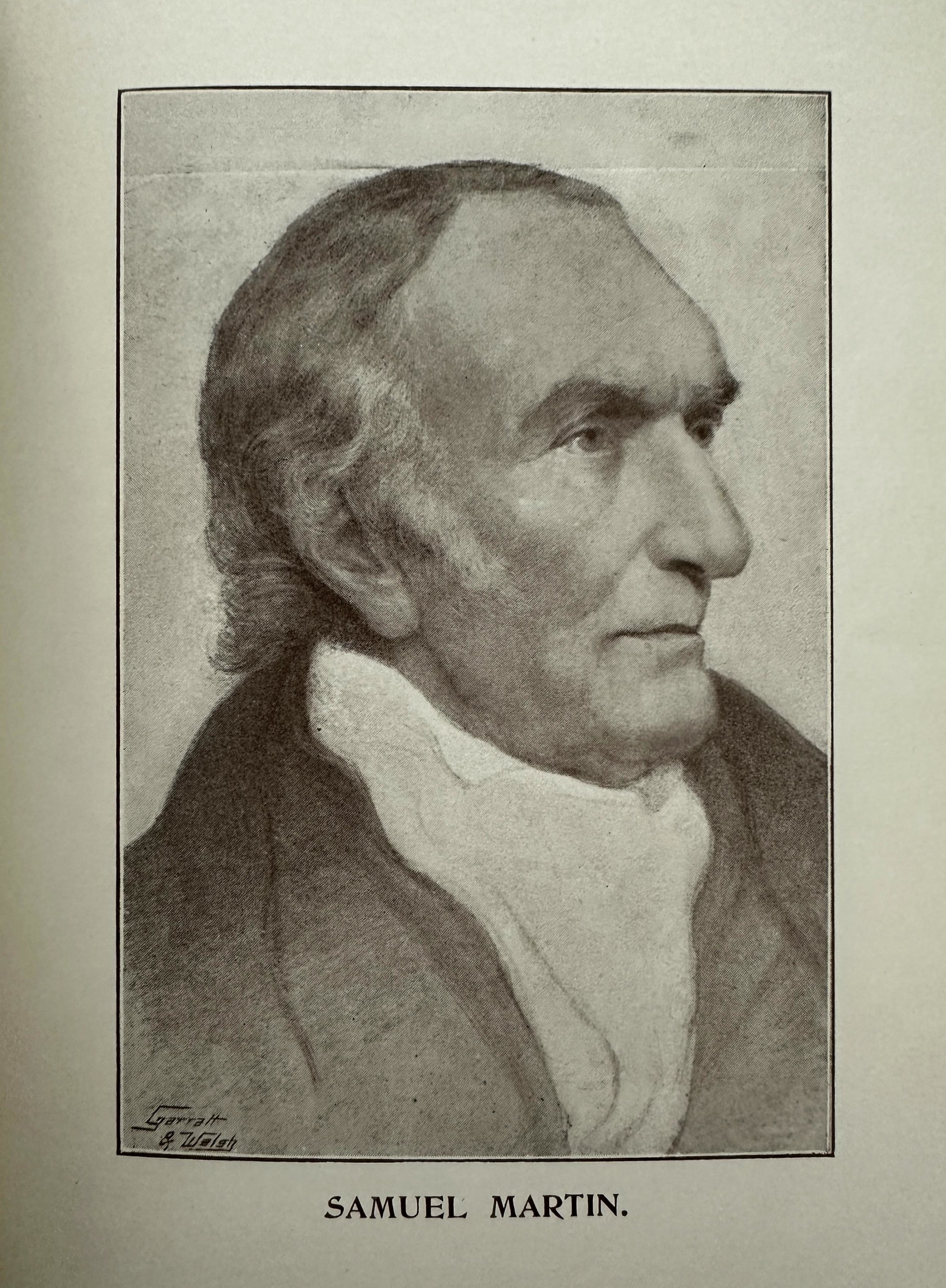
It may be conjectured that gradually M‘Kie’s tact and faithful discharge of all permitted duties as a pastor, won upon many of Macmillan’s own adherents, and helped to bring about his final removal. In any case, the year 1729 saw the rightful minister established in the little manse. He was its last occupant, for a new one was erected in 1764 at his death. Of this last, only a small part still remains, marking the spot where his successors, Blenchell, Martin, and Morison, spent their brief pastorates.
M‘Kie had thus been nineteen years ordained to the ministry in Balmaghie before he got possession of the keys of the Church. Providence now hastened to make amends to a truly faithful and good man. He was permitted to enjoy from this date thirty-four peaceful, busy, and useful years as undisputed shepherd of the flock. The real kindliness of the people appeared in the fact that they rallied round him as soon as disturbing causes were removed. They saw that he was no hireling, but a devoted servant of Christ’s people. And so, although occasional irregularities (such as the well-known incident of the “Twice-Christened Bairn”) occurred, his ministry now went on as smoothly as the Dee water flows along its wide channel. Death also played its part in healing the once bitter wounds and divisions of the parish. Macmillan’s chief supporters, one by one, lay down in the kirkyard. We can read some names there, which belonged to men who had raised their hands in anger against the quiet, gentle minister who at last performed their obsequies. William Murdoch, who led the glebe riot in 1713, lies
“The House of Rimmon.” 73
in an obscure corner, all his fiery passions for ever stilled. Long ere this, he has doubtless been reconciled to the man whom he then reviled and assaulted. It is indeed strange and instructive to read the names on the impassive stones of men who once lived so strenuous a life in their little sphere. As we muse on them and their story, we recognise thankfully that all our parochial quarrels and divisions have one sure end and issue—in this peaceful kirkyard.
“Their hatred and their love is lost,
Their envy buried in the dust;
They have no share in all that’s done
Beneath the circuit of the sun.*
Of M‘Kie’s actual ministry, we possess no detailed records, but a very slight effort of imagination may help to fill the blank. It is just the most useful Christian work which is least likely to be trumpeted forth in history. The parish under his thoughtful and loving care was quiet, but far from drowsy. M‘Kie’s epitaph forbids us to suppose that. It shews in every line of the quaint verses, that he had earned the priceless character of being a just man, a man of God, and even a saint. There is a peculiar fragrance and grace in the opening reference to his memory, compared as it is to the perfume of “new-blown roses sweet.” Not here alone, but on several other stones, this simple yet beautiful comparison will be found. I have long had a theory about this too—that Balmaghie kirkyard once† abounded in fragrant rose-bushes, although now hardly one blooms on its green mounds. Let us merely note, in passing, that the very next stone to M‘Kie’s
_____
* Paraphrase 15.
† There are still two or three small rosebushes left.
74 The Kirk above Dee Water.
stately monument, speaks of the “Summer’s Rose” and “its balmy gift.” And not far off, in a sheltered corner, we read of a Rose which “was pluck’t when scarcely grown.” No doubt, it is a trite and hackneyed simile, as beseems the homely muse of country folk. Yet it breathes a fine fragrance of gentle affection and regret. And there is something of refreshment to the mind in picturing these weather-stained epitaphs being carved by the workmen while roses bloomed and exhaled their tender essences all around.
I believe that this monument was erected by the parishioners, in which respect it seems to be unique. Never before or since, did the people of Balmaghie honour their pastor by raising a stone to his memory. We have indeed only just succeeded in wiping out a stain from the parochial character in this respect, by the erection of the simple cross which, after fifty-seven years, rescues the grave of James Henderson from “dark oblivion.” The fact is notable, and justifies us in believing, that every line of M‘Kie’s epitaph speaks the truth. His gentle, considerate, and faithful ways had plainly won for him the affection of his people. To them, he is the “much-lov’d Pastor,” whose venerable form they recall with mingled reverence and attachment. Concerning his fate, they have no doubt at all. He “is gone home”—he has been transported “to the shore of endless bliss”—he “left this for a better life,” so says the monument, and we for our part do not dream of doubting its statement. Concerning poor James Henderson, a man much misunderstood, stories reach me which indicate an inferior degree of certainty on this mysterious point. Galloway is ardent in its attachments,
“The House of Rimmon.” 75
and equally vehement in its dislikes. And few ministers have been more heartily disliked than he who lies side by side with M‘Kie. To-day, we simply note the strange irony which has laid so close together two men—one the most popular and the other the most unpopular, of the pastors of this parish.
M‘Kie had a numerous family, many of whom are interred beneath the flat stone at the foot of his monument. There, as we saw, lies his wife. There, too, Nathaniel M‘Kie, the humorous and eccentric minister of Crossmichael, reposes at his father’s side. Very likely, he made his last journey across the Dee Water, borne up by stalwart arms into this his family tomb. And two parish churches tolled their bells that day as he was laid to rest with the “much-lov’d” parent.
Ten years before M‘Kie went to a better life, his old rival and sometime supplanter, Macmillan, had been buried, with the reverence of a great multitude, at Dalserf in Lanarkshire. Though he was the greater man, I doubt if he was the better-loved of these two. One thing is certain, that eighty-six years were allowed to elapse before Macmillan’s splendid monument arose. Long ere 1839, the date imprinted on this memorial, loving hands had chiselled out the fine wreathed work on M‘Kie’s stone, and carefully traced the long and beautiful epitaph. This monument cannot have been erected later than 1794, since it was built into the east end of the old church then demolished. So here, as ever, love conquers all. M‘Kie had not the learning or commanding genius of Macmillan; but he had the gentle winning ways which set busy hands in motion to tend a loved one’s grave.
76 The Kirk above Dee Water.
When I compare these two men, who were Galloway men to their very marrow, I find in both the characteristic quality of determination, “the stalk of carle-hemp in man,” which flourishes in no Scottish province more powerfully than here. But the two men wore this quality with a difference. In Macmillan, it grew under incessant conflict into something like “dourness.” In M‘Kie, mollified by a temper naturally sweet and placid, it became simply the faculty of not growing weary in well-doing, the habit of steadily applying gentleness and patience to parochial irritations. And so, while I admire and revere Macmillan, I am moved to love M‘Kie even as his people did at last. And I lay here on his fragrant tomb my own slight garland of affectionate remembrance, for one who, through fifty-three years, fed his flock like a shepherd, among these green pastures and beside these still waters of his own beloved Dee.
“The House of Rimmon.” 77
NOTES TO CHAPTER VI.
Note 1.—NATHANIEL M‘KIE.—At the foot of the M‘Kie monument is a “thruch-stone” [“flat grave-covering stone”], containing the names of Mary Gordon his wife, and the following children—Robert, John, Grizel, Anna, Ebenezer, Captain George (died 1790), and Rev. Nathaniel M‘Kie, minister of Crossmichael (died 1781). This last was the eldest son, and is commemorated as follows:—
NATHANIEL M‘KIE’S EPITAPH.
He was kindly, and endowed with ministerial abilities, which he carefully cultivated, and zealously exerted in the service of his Divine Master. His virtues will long live in the memory of his friends.
Nathaniel M‘Kie got the present church at Crossmichael built in 1781. He was the maternal uncle of Lowe, author of the well-known poem, “Mary’s Dream.”
Note 2.—THE TWICE-CHRISTENED BAIRN.—The schism in Balmaghie in the time of Macmillan and M‘Kie caused some curious incidents. One of these is described in Nicholson’s Historical and Traditional Tales, 1843, page 61, under the heading of this note. As many of my readers do not possess Nicholson’s volume, I append a large extract from the paper in question:—
“While the tide of religious zeal was running thus high among the good folks of Balmaghie (with what praiseworthy and philosophical coolness they have often taken the matter since!) the farm of Ulioch, on the barony of Duchrae, at that time a part of the Castle-Stewart property, was occupied by David Charters and his wife Mary Glendinning. David bore the character of being at once an honest, a pious, and a most sagacious man; well to live in the world, come of the old creditable stock of the district—and as the reward of such a constellation of merits, could boast of being, at one and the same time, ‘ane elder o’ the kirk,’ and factor and baron-bailie of the barony of Duchrae. David, no doubt sensible of his own importance, had given way to a little ambition in his wooing days—for his wife designed herself of ‘gentle blude’—but as her father had incurred the displeasure of his family by first marrying,
78 The Kirk above Dee Water.
according to my authority, ‘a sweet, sonsy lass below his ain degree” [a sweet, pleasant, healthy-looking girl beneath his own social rank], and second, by renouncing the ‘ancient religion,’ Mary’s blude was the only thing of value which her husband might not have possessed, in any other decent man’s daughter, between the Rhonfoot and the Ross of Balmangan. Mary, however, retained no hankering after the faith of her paternal ancestors. On the contrary, though now the almost idolised wife of an elder of the Established Kirk, she in secret became a devoted sympathiser in the fate and doctrines of the still more rigid reformer, M‘Millan. It cannot now be ascertained after what fashion the bailie digested the non-conforming principles of his otherwise submissive wife; all that is known amounts to this—that as often as the bailie’s avocations led him from home, the old minister paid regular visits to the gudewife, who on safe occasions, failed not, in return, to attend upon his public ministrations. Matters had gone on in this manner for some time—the elder probably winking hard at what he could not effectually check, without a stretch of authority ill suited to the affectionate respect with which he uniformly treated his wife—when an event occurred which at once brought affairs to a crisis.
“It was in the month of May, 1712, that business obliged the bailie to pay a visit to Edinburgh, leaving his wife in a situation above all others the most interesting to a husband’s heart and hopes. Being detained longer than he had anticipated, his wife had been safely delivered of a daughter several days before his return. In the meantime, the old minister, anxious to produce a triumphant proof of his influence, if not over the elder himself, at least over his better half, succeeded in persuading her to take a step, of which, it may be safely concluded, she did not soon cease to repent, and which was followed by the almost immediate return of the bailie himself, wholly unconscious of what had taken place in his absence. It was late in the evening when he reached home, and the family had all retired to bed, except one man, who, it being Saturday at e’en, had lingered by the fireside, in expectation of his master’s return. ‘How’s a’ here, John?’ was the first hurried inquiry of the anxious bailie. ‘Ou, gaily,’ was John’s ready reply. ‘How’s yer mistress? Eh? Speak out, man.’ ‘Ou, gaily. She’s as weel as can be expectit.’ ‘What has she gotten? Eh? I say, speak out, man.’ ‘She’s gotten a sonsy lass wean,’* quoth John, wishing to put the best face on the matter—for, thus far, no son had crowned the bailie’s hopes. ‘Thank God even for a lass!’ exclaimed the affectionate husband;
_____
* [“‘Oh, fairly well,’ was John’s ready reply. ‘How is your wife? Eh? Speak out, man.’ ‘Oh, fairly well. She’s as well as can be expected.’ ‘What has she had? Eh? I say, speak out, man.’ ‘She’s had a fine healthy baby girl.’” ED.]
“The House of Rimmon.” 79
‘thank Heaven for a living mother and a living wean, even though it be a lass.’ So saying, he threw the reins from him, and hurried towards the door. ‘Stop a minute, gudeman,’ quoth John in a subdued kind of tone; ‘it may be as weel, before ye gang ony farther, that ye ken a’ about it.’ ‘Ken about what, John? What is’t ye mean, man?’ ‘Ou, naething ava,’ returned John, ‘only’—scratching his head—‘only, the minister has been here.’ ‘Is that a’ the mighty affair?’ rejoined the bailie. ‘What minister do ye mean, though?’ added he. ‘Mr M‘Kie, I hope?’ ‘Na, gudeman,’ quoth John, ‘it was not Mr M‘Kie’—and again he came to a dead set. ‘It was Mr M‘Millan, then?’ said the bailie. John said nothing, but hung his head. ‘I aye thought ye a man o’ sense,’ exclaimed the alarmed elder, ‘until this blessed night, John. Tell me what means a’ this will-a-wearin’? Isna Mr M‘Millan still a dispenser o’ Christian mercies to ithers, although he bena ony langer such to me?’ ‘When ye ken a’ aboot it,’ quoth John, in a dry, careless manner, ‘ye’ll maybe think him liberal eneugh o’ his dispensations. He has christened yer ain wean, in yer absence, and, I’m opining, without sae muckle as speirin’ yer leave.’ The bailie was dumbfounded at this piece of intelligence. At length, finding utterance, he exclaimed—‘That’s a different thing, John—clean a different thing altogether, that! How durst he presume to do this, an’ me an elder o’ the Kirk o’ Scotland?’ ‘Oh, that’s clean a different thing, gudeman,’ returned the imperturbable John, ‘and a question only for yourself to answer; but christened the wean he has, this forenoon in my presence, as well as in that o’ sindry ithers—this muckle ye may rely on, ony how.’ ‘Aweel, aweel,’ soliloquised the considerate bailie, ‘this is a matter that requires management, and canny, judicious management, too. In the meantime, John, as soon as ye hae putten up the beast, ye can gang to yer bed, and tak a nap; and as soon as ye rise in the morning, step down to Mr M‘Kie’s, and, wi’ my compliments, say to him that he maun come up and tak’ his kail wi’ me to-morrow, gin the thing be at a’ within the compass o’ his power. But, John, I had amaist forgotten; what name hae they gien the bit thing?’ ‘They ca’d it Ann,’ quoth John. ‘Ann,’ repeated the bailie, with emphasis.
The fond couple met mutually embarrassed. The wife dreaded the effects of her imprudence, although as yet uncertain whether her husband was aware of it; but not a word on the subject was
_____
* [“Stop a minute, master,” said John in a subdued tone; “it may be as well, before you go any further, that you know all about it.”
“Know about what, John? What do you mean, man?”
“Oh, nothing at all,” returned John, “only”—scratching his head—“only, the minister has been here.”
“Is that all the mighty affair?” replied the bailie. “What minister do you mean, though? Mr. M‘Kie, I hope?”
“No, master,” said John, “it was not Mr. M‘Kie”—and again he came to a full stop.
“It was Mr. M‘Millan, then?” said the bailie.
John said nothing, but hung his head.
“I always thought you a man of sense,” cried the alarmed elder, “until this blessed night, John. Tell me what all this shilly-shallying means. Is not Mr. M‘Millan still a dispenser of Christian mercies to others, although he is no longer such to me?”
“When you know all about it,” said John dryly, “you may perhaps think him liberal enough with his dispensations. He has baptized your own child, in your absence, and, I think, without so much as asking your leave.” ED.]
80 The Kirk above Dee Water.
mentioned by either party. Next morning the gudeman proposed, as a befitting thing, that Mr M‘Kie should be sent for to baptise the child. The poor woman trembled, but said nothing. The minister dropped in about kail time, as if by accident; a short communing took place between him and his elder; their resolution was speedily taken, and the child christened again under the name of Agnes. The affair of the twice-christened bairn afforded much mirth to the neighbours; but it marred not the harmony of the worthy couple, for a word in relation to it never passed between them to their dying day.
“Many and oft have been the times, when the above particulars have been related, in the garrulous spirit of extreme old age, by the doubly sealed Christian herself, to HER GRANDSON.”
[Illustration: SAMUEL MARTIN.]