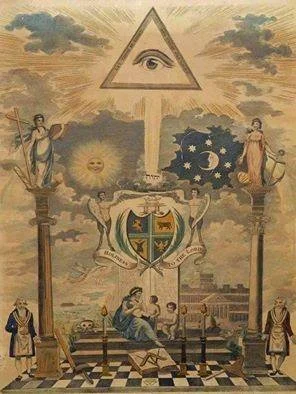
Secret Societies
James Dodson
United Presbyterian Tracts, No. 24.
SECRET SOCIETIES.
The Relation and Duty of the Church and her Members toward them.
[by Dr. James G. Carson]
[Pittsburgh: United Presbyterian Board of Publication]
[1900]
It is proposed to establish the truth of the following proposition, viz: “That associations formed for political, benevolent or other purposes, which impose upon their members an oath of secrecy, or an obligation to obey a code of unknown laws are inconsistent with the genius and spirit of Christianity, and church members ought not to have fellowship with them.”
This declaration contains a statement of principle, and an inference from it: the latter following as an irresistible consequence from the former: for if we can show that these associations in spirit and
[Page 2]
workings, are inconsistent with those principles of God’s word, which Christians universally recognize as of paramount obligation, then it will follow that members of the church—not of this or that one, but of every church, ought not to have fellowship with them. And if Christians can but be convinced of the sinfulness of their connection with such associations, and be persuaded to sever or keep aloof from all such connection; if the church of God would but use her influence and lift up her testimony against this great and growing evil of secretism, the power of these societies, for evil, would be so weakened as to excite little alarm. And on the other hand, the presence of church members in them, and the silent indifference or active encouragement of the church of God regarding them, is that which gives them respectability and constitutes the chief part of their strength, just as formerly was the case with slavery in this land.
The church cannot afford to occupy a neutral, much less a friendly position
[Page 3]
towards them; for, if they belong to the “unfruitful works of darkness,” as I think can easily be shown, then she is bound not only “to have no fellowship with them, but rather to reprove them.” If, as I think will be evident as we proceed, they belong to the world that lieth in the wicked one—the god of this world—then they are the enemies of Christ and his kingdom, from which she is bound to maintain a complete separation, and with which she must wage an uncompromising war. And what is the duty of the church is the duty of individual Christians.
The question is one of intensely practical importance, and nothing can be more amazing than the apparent apathy and indifference of the churches generally on this subject, as formerly on the subject of slavery, unless it be the impudence and arrogance of these societies in claiming recognition and encouragement and at the same time resisting and bitterly resenting all investigation and judgment of the character and truth of these claims. Indeed the very
[Page 4]
attempt to screen themselves from public observation, and honest, candid investigation, is itself a confession of weakness and is the old cry of the demons, to which the enemies of Christ and truth have always resorted to stifle inquiry, saying, “Let us alone, what have we to do with thee, thou Jesus of Nazareth?” But despite all these attempts by ridicule, defamation, and even persecution and violence to stop our mouths, we claim the right in the name of the Master, and are bound in faithfulness to Him—and to this point it must come sooner or later with all the churches, to inquire, “Art thou for us, or for our enemies?”—“to try the spirits whether they are of God.”
Now, in the pursuit of this inquiry it is not necessary for us to become members of these societies, or to pry into what they call their secrets in order to ascertain their true character. We need only to examine the principles which confessedly underlie their organization, and the character and tendency of their legitimate workings, and
[Page 5]
show that these are inconsistent with the principles laid down in the word of God. “To the law and to the testimony if they speak not according to this word it is because there is no light in them.” Nor is it necessary to deny that there is anything good in these associations, or to assert that all of them are equally bad. But if on the whole they are evil in their tendency and workings; if there are some things necessarily belonging to all of them which are wrong and sinful; if connection with any of them involves the Christian in acts of at least doubtful propriety, and closes his mouth against the acknowledged evils of the more dangerous societies, then we are warranted in drawing the conclusion that Christians ought not to have fellowship with them; and if I shall succeed in persuading a single one of my fellow Christians, who have become entangled in the snare of unholy conformity, to break that connection, or prevent any one from becoming involved in such connection, I shall feel amply rewarded. I appeal to your understanding, not to your prejudices; to your reason and conscience, not to your passions. “I speak as unto wise men, judge ye what I say.”
[Page 6]
I. PRINCIPLES OF THE ORGANIZATION.
1st. The first reason I would offer why these associations are inconsistent with the genius and spirit of Christianity, is that they constitute an artificial relation of fraternity or brotherhood, the obligations of which are inconsistent with the duties we owe to our fellow men in those relations which God has established and in which he has placed us.
God has instituted the brotherhoods of man or society, of the family, and of the church. These have their foundations either in the nature of man, or in his relation to God through Christ. The obligations of these relations, the family, the church, and the state, are divinely imposed; are neither arbitrary nor voluntary; which can neither be assumed nor laid aside at pleasure. Every one is born into the family, and into society, and even when joining the church (as we express it), although in one sense a voluntary act, yet he thereby merely recognizes and acknowledges those obligations which every one owes to his God and Saviour. These relations being thus divinely appointed and regulated, are designed and adapted to move on together
[Page 7]
and co-operate harmoniously like the planets of the solar system in their several spheres, their duties and obligations neither interfering nor conflicting with each other.
But it is not so with these associations. The relation of fraternity which they form is a purely artificial one, having its foundation neither in nature nor in grace. Certainly it is not of Divine institution, and cannot be referred to any of those natural or gracious relations which he has instituted, the duties and obligations of which are imposed by purely human authority, self-assumed and self-imposed. Hence arises, and must necessarily arise, discord, corruption, conflict, just as if a new planet were introduced into the solar system by some other power than that of God.
Here is a relation, a brotherhood, whose tie cuts right across all other relations, enters the family, interfering between parents and children, husband and wife, brothers and sisters; enters society, interferes with its various relations both civil and social; enters the church, coming between pastor and people, and between members of the same church, often producing alienation and distrust if not positive discord and conflict. It is in vain to say that membership in these societies need not conflict
[Page 8]
with a man’s duty in his other relations. In the very nature of things they must conflict, and as a matter of fact we all know and see that they do conflict in multitudes of instances; and when the obligation of these societies is regarded at all it becomes necessarily paramount to all others. Instances might be given illustrating this in the family (as at funerals), in the state (as in the case of judge and juries), and in the church (as between pastors and people.)
To this principle our Lord refers when he charges the Pharisees with making void the law of God by their traditions. They had invented an artificial relation with its appropriate sign, or pass-word, by which they undertook to set aside the obligation of children to their parents. The law of God said, Honor thy father and mother, and whosoever hateth father and mother let him die the death; but ye say, “If a man shall say to his father or mother, Corban, that is to say, it is a gift by whatsoever thou miightieste profited by me, he shall be free; making the word of God of none effect by your traditions.” Mark, 7:10–12. Precisely on the same principle do these associations come between those whom God hath joined together in the
[Page 9]
various relations of life, making distinctions where God has made none either in nature or grace; thus producing disturbance, unsettling confidence, and introducing suspicion, alienation, strife. Now, while it is improper for any one to enter a society which does or may conflict with the duties he owes to his fellow men in the other relations of life, it is especially wrong and inconsistent for a Christian to do so. The very principle on which these societies are organized is that of caste, and their obligation requires them to help each other in preference to all outside, no matter how closely connected these outside ones may be otherwise. I do not say that this obligation is always regarded as paramount, but I do know that this principle of favoritism belongs to all these associations, is avowed by them, and urged, indeed, as one of the most powerful inducements for members to join them, viz.: the superior advantages to be enjoyed in various ways from the patronage, support and assistance of their fellow members to which they are all mutually pledged. I do know, also, that many regard their obligation in this light, and treat it as paramount to all others. A Presbyterian elder, when asked the question, if two men claimed his assistance
[Page 10]
equally needy, the one a Christian or fellow member of the church, and the other a fellow Mason, which he would feel bound to prefer, answered without hesitation, “The Mason.” Another stated, that if the claims of his mother and those of a brother Mason came in conflict he should feel bound to regard the latter before the former; and, indeed, this, as we have said, seems to be the natural and obvious meaning of this pledge of brotherhood and mutual help, if it have any obligation at all. The only way in which the Christian can maintain the integrity of his conscience between these conflicting claims is by treating this artificial obligation as a nullity. Now every one can see how a conscientious judge or juryman sworn to administer impartial justice between the parties brought before them would feel himself, to say the least, embarrassed by his relation to one of them as a member of the same fraternity. Has any one, much less a Christian, a right voluntarily to place himself in a relation the obligation of which he must either disregard and treat as a nullity, or else violate his obligation to his fellow men in the other relations in which God has placed him. Partiality, favoritism, the making of
[Page 11]
discriminations among men on the ground of fictitious or artificial distinctions which is the very essence of these associations, is just as unwarranted and inconsistent with the spirit of Christianity as the same partiality would be unjust and unwarrantable in a judge on the bench. James 2:1, 2: “My brethren, have not the faith of our Lord Jesus Christ, the Lord of glory, with respect of persons. For if there come into your assembly a man with a gold ring, in goodly apparel, and there come in also a poor man in vile raiment; and ye have respect to him that weareth the gay clothing, and say unto him: Sit thou here in a good place, and say to the poor, Stand thou there or sit here under my footstool, are ye not, then, partial in yourselves, and are become judges of evil thoughts, or as it ought to be rendered, ill-reasoning judges?” Therefore we say these associations, the very principle of whose organization requires their members to exercise this partiality towards their fellow members are inconsistent with the genius and spirit of Christianity.
2nd. The second reason why these associations are inconsistent with the genius of Christianity is because the obedience which they require of their members to their superiors
[Page 12]
is inconsistent with that supreme allegiance which every Christian has vowed and owes to Christ.
The spirit of these orders, whether religious or secular, is that of an unmitigated despotism, requiring an obedience which is implicit and unquestioning. This is seen most fully in the society of Jesuits, the prime qualification of whose members is an entire subjection of their will to that of their superiors; and although all these secret orders do not go to the same length as do these Jesuits, or even the Masons, yet their spirit and tendency is the same, and so far as they are allowed to exert their legitimate influence, the effect is to destroy all independence of thought, speech, or action on the part of their members and render them passive tools in the hands of their superiors or the orders they represent. This is symbolized in some of their ceremonies, inculcated in their lectures, and expressed in the subordination of the various degrees and in the high-sounding titles given to their officers—Masters—Grand Masters—Most Puissant Potentate, &c. Indeed, obedience to the Master is one of the cardinal virtues in their orders. And of their power to exact this obedience, when
[Page 13]
they deem it necessary, let the abduction and murder of Morgan bear witness; and also that intolerant spirit everywhere manifested by these orders which aims to fetter the freedom of speech and of the press, and which prevails to muzzle editors, publishers, and public speakers, and even the ministers of Jesus Christ, most of whom dare not utter their own convictions, and can hardly call their souls their own. Now, while any one who has any regard to his own manhood ought to scorn to place himself in subjection to any will or authority less than Divine, it is specially unworthy of the Christian, who as the Lord’s servant, is free from both the doctrine and commandments of men. “Ye are bought with a price, be ye not the servants of men.” “Call no man master, neither be ye called master, for one is your Master even Christ.” To Him every Christian owes and cheerfully acknowledges implicit subjection—entire and unreserved obedience. He only is worthy of it and entitled to it, because He is God; nor dare any Christian, on peril of treason to his Lord, acknowledge or promise subjection to any man or set of men only in the Lord. It is only so far as they represent the authority of Christ that
[Page 14]
we owe obedience to our superiors in the family, the state, or the church. Children are to obey their parents in the Lord for this is right. Wives are to be in subjection unto their husbands, as unto Christ. Citizens are to obey civil magistrates because they are ministers of God. The powers that be are ordained of God, and we owe this obedience not only for wrath, but also for conscience’ sake, because they represent the authority of God in all their lawful commands; and even in the church, Christians are under obligations to those who have the rule over them only in the Lord, that is, so far as they represent the authority of Christ; anything else than this is rank popery, culminating in the Jesuitical dogma of papal infallibility. Now it may be safely affirmed that the subjection which membership in these orders involves is worse, more inconsistent with Christian liberty, than popery itself, because the priest and the pope have some shadow of pretension for their claims to implicit subjection because they pretend to be the vicars of Christ and to represent his authority. But where in all these orders is there even a pretense of representing His authority? Where in all the word of God
[Page 15]
has he given them authority to command my obedience, and how can I, consistently with my supreme allegiance to him, voluntarily place myself in subjection to any such usurped authority, or promise any kind of obedience to it, when it is not and can not be obedience in the Lord? Surely Christians and Christian ministers especially, who ought to be so jealous even of their lawful superiors where their authority infringes upon or conflicts with that of Christ, must see that in joining these orders they are renouncing their allegiance to him, and promising subjection to those who neither pretend to represent the authority of Christ nor can ever claim obedience to any of their behests on the ground of that authority. “And no man can serve two masters, for either he will hate the one and love the other, or else he will hold to the one and despise the other.” If there were no other reason than this one, it is sufficient of itself, one would think, to convince any conscientious Christian that these associations are inconsistent with the genius and spirit of Christianity.
3rd. Because the morality and benevolence which they inculcate and practice are selfish and partial, and so inconsistent with
[Page 16]
the genius and spirit of Christ, and ought not to be encouraged or patronized by Christians. The whole system from beginning to end is just a system of organized selfishness. Instead of being governed by that royal law of Christ: “As ye would that man should do unto you, do ye even so unto them,” the Christian in these societies finds himself restricted and narrowed down to this miserable law of selfishness: Do to others as you expect them to do to you; which is the rule and limit both of their morality and benevolence, so called.
(1.) Their morality is selfish and partial, although the professions which some of these societies make of being the special patrons and teachers of morality, may at first sight appear plausible, yet when we come to inquire into the principle which underlies their so-called morality, it will be found nothing more than a species of a personal honor—a somewhat extended kind of selfishness. It is true, they inculcate friendship, love, and truth, and oblige their members to abstain from injustice, wrong or injury. But to what extent? Toward all men? O, no! only toward their fellow members,—and why even toward them? Because the one is right and the other
[Page 17]
wrong? that is, required or forbidden by the law of God, the only standard of true morality? O, no! for this would require them to make the obligation universal and extend it to all men, which would destroy their very character as exclusive mutual aid societies. Take for illustration the Masonic fraternity. The obligation of this order requires its members to act honestly and uprightly towards their fellow members, and to abstain from injury towards them or their wives or sisters. This implies a license to act otherwise towards all others; that is to say, if they are restrained from acting unjustly towards others, it is from some other principle than their Masonic obligation; such injustice and immorality does not affect their standing in the order, nor is it considered or treated as a breach of Masonic obligation. The most dishonest and immoral men can and do maintain their standing in the order, provided their offenses are not against Masonic law. What is this but a species of worldly honor, and no more deserves the name of morality than that honesty which may be found among thieves and banditti.
That I do not overstate this matter let me refer to an instance that I have seen
[Page 18]
quoted by their own writers as an illustration of the superior excellence and advantage of the Masonic obligation; and many similar instances might be given from our own rebellion and the Sepoy rebellion in India. A pirate captured a vessel and murdered all its inmates except two, who were Masons as he was. Here was one who considered his obligations of Masonic morality limited to his own order, and whose multiplied crimes of fiendish cruelty did not affect his standing as a Mason, so long as he refrained from injuring his fellow Masons. Is it not worse than a misnomer to call such conduct by the name of morality, or to compare it for a moment with that universal honesty and integrity of character and conduct which the gospel of Christ not only teaches, but produces? “Teaching us to deny ungodliness and worldly lusts and live soberly, righteously, and godly, in this present evil world,” the disregard of which in regard to the poorest and humblest human being, would not only, if known, affect the Christian standing of the most eminent minister or member of the church, but would destroy the reputation and standing of any church which should tolerate such an one in its membership for an hour. And yet, I repeat, this
[Page 19]
is the extent of the morality which the Masonic order, as such, (and the same is true, to a certain extent, of the others,) inculcates and enforces—simply and solely the morality of selfishness. How degrading to, and unworthy of, the Christian to lend the sanction of his name and influence to any such caricature and fraud, by which thousands are deluded into the thought and belief, that with such false and spurious morality as their religion they can be as good Christians as church members, and fitted at death for entrance into heaven, or the Grand Lodge above. Surely Christians instead of having any fellowship with, ought to expose and testify against all such miserable pretences as dishonoring to Christ and ruinous to the souls of men. The same substantially may be said of their—
(2.) Benevolence; which like their morality is both partial and selfish. Many of these associations claim to be benevolent and charitable, even above the church; and there are some Christians who are base enough and silly enough to echo their claims, not only inside, but outside of these orders. Now, whatever may be said of the short-comings, in this respect, of individual members, or even of the church, yet we
[Page 20]
dare affirm that the only true charity and benevolence that is found in the world, and even in these orders themselves, is due to the presence and influence of the Christian religion, and that what goes under the name of benevolence as inculcated and received by these associations, is not worthy to be compared to that large-hearted and universal philanthropy, and active benevolence which Christianity not only teaches but produces in all who embrace its doctrines.
(a.) Their benevolence is limited to their own members. It not only begins but it ends at home. The difference between it and true Christian benevolence may be seen in the parable of the good Samaritan. While the priest and the Levite who found the man that had fallen among thieves, passed by on the other side, because he did not belong to their order, the good Samaritan stopped to ask no questions, but recognizing a brother’s claim on his sympathy in the distress of a stranger or even an enemy, he “bound up his wounds, pouring in oil and wine, and set him on his own beast, carried him to an inn and took care of him.” And the injunction with which our Lord closes the parable, “Go thou and do likewise,” stands on
[Page 21]
record as a withering rebuke to that narrow-minded selfishness which stops to ask, “Who is my neighbor,” and makes the world-wide difference between true Christian beneficence and that charity falsely so called which is confined to a particular order or caste.
Even this limitation, however, would not be so blameworthy if the doors of these orders were, like those of the church, opened wide for the admission of all classes. But it is not so. Most of them exclude women, minors, the aged, the poor, lame, halt and blind, those who are not able to pay their dues, or have no visible means of support, the very classes that are likely to become objects of charity; and when those who are members cease to pay their dues, even though unable to do so, they forfeit their claim on the assistance of the order at the very time when they most need it. Thus their boasted benevolence, limited as it is to their own members, dwindles down into a simple re-payment of what has already been paid for, like any other insurance policy, and that at a very dear rate of premium. An examination of their own reports will show, that while the larger proportion of the vast incomes of some of
[Page 22]
these orders is expended in mere pomp and show, it is a comparatively trifling amount that goes to the relief of the needy and suffering. The amount expended by one of the smaller branches of the church in this land for really benevolent objects far exceeds that of the strongest and wealthiest of these orders. So that the assertion that the benevolence of these orders excels that of the church is a false and a base slander.
(b.) Let it be remembered, also, that whatever is done by the members of these societies, even Christian members, redounds to the credit of the order and not to Christ. While the church of God teaches as the law of her Head, the duty of doing good to all men as we have opportunity, and actually exercises through her membership all the benevolence worthy of the name that aims to bless and elevate suffering humanity; yet all the honor of it is cheerfully ascribed to Christ, and not to any man or organization. Our Lord said to his disciples, “When thou doest alms, do not sound a trumpet before thee as the hypocrites do, in the synagogues and in the streets, that they may be seen of men: Verily, I say unto you, they have their reward.” This is just what these societies
[Page 23]
do, and doubtless this is one reason why we hear so much more of their benevolence just because the end and object of it is self-glorification. How can a Christian consistently lend his countenance and name to that which detracts from the glory of his Master, and seeks the praise of men and not of God.
(c.) Moreover, in the day of final reckoning only those good deeds that are done in the name of Christ and for his sake will be regarded as worthy of mention. And measured by this standard, love to Christ and to our fellow men for his sake, all the boasted charity of these orders will be cast out as spurious and worthless, being nothing more than a species of selfishness: “Inasmuch as ye did it not to one of the least of these my brethren, ye did it not to me.” Thus the whole influence of these associations, as combinations for selfish purposes, in their selfish morality and selfish benevolence, serves to foster and strengthen this principle of evil in the individual and in society, and so instead of assisting the church it opposes an ever increasing barrier to the influence of Christianity through the church and upon the
[Page 24]
world at large. For this reason then Christians should have no fellowship with them.
4th. Fellowship with these societies is inconsistent with that separation from the world which is essential to the Christian character. This is of itself sufficient and conclusive reason why Christians should not have connection with them. That these societies belong to the world will hardly be disputed. They cannot claim, they will hardly pretend to be of Divine institution; their origin is in the world; the principles of their organization are of the world; their morality and benevolence are worldly; their aims and ends are worldly and selfish, and their membership is largely, and we may safely say predominantly, from the world, composed of all sorts, men of all religions and of no religion at all; Jews and Gentiles, Greeks, Mohammedans, pagans, infidels, ungodly and wicked men in equally good standing with Christians or ministers of the Gospel. Now, there is nothing more plainly revealed in the word of God than this, that the world which lieth in the wicked one is the great enemy of Christ, and that whosoever is the friend of the world is the enemy of God. There
[Page 25]
is no duty more frequently insisted on in the Bible than that of Christians maintaining a complete and universal separation from the world. In the language of Mr. Moody, “With the Bible open before me I can not see what right any child of God has to go and yoke himself with unbelievers in business or in secret societies, or in any other society. If you say it is to do good, you can do more good without them than you can possibly do by identifying yourself with them; Abraham had more influence over Sodom away up in Hebron than Lot had there in Sodom.” This is strong language, but is it not true? The people of Israel were expressly forbidden to make covenants of peace and friendship, or enter into any alliance whether by marriage with the surrounding nations, and nothing was a more fruitful source of corruption and consequent calamity to that nation than the neglect or disregard of this prohibition. The same principle applies to the church of God to-day. The command, “Be not unequally yoked together with unbelievers” has reference not merely, nor even principally to the marriage relation. But from the reasons assigned it is evident that the injunction applies with
[Page 26]
special force to just such associations as these fraternities which bring together in the closest bonds of fellowship, friendship and even brotherhood, Christian and infidel, believer and unbeliever, the friends and enemies of Christ: “For what fellowship hath righteousness with unrighteousness, and what communion hath light with darkness? and what concord hath Christ with Belial? or what part hath he that believeth with an infidel? and what agreement hath the temple of God with idols: for ye are the temple of the living God.” Language could not more strongly impress the relation and duty of the church and its members towards these secret societies. While we are not prohibited from all intercourse with men of the world in the affairs of business, or in those relations of civil society, in which God has placed us, yet neither with individuals nor associations are we at liberty to form covenants of friendship or brotherhood. The attitude of the church to the world is that of constant, uncompromising hostility, and the obligation on the church and its members to-day is just as strict and imperative as ever to maintain a complete and entire separation from it, both in order to preserve
[Page 27]
their freedom from its corrupting influences and to maintain a testimony against its evils. The voice of Christ, which is the voice of duty and the voice of wisdom, cries aloud to every Christian, “Come out from among them and be ye separate, and touch not the unclean thing.” “Have no fellowship with the unfruitful works of darkness but rather reprove them;” and only by obeying this voice by the way of requiring her members to abstain from all connection with these societies, can the church of Christ “keep herself unspotted from the world,” avoid compromise with its evils, and be free from its corrupting influences and its final condemnation.
Thus I have presented considerations which apply to all these associations, from the very principles of their organization, the force of which every Christian heart will feel and appreciate, and which to every candid mind must appear conclusive: “That these associations, whether formed for political or benevolent purposes, are in their very nature inconsistent with the genius and spirit of Christianity, and church members ought not to have fellowship with them.” I have dwelt thus long on this part of the subject because it occupies
[Page 28]
ground which I humbly conceive has not hitherto received the consideration which its importance demands, and because the considerations presented can be understood and appreciated as well as by those outside as by those inside of these orders.
II. THEIR SECRECY.
5th. Another reason why these associations are inconsistent with the genius of Christianity is because the secrecy which they affect, and to which they bind their members by promise or oath, is unnecessary and so unwarrantable, dangerous, and ensnaring to the conscience, and therefore utterly opposed to that openness and publicity which Christ enjoins on his disciples both by example and precept. “I ever spoke openly in the synagogues and in secret have I said nothing.” “Ye are the light of the world.” “Let your light so shine before men,” etc.
1. This secrecy is unnecessary for any good and lawful purpose. Let us carefully observe what secrecy is condemned and when. It is not denied that individuals, families and even societies may have secrets which they are not bound to disclose, but these are private or personal affairs with which the public has no concern. These,
[Page 29]
however, are not private but public associations, claiming public patronage and approval, extending their influence through all the ramifications of the community in which they exist, whether it be a college or society at large; and yet secrecy instead of being the exception is the rule; it is not an incidental but an essential element of their organization.
Nor do we deny that even public bodies, legislative or judicial, whether in church or state, may have private or secret meetings, the proceedings of which it is necessary and therefore lawful and right for good and sufficient reasons to keep secret. But this is a very different thing from being organized on the principle of secrecy, and no more justifies the charge of being secret societies than does the fact, that many of the meetings and proceedings of these associations are public, free them from that charge. We affirm that the secrecy which so universally characterizes these orders is not necessary for any good or lawful purpose where they have the protection of law.
We admit that when the prosecution of that which is good and right exposes to oppression and persecution and there is no
[Page 30]
protection from the law, then it may be necessary and proper to resort to secrecy for self-protection, as did the primitive Christians, the Covenanters of Scotland, and loyal leagues at the South during the rebellion. But when, as is the case at least in this country now, and as was true in the North during the war, every one can claim and enjoy the protection of law in the prosecution and accomplishment of every good and worthy object, there is absolutely no necessity for secrecy and it is therefore wrong. Truth and right under a free government never fear or need fear or shun the light; only that which is conscious of wrong doing seeks to hide itself in darkness. These individuals and societies which have objects in view that are condemned by law or public sentiment, such as the Ku-Klux Klan, the Jesuits, and others, are indeed under the necessity of resorting to secrecy. “He that doeth evil hateth the light, neither cometh to the light lest his deeds should be reproved; but he that doeth truth cometh to the light that his deeds may be manifest that they are wrought in God.” So that the very resort to secrecy is in itself suspicious, and presumptive evidence of something wrong which will
[Page 31]
not bear the light. What would be thought of a church or congregation of Christians organized on this principle? Would it not deservedly meet with universal suspicion and reprobation? Even when necessary, such secrecy is undesirable and fraught with many evils. We know how the secret meetings of the early Christians exposed them to undeserved, yet unavoidable obloquy and reproach, as being guilty of the most scandalous and horrible practices; and when the necessity no longer existed how promptly and joyfully they abandoned their secrecy and held their meetings in open day! An imperative necessity alone will justify such secrecy and only during the time such necessity exists. So that the plea that it is necessary to guard against imposition will not avail, seeing such necessity is not imperative, that is, there are other means of guarding against imposition which individuals and societies have employed and do employ with reasonable success without resorting to secrecy. Being therefore unnecessary for any good or lawful purpose:
2. It is unwarrantable for any one and especially for Christians. Christ has said: “Ye are the light of the world. No man”
[Page 32]
lighteth a candle and putteth it under a bushel or under a bed but on a candlestick and it giveth light to all that are in the house.”
Now, there are but two alternatives conceivable, either those things that are kept secret are good and valuable, important to be known, or they are wrong and sinful, or at best trifling and unimportant. In either case secrecy is unwarrantable. If they are wrong, if it be “a shame even to speak of those things that are done of them in secret,” as was the case with the secret societies in the Apostles’ day, and as no doubt is the case with some of them in our own day, such as their indecent and disgusting ceremonies of initiation and also many “hidden things of darkness,” which the great day alone will reveal, then there can be no question as to the Christian’s duty not only to have no “fellowship with the unfruitful works of darkness,” but rather reprove them by exposing them to the light as many good men have done and are doing, and that too, even though they had promised or sworn to keep them secret. In reference to these the Christian should say: “Oh, my soul come not thou unto their secret; unto their assembly mine honor be not thou united.” Even when
[Page 33]
the secrets are harmless and trifling, while at the same time they pretend to introduce the initiated to the knowledge of great and profound mysteries and valuable and important truths, the obligation of secrecy is unwarrantable for a Christian because it makes him a party to a stupendous fraud, and being deceived himself becomes the occasion and means of deceiving and misleading others.
But even on the most charitable supposition, viz: that these secrets are what some pretend, important and valuable, worth all the money paid for them, still the Christian may not promise to keep secrets which may be of benefit and advantage to his fellow men, in the face of the express command of the Master: “What I tell you in darkness that speak ye in light, and what ye hear in the ear that preach ye on the house tops.” “Let your light so shine before men,” &c. No man or set of men, much less a Christian, has a right to monopolize for their own benefit anything the knowledge of which would be of advantage to their fellow men. Even in reference to inventions in the useful arts, while the inventor has a right to a reasonable compensation for the fruit of his inventive genius, yet he has no right to confine the
[Page 34]
benefits to himself, nor after such reasonable compensation to deprive the public of the advantage of its knowledge by locking it up in a secret circle or combination. What would be thought of a teacher of science who should pledge all his scholars to secrecy as to the discoveries he had made and communicated to them? Indeed this is the great difference between the heathen and Christian civilization, as Wendell Phillips has well remarked in his lecture on the “Lost Arts.” While among ancient heathen nations all knowledge or learning in religion, science and the arts, was confined by strict secrecy to select circles, or classes, and so became lost to the world, when their families or classes became extinct, it is the glory of our Christian civilization that what is known to any individual becomes common property to all, and cannot be lost to the world; and what has produced this difference? Simply the teaching of the Author of Christianity, obliging his disciples to be light-bearers to the world, shining as lights in the world, dispensing to all whatever good or blessing they have received. “Freely ye have received, freely give.”
On any supposition, therefore, secrecy in a society which claims and deserves the
[Page 35]
patronage and encouragement of Christians is unwarrantable, and so inconsistent with the genius and spirit of Christianity. But further—
(3) Such secrecy is dangerous. While it is unnecessary and unwarrantable for any good purpose and those whose designs are open and fair will not resort to it, yet we know that those whose designs are sinister and selfish, and who are unscrupulous in the use of means for carrying them out, do find it necessary to cover them up with the veil of secrecy. And this gives them a great advantage not only over the public at large, but also over the honest and unsuspecting members of the society or association to which they belong. On this account it is that political parties can be preserved from becoming corrupt and mighty engines for evil in the hands of scheming demagogues only by subjecting them and their actions to the fullest and most open scrutiny by the public press. On this account it was that the society called Jesuits became so dangerous wherever it was allowed to exist and has been repeatedly suppressed in several countries of Europe, because it became dangerous to the interest of society and the state. Even the church of God if it should adopt the principle of
[Page 36]
secrecy would undoubtedly in a few years become corrupt and subject to the control of unscrupulous and designing men who could wield the influence of the whole body for the accomplishment of personal, selfish ends. As long as human nature remains as it is, any society, it matters not how good and laudable its object, nor how upright and sincere the intentions of its founders, if organized on the principle of secrecy, will necessarily fall into the hands and under the control of evil-minded, selfish men, who contrive, sooner or later, to obtain the monopoly of the highest offices and places of honor and power, and so are able to make use of the resources of the whole order for the accomplishment of their own selfish aims. This might be illustrated by the history of secret orders from the Jesuits down to the latest, and in some respects, most dangerous, the grange. The only security of liberty in the state, of truth and righteousness in the church, the only protection in any society which the many have against the tyranny, the dishonesty and oppression of the few, is by holding those entrusted with official power and influence to the strictest responsibility, requiring them to give frequent reports of themselves and
[Page 37]
their conduct, to the many. But this cannot be done in these secret orders, where the inevitable tendency is to contract the widest circle into an ever-narrowing serpentine coil till it reaches the innermost, central ring or clique, called the highest degree, which dominates all others and is itself accountable to none. The only wonder is that the press of our day, which is so jealous or sensitive to the dangers arising from secret rings or combinations in church or state, is so indifferent to the threatening aspect of this growing and deepening cloud of secretism, which at first no larger than a man’s hand, now darkens the whole political and moral heavens with its shadow. To us it seems like the fascination of some spell, which, like that of slavery, holds both church and state enchained, until the cloud bursts, as that did in this country, in storm and tempest on our heads. How is it possible that the ministers and members of the church of Christ, who are set as watchmen to give the alarm can without great guilt spare to cry aloud and lift up their voice of testimony like a trumpet against this great and growing evil, to show men their danger, much more lend the influence of their words and example by
[Page 38]
membership in their orders, to encourage and increase the evil?
(4) The obligation of secrecy, whether by promise or oath, is ensnaring to the conscience, and so contrary to the express command of God: “Thou shalt swear,”—and the same principle applies to a promise—“in truth, in judgment and in righteousness.” We are not now referring to the profane character of the oaths which some of these societies impose upon their members, and which will be considered in its place. The evil of the obligation of secrecy is the same whatever be the particular form of the obligation, whether by promise or oath. The Christian ought to be as circumspect in taking any obligation which binds his conscience as in taking an oath. Moreover, the obligation of an oath, if it is an unlawful one (as all these extra-judicial oaths are), is not a whit more binding or sacred than that of an unlawful promise. The addition of the oath is only an aggravation of the sin, involving as it does the guilt of profanity, without changing the principle or character of the obligation. This cannot be too frequently or plainly asserted, because the impression is general, that there is some kind of sacredness in the form of the oath administered,
[Page 39]
which becomes the more binding, the more solemn and awful the appeals and imprecations with which it is offered. So that those who disregard their obligations even when convinced of their unlawfulness are considered guilty of perjury. This is a great mistake, as may clearly be seen in the case of Herod, who rashly promised with an oath that he would give to the daughter of Herodias whatever she might ask. Who will say that Herod was bound by such an oath any more than if it had been simply a rash promise? The sin was in taking, not in breaking it. To have disregarded it was his duty; while to keep it involved him in the additional crime of murder without in the least diminishing the original guilt of his conduct, which was the same whether he kept or broke his oath or promise. The sin was in making it, and to keep it after he found that it involved him in doing wrong was only to add to the sin, not only by murder, but also by showing that he had more regard to his own word, or a false sense of honor, than he had to the authority of God. This furnishes a sufficient answer to the common sneer against those who have seceded from these orders and revealed their secrets, that
[Page 40]
they are dishonored and unworthy of belief, because either they say what is false, or are guilty of perjury in revealing what they have sworn to keep. It is not so. On the contrary, those who continue to regard the obligation of secrecy as binding, after they are convinced that it was unlawfully assumed in the first place, are the guilty parties in God’s sight, because, like Herod, they pay more respect to their own word, or rather their false notion of honor, than they do to the honor and authority of God’s law. It is the keeping, not the breaking of an unlawful oath, or promise, which is sinful in God’s sight. Why? Because the taking of it in the first place was the sin, and every moment of continuing it after the sinfulness of it is seen is just a constant repetition of that sin.
Thus the obligation of secrecy, or to obey a code of unknown laws, is ensnaring to the conscience whatever be the form of the obligation, whether by promise or oath, because the Christian is placing himself in a position where for aught he knows, he may be under the necessity of committing sin, either by doing that which he feels to be wrong in order to keep his word, or by violating his word or oath in order to avoid
[Page 41]
doing it, and no man has a right voluntarily to place himself in a position where he must choose between two moral evils. If such an obligation were attempted to be imposed upon us even by lawful authority, whether civil or ecclesiastical, we should resist it to the utmost of our power as an infringement on our rights of conscience which God has left free from the doctrines and commandments of men. How much more inexcusable is it for any of Christ’s people thus voluntarily to surrender the liberty they have in the Gospel, and without any constraint put their necks under this most grievous of all yokes of bondage.
But it may be said that every candidate before joining these orders is assured that his obligation will not conflict with his duty to his God, himself or his fellow men, and that we have the testimony of many good men that they have found this to be true. It is sufficient to reply to this that we have testimony of many men equally good, that they have found that the obligation does conflict with their duties, as Christians, and accordingly have thrown it off; and so the one testimony will offset, and more than offset the other—just as one positive will more than outweigh a hundred
[Page 42]
negatives. But even were it otherwise, were there no such conflicting testimony, yet the assurance of any man or number of men, unless they are infallible, cannot justify another in surrendering his own right of private judgment. “Every one must give account of himself to God,” and no one who is capable of judging for himself has a right to surrender his conscience any more than his understanding and his will to that of another, unless that other be infallible. Indeed this is the very essence of popery, which subjects the consciences of private members to the priests and of the whole church to the Pope. But as Protestants, we claim that each individual has a right, and is bound to judge for himself as to what is right and what is wrong according to the only infallible standard—the word of God. The injunction, “Prove all things,” is addressed to every individual, and no one can comply with it without having submitted what he is called to receive and obey, to the test of God’s word. In this matter we cannot, we dare not, rest our faith on the judgment, or say so of any man or set of men. They may assist us in arriving at a correct judgment as to whether any given action or thing is in
[Page 43]
accordance with the Divine will. But we repeat, no one who is capable of judging for himself can, without entangling his conscience or surrendering his liberty, accept and act upon the simple assurance of another as to what is right or wrong in any given case, unless he know beforehand and have an opportunity of judging for himself; so that any promise of secrecy, or obedience to a code of unknown laws is utterly inconsistent with the genius and spirit of Christianity, and no Christian who has any regard to the purity and liberty of his conscience can lawfully assume such obligation.
Thus we have shown that the secrecy that belongs to all these associations is—
(1necessary for any good purpose: (2.) Unwarrantable, incompatible with the character and position of Christ’s followers as lights in the world: (3.) Dangerous to the interests of society and the purity of the church; and (4.) Ensnaring to the conscience, and so incompatible with each one’s personal responsibility to God.
III. ANTI-CHRISTIAN AND PROFANE.
What we have hitherto said applies to all associations or fraternities which impose
[Page 44]
on their members a promise or oath of secrecy or an obligation to obey a code of unknown laws. The objection we come now to notice, applies with particular force to such societies as the Masonic fraternity which, however, is the mother and model of all of them. While some of them may not be liable to all the objections which we present under this head, yet inasmuch as they imitate many of its anti-Christian rites and ceremonies, they are so far conformed to their model, partake of its characteristics, and must share in its condemnation. Therefore, we say that these associations are inconsistent with the genius and spirit of Christianity, and church members ought not to have fellowship with them.
6th. Because the religion they profess to practice is anti-Christian, and many of their rites and ceremonies are shockingly profane.
That these societies have a religion is susceptible of demonstration, and is even admitted and exultingly claimed by their own writers and advocates. They have their religious rituals for different occasions, such as funerals, dedications, &c.,—call their buildings temples, that is, places of worship; they have their hymns, prayers, altars, priests, some of them even
[Page 45]
sacraments, and profess to prepare their members for the lodge above, meaning heaven. Now what is this religion? It must be either Christian or anti-Christian; it cannot be neutral or indifferent. That it is not Christian is evident, because the very name of Christ and everything distinctively Christian is studiously and of set purpose excluded from its authorized services. We say authorized services, because whatever may be the practice of particular individuals or lodges, different from what is prescribed in their manuals, whether written or oral, can no more be ascribed to the order, than the crime committed by individuals or lodges without the approval or sanction of the society can justly be charged to that society. Now, what is the religion taught in their manuals, and prescribed by the authority of these orders as such? We answer, simply bald deism. The God they worship, the Supreme Being whom they recognize is no more the Christian’s God, the Triune Jehovah, than he is the God of the Jews, Mohammedans, or pagans. He is an imaginary being in whose worship Jews, Mohammedans, infidels and pagans, those of the most opposite opinions and beliefs, all except Christians, can consistently unite. Indeed it is their pride and
[Page 46]
boast that in their temples and at their altars there is the utmost liberality, where all except Christians, can meet on a common level. They say, “except Christians,” because they leave out their peculiarities as Christians, and so cease, for the time to be Christians while officiating or participating in these Christless ceremonies where there is no mention of the name of Christ, no recognition of sin, of atonement, or reconciliation by blood, nothing but a kind of heathen morality and worldly benevolence which their members are taught to believe will commend them to God and procure them admission to heaven or the lodge above. Thus, in the language of the prophet Ezekiel, 43: 8 verse: “In their setting of their threshold by my thresholds, and their post by my posts, and their wall between me and them, they have even defiled my holy name by their abominations.” If, as is claimed in some of their degrees, there is anything introduced peculiar to Christianity, it is only by way of imitation or caricature, producing a kind of mongrel mixture of paganism, Judaism, and spurious Christianity, which like the religion of the colonists of Samaria is even worse than pure deism. This compromising of truth
[Page 47]
with error, of Christ with Belial, of the temple of God with idols, is the worst form of anti-Christ, and renders the religion of these societies near akin to popery, if indeed it is not even worse. How any minister, or member of the church of Jesus Christ can lend his countenance or encouragement to such a religion, even by his presence, much more by officiating, or taking part in such ceremonies, miscalled religion, so dishonoring to his Master and directly opposed to the very primary and fundamental principles of our holy religion, is, and must forever remain a most inexplicable mystery!
We have said that many of their rites and ceremonies are shockingly profane.
(1.) They profess the name of God by ascribing those titles to their officers which belong peculiarly to God and Christ, such as Most Excellent High Priest, Most Puissant Potentate, &c.
(2.) They profane the solemn ordinance of the oath, which is only properly observed when administered first by lawful authority, second on a lawful occasion, and thirdly for a lawful purpose, not one of which essential conditions can be found in the oaths which these societies presume to administer,
[Page 48]
as might be easily shown if space permitted.
(3.) They profane the Bible by perverting its meaning, and using the Book for purposes for which it was never intended. The employment of it as a symbol of Masonry, as an instrument to swear by, and carrying it in processions along with the sword of the civil magistrate can only be regarded as a superstitious, unwarranted and so profane use of that holy book. Their extracts and quotation from it in their lectures and elsewhere, are often garbled, mutilated, and most grossly perverted and profaned by leaving out the name of Jesus Christ wherever it occurs, and applying what has sole reference to him and his church, to their own orders. This can be easily verified by an examination of any of their authorized manuals.
Finally: The most sacred symbols of the Divine presence and divine worship are employed in such a way as can only be regarded as idolatrous and profane. Thus we find among the furniture of some of their lodges the ark of the covenant, the breastplate of judgment, Aaron’s rod that budded, the brazen serpent, the white stone, the altar of incense, and many others, which, where it was lawful to use them,
[Page 49]
were to be handled with the utmost reverence, and the imitation of which was forbidden under the most dreadful penalties; and yet which are now by these societies imitated, caricatured, and used for purposes for which they were never intended, with a blasphemy and profanity that is absolutely appalling. These things are done in their public processions, funerals, dedications and celebrations of various kinds, in the light of day, and in the face of the sun. Alas! that we should have to say it; with the silent consent or the active co-operation and unblushing approval of those bearing the name of Christians and even Christian ministers!!! And if these things are done in the green tree what may we suppose is done in the dry—in their secret conclaves, in their chambers of imagery where like those seen by the prophet Ezekiel, as recorded in the 8th chapter of his prophecy, they are found worshiping toward the east with their backs to the temple of God; i.e., worshiping the sun, and where, as we are gravely informed by some of their writers the worship of Tammuz and the Greek Adonis is revived under the name of Hiram Abiff! If a heathen temple were erected in our midst, alongside of our churches,
[Page 50]
with its sacrifices and ceremonies of idolatrous worship, it would excite such horror and indignation in a Christian community as would loudly clamor for its removal or destruction. But we have among us all over this Christian land, close beside our churches, built at vast expense, temples rivaling in splendor that of Solomon, where a worship is maintained as truly and really idolatrous as that of ancient Greece or Rome; and yet the churches of God are either indifferent spectators or active abettors! “Tell it not in Gath!” Is it any wonder that some of us feel, like Paul at Athens, our spirit stirred within us, to cry out with voice and pen against this great, growing idolatry, and especially to say to Christians, “Come out from among them and be ye separate and touch not the unclean thing.” “Have no fellowship with the unfruitful works of darkness, but rather reprove them.” “For what fellowship hath righteousness with unrighteousness? or what communion hath light with darkness; and what concord hath Christ with Belial; or what part hath he that believeth with an infidel; or what agreement hath the temple of God with idols?”
[Page 51]
Considering, therefore, the principles of selfishness which characterize all their organizations, their secrecy, and their anti-Christian and profane character are we not warranted in saying that they “are inconsistent with the genius and spirit of Christianity and church members ought not to have fellowship with them.”
[Publisher imprint page]
UNITED PRESBYTERIAN BOARD OF PUBLICATION,
55 NINTH ST., PITTSBURGH.