Instrumental Music in the Worship of God.
James Dodson
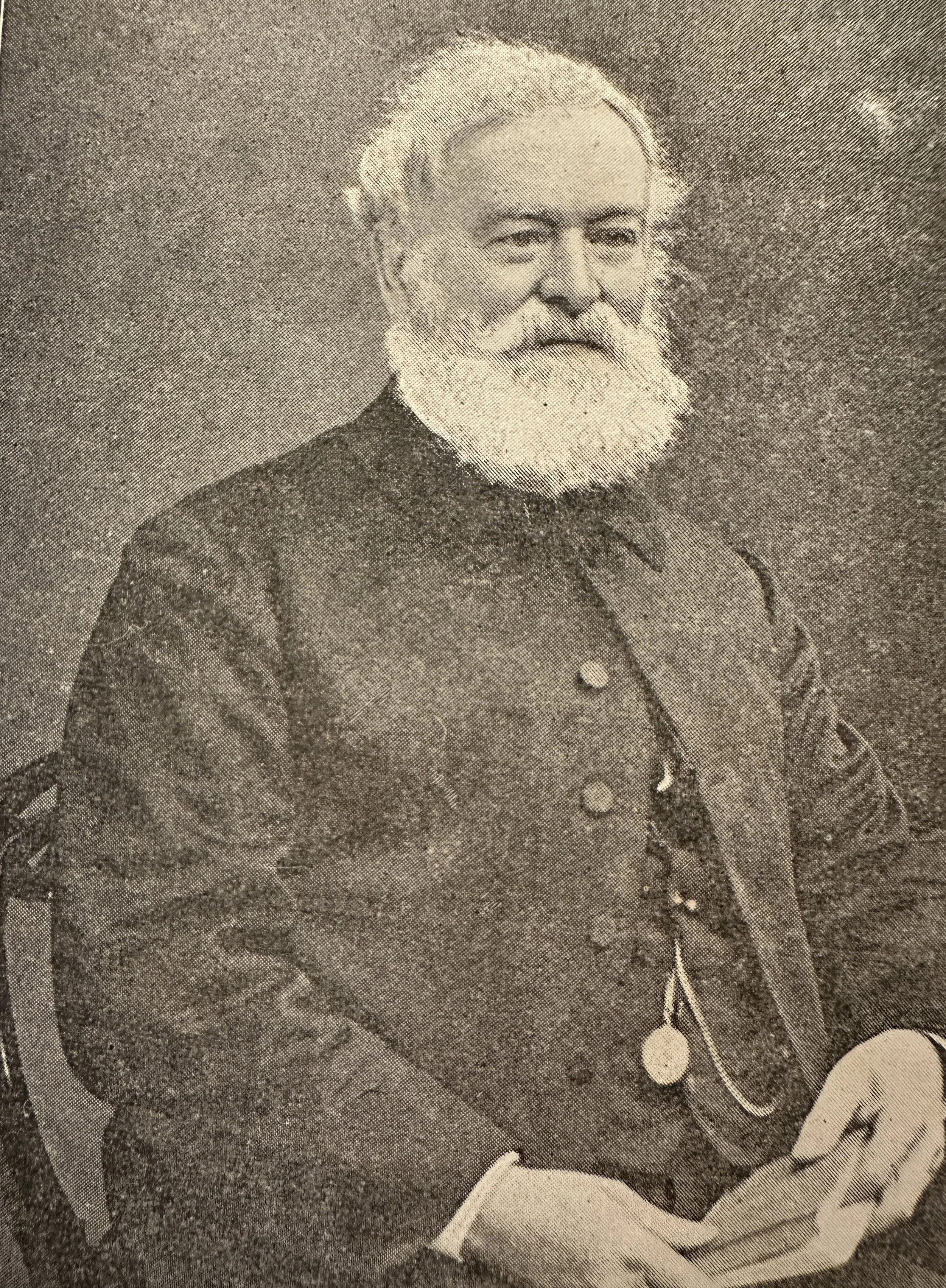
BY THE REV. R. NEVIN,
LONDONDERRY.
Londonderry:
PRINTED AT THE STANDARD STEAM PRINTING ESTABLISHMENT.
PRICE 2d, OR 12s 6d PER 100.
[Unnumbered text page]
INSTRUMENTAL MUSIC IN THE
WORSHIP OF GOD.
THE GRAND PRINCIPLE REGULATING CHRISTIAN WORSHIP was enunciated by the Saviour Himself, in His conversation with the woman of Samaria. “Believe me, the hour cometh, when ye shall neither in this mountain, nor yet at Jerusalem, worship the Father. Ye worship ye know not what: we know what we worship: for salvation is of the Jews. But the hour cometh, and now is, when the true worshippers shall worship the Father in spirit and in truth: for the Father seeketh such to worship him. God is a Spirit: and they that worship him must worship him in spirit and in truth.”—Jo. iv. 21–24. It has been strangely alleged that, in this, “Christ was not drawing a contrast between the worship of the Old Dispensation and that of the New,” but “between a false and formal worship on the one hand, and a true and spiritual on the other.” There were both formal and spiritual worship under the former Dispensation. There are both under the present. The Saviour is clearly comparing the state of matters that had been hitherto with what was to be thenceforth. Hitherto, in its most conspicuous exhibitions, it had been restricted to Jerusalem. It was to be so no longer. There is no doubt an implied comparison of false and formal worship with spiritual. But the comparison on the very surface, if language has any meaning, is that between the worship of the Mosaic Dispensation and the worship of the Christian. The word truth, in this connection, does not mean merely sincerity. Christian worship is to be “in spirit,” as distinguished from the “carnal ordinances” in which worship was enwrapped under the old economy. It is to be in the way of bringing into full light the “truth” that was veiled hitherto under shadows and figures of better things to come. “The law was given by Moses: the grace and the truth [that were in the law, but veiled] were by Jesus Christ.”* Paul expresses a similar idea, when he speaks of the Gospel Dispensation in the way of comparison, as “the ministration of the spirit,” and declares “even that which was made glorious had no glory in this respect, by reason of the glory that excelleth.”—2 Cor. iii. 8–10. One, indeed, tells us that he does “not think it becoming to designate the Mosaic ritual, as has been done, by the title of ‘weak and beggarly elements.’”
_____
* Jo. i. 17, literally rendered.
[Page 4]
The censure, if it light anywhere, must fall upon the great apostle of the Gentiles writing by inspiration.—See Gal. iv. 9. This, from an evangelical minister!
THE QUESTION
respecting the admissibility of musical instruments in Christian worship hinges upon another—Did they belong to the Dispensation that is “done away”? Either they did or they did not. If it be admitted that they did, there is an end of the controversy. If they did not, then the use of them is not only allowable, but positively a matter of moral obligation, and the Instrumentalists are guilty of a dereliction of duty in not insisting upon their use everywhere. This is a consideration overlooked by them, but which presents itself at every step and turn of the argument, and we shall certainly not lose sight of it. They may choose either horn of this dilemma—nay, they must; for there is no alternative—and on either they stand impaled, in the position they have assumed. The allegation, indeed, that the use of instruments did not belong to the former economy—“outside, though associated with, the ceremonial” of those times—is one that we must confess is incomprehensible to us. It is simply nonsense. Every thing belonged to it that was practised under it with Divine approval; and the only proper and legitimate question in the case is—Whether it belonged to it as a thing of merely temporary obligation, or as a thing of permanent and perpetual obligation.
THE PRINCIPLE OF THE INSTRUMENTALISTS
is—That what was practised with Divine approbation of old is still allowable, unless God Himself has recalled the authorization. Here again, be it observed, since they deny any recall, their principle must carry them beyond mere toleration, and make the use of instruments morally obligatory.
That their use in the worship of the Temple was commanded of God, through His prophets, David, Gad, and Nathan, is generally conceded on both sides, and we need not occupy space in adducing proof. But we are by no means disposed to admit so much that has been urged by Instrumentalists. There is no evidence that instruments were ever used in the worship of God before the time of David—none that they were so used afterwards in any place but the Temple. Moses and the men of Israel sang praises at the Red Sea. Miriam and the rest of the women, in addition to joining in the song, danced with sound of timbrel. The timbrel (toph) was not an instrument fitted, when used alone, to furnish any proper accompaniment to the music of song. It was employed merely to beat time to the dance. Saul met a company of prophets coming down from the high place, “with a psaltery, and a tabret, and a pipe, and a harp, before them.”—1 Sam. x. 5. Not a hint here of these instruments being used
[Page 5]
in worship. The prophets are not singing but prophesying. Nor are they playing on the instruments. These are carried “before them,” and played on doubtless by attendants. It is an instance of what has been denominated the inspirational use of the music of instruments, just as we read of Elisha, 2 Ki. iii. 15, that he said, “But now bring me a minstrel. And it came to pass, when the minstrel played, that the hand of the Lord came upon him.”
The principle is a dangerous one. What kind of recall of authorization is required? Must it be express? If so, the way is opened for a return to Judaism in no inconsiderable measure. Will inferential proof suffice? Then, we can adduce of that what ought to satisfy, whether it do so or not.
THE USE OF INSTRUMENTS WAS OF THE CEREMONIAL.
This is strenuously denied by the Instrumentalists; but, to say the very least of it, appearances are strongly against them. So far as we can judge from the page of inspiration, the practice had no place but in the Temple service. There is no evidence of it elsewhere. It is as certain as anything of the kind can well be, that it had no place in the worship of the Synagogue, although there was singing. This is admitted, even by those advocates of instruments who have thoroughly studied the matter. In the Temple service, and in the few instances where it is alluded to before the Temple was built, it was most closely and invariably conjoined with sacrifice. The persons employed in the service were all of the tribe of Levi, and restricted to that tribe. An attempt has been made to extract an argument on behalf of instruments from the fact that the singers and players were not priests, but the force of the fact that they must be Levites is all on the other side. The Levites were given to the priests to be their assistants in all the ministrations of the Sanctuary. At the dedication of the temple of Solomon “the trumpeters” (priests) “and the singers” (Levites) “were as one, to make one sound to be heard in praising and thanking the Lord.”—2 Chro. v. 13.
“We are justified,” says one, “in concluding from various passages in the First Book of Chronicles that the instrumental service had a prior existence in the ordinary devotional life of the people”—that is, prior to the time of David. We are not told, however, what these “various passages” are, nor is any attempt made to show that they imply any such thing. Until that is done, we are ‘justified in concluding’ that this is one of those generalized statements sometimes resorted to in controversy to cover the absence of something specific and really worthy of consideration, and which it is felt cannot be substantiated. There is, in fact, not a single passage that can be legitimately taken to justify the conclusion.
We are further informed that “the circumstance that instrumental music was introduced into the Sanctuary service so late
[Page 6]
as the time of David shews that it was no part of the Ceremonial system given by Moses.” A mere truism, amounting to no more than that what was introduced so late as David was not given by Moses. Does any one fancy that this has reasoning at all, or that it goes any length to justify the conclusion sought. “The circumstance,” however, does show two things—1. That there was Divine prescription for the use of instruments under the Old Economy; there was a law for it, call it positive, ceremonial, moral, or what you will. 2. That it was commanded then, and not till then, goes a long way to show that it had no prior existence in the ordinary devotional life of the people. But then we are told that “as it was not involved in the establishment of the system neither was it involved in its disestablishment.” “The ritual of Mount Sinai,” it is alleged, “was made perfect by Moses, and was not open to any addendum of after ages.” And this, it is fancied, is proved by quoting Deut. xii. 32—“What thing soever I command you, observe to do it: thou shalt not add thereto, nor diminish from it.” Here, be it observed, we have God’s own charge, addressed through Moses, to the people. They were not to add to or diminish. But is it to be conceived, without the most manifest impiety, that the Almighty precluded Himself from adding to or taking from, or that such a construction can be forced upon the text? The text, moreover, cannot be restricted in its reference to ceremonial precepts. It included moral precepts as well—“What thing soever I command you.” As regards the ceremonial system, it was, in the fulness of time, as we know, wholly abrogated; and while its obligation lasted, it was subject to additions by the authority of the Supreme Lawgiver, though not by any inferior authority. There were additions made to it after the time of Moses. The Temple of Solomon, and the service therein, were an advance in many points on the system established through Moses, just as the Mosaic system was an advance on the Patriarchal, which had been regulated by a law that was probably only traditional and unwritten. The use of musical instruments, as ordered by David under the guidance of inspiration, was an undeniable addition to the service as ordered by Moses, whether you call it ceremonial or not. We say it was.
INSTRUMENTAL MUSIC FORMED, IN POINT OF FACT, PART OF THE SYMBOLISM OF THE OLD DISPENSATION.
We put this proposition purposely in the very terms in which it has been denied. For the denial we find only assertion, not even the semblance of real proof. What we assert we mean to prove. One of the mildest and most accomplished of the Instrumentalists, indeed, has ventured upon the statement, that “the strained attempts which have been made to assign to it a sym-
[Page 7]
bolic character bring more damage than advantage to the cause on behalf of which they have been made. Its actual use is obvious to all: its symbolical use is undiscoverable by any, except those who object to its actual use.” The latter part of this statement is equivalent to telling us that the Instrumentalists cannot discover the symbolical use. And why can they not? Whether applicable to this case or not, it is a certain truth, that an eye blinded by prejudice cannot perceive what may be plain enough to others. There is a fallacious confounding here, moreover, of present use with past use. The question is not about its symbolical use now, but about its symbolical use under the Old Dispensation. Where, how, by whom, have the alleged strained attempts been made? What is the nature of the straining? Until these questions are answered, we are entitled to say of this, as of a statement previously quoted, that it is only a general allegation, incapable of being substantiated, and made to cover a felt deficiency in argument. If we may venture on the retort courteous, without giving offence, which is very far from being intended, we may say, that we have already adduced some instances of straining Scripture—and we shall have more of a similar kind to adduce in the sequel—from the very same hand that has framed this accusation. The fact is, the Instrumentalists can scarcely touch a Scripture text without putting a wrong construction on it. Surely we may say of these forced interpretations, with more of reason than it has been alleged of the mythical ‘strainings,’ that they bring more damage than advantage to the cause on behalf of which they have been made.
The typical and symbolical character of many things in the Old Dispensation can only be discovered by reason exercised in respect to congruity and the fitness of things. We cannot expect to find direct Scripture proof for the typical or symbolic character of every particular that is rightly deemed to have such character. As the sacrifice on the altar of burnt-offering typified the great Propitiation for sin, and symbolized spiritual offerings—as the incense on the golden altar typified the acceptance of the great Propitiation, and symbolized the acceptance, on the ground of that Propitiation, of the persons and services of believers—as the prayers of the Aaronic priesthood typified the intercession of our glorious Advocate, and symbolized the intercessions for each other of the spiritual priesthood in all ages—so, it is reasonable to conclude, that the instrumental music of the Temple service typified the glory accruing to Godhead from the work of Christ, and symbolized the spiritual praises of all who believe. Where is the ‘straining’ here? But in this case we can present two proofs drawn from Scripture, the force of which we think cannot be set aside.
The typical character of THE TWO SILVER TRUMPETS, which Moses
[Page 8]
made by Divine command—and these we take to have been the germ of the instrumental service as fully developed in Solomon’s Temple—is generally conceded, so that we need not wait to discuss it. At the Dedication, these were multiplied to 120. Now, when the “trumpeters and singers were as one, to make one sound to be heard in praising and thanking the Lord,” by what process of spiritual chemistry can we separate in the one sound, what issued from the trumpets so as to make it typical, from that which was produced by “cymbals and psalteries and harps,” so as to make the latter non-typical? If the one was typical, so was the other. The typical character of the trumpets was surely participated in by these other instruments, when they were making “one sound.” Our second proof is derived from
THE GOLDEN HARPS OF THE APOCALYPSE.
The more discreet among the Instrumentalists say little or nothing about these. But there are others who will rush in where the former class fear to tread, and who think they have made a good argument out of these. Their argument is, in brief, this—that, since the use of instruments was commanded under the law, and since it “is freely employed as descriptive of the devotions of the saints in the dispensation of glory” (literally?) it were passing strange if it were excluded from the dispensation which intervenes and unites these two. Let us examine this.
1. It is assumed that the description is intended to apply to the employments of the redeemed in the glorified state exclusively. A moment’s reflection might show that this, however common the notion may be, is simply a popular error. John seemed to himself in the prophetic trance to be taken up into heaven. Heaven, in this connection, means the locus of the visions, nothing more. In this view it has its own significance, which we need not take space here to explain. The visions seen there were symbolic representations, in the main, not of what takes place in the world of the glorified, but of what was to take place on earth and in time. John sees a throne, and round about it four living creatures and four and twenty elders. These, without entering into detail, are clearly the representatives of the Church on earth. They have “every one of them harps, and golden vials full of odours” (censers with incense).—Rev. v. 8. These latter are expressly interpreted to mean “the prayers of saints.” What saints? Not a select canonized few, employed in the glorified state in interceding for men on earth. No true Protestant will admit the idea. Saints, in New Testament language, is a name for all true believers, and prayer is the expression of imperfection, infirmity, want. The reader may begin to think we are yielding the point, but one short step or two more.
2. As the golden censers full of incense are thus seen by inspired interpretation
[Page 9]
to be symbolic of the prayers of God’s people, common consistency imperatively demands that we understand the harps to be symbolic of the praises of God’s people; and it matters not in this case if you extend the symbolism to the state of the glorified, it is but symbolism still.
3. This actually excludes the idea of literal instruments; for a symbol cannot, without the plainest absurdity, be taken as symbolic of itself.
4. This, further, justifies the conclusion, that the instrumental part of the Temple service of old was symbolic. With amazing simplicity the question has been put—“Is it to be imagined, then, that the feelings and proceedings of the saints” (Query, what saints?) “should be shadowed forth under the symbolism of a form of worship that had been for ever abolished?” Yes, of a verity, not only is it to be imagined, but it is to be received as an indubitable canon of interpretation in reference to the Apocalypse, that its imagery has been largely drawn from the abolished economy. Temple, altar, “Lamb as it had been slain,” incense, are all there. Would the symbolism be complete without the harps which had been so closely associated with these? Is there anything astonishing in this? Can a minister preach an evangelical sermon without using illustrations taken from that Dispensation which, being God-given, was made glorious, yet now has no glory, by reason of the glory that excelleth? If he can, he has accomplished what inspired apostles never attempted to do. Has the one who puts the question quoted above never himself read or repeated Paul’s words, “By Him therefore let us offer the sacrifice of praise to God continually?”
THE TRUE PRINCIPLE APPLICABLE TO THE CASE,
in opposition to that assumed by the Instrumentalists, may be stated thus—The Old Dispensation is abolished as a whole, and only that is of permanent obligation, or permanently allowable, which is recognised as such in the New Testament, either expressly, or by good and necessary consequence, or by approved exemplification. If specific recall be required in reference to details, where, we ask, is the line to be drawn? On the dangerous principle we oppose what could be said against having ornate erections in our houses of worship called altars? What against burning incense, or having lamps or candles, lit or unlit, as part of symbolic furnishing? The law of the Decalogue is recognised in the New Testament as of permanent and indefeasible obligation. So is the duty of singing of Psalms in praise to God. So is not the use of instrumental accompaniment in praise. We are to do whatsoever Christ has commanded, and teach men so. We are not at liberty to do every thing or any thing which Christ has not forbidden, or to teach men so.
[Page 10]
THE TERM “PSALLO” IN THE NEW TESTAMENT.
It has been alleged that there is a word (psallo) employed in the original of the New Testament, which etymologically implies the use of an instrument. There are verbs in all languages derived from the name of some particular kind of instrument (hence called denominatives), as we have in English to pipe and to harp. But in no language has there ever been a word which in itself or necessarily implies the use of an instrument in general. This is plain from the fact that such words as play, perform, execute, when intended to convey such an idea, require the word instrument or the name of a particular kind of instrument to be either expressed or understood in connection with them. Words get new significations in the lapse of time, and whatever may have been the signification of psallo in former times or elsewhere, in the New Testament it signifies simply to praise. It should suffice to show this, merely to quote the passages where it occurs, inserting this as the translation. They are only four. Rom. xv. 9—“I will confess to Thee among the Gentiles, and praise Thy name.” 1 Cor. xiv. 15—“I will pray with the spirit, and I will pray with the understanding also: I will praise with the spirit, and I will praise with the understanding also.” Eph. v. 19—“In psalms, and hymns, and odes spiritual (or inspired), singing and giving praise with your heart to the Lord”—not singing and giving praise to yourselves or to one another, as it is commonly but most erroneously pointed and construed. James v. 13—“Is any among you afflicted? let him pray. Is any cheerful? let him praise.” As this philological argument is now, we suppose, abandoned, we need not pursue it further.
INSTRUMENTS “EMBEDDED” IN THE PSALMS.
Musical instruments, we are told, are so embedded in the Book of Psalms that you cannot tear them out, without discarding the Book as the proper expression of our praise. To be consistent, it is broadly stated, we must fling away the Psalter, if we disallow instruments; and we are asked on what principle we can retain the former, if we do not admit the latter. On this we remark—1. The argument is a mere theoretical one, got up to serve a polemical exigency. The proof of this is plain, for the general practice of Instrumentalists is in diametric opposition to it. The theory of the argument is—Bring in the instruments, in order that you may consistently retain the Psalter. The general practice of Instrumentalists is—Bring in the instruments by all means, underhand or aboveboard, and get rid of the inspired Psalms, wholly or partially, as quietly and as speedily as you can.
2. The argument, if worth anything, would make the use of instruments not optional but obligatory, for the reference to them in the Psalms takes the form of a command.
3. Musical instru-
[Page 11]
ments are no more embedded in the Psalms than an altar—Ps. xxvi. 6; xliii. 4; cxviii. 27; sacrifices of fat rams, bullocks, and goats, and incense—Ps. lxvi. 15; and dancing—Ps. cxlix. 3; cl. 4. All these, moreover, are alike obligatory, if this argument be true. On what principle can any difference be made among them?
4. The principle (principles rather) on which we deal with all these is easily told. It is surprising that any one of ordinary intelligence in any degree acquainted with the subject should need to ask what it is. The Psalms were composed in language adapted to the institutions of worship existing, by Divine prescription, at the time, although, when this is taken into account, the allusions in them to ceremonial observances are remarkably few, and we might almost say in some instances depreciatory. We have apostolic precept and example for singing the inspired Psalms in worship. We have no apostolic precept or example for singing any thing else. Neither have we for dancing, offering animal sacrifices, burning incense, or performing on musical instruments, in worship. The figures of the Old Dispensation, being of Divine prescription, were the most appropriate possible. Poetical genius in its highest efforts could never have conceived anything to compare with them, and must now be content to borrow them. We have these figures still (be not startled, gentle reader) with this difference—to the Jew they were figures to be acted out really and in the letter, while he could only dimly perceive their meaning; to us they are simply figures of speech, the glorious significance of which is seen in the light shed on them by Gospel revealings. If, because these figures are embedded in the Psalms, we must discard the use of the whole Book, then, for a like reason, we must discard Paul’s epistle to the Hebrews, nay, we might say, the whole New Testament. And if this be the “strongest argument” of the Instrumentalists, as it is so exhibited by one of themselves, their cause is hopelessly and irremediably lost.
HISTORY OF THE PRACTICE.
There was no such practice in the whole Christian Church, East or West, for six centuries of the era. About the middle of the 7th century it was introduced in the Western or Latin portion of the Church by a Pope. It is a significant fact, that in that large portion of the nominally Christian Church, distinguished as the Eastern or Greek Church, corrupt as it became in other respects, no such thing has ever had place from the earliest period till the present time. At the Reformation it was denounced by the Reformers. At the time of the Westminster Assembly the great organs at Peter’s and Paul’s were taken down. To introduce it now is in so far a return to the practice of the Dark Ages. “The solemn and absorbing topics,” we are told, “that engaged the minds of men in connection with the foundation of the Christian Church were fitted to preclude the consideration of mere accessories or accompaniments of worship.”
[Page 12]
This pretence for a reason cannot pass. It had been wiser never to utter it. If these “topics” had such an effect then, why should they not have the same now? Is this a confession that the minds of men are not now engaged and absorbed with these topics as they should be? There were frivolous practices on the part of some professing Christians in the earliest period of the Church’s history, and instrumental music was in secular use. The statement we take to be a virtual acknowledgment, that in the mind of the early Christians the instrumental accompaniment was held to be incompatible with the very nature of the worship required by the New Dispensation.
EVILS OF THE PRACTICE.
1. It has the effect of preventing many from joining with their voice, as they ought to do, in the solemn worship of God. This is denied, but we believe it is so to a large extent.
2. It is theatrical, sensuous, and inconsistent with that simplicity and spirituality which are required under the Gospel.
3. It is expensive. How much good might be effected, if the large sums of money spent upon great organs were given to sustain missionary enterprise?
4. It is calculated to engender alienation, strife, and division, to grieve and wound the consciences of many God-fearing men, and to prevent that uniformity in worship to which all Christians should strive to attain, and which was one great professed aim of our Covenanted ancestors in these lands.
5. Its influence on devotional feeling, we are persuaded, is on the whole most injurious—it is so easy for one to come under the self-deception that what is merely the gratification of a natural musical taste is true and real devotion.
6. It is in violation of the Second Commandment, which forbids the worshipping of God in any “way not appointed in His Word.” Hence John Knox did not hesitate to class it under the head Idolatry. There are some whose ideas of idolatry seem to be exceedingly circumscribed. At one time we are told that a musical instrument “is not fairly characterized as ‘dead insensate matter,’” leaving us to infer that it must be a living sentient being; at another, that “it is a mere machine.” But whether one or other of these, there is no idolatry in the case, it seems, unless one falls on his knees before it, and worships it. Now we hold that to rest in any means or aid to devotion, even though it were divinely prescribed, is to idolize that means, for it occupies the place which the Great Object of worship should occupy. It is surely quite possible to do this with music. Where an organ has place there is always a considerable class who go, not to hear the Gospel or to worship God, “but for the music there.” Are they not guilty of a sort of spiritual idolatry? Can those who erect the organ free themselves from all responsibility of inducing them to it?
7. The practice cannot be vindicated except on principles which would justify much more—altars and altar lights, incense, vest-
[Page 13]
ments of various shapes and hues—the whole symbolic paraphernalia, in short, of the Ritualists.
It may be objected, that it is not becoming to speak of evils connected with what was once Divinely enjoined. But if it formed part of the Dispensation now “done away,” as we believe it did, and if it be now forbidden, as we believe it is constructively, then we can see no presumption in the case. A small but highly respectable class of Millenarians confidently expect that, in the latter day, there will be a restoration of animal sacrifices, not as types of a Saviour to come, but as memorials of a Saviour already come. Suppose a party should now introduce the practice in anticipation of that day, would there be no evil in that? As we are not to indulge our own speculations drawn from the light or law of nature, reason, or Christian prudence, in opposition to the revealed will of God, so neither are we to imagine that there can be aught but evil in running counter to His will. And it ought to be understood, that there are many points on which God has revealed His will with sufficient clearness, yet not so as to preclude the trial and exercise of reason and faith in respect to that revelation.
THE LAW OF LIBERTY IN WORSHIP.
The cry is for liberty. Driven from every other refuge, this is the last resort of the Instrumentalist. We are for liberty, but let us understand the meaning of the term. It is not unbridled licence. It is freedom regulated by law. So much is admitted. But where and what is the law in this case? Is it a law enjoining the use of instruments on Christians? None such is pleaded for. Is it a law forbidding their use in worship? That is precisely what the Instrumentalist will not admit the existence of, though we hold it does exist, constructively. Is it, then, a law providing that we may have the instruments or not, as we choose? There is no such law, as every one knows. When the Instrumentalist, therefore, talks of a law of liberty in the case, he talks of that which is not, in his views of it. If he would understand his own position, it is not a law that he is pleading for, but the absence of law—not liberty, but lawlessness. There is, however, a “perfect law of liberty.” That is found in “the Word of Christ.”
He is the freeman whom the truth makes free:
And all are slaves beside.
The example of Christ, and the approved example of His apostles, recorded in that Word, are of equal authority with express command or prohibition. They sang the inspired Psalms, nothing else—they never used an instrumental accompaniment—in worship. We are at liberty to walk in their footsteps. We are not at liberty to deviate from that path, whether to the right hand or to the left. There is our law, and the observance of that law is true liberty. Men may take a liberty which is not granted by
[Page 14]
the rightful authority, but they can plead no law for that, nor is it true liberty. And we do not hesitate to say, that a Church, which, in such a solemn thing as the worship of God, sanctions, or connives at and does not positively forbid, what Christ has not sanctioned, is wanting in fidelity to the trust committed to her, and in her allegiance to her Divine Head.
THE PRACTICE NOT A TRIVIAL MATTER.
We hear it sometimes spoken of as a matter of very small importance. Even if the consideration were true, it would cut both ways, and with vastly greater force against than for. Why manifest such undue anxiety for it—why disturb the peace of the Church, and distract the minds of men from subjects of acknowledged greater moment—if it be as thus represented? The conscience of no one is aggrieved by the absence of an instrument. The conscience of many will be wounded, and their devotion seriously interfered with, by its presence. Ah, but, says the Instrumentalist, if you insist on forbidding it, that infringes upon my Christian liberty—pure lawlessness as we have shown—and so he thinks himself entitled to assume an air of virtuous indignation, an attitude of defiance, and imagines he has the Apostle Paul on his side. Paul could say that “neither circumcision availeth anything, nor uncircumcision; but faith which worketh by love.” The latter clause, by the way, we have not heard quoted in this controversy—this, perhaps, has its own significance—and if the quotation of the former availeth anything for the Instrumentalist’s purpose, it availeth for the introduction of the whole Mosaic ritual. But then, Paul would never for a moment consent to the circumcision of a Gentile.* The Instrumentalist, however, totally mistakes his own position as compared with that of the apostle. He makes free to reverse any analogy that exists between them. The Judaizers of old, it is true, insisted on circumcision and keeping the law of Moses, as necessary to salvation. The Instrumentalists do not profess to regard the use of an instrument as possessed of such stupendous importance. We certainly owe them no thanks for that. But, short of this, and so far as there is any analogy in the case, it is all the other way from what they appear to conceive. It is they, not we, that are in the place of the Judaizers; and we have the apostle on our side, not they. This being so, we call upon all true-hearted Presbyterians to arise, quit them like men, stand fast in the liberty wherewith Christ hath made them free, and not suffer themselves to be entangled again with the smallest
_____
* The Rev. A. C. Murphy, indeed, has said that “to meet the scruples of the Jewish converts, he seemed not unwilling that Titus, the Greek, should be circumcised, as Timothy had already been. He deferred so far to an honest, though unwarrantable prejudice.” Where did Mr. Murphy learn this? The apostle himself asserts the contrary, in language as emphatic as we can well conceive—“To whom we gave place by subjection, no, not for an hour.”—Gal. ii. 5.
[Page 15]
fraction of that yoke of bondage, respecting which Peter could use the words, “a yoke, which neither our fathers nor we were able to bear.”
We have actually heard another expression of Paul’s publicly quoted in this controversy—“We know that an idol is nothing in the world”—and then it was added, with an adaptation of other words of his, ‘neither, if we use an instrument in worship, are we the better; neither, if we use not an instrument, are we the worse’—as if Paul gave authoritative permission to Christians to erect an idol in their places for worship, and to assemble there, and feast together, partly at least in honour of the idol—all this on the ground, that “we know an idol to be nothing in the world!” This goes considerably beyond adducing the worship of the golden calf as a proof (while it proves nothing about instrumentation) of the early use of instruments in the worship of the God of Israel. What next?
We are far from regarding the agitation on behalf of instruments in worship as of small significance, were it for nothing else than as a sign of the times, an index to the proclivities of the age in which we live.
The sentiment has been promulgated, that instrumental music in worship was “fitted to the infantile state of the human race”—“unnecessary and even unsuitable in its manhood”—“adapted to the Church of the Old Testament, but not to that of the New”—and yet that it would be a wise thing now to permit it. Is this a sentiment worthy of a father in the Church, a leader of the host of the Presbyterian Israel in Ireland?
Let those who make light of the subject reflect, that God’s trifles, if there be such, are not to be trifled with. When Uzzah put forth his hand to steady the ark, because the oxen that drew the cart on which it was placed shook it, the act might seem at a first glance only indicative of pious care, positively commendable. But we know the result. It were well, if those who conclude that any sufficient intimation of the will of God on any subject, whatever may be their ideas of its comparative triviality or importance, may be with impunity treated as a thing of nought, lightly tampered with, and their own notions, from whatever source derived, substituted for it as a rule of guidance, should always
REMEMBER PEREZ-UZZAH.
For a fuller discussion of some points, the reader is referred to the author’s larger pamphlet on the subject.