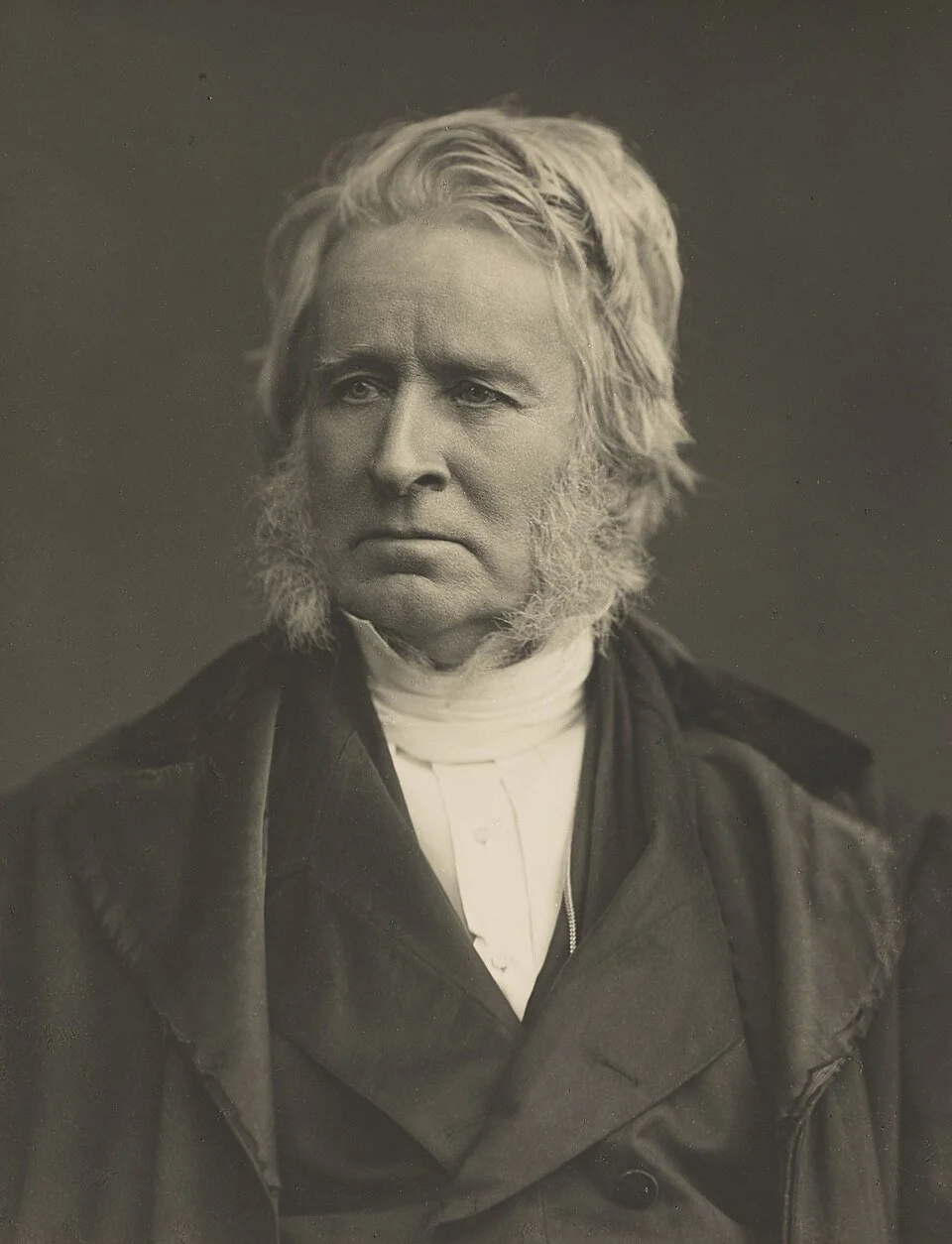
Begg on the Use of the Organ, Chapter 1
James Dodson
[Page 9]
THE USE OF ORGANS, &c.
CHAPTER I.
THE SCRIPTURAL PRINCIPLE WHICH SHOULD REGULATE CHRISTIAN WORSHIP.—THIS INCONSISTENT WITH THE USE OF MUSICAL INSTRUMENTS IN THE HOUSE OF GOD, UNDER THE NEW TESTAMENT.
“Teaching them to observe all things whatsoever I have commanded you.”—Matt. xxviii. 20.
The questions which arise in the Christian Church are constantly varied. In all wars it is found expedient to change the mode of attack; and in Christian warfare experience proves, and our enemies know, that many who had made themselves pretty familiar with the answers necessary to one form of objection, are quite taken by surprise when new questions are raised, proving how essential it is that the Church as a
[Page 10]
whole, as well as individual Christians, should put on and keep on “the whole armour of God.” For many years past, in Scotland, the main questions stirred have concerned Christian liberty, and the relations of Church and State. Although many are still ignorant even in regard to these, the controversy about them amongst leading minds is pretty well exhausted, and the battle has now turned upon new themes—the nature and authority of Church government, the plenary inspiration of Scripture, the perpetuity of the Divine law, and the purity of God’s worship.
To the latter of these topics we propose to direct attention, and none is more important. The first thing necessary is to fix the principle which regulates New Testament worship. There is a tremendous emphasis in the question of the King of Moab, “Wherewithal shall I come before God, and bow myself before the Most High?” To hear many speak at present, one would suppose that there was nothing less solemn than an act of worship, and that, instead of raising the question, “What in worship is
[Page 11]
pleasing and acceptable to God?” they have simply to consider “What is pleasing and acceptable to themselves and to each other?” They perfectly well understand that they must study the most minute rules of the court before they can dare, or be permitted to approach an earthly sovereign; but they presumptuously imagine that it is, and ought to be, the easiest thing possible, to enter into the presence of the King of kings, before whose awful Majesty angels veil their faces whilst they adore. They forget that it is in connection with His own worship that God proclaims Himself in the second commandment to be “a jealous God,” and that it has been in the same connection that this jealousy has most frequently flamed forth in the past history of the Church—in the case of Cain, of Korah, of Uzziah, of the buyers and sellers in the temple. Corruption here is corruption at the fountain head, fitted to cause the withdrawal of the Holy Spirit of God, and thus to leave the Church to sink under deeper and more hopeless evils; whilst, if we consider the relation of the thrice holy God to fallen
[Page 12]
sinners, the wonder is not that our mode of access into His presence is strictly regulated, but that any such access is permitted to us at all.
It is an important fact that the first religious question ever raised in the world after the fall of Adam related to the acceptable way of worshipping God. Cain and Abel, the two first brothers of the human family, met probably at the same altar, and worshipped—one would have supposed, apart from God’s appointment—each in the most natural and becoming way. The husbandman brought a portion of his fruits, and the shepherd a portion of his flock, to lay on God’s altar. God, however, frowned upon Cain, and rejected his offering, but smiled upon Abel, who, “being dead, yet speaketh,” proclaiming not only the necessity for Christ’s atonement, as the only ground of a sinner’s acceptance, but that God will reject all worship which He has not Himself prescribed. (During the whole of the Old Testament dispensation, the mode of worship, in all its details, was the subject of Divine appointment. Every pin of
[Page 13]
the tabernacle, every peculiarity of the temple, the dresses, and all the movements of the priests, were divinely regulated. “See thou do all things,” was the express commandment, “after the pattern shewed thee in the mount.” When all this was swept away by the introduction of the more simple and spiritual worship of the gospel, it is a mere dream to imagine that men were left to regulate the worship of God according to their own fancies.) Our blessed Lord, in speaking to the woman of Samaria (John iv. 21-24), intimates the general principle by which the worship of the New Testament was to be regulated. Neither in Jerusalem nor in the mountain of Samaria were men to worship, but everywhere “the true worshippers were to worship the Father in spirit and in truth.” Many seem to assume that this meant spiritual worship as contrasted with mere insincere and carnal observances, but it is plain that this could not have been the meaning. There never was a time when God tolerated or accepted “insincere and carnal observances.” When this kind of worship was
[Page 14]
attempted, God said, “Bring no more vain oblations; incense is an abomination unto me.” “This people draweth nigh unto me with their mouths, and honoureth me with their lips, but their hearts are far from me.” “If I were hungry, would I ask you? The beasts of the forest are mine, and the cattle upon a thousand hills.” “Thou desirest not sacrifice; thou canst not be pleased with burnt-offering”—that is, apart from the heart; for God had expressly appointed these, and could not then be acceptably worshipped without them; but the worship must still be spiritual, and hence the Psalmist proceeds, “A broken spirit is to God a pleasing sacrifice; a broken and a contrite heart, O God, thou wilt not despise.” We repeat, therefore, that our Lord could not be speaking of the distinction between heart worship and mere outward profession, for in this respect there is no distinction between the two dispensations, but between spiritual worship connected with the old temple, and coupled with a gorgeous and external ceremonial in the one case, and spiritual worship stripped of all these accom-
[Page 15]
paniments, and conducted everywhere, in the other. If this is not the meaning, no other intelligible explanation of our Lord’s language can be given. This meaning, however, is in full accordance with all that took place. (The temple and all its gorgeous peculiarities being removed, “not one stone being left upon another,” a simple form of worship was introduced, consisting of preaching, singing, prayer, and the dispensation of sacraments—a religion fitted to be universal by its very simplicity. The worship of the New Testament Church could now be conducted anywhere, everywhere, in upper rooms, on the shores of the sea, in open market places, in Jewish synagogues, where a similar worship, indeed, had been conducted for ages. Singing was the only form of music employed in the primitive Church, by universal consent. And it is important to notice that, whilst men may argue and mystify about a point of doctrine, it is impossible to becloud or mystify a simple matter of fact. The apostles urged and practised the singing of praise, and nothing else.
[Page 16]
It has been alleged that, apart from the hymn or psalm sung by our Lord and His apostles, there are only four passages in the New Testament which speak distinctly and directly on this subject, and mark what they say: “Let the word of Christ dwell in you richly in all wisdom; teaching and admonishing one another in psalms and hymns and spiritual songs, singing with grace in your hearts to the Lord,” (Col. iii. 16.) “Speaking to yourselves in psalms and hymns and spiritual songs, singing and making melody in your heart to the Lord,” (Eph. v. 19.) “Is any among you afflicted? let him pray. Is any merry? let him sing psalms,” (James v. 13.) “By him therefore let us offer the sacrifice of praise to God continually, that is, the fruit of our lips, giving thanks to his name,” (Heb. xiii. 15.) In each case it is singing alone that is enjoined. We have thus ample authority for this exercise in God’s worship, but not a shadow of warrant for the use of instruments.) Singing was not only the apostolic practice, but the apostolic theory, as more directly explained in one pas-
[Page 17]
sage already quoted. The apostle Paul, speaking to the Hebrews about the doing away with their priests, sacrifices, and “worldly sanctuary,” and the admission of all Christians to worship as priests through Jesus Christ in the immediate presence of God, says emphatically (Heb. xiii. 15), “By him therefore let us offer the sacrifice of praise to God continually,” and he adds a definition of what he meant, “that is, the fruit of our lips, giving thanks to his name.” So it was, and so it continued beyond all controversy to be, until the Man of Sin, amidst his growing corruptions, attempted to restore the whole temple service—a sacrifice, priests, vestments, incense, and, amongst the last of popish corruptions, instrumental music also. The more consistent and thorough reformers denounced the whole of this, and demanded that the worship of the Church, as well as its framework and doctrine, should be reduced to the simple primitive model, and it was only in process of time that some of these corruptions again gradually crept back into certain sections of the Protestant Church, to
[Page 18]
the utter destruction, however, of the Protestant argument against the whole corruptions of the mystic Babylon.
This will be seen at once if we consider both the new principle in accordance with which such corruptions can alone be defended, and the reason for its adoption. (If we introduce instrumental music in our New Testament worship, we cannot plead either the precept or example of Christ or His apostles. Their precepts and examples under the New Testament system are all the other way, and therefore, if we act in the face of these, we can no longer maintain the great principle of the Reformation, viz., that no worship is lawful which God Himself has not prescribed. If this principle again be abandoned—if we hold that we may alter the worship of the Christian Church according to our own mind and fancy—how far may we not go? As good an argument can be made for the use of incense, priests, sacrifices, indeed, of the whole temple system, as for the use of instrumental music in Christian worship.) Nay, we may change the whole
[Page 19]
government, discipline, and doctrine of the Church, as well as its worship, on the same ground; for the instant we admit the principle that the system of the Church of Christ is not revealed in His word, and was not perfect as left by our Lord and the apostles, and that men may, at their own hand, alter the form and substance of Christian worship, or anything else in the Church, the whole theory to which we have referred is levelled at a blow, and no limit can be set to the spirit of change. The whole struggles of our ancestors against Popery and Prelacy, if this new theory is tenable, can only be regarded as foolish and uncalled for. If it be quite open to us to make any form of worship we please, much may be said in favour not only of instruments, but of proceeding at once to introduce the whole splendid ceremonial of the Popish Church, instead of merely peddling with small Romish and Romeward alterations. The great principle is gone in either case, and it is of little use to attempt to stay the headlong tide of innovation. But not only is the new principle
[Page 20]
itself essentially Popish; the spirit which leads to its adoption is equally so. This principle is neither more nor less than that, since we may do what we please, we ought to study human taste and wishes in the worship of God, irrespective altogether of any question of Divine authority or of apostolic precept or example. We first pretend to have discovered, in the face of the plainest teaching of Scripture and of our own standards, that God has not prescribed any mode of worship, but left the whole question open, and then we proceed in a course of man-pleasing, upon pretence of making the worship of God more interesting and impressive. This was the very theory upon which Rome proceeded in rearing her enormous system of error and will-worship, under which the world has so long groaned. Setting aside the authority of God, in regulating the affairs of the Church, she borrowed from Judaism and heathenism, right and left, upon pretence of improving and embellishing the worship of God, virtually turning the church into a theatre. The principle is one of the most daring and
[Page 21]
unscriptural nature, as well as of the most dangerous tendency, and yet it is painful to say that some of the children of the Puritans and Covenanters are openly adopting it, and apparently in profound ignorance that they have entirely abandoned the old ground on which so many noble battles for truth and purity were fought. It is quite common, when these practices are challenged, to hear men say, “We don’t see any text of Scripture in opposition to them,” forgetting that such a remark assumes that the Presbyterian Church has adopted a principle which she has always earnestly disowned and repudiated. The question is not, “What is positively condemned in Scripture?” but “What has God appointed in worship?” No prohibition is found in the New Testament of the use of incense, of crossing in baptism, of kneeling at communion, of confession and absolution, and many other uncalled-for, unseemly, and superstitious observances; and were a prohibition necessary in every case, we could not maintain our ground for a moment against Popish and Pre-
[Page 22]
latic opponents and innumerable abuses. Our principle, and that of all the more thorough Reformers, is found in the words of our Lord himself, as part of the permanent commission to His ministers (Matt. xxviii. 20), “Teaching them to observe all things whatsoever I have commanded you.” Observe, it is not “all things whatsoever I have not forbidden.” A positive command is necessary to warrant any observance in the Church. “In vain do they worship me, teaching for doctrines the commandments of men.” This authority is amply given in the New Testament in regard to singing, but never in regard to the use of any instrument of music. If this simple principle be abandoned, the floodgates of error and superstition are at once opened, and no one can foretell the result.
That the principle which we have advocated was that of all the more thorough Reformers is certain. John Calvin said—“Unless we intend to confound everything, we must constantly distinguish between the Old and the New Testament;” and he often condemns the
[Page 23]
use of instruments in worship as inconsistent with the principles of the New Testament economy. In his Homily on 1 Sam. xviii. 1—9, he says—“In Popery there was a ridiculous and unsuitable imitation (of the Jews); while they adorned their temples and valued themselves as having made the worship of God more splendid and inviting, they employed organs and many other such ludicrous things, by which the word and worship of God are exceedingly profaned, the people being much more attached to those rites than to the understanding of the Divine word.” The great principle upon which our Scottish Reformation was established, and which has so nobly vindicated itself by the result, in so far as it has not been interfered with by human power or corrupted by ecclesiastical practice and policy, was precisely the same. Knox, the greatest of Scotchmen, says, in contrasting our Reformation with that of other lands—“All others—that is, realms—however sincere that ever the doctrine be that by some is taught, retain in their churches and the ministry thereof some foot-
[Page 24]
steps of Antichrist and some dregs of Popery; but we (all praise to God alone) have nothing within our churches that ever flowed from that Man of Sin. And this we acknowledge to be the strength given unto us by God, because we esteemed not ourselves wise in our own eyes, but understanding our whole wisdom to be foolishness before the Lord our God, laid it aside, and followed only that which we found approved by Himself. In this point could never our enemies cause us to faint, for our first petition was ‘that the revered face of the primitive and apostolic Church should be reduced (restored) again to the eyes and knowledge of men.’ And in that point we say that our God hath strengthened us till that the work was finished, as the world may see.”* The same man, of almost unequalled vigour and energy, and yet of most humble and childlike deference to the declared will of God, in his noble and eloquent refutation of the Mass, lays down first the true principle of Christian
_____
* Knox’s “History of the Reformation in Scotland.”
[Page 25]
worship as follows: “All worshipping, honouring, or other service invented by the brain of man in the religion of God, without His own express commandment, is idolatry.” We may well take a lesson from this Reformer in the firm maintenance of principle, when we find his stern adherence to the truth of God, and far-reaching sagacity, so highly honoured in the result. Knox, no doubt, had an immense struggle with ungodly men in his own day, and his memory was long buried under unjust reproach, but Scotland has in all ages since borne the stamp of his sanctified genius; the outgoings of the morning and evening have proclaimed in the living presence of energetic, educated and Christian Scotchmen the glory of this particular Reformation; and Dr M‘Crie has unanswerably vindicated the title to the highest Christian wisdom and the most exalted patriotism of the “man who never feared the face of man.” In the eloquent lecture delivered recently in Edinburgh by one so impartial and yet so well qualified to judge as Mr Froude, not only the
[Page 26]
whole success of the Scottish Reformation, but the preservation of the liberties of Britain, is directly traced* to our noble, stern, and heaven-taught countryman, and Thomas Carlyle has since confirmed this impression. “The only powerful noblemen who remained on the Protestant side,” says Froude, “were Lennox, Morton, and Mar. Lord Lennox was a poor creature, and was soon despatched; Mar was old and weak; and Morton was an unprincipled scoundrel, who used the Reformation only as a stalking-horse to cover the spoils which he had clutched in the confusion, and was ready to desert the cause at any moment if the balance of advantage shifted. Even the ministers of the Kirk were fooled and flattered over. Maitland told Mary Stuart that he had gained them all except one. John Knox alone defied both his threats and his persuasions. Good reason has Scotland to be proud of Knox. He, only, in this wild crisis, saved
_____
* “The Influence of the Reformation on the Scottish Character.” By James Anthony Froude. Edinburgh: Edmonston & Douglas.
[Page 27]
the Kirk which he had founded, and saved with it Scottish and English freedom. But for Knox, and what he was able still to do, it is almost certain that the Duke of Alva’s army would have been landed on the eastern coast. The conditions were drawn out and agreed upon for the reception, the support, and the stay of the Spanish troops. Two-thirds of the English peerage had bound themselves to rise against Elizabeth, and Alva waited only till Scotland itself was quiet. Only that quiet would not be. Instead of quiet came three dreadful years of civil war. Scotland was split into factions, to which the mother and the son gave names. The Queen’s Lords, as they were called, with unlimited money from France and Flanders, held Edinburgh and Glasgow; all the border line was theirs, and all the north and west. Elizabeth’s Council, wiser than their mistress, barely squeezed out of her reluctant parsimony enough to keep Mar and Morton from making terms with the rest; but there her assistance ended. She would still say nothing, promise nothing, bind herself to nothing, and, so far as
[Page 28]
she was concerned, the war would have been soon enough brought to a close. But away at St. Andrews, John Knox, broken in body, and scarcely able to stagger up the pulpit stairs, still thundered in the parish church; and his voice, it was said, was like ten thousand trumpets braying in the ear of Scottish Protestantism. All the Lowlands thrilled under his tones. Our English Cromwell found in the man of religion a match for the man of honour. Before Cromwell, all over the Lothians, and across from St. Andrews to Stirling and Glasgow—through farm, and town, and village—the words of Knox had struck the inmost chords of the Scottish commons’ hearts. Passing over knight and noble, he had touched the farmer, the peasant, the petty tradesman, and the artisan, and turned the men of clay into men of steel.”—Pp. 21, 22. And yet this was the man whose clear and leading principle was that the word of God alone should rule, and that God should only be worshipped in his own appointed way.
The estimate of this English historian of the
[Page 29]
probable result which would have taken place, had the Scottish Church got into hands less vigorous and honest, is as applicable as ever to the times in which we live, and will, no doubt, be realised still, if some of the very puerile friends of so-called liberality and enlightenment should ever unfortunately get sway in our Church or country. Mr Froude most justly says,—
“And now suppose the Kirk had been the broad, liberal, philosophical, intellectual thing which some people think it ought to have been, how would it have fared in that crusade; how altogether would it have encountered those surplices of Archbishop Laud or those dragoons of Claverhouse? It is hard to lose one’s life for a ‘perhaps;’ and philosophical belief at the bottom means a ‘perhaps,’ and nothing more. For more than half the seventeenth century, the battle had to be fought out in Scotland, which in reality was the battle between liberty and despotism; and where, except in an intense burning conviction that they were maintaining God’s cause against the devil, could
[Page 30]
the poor Scotch people have found the strength for the unequal struggle which was forced upon them? Toleration is a good thing in its place; but you cannot tolerate what will not tolerate you, and is trying to cut your throat. Enlightenment you cannot have enough of, but it must be the true enlightenment which sees a thing in all its bearings. In these matters the vital questions are not always those which appear on the surface; and in the passion and resolution of brave and noble men there is often an inarticulate intelligence deeper than what can be expressed in words. Action sometimes will hit the mark, when the spoken word either misses it or is but half the truth. On such subjects, and with common men, latitude of mind means weakness of mind. There is but a certain quantity of spiritual force in any man. Spread it over a broad surface, the stream is shallow and languid; narrow the channel, and it becomes a driving force. Each may be well at its own time. The mill-race which drives the water-wheel is dispersed in rivulets over the meadow at its foot. The
[Page 31]
Covenanters fought the fight and won the victory, and then, and not till then, came the David Humes with their essays on miracles, and the Adam Smiths with their political economics, and steam engines, and railroads, and philosophical institutions, and all the other blessed or unblessed fruits of liberty.”—Pp. 26, 27.
The following tribute to the same great Reformer was given by Thomas Carlyle in his speech as Lord Rector of the Edinburgh University:—“I don’t know in any history of Greece or Rome where you will get so fine a man as Oliver Cromwell. (Applause.) And we have had men worthy of memory in our little corner of the island here as well as others, and our history has been strong at least in being connected with the world history—for, if you examine well you will find that John Knox was the author, as it were, of Oliver Cromwell; that the Puritan revolution would never have taken place in England at all had it not been for that Scotchman. (Applause.) That is an arithmetical fact, and is not prompted
[Page 32]
by national vanity on my part at all. (Laughter and applause.) And it is very possible, if you look at the struggle that was going on in England, as I have had to do in my time, you will see that people were overawed with the immense impediments lying in the way. A small minority of God-fearing men in the country were flying away with any ship they could get to New England, rather than take the lion by the beard. They dursn’t confront the powers that were with their most just complaint to be delivered from idolatry. They wanted to make the nation altogether conformable to the Hebrew Bible, which they understood to be according to the will of God; and there could be no aim more legitimate. However, they could not have got their desire fulfilled at all if Knox had not succeeded by the firmness and nobleness of his mind. For he is also of the select of the earth to me—John Knox. (Applause.) What he has suffered from the ungrateful generations that have followed him should really make us humble ourselves to the dust—to think that the most excellent men
[Page 33]
our country has produced, to whom we owe everything that distinguishes us among modern nations, should have been sneered at and abused by people. Knox was heard by Scotland—the people heard him with the marrow of their bones—they took up his doctrine, and they defied principalities and powers to move them from it. ‘We must have it,’ they said. It was at that time the Puritan struggle arose in England.”
Calderwood expounds the principles of Presbyterian worship, as held during the period of the second Reformation, in his great work, the Altare Damascenum, chap. ix. He says,—“We assert that God alone can have the right to determine and prescribe sacred and religious actions or ceremonies.” Again: “If then it was not lawful, under the law, for man to add to ceremonies or sacred rites of Divine worship, neither can it be lawful under the Gospel. For Christ the legislator is worthier than Moses, and endowed with far more glory. Moses was constituted a faithful steward in the house of God; Christ as Son over His own house. Moses, the
[Page 34]
administrator and lawgiver, received those things, which were entrusted to him, from God; but the government was laid upon the shoulders of Christ.”
The clear and simple principle of Knox, already announced, in regard to worship, is still embodied in the Standards of the Presbyterian Church. In the Shorter Catechism it is said, in answer to the question, “What is forbidden in the second commandment? The second commandment forbiddeth the worshipping of God by images, or in any other way not appointed in his word.” The Larger Catechism, whilst confirming this view, intimates that the second commandment requireth the “disapproving, detesting, opposing all false worship, and, according to each one’s place and calling, removing it;” whilst the sins forbidden by that commandment are said to be, “all devising, counselling, commanding, using, and in any wise approving, any religious worship not instituted by God himself.” It likewise forbids, we are told, “corrupting the worship of God, adding to it, or taking from it, whether
[Page 35]
invented and taken up of ourselves or received by tradition from others, though under the title of antiquity, custom, devotion, good intent, or any other pretence whatsoever.” The Westminster Confession is equally explicit. “The acceptable way of worshipping the true God is instituted by Himself, and so limited by His own revealed will, that He may not be worshipped according to the imaginations and devices of men.”
The representatives of all the leading Presbyterian Dissenters, negociating in regard to union, lately affirmed unanimously these important principles in regard to worship, as follows:—
FIFTH HEAD OF PROGRAMME.
Law and practice of the Churches as to Public Worship.
“15th March, 1865.—The Committee having carefully considered the whole subjects requiring attention under the fifth head of the programme, find that there is, on the whole, much harmony both of principle and practice
[Page 36]
with relation to those subjects in all the four Churches. They all agree in declaring, according to the language of the last sentence of section 1 of chapter xxi. of the Westminster Confession, ‘That the acceptable way of worshipping the true God is instituted by Himself, and so limited by His own revealed will, that He may not be worshipped according to the imaginations and devices of men, or the suggestions of Satan, under any visible representation, or any other way not prescribed in the Holy Scripture.’ They all agree also in declaring, according to the language of first sentence of section 2, chapter xx. of the same Confession, that ‘God alone is Lord of the conscience, and hath left it free from the doctrines and commandments of men, which are in anything contrary to His Word, or beside it in matters of faith or worship.’ They all further agree in the subordinate principle that, in matters not vital, uniformity of practice in public worship ought to be observed, and divisive courses avoided, according to the ordination-engagements of ministers and elders in
[Page 37]
all the four Churches. The Committee find that the three principles thus adverted to regulate the practice of all the four Churches, and that all the matters under this head of the programme are subject in these Churches to the regulation of the Church Courts.
“The Committee find that there is substantial agreement in all the four Churches in the conduct of public prayer, in the order of public worship, in the arrangements for the singing of God’s praise,” &c.
It were easy to multiply authorities of eminence in confirmation of the soundness of these views. John Owen says:—“Be the worship what it will, they (carnal men) can see no glory in it, nor did it give any satisfaction to their minds—for having no light to discern its glory, they could have no experience of its power and efficacy. What, then, shall they do? The notion must be retained, that Divine worship is to be beautiful and glorious. But in the spiritual worship of the gospel they could see nothing thereof; wherefore they thought necessary to make a glory for it, or
[Page 38]
to dismiss it out of the world, and set up such an image of it as might appear beautiful to their fleshly minds, and give them satisfaction. To this end they set their inventions on work to find out ceremonies, vestments, gestures, ornaments, music, altars, images, paintings, with prescriptions of great bodily veneration. This pageantry they call the beauty, the order, the glory, of Divine worship. This is that which they see and feel, and which, as they judge, doth dispose their minds unto devotion. Without it they know not how to pay any reverence unto God himself; and when it is wanting, whatever be the life, the power, the spirituality of the worship or the worshippers—whatever be its efficacy unto all the proper ends of it—however it may be ordered according to the prescription of the Word—it is unto them empty—indecent; they can neither see beauty nor glory in it. This light and experience being lost, the introduction of beggarly elements and carnal ceremonies in the worship of the Church, with attempts to render it decorous and beautiful by superstitious rites
[Page 39]
and observances—wherewith it hath been defiled and corrupted, as it was and is in the Church of Rome—was nothing but the setting up of a deformed image in the room of it. And with this they are pleased withal. The beauty and glory which carving, and painting, and embroidered vestures, and musical incantations, and postures of veneration do give unto Divine service, they can see and feel; and in their own imagination are sensibly excited unto devotion by them. But hereby, instead of representing the true glory of the worship of the Gospel, wherein it excels that under the Old Testament, they have rendered it altogether inglorious in comparison of it; for all the ceremonies and ornaments which they have invented for that end come unspeakably short, for beauty, order, and glory, of what was appointed by God himself in the temple—scarce equalling what was among the pagans.”—The Works of John Owen, D.D., edited by Dr. Goold, vol. viii., p. 558.
Principal Dunlop, in his celebrated defence of Confessions of Faith, makes the following
[Page 40]
admirable and eloquent observations on this peculiarity of our simple and scriptural worship:—
“We in the same manner celebrate the goodness of God, which carried our Reformation to such a high pitch of perfection, with respect to our government and worship; and delivered them from all that vain pomp which darkened the glory of the gospel service, and the whole of those superstitious or insignificant inventions of an imaginary decency and order, which sullied the Divine beauty and lustre of that noble simplicity that distinguished the devotions of apostolical times. And our Church glories in the primitive plainness of her worship, more than in all the foreign ornaments borrowed from this world, though these appear, indeed, incomparably more charming to earthly minds.
“We are sensible that it is a necessary consequence of the nature of our Reformation in these particulars, that there is nothing left in our worship which is proper to captivate the senses of mankind or amuse their imagina-
[Page 41]
tions; we have no magnificence and splendour of devotion to dazzle the eye, nor harmony of instrumental music to enliven our worship and soothe the ears of the assembly. Pomp and show and ceremony are entirely strangers in our churches; and we have little in common with that Apostate Church whose yoke we threw off at the Reformation, or with the exterior greatness and magnificence of the Jewish Temple and its service.
“For which reason we know we must lay our account to be despised by the men of this world, who value nothing that is stripped of the allurements of sense, and fancy that a rich and gaudy dress contributes to the majesty, and raises the excellency of religious service; who seek for the same dazzling pomp and splendid appearances to recommend their worship, which they are so fond of in their equipage and tables, and think that a veneration and respect to the service of the Church is to be raised by the same methods that procure an esteem and fondness for a court. We have nothing to tempt persons of such inclinations;
[Page 42]
we know they’ll entertain the meanest thoughts and most disdainful notions of a worship too plain and homely for them, and fit only for the rude and unmannerly multitude, who have not a delicate enough taste of what is truly great and noble.
“But how much soever upon this account we may be despised by the great and the learned, the Church of Scotland, we hope, will always publicly own the simplicity and plainness of her worship as her peculiar glory; and believe that these, to a spiritual eye, are beautified with a lustre which external objects are incapable of, and of a too elevated nature for the senses to look at. She is not ashamed to acknowledge her sentiments; that the devotions of Christians stand in no need of the outward helps afforded to the Jews, and that the triumphs of all-conquering love, the mighty acts of a Redeemer, all the powers and glories of an immortal life—that are represented to our wonder and meditation under the Gospel—are far nobler springs of devotion, and fitter to animate with a cheerful zeal and inspire the
[Page 43]
most fervent affections, than the meaner helps afforded under the law, the costliness of Pontifical garments, the glory of a magnificent temple, the ceremony of worship, and the power of music.
“Our Church believes it to be one design of the better reformation of things to raise the Christian worshippers above the airy grandeur of these, and instead of a laborious service, to introduce a worship worthy of the Father of Spirits that should be truly great and manly, the beauty and the power whereof should be Spirit and Life; and which, instead of a servile imitation of the temple, should be all purified reason and religion, and make the nearest approaches to the devotion of the heavenly state, where there is no temple. And how despicable soever this may appear to earthly minds, and distasteful to the senses that are pleased with show and appearance, we are not afraid to own that we believe that an imitation of our blessed Redeemer and his apostles in the plainness and spirituality of their devotions, and an endeavour to copy after the example of
[Page 44]
these truly primitive times, will ever bear us up to all the just decency and order of the Gospel Church; and that in a conformity hereto the naked simplicity of our worship is beautified with a superior lustre, and shines with a brightness that is more worthy of it than when dressed in the gayest colours, and busk’d up with the richest and most artful ornaments of human fancy and contrivance.
“Were we in this nation possessed by a just value for these incomparable advantages of our Reformation, and had we a due esteem for its purity, and the uncommon advances it hath made in our Church, with what pleasure would we celebrate these heavenly blessings with our loudest songs. Animated by a noble pride, we would value ourselves beyond others, and boast that we were raised to a more elevated and happy situation than those kingdoms that can speak of the glories of victories and the pomp of triumphs and the splendour of greatness; without any repinings of envy we’d look back upon the fertility of soil, the affluence of pleasures which other countries exceed us in; upon
[Page 45]
their trade and luxury and riches, when flowing in with the highest tide of plenty. How incomparably would we think those temporal advantages overbalanced by the blessings of our Reformation, by His Word which He shewed unto us, and the statutes and judgments that with so bright a light He hath discovered. And thus, while the wise gloried in their wisdom, the mighty in their might, or the rich in their riches; in this would we glory with a nobler triumph, that the Lord hath given us in such a manner to know and understand Him.”—Dunlop’s “Collection of Confessions of Faith,” Vol. I., Preface, page 26.
Very recently Dr Killen, of Belfast, in his admirable and learned work on the “Ancient Church,” makes the following observations:—
“Singing, in which none but Levites were permitted to unite, and which was accompanied by instrumental music, constituted a prominent part of the temple service. The singers occupied an elevated platform adjoining the court of the priests; and it is somewhat doubtful whether in that position they were distinctly
[Page 46]
heard by the majority of the worshippers within the sacred precincts. As the sacrifices, offerings, and other observances of the temple, as well as the priests, the vestments, and even the building itself, had an emblematic meaning, it would appear that the singing, intermingled with the music of various instruments of sound, was also typical and ceremonial. It seems to have indicated that the tongue of man cannot sufficiently express the praise of the King Eternal, and that all things, animate and inanimate, owe him a revenue of glory. The worship of the synagogue was more simple. Its officers had, indeed, trumpets and cornets, with which they published their sentences of excommunication, and announced the new year, the fasts, and the Sabbaths, but they did not introduce instrumental music into their congregational services. The early Christians followed the example of the synagogue; and when they celebrated the praises of God, ‘in psalms, and hymns, and spiritual songs,’ their melody was ‘the fruit of the lips.’ For many centuries after this period, the use of instru-
[Page 47]
mental music was unknown in the Church.”—Dr Killen’s “Ancient Church,” p. 216.
It will scarcely do, therefore, for men, with little pretensions to authority, to attempt to make light of all this, without even attempting to furnish a solid answer to it, or indeed any answer deserving the name.