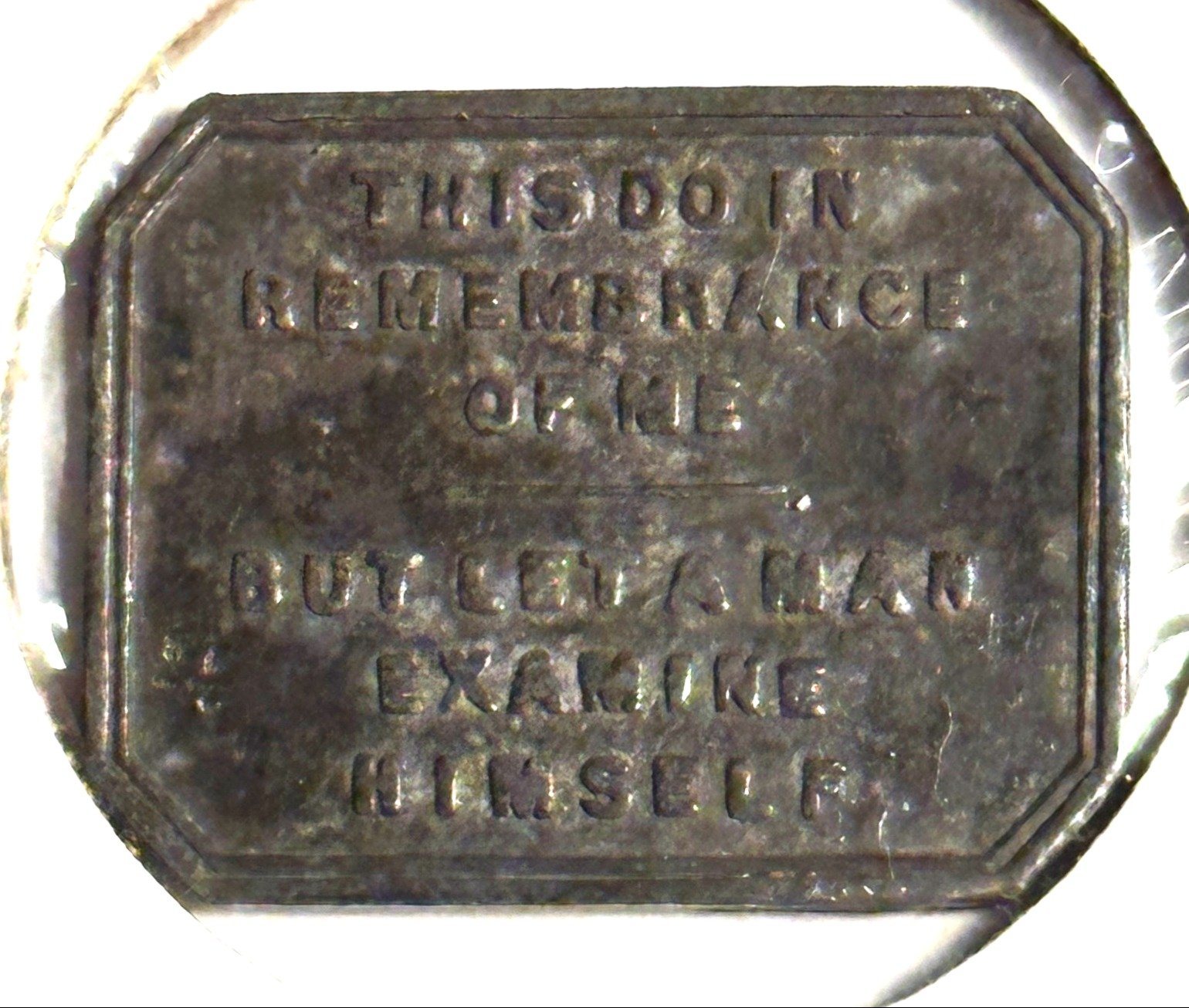
A Disquisition on the Observance of the Lord’s Supper,
James Dodson
WITH A VIEW TO THE
DEFENCE
OF THE
PRESBYTERIAN PLAN OF ADMINISTERING
THAT ORDINANCE.
――――――
APPENDIX.
A
SHORT REVIEW
OF
MR MASON’S LETTERS ON COMMUNION.
[by Alexander Duncan]
――――――
EST MODUS IN REBUS; SUNT CERTI DENIQUE FINES,
QUOS ULTRA CITRAQUE NEQUIT CONSISTERE RECTUM.
HORAT.
[“There is a proper measure in all things; there are fixed limits, beyond or short of which what is right cannot exist.” Horace.]
――――――
Edinburgh:
PRINTED BY THOMAS TURNBULL, CANONGATE.
1805.
[v]
PREFACE.
THE late vigorous dissemination of Independent principles, followed up by a practical exhibition of the Independent plan to an extent hitherto unknown in North Britain, may sufficiently apologize for calling the attention of the public to the subject of the following sheets. It is on the head of communion, the Author apprehends, the operation and effects of these principles among Presbyterians are most to be dreaded. Though individuals may be gained over to the new societies, or to the old Independents, there seems to be no great danger of any sudden revolution as to government in the Presbyterian churches. The attempt, however craftily, or under whatever plausible pretexts of reformation it might be made, would be too obviously a direct attack on the Presbyterian system, and the friends of that system would instantly be alarmed into vigilance. But the Independent mode of observing the ordinance of communion has an imposing appearance, and is apt to throw serious Christians off their guard. It seems to be recommended by the value of the ordinance, by primitive usage, and other considerations apparently unconnect-
[vi]
ed with the Independent scheme. While it holds out much to prejudice the godly in its favour, it also presents a strong allurement to the worldly minded, by restoring to them those portions of time usually devoted with us to religious services, and thus adapted to these opposite classes, is likely to gain ground. Some Presbyterians, carried away by the contemplation of supposed spiritual advantages, which seem alone to have engrossed their attention, have contributed not a little to the success of the new measures. The dissertations and warm addresses of these authors have found too much in the circumstances of the times to give them effect. But it is not merely the spirit of Independency, already operating in various Presbyterian communities, we have reason to dread. Were the plan of observance proposed by the authors alluded to adopted, Independency itself, so far as, without a total subversion of the Presbyterian system, capable of being introduced among us, would actually be established. The fear of future danger was not, however, the writer’s sole determining motive: In some publications in favour of the new measure, our mode of observance is criminated as will-worship, and charged with inconsistency and tyranny, as well as with ingratitude to our Saviour. This affects the consciences of those who adhere to it. Since “whatsoever is not of faith is sin,” they are called upon to vindicate the mode, to ascertain its warrantableness, and justify it to the public. These are the objects of the following disquisition. Though the plan and style of disquisition is adopted, the Author did not conceive it necessary
[vii]
for him to act the part of the sceptic, or proceed as if hitherto nothing had been ascertained on the subject. He considered it as the most fair as well as forcible method of defending the practice in which he and other Presbyterians are engaged, first to state the Nature and Ends of the Lord’s Supper; next, to deduce the conclusions which such a statement might furnish; and then to apply these to the mode of Observance.
After the work was sent to the press, two publications on the same subject were put into his hands: the one ‘A Letter by Mr JOHN COURTAS, addressed to the Community of the Old Dissenters, in answer to a pamphlet entitled, An Address to the Christian People under the Inspection of the Reformed Presbytery,’ Glasg. 1797. The other, ‘An Essay on Humiliation and Thanksgiving Days, as observed in connection with the Lord’s Supper,’ in an appendix to a book entitled, ‘Vindiciæ Cantus Dominicæ,’ by a Mr ANDERSON, a Presbyterian minister in the United States of America. Both these publications deserve to be better known. Of the latter few copies ever came over to Britain. The Author could not deny himself the pleasure of supporting his views by quotations from these writers. To compensate for the length to which the Section on the Days has been extended, he has abridged the Review of Mr Mason’s Letters, originally first written. It was unnecessary to enlarge, after the liberal discussion of the subject of these letters, in the body of the work. The copy
[viii]
used, and to which the references are made, was the edition of the letters in a small volume, entitled, ‘First Ripe Fruits.’ The Author hopes he has treated the subject in a dispassionate manner, and will be sorry if in any instance he has offended against candour and moderation.
[Contents]
CONTENTS.
SECT. I. Institution, Nature, and Use of the Supper, — — — — — — 5
SECT. II. Conclusions from the View given, — 36
SECT. III. Application of these Conclusions to regulate Observance, — — — — 54
SECT. IV. Objections considered, — — 73
SECT. V. Observance of Days, — — 115
Review of Mr Mason’s Letters. — 185
[Errata corrected]