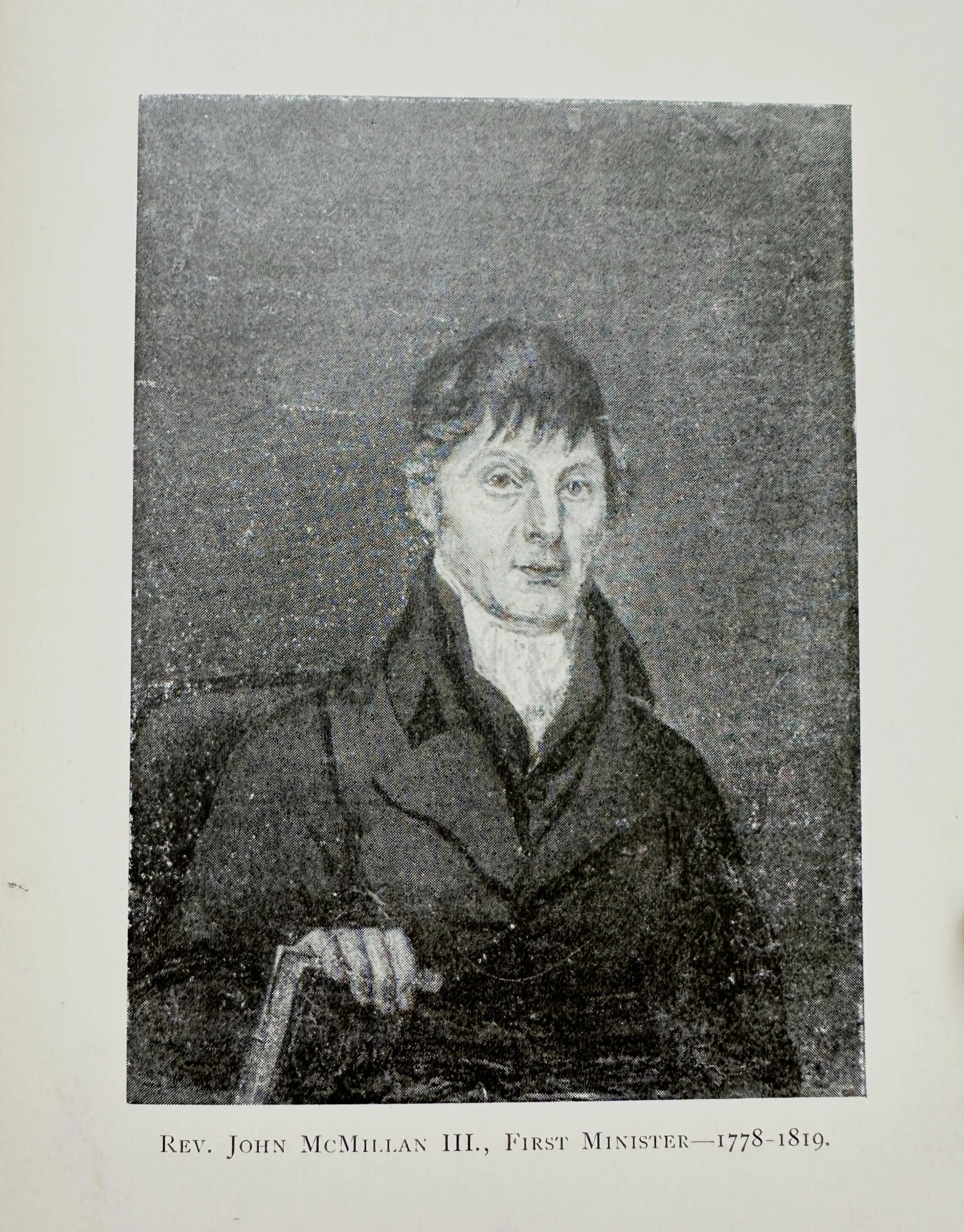
John McMillan’s Dying Letter to his Flock, 1819.
James Dodson
[published in “The Scottish Presbyterian,” January, 1841.]
[22]
From the REV. J. M‘MILLAN [III.], of Stirling, to the People of his Charge.
THE following is a copy of a very interesting and affectionate letter, written by the late Rev. John M‘Millan, Stirling, to his congregation, and read to them in the church, on Sabbath, the 6th June, 1819, being the Sabbath immediately preceding his departure for Bath, to which place he repaired for the benefit of his health; but it was the will of his Divine Master, whom he so long faithfully served, that he should never return to them in life, as he died at Edinburgh, on his way home.
MY DEARLY-BELOVED CHRISTIAN FRIENDS,—I think it my duty to inform you, that, in consequence of the failure of the means employed here for restoring my health, I am advised by my medical attendants to remove to a distant part in England, and there to use other means, which are supposed to be better calculated and more efficacious in relieving from the complaint. The execution of this plan has to encounter formidable ob-
[23]
stacles, and is an undertaking that only the imperious necessity of the case could induce me to think of. But under Divine Providence, I have resolved to make the attempt, leaving the issues thereof in the hand of him who wounds and makes whole, who kills and makes alive. I may be absent about two months, longer or shorter, as circumstances may turn out. It gives much ease to my mind, and affords great consolation, to think that the administration of Gospel ordinances will be continued in the congregation during my absence. My brethren in Presbytery have frankly agreed to dispense the Lord’s Supper in the congregation at the usual time; and provision is made for a pretty regular supply of sermon in the course of the season. Leaving the congregation, like the High Priest of old, with his breastplate, containing the names of the twelve tribes of Israel, for a memorial before the Lord, I desire to carry you all, from the youngest to the oldest, before the Lord. In this way, though absent in body, I may be present in spirit. A similar return of Christian sympathy and feeling is requested and hoped for to the absent pastor, from a congregation that hath existed upwards of forty years under his inspection. Thus exercised, whether office-bearers or private members, though locally separated, we may cherish and maintain the fellowship of the Spirit in connection with the fellowship of the Father and the Son, Christ Jesus our Lord. Separate from each other, whilst the events of time lie concealed from mortal view, it must remain matter of uncertainty whether we shall obtain a returning meeting in the land of the living. Should it please the Lord of Life and Death to renew our days as of old, and to vouchsafe unto us returning opportunities of again assembling in the gates of Zion, what ground of thankfulness and joy would such a dispensation yield to us in our congregational state; but should the event be determined otherwise—if the exercises of the ministry in which we have been long engaged, are blessed to bring us in the unity of the faith, and of the knowledge of the Son of God, unto a perfect man, unto the measure of the stature of the fulness of Christ, we shall meet in a happier clime, where sin, and sorrow, and trouble, are unknown, and shall contemplate, rejoice, and utter unceasing songs of praise to the Redeemer, for the gracious season of our ecclesiastical union in the sanctuary below, as the blessed means of preparing us for all the felicities and glory of the sanctuary above. Let me entreat you, my dear Christian friends, to remain steadfast to those principles of our Covenanted Reformation on which the congregation was formed, at the beginning, and on which, at their call, I undertook the office of pastor therein. These principles I have endeavoured to support hitherto, in my personal practice and public ministry, and also to lead the congregation forward in the profession of them, amid the numerous looser tenets of the age. Might I further exhort you, my dear friends, to cultivate Christian love to each other, as the disciples of that loving Lord who dearly loved his church, and, from the purest principle of unparalleled love, laid down his life for her redemption, and has assigned to Christian love the honourable place of being the distinguished badge of true discipleship. Now, brethren, I recommend you to God, and to the word of his grace, which is able to build you up, and to give you an inheritance among all them that are sanctified. Finally, brethren, farewell for a little; be of good comfort, be of one mind, live in peace, and the God of peace and love shall be with you. Amen and Amen.